 How to resolve AdBlock issue?
News
The California Employment Development Department said the unemployment rate dropped 0.3 percentage points to 9.0 percent in January as the state’s employers lost 69,900 jobs. The EDD said California’s January 2020 jobless rate was 4.2 percent.
Lake County’s unemployment rate in January was 8.8 percent, down from 9 percent in December. The county’s January 2020 unemployment rate was 6 percent.
On the national level, the federal Bureau of Labor Statistics reported that the nationwide jobless rate for January was 6.3 percent, down from 6.7 percent in December. The January 2020 federal unemployment rate was 3.5 percent.
California payroll jobs totaled 15,868,000 in January 2021, down 69,900 from December 2020 and down 1,752,800 from January of last year. This comes after December’s downward-revised month-over loss of 75,400 jobs, down by 23,200 jobs due, in part, to new 2020 benchmark data and methodology, the EDD reported.
Despite December and January combining for a two-month total of 145,300 jobs lost, California has regained more than 39 percent of the upwards-revised 2,714,800 nonfarm jobs that were lost during the COVID-19 pandemic in March and April, 2020.
Benchmark revisions to state data amount to a new lower peak unemployment rate of 16 percent during the pandemic, reached in April-May – down from the 16.4 percent estimate. But the job loss from February-December was revised up from 1.46 million to 1.72 million, the state said.
In January, Lake County had a civilian labor force of 28,600 people, up from 28,060 in December and down just slightly from the 28,620 reported in January 2020.
Lake County’s unemployed residents totaled 2,530 in January, compared to 2,470 in December and 1,790 the previous year, according to EDD statistics.
Leading Lake County’s job sectors in January was total farm, which was up by 21.2 percent, while total nonfarm was down by 0.1 percent overall.
Subcategories that showed growth included information, 12.5 percent; professional and business services, 3.1 percent; government, 1.5 percent; leisure and hospitality, 1 percent; and service producing, 0.3 percent.
The largest declines were in wholesale trade, -11.1 percent; goods producing, -4.3 percent; and private service producing, -0.3 percent.
In January, Lake County ranked No. 36 out of the state’s 58 counties for its jobless rate.
Lake’s neighboring counties’ jobless rates and ranks in the latest report are Colusa, 15.6 percent, No. 57; Glenn, 7.9 percent, No. 24; Napa, 8.6 percent, No. 31; Sonoma, 7.1 percent, No. 14; and Yolo, 7 percent, No. 13.
The highest unemployment rate, 16.5 percent, was reported in Imperial County, while Marin, at 5.4 percent, had the lowest statewide in January, the EDD reported.
The state employment picture
The EDD report said the number of Californians with jobs in January was 16,988,800, an increase of 31,800 jobs from December’s total of 16,957,000, but down 1,624,500 from the employment total in January of last year.
The number of unemployed Californians was 1,680,100 in January, a decrease of 68,400 over the month, but up by 856,300 in comparison to January of last year, according to the report.
Total nonfarm jobs in California’s 11 major industries totaled 15,868,000 in January, a net loss of 69,900 jobs from December. This followed a downward-revision of 23,200 jobs in December for a month-over loss of 75,400 jobs that month, the state reported.
The EDD said total nonfarm jobs decreased by 1,752,800 – down 9.9 percent – from January 2020 to January 2021 compared to the U.S. annual loss of 9,603,000 jobs, a 6.3 percent decrease.
At the same time, the report said the number of jobs in the agriculture industry increased by 2,000 from December 2020 to 420,200 jobs in January 2021. The agricultural industry has the same number of farm jobs as it did in January 2020.
Six of California’s 11 industry sectors gained jobs in January:
– Trade, transportation, and utilities (+13,700) had the state’s largest month-over increase thanks to gains in retail trade;
– Government and professional and business services each had an increase of 3,600 jobs;
– Financial activities and information each grew by 600 jobs;
– Mining and logging was up by 500 jobs.
On the loss side, leisure and hospitality lost 70,600 jobs due to large losses in accommodation and food services.
Other losses were reported in the following:
– Education and health services, down 10,000 jobs;
– Manufacturing, down 4,600 jobs;
– Construction, down 4,000 jobs;
– Other services decreased by 3,300 jobs.
The EDD also reported on Unemployment Insurance claims.
There were 818,589 people certifying for Unemployment Insurance benefits during the January 2021 sample week. That compares to 1,007,331 people in December and 339,026 people in January 2020.
Concurrently, 58,377 initial claims were processed in the January 2021 sample week, which was a month-over decrease of 100,715 claims from December 2020, but a year-over increase of 12,635 claims from January 2020, the EDD reported.
Email Elizabeth Larson at
LAKE COUNTY, Calif. – The city of Clearlake is hiring a firm to assist it with implementing a newly developed downtown strategic vision.
In a unanimous vote at its March 4 meeting, the council gave approval for City Manager Alan Flora to execute a contract with the firm Downtown Strategies.
The discussion begins at the 25:15 mark in the video above.
Flora said it was nearly two years ago, the city began a relationship with Retail Strategies for retail attraction.
“We’ve been seeing a lot of success from their efforts,” said Flora.
Since then, Downtown Strategies – a sister company of Retail Strategies – was launched.
Flora said the city had previously hired Downtown Strategies to develop a downtown strategic vision.
With that strategic vision now complete, Flora asked the council to consider a presentation from Downtown Strategies on its recommendations and which items its staff could help the city implement.
Jenn Gregory, president of Downtown Strategies, spoke to the council about the work to create a strategic plan for Clearlake’s downtown area and offered an implementation proposal.
She said she and other company staff visited the city in July and October in order to really understand the market.
In assembling a strategic plan – which is meant to be used and not sit on a shelf – Gregory said they focused on the five pillars of a healthy downtown: market analysis to understand how the downtown is performing economically; policy and administration; design; tourism and promotion; and economic vitality.
Gregory said the company’s July visit was to lead an assessment and understand the community’s assets, while the October meeting included meeting with city officials and community members.
Through this process, Gregory said the company was able to create a customized strategic plan for downtown Clearlake that is broken down into three categories of implementable strategies: no cost opportunities that require time and effort but no actual capital to implement; one to three year recommendations and strategies which do take some capital, but not a significant amount; and the three to five year timeline, with project that require either municipal investment or public-private partnership.
Gregory said their study so far also has included a walkability assessment of the downtown focus area, which includes Redbud Park in the south, Highland Park in the center and Austin Park to the north.
She said their team has the ability to help the city implement strategies such as identifying gateways and corridors to enhance the city’s walkability.
During the discussion, Gregory said that experiential tourism is on the rise, and it’s favored by millennials, the nation’s top consumer group. That demographic craves experiences. As a result, she said the proposal is to blend that quest for experiences and experiential tourism into the downtown plan.
She also proposed a comprehensive marketing plan and wayfinding signage, which will help tell the city’s story and elevate the downtown area.
One of the recommendations included pursuing a listing of Clearlake’s downtown on the National Register of Historic Places; places and structures 50 years old and older qualify, Gregory said.
Gregory said they would then promote the benefits of state and federal tax credits to property owners in downtown Clearlake. It would not create any restrictions on the properties but would unlock historic tax credits which, on the federal level, are 25 percent of the total rehabilitation costs. State tax credits are still being developed but could be used in tandem with the federal credits.
The company has talked to some downtown property owners who want to update their buildings but they were concerned about the cost of rehabilitation, Gregory said.
She said Downtown Strategies also wants to partner with the city in creating a design guidelines booklet to showcase preferred and recommended styles of facades and design elements within the downtown area.
Gregory said their goal is to retain the resort feel and aesthetic that Clear Lake became famous for, and as part of that they created an exterior paint palette that would be folded into the design guidelines.
As for next steps, she said the company would love the opportunity to partner with the city of Clearlake to make sure this plan doesn't sit on the shelf but is truly implemented in collaboration with the city government.
During the discussion, Gregory explained that Downtown Strategies had studied the city’s flow of visitors and chose not to exclude 2020 because of COVID-19 but to learn from it.
She said that, even during the pandemic, they found that city parks were receiving visitors from well beyond the city boundaries – some traveling more than 100 miles.
Their study found that most tourists are from California, but they have visitors coming from as far away as the East Coast and multiple states in between.
During the July visit to Clearlake, Gregory said she stopped to visit with some people on the pier and found they were from New York and had come for bass fishing. They also found that tourism activity increased during the summer months.
Gregory said they believe there is an opportunity to hone the city’s marketing and branding and to take the opportunity to tell the story of Clearlake and Clear Lake.
“Telling the story is a real critical need,” she said, adding they can exponentially increase the impact with a strong digital presence and branding.
She also suggested more of a focus on regional travel.
There was no public comment before Councilwoman Joyce Overton moved to approve the agreement, a motion which was seconded by Councilman Russ Perdock and approved unanimously by the council.
Email Elizabeth Larson at
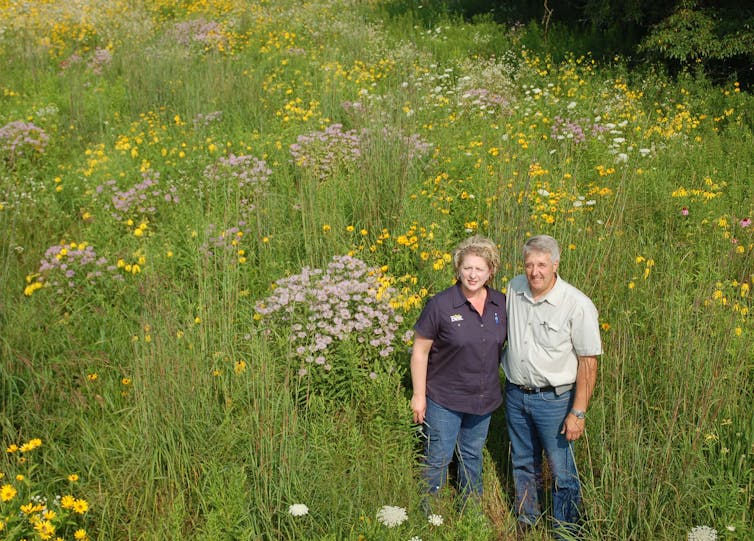
Growing food in a sustainable, environmentally friendly way – while also producing enough of it – is among the most important challenges facing the U.S. and the world today.
The ongoing COVID-19 pandemic has reminded us that food security can’t be taken for granted. Putting affordable food on the table requires both innovative producers and well-functioning markets and global supply chains. With disruptions to the system, prices rise, food is scarce – and people go hungry.
But feeding the world’s 7.8 billion people sustainably – including 332 million Americans – presents significant environmental challenges. Farming uses 70% of the world’s fresh water. Fertilizers pollute water with nitrates and phosphates, sparking algal blooms and creating dead zones like the one that forms every summer in the Gulf of Mexico.
Clear-cutting land for farms and ranches is the main driver of deforestation. Overall, the planet loses about 48,000 square miles (125,000 square kilometers) of forest each year. Without habitat, wildlife disappears. Farming also produces roughly one-quarter of global greenhouse gas emissions.
All of these challenges make balancing food production with environmental security a crucial issue for the Biden administration, which is working to address both a hunger crisis and an environmental crisis in the U.S.
Two different pathways
As an economist studying food systems, I’m keenly aware that trying to provide affordable food and a thriving agricultural sector while also preserving the environment can result in many trade-offs. Consider the different strategies that the U.S. and Northern Europe have pursued: The U.S. prioritizes increased agricultural output, while the EU emphasizes environmental services from farming.
Over the past 70 years, the U.S. has increased crop production with ever more sophisticated seed technologies and highly mechanized farming methods that employ far fewer workers. These new technologies have contributed to farm productivity growth which has, in turn, allowed U.S. farm output to rise without significant growth in the aggregate economic index of agricultural input use.
This approach contrasts sharply with Northern Europe’s strategy, which emphasizes using less land and other inputs in order to protect the environment. Nonetheless, by achieving a comparable rate of agricultural productivity growth (output growth minus the growth rate inputs), Northern Europe has been able to maintain its level of total farm output over the past three decades.
Boosting prices versus benefiting nature
The U.S. also has a long history of setting aside agricultural land that dates back nearly a century. In response to low prices in the 1920s, farmers had flooded the market with grain, pork and other products, desperately seeking to boost revenues but only pushing prices down further.
Under the Agricultural Adjustment Act of 1933, the U.S. government paid farmers to reduce their output and limited the supply of land under cultivation to boost farm prices. This strategy is still in use today.
In 1985 the U.S. launched a new program that created real incentives to protect environmentally sensitive land. Farmers who enroll in the Conservation Reserve Program “rent” environmentally valuable tracts to the U.S. Department of Agriculture for 10-15 years. Withdrawing these acres from production provides food and shelter for pollinators and wildlife, reduces erosion and improves water quality.
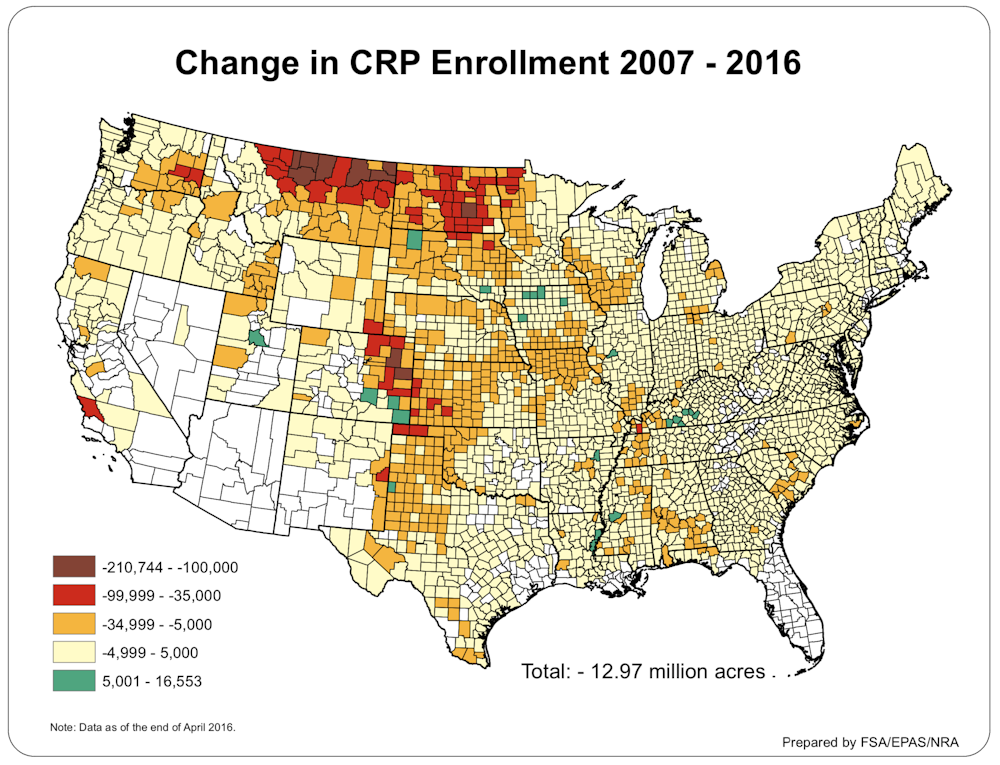
But this is a voluntary program, so enrollment ebbs and flows in tandem with crop prices. For example, when corn, soy and wheat prices fell in the late 1980s and early 1990s, enrollment grew. Then with the commodity price boom of 2007, farmers could make more money from cultivating the land. Protected acreage dropped more than 40% through 2019, erasing many of the environmental benefits that had been achieved.
Rental rates for agricultural land in the U.S. vary widely, with the most productive lands bringing the highest rent. Current rental rates under the Conservation Reserve Program 2021 range from US$243 per acre in Cuming, Nebraska to just $6 in Sutton, Texas.
The EU also began setting aside farmland to curb overproduction in 1988. Now, however, their program focuses heavily on environmental quality. Policy reforms in 2013 required farmers to allocate 5% of their land to protected ecological focus areas. The goal is to generate long-term environmental benefits by prioritizing nature.
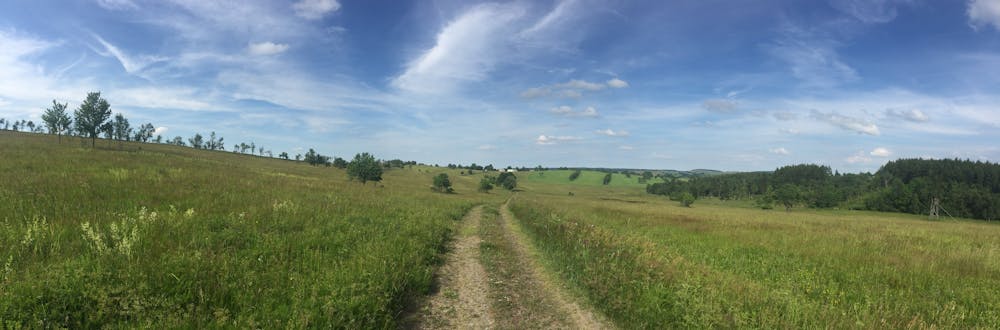
This program supports both production and conservation. Within this mix of natural and cultivated lands, wild pollinators benefit both native plants and crops. Birds, insects and small predators offer natural bio-control of pests. In this way, “rewilded” tracts foster biodiversity while also improving crop yields.
Who will feed the world?
What would happen if the U.S., a major exporter of agricultural products, followed the EU model and permanently withdrew land from production to improve environmental quality? Would such action make food unaffordable for the world’s poorest consumers?
In a study that I conducted in 2020 with colleagues at Purdue and the U.S. Department of Agriculture, we set up a computer model to find out. We wanted to chart what might happen to food prices across the globe through 2050 if the U.S. and other rich economies followed Northern European conservation strategies. Our analysis focused on the world’s most food-insecure region, sub-Saharan Africa.
We discovered that altering food production in this way would raise food prices in that region by about 6%. However, this upward price trend could be reversed by investing in local agriculture and new technologies to increase productivity in Africa. In short, our research suggested that conserving the environment in the U.S. doesn’t have to cause food insecurity in other countries.
Implications for US farm policy
Many experts on hunger and agriculture agree that to feed a growing global population, world food output must increase substantially in the next several decades. At the same time, it’s clear that agriculture’s environmental impacts need to shrink in order to protect the natural environment.
In my view, meeting these twin goals will require renewed government investments in research and dissemination of new technologies. Reversing a two-decade decline in science funding will be key. Agriculture is now a knowledge-driven industry, fueled by new technologies and improved management practices. Publicly funded research laid the foundations for these advances.
To reap environmental gains, I believe the U.S. Department of Agriculture will need to revamp and stabilize the Conservation Reserve Program, so that it is economically viable and enrollment does not fluctuate with market conditions. The Trump administration reduced incentives and rental payment rates, which drove down enrollments. The Biden administration has already taken a modest step forward by extending the yearly sign-up for the program indefinitely.
[Over 100,000 readers rely on The Conversation’s newsletter to understand the world. Sign up today.]
As I see it, following Northern Europe’s model by permanently protecting ecologically rich areas, while simultaneously investing in knowledge-driven agricultural productivity, will enable the U.S. to better preserve wildlife and its natural environment for future generations, while maintaining an affordable food supply.
Thomas Hertel, Professor of Agricultural Economics, Purdue University
This article is republished from The Conversation under a Creative Commons license. Read the original article.
Officials said the 2019 Crop Year Report was assembled in late 2020.
California’s agricultural export statistics are produced by the University of California, Davis, Agricultural Issues Center.
The $50 billion received by agricultural producers in 2019 represents a slight increase over reported cash receipts compared to the previous year, CDFA said.
California agricultural exports totaled $21.7 billion, an increase of 3 percent from 2018.
Top commodities for export included almonds, pistachios, dairy and dairy products, wine and walnuts.
California organic product sales totaled more than $10.4 billion in 2019, an increase of 3.5 percent from the prior year.
Organic production encompasses more than 2.5 million acres in the state and California is the only state in the U.S. with a USDA National Organic Program.
California’s agricultural abundance includes more than 400 commodities.
Over a third of the country’s vegetables and two-thirds of the country’s fruits and nuts are grown in California.
California’s top-10 valued commodities for the 2019 crop year are:
Dairy products, milk: $7.34 billion.
Almonds: $6.09 billion.
Grapes: $5.41 billion.
Cattle and calves: $3.06 billion.
Strawberries: $2.22 billion.
Pistachios: $1.94 billion.
Lettuce: $1.82 billion.
Walnuts: $1.29 billion
Floriculture: $1.22 billion.
Tomatoes: $1.17 billion.
The American Challenger grounded early on the morning of March 6. The 90-foot vessel was being towed by the Tug Hunter from Puget Sound, Washington, when the Tug Hunter lost propulsion due to a rope entangling the propeller.
Officials said Monday that oversight for the next response phase will shift to a coalition of agencies including the National Oceanic and Atmospheric Administration’s Greater Farallones National Marine Sanctuary, the California Department of Fish and Wildlife’s Office of Spill Prevention and Response and the Marin County Sheriff’s Office of Emergency Services.
The coalition will focus on addressing the longer-term pollution threat and additional environmental concerns from the American Challenger, as well as determining the ultimate fate of the vessel.
The initial emergency oil pollution response efforts are scheduled to conclude at the end of the week when all the boom has been removed from Tomales Bay.
Greater Farallones National Marine Sanctuary will continue to monitor the coast for evidence of impacts from the grounding and oil spill with regular and enhanced Beach Watch surveys.
The sanctuary will also continue to coordinate in other ways with agencies involved in this incident.
There have been no confirmed reports of oiled wildlife. If oiled wildlife is seen, the public is asked not to approach and contact the Oiled Wildlife Care Network at 1-877-823-6926.
More information on this response can be found at https://calspillwatch.wordpress.com/tag/american-challenger-incident.

This article has been updated with information about a hit-and-run crash that occurred Saturday evening involving the driver who was later arrested for the fatal crash.
LAKE COUNTY, Calif. – A young Novato woman has been arrested for vehicular manslaughter and driving under the influence of alcohol for a Saturday night wreck near Middletown that killed two Clearlake residents.
Keilah Marie Coyle, 21, was taken into custody by California Highway Patrol officers, the CHP said in a Monday report.
The crash took the lives of two county residents.
Lt. Corey Paulich of the Lake County Sheriff’s Office identified the victims as Miguel Maciel Dominguez, 47, and Cassandra Elaine Rolicheck, 53, both of Clearlake.
The CHP’s Clear Lake Area office reported that at 11:05 p.m. Saturday, Coyle was driving a black 2003 Ford F-250 pickup southbound on Highway 29, approaching Bar X Road north of Middletown at an unknown speed.
Due to Coyle's level of intoxication, she allowed her vehicle to travel over the solid double yellow lines of Highway 29 and into the path of a 2000 GMC van that Rolicheck was driving northbound at an unknown speed, the CHP said.
The two vehicles collided head-on, with Coyle’s pickup overturning and becoming disabled in the northbound lane, according to the report.
The CHP said the GMC van became disabled facing northbound, partially in the northbound and southbound traffic lanes.
Cal Fire and South Lake County Fire personnel had to extricate both Dominguez and Rolicheck, according to radio reports on the night of the wreck.
Once extricated, the two were pronounced dead by firefighters, the CHP said.
Highway 29 was closed for approximately five hours due to the collision investigation and removal of the vehicles, the CHP said.
All of those involved in the crash were using their safety equipment, the CHP report said.
The CHP said Coyle suffered minor injuries in the wreck.
She was arrested early Sunday morning by Clear Lake Area CHP Officers who observed signs and symptoms of alcohol intoxication.
Coyle was booked into the Lake County Jail on Sunday night for vehicular manslaughter while intoxicated with gross negligence, felony driving under the influence and causing injury, and felony driving under the influence and causing injury with a blood alcohol content above 0.08 percent, the CHP said.
Jail records show that Coyle is being held on $2 million bail.
She is due to be arraigned in Lake County Superior Court on Tuesday.
The CHP also confirmed to Lake County News that Coyle had been involved in a hit-and-run crash in Sonoma County several hours before the fatal wreck in Middletown.
At 5:55 p.m. Saturday, Coyle was driving the Ford F-250 pickup on southbound Highway 101, south of Gravenstein Highway, when she hit May Nguyen, who was driving a 2017 Mercedes GLE350, the CHP said.
The CHP said Coyle fled the scene of that crash, in which no injuries were reported.
If anyone has any details that could assist the investigation into the fatal Middletown crash, they are requested to contact the Clear Lake CHP Area office at 707-279-0103.
Email Elizabeth Larson at