How to resolve AdBlock issue?
News
The following cats at the shelter have been cleared for adoption.
Call Lake County Animal Care and Control at 707-263-0278 or visit the shelter online at http://www.co.lake.ca.us/Government/Directory/Animal_Care_And_Control.htm for information on visiting or adopting.

Male tuxedo cat
This male tuxedo cat has a short black and white coat and green eyes.
He is in cat room kennel No. 39, ID No. 14359.

Male domestic short hair
This young male domestic short hair cat has a black coat and gold eyes
He is in kennel No. 66, ID No. 14417.

‘Buddy’
“Buddy” is a male domestic short hair cat with a flame point and white coat and blue eyes.
He has been neutered.
He’s in cat room kennel No. 100, ID No. 14384.

Male domestic short hair cat
This male domestic short hair cat has a black and white coat and green eyes.
He has been neutered.
He’s in cat room kennel No. 142, ID No. 14386.
Email Elizabeth Larson at
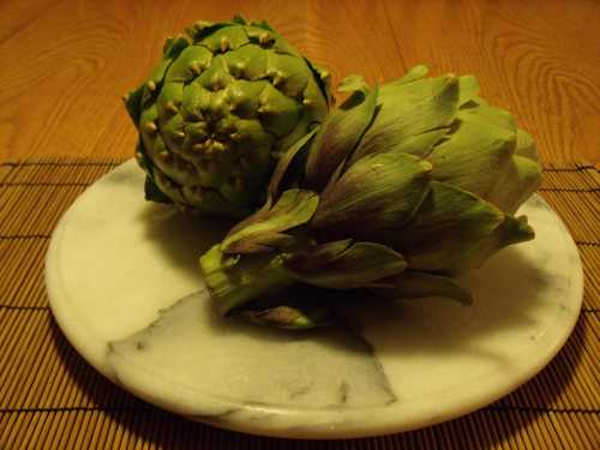
LAKE COUNTY, Calif. – To celebrate peak season for artichokes, I thought it would be fun to begin today’s column with an ode to this delectable fare.
Oh, prickly globe of humble leaf
Grown on ocean cliffs so steep
You woo us with your inner heart
Your thorns shock fingers like a dart
We seek you for your tasty flesh
And love you when you’re on our dish
We dig through leaves for our reward,
That tender disc which thorns do guard
Oh, artichoke, how you please!
With oil, butter, or mayonnaise
We peel a leaf, we take a bite
(What’s left behind does look a sight!)
Oh, artichoke, you’re worth the time
It takes to eat your parts sublime
You make for us a mighty feast
With heart, and each and every leaf
Groaning aside, the artichoke is a vegetable worthy of an ode, don’t you think? It’s mysterious, after all, as well as metaphorical and unique.
As to mystery, who ate the first one? What prompted that curious soul to look past the thorns and discover tasty flesh inside?
Its prickly leaves and tender heart evoke endless metaphors:
You can’t judge a book by its cover.
Good things take time.
Life unfolds like the leaves of an artichoke.
One must dig deep for hidden treasure.
A thorny exterior belies a tender heart within.
Patience wins all.
And its uniqueness speaks for itself. There is no other vegetable quite like it.
Peak season for artichokes is from March to May, and almost 100 percent of the U.S. artichoke crop is cultivated in California, with Monterey County – specifically Castroville and surrounding areas – accounting for a whopping 75 percent of it. Apparently the moderate coastal clime of that area and its fog-shrouded fields bode well for its growth.
Not surprisingly, Castroville, which began hosting its artichoke festival in 1956, has been dubbed the artichoke capital of the world.
And the town has an additional, if lesser known, claim to fame: Marilyn Monroe, then a barely recognizable starlet, was crowned Castroville’s artichoke queen in 1948.
Artichoke plants are large, with spiny, arching, ferny leaves that spread to up to six feet in diameter and stalks that grow to about three or four feet in height.
Edible artichokes are officially known as globe artichokes, and there are a number of varieties in varying sizes and shades of green and purple.
The part we eat is actually an immature bud that develops in various sizes depending on which part of the stalk it resides. The largest artichokes grow at the top of the stalk, medium ones grow from side shoots, and “baby” (or petite) artichokes grow at the base of the stalk hidden in the leaves.
“Baby” artichokes are fully mature but of a smaller size. The fuzzy portion near the heart doesn’t develop on them, making them easier to prepare.
If the buds are allowed to mature, they flower into a violet, thistle-like bloom, appropriate for this member of the thistle group of the sunflower family.
Artichokes grow wild in southern Europe and northern Africa and were first developed for cultivation in Sicily, Italy. They were later cultivated by the African Moors near Granada, Spain in about 800 A.D.
It was Spanish settlers who brought them to California in the 1600s, but they didn’t achieve popularity here until more than three centuries later, in the 1920s.
They were mentioned in the literature of the Greeks and Romans as far back as 77 A.D. In fact, shortly before his death, Pliny the Elder, an oft-quoted Roman author and naturalist, said they were one of “earth’s monstrosities.” Clearly he wasn’t a fan.
Artichokes contain more than nine powerful antioxidants that contribute to our health in a diverse array of ways, from promoting cardiovascular health to inhibiting the growth of cancer cells to aiding in the regeneration of liver tissue.
They’re also full of fiber, vitamin C, magnesium, and potassium.
The best artichokes are globes that are heavy for their size with tight leaves. Don’t choose those that are dry looking or turning brown. If leaves are open, it means the artichoke is past its prime.
Artichokes may be stored in your fridge in a plastic bag, unwashed, for up to four days.
Before using, wash artichokes well, and if homegrown, be sure to tap them upside down in the sink. This helps remove any critters that may have made the leaves their home.
Artichokes are most commonly steamed, but they can be boiled, grilled, or roasted. If using the latter two methods, I recommend parboiling them first to tenderize the leaves and then finishing on the grill or in the oven to infuse the rich, smoky flavor that these methods impart.
When steaming, the top half-inch or so may be cut off to remove prickly thorns and, for the same reason, the tips of each leaf may be trimmed with scissors. I often slice artichokes in half to reduce the cooking time. I clean out the fuzz near the heart before popping into the steamer.
Artichoke stems are tasty and needn’t be completely removed before cooking. A couple inches may be left intact and lightly peeled.
A garlic clove, bay leaf, or slice of lemon (even all three) may be added to the water that steams the artichokes to impart flavor.
Artichokes may be served cold or hot, and are often accompanied by mayonnaise (usually when served cold), melted butter, or garlic-infused olive oil. I especially love them with a sauce of mayonnaise, freshly squeezed lemon juice, and fresh dill.
In Italy and parts of France, raw artichoke hearts are shaved and tossed in salads with a vinaigrette dressing and shavings of Parmigiano-Reggiano cheese.
In Sicily, a mixture that includes bread crumbs, garlic, olive oil, anchovies, and cheese is stuffed between the bracts (the official term for an artichoke’s leaves) and then baked in the oven.
Polish cooks braise artichoke hearts in white wine and garlic, while Moroccans bake them with lamb.
I have to say that the most unusual use of artichokes I’ve seen is in the Italian liqueur cynar. This bitter aperitif is made with 13 different plants, the most predominant being the artichoke.
Today’s recipe, cream of artichoke heart soup, is a spin on one by Giada De Laurentis of the Food Network. Its delicate flavor and creamy texture marry well with a salad of hearts of Romaine lettuce tossed in a simple vinaigrette.
If frozen artichoke hearts are unavailable, canned or home-cooked ones may be used. (Just be sure the canned variety is not marinated.) If you prefer not to use cream, plain yogurt may be substituted, or add an extra potato and forgo the dairy all together.
As to my ode, I may have broken some poetry etiquette through its creation. According to thinkquest.org, “An ode is a poem that is written for an occasion or on a particular subject. They are usually dignified and more serious as a form than other forms of poetry. Unfortunately, today's society has distinctly less respect for propriety, morality, and dignity. Modern odes include sarcastic poems about various subjects, including Velcro and vegetables. “
I hope you’ll forgive me. At least mine wasn’t sarcastic; I meant every word.
Cream of artichoke heart soup
2 tablespoons extra-virgin olive oil
2 leeks, white part only, washed well and chopped
1 clove garlic, minced
1 small potato, peeled and chopped
1 (8 or 10 ounces) package frozen artichoke hearts, thawed
2 cups stock of your choice
½ teaspoon salt
Freshly ground black pepper
¼ - ½ cup heavy cream
Heat olive oil in a heavy, large pot over medium heat.
Add the leeks and the potatoes and cook for 5 minutes, stirring often.
Stir in the garlic and cook for another minute.
Add the artichokes, stock, salt, and pepper and cook until the vegetables are tender, about 20 minutes.
Off heat, use a handheld immersion blender to puree the soup.
Add the cream to taste and blend again to combine.
Taste and adjust the seasoning, if needed, and heat to serving temperature.
Makes about four servings.
Esther Oertel is a writer and passionate home cook from a family of chefs. She grew up in a restaurant, where she began creating recipes from a young age. She’s taught culinary classes in a variety of venues in Lake County and previously wrote “The Veggie Girl” column for Lake County News. Most recently she’s taught culinary classes at Sur La Table in Santa Rosa. She lives in Middletown.
Lake County moved from the most restrictive purple tier – where it had been since late November – into the red tier last week, as Lake County News has reported.
Officials warn that the prevalence of COVID-19 remains substantial in the community, and they expect many residents, particularly those that have not yet had the opportunity to be vaccinated, will continue to prefer remote services.
The COVID-19 pandemic has led county governments to reimagine and reinvent the way many types of services are delivered.
All county of Lake offices have gotten creative and developed the capacity to meet most customer needs via electronic means.
Given the county’s geography, officials said these changes represent “a tremendous step forward” in helping all county residents access services.
If you have a question for a county department, starting with a phone call is a great approach, and can help ensure a response from the staff person best able to address your inquiry at the earliest possible opportunity.
Due to health and safety protocols and ongoing understaffing, appointments may be required to meet some customer needs.
Lake County Air Quality Management District, for example, asks that members of the public call their office at 707-263-7000 prior to visiting.
A directory with contacts for all County Departments is available here.
County Departments can be reached from 8 a.m. to 5 p.m. Monday through Friday.
Starting Friday, April 2, limited in-person services will be accessible five days a week.
To promote the health and safety of all members of the public, and ensure continuous availability of county services, standard COVID-19 precautions must be observed by all members of the public (including those who are fully vaccinated) when visiting County facilities.
These include:
· Properly wearing a face covering;
· Maintaining six feet of space whenever possible;
· Sanitizing hands frequently.
County officials said they look forward to serving the community safely and in the manner that best addresses individuals’ needs, be that in person or electronically.
They also offered their thanks for the public’s patience and partnership as they have navigated the challenges of this past year.
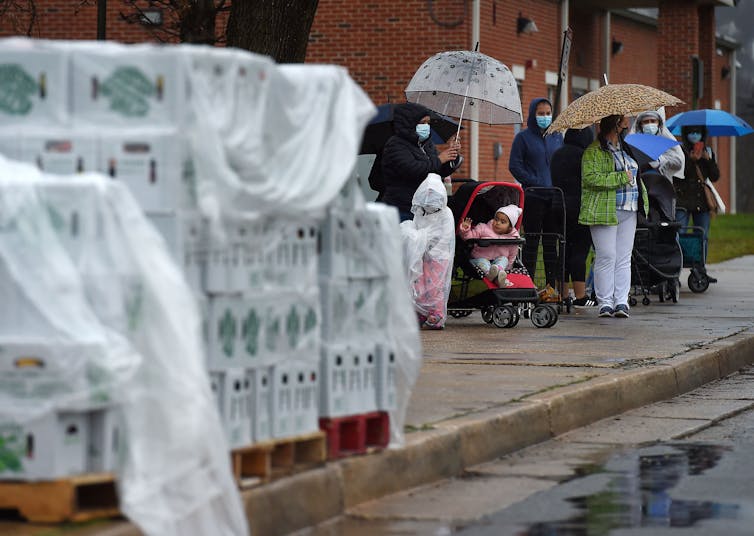

The COVID-19 pandemic has imposed hardship on millions of vulnerable Americans through unemployment and reduced work hours. And this has increased food insecurity across the nation.
There is no official figure yet for how many more families are struggling to provide regular meals around the table – the U.S. Department of Agriculture’s next annual report on food insecurity, defined as a lack of access to sufficient food due to limited financial resources, won’t be out until the fall.
But for me as an academic who has long tracked food insecurity trends, working out the increase in the number of people affected and projecting what will happen next is important. By understanding this, experts can work out whether what is occurring during the pandemic is likely to follow – or breaks with – previous patterns during and after economic recessions.
To project what has happened to food insecurity under the pandemic, colleagues at Feeding America, the nationwide network of food banks, and I used a model underlying the nonprofit’s Map the Meal Gap study. In particular, it looks at how changes in poverty and unemployment at a local level influenced food insecurity.
Our latest projection shows that the overall food insecurity rates rose sharply, from 10.9% in 2019 to 13.9% in 2020. In terms of people, that means a rise from 35.2 million food insecure Americans in 2019 to 45 million in 2020.
An addition 4.3 million children became food insecure over the same period, rising to 15 million in total. That represents an increase in the food insecurity rate for children from 14.6% to 19.9%, or a change from 1 in 7 kids to 1 in 5.
Based on our projections, we believe that U.S. food insecurity will decline slightly in 2021 to 12.9% for the entire population, and 17.9% for children. The reasons for this expected decrease include the impact of relief checks for many Americans – which has restrained the growth of poverty – and the continued decline in the unemployment rate after initial sharp increases in March and April 2020.
Meanwhile, the Supplemental Nutrition Assistance Program , known widely as SNAP, continues to provide a lifeline for many Americans. Alongside these government programs, food banks across the country have rapidly increased their distribution of food to vulnerable households.
Finally, the agricultural supply chain in the U.S. has shown itself to be robust in the face of the pandemic.
To put the pandemic’s effect on food insecurity into perspective, the increases we are projecting for 2020 are less than what was seen at the outset of the Great Recession sparked by 2007’s financial crisis. Food insecurity rose from 12.2% (36.2 million people) before the Great Recession to 16.4% (49.1 million) at its peak.
Moreover, whereas it took several years after the Great Recession for food insecurity rates to drop significantly, we are projecting a decline in 2021.
[Get the best of The Conversation, every weekend. Sign up for our weekly newsletter.]
Racial hunger gap
Even with this predicted decline in food insecurity in 2021, there are some troubling trends when we break things down by race, in particular for Black communities. When the COVID-19 pandemic began, the food insecurity rate for Black people was 19.3% – more than twice as high as it was for white Americans (9.6%). This projected gap narrowed somewhat in 2020. But in 2021, Black food insecurity rates are projected to fall by only 0.3 percentage points compared to a drop of 1.2 percentage points for white people.
This highlights a troubling trend. Namely, that food insecurity was a huge issue for the U.S. before COVID-19; it was a huge issue during the pandemic; and it will continue to be so after. And, in particular, those who are most at risk of food insecurity will continue to be especially vulnerable.
Monica Hake, Adam Dewey and Emily Engelhard from Feeding America contributed to this article.
Craig Gundersen, Professor of Agricultural and Consumer Economics, University of Illinois at Urbana-Champaign
This article is republished from The Conversation under a Creative Commons license. Read the original article.
Dogs available for adoption this week include mixes of boxer, cattle dog, Chihuahua, terrier and pit bull.
Dogs that are adopted from Lake County Animal Care and Control are either neutered or spayed, microchipped and, if old enough, given a rabies shot and county license before being released to their new owner. License fees do not apply to residents of the cities of Lakeport or Clearlake.
The following dogs at the Lake County Animal Care and Control shelter have been cleared for adoption (additional dogs on the animal control Web site not listed are still “on hold”).
Call Lake County Animal Care and Control at 707-263-0278 or visit the shelter online at http://www.co.lake.ca.us/Government/Directory/Animal_Care_And_Control.htm for information on visiting or adopting.

Boxer-pit bull terrier mix
This female boxer-pit bull mix has a short red coat.
She is in kennel No. 18, ID No. 14356.

‘Mandy’
“Mandy” is a heeler mix with a short tan and white coat.
She has been spayed.
She is in kennel No. 19, ID No. 14424.

Cattle dog-terrier mix
This male cattle dog-terrier mix has a short brown coat.
He is in kennel No. 20, ID No. 14415.

Female Chihuahua
This young female Chihuahua has a short brown coat.
She is in kennel No. 23, ID No. 14421.

Male Chihuahua
This male Chihuahua has a short black and tan coat.
He is in kennel No. 25, ID No. 14419.
Email Elizabeth Larson at

Like millions of people around the world, David Shuster and his 7-year-old daughter cheered wildly as the Perseverance rover was lowered by sky crane to the Martian surface on Feb. 18 to start years of exploration.
But for him and a subset of the Mars 2020 science team, true gratification will be delayed.
Shuster is one of 15 members of the team focused on sample return, which means that they — or their graduate student successors — won't get their hands on actual Mars rocks for another 10 years, at the earliest. NASA and the European Space Agency will launch two additional missions to collect the rocks that Perseverance sets aside and rocket them back to Earth, ideally by 2031.
Nevertheless, Shuster, a professor of earth and planetary science at the University of California, Berkeley, and a specialist in dating old rocks, isn't bummed. He himself has studied moon rocks brought back by Apollo-era astronauts more than 50 years ago and feels a special affinity with the scientists who protected those precious samples for the benefit of those who came after. He, too, will be helping a new generation of scientists.
"One of the things that motivates me about this mission is the fact that I have benefited from those Apollo samples that were collected before I was born. I know firsthand what it is like to benefit from the really hard work, not just during the actual missions and by the astronauts themselves, but by scientists who curated and documented all of these samples," said Shuster. "I at once appreciate the value of that, but also the importance of doing that carefully for the Mars sample return mission. With all of the science that will be done on these samples, it matters what samples we collect. Not just any old rock works for the things that we do here in the lab."
For him, the key questions are: How old is Jezero Crater, where Perseverance landed, and when did liquid water exist on the surface and deposit the sediments and sculpt the alluvial features clearly visible in the crater? Estimates of the crater's age, which are based on the number of smaller impact craters inside the larger Jezero Crater, range anywhere from 1.7 billion years to more than 3 billion years, he said.
"One of the attractive things about this landing site is that it seems quite clear that at one point in the past — it's unknown as to when — Jezero Crater was a lake, and it was depositing sediment, such as this beautifully preserved fan," he said.
While instruments on board Perseverance can test rocks and sediment for chemical composition and mineralogy, they can't determine age. The radioactive isotope measurements needed to precisely pinpoint age can only be done in labs on Earth.
"Trying to get answers to those questions quantitatively, based on geochemical measurements, is not trivial — this is difficult to do even on Earth," said Shuster, who primarily uses the world-class, state-of-the-art equipment at the independent Berkeley Geochronology Center.
Complicating the analysis, the return samples — a mere 28, if all goes well — will be small, each the size of a stick of blackboard chalk. Scientists plan to analyze them with every chemical and mineralogical technique available, while saving as much of the samples for the future as possible, in hopes of improved analysis techniques. Luckily, though geochronological analysis destroys rock to determine its age, the process requires only tiny pieces.
"The big-picture question is, if we find any evidence for past life on Mars — which is a big motivation behind this mission — the very next question is going to be, 'When was that?'," Shuster said. "We need to know 'when' in an absolute sense, because the next question we are going to ask is, 'What was happening on Earth at that time, and how do these two compare?'"
'A selfless mission'
While Shuster plans to be around to conduct some of that analysis, his graduate student, Andrew "Drew" Gorin, is primed to reap the benefits, too.
"A lot of the people in charge of the mission are going to be retired by the time the samples come back — I feel awed that such a massive team of scientists would embark on such a selfless mission," said Gorin, who came to UC Berkeley last year and hasn't set foot in a campus lab since arriving. "People are dedicating the last 10 years of their career to this and may not get to develop the results themselves. So, it is exciting to be involved in the process as a graduate student."
Shuster, a 1996 UC Berkeley alumnus in geology, has conducted extensive work not only on lunar rocks, but also rocks from Mars: stones that were thrown from the Martian surface by a meteor impact and eventually wended their way through the solar system into Earth's orbit and entered the atmosphere as shooting stars. More than 100 such meteorites from Mars have been identified, but their violent history, combined with likely alterations when leaving Mars and falling to Earth, make them poor representatives of what rocks are like on Mars.
"There are some important limitations to studying meteorites from Mars: There is no geologic context, because you don't know where it is from; you don't know what the orientation of the rock was when it was on the planet, which you need for paleomagnetic studies; and not all materials are strong enough to survive the process of getting ejected and remaining a rocky material," he said. "These are all reasons why collecting samples on the planet itself is hugely advantageous. It simplifies all that stuff, it makes a lot of these problems just go away."
The sample return mission is designed to bring the first materials back from another planet, not just pieces of the moon or an asteroid or space dust. As the Perseverance rover navigates around Jezero Crater investigating interesting outcrops, Shuster and other members of the sample return science team will meet weekly, if not daily, to decide which rocks are worth sampling for return to Earth. Perseverance will then drill a core, store it hermetically in capsules and carry them around until it has accumulated enough to cache on the surface. At least two caches are planned: one inside the crater and one outside, as the rover moves from the younger crater interior to the presumably older rock in which Jezero is embedded.
"Our role is to provide expertise and advise on how best to collect and what samples to collect," he said, noting that the team has tentative plans that will evolve as the rover surveils the landscape. "The decisions are going to be based on all of the information that we have, and that information is evolving through time."
Counting meteor craters
Before drilling cores, the sample return team must decide which rocks will provide the answers they need. Volcanic, or igneous, rocks provide the best radiometric dates, Gorin said. He hopes Perseverance will pick up rocks that will help calibrate the standard technique — crater counting — now used to estimate the ages of the surfaces of planets and moons. This technique is based on correlations between crater counts and radiometric dating of rocks on the moon, with the assumption that the meteor population in the asteroid belt is similar around the moon and Mars, with some accommodation for the different gravity and atmosphere on Mars.
"The idea is, imagine you have some flat surface that gets bombarded with impactors through time at some knowable rate," he said. "Based on that, if you count the size distribution of craters, you can back out how long it has been since that surface was once completely flat. We have some anchor points we have gathered from the moon: basalt or lava flows, which we can imagine flattened the surface completely at some time. Lava flows are really excellent for radiometric dating."
Gorin has been tasked with assessing which rocks are likely to provide a date precise enough to calibrate meteor counts on Mars.
"We want to find a sample of an easily dated material within Jezero Crater where we can then apply this crater counting technique and also radiometrically date something in there, compare those and use that to shift the anchor point, which will allow us to better understand how the system works on Mars," he said.
Shuster noted that his sample return team must ride herd on other members of the science team to make sure that Perseverance has the time to gather key samples and cache them for pickup in the face of the curiosity-led desire to explore every interesting nook and cranny in Jezero Crater.
"This mission is very different from previous Mars rover missions because we have a specified date, at the end of which we have to have these samples that we are going to collect located at a fixed location," he said. "So, we have a pace on this mission that is undeniable."
Gorin will have gotten his Ph.D. by the time the Mars rocks return to Earth, but he hopes that his work on the mission — which he said is amazingly collaborative among younger and older scientists — will help him get access afterward. And it was all serendipitous. His master's thesis at Boston College involved using geochemistry to explore climate change over Earth's entire history, which he why he asked to work with Shuster when applying to UC Berkeley. He was surprised when Shuster asked whether his role with the Mars sample return mission, which would take up a lot of his time, would be a deal breaker for Gorin.
"When he asked me if I was interested in doing that sort of work, I was like, ‘Who would say no to that?’" Gorin said. "That sounds awesome. Doing work on the Mars mission reaches back to that childlike excitement for science that all of us have."
"I feel really lucky to have been given the opportunity to contribute to such an important mission," he added. It's also easier to explain his work to non-scientists. "I have been working on climate change research for a while, which I think is equally important,” he said, “but it is quite a bit easier getting people interested in this work."
Robert Sanders writes for the UC Berkeley News Center.