 How to resolve AdBlock issue?
News
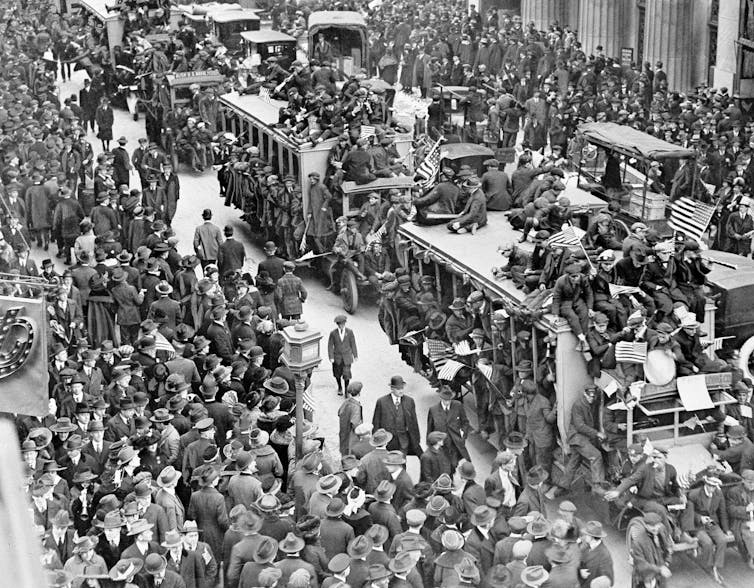
Picture the United States struggling to deal with a deadly pandemic.
State and local officials enact a slate of social-distancing measures, gathering bans, closure orders and mask mandates in an effort to stem the tide of cases and deaths.
The public responds with widespread compliance mixed with more than a hint of grumbling, pushback and even outright defiance. As the days turn into weeks turn into months, the strictures become harder to tolerate.
Theater and dance hall owners complain about their financial losses.
Clergy bemoan church closures while offices, factories and in some cases even saloons are allowed to remain open.
Officials argue whether children are safer in classrooms or at home.
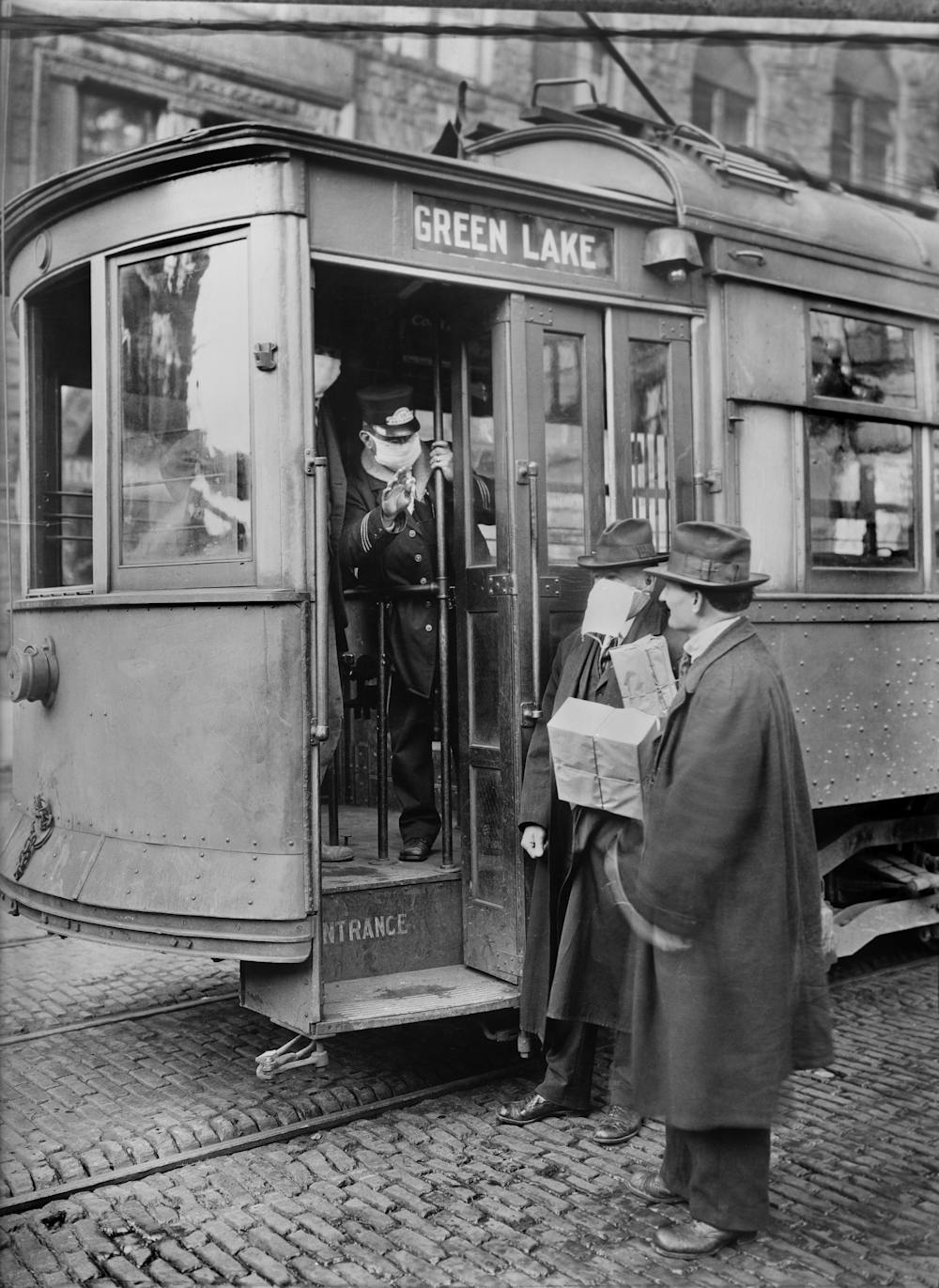
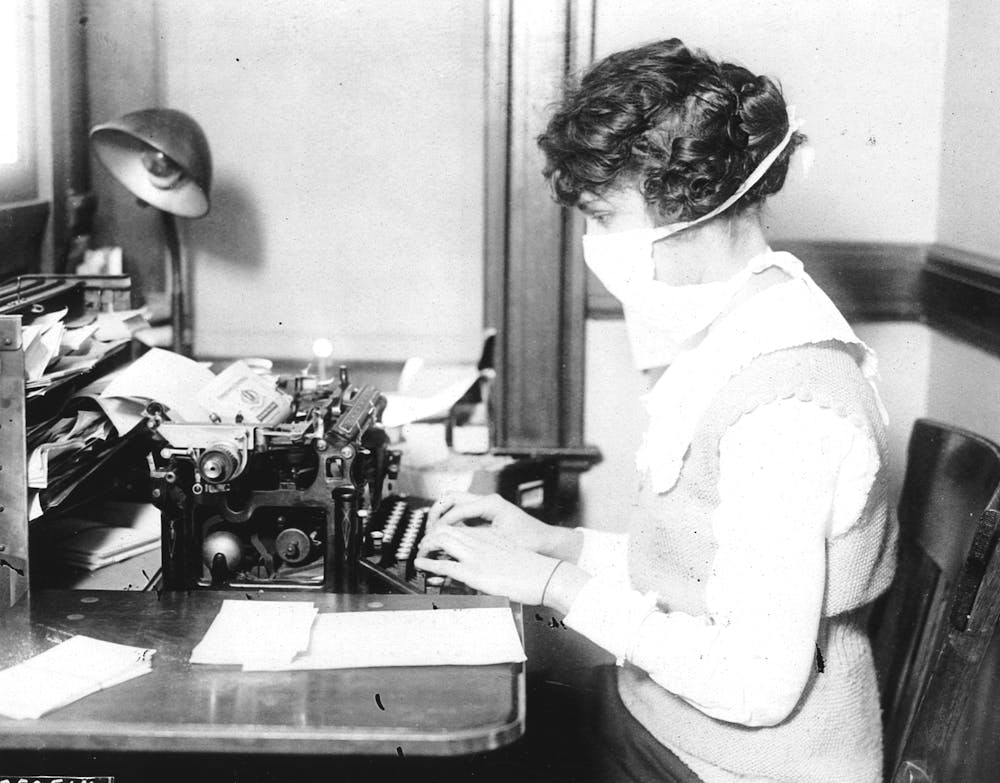
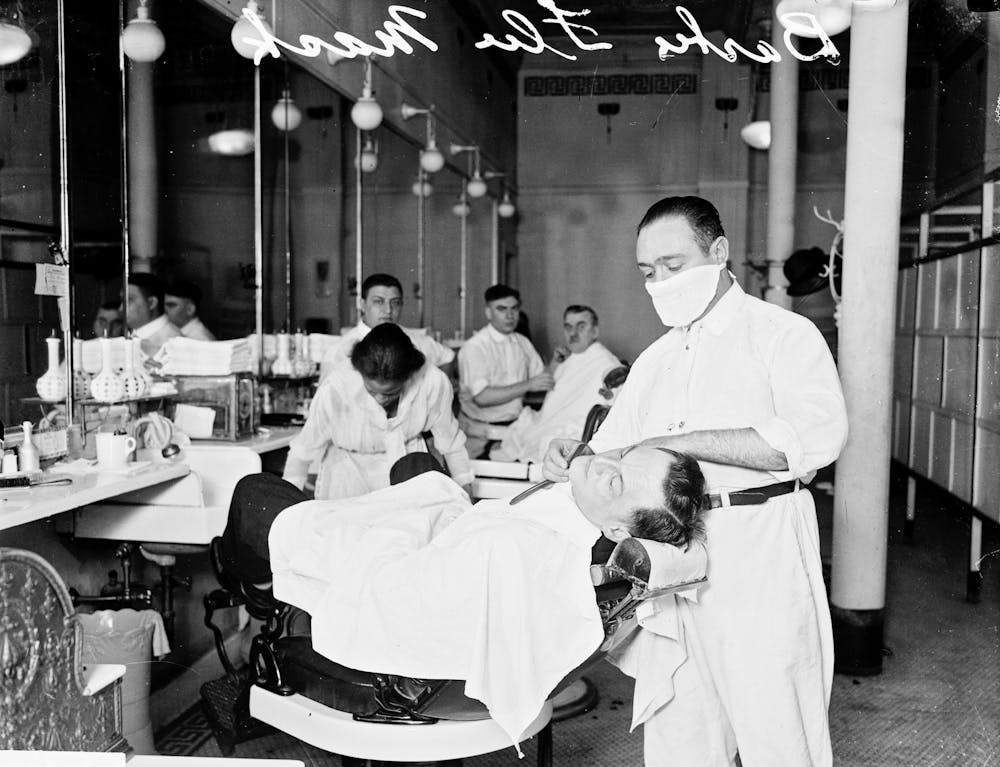
Many citizens refuse to don face masks while in public, some complaining that they’re uncomfortable and others arguing that the government has no right to infringe on their civil liberties.
As familiar as it all may sound in 2021, these are real descriptions of the U.S. during the deadly 1918 influenza pandemic. In my research as a historian of medicine, I’ve seen again and again the many ways our current pandemic has mirrored the one experienced by our forebears a century ago.
As the COVID-19 pandemic enters its second year, many people want to know when life will go back to how it was before the coronavirus. History, of course, isn’t an exact template for what the future holds. But the way Americans emerged from the earlier pandemic could suggest what post-pandemic life will be like this time around.
Sick and tired, ready for pandemic’s end
Like COVID-19, the 1918 influenza pandemic hit hard and fast, going from a handful of reported cases in a few cities to a nationwide outbreak within a few weeks. Many communities issued several rounds of various closure orders – corresponding to the ebbs and flows of their epidemics – in an attempt to keep the disease in check.
These social-distancing orders worked to reduce cases and deaths. Just as today, however, they often proved difficult to maintain. By the late autumn, just weeks after the social-distancing orders went into effect, the pandemic seemed to be coming to an end as the number of new infections declined.
People clamored to return to their normal lives. Businesses pressed officials to be allowed to reopen. Believing the pandemic was over, state and local authorities began rescinding public health edicts. The nation turned its efforts to addressing the devastation influenza had wrought.
For the friends, families and co-workers of the hundreds of thousands of Americans who had died, post-pandemic life was filled with sadness and grief. Many of those still recovering from their bouts with the malady required support and care as they recuperated.
At a time when there was no federal or state safety net, charitable organizations sprang into action to provide resources for families who had lost their breadwinners, or to take in the countless children left orphaned by the disease.
For the vast majority of Americans, though, life after the pandemic seemed to be a headlong rush to normalcy. Starved for weeks of their nights on the town, sporting events, religious services, classroom interactions and family gatherings, many were eager to return to their old lives.
Taking their cues from officials who had – somewhat prematurely – declared an end to the pandemic, Americans overwhelmingly hurried to return to their pre-pandemic routines. They packed into movie theaters and dance halls, crowded in stores and shops, and gathered with friends and family.
Officials had warned the nation that cases and deaths likely would continue for months to come. The burden of public health, however, now rested not on policy but rather on individual responsibility.
Predictably, the pandemic wore on, stretching into a third deadly wave that lasted through the spring of 1919, with a fourth wave hitting in the winter of 1920. Some officials blamed the resurgence on careless Americans. Others downplayed the new cases or turned their attention to more routine public health matters, including other diseases, restaurant inspections and sanitation.
Despite the persistence of the pandemic, influenza quickly became old news. Once a regular feature of front pages, reportage rapidly dwindled to small, sporadic clippings buried in the backs of the nation’s newspapers. The nation carried on, inured to the toll the pandemic had taken and the deaths yet to come. People were largely unwilling to return to socially and economically disruptive public health measures.
It’s hard to hang in there
Our predecessors might be forgiven for not staying the course longer. First, the nation was eager to celebrate the recent end of World War I, an event that perhaps loomed larger in the lives of Americans than even the pandemic.
Second, death from disease was a much larger part of life in the early 20th century, and scourges such as diphtheria, measles, tuberculosis, typhoid, whooping cough, scarlet fever and pneumonia each routinely killed tens of thousands of Americans every year. Moreover, neither the cause nor the epidemiology of influenza was well understood, and many experts remained unconvinced that social distancing measures had any measurable impact.
Finally, there were no effective flu vaccines to rescue the world from the ravages of the disease. In fact, the influenza virus would not be discovered for another 15 years, and a safe and effective vaccine was not available for the general population until 1945. Given the limited information they had and the tools at their disposal, Americans perhaps endured the public health restrictions for as long as they reasonably could.
A century later, and a year into the COVID-19 pandemic, it is understandable that people now are all too eager to return to their old lives. The end of this pandemic inevitably will come, as it has with every previous one humankind has experienced.
If we have anything to learn from the history of the 1918 influenza pandemic, as well as our experience thus far with COVID-19, however, it is that a premature return to pre-pandemic life risks more cases and more deaths.
And today’s Americans have significant advantages over those of a century ago. We have a much better understanding of virology and epidemiology. We know that social distancing and masking work to help save lives. Most critically, we have multiple safe and effective vaccines that are being deployed, with the pace of vaccinations increasingly weekly.
Sticking with all these coronavirus-fighting factors or easing off on them could mean the difference between a new disease surge and a quicker end to the pandemic. COVID-19 is much more transmissible than influenza, and several troubling SARS-CoV-2 variants are already spreading around the globe. The deadly third wave of influenza in 1919 shows what can happen when people prematurely relax their guard.
[Deep knowledge, daily. Sign up for The Conversation’s newsletter.]
J. Alexander Navarro, Assistant Director of the Center for the History of Medicine, University of Michigan
This article is republished from The Conversation under a Creative Commons license. Read the original article.
Dogs available for adoption this week include mixes of boxer, cattle dog, Chihuahua, German Shepherd, heeler, Husky, McNab, terrier and pit bull.
Dogs that are adopted from Lake County Animal Care and Control are either neutered or spayed, microchipped and, if old enough, given a rabies shot and county license before being released to their new owner. License fees do not apply to residents of the cities of Lakeport or Clearlake.
The following dogs at the Lake County Animal Care and Control shelter have been cleared for adoption (additional dogs on the animal control Web site not listed are still “on hold”).
Call Lake County Animal Care and Control at 707-263-0278 or visit the shelter online at http://www.co.lake.ca.us/Government/Directory/Animal_Care_And_Control.htm for information on visiting or adopting.
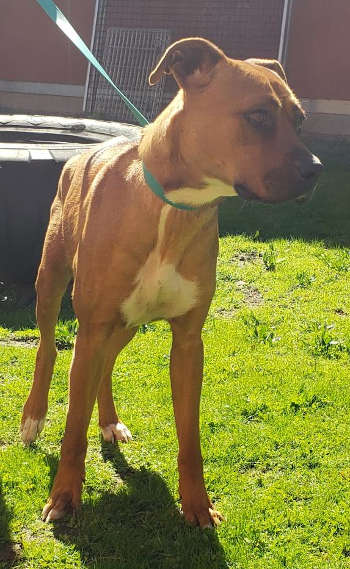
‘Sophie’
“Sophie” is a female boxer-pit bull mix with a short red coat.
She is in kennel No. 18, ID No. 14356.
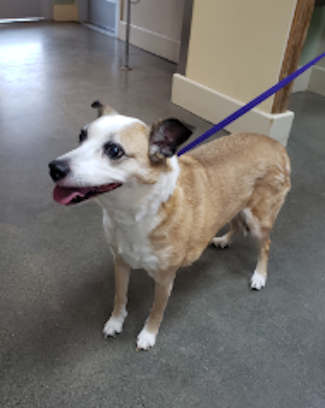
‘Mandy’
“Mandy” is a heeler mix with a short tan and white coat.
She has been spayed.
She is in kennel No. 19, ID No. 14424.
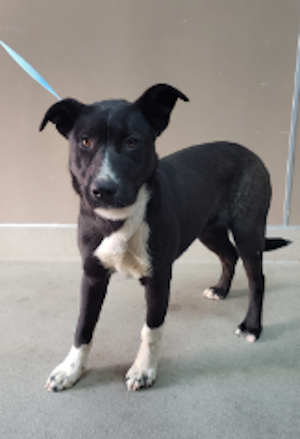
Cattle dog-terrier mix
This male cattle dog-terrier mix has a short brown coat.
He is in kennel No. 20, ID No. 14415.
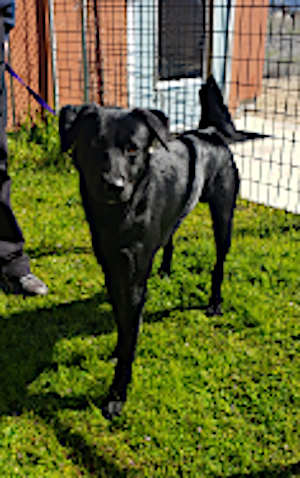
Male McNab mix
This male McNab mix has a medium-length black coat and gold eyes.
He is in kennel No. 21, ID No. 14425.
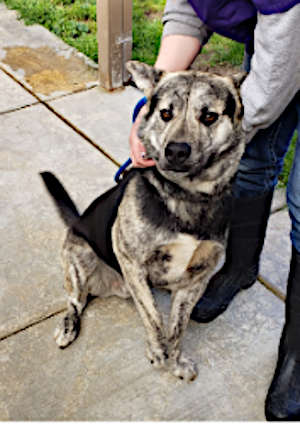
‘Husk’
“Husk” is a male shepherd mix with a short black and brindle coat.
He is in kennel No. 26, ID No. 14429.
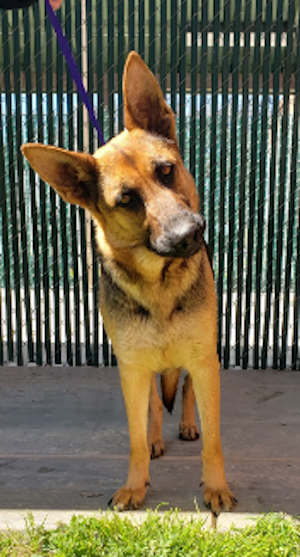
Female German Shepherd
This female German Shepherd has a medium-length black and red coat and brown eyes.
She is in kennel No. 27, ID No. 14434.
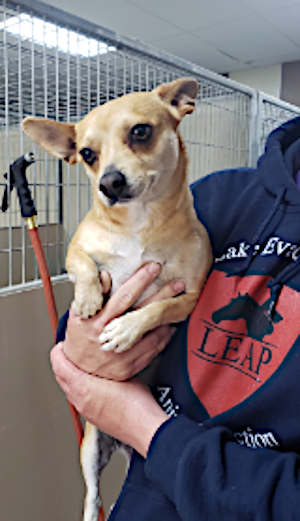
Female Chihuahua
This female Chihuahua has a short tan coat.
She is in kennel No. 31, ID No. 14431.
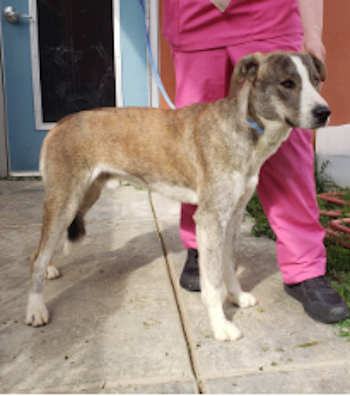
Husky-pit bull terrier mix
This young male husky-pit bull terrier mix has a short blue and white coat and brown eyes.
He is in kennel No. 33, ID No. 14437.
Email Elizabeth Larson at
If you’re on the ground during a thunderstorm, you might witness a spectacular show of lightning.
But if you’re observing that same thunderstorm from the vantage point of the International Space Station, you might see a bolt of energy shooting up from the clouds. And it might be red. Or blue. Or even green.
These particle outbursts are like nothing seen from the ground, and may prove useful to predict weather outcomes more precisely, better understand changes to our climate and increase the safety of planes and ships approaching dangerous storms.
They have names that sound like they were taken from a fantasy novel: Blue Jet. Gigantic Jet. Red Sprite. Halos and Elves. But all belong to a more scientific-sounding family, transient luminous events or TLE’s; flashes and glows that appear above storms that are results of activity occurring in and below those storms.
Dr. Timothy Lang is a lead research aerospace technologist at NASA’s Marshall Space Flight Center. He explainED how two key observational instruments aboard the orbiting laboratory are helping scientists better understand these colorful bursts of energy:
“We use the Lightning Imaging Sensor, or LIS, to map lightning in two dimensions with global-scale coverage. It shows us where the thunderstorms are taking place, and how powerful each one is based on the size of its lightning flashes. So it’s akin to a macro camera. Another instrument, the Atmosphere-Space Interactions Monitor, or ASIM, is operated by the European Space Agency. ASIM gives us very fine detail of a TLE’s flash. In essence, it’s akin to a micro camera,” Lang said.
Torsten Neubert, ASIM Principal Investigator at Denmark’s National Space Institute addED that “ASIM and LIS make observations in different ranges of the color spectrum, allowing for different views of these particle events.”
So, LIS is macro; ASIM is micro, and together they provide a powerful combination for exploring lightning and TLEs.
The space station offers an excellent vantage point to scientists studying TLEs. At about 250 miles up, it is much closer to these phenomena than a geosynchronous satellite. Further, the stations’ orbit allows for coverage of storms world-wide.
All this allows LIS and ASIM to produce a unique space-based dataset of thunderstorms and their effects, which in turn helps support other observational instruments. LIS for example, has been used to calibrate instruments and verify data for the Geostationary Lightning Mapper on NASA and NOAA’s GOES satellites, and will also support the lightning imager on the European satellite, Meteosat Third Generation. This support helps make data produced by these sensors the highest quality for serving the public.
From the space station, LIS can provide lightning data in near-realtime for the benefit of those on Earth. It can report lightning nearing dry areas of forests prone to wildfires. It’s integrated into the NOAA Aviation Weather Center's operations, which provides weather forecasts and warnings to the US and international aviation and maritime communities. And, over time, it can map data points to help scientists observe changes to our climate over broad tracts of land and sea.
In short, studying lightning and its effects both below and above the clouds can have a big impact on how we view our planet. Doing so from the International Space Station is improving that view in ways that couldn’t be accomplished anywhere else.
For more electrifying information about the International Space Station, go to www.nasa.gov/iss-science.
To discover more about the space on, around, and beyond our planet visit http://science.nasa.gov.
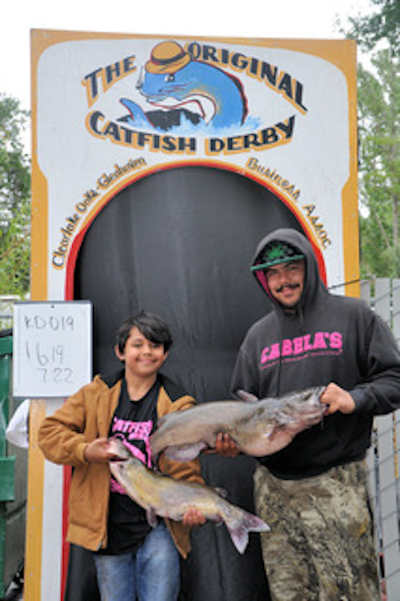
LAKE COUNTY, Calif. – After a one-year hiatus, the popular Catfish Derby is returning to Clearlake Oaks on May 14, 15 and 16.
Past participants are being notified of the decision and the precautions that will be in effect.
Widely known as the biggest Catfish Derby west of the Mississippi, the event traditionally draws fishing enthusiasts from throughout the United States who come for a chance to hook a big fish, win a cash prize and enjoy the camaraderie that makes the tournament the type of event groups and families enjoy, year after year.
This year will mark the 37th Derby.
“In recent years, participation has grown to about 1,000 fishing enthusiasts and their families,” said Dennis Locke, chairman of the Catfish Derby Committee.
The much-anticipated event was cancelled last year due to COVID-19 restrictions that precluded events drawing large crowds of the size the Derby normally attracts.
“We aren’t expecting as large a crowd this year,” Locke said. “But we have been fielding calls from our most avid participants and so far, the mail in application rate is encouraging. Also, for the first time this year we’re accepting online applications so overall, we’re seeing good results early in the process.”
Camille Gouldberg, president of the Clearlake Oaks-Glenhaven Business Association which sponsors the Derby, said that many aspects of the event will be different this year.
“The one thing that won’t change is the fishing,” she said. “Hopefully the individuals, groups and family bubbles that normally enter the contest will return to enjoy the best catfishing around.”
“We decided to move forward this year after considerable discussion and careful consideration of the operational changes needed to minimize potential spread of the COVID virus,” Locke said. “We are following the most current local and state guidance. If restrictions ease up by May, we’ll evaluate the feasibility of revising some procedures.”
Locke also said that the Catfish Derby supports the local economy in numerous ways, boosting sales at bait and tackle shops, stores, coffee houses, restaurants, hotels, resorts, casinos, and more. “It draws more people from outside the county than any single event I can think of and the proceeds go right back into the community” he said. “It’s an important fundraiser for our little town.”
Gouldberg said the business association had to limit the amount of donations given in 2020. “The event proceeds from this year will hopefully allow us to resume more robust funding of the activities we traditionally support including schools, the local senior center and events that benefit our children, seniors and the community at large,” she said.
A number of significant changes have been made including two location changes. The on-site registration is moving from the fire station to the Clearlake Oaks Plaza on 12483 Foothill Blvd. and the fish weigh-ins will move to the Clearlake Oaks public boat launch ramp on 12684 Island Drive, west of the fire station off highway 20.
“We won’t be providing food or beverages this year and we’re foregoing the raffles, t-shirt sales and photo booth. Also, no entertainment or spectators this year and no awards ceremony at the conclusion of the Derby. Instead, tournament results will be posted on our website and social media. Prize awards will be sent to winning contestants by mail,” Locke said.
“It’s a scaled down version of what we’ve done,” Locke said, “but the prize levels are the same.”
A total of $10,000 in cash prizes will be awarded. In the adult division, 20 prizes ranging from $5,000 to $40 will be awarded. In the two kid’s divisions, 5 prizes are awarded in the 11 to 15 category and 5 in the “up to 10-year-old” category. Prizes in these divisions range from $100 to $10.
For updated information on the 2021 Derby call 707-596-0248, send an email to
“Our committee is made up of volunteers, mostly over the age of 65,” said Gail Jonas, former Catfish Derby Committee chair. “We missed the derby last year and hopefully, soon, we can return to more traditional times. But for now, we need to be cautious.”
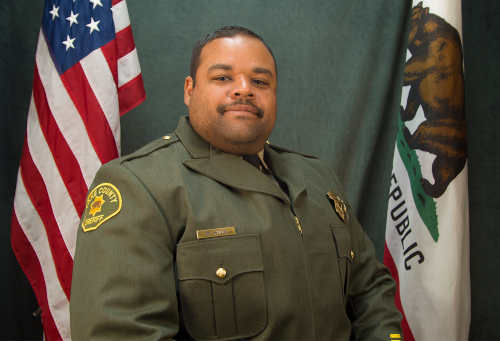
LAKE COUNTY, Calif. – A veteran Lake County Sheriff’s deputy has made an important move up in the agency’s ranks.
The sheriff’s office said this week that Deputy Walter White has been promoted to the rank of sergeant.
Lt. Corey Paulich said White is believed to be the first Black deputy to reach the rank of sergeant or above on the patrol side. “We have had at least one on our correctional side.”
The sheriff’s office has 11 sergeants, Paulich said.
Sgt. White is a lifelong Lake County resident and graduate of Lower Lake High School.
He began his law enforcement career with the sheriff’s office as a Correctional Officer in 2006. He was promoted to deputy trainee and graduated from the Santa Rosa Police Academy in 2009.
White completed his field training program and began working as a solo deputy serving the citizens of Lake County in 2010.
During his career he has served as an explorer advisor, peer support member, field training officer, off-highway vehicle enforcement team and crisis response perimeter team.
During White’s promotion ceremony, Sheriff Brian Martin noted, “Sgt. White is a leader in the sheriff’s office and our community.”
Thompson convenes AAPI roundtable to hear from community about recent Anti-Asian sentiment, violence
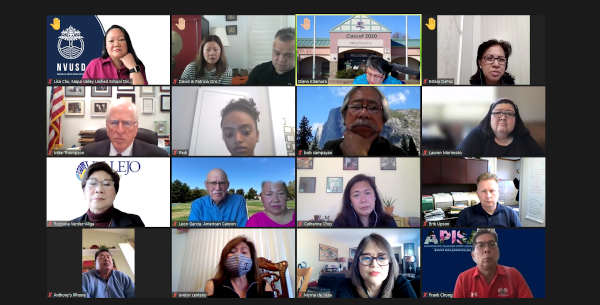
NORTHERN CALIFORNIA – On Friday, Rep. Mike Thompson (CA-05) convened a roundtable with Asian American and Pacific Islander leaders from across the Fifth Congressional District to discuss the rise in anti-Asian rhetoric and violence both in the region and across our nation.
He pledged to take their solutions and suggestions to Congress and continue the conversation in order to keep the local AAPI community safe from such hateful racism.
“Asian Americans and Pacific Islanders in our community and our nation have been subjected to terrible bigotry and violence in recent months,” Thompson said. “It’s unacceptable and we must take steps to end this hate and bigotry. Today I was honored to hear from AAPI community leaders and deeply thankful to those who shared their stories. Our community must do better than this. Know I am committed to taking the solutions and stories we heard today back to Congress, so we can work to end this and keep our community safe.”
Thompson is a coauthor of several bills to address the rise in anti-Asian hate and violence, including The COVID-19 Hate Crimes Act, which directs the Attorney General to conduct a Department of Justice review of hate crimes motivated by COVID-19 and issue guidance for law enforcement to address this issue.
He also cosponsored the Hate Crimes Commission Act, which would establish a bipartisan commission to study the rise in hate crimes.
Thompson also coauthored a resolution condemning anti-Asian sentiment and calling on law enforcement to investigate these hate crimes.
Thompson represents California’s Fifth Congressional District, which includes all or part of Contra Costa, Lake, Napa, Solano and Sonoma counties.