How to resolve AdBlock issue?
Refresh this page
How to resolve AdBlock issue?
Refresh this page
Lake County News,California
  • Home
    • Registration Form
  • News
    • Education
    • Veterans
    • Community
      • Obituaries
      • Letters
      • Commentary
    • Police Logs
    • Business
    • Recreation
    • Health
    • Religion
    • Legals
    • Arts & Life
    • Regional
  • Calendar
  • Contact us
    • FAQs
    • Phones, E-Mail
    • Subscribe
  • Advertise Here
  • Login

News

Clearlake Oaks man arrested for kidnap, rape

LAKE COUNTY, Calif. — Authorities have arrested a local man on a host of felony charges after he abducted and raped a female victim earlier this week.

Clifford Merle Cutrell, 54, also known as “Cliff Hanger,” reported to be a transient last known to be living in Clearlake Oaks, was taken into custody by the Clearlake Police Department at 10 p.m. Tuesday night, according to Lake County Jail records.

Chief Deputy District Attorney Rich Watson told Lake County News that Cutrell is facing charges for two separate cases, the one committed on Tuesday, Aug. 12, involving kidnap and rape, as well as a felony assault case that took place on April 10. Both cases were filed Thursday.

Watson said Cutrell was arraigned that same day for both cases, with the Public Defender’s Office appointed to represent him. 

Cutrell will return to court on Tuesday in both cases, at which point his defense attorney is expected to make an initial appearance and Cutrell will enter pleas, according to Watson.

Cutrell’s bail is set at $1 million for the rape case and $125,000 for the assault case, Watson said.

Court records show that Cutrell has a criminal background that includes numerous convictions and arrests extending back nearly 20 years in Lake County and even further in Sonoma and Tuolumne counties. 

Cutrell is a registered sex offender who has previously served prison time, with a risk assessment score by the state of 21, placing him in the “high” category for risk of reoffending.

Two violent cases

The court filings from this week show that Cutrell is charged with two felonies for a case that occurred on April 10 and 11, during which time he is accused of committing assault with force likely to produce great bodily injury and false imprisonment on a victim identified as “J.T.”

In that case, he’s also facing an allegation of having a prior serious or violent felony conviction for an assault with intent to commit sex crimes in Sonoma County on Aug. 25, 1999.

Then, on Tuesday, authorities said Cutrell kidnapped a victim with the intent to rape her.

So far, authorities have not given specific details about the case, the severity of which is outlined in the numerous charges.

Altogether, for this week’s case he’s charged with nine felonies: kidnapping with the intent to commit rape; assault with intent to commit rape; sodomy for force, violence or fear; oral copulation by force; rape; sexual penetration by force; sexual battery while the victim is unlawfully restrained; burglary of an inhabited dwelling house and trailer coach with intent to commit a felony; and criminal threats.

Convictions on the sodomy, oral copulation, rape, sexual penetration by force and sexual battery while restrained would all require additional sex offender registration, according to the filing.

The filing includes a special allegation that Cutrell is ineligible for probation or suspension of sentence.

Both the April and August cases include allegations for six previous felonies. In addition to the 1999 Sonoma County case they include five convictions in Lake County for two separate cases: for a conviction for sexual battery, false imprisonment and failure to register as a sex offender, all committed on Jan. 8, 2010; and disobeying a police officer and possession of an illegal weapon from March 10, 2020.

The August case also refers to a February 1995 felony conviction in Tuolumne County for battery causing serious bodily injury.

The District Attorney’s Office also has charged Cutrell in both cases with a special allegation of circumstances in aggravation, including violence; a particularly vulnerable victim; threats against witnesses; the crime’s commission included planning, sophistication, and professionalism; he took advantage of a position of trust or confidence to commit the offense; he engaged in violent conduct, which indicates a serious danger to society; his prior convictions are numerous or of increasing seriousness; he served a prior prison term; and his prior performance on probation, mandatory supervision, post-release community supervision or parole was unsatisfactory.

Despite Cutrell’s long and violent criminal history, he so far has only been convicted of one “strike” under California’s three strikes law, Watson said.

The filing for this case includes several charges — kidnap; assault with intent to commit rape, sodomy or oral copulation; sodomy; rape; sexual penetration by force; burglary with intent to commit a felony; and criminal threats — that could count as strikes upon conviction, based on the penal code. 

Editor’s note: A previous version of this story incorrectly stated that the law does not allow multiple strikes from the same case. In fact, multiple strikes can result from one case if the defendant is convicted of multiple serious or violent felonies. What is not allowed, based on a 2014 California Supreme Court ruling in People v. Vargas, is that multiple convictions arising from a single criminal act may not be considered as separate strikes under the three strikes law.

Email Elizabeth Larson at This email address is being protected from spambots. You need JavaScript enabled to view it.. Follow her on Twitter, @ERLarson, and on Bluesky, @erlarson.bsky.social. Find Lake County News on the following platforms: Facebook, @LakeCoNews; X, @LakeCoNews; Threads, @lakeconews, and on Bluesky, @lakeconews.bsky.social. 

Clearlake Police seek missing juvenile

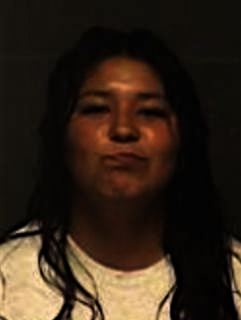
Latoya Pacheco. Courtesy photo.


UPDATE: Clearlake Police reported Saturday that she has been located.

CLEARLAKE, Calif. — The Clearlake Police Department is asking for the community’s help in locating a missing teenager.

Police are seeking Latoya Pacheco, 15.

Latoya left her foster residence in Clearlake around 9:30 p.m. Friday, police said.

She is described as a Native American female with longer black hair, standing 5 feet 6 inches tall and weighing 140 pounds.

Police said she was last seen wearing a black hoodie and black sweatpants, and she left with a black backpack. 

If you have any knowledge of Latoya's whereabouts please contact Clearlake Police Department at 707-994-8251, Extension 1.

State legislators announce plans for special election on redistricting measure

On Friday, Democrats in the California State Legislature announced new legislation to call a special election in November, which they said is meant to empower voters to protect the state’s economy and democracy, and fight back against “reckless attacks by Trump and Republicans.”

The legislation includes a state constitutional amendment to set a special election on Nov. 4. It also makes public, for all voters to see and review, new proposed Congressional maps for California. 

Voters will have the final say on the maps when they cast their ballots.

The proposed maps are now publicly available on the Senate and Assembly Elections Committee websites.

Californians also can provide input on the map via a public portal on the same website, which already has received more than 3,000 public comments since its launch on Wednesday.

“Republican redistricting efforts in Texas and other states are dividing communities, undermining voter freedom — and their maps are drawn in secret without letting the people decide,” the legislators said in their announcement. 

In California, lawmakers in the Assembly and Senate pushed for key provisions in the legislation to ensure fidelity to independent commissions, protections for the Voting Rights Act, and preservation of California cities and communities:

• California will keep the Independent Citizens Redistricting Commission. The Legislature’s plan makes sure the commission maintains its full scope of work and authority after the 2030 Census and beyond, redrawing California’s Congressional, state legislative and Board of Equalization lines every 10 years.

• California only acts if Republicans try to rig the vote. The legislation includes a trigger to ensure that maps will take effect only if other states effectuate partisan gerrymanders. Several Republican-controlled states, most notably Texas, are considering gerrymanders aimed to benefit their party. Unlike California, none are submitting those plans for voter approval.

• Every state in the country should have independent redistricting. The bills include provisions to express California’s policy to support nonpartisan, independent redistricting nationwide and would call on Congress to initiate a federal constitutional amendment to require nonpartisan, independent redistricting nationwide.

• Protecting communities of color and historically marginalized voters. The new map makes no changes to historic Black districts in Oakland and the Los Angeles area, and retains and expands Voting Rights Act districts that empower Latino voters to elect their candidates of choices.

• Keeping cities and communities together. The proposed Congressional map keeps more cities whole within a single district than the most recent map enacted by the commission.

“This is about more than drawing lines on a map, it’s about drawing a line in the sand to stop Texas and Trump from rigging the election,” said Senate President Pro Tem Mike McGuire. “This is about protecting the people of the Golden State, our Democracy, and making sure voters have a say. Access to health care matters. Reproductive rights and Planned Parenthood matters. Making life more affordable matters. So does keeping tariffs from killing California jobs. These are the stakes, this is what we will be voting on this week in the Legislature, and what the people of California will vote on in November.”

“Trump sparked this national crisis when he called Texas to rig the election,” said Assembly Speaker Robert Rivas. “California is fighting back. Democrats are empowering voters to protect working families and our democracy — with the most transparent process in the nation. Voters will see the maps and have the final say. The stakes couldn’t be higher, but I’m confident we’ll defeat this assault on our democracy and end Trump’s attacks on California.”

Overview of the legislation

The Legislature will consider three bills in order to call and facilitate the special election:

• A constitutional amendment which authorizes the replacement of the existing Congressional map.

• A statute which contains the new proposed Congressional map for voter approval.

• A statute to call the special election, appropriate funding for election administration, and make conforming changes to election calendars.

State leaders said Trump and Republicans continue to harm California’s families, workers and businesses in a number of ways:

• Trump’s tariffs are making family essentials and basic household items more expensive.

• Trump’s budget slashes billions of dollars in funding for social services, threatening access to health care and food for millions of Californians.

• Trump’s immigration raids are damaging California’s economy as they terrorize our communities.

• Trump is arbitrarily and capriciously cutting off grant funding for California’s research universities, along with K-12 funds, punishing California students and stalling resources for afterschool programs and teacher training.

• Trump and the federal government are playing politics with California’s requests for relief following the devastating January fires in Los Angeles.

Timeline of anticipated legislative action

• Monday, Aug. 18: Legislation into print in Assembly and Senate.

• Tuesday, Aug. 19: Assembly and Senate Elections Committees hear legislation.

• Wednesday, Aug. 20: Assembly Appropriations Committees hears legislation.

• Thursday, Aug. 21: Anticipated floor votes in both Assembly and Senate.

Estate Planning: The latest regarding Medi-Cal’s asset test

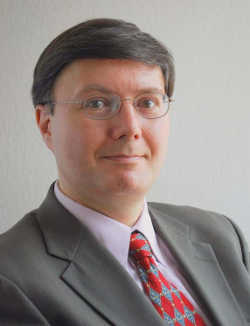
Dennis Fordham. Courtesy photo.
On Jan. 1, 2026, Medi-Cal will restore the asset test, as it existed in 2022, to determine a person’s eligibility to receive, or continue to receive, community based Medi-Cal and skilled nursing residential care Medi-Cal. 
The restored asset test does not apply to the Expansion Medi-Cal created by the Affordable Care Act which has no asset test. 

The asset test applies to both the community based and long term care Medi-Cal programs.

In 2026, the asset test means that individuals with countable, non-exempt assets worth more than $130,000 and couples with more than $195,000 in countable, non-exempt assets do not qualify for community based Medi-Cal. 

Moreover, if there are additional family members living as part of the same household then each of these persons adds $65,000 (just like the spouse) to the exemption amount.

Next, if one spouse is institutionalized in a skilled nursing facility, the institutionalized spouse can have up to $130,000 in countable non exempt assets and the community (stay at home) spouse can also have a further $157,980 in non exempt assets as a “Community Spouse Resource Allowance” (“CSRA”). In certain circumstances, the CSRA may even be expanded due to spousal impoverishment.

Exempt assets are not counted as part of the $130,000/$195,000 reserve. This includes a person’s primary dwelling, retirement accounts, a burial plot, and household possessions. 

During 2025, persons who apply for Medi-Cal do so without any asset test and may become eligible without disclosing assets. 

But, when they file their periodic Medi-Cal renewal application their assets will be required to be disclosed and will then be considered for renewal.

During 2025, persons who transfer assets to reduce the total value of their non-exempt assets in anticipation of 2026, are not expected to be subject to the once all too familiar “look back” period that recommences in 2026. 

Thus, transferring assets in 2025 is unlikely to result in any future “transfer penalties” which otherwise would delay a Medi-Cal applicant’s eligibility in 2026 onwards.

Commencing 2026, transfers of non exempt assets above the asset exemption value will again result in a transfer penalty measured in terms of months of skilled nursing long term care Medi-Cal ineligibility. 

The ineligibility period is determined by dividing the amount transferred that is in excess of the Medi-Cal person’s $130,000 asset exemption amount by the “Average Private Pay Rate,” or APPR, in effect at the time of the transfer, presently $13,365 in 2025. 

For example, if the total value of a person’s countable nonexempt assets is $150,000 and that person transfers $20,000 to a relative in order to qualify for Medi-Cal, then the ineligibility transfer period would be $20,000 divided by the 2026 APR. It is reduced down to the nearest whole number.

The typical Medi-Cal eligibility strategy is, first, to convert non exempt assets (e.g., cash and investments) into exempt assets by purchasing, improving, or paying-down such assets. 

Second, if a person’s countable, non exempt assets still exceed the applicable threshold then the next approach is to transfer such assets in a manner that does not result in an ineligibility period. 

A Medi-Cal eligible person is still subject to Medi-Cal’s special “Income” rules and its “Share of Cost” rules. That is, a person on Medi-Cal may still have a “Share of Cost” to pay for any type of Medi-Cal. Income includes all forms of income, including Social Security and other retirement incomes.

Lastly, when a Medi-Cal participant dies there is still the possibility of Medi-Cal asserting a Medi-Cal estate recovery claim. 

However, since Jan. 1, 2017, Medi-Cal estate recovery is limited to estates that are in probate, and even then only if the deceased Medi-Cal recipient was not survived by a spouse. Nowadays, Medi-Cal estate recovery claims are infrequent.

The foregoing is not legal advice. Consult a qualified elder law attorney for guidance. 

Dennis A. Fordham, Attorney, is a State Bar-Certified Specialist in estate planning, probate and trust law. His office is at 870 S. Main St., Lakeport, Calif. He can be reached at This email address is being protected from spambots. You need JavaScript enabled to view it. and 707-263-3235.

Space News: NASA plans to build a nuclear reactor on the Moon – a space lawyer explains why, and what the law has to say

The stark landscape of the Moon as viewed by the Apollo 12 astronauts on their return to Earth. NASA/The Planetary Society

The first space race was about flags and footprints. Now, decades later, landing on the Moon is old news. The new race is to build there, and doing so hinges on power.

In April 2025, China reportedly unveiled plans to build a nuclear power plant on the Moon by 2035. This plant would support its planned international lunar research station. The United States countered in August, when acting NASA Administrator Sean Duffy reportedly suggested a U.S. reactor would be operational on the Moon by 2030.

While it might feel like a sudden sprint, this isn’t exactly breaking news. NASA and the Department of Energy have spent years quietly developing small nuclear power systems to power lunar bases, mining operations and long-term habitats.

As a space lawyer focused on long-term human advancement into space, I see this not as an arms race but as a strategic infrastructure race. And in this case, infrastructure is influence.

A lunar nuclear reactor may sound dramatic, but its neither illegal nor unprecedented. If deployed responsibly, it could allow countries to peacefully explore the Moon, fuel their economic growth and test out technologies for deeper space missions. But building a reactor also raises critical questions about access and power.

The legal framework already exists

Nuclear power in space isn’t a new idea. Since the 1960s, the U.S. and the Soviet Union have relied on radioisotope generators that use small amounts of radioactive elements – a type of nuclear fuel – to power satellites, Mars rovers and the Voyager probes.

A circular metal container with a glowing cylinder inside.
Nuclear energy in space isn’t new – some spacecraft are nuclear-powered. This photo shows the nuclear heat source for the Mars Curiosity rover encased in a graphite shell. The fuel glows red hot because of the radioactive decay of plutonium-238. Idaho National Laboratory, CC BY

The United Nations’ 1992 Principles Relevant to the Use of Nuclear Power Sources in Outer Space, a nonbinding resolution, recognizes that nuclear energy may be essential for missions where solar power is insufficient. This resolution sets guidelines for safety, transparency and international consultation.

Nothing in international law prohibits the peaceful use of nuclear power on the Moon. But what matters is how countries deploy it. And the first country to succeed could shape the norms for expectations, behaviors and legal interpretations related to lunar presence and influence.

Why being first matters

The 1967 Outer Space Treaty, ratified by all major spacefaring nations including the U.S., China and Russia, governs space activity. Its Article IX requires that states act with “due regard to the corresponding interests of all other States Parties.”

That statement means if one country places a nuclear reactor on the Moon, others must navigate around it, legally and physically. In effect, it draws a line on the lunar map. If the reactor anchors a larger, long-term facility, it could quietly shape what countries do and how their moves are interpreted legally, on the Moon and beyond.

Other articles in the Outer Space Treaty set similar boundaries on behavior, even as they encourage cooperation. They affirm that all countries have the right to freely explore and access the Moon and other celestial bodies, but they explicitly prohibit territorial claims or assertions of sovereignty.

At the same time, the treaty acknowledges that countries may establish installations such as bases — and with that, gain the power to limit access. While visits by other countries are encouraged as a transparency measure, they must be preceded by prior consultations. Effectively, this grants operators a degree of control over who can enter and when.

Building infrastructure is not staking a territorial claim. No one can own the Moon, but one country setting up a reactor could shape where and how others operate – functionally, if not legally.

Infrastructure is influence

Building a nuclear reactor establishes a country’s presence in a given area. This idea is especially important for resource-rich areas such as the lunar south pole, where ice found in perpetually shadowed craters could fuel rockets and sustain lunar bases.

These sought-after regions are scientifically vital and geopolitically sensitive, as multiple countries want to build bases or conduct research there. Building infrastructure in these areas would cement a country’s ability to access the resources there and potentially exclude others from doing the same.

A close-up shot of the Moon's surface, with the left half covered in shadow, and the right half visible, with gray craters. Tiny blue dots in the center indicate PSRs.
Dark craters on the Moon, parts of which are indicated here in blue, never get sunlight. Scientists think some of these permanently shadowed regions could contain water ice. NASA's Goddard Space Flight Center

Critics may worry about radiation risks. Even if designed for peaceful use and contained properly, reactors introduce new environmental and operational hazards, particularly in a dangerous setting such as space. But the U.N. guidelines do outline rigorous safety protocols, and following them could potentially mitigate these concerns.

Why nuclear? Because solar has limits

The Moon has little atmosphere and experiences 14-day stretches of darkness. In some shadowed craters, where ice is likely to be found, sunlight never reaches the surface at all. These issues make solar energy unreliable, if not impossible, in some of the most critical regions.

A small lunar reactor could operate continuously for a decade or more, powering habitats, rovers, 3D printers and life-support systems. Nuclear power could be the linchpin for long-term human activity. And it’s not just about the Moon – developing this capability is essential for missions to Mars, where solar power is even more constrained.

A semicircle-shaped room full of people sitting at tables.
The U.N. Committee on the Peaceful Uses of Outer Space sets guidelines to govern how countries act in outer space. United States Mission to International Organizations in Vienna, CC BY-NC-ND

A call for governance, not alarm

The United States has an opportunity to lead not just in technology but in governance. If it commits to sharing its plans publicly, following Article IX of the Outer Space Treaty and reaffirming a commitment to peaceful use and international participation, it will encourage other countries to do the same.

The future of the Moon won’t be determined by who plants the most flags. It will be determined by who builds what, and how. Nuclear power may be essential for that future. Building transparently and in line with international guidelines would allow countries to more safely realize that future.

A reactor on the Moon isn’t a territorial claim or a declaration of war. But it is infrastructure. And infrastructure will be how countries display power – of all kinds – in the next era of space exploration.The Conversation

Michelle L.D. Hanlon, Professor of Air and Space Law, University of Mississippi

This article is republished from The Conversation under a Creative Commons license. Read the original article.

West Nile virus detected in Lake County sentinel chickens

LAKEPORT, Calif. — Lake County Vector Control reported that three sentinel chickens tested positive for West Nile virus this week. 

The chickens are part of a flock of sentinel chickens near Upper Lake, the district reported.
 
A sentinel chicken is a chicken used for the early detection of viruses transmitted by mosquitoes. Vector Control said any breed of chicken can be a sentinel chicken. 

These chickens are housed in coops in various locations and serve as an early warning for West Nile, St. Louis encephalitis and western equine encephalomyelitis viruses. Unlike humans and other animals, Vector Control said chickens do not get sick from West Nile virus. Because they can be infected with these viruses without getting sick, it makes them ideal for monitoring. 
 
“West Nile virus shows up every year throughout California, including Lake County,” said Jamesina Scott, Ph.D., district manager and research director for the Lake County Vector Control District. “It’s shown up a little later than usual this year, likely because of the relatively mild summer temperatures we’ve had so far.” 
 
Dr. Scott recommends that people protect themselves from mosquito bites by using an EPA-registered mosquito repellent, especially if you are out at dusk or dawn when mosquitoes are most active. She recommends visiting the US Environmental Protection Agency’s Repellents page to learn more about repellents and find the one that is right for you at https://www.epa.gov/insect-repellents. 
 
Vector Control encourages residents to protect themselves with these steps:

• Eliminate mosquito habitat: Empty and clean any containers that hold water, such as tires, buckets and planters.
• Maintain swimming pools: Just one neglected swimming pool can produce more than 1 million mosquitoes and affect people up to five miles away.
• Consider mosquito fish: For water sources that cannot be drained, such as ornamental ponds or unmaintained swimming pools, the LCVCD offers free mosquito fish to help control mosquito larvae.
• Use insect repellent: Apply an EPA-registered insect repellent according to label instructions whenever outdoors. 
• Wear protective clothing: When outside during peak mosquito biting times (dawn and dusk), wear long-sleeved shirts and pants.
• Report dead birds to the toll-free state hotline: 1-877-968-2473 or online at https://westnile.ca.gov/report. 
 
“West Nile virus is a serious threat, but by taking these simple precautions, residents can significantly reduce their risk of infection,” Dr. Scott concluded.
 
No other West Nile virus has been detected in Lake County in 2025. Statewide, 27 California counties have detected WNV this year in mosquitoes, dead birds or sentinel chickens. Nine Californians have been sickened by West Nile virus this year, including one resident who died from the infection. 
 
The Lake County Vector Control District provides mosquito control services to our community. If you need help with a mosquito problem, including reporting a neglected pool or spa, or have an in-ground yellowjacket nest on your property that you want treated, please contact the Lake County Vector Control District at 707-263-4770, Monday through Friday, 7:30 a.m. to 4 p.m., or submit a service request on their website at www.lcvcd.org. 
 
For more information about West Nile virus, visit https://westnile.ca.gov/. Information about mosquito repellents can be found on the US Centers for Disease Control and Prevention website at https://www.cdc.gov/mosquitoes/prevention/. 

  • 126
  • 127
  • 128
  • 129
  • 130
  • 131
  • 132
  • 133
  • 134
  • 135

Community

  • Lake County Wine Alliance offers sponsor update; beneficiary applications open 

  • Mendocino National Forest announces seasonal hiring for upcoming field season

Public Safety

  • Lakeport Police logs: Thursday, Jan. 15

  • Lakeport Police logs: Wednesday, Jan. 14

Education

  • Woodland Community College receives maximum eight-year reaffirmation of accreditation from ACCJC

  • SNHU announces Fall 2025 President's List

Health

  • California ranks 24th in America’s Health Rankings Annual Report from United Health Foundation

  • Healthy blood donors especially vital during active flu season

Business

  • Two Lake County Mediacom employees earn company’s top service awards

  • Redwood Credit Union launches holiday gift and porch-to-pantry food drives

Obituaries

  • Rufino ‘Ray’ Pato

  • Patty Lee Smith

Opinion & Letters

  • The benefits of music for students

  • How to ease the burden of high electric bills

Veterans

  • CalVet and CSU Long Beach team up to improve data collection related to veteran suicides

  • A ‘Big Step Forward’ for Gulf War Veterans

Recreation

  • Wet weather trail closure in effect on Upper Lake Ranger District

  • Mendocino National Forest seeking public input on OHV grant applications

  • State Parks announces 2026 Anderson Marsh nature walk schedule 

  • BLM lifts seasonal fire restrictions in central California

Religion

  • Kelseyville Presbyterian to host Ash Wednesday service and Lenten dinner Feb. 18

  • Kelseyville Presbyterian Church to hold ‘Longest Night’ service Dec. 21

Arts & Life

  • Auditions announced for original musical ‘Even In Shadow’ set for March 21 and 28

  • ‘The Rip’ action heist; ‘Steal’ grounded in a crime thriller

Government & Politics

  • Lake County Democrats issue endorsements in local races for the June California Primary

  • County negotiates money-saving power purchase agreement

Legals

  • March 3 hearing on ordinance amending code for commercial cannabis uses

  • Feb. 12 public hearing on resolution to establish standards for agricultural roads

How to resolve AdBlock issue?
Refresh this page