 How to resolve AdBlock issue?
News
LAKE COUNTY, Calif. — The Board of Supervisors is set to consider formally supporting the Berryessa Snow Mountain National Monument’s proposed expansion, present a proclamation recognizing Native American Days and hear the latest on COVID-19.
The board will meet beginning at 9 a.m. Tuesday, Sept. 21, in the board chambers on the first floor of the Lake County Courthouse, 255 N. Forbes St., Lakeport.
The meeting can be watched live on Channel 8, online at https://countyoflake.legistar.com/Calendar.aspx and on the county’s Facebook page. Accompanying board documents, the agenda and archived board meeting videos also are available at that link.
To participate in real-time, join the Zoom meeting by clicking this link.
The meeting ID is 927 0750 0539, pass code 006417. The meeting also can be accessed via one tap mobile at +16699006833,,92707500539#,,,,*006417#.
All interested members of the public that do not have internet access or a Mediacom cable subscription are encouraged to call 669-900-6833, and enter the Zoom meeting ID and pass code information above.
To submit a written comment on any agenda item visit https://countyoflake.legistar.com/Calendar.aspx and click on the eComment feature linked to the meeting date. If a comment is submitted after the meeting begins, it may not be read during the meeting but will become a part of the record.
At 9:06 a.m., the board will get an update on COVID-19.
In an item scheduled for 9:45 a.m., the board will present a proclamation declaring Sept. 17 and 24 Native American Days in Lake County.
In an untimed discussion, the board will consider a letter of support for federal legislation expanding the Berryessa Snow Mountain National Monument.
Supervisors Eddie Crandell and Bruno Sabatier are asking their fellow board members to approve the letter, which supports adding the 4,000-acre Walker Ridge area, already owned by the Bureau of Land Management, to the 330,000 national monument, created in July 2015 by President Barack Obama.
In their memo, Crandell and Sabatier explain, “Walker Ridge is an important part of the area and adds to the beauty, diversity, and recreational opportunities that the National Monument already features.”
The Berryessa Snow Mountain National Monument Expansion Act was created by Congressman John Garamendi with the help of the nonprofit conservation group Tuleyome.
“We bring this letter of support for the Expansion Act for the board's consideration, believing that this expansion will enhance the opportunities that this National Monument brings to our county both for conserving our precious surroundings and for the economic advantages that a National Monument destination brings to local jurisdictions,” Crandell and Sabatier wrote.
The full agenda follows.
CONSENT AGENDA
5.1: Adopt proclamation declaring Sept. 17 and 24 Native American Days in Lake County.
5.2: Appoint plans examiner Jack Smalley to serve as interim chief building official effective Sept. 1, 2021.
5.3: (a) Approve agreement between county of Lake and High Country Security for commercial fire alarm installation as a fixed asset under County Code 62-74 and ongoing Monitoring at 14092 Lakeshore Drive, Clearlake for Fiscal Years 2019-20 and 2020-21 for a contract maximum of $11,739.70 and authorize the Behavioral Health Services director to sign the agreement.
5.4: Approve temporary closure of the Department of Child Support Services to the public from noon, Oct. 21, 2021, through the end of the day of Oct. 22, 2021.
5.5: Second reading of ordinance amending Article VII of Chapter 13 of the Lake County Code relating to administrative fines and penalties.
5.6: Approve agreement between the county of Lake and SCS Field Services for landfill gas collection system operations, monitoring, maintenance, and reporting in the not-to-exceed amount of $106,000 from July 1, 2021 to June 30, 2022; and authorize the chair to sign.
TIMED ITEMS
6.2, 9:06 a.m.: Consideration of update on COVID-19.
6.3, 9:45 a.m.: Presentation of proclamation declaring Sept. 17 and 24 Native American Days in Lake County.
UNTIMED ITEMS
7.2: Consideration of letter of support for federal legislation expanding the Berryessa Snow Mountain National Monument .
7.3: Consideration of a letter of commitment between the county of Lake and Trane Technologies enabling pursuit of grant funding toward a firemain linked auxiliary supply hydraulic energy storage system project in north Lakeport.
7.4: (a) Consideration to waive the formal bidding process, pursuant to Lake County Code Section 38.2, as it is not in the public interest due to the unique nature of goods or services; and (b) consideration of agreement between the county of Lake and Redwood Community Services Inc. for the Lake County WRAP Program, Foster Care Program and Intensive Services Foster Care Program for specialty mental health services for fiscal year 2021-22 for a contract maximum of $900,000 and authorize the board chair to sign the agreement.
7.5: A) Consideration to waive the formal bid process as the unique nature of the goods precludes competitive bidding and would produce no economic benefit to the county; and B) consideration of award for trailer-mounted emergency standby generators.
CLOSED SESSION
8.1: Public employee evaluation: Health Services Director Denise Pomeroy.
8.2: Public employee evaluation: Behavioral Health Director Todd Metcalf.
8.3: Sitting as the Board of Directors of the Lake County IHSS Public Authority: Conference with (a) chief negotiator M. Long, county negotiator C. Markytan, M. Dolby, and A. Schimansky; and (b) employee organization: California United Homecare Workers Union Local 4034.
8.4: Conference with labor negotiator: (a) chief negotiator: M. Long; county negotiators: C. Huchingson and P. Samac; and (b) employee organizations: LCDDAA, LCDSA, LCCOA, LCEA, LCSEA and LCSMA.
8.5: Conference with temporary representatives designated to meet with county department heads regarding salary and benefits and unrepresented management employees.
8.6: Conference with temporary representatives designated to meet with Confidential A and B employees regarding salaries and benefits.
Email Elizabeth Larson atThis email address is being protected from spambots. You need JavaScript enabled to view it. . Follow her on Twitter, @ERLarson, or Lake County News, @LakeCoNews.
The board will meet beginning at 9 a.m. Tuesday, Sept. 21, in the board chambers on the first floor of the Lake County Courthouse, 255 N. Forbes St., Lakeport.
The meeting can be watched live on Channel 8, online at https://countyoflake.legistar.com/Calendar.aspx and on the county’s Facebook page. Accompanying board documents, the agenda and archived board meeting videos also are available at that link.
To participate in real-time, join the Zoom meeting by clicking this link.
The meeting ID is 927 0750 0539, pass code 006417. The meeting also can be accessed via one tap mobile at +16699006833,,92707500539#,,,,*006417#.
All interested members of the public that do not have internet access or a Mediacom cable subscription are encouraged to call 669-900-6833, and enter the Zoom meeting ID and pass code information above.
To submit a written comment on any agenda item visit https://countyoflake.legistar.com/Calendar.aspx and click on the eComment feature linked to the meeting date. If a comment is submitted after the meeting begins, it may not be read during the meeting but will become a part of the record.
At 9:06 a.m., the board will get an update on COVID-19.
In an item scheduled for 9:45 a.m., the board will present a proclamation declaring Sept. 17 and 24 Native American Days in Lake County.
In an untimed discussion, the board will consider a letter of support for federal legislation expanding the Berryessa Snow Mountain National Monument.
Supervisors Eddie Crandell and Bruno Sabatier are asking their fellow board members to approve the letter, which supports adding the 4,000-acre Walker Ridge area, already owned by the Bureau of Land Management, to the 330,000 national monument, created in July 2015 by President Barack Obama.
In their memo, Crandell and Sabatier explain, “Walker Ridge is an important part of the area and adds to the beauty, diversity, and recreational opportunities that the National Monument already features.”
The Berryessa Snow Mountain National Monument Expansion Act was created by Congressman John Garamendi with the help of the nonprofit conservation group Tuleyome.
“We bring this letter of support for the Expansion Act for the board's consideration, believing that this expansion will enhance the opportunities that this National Monument brings to our county both for conserving our precious surroundings and for the economic advantages that a National Monument destination brings to local jurisdictions,” Crandell and Sabatier wrote.
The full agenda follows.
CONSENT AGENDA
5.1: Adopt proclamation declaring Sept. 17 and 24 Native American Days in Lake County.
5.2: Appoint plans examiner Jack Smalley to serve as interim chief building official effective Sept. 1, 2021.
5.3: (a) Approve agreement between county of Lake and High Country Security for commercial fire alarm installation as a fixed asset under County Code 62-74 and ongoing Monitoring at 14092 Lakeshore Drive, Clearlake for Fiscal Years 2019-20 and 2020-21 for a contract maximum of $11,739.70 and authorize the Behavioral Health Services director to sign the agreement.
5.4: Approve temporary closure of the Department of Child Support Services to the public from noon, Oct. 21, 2021, through the end of the day of Oct. 22, 2021.
5.5: Second reading of ordinance amending Article VII of Chapter 13 of the Lake County Code relating to administrative fines and penalties.
5.6: Approve agreement between the county of Lake and SCS Field Services for landfill gas collection system operations, monitoring, maintenance, and reporting in the not-to-exceed amount of $106,000 from July 1, 2021 to June 30, 2022; and authorize the chair to sign.
TIMED ITEMS
6.2, 9:06 a.m.: Consideration of update on COVID-19.
6.3, 9:45 a.m.: Presentation of proclamation declaring Sept. 17 and 24 Native American Days in Lake County.
UNTIMED ITEMS
7.2: Consideration of letter of support for federal legislation expanding the Berryessa Snow Mountain National Monument .
7.3: Consideration of a letter of commitment between the county of Lake and Trane Technologies enabling pursuit of grant funding toward a firemain linked auxiliary supply hydraulic energy storage system project in north Lakeport.
7.4: (a) Consideration to waive the formal bidding process, pursuant to Lake County Code Section 38.2, as it is not in the public interest due to the unique nature of goods or services; and (b) consideration of agreement between the county of Lake and Redwood Community Services Inc. for the Lake County WRAP Program, Foster Care Program and Intensive Services Foster Care Program for specialty mental health services for fiscal year 2021-22 for a contract maximum of $900,000 and authorize the board chair to sign the agreement.
7.5: A) Consideration to waive the formal bid process as the unique nature of the goods precludes competitive bidding and would produce no economic benefit to the county; and B) consideration of award for trailer-mounted emergency standby generators.
CLOSED SESSION
8.1: Public employee evaluation: Health Services Director Denise Pomeroy.
8.2: Public employee evaluation: Behavioral Health Director Todd Metcalf.
8.3: Sitting as the Board of Directors of the Lake County IHSS Public Authority: Conference with (a) chief negotiator M. Long, county negotiator C. Markytan, M. Dolby, and A. Schimansky; and (b) employee organization: California United Homecare Workers Union Local 4034.
8.4: Conference with labor negotiator: (a) chief negotiator: M. Long; county negotiators: C. Huchingson and P. Samac; and (b) employee organizations: LCDDAA, LCDSA, LCCOA, LCEA, LCSEA and LCSMA.
8.5: Conference with temporary representatives designated to meet with county department heads regarding salary and benefits and unrepresented management employees.
8.6: Conference with temporary representatives designated to meet with Confidential A and B employees regarding salaries and benefits.
Email Elizabeth Larson at
LAKE COUNTY, Calif. — The Lakeport City Council this week will discuss a resolution seeking exemption from a state law setting new organic waste collection service requirements.
The council will meet at 6 p.m. Tuesday, Sept. 21, in the council chambers at Lakeport City Hall, 225 Park St.
The agenda can be found here.
The council chambers will be open to the public for the meeting. In accordance with updated guidelines from the state of California and revised Cal OSHA Emergency Temporary Standards, persons who are not fully vaccinated for COVID-19 are required to wear a face covering at this meeting.
If you cannot attend in person, and would like to speak on an agenda item, you can access the Zoom meeting remotely at this link or join by phone by calling toll-free 669-900-9128 or 346-248-7799.
The webinar ID is 973 6820 1787, access code is 477973; the audio pin will be shown after joining the webinar. Those phoning in without using the web link will be in “listen mode” only and will not be able to participate or comment.
Comments can be submitted by email toThis email address is being protected from spambots. You need JavaScript enabled to view it. . To give the City Clerk adequate time to print out comments for consideration at the meeting, please submit written comments before 3:30 p.m. on Tuesday, Sept. 21.
Indicate in the email subject line "for public comment" and list the item number of the agenda item that is the topic of the comment. Comments that are read to the council will be subject to the three minute time limitation (approximately 350 words). Written comments that are only to be provided to the council and not read at the meeting will be distributed to the council before the meeting.
Under council business, staff will ask for council members to adopt a resolution opting to affirm an exemption from the mandatory organics collection requirements of SB 1383.
Compliance Officer Andrew Britton’s report to the council explained that the action is needed to take advantage of the rural jurisdiction exemption offered by CalRecycle to the 2016 law, which seeks to reduce methane emissions reduction targets as part of a statewide effort to reduce emissions of short-lived climate pollutants in various sectors of California's economy.
“As it pertains to solid waste management, SB 1383 establishes aggressive targets to achieve by year 2025 a 75 percent reduction in the level of the statewide disposal of organic waste from the 2014 level; and establishes an additional target that not less than 20 percent of currently disposed edible food is recovered for human consumption by 2025,” Britton said.
Britton said the proposed resolution is provided for the council’s consideration. “The resolution affirms the city’s desire for an exemption from the organic waste collection service requirements for commercial and residential generators and has been reviewed, edited and approved by CalRecycle’s Local Assistance liaison.”
If approved by CalRecycle, the exemption waiver will be valid until Dec. 31, 2026, Britton said.
On the consent agenda — items usually accepted as a slate on one vote — are ordinances; warrants; minutes of the regular council meeting on Sept. 7; approval of event application 2021-012, amended to request the closures of Second and Third Streets, between Main Street and Park Street, for a car show during the 2021 Pumpkin and Dia de los Muertos Festival on Oct. 2; approval of event application 2021-020, with staff recommendations, for the 2021 Clear Lake High School Homecoming Parade; confirmation of a continuing existence of a local emergency for the COVID-19 public health emergency; adoption of a resolution approving a memorandum of understanding with the Lakeport Employees’ Association for the period of July 1, 2021 to June 30, 2024; approval of corrections to attachments to the Compensation and Benefits Program for the City of Lakeport Unrepresented Employees adopted on Resolution 2825 (2021) on Sept. 7, 2021.
After the open portion of the meeting, the council will meet in closed session to discuss a potential case of litigation.
Email Elizabeth Larson atThis email address is being protected from spambots. You need JavaScript enabled to view it. . Follow her on Twitter, @ERLarson, or Lake County News, @LakeCoNews.
The council will meet at 6 p.m. Tuesday, Sept. 21, in the council chambers at Lakeport City Hall, 225 Park St.
The agenda can be found here.
The council chambers will be open to the public for the meeting. In accordance with updated guidelines from the state of California and revised Cal OSHA Emergency Temporary Standards, persons who are not fully vaccinated for COVID-19 are required to wear a face covering at this meeting.
If you cannot attend in person, and would like to speak on an agenda item, you can access the Zoom meeting remotely at this link or join by phone by calling toll-free 669-900-9128 or 346-248-7799.
The webinar ID is 973 6820 1787, access code is 477973; the audio pin will be shown after joining the webinar. Those phoning in without using the web link will be in “listen mode” only and will not be able to participate or comment.
Comments can be submitted by email to
Indicate in the email subject line "for public comment" and list the item number of the agenda item that is the topic of the comment. Comments that are read to the council will be subject to the three minute time limitation (approximately 350 words). Written comments that are only to be provided to the council and not read at the meeting will be distributed to the council before the meeting.
Under council business, staff will ask for council members to adopt a resolution opting to affirm an exemption from the mandatory organics collection requirements of SB 1383.
Compliance Officer Andrew Britton’s report to the council explained that the action is needed to take advantage of the rural jurisdiction exemption offered by CalRecycle to the 2016 law, which seeks to reduce methane emissions reduction targets as part of a statewide effort to reduce emissions of short-lived climate pollutants in various sectors of California's economy.
“As it pertains to solid waste management, SB 1383 establishes aggressive targets to achieve by year 2025 a 75 percent reduction in the level of the statewide disposal of organic waste from the 2014 level; and establishes an additional target that not less than 20 percent of currently disposed edible food is recovered for human consumption by 2025,” Britton said.
Britton said the proposed resolution is provided for the council’s consideration. “The resolution affirms the city’s desire for an exemption from the organic waste collection service requirements for commercial and residential generators and has been reviewed, edited and approved by CalRecycle’s Local Assistance liaison.”
If approved by CalRecycle, the exemption waiver will be valid until Dec. 31, 2026, Britton said.
On the consent agenda — items usually accepted as a slate on one vote — are ordinances; warrants; minutes of the regular council meeting on Sept. 7; approval of event application 2021-012, amended to request the closures of Second and Third Streets, between Main Street and Park Street, for a car show during the 2021 Pumpkin and Dia de los Muertos Festival on Oct. 2; approval of event application 2021-020, with staff recommendations, for the 2021 Clear Lake High School Homecoming Parade; confirmation of a continuing existence of a local emergency for the COVID-19 public health emergency; adoption of a resolution approving a memorandum of understanding with the Lakeport Employees’ Association for the period of July 1, 2021 to June 30, 2024; approval of corrections to attachments to the Compensation and Benefits Program for the City of Lakeport Unrepresented Employees adopted on Resolution 2825 (2021) on Sept. 7, 2021.
After the open portion of the meeting, the council will meet in closed session to discuss a potential case of litigation.
Email Elizabeth Larson at

LAKEPORT, Calif. — Lake County Animal Care and Control has two male goats who are looking for a new home to roam.
“Ivan” and “Rocky” are waiting to meet new and loving families.
Ivan is a 1-year-old male Nubian with a brown goat and black markings.
He’s in upper pen No. 1, ID No. LCAC-A-1186.
Rocky, also a 1-year-old Nubian, has a black coat with white markings.
He’s in upper pen No. 2, ID No. LCAC-A-1187.
Lake County Animal Care and Control is located at 4949 Helbush in Lakeport, next to the Hill Road Correctional Facility.
Office hours are Monday through Friday, 11 a.m. to 5 p.m., and 11 a.m. to 3 p.m. Saturday.
Visit the shelter online at http://www.co.lake.ca.us/Government/Directory/Animal_Care_And_Control.htm.
For more information call Lake County Animal Care and Control at 707-263-0278.
Email Elizabeth Larson at


Dear Bemused and Confused,
This is a continuation of my column from last Sunday, Sept. 12, titled; “Bemused and Confused about the Blue Ribbon Committee, or BRC, for the Rehabilitation of Clear Lake.” I recommend that you read Part 1 first, just so that you are familiar with the background and need for the Blue Ribbon Committee. Today's column continues where Part 1 left off.
To find out information from previous BRC meetings or to learn about upcoming meeting agenda’s, please visit the Natural Resources Agency Blue Ribbon Committee for The rehabilitation of Clear Lake website.
If you want more details on the process and purpose of the BRC, I would suggest reading Section 3 in the BRC “2020 Report to the Governor and the State Legislature.”
I also want to acknowledge some important behind the scenes contributors. As you can imagine, the BRC does not organize or run itself, but this is a daunting yet very necessary task. The BRC, sub-committees, schedules, meetings, agendas, minutes, material preparation and report writing fall unto the mighty shoulders of the Consensus and Collaboration Program at California State University, Sacramento (CSUS) in the College of Continuing Education. The third party facilitators from CSUS are doing a fabulous job of coordinating this huge effort and I fully acknowledge their role in the past and current success of the BRC. As long as the team at CSUS are serving in the facilitator role, the future looks very promising for the BRC and all that will be accomplished for Clear Lake and the communities who depend on her.
Recap
Briefly remember that in 2017 the BRC was approved by the State Legislature in Assembly Bill 707 (Ch. 842, Statutes of 2017) thanks to Assemblymember Cecilia M. Aguiar-Curry (Fourth District). Some parallel California Department of Fish and Wildlife funding was immediately provided to UC Davis Tahoe Environmental Research Center (TERC) and the UC Davis Center for Regional Change (CRC) to jumpstart some monitoring and research into Clear Lakes ecology and economy, respectively.
The BRC was also allotted about $5 Million in proposition 68 funds to be used for “capital improvement projects” that would lead to the rehabilitation of Clear Lake. In 2019, the BRC decided on a list of improvement items they wanted funded in 2020, but, due to uncertainty associated with COVID, the list of recommendations was not approved for funding by the Governor until 2021. However, the funds were directed straight from the Governor's budget through the “Drought and Resiliency Bill Package”. These funds were the only funds requested by Lake County’s assemblymember Cecilia Aguiar-Curry. For that we thank you, Assembly member.
Due to the source of 2021 funds being from the State budget and not from the allocated Prop 68 funds, there remains a $5 Million balance that needs to be spent by 2025. Therefore, the BRC needs to identify and select projects that will both use the allocated funds and meet the goals of the BRC and AB 707.
In Part 1, I talked about the importance of current and relevant research-driven management, which is an important concept to remember when we describe and detangle some of these BRC projects. There are many complex systems that interact and influence what is happening in the watershed that determine the water quality conditions of Clear Lake. The research needed to understand that complexity is extensive and expensive.
The list below provinces the project title, the agency or organization funded, and a brief description of the task. The total amount approved in the Governor’s budget revision (from May) for these projects and the continuation of the BRC was about $5.7 million.
2019 Recommendations for Funding in 2021
The prices shown adjacent to each recommendation are the estimated amount provided in the 2020 report and might not align specifically with the line-items awarded in the 2021 budget, as that information is still waiting to be released from the Natural Resources Agency and Department of Finance.
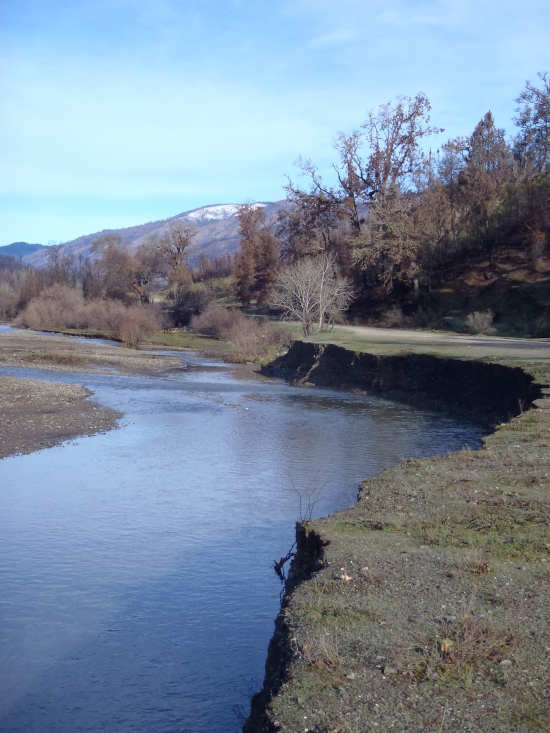
1. Develop a distributed model of the upper watershed — US Geological Survey, $1.6 million over three years
This task will be carried out by the USGS with collaboration and input from UC Davis’s TERC team, local agencies, local tribes, federal agencies like Bureau of Land Management and The Forest Service. Basically any type of activity that occurs within the watershed will be included in this model, with the “upper watershed” meaning the area of land that surrounds that lake that has influence over what eventually flows — or doesn’t flow — into the lake.
The model that will be produced from this task is called Sparrow, which abbreviates SPAtially Referenced Regression on Watershed attributes.
Basically this models takes in all the information about the watershed including climate, weather, slopes, soils, stream flows and adds in sediments and nutrients in the runoff from streams, agriculture, urban areas, other land uses and calculates nutrient load predictions and what we should expect to come down the land into the lake based on different scenarios.
An additional — and very interesting — component of this modelling will include what’s called “sediment fingerprinting.” It’s well-established in the literature, and from other studies and monitoring, that soils in Lake County are rich in phosphorus, which has been identified as a major driving nutrient in the lake for influencing cyanobacteria growth. Therefore, any process that produces a large amount of sediment to flow into the lake, from earth moving, stream erosion or land-use change, has the potential to be contributing significant amounts of nutrient phosphorus — through the sediments.
Sediment fingerprinting will “trace” some of the sources of phosphorus entering the lake, and this can help to guide future BRC management projects. To more effectively manage sediments, it’s necessary to locate, identify, and mitigate sediment sources, deposition and erosion “hot spots”. Contrary to popular belief, vineyards and agriculture fertilizer applications are not the sole source of nuisance nutrients in Clear Lake, and the BRC upper watershed model and sediment fingerprinting component will help to identify what the real sources are and guide more effective management.
If you want to know more about sediment fingerprinting, I recommend this fabulous factsheet About Sediment Source Assessment Using Sediment Fingerprints (USGS 2018-3008).
2. Implement a comprehensive basin-wide monitoring strategy — USGS, $1.9 M over three years
Obviously, any watershed assessment needs appropriate monitoring and data gathering to be complete. This task will incorporate all the current and ongoing monitoring information in the basin, including the current data being collected by UC Davis or other researchers in the lakes and streams, any lake and stream monitoring efforts being conducted by the county, urban runoff monitoring from the County and Cities, monitoring by other tribes, as well as with cyanobacteria monitoring being completed by Big Valley Rancheria and Robinson Rancheria.
This task will also identify data and knowledge gaps, and collect the appropriate data to address those gaps. Lastly, the information gathered together in this task will be used to validate and run the Upper Watershed model mentioned in recommendation #1. The upper watershed model needs to input data from the real system so that it can be set up correctly and be tested and verified that it’s working accurately.
3. Conduct a bathymetric survey of Clear Lake — UC Davis TERC, $400,000
This is a very important task valuable for any lake study. A bathymetric survey, or underwater map, is basically a topological representation of the bottom of the lake. We would need this so that we can get an accurate picture (literally) of what the bottom of the lake looks like, including depth, depth contours, sedimentation, sand bars, and anything else that is at the bottom of the lake that might shape the volume and structure of the lake. This map can also help with calculating the current volume of the lake and where sedimentation might have occurred or shifted since the last bathymetric map.
Bathymetric maps are traditionally used heavily by researchers studying lakes or a specific lake. Many states make bathymetric maps of their public access lakes every 20-50 years so that the boaters know how to safely navigate around the lake and so managers can see how the lakes are physically changing shape or volume over time.
Clear Lake has a bathymetric map that is about 10 years old, but it’s not very detailed and it doesn’t account for any recent accumulation of sediments or soils. A new bathymetric map is very much needed and this project will use the most advanced technology to get a high resolution picture of the lake beneath the surface.
4. Review the implementation of existing Tribal, local, State, and Federal programs, Best Management Practices (BMPs), and other management requirements to limit
sedimentation/nutrient loading in the Clear Lake Basin - Big Valley Band of Pomo Indians, $60,000
Many policies and procedures that have been written into Tribal, Federal, State, and local law are aimed at protecting environmental resources, and some here in Lake County to protect Clear Lake and prevent pollution impacts to water quality. However, these existing programs and policies are not evaluated regularly and so it’s unknown how most of them function and if they can be improved upon to increase their effectiveness to protect the resources they were created for.
5. Assess the public’s perceptions, attitudes, and knowledge gaps towards water quality in order to improve education and ultimately human impacts on Clear Lake — Lake County Watershed Protection District, $120,000
The purpose of this project is to identify the public’s current perceptions and attitudes towards water quality, and related impacts, in Clear Lake and to identify any knowledge gaps and research information needs. One of the charges of the Blue Ribbon Committee is to identify “barriers to improved water quality in Clear Lake and contributing factors to poor water quality.”
The proposed project helps to address this charge by identifying what barriers exist from the public’s perspective, or how the public’s attitudes and perceptions may be driving behaviors that can both negatively and positively impact water quality. It’s important for managers, researchers, and policy makers to be able to understand how to clearly communicate sometimes complex scientific information about water quality to the voting public.
Additionally, policy decisions driven by community consensus determine the available resources for managing water resources, such as funding for watershed scale non-point source pollution control. Local and state managers can better focus educational and outreach efforts towards the public if it’s clear what the public understands and doesn’t understand about the causes and impacts of water quality.
Results from this project will allow managers to better communicate how management or policy practices, like those produced by the BRC and other efforts, can be beneficial for Clear Lake water quality and ecology.
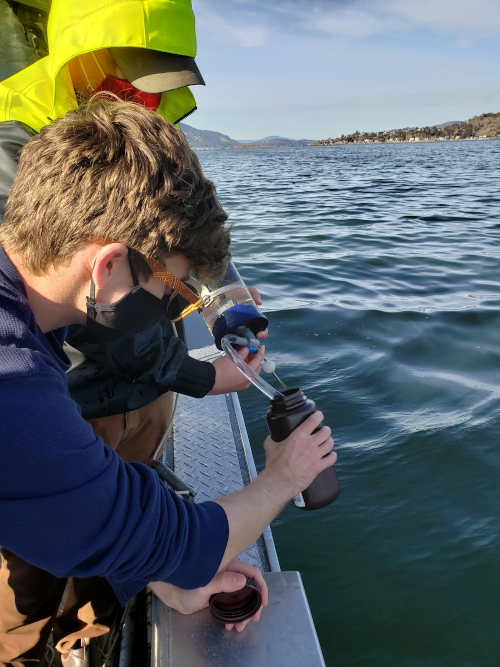
6. Continuation of Clear Lake Limnological Sampling for 2021 — Lake County Water Resources Department, $100,000
Since 1968, the California Department of Water Resources has been sampling Clear Lake at least three locations (one site in the deepest spot in each of the Oaks, Lower, and Upper arm). At each of these sites, 10 months out of the year, the CDWR sampled a full suite of physio-chemical water quality parameters like nutrients (nitrogen and phosphorous), metals, solids, suspended and dissolved solids, and in-situ (in the water at the field site) measurements like dissolved oxygen, temperature, pH, and conductivity.
In 2020, CDWR decided to terminate the Clear Lake monitoring program in its entirety. In 2021, County of Lake Water Resources took over this program, however abbreviated due to cost inhibitions, but with funds from the BRC, this program can continue at least through 2022.
7. Bridge Funding for UC Davis research efforts — UC Davis TERC and CRC, $100,000
This was a short, one-time task that was needed only if other funds did not materialize for the UC Davis TERC team to continue some of their current monitoring occurring in the lake and tributaries. It would have been devastating to the efforts conducted to date if all monitoring devices had to be removed and there was a significant gap in data collected until funds could materialize.
Thankfully, these promised funds and fast approval by the Governor for the suite of recommendations, allowed the vital research to continue with no data gaps and allowed for the information to provide meaningful results.
8. Support for Middle Creek Restoration Project — no funding requested
No funding was associated with this recommendation, but it guaranteed support from the BRC to the Middle Creek Restoration coalition and Committee to maintain progress of this important restoration project in a high-impact area of Clear Lake.
Proposed Projects for 2022 Committee Recommendations
In this section I will share with you the list of proposed projects going before the Blue Ribbon Committee at the next Meeting on September 23rd, 2021 at 1 pm. You can access that meeting via Zoom, and the meeting log in information and agenda is available at this link.
I will not go into detail about each of these projects because they are still being discussed and refined by the applicants, along with the costs. There is a very nice summary for each project, including proposed budgets, timelines, tasks, and description included in the meeting materials online at the BRC webpage.
If you recall from my Part 1, I identified the two sub-committees established to help focus and refine the most relevant projects and topics for the whole BRC to review, discuss, and recommend for funding.
The two sub-committees have been working hard over the summer to identify and plan projects that are very-much needed to study or improve both water quality in Clear Lake and Clear Lake economy. The projects are up for discussion and potential approval during the next meeting, with specific focus on “near-term” projects. These “near-term” projects are defined as projects that have high priority (i.e. satisfy an unmet need), can be initiated immediately, and can be met within a short time frame of less than five years from start.
Members within the two committees will be given time to present their projects and encourage discussion and interest from the large BRC, with the ultimate goal of getting their projects fully or partially funded.
Technical Subcommittee Project Proposals September 2021
Below is a list of the proposed projects and the agencies or organizations bringing them before the BRC. Details on each proposed near-term technical subcommittee project are provided by clicking here.
1. Kelsey Creek Fish Passage — Big Valley Band of Pomo Indians;
2. Tule Replanting / Invasive Vegetation Removal — Big Valley Band of Pomo Indians;
3. Lake County Storm Water Infrastructure and Program Improvement — County of Lake Water Resources Department;
4. Trash Removal - County of Lake Water Resources Department;
5. Derelict Structure Abatement - County of Lake Water Resources Department;
6. Mercury Monitoring - UC Davis TERC and USGS.
7. *Added* Airborne Electromagnetic (AEM) Survey of Scotts Valley Groundwater Basin - Scotts Valley Band of Pomo Indians and County of Lake Water Resources.
Socioeconomic Subcommittee project proposals September 2021
Below is a list of the proposed projects and agencies or organizations bringing them before the BRC. Details on each proposed near-term socioeconomic project are provided by clicking here.
1. Clear Lake Environmental Education Roundtable (CLEER) — UC Davis Team (Center for Regional Change, TERC, Center for Community and Citizen Science);
2. Research Lab Concept — Jim Steele, former District 3 supervisor;
3. Environmental Education Resources and Program Support for Citizen and Community Science at Clear Lake — UC Davis Team;
4. Citizen Science — Promoting Citizen and Community Science through the Development and Piloting of a Participatory Environmental Monitoring app — UC Davis Center for Community and Citizen Science and TERC;
5. Program Evaluation to Enhance Environmental Programs for Clear Lake — UC Davis Center For Regional Change;
6. Cobb Mountain Clear Lake Watershed Education and Stewardship Program (WEP) for community leaders / volunteers — Cobb Area Council;
7. Scientific Research and Environmental Education Capacity Building in Lake County — Clear Lake Environmental Research Center.
Most of the socioeconomic proposed projects address an important missing link in watershed, lake and land science here in Lake County. Basically, we just can’t only study and manage the lake itself, we have to study the land and space surrounding the lake and how we use that land responsibly. We need to teach ourselves how we can be better caretakers of the beautiful natural world, and we learn that in many different ways, but mostly through our educational tenure, as children to young adults.
The majority of the socioeconomic project proposals address this component; increasing and refining the knowledge base around Clear Lake that will lead to the future generations being responsible lake and land stewards.
What does all this mean for lake management?
A) As a lake manager, the ultimate measure of success when managing any lake simplistically boils down to a few things:
B) An understanding of the system - through monitoring;
C) Identification of any problem(s) - through analysing the monitoring data;
D) Implementation of an appropriate management strategy or tool - if needed, to fix the problem (s).
E) Evaluation to identify if the problem is being corrected — through more monitoring and analysis.
F) Public understanding and support of this entire process.
If an identified “problem” is not improving, we do even more monitoring and analysis, then tweak or adjust our strategy or tool (or sometimes, try something else) and monitor and reevaluate until we can explain what we are observing.
Basically, lake managers, like all scientists, rely heavily on monitoring and evaluation of any imposed strategy to determine if what we are doing is helping or hurting the system or the expected outcome we desire.
This whole process is actually called adaptive management and it's cyclical, continuous, and iterative. The process of Adaptive Management in Clear Lake will probably never end because conditions and influencing factors are constantly changing as are the way we manage. The availability of new technology to improve monitoring through enhanced detection capabilities and the accessibility and availability of management resources and tools to respond to problems also adds loops to this cycle.
Unfortunately, there is no magic bullet — or, to reference my namesake — there is no magic “excalibur” sword for improving Clear Lake. There is not one machine, not one tool, not one policy, or one method that can be done, even with gobs of money, that will easily and quickly “correct” or “fix” Clear Lake. There just isn’t — or else it would be in play right now here, in Lake Erie, in Lake Okeechobee and many others across the country and across the globe.
To solve the problems we observe in Clear Lake it will take many complex and interwoven solutions, tools, strategies, and constant, consistent evaluation and monitoring. Not to mention, this effort will deserve more realistic expectations from the public and it’s funders considering the complexity and how long it might take and how expensive it might be.
The efforts of the BRC, and partners and collaborators, supported approach to study, monitor, manage, and evaluate the systems within and around the lake, combined with community involvement and engagement promoted through environmental education and stewardship will provide for the broad but clear understanding and responsibility we have for this unique aquatic system and the technical and intellectual value that it both requires and provides.
I would encourage the BRC, and the Natural Resources Agency, to commit to a long-term involvement in these approaches and remain integrated with us in Lake County, as we chug through the adaptive management cycle - perhaps several times. Previous temporal and temporary patches of research and management recommendations have largely remained unfulfilled which has resulted in a precarious and sometimes compromised lake water quality, with devastating cumulative impacts more realized right now than ever before.
For example, this last week Lake County saw some of the highest recorded cyanobacterial toxin concentrations ever seen in Clear Lake (160,377 ug/L at Redbud Park ramp). Public health alerts went out notifying the County that about 280 homes with individual, private intakes that their drinking water was unsafe if not dangerous to drink.
Alternate water filling stations were established to provide safe drinking water from state-regulated and monitored treatment plants nearby. Note that this alert did not apply to water distributed from any of the 18 large, public or privatized treatment districts, systems, or operators on Clear Lake. Thanks to the monitoring efforts by Big Valley EPA and the Cal WATCH Program, quick communications and solutions were rapidly established.
This scenario, of course exacerbated by the occurrence of drought, low water levels and high heats, is an extreme burden, put onto a community that is already burdened. Droughts and extreme conditions are only expected to keep occurring, which is going to have an unpredictable but significant impact on Clear Lake and her communities.
When it comes to lake management, it’s known that solutions and results take time to implement, evaluate, and improve upon. I hope the BRC continues their efforts, maybe even indefinitely, to make sure that Clear Lake ecologic and economic systems are given the right opportunity and appropriate resources to improve and enough time to evaluate their success. I think the largest freshwater lake in California deserves that, at least.
Sincerely,
Lady of the Lake
Angela De Palma-Dow is a limnologist (limnology = study of fresh inland waters) who lives and works in Lake County. Born in Northern California, she has a Master of Science from Michigan State University. She is a Certified Lake Manager from the North American Lake Management Society, or NALMS, and she is the current president/chair of the California chapter of the Society for Freshwater Science. She can be reached at
LAKE COUNTY, Calif. — Due to an offshore weather system that could bring high winds on Monday, Pacific Gas and Electric Co. said it may need to shut off power to 14,000 customers in 13 counties across Northern California, including Lake County.
The company said its meteorologists continue to monitor a potential weather system that could bring dry offshore winds to parts of the company’s service area beginning Monday morning.
Due to the wind event, combined with extreme to exceptional drought and extremely dry vegetation, PG&E began sending advance notifications to the customers where it may implement a public safety power shutoff Monday morning in portions of the North Coast and North Bay.
Shutoffs in the Northern Sierra foothills and Kern County could begin Monday afternoon, depending on the timing of the wind event, PG&E said.
PG&E said it activated its Emergency Operations Center on Friday to support this weather event.
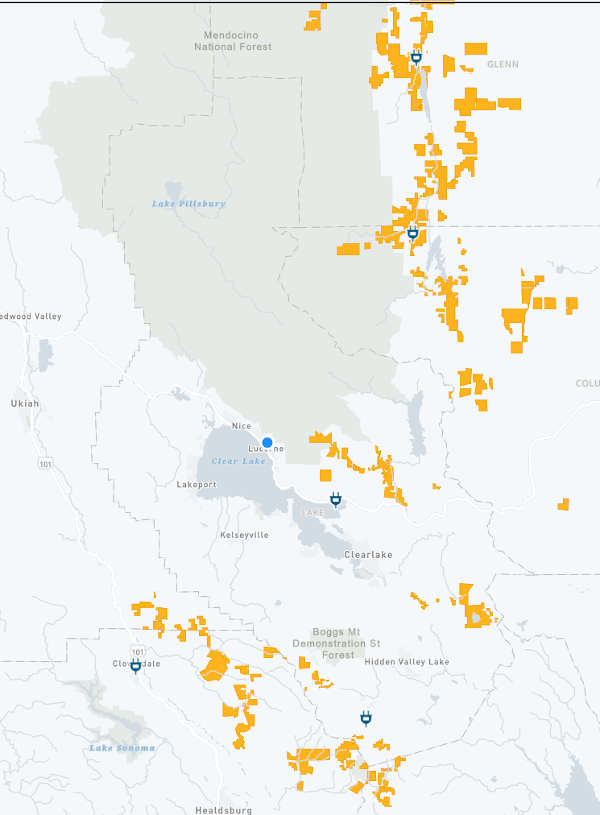
PG&E said it notified 756 customers, including 65 Medical Baseline customers, in Lake County of the potential shutoff.
The Lake County customers expected to be impacted are in areas north and east of Clearlake Oaks, east of Lower Lake, and south of Cobb and Middletown, as shown in the map above.
PG&E estimated that power in those areas will be shut off between 4 and 6 a.m., and be restored by 10 p.m. Monday.
Potentially affected customers in other counties are as follows:
Butte County: 2,735 customers, 248 Medical Baseline customers;
Colusa County: 567 customers, 36 Medical Baseline customers;
Glenn County: 376 customers, 21 Medical Baseline customers;
Kern County: 674 customers, 35 Medical Baseline customers;
Mendocino County: 13 customers, 4 Medical Baseline customers;
Napa County: 1,584 customers, 70 Medical Baseline customers;
Santa Barbara County: 19 customers, 1 Medical Baseline customer;
Shasta County: 3,166 customers, 294 Medical Baseline customers;
Solano County: 802 customers, 56 Medical Baseline customers;
Sonoma County: 1,241 customers, 47 Medical Baseline customer;
Tehama County: 2,270 customers, 177 Medical Baseline customers;
Yolo County: 20 customers, 0 Medical Baseline customers.
The impacted customers and the numbers could change as the company adjusts its plans in response to conditions.
Customers can also look up their address online to find out if their location is being monitored for the potential safety shutoff at www.pge.com/pspsupdates.
During a PSPS, PG&E offers support to customers by opening Community Resource Centers with snacks, water and other essential items; partnering with community-based organizations to assist customers with medical and independent living needs; and continuing to update our customers on power restoration status.
Two Community Resource Centers are planned in Lake County, one at the Live Oaks Senior Center, 12502 Foothill Blvd, Clearlake Oaks, and the other at Twin Pine Casino and Hotel, 22223 Highway 29, Middletown.
The two centers will be open from 8 a.m. to 10 p.m. Monday and Tuesday.
They will offer blankets, snacks and water, device charging, ADA-accessible restrooms and washing station, seating, small medical device charging and wifi.
Details about customer support programs are available at www.pge.com/pspsupdates.
LAKE COUNTY, Calif. — During Child Passenger Safety Week, Sept. 19 through 25, the California Highway Patrol will educate the public on the importance of ensuring children are riding in a properly fitted and installed child passenger safety seat.
According to the National Highway Traffic Safety Administration, or NHTSA, car crashes are the leading cause of death for children ages 1 to 13.
In 2020, 90 children aged 13 and under died as a result of car crashes in California.
The NHTSA reports that while most parents and caregivers are confident they have correctly installed their child’s safety seat, when checked almost half (46%) are found to be installed incorrectly.
California law requires all children under the age of 2, or weighing under 40 pounds and under 40 inches tall, ride in a rear-facing car seat. All children under the age of 8 must ride in the back seat in an age-appropriate safety seat. Safety experts recommend children ride in the back seat until the age of 13.
For more information about child passenger safety, visit https://www.chp.ca.gov/Programs-Services/Programs/Child-Safety-Seats.
“Proper use of child safety seats can mean the difference between life and death,” CHP Commissioner Amanda Ray said. “Our child passenger safety technicians can assist you in ensuring your most precious cargo arrives safely.”
At all CHP child safety seat events throughout the week, child passenger safety technicians will provide free safety seat inspections, education, and hands-on training for parents and caregivers.
These free safety seat inspections are also available year-round, by appointment, at any CHP Area office.
To locate the nearest CHP Area office, please visit https://www.chp.ca.gov/find-an-office.
Funding for this program is provided by a grant from the California Office of Traffic Safety through the NHTSA.
According to the National Highway Traffic Safety Administration, or NHTSA, car crashes are the leading cause of death for children ages 1 to 13.
In 2020, 90 children aged 13 and under died as a result of car crashes in California.
The NHTSA reports that while most parents and caregivers are confident they have correctly installed their child’s safety seat, when checked almost half (46%) are found to be installed incorrectly.
California law requires all children under the age of 2, or weighing under 40 pounds and under 40 inches tall, ride in a rear-facing car seat. All children under the age of 8 must ride in the back seat in an age-appropriate safety seat. Safety experts recommend children ride in the back seat until the age of 13.
For more information about child passenger safety, visit https://www.chp.ca.gov/Programs-Services/Programs/Child-Safety-Seats.
“Proper use of child safety seats can mean the difference between life and death,” CHP Commissioner Amanda Ray said. “Our child passenger safety technicians can assist you in ensuring your most precious cargo arrives safely.”
At all CHP child safety seat events throughout the week, child passenger safety technicians will provide free safety seat inspections, education, and hands-on training for parents and caregivers.
These free safety seat inspections are also available year-round, by appointment, at any CHP Area office.
To locate the nearest CHP Area office, please visit https://www.chp.ca.gov/find-an-office.
Funding for this program is provided by a grant from the California Office of Traffic Safety through the NHTSA.