 How to resolve AdBlock issue?
News
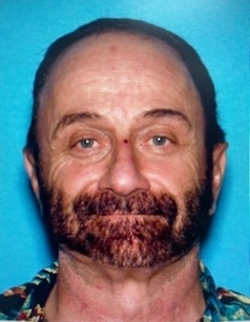
LAKE COUNTY, Calif. — The Lake County Sheriff’s Office is attempting to locate a Lucerne man reported missing last month.
Lt. Corey Paulich said Ronald James Meluso, 63, was reported missing to the Lake County Sheriff’s Office on Aug. 22.
Meluso was last heard from on Aug. 18, Paulich said.
Paulich said Meluso is currently believed to be without a vehicle, has not reached out to family, friends, or law enforcement for help or aid, and is not returning phone calls, behavior which is reported to be out of character for Meluso.
Since the date of the report, investigators have conducted searches in multiple jurisdictions and have served multiple search warrants in an effort to locate Meluso, Paulich said.
Anyone with information regarding Ronald Meluso’s whereabouts is asked to contact Det. Richard Kreutzer at 707-262-4233.
LAKE COUNTY, Calif. — The Lake County Sheriff’s Office has identified the victim of a fatal crash near the Rodman Slough on Wednesday as a Clearlake Oaks man.
Lt. Corey Paulich said Lonnie Ray Sullivan, 64, died in the wreck, which occurred shortly before 7:30 a.m. Wednesday.
The California Highway Patrol’s Clear Lake Area office said Sullivan was driving a 1996 Honda Civic eastbound on the Nice-Lucerne Cutoff west of the Rodman Slough when he was hit head-on by a 2016 Chevy Camaro driven by Steven Michael Pruitt, 35, of Lakeport.
The CHP said Pruitt had crossed over the double yellow lines.
Sullivan was declared dead at the scene, the CHP said.
Both Sullivan and Pruitt were wearing their seat belts at the time of the crash, according to the CHP report.
Pruitt was arrested for driving under the influence of drugs and vehicular manslaughter and booked into the Lake County Jail after he was medically cleared, authorities said.
Jail records show that Pruitt remains in custody, with bail set at $1 million.
The crash that claimed Sullivan’s life was the second fatal in Lake County this week. A Willits man died in a solo-vehicle crash on Monday afternoon on Highway 20, as Lake County News has reported.
Email Elizabeth Larson atThis email address is being protected from spambots. You need JavaScript enabled to view it. . Follow her on Twitter, @ERLarson, or Lake County News, @LakeCoNews.
Lt. Corey Paulich said Lonnie Ray Sullivan, 64, died in the wreck, which occurred shortly before 7:30 a.m. Wednesday.
The California Highway Patrol’s Clear Lake Area office said Sullivan was driving a 1996 Honda Civic eastbound on the Nice-Lucerne Cutoff west of the Rodman Slough when he was hit head-on by a 2016 Chevy Camaro driven by Steven Michael Pruitt, 35, of Lakeport.
The CHP said Pruitt had crossed over the double yellow lines.
Sullivan was declared dead at the scene, the CHP said.
Both Sullivan and Pruitt were wearing their seat belts at the time of the crash, according to the CHP report.
Pruitt was arrested for driving under the influence of drugs and vehicular manslaughter and booked into the Lake County Jail after he was medically cleared, authorities said.
Jail records show that Pruitt remains in custody, with bail set at $1 million.
The crash that claimed Sullivan’s life was the second fatal in Lake County this week. A Willits man died in a solo-vehicle crash on Monday afternoon on Highway 20, as Lake County News has reported.
Email Elizabeth Larson at
LAKE COUNTY, Calif. — A Kelseyville man was arrested on Thursday after a deputy found him under the influence of drugs and in possession of the key to a stolen vehicle.
Travis Jay Minor, 26, was arrested in the case, according to Lt. Corey Paulich of the Lake County Sheriff’s Office.
At 1:30 p.m. Thursday, a Lake County Sheriff’s deputy was patrolling in the Middletown area when he observed a male walking in the Armstrong Street area around several vehicles behind a convenience store. The deputy believed the male was possibly tampering with the vehicles, Paulich said.
The deputy contacted the male subject who was identified as Minor. Paulich said Minor told the deputy he was stuck in Middletown because his vehicle had run out of gas and it was parked near the park.
Paulich said the deputy was familiar with Minor and knew he had been arrested the previous week for tampering with vehicles. The deputy conducted field tests and determined Minor was under the influence of a controlled substance.
The deputy again asked Minor where his vehicle was. He told the deputy it was parked in front of the convenience store near Armstrong and Highway 29, Paulich said.
Minor was not able to tell the deputy what type of vehicle he was driving. Paulich said the deputy believed that Minor was being evasive about the vehicle because it was possibly stolen.
Paulich said the deputy placed Minor under arrest for being under the influence of a controlled substance.
During a search of Minor the deputy located a Mercedes key. Paulich said the deputy checked the area in front of the convenience store for a Mercedes vehicle, locating a silver Mercedes that he believed was related to Minor.
The silver Mercedes was not locked so the deputy attempted to use the key from Minor to start the vehicle, but the key did not match the vehicle. Paulich said it was later determined that this Mercedes was not related when the owner of the vehicle contacted the deputy in front of the store.
Paulich said the deputy again questioned Minor about the location of his vehicle. Minor told the deputy it was parked further north.
The deputy drove north on Highway 29, locating a black Mercedes parked across the street from Hardister’s Market. The deputy used the Mercedes key found on Minor to unlock this Mercedes and found they matched, Paulich said.
Paulich said the deputy contacted the registered owner to verify that Minor was supposed to have the vehicle. The owner told the deputy he was just calling to report it stolen.
The vehicle’s owner responded to the deputy’s location and took possession of his Mercedes. He told the deputy that Minor had spent the night at his residence the previous night. When the owner woke up he noticed Minor and his vehicle were gone. Minor never had permission to take the Mercedes, Paulich said.
Paulich said Minor was booked into the Lake County Jail on charges of being under the influence of a controlled substance and vehicle theft.
Minor remained in custody on Saturday. Booking records show he is being held on $15,000 bail, and is scheduled to be arraigned in Lake County Superior Court on Monday.
Travis Jay Minor, 26, was arrested in the case, according to Lt. Corey Paulich of the Lake County Sheriff’s Office.
At 1:30 p.m. Thursday, a Lake County Sheriff’s deputy was patrolling in the Middletown area when he observed a male walking in the Armstrong Street area around several vehicles behind a convenience store. The deputy believed the male was possibly tampering with the vehicles, Paulich said.
The deputy contacted the male subject who was identified as Minor. Paulich said Minor told the deputy he was stuck in Middletown because his vehicle had run out of gas and it was parked near the park.
Paulich said the deputy was familiar with Minor and knew he had been arrested the previous week for tampering with vehicles. The deputy conducted field tests and determined Minor was under the influence of a controlled substance.
The deputy again asked Minor where his vehicle was. He told the deputy it was parked in front of the convenience store near Armstrong and Highway 29, Paulich said.
Minor was not able to tell the deputy what type of vehicle he was driving. Paulich said the deputy believed that Minor was being evasive about the vehicle because it was possibly stolen.
Paulich said the deputy placed Minor under arrest for being under the influence of a controlled substance.
During a search of Minor the deputy located a Mercedes key. Paulich said the deputy checked the area in front of the convenience store for a Mercedes vehicle, locating a silver Mercedes that he believed was related to Minor.
The silver Mercedes was not locked so the deputy attempted to use the key from Minor to start the vehicle, but the key did not match the vehicle. Paulich said it was later determined that this Mercedes was not related when the owner of the vehicle contacted the deputy in front of the store.
Paulich said the deputy again questioned Minor about the location of his vehicle. Minor told the deputy it was parked further north.
The deputy drove north on Highway 29, locating a black Mercedes parked across the street from Hardister’s Market. The deputy used the Mercedes key found on Minor to unlock this Mercedes and found they matched, Paulich said.
Paulich said the deputy contacted the registered owner to verify that Minor was supposed to have the vehicle. The owner told the deputy he was just calling to report it stolen.
The vehicle’s owner responded to the deputy’s location and took possession of his Mercedes. He told the deputy that Minor had spent the night at his residence the previous night. When the owner woke up he noticed Minor and his vehicle were gone. Minor never had permission to take the Mercedes, Paulich said.
Paulich said Minor was booked into the Lake County Jail on charges of being under the influence of a controlled substance and vehicle theft.
Minor remained in custody on Saturday. Booking records show he is being held on $15,000 bail, and is scheduled to be arraigned in Lake County Superior Court on Monday.
On Friday, Gov. Gavin Newsom signed a suite of bills expanding the state’s humane immigration policies by providing protections and support for immigrants, including a new law to replace the outdated and derogatory term “alien” used to describe non-citizens in California State code.
“As the nation’s most diverse state, we are stronger and more vibrant because of our immigrant communities,” said Gov. Newsom. “This important legislation removes the word ‘alien,’ which is not only an offensive term for a human being, but for far too long has fueled a divisive and hurtful narrative. By changing this term, we are ensuring California’s laws reflect our state’s values.”
AB 1096, authored by Assemblymember Luz Rivas (D-Arleta) will replace the word “alien” with language more reflective of today’s legal terminology, such as “noncitizen” or “immigrant.”
The term “alien” has been used to identify individuals who were not born in the United States by the federal government since 1798 and in California since 1937.
In the 1990s, the word “alien” began to be used as a political dog whistle to express bigotry and hatred without using traditionally racist language.
By 2015, the term was officially replaced with “noncitizen,” however “alien” is still widely used in many aspects of California law.
In addition to signing AB 1096, Gov. Newsom signed a series of bills to protect the health and safety of immigrants, including legislation to clarify safety standards at detention facilities, ensure rights and protections for unaccompanied undocumented minors, and cement protection for immigrants under hate crime legislation.
California’s existing pro-immigrant policies include expanding access to higher education, expanding access to health care and public benefits, advancing protections for immigrant workers, supporting immigrant students through partnerships with school districts, improving opportunities for economic mobility and inclusion through access to drivers licenses and pro bono immigration services.
Newsom’s California Comeback Plan offers an additional $1,000 in stimulus checks to undocumented families through the expanded Golden State Stimulus; the largest renter assistance program in the country; $5.2 billion to help low-income renters cover their back-rent and their rent for several months into the future; and $2 billion to help Californians pay past-due utility bills. The California Comeback Plan also enacts a first-in-the-nation expansion of Medi-Cal to undocumented Californians over 50 years old, providing access to critical health care services.
During the COVID-19 pandemic, California has made free COVID-19 testing and treatment available for all Californians, regardless of insurance or immigration status. The state also prioritized high-risk neighborhoods for COVID-19 vaccines to inoculate people most at-risk of contracting the virus, reaching many communities with large immigrant populations.
To support food and agriculture workers who tested positive for or were exposed to COVID-19 and did not have a place to quarantine safely, California created Housing for the Harvest, a first-in-the-nation framework with FEMA that provided shelter and quarantine options for farmworkers to isolate.
The program was expanded to also provide in-home quarantine support and cash assistance to participants.
California also created a first-in-the-nation statewide public-private partnership to provide $150 million in disaster relief assistance to undocumented Californians.
California’s $75 million investment reached 150,000 people across the state.
In addition to AB 1096, Gov. Newsom also signed:
AB 263 by Assemblymember Dr. Joaquin Arambula (D-Fresno), which clarifies the requirement of private detention facilities, including those used to house and detain immigrants in California, to comply with local and state public health orders. It also requires private operators to abide by Cal/OSHA workplace safety rules and regulations.
AB 600 by Assemblymember Dr. Joaquin Arambula (D-Fresno), which clarifies that existing law includes immigration status under the definition of “nationality” so that crimes targeting people due to their immigration status are considered a hate crime.
AB 1140 by Assemblymember Robert Rivas (D-Hollister), which ensures that all children housed in state-licensed facilities, including unaccompanied undocumented minors, will be under the jurisdiction of the California Foster Care Ombudsperson’s Office and will thereby receive all of the resources and protections they are entitled to under state law.
SB 334 by Sen. María Elena Durazo (D-Los Angeles), which requires private, for-profit detention facilities operating in California to uphold basic health and safety standards for people being detained in these facilities and maintain minimum levels of insurance coverage related to medical professional liability and liability for civil rights violations.
SB 714 by Sen. Anna Caballero (D-Salinas), which amends California election code to allow aspiring citizens such as DREAMers to be appointed and elected members in a county central committee.
For full text of the bills, visit http://leginfo.legislature.ca.gov.
“As the nation’s most diverse state, we are stronger and more vibrant because of our immigrant communities,” said Gov. Newsom. “This important legislation removes the word ‘alien,’ which is not only an offensive term for a human being, but for far too long has fueled a divisive and hurtful narrative. By changing this term, we are ensuring California’s laws reflect our state’s values.”
AB 1096, authored by Assemblymember Luz Rivas (D-Arleta) will replace the word “alien” with language more reflective of today’s legal terminology, such as “noncitizen” or “immigrant.”
The term “alien” has been used to identify individuals who were not born in the United States by the federal government since 1798 and in California since 1937.
In the 1990s, the word “alien” began to be used as a political dog whistle to express bigotry and hatred without using traditionally racist language.
By 2015, the term was officially replaced with “noncitizen,” however “alien” is still widely used in many aspects of California law.
In addition to signing AB 1096, Gov. Newsom signed a series of bills to protect the health and safety of immigrants, including legislation to clarify safety standards at detention facilities, ensure rights and protections for unaccompanied undocumented minors, and cement protection for immigrants under hate crime legislation.
California’s existing pro-immigrant policies include expanding access to higher education, expanding access to health care and public benefits, advancing protections for immigrant workers, supporting immigrant students through partnerships with school districts, improving opportunities for economic mobility and inclusion through access to drivers licenses and pro bono immigration services.
Newsom’s California Comeback Plan offers an additional $1,000 in stimulus checks to undocumented families through the expanded Golden State Stimulus; the largest renter assistance program in the country; $5.2 billion to help low-income renters cover their back-rent and their rent for several months into the future; and $2 billion to help Californians pay past-due utility bills. The California Comeback Plan also enacts a first-in-the-nation expansion of Medi-Cal to undocumented Californians over 50 years old, providing access to critical health care services.
During the COVID-19 pandemic, California has made free COVID-19 testing and treatment available for all Californians, regardless of insurance or immigration status. The state also prioritized high-risk neighborhoods for COVID-19 vaccines to inoculate people most at-risk of contracting the virus, reaching many communities with large immigrant populations.
To support food and agriculture workers who tested positive for or were exposed to COVID-19 and did not have a place to quarantine safely, California created Housing for the Harvest, a first-in-the-nation framework with FEMA that provided shelter and quarantine options for farmworkers to isolate.
The program was expanded to also provide in-home quarantine support and cash assistance to participants.
California also created a first-in-the-nation statewide public-private partnership to provide $150 million in disaster relief assistance to undocumented Californians.
California’s $75 million investment reached 150,000 people across the state.
In addition to AB 1096, Gov. Newsom also signed:
AB 263 by Assemblymember Dr. Joaquin Arambula (D-Fresno), which clarifies the requirement of private detention facilities, including those used to house and detain immigrants in California, to comply with local and state public health orders. It also requires private operators to abide by Cal/OSHA workplace safety rules and regulations.
AB 600 by Assemblymember Dr. Joaquin Arambula (D-Fresno), which clarifies that existing law includes immigration status under the definition of “nationality” so that crimes targeting people due to their immigration status are considered a hate crime.
AB 1140 by Assemblymember Robert Rivas (D-Hollister), which ensures that all children housed in state-licensed facilities, including unaccompanied undocumented minors, will be under the jurisdiction of the California Foster Care Ombudsperson’s Office and will thereby receive all of the resources and protections they are entitled to under state law.
SB 334 by Sen. María Elena Durazo (D-Los Angeles), which requires private, for-profit detention facilities operating in California to uphold basic health and safety standards for people being detained in these facilities and maintain minimum levels of insurance coverage related to medical professional liability and liability for civil rights violations.
SB 714 by Sen. Anna Caballero (D-Salinas), which amends California election code to allow aspiring citizens such as DREAMers to be appointed and elected members in a county central committee.
For full text of the bills, visit http://leginfo.legislature.ca.gov.
A residence can be held in further trust for the benefit of one or multiple beneficiaries after the owner’s death.
In California, a trust can hold title to real property either for up to ninety years or for a period that ends no later than 21 years after the death of an individual who was alive at the real property owner’s death (when the trust is established).
Let us discuss when, why and how the so-called “house trust” is used, so-named because its primary asset is a residence.
First, consider a second-marriage with stepchildren, where the couple reside in a residence owned solely by one spouse.
The spouse who owns the residence may want to allow the other (surviving) spouse to continue to live in a residence but ensure that the residence ultimately goes to his or her own children.
Second, consider parents who want to maintain a significant family residence after they die for the shared benefit of multiple children.
In the first (second marriage) scenario, the spouse who owns the residence wants to protect their surviving spouse from being forced out of their home.
The spouse also wants to ensure that when the surviving spouse dies (or moves out) that the residence ultimately benefits their children from before the second marriage.
The house trust controls the rights and duties of the beneficiary spouse and the future beneficiaries.
For example, the spouse may be allowed lifetime rent-free use of the residence but be required to pay the insurance, taxes, upkeep and utilities for the house while living in the house.
The spouse may also be allowed to require the trustee to sell the residence and purchase another residence with the sale proceeds; this would help if the spouse decides to downsize or relocate.
Ultimately, when the surviving spouse dies or does not keep his or her duties the trust will terminate and the remaining assets of the trust are distributed to the children of the spouse who owned the residence.
In the second scenario, the parents want the benefits and burdens associated with maintaining a residence to be shared amongst multiple children (and their families).
Here, the house trust addresses how multiple beneficiaries share the use of the residence over the calendar year, what duties the children (and their families) have for the upkeep of the residence and for each other, and how the many costs of owning the house are divided.
Drafting the house trust provisions varies with each family situation and objectives. In all cases it allows for a trustee (or co-trustees) to manage the residence, enforce the rules, and avoid outright distribution or sale of the residence at the death of the spouse who owns the residence.
It also provides creditor protection for the house against most creditor claims related to the beneficiaries’ personal debts.
Outright distribution might otherwise mean the house is sold, becomes subject to claims by a beneficiary’s own creditors, or is not used in the intended manner.
The foregoing is a limited and simplified discussion of a larger and fact driven subject. It is not legal advice. Consult an attorney for guidance.
Dennis A. Fordham, attorney, is a State Bar-Certified Specialist in estate planning, probate and trust law. His office is at 870 S. Main St., Lakeport, California. He can be reached at

In 2023, NASA’s Volatiles Investigating Polar Exploration Rover, or VIPER, will land near the western edge of the Nobile Crater at the Moon’s South Pole to map and explore the region’s surface and subsurface for water and other resources.
Part of Artemis, VIPER will launch on a SpaceX Falcon-Heavy rocket for delivery to the Moon by Astrobotic’s Griffin lander under NASA’s Commercial Lunar Payload Services initiative.
The Moon’s South Pole is one of the coldest areas in our solar system. No prior missions to the Moon’s surface have explored it — scientists have thus far only studied the region using remote sensing instruments, including those on NASA’s Lunar Reconnaissance Orbiter and the Lunar Crater Observation and Sensing Satellite.
Data from these and other missions helped scientists conclude that ice and other potential resources exist in permanently shadowed areas of the Moon near the poles.
After an extensive landing site selection process, the mountainous area west of Nobile Crater was chosen as VIPER’s landing site due to its rover-accessible terrain and array of nearby sites of scientific interest, including permanently shadowed areas.
“Once on the lunar surface, VIPER will provide ground truth measurements for the presence of water and other resources at the Moon’s South Pole, and the areas surrounding Nobile Crater showed the most promise in this scientific pursuit” said Thomas Zurbuchen, associate administrator for science at NASA Headquarters.
“The data VIPER returns will provide lunar scientists around the world with further insight into our Moon’s cosmic origin, evolution, and history, and it will also help inform future Artemis missions to the Moon and beyond by enabling us to better understand the lunar environment in these previously unexplored areas hundreds of thousands of miles away,” Zurbuchen said.
Nobile Crater is an impact crater that was formed through a collision with another smaller celestial body, and is almost permanently covered in shadows, allowing ice to exist there.
Smaller, more accessible craters surrounding Nobile’s perimeter, will also provide VIPER with ideal locations to investigate in its search for ice and other resources.
“Selecting a landing site for VIPER is an exciting and important decision for all of us,” Daniel Andrews, VIPER project manager, said. “Years of study have gone into evaluating the polar region VIPER will explore. VIPER is going into uncharted territory — informed by science — to test hypotheses and reveal critical information for future human space exploration.”
Landing site selection
NASA’s team evaluated viable rover traverse paths, taking into account where VIPER could use its solar panels to charge and stay warm during its 100-day journey. The area near Nobile Crater provided a lot of flexibility.
VIPER’s currently planned trajectory allows the rover to visit at least six sites of scientific interest, with additional time to spare.
“Our evaluation of the landing site was driven by science priorities,” said Anthony Colaprete, VIPER lead project scientist at NASA's Ames Research Center in Silicon Valley, California. “We seek answers to some pretty complex questions and studying these resources on the Moon that have stood the test of time will help us answer them.”
The VIPER team aims to address how frozen water and other resources arrived on the Moon in the first place. They also plan to identify where they came from, how they remained preserved for billions of years, how they escape, and where they go.
VIPER’s journey across the Nobile Region
The area VIPER will study in the Nobile region covers an approximate surface area of 36 square miles, 10 to 15 miles of which VIPER is expected to traverse through during the course of its mission.
During this time, the rover will visit carefully chosen areas of scientific interest that will provide further insight into a wide array of different kinds of lunar environments.
The VIPER team will look to characterize ice and other resources in these areas using VIPER’s sensors and drill.
As VIPER moves among each area of scientific interest, it will collect samples from at least three drill locations. Analysis of these samples from a variety of depths and temperatures will help scientists to better predict where else ice may be present on the Moon based on similar terrain, allowing NASA to produce a global resource map.
This map, and the other science VIPER will produce, will allow scientists to better understand the distribution of resources on the Moon and help inform future crewed missions to establish a long-term presence on the lunar surface.
Learn more about the VIPER mission at https://www.nasa.gov/viper.