 How to resolve AdBlock issue?
News

On Friday, Gov. Gavin Newsom announced plans to add the COVID-19 vaccine to the list of vaccinations required to attend school in-person when the vaccine receives full approval from the Food and Drug Administration for middle and high school grades, making California the first state in the nation to announce such a measure.
Following the other first-in-the-nation school masking and staff vaccination measures, Gov. Newsom announced the COVID-19 vaccine will be required for in-person school attendance — just like vaccines for measles, mumps, rubella and more.
“The state already requires that students are vaccinated against viruses that cause measles, mumps, and rubella — there’s no reason why we wouldn’t do the same for COVID-19,” Gov. Newsom said Friday. “Today’s measure, just like our first-in-the-nation school masking and staff vaccination requirements, is about protecting our children and school staff, and keeping them in the classroom.”
He added, “Vaccines work. It’s why California leads the country in preventing school closures and has the lowest case rates. We encourage other states to follow our lead to keep our kids safe and prevent the spread of COVID-19.”
Thanks to the state’s public health measures, California continues to maintain the lowest case rate in the entire country and is one of only two states to have advanced out of the CDC's “high” COVID-19 transmission category.
The vast majority of school districts have reported that over 95% of students have returned to in-person instruction this school year, as can be seen on the state’s Student Supports & In-Person Dashboard.
Thanks to unprecedented resources and public health measures (measures shown to be highly effective), California is leading national trends in preventing school closures and keeping kids in classrooms, accounting for only 14 out of over 2,000 school closures nationwide, or roughly 0.7% — despite the fact that California educates an estimated 12% of the nation’s public school students. If California’s rates had aligned with national trends, the state would have seen upwards of 240 school closures.
In order to further protect students and staff and continue supporting a safe return to in-person instruction for all students, the governor directed the California Department of Public Health, or CDPH, to follow the procedures established by the Legislature to add the COVID-19 vaccine to other vaccinations required for in-person school attendance — such as measles, mumps and rubella — pursuant to the Health and Safety Code.
COVID-19 vaccine requirements will be phased-in by grade span, which will also promote smoother implementation.
Upon full FDA approval of age groups within a grade span, CDPH will consider the recommendations of the Advisory Committee on Immunization Practices of the United States Department of Health and Human Services, the American Academy of Pediatrics, and the American Academy of Family Physicians prior to implementing a requirement.
Following the existing statute, full approval of ages 12+ corresponds to grades 7 to 12, and full approval of ages 5 to 11 corresponds to grades K-6.
Students who are under the age of full approval, but within the grade span, will be required to be vaccinated once they reach the age of full approval (with a reasonable period of time to receive both doses), consistent with existing procedures for other vaccines.
The requirement will take effect at the start of the term following full approval of that grade span, to be defined as Jan. 1 or July 1, whichever comes first.
Based on current information, the requirement is expected to apply to grades seven to 12 starting on July 1, 2022.
However, local health jurisdictions and local education agencies are encouraged to implement requirements ahead of a statewide requirement based on their local circumstances.
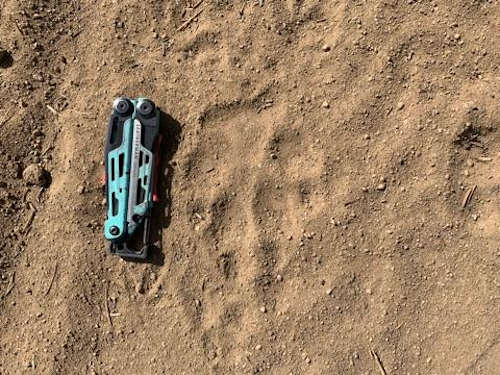
Wildlife officials said Friday that a gray wolf that’s traveled from Oregon to Ventura County may be the first gray wolf to be found that far south in California in nearly a century.
Between Sept. 20 and 26, the California Department of Fish and Wildlife received three separate reports of a gray wolf with a purple collar in northern Ventura County.
CDFW staff began site inspections and have confirmed recent wolf tracks in the vicinity.
Though CDFW does not have forensic evidence to confirm this at this time, the wolf could be OR-93.
The recent reports match the description of OR-93, who was fitted with a purple tracking collar by the U.S. Fish and Wildlife Service and Confederated Tribes of Warm Springs in Oregon in June 2020.
The collar was monitored by the Oregon Department of Fish and Wildlife, or ODFW, but it stopped transmitting in April.
Neither CDFW nor ODFW can determine the wolf’s current location, but if an opportunity arises, CDFW may attempt to capture and re-collar the wolf to continue tracking its journey.
Though historically all of California is wolf habitat, this is the farthest south in California that any gray wolf has been documented since one was captured in San Bernardino County in 1922.
OR-93 is a male wolf born in 2019. He dispersed from the White River pack in northern Oregon.
When his collar was providing information, he was tracked entering Modoc County on Jan. 30.
After briefly returning to Oregon, he reentered Modoc County on Feb. 4. On Feb. 24, he entered Alpine County after passing through portions of Lassen, Plumas, Sierra, Nevada, Placer, El Dorado, Amador and Calaveras counties.
On Feb. 25, he entered Mono County. In mid-March, he was in western Tuolumne County. By late March he was in Fresno County, and then entered San Benito County after crossing Highway 99 and Interstate 5.
He was in Monterey County on April 1 and his last collar transmission was from San Luis Obispo County on April 5.
Through April 5 he had traveled at least 935 air miles in California, a minimum average of 16 air miles per day.
In August, CDFW received trail camera video from May 15, showing a collared gray wolf in southwest Kern County that may have been OR-93.
The trail camera records wildlife use at a water trough on private property. Though the video was from May, the trail camera was not checked until August, when it was provided to CDFW.
CDFW strongly encourages the public to be aware that the wolf population continues to grow in California and to know the difference between wolves and coyotes.
Though gray wolves are generally much bigger than coyotes, they can sometimes be misidentified.
Officials encourage the public to review this page that provides tips for differentiating between wolves, coyotes and dogs.
Gray wolves are listed as endangered pursuant to California’s Endangered Species Act, or CESA. It is unlawful to harass, harm, pursue, hunt, shoot, wound, kill, trap or capture gray wolves.
Anyone who believes they have seen a wolf in California can report it to CDFW here.
Gray wolves pose very little safety risk to humans. CDFW is working to monitor and conserve California’s small wolf population and is collaborating with livestock producers and diverse stakeholders to minimize wolf-livestock conflicts.
Gray wolf management in California is guided by CESA as well as CDFW’s Conservation Plan for Gray Wolves in California, finalized in 2016.
More information is available on CDFW’s wolf webpage.
What's up for October? What to look for this month at sunrise and sunset, and two brilliant stars vying for the “pole” position.
On Oct. 10 look for the five-day-old crescent Moon to join Venus and bright, orange-colored Antares in the southwest after sunset. Then watch as Venus closes on Antares, for a close conjunction on the 15th and 16th, where the two will be only about a degree and a half apart.
During the last week of October, Mercury pops briefly into view for early risers.
Look for it about 10 degrees above the eastern horizon, or about the width of your fist held at arm's length, about 30 to 45 minutes before sunrise.
Then on Oct. 30, in the last couple of hours before daybreak, look for the 24-day-old crescent Moon to join the brilliant blue-white star Regulus.
All month long, look high overhead early in the evening to find two bright stars that take turns with Polaris being the North Star. Their names are Vega and Deneb. Both of these stars are part of the Summer Triangle, and we introduced the other member of the trio, Altair, in last month's video.
To find Vega and Deneb, look high overhead in the first few hours after it gets dark. They'll be two of the brightest stars you can see up there.
Vega is a bluish-white star, and like Altair, it's a fast rotator, spinning every 12 and a half hours, compared to the Sun's 27-day rotation. NASA's Spitzer Space Telescope found Vega to have a debris disk around it that could be similar to regions in our own solar system.
Deneb is a blue-white supergiant star that is fusing hydrogen at a phenomenal rate.
With this sort of fury, the party won't last all that much longer. Deneb is likely headed for an explosive end as a supernova within a few million years. Deneb is much farther away than most bright stars in our night sky. This means it's SUPER luminous to be that bright from so far away. Because it's so bright, it's one of the most distant stars you can see with the unaided eye.
These stars rotate around the northern celestial pole, and this time of year, they dip toward the western horizon before setting in the pre-dawn hours. Both Vega and Deneb are part of a special group of stars that take turns being the pole star in the north, as Earth's axis wobbles in a circle over a period of 26,000 years.
For now the distinction of "North Star" belongs to Polaris, for at least a few hundred years more.
Finally, Oct. 16 is International Observe the Moon Night, when everyone is invited to learn about the science and exploration of the Moon. Visit the link onscreen to find out how you can take part.
You can catch up on all of NASA's missions to explore the solar system and beyond at www.nasa.gov.
Preston Dyches works for NASA's Jet Propulsion Laboratory.
California’s COVID-19 Rent Relief Program reported that it has received nearly $3 billion in assistance requests to help households across the state that have suffered financial hardship because of the pandemic.
The program’s dashboard early Friday showed that it has received 309,168 applications — from both tenants and landlords — of which 227,388 household applications are complete.
The funds requested to date total approximately $2,963,969,356.
The program said 54,974 households have been served with $649,356,911 paid so far. Average assistance totals $11,812.
The state reported that 779 applications have been received from Lake County, of which 777 are complete.
Lake County applicants have sought $9,987,925 in assistance so far, with $1,768,474 paid.
A total of 160 Lake County households have been served, with assistance averaging $11,053.
At the city level, residents from the city of Clearlake have submitted 314 applications, of which 313 are complete.
Clearlake residents have requested $4,232,188, with $606,256 paid for 54 households. Average assistance is $11,227.
In Lakeport, 51 applications — all of which are complete — have been submitted, seeking $712,439 in assistance. To date, $16,569 has been paid to assist three households, with assistance averaging $5,523.
The program is not first-come, first-served. Applications are reviewed and assistance payments are processed based on tenant vulnerability factors.
On June 28, Gov. Gavin Newsom signed AB 832, which increased the level of assistance to 100% for both back rent and prospective rent and gave California the strongest eviction protections in the nation.
The extension of state-level eviction protections, which were initially established over a year ago, have provided much-needed housing stability for Californians throughout the pandemic, state officials said.
“The COVID-19 pandemic brought so much pain and economic disruption, particularly to low-wage workers and low-income renter households,” said Business, Consumer Services and Housing Agency Secretary Lourdes Castro Ramírez. “Working with over 130 community-based partners, we are reaching families hardest hit — 85% being very low- or extremely low-income — and making landlords whole. Rent relief has been a game changer for Californians at greatest risk of displacement or becoming homeless.”
Additional protections will be in place through the spring.
Beginning Oct. 1 and continuing through March 31, 2022, tenants earning less than 80% of the area median income will be protected through a pre-eviction diversion process through the courts, so long as they have submitted a completed application for rental relief through either the state or a locally administered program.
“We have been moving with a sense of urgency to ensure that renters and landlords who need assistance can get it as quickly as possible,” said Department of Housing and Community Development Director Gustavo Velasquez. “Keeping families stably housed continues to be a critical public health measure, as we continue to recover from the COVID-19 pandemic.”
Email Elizabeth Larson atThis email address is being protected from spambots. You need JavaScript enabled to view it. . Follow her on Twitter, @ERLarson, or Lake County News, @LakeCoNews.
The program’s dashboard early Friday showed that it has received 309,168 applications — from both tenants and landlords — of which 227,388 household applications are complete.
The funds requested to date total approximately $2,963,969,356.
The program said 54,974 households have been served with $649,356,911 paid so far. Average assistance totals $11,812.
The state reported that 779 applications have been received from Lake County, of which 777 are complete.
Lake County applicants have sought $9,987,925 in assistance so far, with $1,768,474 paid.
A total of 160 Lake County households have been served, with assistance averaging $11,053.
At the city level, residents from the city of Clearlake have submitted 314 applications, of which 313 are complete.
Clearlake residents have requested $4,232,188, with $606,256 paid for 54 households. Average assistance is $11,227.
In Lakeport, 51 applications — all of which are complete — have been submitted, seeking $712,439 in assistance. To date, $16,569 has been paid to assist three households, with assistance averaging $5,523.
The program is not first-come, first-served. Applications are reviewed and assistance payments are processed based on tenant vulnerability factors.
On June 28, Gov. Gavin Newsom signed AB 832, which increased the level of assistance to 100% for both back rent and prospective rent and gave California the strongest eviction protections in the nation.
The extension of state-level eviction protections, which were initially established over a year ago, have provided much-needed housing stability for Californians throughout the pandemic, state officials said.
“The COVID-19 pandemic brought so much pain and economic disruption, particularly to low-wage workers and low-income renter households,” said Business, Consumer Services and Housing Agency Secretary Lourdes Castro Ramírez. “Working with over 130 community-based partners, we are reaching families hardest hit — 85% being very low- or extremely low-income — and making landlords whole. Rent relief has been a game changer for Californians at greatest risk of displacement or becoming homeless.”
Additional protections will be in place through the spring.
Beginning Oct. 1 and continuing through March 31, 2022, tenants earning less than 80% of the area median income will be protected through a pre-eviction diversion process through the courts, so long as they have submitted a completed application for rental relief through either the state or a locally administered program.
“We have been moving with a sense of urgency to ensure that renters and landlords who need assistance can get it as quickly as possible,” said Department of Housing and Community Development Director Gustavo Velasquez. “Keeping families stably housed continues to be a critical public health measure, as we continue to recover from the COVID-19 pandemic.”
Email Elizabeth Larson at
LAKE COUNTY, Calif. — Unemployment rates in Lake County, across California and nationwide were down in August, according to reports from state and federal agencies that track joblessness.
Lake County’s unemployment rate in August was 7%, down from 7.4% in July and 9.5% in August 2020, according to the California Employment Development Department.
The California unemployment rate was 7.5% in August, slightly below July’s rate of 7.6%. The state’s jobless rate for August 2020 was 12.3%.
On the national level, the Bureau of Labor Statistics said August’s unemployment rate was 5.2%, down from 5.4% in July and 8.4% in August 2020.
Lake County’s August unemployment rate was its second-lowest since the pandemic started last year. May was the lowest at 6.9%.
In August, a busy month for the local agriculture industry, Lake County’s total farm jobs were up by 24.4% over July and 39.1% in a year-over comparison. Total nonfarm jobs were up by 1.8% over July and 5.1% over August 2021.
The EDD said California’s payroll jobs totaled 16,632,100 in August 2021, up 104,300 from July 2021 and up 874,300 from July of last year.
The state’s gain of 104,300 nonfarm jobs accounted for 44% of the nation’s 235,000 overall jobs gain in August, the EDD said.
Of the 2,714,800 jobs lost in March and April 2020 due to the COVID-19 pandemic, the EDD said California has now regained 1,686,000 jobs, or 62.1%.
In August, nine of California’s 11 industry sectors gained jobs, with government having the state’s largest month-over gain — 46,900 jobs — driven by hiring in local government education as a new school year begins and public schools reopen.
The educational and health services had the largest month-over job reduction — 6,300 — due a large decrease in health services, while trade, transportation and utilities lost 800 jobs.
Lake County’s jobless rate in August ranked it No. 36 out of California’s 58 counties.
Neighboring county jobless rates and ranks for August were: Colusa, 9.3%, No. 53; Glenn, 6.9%, No. 33; Mendocino, 6.1%, No. 21; Napa, 5.5%, No. 9; Sonoma, 5.3%, No. 7; and Yolo, 5.6%, No. 13.
Marin maintained its position as the lowest unemployment in the state at 4.4%.
Imperial County had the highest unemployment in California in August, 19.4%.
Email Elizabeth Larson atThis email address is being protected from spambots. You need JavaScript enabled to view it. . Follow her on Twitter, @ERLarson, or Lake County News, @LakeCoNews.
Lake County’s unemployment rate in August was 7%, down from 7.4% in July and 9.5% in August 2020, according to the California Employment Development Department.
The California unemployment rate was 7.5% in August, slightly below July’s rate of 7.6%. The state’s jobless rate for August 2020 was 12.3%.
On the national level, the Bureau of Labor Statistics said August’s unemployment rate was 5.2%, down from 5.4% in July and 8.4% in August 2020.
Lake County’s August unemployment rate was its second-lowest since the pandemic started last year. May was the lowest at 6.9%.
In August, a busy month for the local agriculture industry, Lake County’s total farm jobs were up by 24.4% over July and 39.1% in a year-over comparison. Total nonfarm jobs were up by 1.8% over July and 5.1% over August 2021.
The EDD said California’s payroll jobs totaled 16,632,100 in August 2021, up 104,300 from July 2021 and up 874,300 from July of last year.
The state’s gain of 104,300 nonfarm jobs accounted for 44% of the nation’s 235,000 overall jobs gain in August, the EDD said.
Of the 2,714,800 jobs lost in March and April 2020 due to the COVID-19 pandemic, the EDD said California has now regained 1,686,000 jobs, or 62.1%.
In August, nine of California’s 11 industry sectors gained jobs, with government having the state’s largest month-over gain — 46,900 jobs — driven by hiring in local government education as a new school year begins and public schools reopen.
The educational and health services had the largest month-over job reduction — 6,300 — due a large decrease in health services, while trade, transportation and utilities lost 800 jobs.
Lake County’s jobless rate in August ranked it No. 36 out of California’s 58 counties.
Neighboring county jobless rates and ranks for August were: Colusa, 9.3%, No. 53; Glenn, 6.9%, No. 33; Mendocino, 6.1%, No. 21; Napa, 5.5%, No. 9; Sonoma, 5.3%, No. 7; and Yolo, 5.6%, No. 13.
Marin maintained its position as the lowest unemployment in the state at 4.4%.
Imperial County had the highest unemployment in California in August, 19.4%.
Email Elizabeth Larson at
LAKE COUNTY, Calif. — Lake County’s own Clear Lake State Park is among 19 state parks designated to participate in a new free pass program for fourth graders and their families.
California State Parks, First Partner Jennifer Siebel Newsom and the Natural Resources Agency today announced the opportunity for fourth graders to apply for a free California State Parks Adventure Pass.
They can apply for the pass that will give them the opportunity to explore 19 select state parks free for a full year.
Clear Lake State Park officials said they are excited about the new opportunity.
“The California State Park Adventure Pass is an incredible new program that will help promote a healthier, more equitable California for all — a California where every child has the opportunity to explore, learn and benefit from our state’s natural wonders,” said First Partner Jennifer Siebel Newsom.
Championed by the First Partner, whose California for All Kids initiatives support children’s physical, mental and social-emotional well-being, the California State Park Adventure Pass Program expands the opportunity for fourth graders and their families to enjoy the benefits of connecting with nature, with each other and with their communities.
Applying for the free pass online is simple. All that is needed is a name, address, phone number and an email address.
For individuals who do not have access to a smartphone, computer or printer, and/or do not have an email address to use when applying online, they can still apply for a pass by visiting a State Parks Pass Sales Office or by calling 800-444-7275. For detailed information on the program and the list of participating park units, please visit http://parks.ca.gov/AdventurePass.
Assembly Bill 148, signed by Gov. Gavin Newsom in July, established the California State Park Adventure Pass Program, a three-year pilot program that waives day-use entrance fees to 19 state parks for fourth graders and their families for a full year.
Earlier this year, the governor also signed Senate Bill 129, legislation that includes $5.6 million to fund the new Pass program.
When determining which park units would be selected to participate in the pilot program, State Parks reviewed several factors including a diverse list of park units that span the state geographically.
By spreading the park units throughout the state, the department will be able to maximize participation by limiting the distance that would need to be traveled to the nearest participating park.
State Parks was also mindful of including a diverse collection of park units in terms of park features. The final list includes beaches, museums, redwoods, off-highway vehicle recreation, hiking trails and important cultural history.
The State of California believes in the right of all Californians to have access to recreational opportunities and enjoy the cultural, historic and natural resources found across the state. Too many Californians cannot access the state’s parks, beaches and outdoor spaces, nor the state’s array of museums and cultural and historical sites.
Given this, the California Natural Resources Agency and California State Parks are prioritizing efforts to expand all Californians’ access to park, open space, nature and cultural amenities. This priority requires reshaping funding and programs to expand opportunities to enjoy these places. Doing so advances Gov. Newsom’s strong personal commitment to building a “California for All.”
California State Parks, First Partner Jennifer Siebel Newsom and the Natural Resources Agency today announced the opportunity for fourth graders to apply for a free California State Parks Adventure Pass.
They can apply for the pass that will give them the opportunity to explore 19 select state parks free for a full year.
Clear Lake State Park officials said they are excited about the new opportunity.
“The California State Park Adventure Pass is an incredible new program that will help promote a healthier, more equitable California for all — a California where every child has the opportunity to explore, learn and benefit from our state’s natural wonders,” said First Partner Jennifer Siebel Newsom.
Championed by the First Partner, whose California for All Kids initiatives support children’s physical, mental and social-emotional well-being, the California State Park Adventure Pass Program expands the opportunity for fourth graders and their families to enjoy the benefits of connecting with nature, with each other and with their communities.
Applying for the free pass online is simple. All that is needed is a name, address, phone number and an email address.
For individuals who do not have access to a smartphone, computer or printer, and/or do not have an email address to use when applying online, they can still apply for a pass by visiting a State Parks Pass Sales Office or by calling 800-444-7275. For detailed information on the program and the list of participating park units, please visit http://parks.ca.gov/AdventurePass.
Assembly Bill 148, signed by Gov. Gavin Newsom in July, established the California State Park Adventure Pass Program, a three-year pilot program that waives day-use entrance fees to 19 state parks for fourth graders and their families for a full year.
Earlier this year, the governor also signed Senate Bill 129, legislation that includes $5.6 million to fund the new Pass program.
When determining which park units would be selected to participate in the pilot program, State Parks reviewed several factors including a diverse list of park units that span the state geographically.
By spreading the park units throughout the state, the department will be able to maximize participation by limiting the distance that would need to be traveled to the nearest participating park.
State Parks was also mindful of including a diverse collection of park units in terms of park features. The final list includes beaches, museums, redwoods, off-highway vehicle recreation, hiking trails and important cultural history.
The State of California believes in the right of all Californians to have access to recreational opportunities and enjoy the cultural, historic and natural resources found across the state. Too many Californians cannot access the state’s parks, beaches and outdoor spaces, nor the state’s array of museums and cultural and historical sites.
Given this, the California Natural Resources Agency and California State Parks are prioritizing efforts to expand all Californians’ access to park, open space, nature and cultural amenities. This priority requires reshaping funding and programs to expand opportunities to enjoy these places. Doing so advances Gov. Newsom’s strong personal commitment to building a “California for All.”