 How to resolve AdBlock issue?
News
The flood watch is in effect from late Saturday night through Sunday night.
The National Weather Service said an atmospheric river is forecast to focus over northwestern California during Sunday before shifting southward Sunday night or Monday, with the system expected to bring periods of moderate to heavy rainfall.
The forecast calls for 4 to 6 inches of rain to fall Sunday for coastal and valley locations, with 5 to 8 inches possible along southwest facing mountains and ridges.
Heavy rain combined with saturated soil from recent rains across the mountains will contribute toward possible flooding, and the forecast warns that low lying areas, creeks, streams, culverts and portions of urban areas may experience flooding due to heavy rainfall.
The Lake County forecast calls for the potential for up to a quarter of an inch on Saturday and between 1 and 2 inches of rain on Saturday night, coupled with gusty winds.
On Sunday the heaviest rain is expected, with up to 4 inches during the day and another three quarters of an inch possible on Sunday night. Winds of more than 30 miles per hour, with gusts of nearly 50 miles per hour, are forecast for parts of the county.
On Monday, rainfall amounts will taper off, totaling about a tenth of an inch. There also are chances of rain on Tuesday.
Temperatures through Friday will drop into the 40s at night, and range between the mid 50s to high 60s during the day.
Email Elizabeth Larson at
Built on industry-leading best practices and frameworks, Cal-Secure addresses critical gaps in the state’s information and cybersecurity programs while enabling the state to manage existing and future threats more effectively.
Cal-Secure defines a path for state entities to strengthen our cybersecurity measures and prioritize resources to manage the most significant cyber risks and safeguard those services for Californians who depend on them.
“Hackers steal our time, money and peace of mind. Protecting our data is among the most important things we can do to prevent disruption to our daily lives and our economy.” said Gov. Newsom. “We have to do more to safeguard the state’s critical infrastructure, intellectual property and our status as one of the world’s leading economies.”
Cal-Secure’s roadmap outlines actionable steps, with measurable success criteria, to ensure California’s Executive Branch has a world-class cybersecurity workforce, an empowered and right-sized federated cybersecurity oversight governance structure and effective cybersecurity defenses to all technology, including critical infrastructure.
The roadmap is broken into three categories — people, process and technology — each containing strategic priorities to address critical shortfalls or concerns.
These priorities include developing and unifying California’s diverse, innovative cybersecurity workforce to safeguard the data and systems used to deliver public services; providing effective oversight supported by a flexible governance model; and investing in technology and services to enhance cybersecurity capabilities at all state entities.
Cal-Secure is designed to improve cyber defenses statewide, regardless of the existing baseline capabilities of state government agencies and entities.
This plan builds on the key objectives of the California Homeland Security Strategy, or HSS, under which California established a goal to strengthen security and preparedness across cyberspace by enhancing safety and preparedness with state, federal, local, tribal and private sector stakeholders.
The Newsom Administration has advanced $260 million in recent investments at the Department of Technology and other state entities to bolster the state’s ability to prevent and respond to cyberattacks.
The state budget also includes $11.3 million one-time and $38.8 million ongoing to mature the state’s overall security posture, improve statewide information security initiatives, analyze cyber threat intelligence and mitigate potential threats.
Cal-Secure was created through a collaborative process with the California Cybersecurity Integration Center and its four critical partners: California Department of Technology, the California Governor’s Office of Emergency Services, California Highway Patrol and California Military Department and the state government security community.

Many Americans now have the green light to get a COVID-19 vaccine booster – and the flexibility to receive a different brand than the original vaccine they received.
On the heels of the Food and Drug Administration’s Sept. 22, 2021, emergency use authorization of a third dose – or “booster shot” – of the Pfizer/BioNtech vaccine for certain Americans, on Oct. 20, the agency also gave emergency authorization to a third Moderna shot and a second dose of the Johnson & Johnson vaccine.
On Oct. 21, the Centers for Disease Control and Prevention also recommended these vaccinations in light of the FDA’s authorization. The CDC’s signoff will make the Moderna booster shot available to people 65 and older, younger adults at higher risk of severe COVID-19 due to medical conditions and those who are at increased risk due to their workplace environment. People are now eligible for the Moderna booster six months after completion of their original series – as is already the case for the third Pfizer shot. The authorization made all Johnson & Johnson vaccine recipients eligible for a second shot two months after the initial dose.
Notably, the FDA and CDC also authorized a “mix-and-match” strategy, enabling eligible Americans to get a booster shot from a brand different from their original vaccine.
As an infectious disease expert, I have closely followed the development of the COVID-19 vaccines and the research on how immunity and vaccine efficacy shift over time.
With the swirling mass of news around how effective the COVID-19 vaccines are and who needs booster shots and when, it can be challenging and confusing to make sense of it all. But understanding how the immune system works can help bring clarity to the reasons some people could benefit from the authorized shots.
How vaccine efficacy evolves
The discussion and perceived urgency around booster shots has partially been driven by the occurrence of “breakthrough” COVID-19 infections in fully vaccinated people. The term breakthrough misleadingly implies that the vaccines failed, but this is not the case. The intention of the vaccine is to reduce hospitalizations and deaths, a goal that the COVID-19 vaccines continue to meet.
While the Pfizer/Biontech mRNA vaccine shows decreasing efficacy against asymptomatic and mild infections over the first six months after vaccination, studies show that it continues to be highly effective at preventing hospitalizations and deaths, including against the delta variant, in the first six months.
A clinical study of the Moderna vaccine showed that antibody levels remain strong after six months as well. But studies after the six-month mark have been mixed, with reports of waning antibody levels leaving some researchers concerned that a booster shot strategy is essential. However, the limited data left too many questions for the FDA and CDC to approve a booster shot for all Americans, at least at this time.

Still, the overwhelming majority of intensive care admissions and deaths from COVID-19 continue to be in unvaccinated people. The rare deaths from COVID-19 in vaccinated people are mostly in people with immune systems weakened either by age or underlying conditions, which is why booster shots have been authorized for these groups. While boosters clearly help the individual, it is just as important for everyone to get fully vaccinated to protect vulnerable people by reducing the overall number of cases in the community.
Vaccines rev up the immune system
All three of the authorized vaccines in the U.S. work by giving the body instructions for making the spike protein from the SARS-CoV-2 virus that causes COVID-19. The spike protein, which resembles a stem with three buds on the end, is what enables the actual virus to invade cells and cause infection. The mRNA vaccines by Pfizer/BioNtech and Moderna provide the blueprint for the spike protein in the form of mRNA in a drug-delivery system called a lipid nanoparticle. The Johnson & Johnson vaccine gives DNA instructions inside the coat of a different virus, called a viral vector.
The immune system quickly recognizes that these foreign proteins do not belong, and it generates an immune response to fight them off. These newfound defenses gear the body up to protect against the real virus. During this primary immune response, immune cells encounter spike proteins and, as a defense, they produce antibodies, “memory” cells and T-cells that can kill infected cells to prevent the virus from multiplying. Some of these antibodies and T-cells from the primary immune response persist over time, though they decrease during the first month after vaccination, while memory cells last much longer.
Then, when someone gets an additional dose of vaccine, the immune system goes through a secondary immune response. Thanks to the memory cells, the secondary immune response activates more rapidly, triggering lots of antibody production and T-cell activation. More mature antibodies are produced as well, and they are even better at trapping the spike proteins. And T-cells proliferate, helping to stop the intruder in its tracks. This type of secondary immune response can be activated again and again when repeat exposures to a vaccine – or booster doses – occur. Each time, the immune response mounts a stronger and more effective defense.
Mix-and-match vaccine boosters
Multiple studies, including preliminary research from the National Institutes of Health that is not yet peer-reviewed, have shown that the mix-and-match strategy is safe and effective at providing a significant immune boost.
Additionally, mixing vaccine types may be most beneficial in those who initially received a non-mRNA vaccine. The NIH data suggests that people who got the single-shot Johnson & Johnson vaccine had a bigger increase and achieved a higher antibody concentration after receiving an mRNA booster than if they received the Johnson & Johnson booster. For people who first received one of the mRNA vaccines, Pfizer or Moderna, followed by a third shot with Johnson & Johnson, the antibody response was similar to that seen in those who got a third, or homologous, mRNA dose.
Studies exploring why the mix-and-match strategy is more effective with some initial vaccines and not others are underway. Understanding this and the effectiveness of different vaccine combinations, including using vaccines that are authorized in other countries, will help improve vaccination strategies all over the world.
Interchanging vaccine types may have greater advantages in some people than in others, which will become clearer as more data is gathered. But the good news is that the immune response seems to get a solid boost from booster shots, regardless of which vaccine combination is used.
[Get The Conversation’s most important coronavirus headlines, weekly in a science newsletter]
Glenn J. Rapsinski, Pediatric Infectious Diseases Fellow, University of Pittsburgh Health Sciences
This article is republished from The Conversation under a Creative Commons license. Read the original article.

In 2021, California significantly increased the protection under the “homestead exemption” and the “homestead declaration.”
Until 2021, the amount of the homestead exemption (protection) varied from $75,000 to $175,000 depending on circumstances.
Now, the exemption amount varies between $300,000 and $600,000, adjusted annually for inflation, based on the countywide median sale price for a single-family home.
These two important exemptions can protect either all or a portion of a homeowner’s equity in one principal dwelling (home), owned either in their name or in the name of their spouse (or both), even if the spouses reside separately, against any unsecured creditors who obtain judgment liens against the home.
These exemptions apply regardless of whether the principal dwelling is owned outright or in a living trust. A dwelling includes a residence but can also include a mobile home, a trailer or a boat.
A judicial sale can only occur when the amount of a bid at a judicial auction exceeds the amount of the homestead exemption plus any additional amount necessary to satisfy all liens and encumbrances on the property.
If a sale occurs then a portion of the proceeds are exempt for six months after receipt, during which time they can be used to buy a new dwelling.
The homestead exemption, which applies automatically, protects a certain amount of equity against judicial foreclosures by judgment creditors of a person’s or a family’s principal dwelling in California. It also applies when a homestead is damaged, destroyed, or acquired for public use to the proceeds.
Equity is the amount by which the value of your principal residence exceeds the combined value of all secured loans (typically mortgages and equity lines of credit).
The automatic homestead exemption does not protect proceeds from a voluntary sale. That additional protection requires a declaration of homestead.
Next, the declaration of homestead requires the homeowner to file a sworn and notarized declaration of homestead form with the county where the principal dwelling is situated.
Once filed, the declared homestead protects the same amount of equity as the homestead exemption, but this time also with respect to sale proceeds from voluntary sales of the principal dwelling.
If a home is sold voluntarily, then the homeowner has six months protection to use the proceeds to purchase a new dwelling and record a new homestead declaration within that same period.
The date when the declaration of homestead is filed is very important. The declaration does not pertain to judgment liens filed with the county prior to the declaration. So filing one’s declaration early when no judgment liens are imminent is prudent.
Moreover, if the homeowner buys a new home within six months, the homeowner can record a new declaration of homestead. Any equity from the sale of the first home that is used to buy the second home is also protected.
The declaration of homestead, however, does not protect against the recordation of child, family, or spousal support judgments. Like elsewhere, California law treats support obligations as exceptional and sacrosanct.
Consider an example: John and Mary Smith, a hypothetical married couple who own a house worth $400,000, with an unpaid balance of $200,000 owed on the mortgage; the Smiths have $200,000 of equity.
The Smiths owe $80,000 to a judgment creditor who has filed a judgment lien against their home. The Smiths qualify for a homestead exemption amount of at least $300,000. Thus, all $200,000 equity is protected from judgment creditors.
However, if the Smiths had paid off their mortgage then their equity would be the full $400,000 house value and the exemption amount would depend on in which county they reside in California.
Thus, having some unpaid mortgage can help keep the equity within the exemption amount and avoid a forced sale of the residence.
The foregoing is not legal advice. If needing guidance regarding the homestead exemption or homestead declaration consult an attorney.
Dennis A. Fordham, attorney, is a State Bar-Certified Specialist in estate planning, probate and trust law. His office is at 870 S. Main St., Lakeport, Calif. He can be reached at
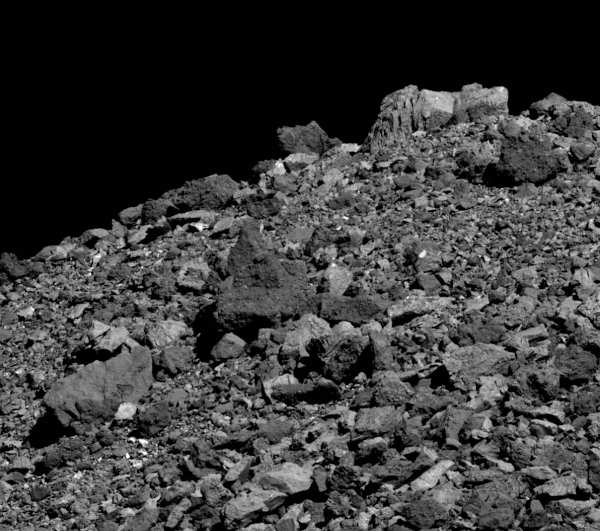
Scientists thought Bennu's surface was like a sandy beach, abundant in fine sand and pebbles, which would have been perfect for collecting samples.
Past telescope observations from Earth had suggested the presence of large swaths of fine-grained material smaller than a few centimeters called fine regolith.
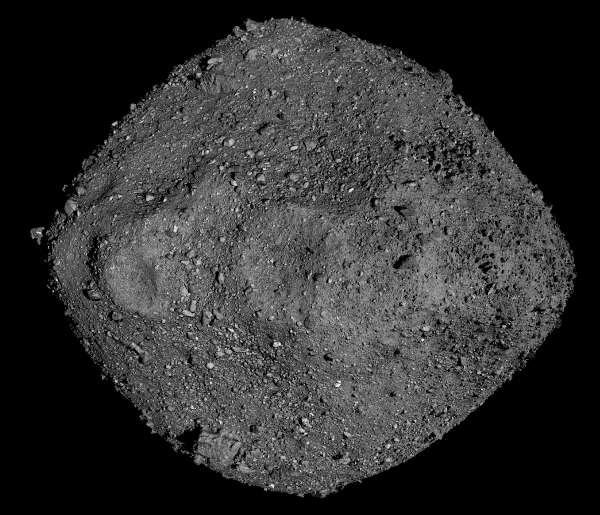
But when NASA's OSIRIS-REx mission arrived at Bennu in late 2018, the mission saw a surface covered in boulders.
The mysterious lack of fine regolith became even more surprising when mission scientists observed evidence of processes potentially capable of grinding boulders into fine regolith.
New research, published in Nature and led by Saverio Cambioni, of the University of Arizona, used machine learning and surface temperature data to solve the mystery.
Cambioni conducted the research at the university's Lunar and Planetary Laboratory. He and his colleagues ultimately found that Bennu's highly porous rocks are responsible for the surface's surprising lack of fine regolith.
"The 'REx' in OSIRIS-REx stands for Regolith Explorer, so mapping and characterizing the surface of the asteroid was a main goal," said study co-author and OSIRIS-REx Principal Investigator Dante Lauretta, a Regents Professor of Planetary Sciences at the University of Arizona. "The spacecraft collected very high-resolution data for Bennu's entire surface, which was down to 3 millimeters per pixel at some locations. Beyond scientific interest, the lack of fine regolith became a challenge for the mission itself, because the spacecraft was designed to collect such material."
A rocky start and solid answers
"When the first images of Bennu came in, we noted some areas where the resolution was not high enough to see whether there were small rocks or fine regolith. We started using our machine learning approach to distinguish fine regolith from rocks using thermal emission (infrared) data," Cambioni said.
The thermal emission from fine regolith is different from that of larger rocks, because the size of its particles controls the former, while the latter is controlled by rock porosity.
The team first built a library of thermal emissions associated with fine regolith mixed in different proportions with rocks of various porosity.
Next, they used machine-learning techniques to teach a computer how to "connect the dots" between the examples, Cambioni said. They analyzed 122 areas on the surface of Bennu, that were observed both during the day and the night.
"Only machine learning could efficiently explore a dataset this large," Cambioni said.
Cambioni and his collaborators found something surprising when the data analysis was completed: the fine regolith was not randomly distributed on Bennu.
Instead, it was up to several tens of percent in those very few areas where rocks are non-porous, and systematically lower where rocks have higher porosity, which is most of the surface.
The team concluded that very little fine regolith is produced from Bennu's highly porous rocks because these are compressed rather than fragmented by meteoroid impacts. Like a sponge, the voids within rocks cushion the blow from incoming meteoroids. These findings are also in agreement with laboratory experiments from other research groups.
"Basically, a big part of the energy of the impact goes into crushing the pores restricting the fragmentation of the rocks and the production of new fine regolith," said study co-author Chrysa Avdellidou, a postdoctoral researcher at the French National Centre for Scientific Research (CNRS) – Lagrange Laboratory of the Côte d'Azur Observatory and University in France. Additionally, Cambioni and colleagues showed that cracking caused by the heating and cooling of Bennu's rocks as the asteroid rotates through day and night proceeds more slowly in porous rocks than in denser rocks, further frustrating the production of fine regolith.
"When OSIRIS-REx delivers its sample of Bennu (to Earth) in September 2023, scientists will be able to study the samples in detail," said Jason Dworkin, OSIRIS-REx project scientist at NASA's Goddard Space Flight Center in Greenbelt, Maryland. "This includes testing the physical properties of the rocks to verify this study."
Other missions have evidence to support the team's findings. The Japan Aerospace and Exploration Agency (JAXA) Hayabusa2 mission to Ryugu, a carbonaceous asteroid like Bennu, found that Ryugu also lacks fine regolith and has high-porosity rocks.
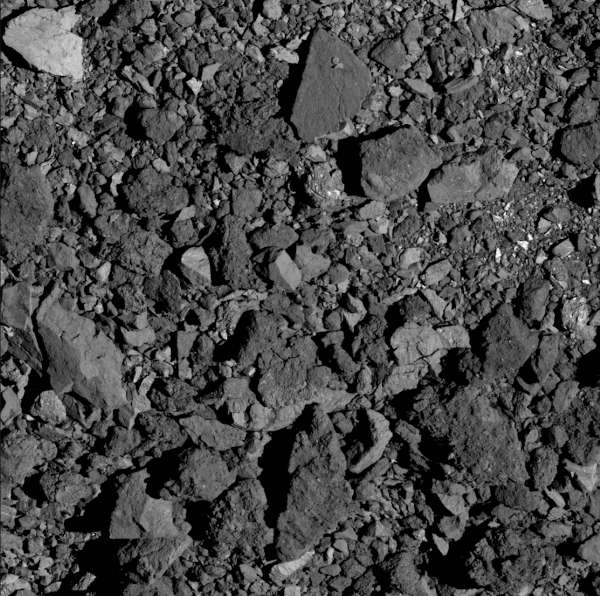
Conversely, JAXA's Hayabusa mission in 2005 revealed abundant fine regolith on the surface of asteroid Itokawa, an S-type asteroid with rocks of a different composition than Bennu and Ryugu.
A previous study also from Cambioni and colleagues provided evidence that its rocks are less porous than Bennu's and Ryugu's using observations from Earth.
"For decades, astronomers disputed that small, near-Earth asteroids could have bare-rock surfaces," said study co-author Marco Delbo, research director with CNRS, also at the Lagrange Laboratory. "The most indisputable evidence that these small asteroids could have substantial fine regolith emerged when spacecraft visited S-type asteroids Eros and Itokawa in the 2000s and found fine regolith on their surfaces."
The team predicts that large swaths of fine regolith should be uncommon on carbonaceous asteroids, the most common of all asteroid types observed, and which the team expects to have high-porosity rocks like Bennu. By contrast, they predict terrains rich in fine regolith to be common on S-type asteroids, the second-most populous type of asteroids observed in the solar system, which they expect to have denser, less porous rocks than carbonaceous asteroids.
"This is an important piece in the puzzle of what drives the diversity of asteroids' surfaces," Cambioni said. "Asteroids are thought to be relics of the early solar system, so understanding the evolution they have undergone in time is crucial to comprehend how the solar system formed and evolved. Now that we know this fundamental difference between carbonaceous and S-type asteroids, future teams can better prepare sample collection missions depending on the nature of the target asteroid."
Cambioni is continuing his research on planetary diversity as a distinguished postdoctoral fellow in the Department of Earth, Atmospheric and Planetary Sciences at the Massachusetts Institute of Technology.
The University of Arizona leads the OSIRIS-REx science team and the mission's science observation planning and data processing. NASA's Goddard Space Flight Center in Greenbelt, Maryland, provides overall mission management, systems engineering, and the safety and mission assurance for OSIRIS-REx. Lockheed Martin Space in Littleton, Colorado, built the spacecraft and provides flight operations. Goddard and KinetX Aerospace are responsible for navigating the OSIRIS-REx spacecraft. OSIRIS-REx is the third mission in NASA's New Frontiers Program, managed by NASA's Marshall Space Flight Center in Huntsville, Alabama, for the agency's Science Mission Directorate at NASA Headquarters in Washington, D.C.
Mikayla Mace Kelley is with the University of Arizona.
Clearlake Police Chief Andrew White reported that his agency is trying to determine what led to the death of 44-year-old Steven Chrisman of Clearlake, who died after being assaulted.
At 9:30 p.m. Saturday, Oct. 16, the Clearlake Police Department received a call from a citizen reporting an unresponsive male lying on the ground in the rear parking lot of the Burns Valley Shopping Center, located in the 14900 block of Olympic Drive.
Police said officers and paramedics were dispatched to the scene, where officers located a male adult in the rear parking lot of the shopping center.
Paramedics with Lake County Fire Protection District attempted life saving measures but the victim, identified as Chrisman, was pronounced deceased on scene.
Police concluded Chrisman was the victim of an assault by an unknown subject. Detectives with the Clearlake Police Department responded to the scene for processing of evidence.
At this time, the department said the motive is unclear and the investigation is ongoing.
The circumstances which led to Chrisman’s death are being withheld by police at this time to preserve the case integrity.
Anyone with information related to this case is encouraged to call Det. Leonardo Flores at 707-994-8251, Extension 315.