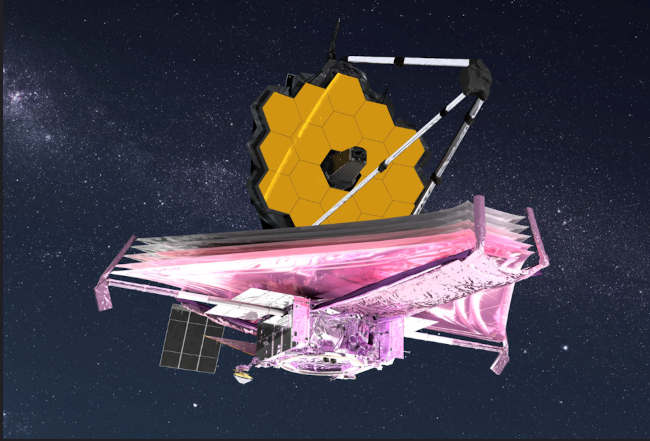
This artist’s conception of the James Webb Space Telescope in space shows all its major elements fully deployed. The telescope was folded to fit into its launch vehicle, and then was slowly unfolded over the course of two weeks after launch. Credits: NASA GSFC/CIL/Adriana Manrique Gutierrez. NASA’s James Webb Space Telescope team fully deployed its 21-foot, gold-coated primary mirror, successfully completing the final stage of all major spacecraft deployments to prepare for science operations.
A joint effort with the European Space Agency and Canadian Space Agency, the Webb mission will explore every phase of cosmic history — from within our solar system to the most distant observable galaxies in the early universe.
“Today, NASA achieved another engineering milestone decades in the making. While the journey is not complete, I join the Webb team in breathing a little easier and imagining the future breakthroughs bound to inspire the world,” said NASA Administrator Bill Nelson. “The James Webb Space Telescope is an unprecedented mission that is on the precipice of seeing the light from the first galaxies and discovering the mysteries of our universe. Each feat already achieved and future accomplishment is a testament to the thousands of innovators who poured their life’s passion into this mission.”
The two wings of Webb’s primary mirror had been folded to fit inside the nose cone of an Arianespace Ariane 5 rocket prior to launch. After more than a week of other critical spacecraft deployments, the Webb team began remotely unfolding the hexagonal segments of the primary mirror, the largest ever launched into space. This was a multi-day process, with the first side deployed Jan. 7 and the second Jan. 8.
Mission Operations Center ground control at the Space Telescope Science Institute in Baltimore began deploying the second side panel of the mirror at 8:53 a.m. EST. Once it extended and latched into position at 1:17 p.m. EST, the team declared all major deployments successfully completed.
The world’s largest and most complex space science telescope will now begin moving its 18 primary mirror segments to align the telescope optics.
The ground team will command 126 actuators on the backsides of the segments to flex each mirror — an alignment that will take months to complete. Then the team will calibrate the science instruments prior to delivering Webb’s first images this summer.
“I am so proud of the team — spanning continents and decades — that delivered this first-of-its kind achievement,” said Thomas Zurbuchen, associate administrator for the Science Mission Directorate in NASA Headquarters in Washington. “Webb’s successful deployment exemplifies the best of what NASA has to offer: the willingness to attempt bold and challenging things in the name of discoveries still unknown.”
Soon, Webb will also undergo a third mid-course correction burn — one of three planned to place the telescope precisely in orbit around the second Lagrange point, commonly known as L2, nearly one million miles from Earth.
This is Webb’s final orbital position, where its sunshield will protect it from light from the Sun, Earth, and Moon that could interfere with observations of infrared light. Webb is designed to peer back over 13.5 billion years to capture infrared light from celestial objects, with much higher resolution than ever before, and to study our own solar system as well as distant worlds.
“The successful completion of all of the Webb Space Telescope’s deployments is historic,” said Gregory L. Robinson, Webb program director at NASA Headquarters. “This is the first time a NASA-led mission has ever attempted to complete a complex sequence to unfold an observatory in space — a remarkable feat for our team, NASA, and the world.”
NASA’s Science Mission Directorate oversees the mission. NASA’s Goddard Space Flight Center in Greenbelt, Maryland, manages the project for the agency and oversees the Space Telescope Science Institute, Northrop Grumman, and other mission partners.
In addition to Goddard, several NASA centers contributed to the project, including Johnson Space Center in Houston, the Jet Propulsion Laboratory in Pasadena, Marshall Space Flight Center in Huntsville, Alabama, Ames Research Center in Silicon Valley, and others.
LAKE COUNTY, Calif. — With numerous state, federal and local offices to be on the ballot in the June primary, the Lake County Registrar of Voters Office said Friday that candidates are now able to begin taking out papers to begin the election process.
Registrar Maria Valadez reported that the local offices up for election on June 7 are the county superintendent of schools, District 2 county supervisor, District 3 county supervisor, assessor-recorder, county clerk-auditor, district attorney, sheriff-coroner and treasurer-tax collector.
So far, several incumbents and some new candidates have filed candidate intention statements, Valadez said Friday.
The incumbents who have filed include Superintendent of Schools Brock Falkenberg, County Clerk-Auditor Cathy Saderlund, Sheriff-Coroner Brian Martin and District Attorney Susan Krones.
Anthony Farrington, who plans to challenge Krones for the district attorney’s job, also has filed a statement, Valadez said.
Patrick Sullivan has filed the statement to run for treasurer-tax collector, Valadez said. Incumbent Barbara Ringen has previously stated she did not plan to seek reelection.
For the assessor-recorder, incumbent Richard Ford hasn’t filed the statement yet but he told Lake County News he intends to do so.
Valadez said Hannah Lee has filed a statement to also run against Ford for the assessor-recorder job.
Candidates for the District 2 and 3 supervisorial seats can’t begin to pull any paperwork until after Jan. 11, Valadez said.
However, Lake County News confirmed with the incumbents, District 2 Supervisor Bruno Sabatier and District 3 Supervisor EJ Crandall, that they would both be running for reelection. They are completing their first terms.
Those early filings, however, are just an initial step, and Valadez emphasized there are other parts of the process to complete before they officially become candidates and have their names on the ballot.
The registrar’s office said candidates for those elective offices may submit “in-lieu-of-filing fee petitions” containing signatures of registered voters in the jurisdiction in which he or she seeks nomination, to offset all or part of the cost of their filing fee.
The in-lieu-of-filing petitions are available for voter-nominated offices and countywide offices between Jan. 3 and Feb. 9 and for county Board of Supervisor candidates starting Jan. 11 and continuing until Feb. 9, the elections office said.
The registrar’s office said the in-lieu-of-filing fee petitions are available to countywide candidates during regular office hours of 8 a.m. to 5 p.m. Monday through Friday. The office is closed on cunty holidays and weekends.
The deadline to file the in-lieu-of-filing fee petitions with the Lake County Registrar of Voters’ Office is the close of business on Wednesday, Feb. 9.
There are still more steps beyond those petitions, including the requirement that all candidates must file a declaration of candidacy form and nomination papers within the nomination period of Feb. 14 through March 11 in order for their name to be printed on the June 7 primary election ballot.
In addition to local offices to be filled, Valadez said the June 7 primary election will include several state offices: governor, lieutenant governor, secretary of state, controller, treasurer, attorney general, insurance commissioner, District 2 Board of Equalization member and the nonpartisan superintendent of public instruction.
Federal offices on the ballot in June will include United States representative, District 4; United States senator; State Senate, District 2; and State Assembly member, District 4.
Voters wanting more information about filing for any of these elective offices may contact the Registrar of Voters Office in person at the Lake County Courthouse, 255 N Forbes St, Room 209, Lakeport or by phone at 707-263-2372.
Email Elizabeth Larson at This email address is being protected from spambots. You need JavaScript enabled to view it.. Follow her on Twitter, @ERLarson, or Lake County News, @LakeCoNews.
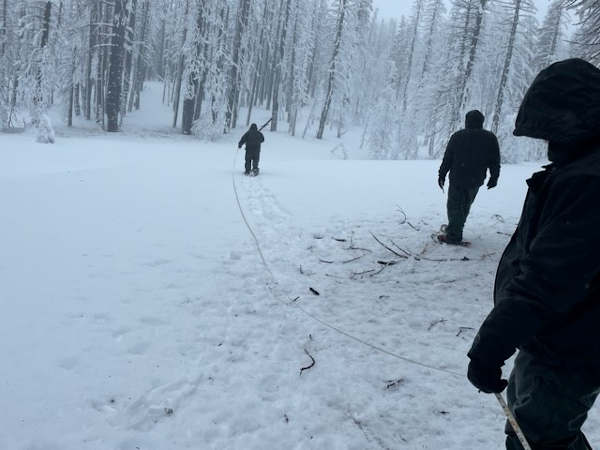
Forest staff from Covelo Ranger Station conduct a snow survey near Anthony Peak in Northern California. Photo courtesy of the Mendocino National Forest. NORTHERN CALIFORNIA — Recent winter storms have brought an abundance of snow, ice and downed trees to Mendocino National Forest.
Forest officials want visitors to be aware of winter weather conditions and hazards when traveling in the forest.
Some areas are seasonally closed, and many places can become dangerous with winter weather.
Forest officials ask visitors to research destinations and double check the weather forecasts and road conditions before making a trip to the forest.
“Our first snow survey in 2022 measured an average 60 inches of snow depth near Anthony Peak Lookout. That amount of snow and the wind has had a significant impact on our trail system with downed trees and saturated soils as that snow melts,” said Upper Lake District Ranger Frank Aebly.
Each year staff from the Covelo Ranger Station conduct surveys as part of the California Cooperative Snow Surveys, which is funded by the California Department of Water Resources.
Historical data from the Anthony Peak snow survey goes back to 1944 and is available on the California Department of Water Resources website. That site shows the 60 inches of snow recorded this much is the largest amount reported at Anthony Peak since March 2019,
Off-highway vehicle, or OHV, trails can also close during wet weather, if precipitation reaches two inches within 24 hours or if soils become saturated.
OHV trail riders need to be aware that downed trees and snow will impact trail access, forest officials said.
“If you’re coming to the forest this weekend to enjoy the snow or ride the OHV trails, please be prepared and make safe decisions,” said Aebly. “Know your limits. Pack extra layers, waterproof clothing and safety equipment.”
Downed trees and icy roads and trails are not the only hazards to forest staff and the public.
Because much of the forest is in a burn scar, wet or windy weather can result in landslides, rockfall, erosion, debris flows and flooding.
Visitors should prepare for alternative ways out in case roads become impassable.
LAKE COUNTY, Calif. — The Health Services Department has been made aware that local emergency departments have recently seen an increase in patients seeking non-emergent medical services.
Some people with mild symptoms that can be associated with COVID-19 are continuing to utilize local emergency rooms for COVID testing, while others have sought vaccination at the hospitals.
Different, more appropriate, local resources are available to meet those needs, health officials said.
“Please remember, we are a small, rural county, and we have limited intensive care and emergency medicine resources,” said Lake County interim Public Health Officer Gary Pace, MD, MPH.
“The limited staffed beds and other resources we have must be reserved for those in medical distress; those in need of immediate care. Use of these resources for other purposes, like routine COVID-19 testing for people with only mild symptoms, extends wait times, and delays care for those in the greatest need,” Pace said.
“People with mild symptoms should contact their medical providers and nursing advice lines, rather than going straight to the emergency room,” continued Pace. “If you are in need of immediate medical care, go to the ER. If you are mildly ill, use other resources.”
If you have symptoms, or believe you may have been exposed to COVID-19, accessing testing is very important.
Here are some answers to Frequently Asked Questions that can help you access appropriate resources to fit your situation.
What testing types are available? How long does it take to get results?
· PCR (Polymerase Chain Reaction) tests are sent out for analysis, and results are typically available in 24-48 hours. Considered a bit more accurate, PCR tests can show a positive result long after someone is actually contagious.
· Antigen (or Rapid) tests are much more available now, and provide results in 15 minutes. Rapid testing offers a pretty reliable indication of whether someone is actually contagious.
Where should I go if I need COVID-19 testing or vaccination?
Testing is generally available from the following sources:
· OptumServe’s Mobile Van (PCR testing);
· Clinics and Pharmacies around Lake County (PCR and some rapid/antigen resources);
· Sites that provide vaccination (these typically have rapid testing available);
· Schools (contact your school for information);
· Nonprofits: Several shipments of antigen tests have been delivered to local nonprofits (churches, food banks, senior centers, etc.) to use to help people access testing. Check with groups in your community, and if they don’t have any and want some, please call the Health Services Department’s MHOAC line, 707-263-8174.
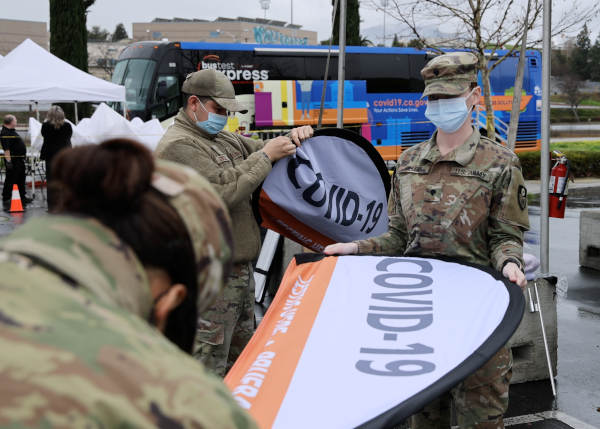
California National Guard have been activated to assist communities with test sites as the Omicron variant of COVID-19 continues to spread. California National Guard personnel are shown here arriving at Antioch Community Center testing site on Friday, January 7, 2022. Photo courtesy of the Governor’s Office. Gov. Gavin Newsom on Friday announced that he has activated the California National Guard to support local communities with additional testing facilities and capacity amid the national surge in COVID-19 cases driven by the Omicron variant.
“California has led the country’s fight against COVID-19, implementing first-in-the-nation public health measures that have helped save tens of thousands of lives,” said Gov. Newsom. “We continue to support communities in their response to COVID by bolstering testing capacity.”
This new action is on top of the existing 6,000 testing sites that have been set up across the state, the recent demand-based expansion of hours at state-operated sites and the 9.6 million tests that the state has distributed to schools since early December.
The announcement comes as Omicron continues to spread rapidly across the globe, accounting for at least 80% of COVID-19 cases in California.
The National Guard plan will deploy over 200 Cal Guard members across 50 Optum Serve sites around the state, providing interim clinical staff while permanent staff are hired, adding capacity for walk-ins, assisting with crowd control and back-filling for staff absences — all in an effort to conduct more tests for more Californians.
Additional members of the Guard will be deployed next week in similar capacities.
These measures will bolster California’s already robust testing program — the most extensive in the nation. Currently, 90% of Californians live within a 30-minute drive of a site. Amidst the surge, the state has been able to maintain a 48-hour turn around for PCR tests.
To date, California has administered almost 67 million vaccination doses and over 122.7 million tests. In recent months, Gov. Newsom implemented a series of measures to slow the spread of COVID-19, including first-in-the-nation vaccine and masking measures requiring that workers in health care settings be fully vaccinated, announcing plans to add the COVID-19 vaccine to the list of vaccinations required to attend school in-person when fully approved, requiring masking in schools and implementing a standard that all school staff and all state workers either show proof of full vaccination or be tested.
To help slow the spread of COVID-19, Californians are encouraged to get vaccinated, get boosted, wear a mask indoors and get tested if sick.
CLEARLAKE, Calif. — Clearlake Animal Control this week continues to offer a big group of dogs to new homes.
The City of Clearlake Animal Association also is seeking fosters for the animals waiting to be adopted.
Call the Clearlake Animal Control shelter at 707-273-9440, or email This email address is being protected from spambots. You need JavaScript enabled to view it. to inquire about adoptions and schedule a visit to the shelter.
Visit Clearlake Animal Control on Facebook or on the city’s website.
The newest dogs are listed at the top of the following list.
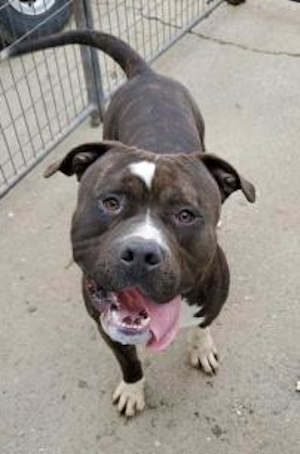
“Andy.” Photo courtesy of Clearlake Animal Control. ‘Andy’
“Andy” is a male American pit bull mix with a short gray and white coat.
He is dog No. 48995415.
“Arnold.” Photo courtesy of Clearlake Animal Control. ‘Arnold’
“Arnold” is a male American Staffordshire terrier mix with a short brindle coat with white markings.
He is dog No. 49029348.
“Bear.” Photo courtesy of Clearlake Animal Control. ‘Bear’
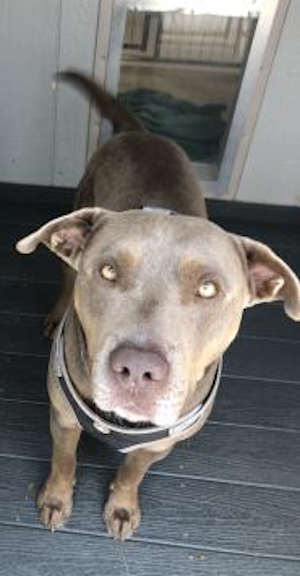
“Bear” is a male Labrador retriever-American pit bull mix with a short charcoal and fawn coat.
“Bear No. 2” is a male American pit bull mix with a short tan coat.
He has been neutered.
He is dog No. 48731556.
“Bella.” Photo courtesy of Clearlake Animal Control. ‘Bella’
“Bella” is a female American pit bull mix with a short gray brindle coat.
She has been spayed.
She is dog No. 48448381.
“Gingy.” Photo courtesy of Clearlake Animal Control. ‘Gingy’
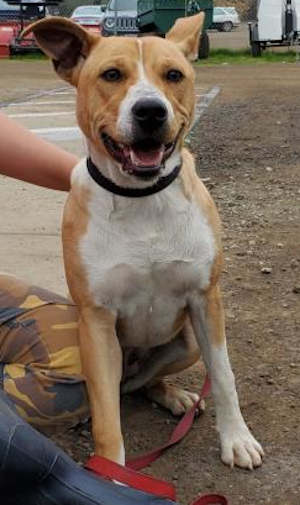
“Gingy’ is a female terrier mix with a tan and white coat.
She is dog No. 49228146.
“Holly.” Photo courtesy of Clearlake Animal Control. ‘Holly’
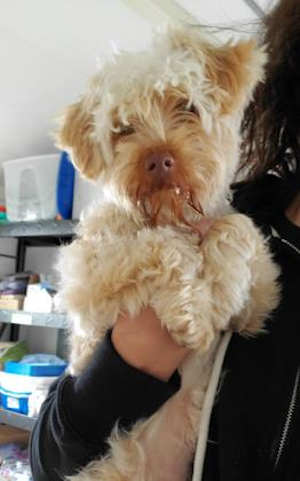
“Holly” is a female terrier mix with a beige coat.
She is dog No. 49159116.
“Isabella.” Photo courtesy of Clearlake Animal Control. ‘Isabella’
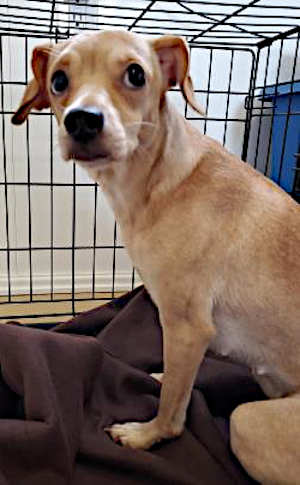
“Isabella” is a female Chihuahua mix with a short tan coat.
She is dog No. 49292130.
“Levi.” Photo courtesy of Clearlake Animal Control. ‘Levi’
“Levi” is a male golden retriever-Labrador retriever mix.
He has a short golden coat.
He is dog No. 48975687.
“Maria.” Photo courtesy of Clearlake Animal Control. ‘Maria’
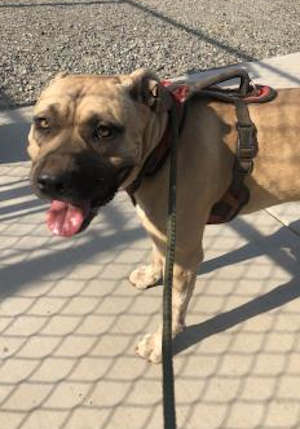
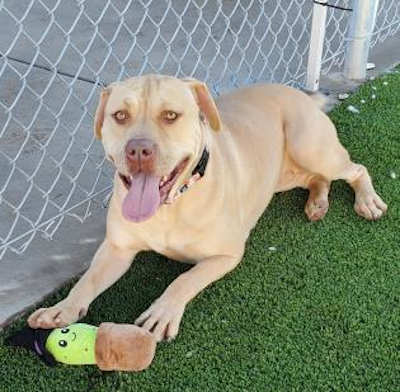
“Maria” is a female Shar-Pei mix with a short tan coat.
She is dog No. 49047315.
“Mitzi.” Photo courtesy of Clearlake Animal Control. ‘Mitzi’
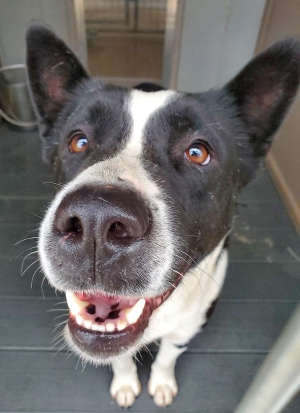
“Mitzi” is a female Australian cattle dog mix with a medium-length black and white coat.
She has been spayed.
She is dog No. 48443306.
“Nala.” Photo courtesy of Clearlake Animal Control. ‘Nala’
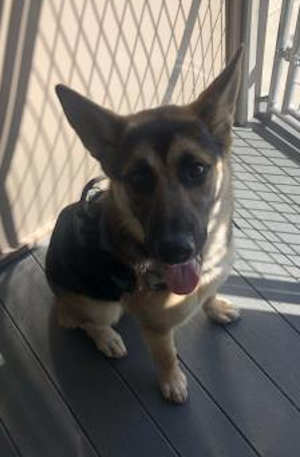
“Nala” is a 1-year-old female German shepherd mix.
She has a medium-length black and tan coat.
She is dog No. 48289638.
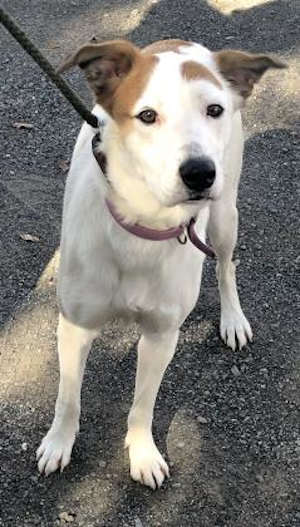
“Priscilla.” Photo courtesy of Clearlake Animal Control. ‘Priscilla’
“Priscilla” is a female Brittany spaniel mix with a white and copper coat.
She is dog No. 49089138.
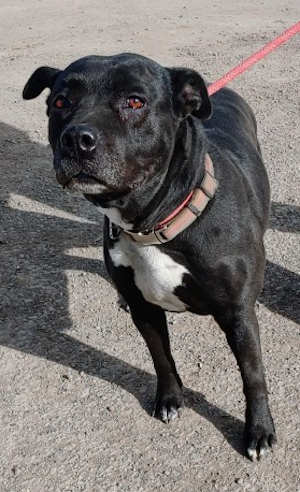
“Sassy.” Photo courtesy of Clearlake Animal Control. ‘Sassy’
“Sassy” is a female American pit bull mix with a short black coat.
She has been spayed.
She is dog No. 48443128.
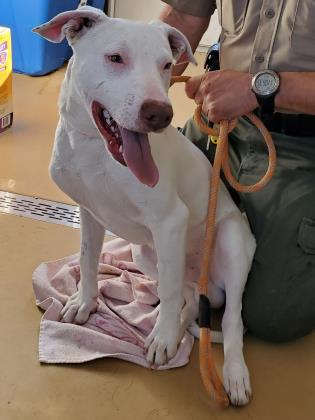
“Snowball.” Photo courtesy of Clearlake Animal Control. ‘Snowball’
“Snowball” is a male American Staffordshire mix terrier with a white coat.
He is dog No. 49159168.
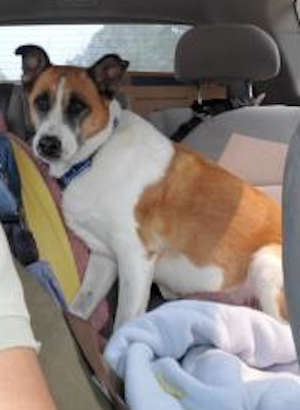
“Tanisha.” Photo courtesy of Clearlake Animal Control. ‘Tanisha’
“Tanisha” is a female Australian cattle dog mix with a short red and white coat.
She has been spayed.
She is dog No. 48443302.
“Terry.” Photo courtesy of Clearlake Animal Control. ‘Terry’
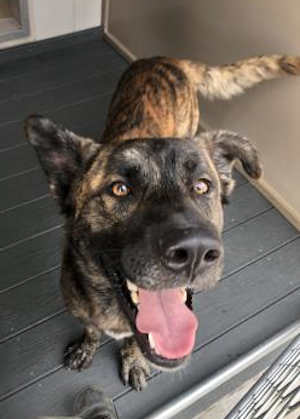
“Terry” is a male shepherd mix with a short brindle coat.
He is dog No. 48443693.
“Turk.” Photo courtesy of Clearlake Animal Control. ‘Turk’
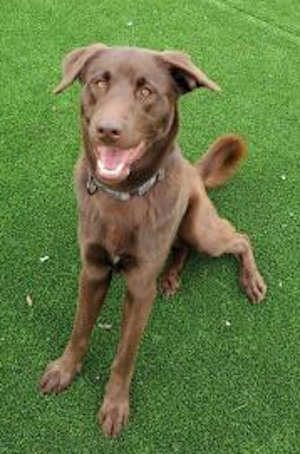
“Turk” is a male chocolate Labrador retriever mix.
He is dog No. 48911836.
“Willie.” Photo courtesy of Clearlake Animal Control. ‘Willie’
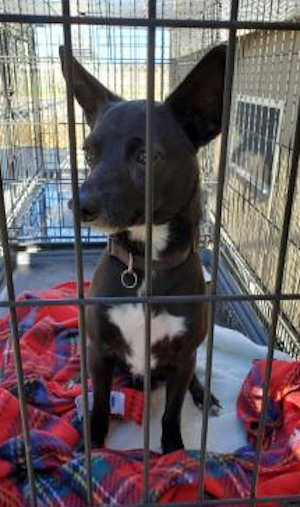
“Willie” is a male Chihuahua mix with a short black coat and white markings.
He is dog No. 49141640.
“Winnie.” Photo courtesy of Clearlake Animal Control. ‘Winnie’
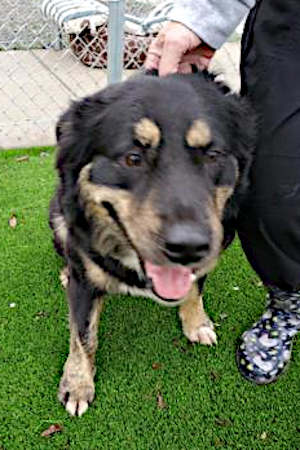
“Winnie” is a female Doberman pinscher-Australian shepherd mix with a short tricolor coat.
She has been spayed.
She is dog No. 49228128.
Email Elizabeth Larson at This email address is being protected from spambots. You need JavaScript enabled to view it.. Follow her on Twitter, @ERLarson, or Lake County News, @LakeCoNews.
 How to resolve AdBlock issue?