 How to resolve AdBlock issue?
News
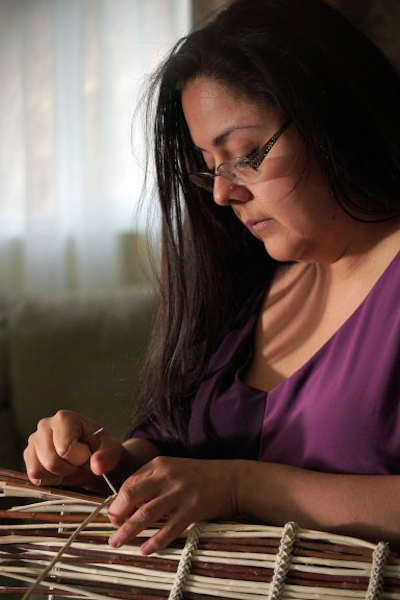
LAKE COUNTY, Calif. — When Pomo basket weaver Corine Pearce was just 9 years old, her great-grandmother came to her in a dream to tell her that she could weave baskets.
Pearce, who is a member of the Little River Band of Pomo Indians in Redwood Valley and has lineage in Lake County through her Pomo grandfather, was on a school camping trip at the time of her dream. A presenter had come to talk about baskets, and later, while Peace slept under a willow tree, she had the dream that changed her life.
As she slept, she dreamed that she walked to her great-grandmother’s house, where she sat on her lap. Touching the young Pearce’s hands, her great-grandmother said, “You can weave. You’ve got my hands, you can weave.”
Pearce says that when she awoke the next morning, she looked at the willow tree under which she slept in an entirely different way. She saw it through the eyes of a basket weaver.
That day she harvested willow and wove a little basket, and she’s been harvesting and weaving ever since.
Her great-grandmother was Mary Francisco, a highly skilled Pomo basket weaver, and though she wasn’t alive at the time of Pearce’s dream, through it a passion for basket weaving was infused into the heart of her great-granddaughter.
As a child, Pearce grew up with baskets surrounding her, and she always thought them beautiful. They instilled in her a sense of family pride, so much so, that someone once told her that she spoke about those baskets as though they were her siblings.
Despite the presence of the family heirloom baskets in her home, there were no basket weavers, family or otherwise, to pass on the tradition to her personally, and she was hungry to learn.
Renowned Pomo basket weavers Elsie Allen, Mabel MacKay, Laura Somersal and Pearce’s great-aunt Annie Lake provided inspiration for the young Pearce, but they were elderly when she was a child. Some were just months from death at the time of her dream.
Pearce knew that if she wanted to learn basketry, she’d have to teach herself.
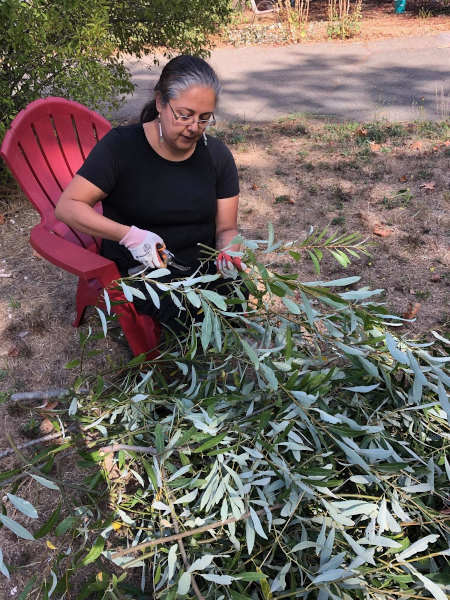
Thankfully, her mother, an avid researcher, had a huge library of books in their home, including many on basket weaving. Pearce read every one of them and learned not only the techniques of weaving, but how to tend and harvest the native plants needed for the art.
In addition to her passion for weaving the baskets of her ancestors, a pressing life goal for Pearce is to teach others the almost-lost art.
Pearce began teaching basketry to family members at the age of 12, and by age 14 was teaching outside of her community.
Much of her early teaching experience came through her mother, who at the time worked for the University of Oklahoma’s Native Wellness Program. The teenage Pearce taught basketry to adults throughout the United States and Canada at the various wellness conferences with which her mother was involved.
Between that experience and the classes taught since then, including in the Middle East and Europe, Pearce estimates that she’s introduced literally thousands of people to the art of Pomo basket weaving.
Through teaching internationally, Pearce came to believe that every person has a basket inside them, wherever they may live.
The best in the world
Pomo basket weavers were the best in the world, according to Sherrie Smith-Ferri, Ph.D., who has studied and written extensively about Pomo basketry. She recently retired after 30 years as executive director and curator of the Grace Hudson Museum in Ukiah.
Sophisticated environmental knowledge is needed to be a successful basket weaver, says Smith-Ferri. It’s a collaboration of weaver and plant working together.
Because of the botanical diversity of the area where the Pomo people lived — now Lake, Mendocino and Sonoma counties — they made baskets from more types of materials than anyone else in the world.
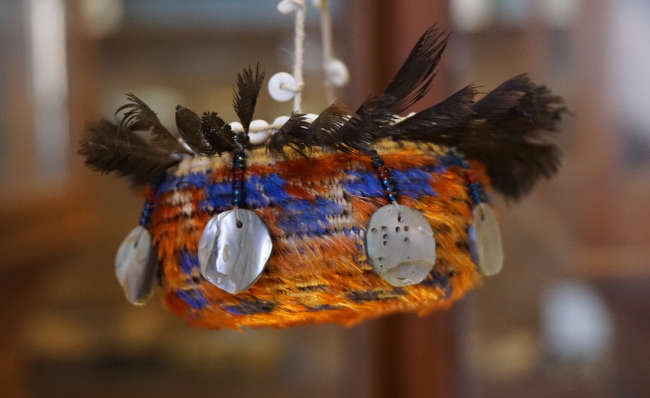
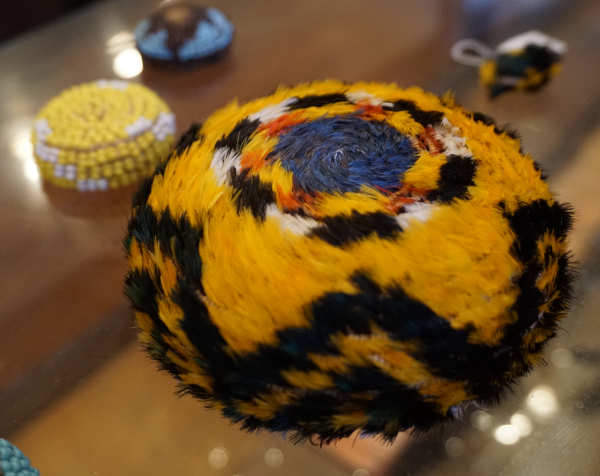
Pomo basket weavers also employed feathers and beads of clamshell or wood in their basket making. Some decorative Pomo baskets were completely covered in feathers, something unseen in the work of other tribes.
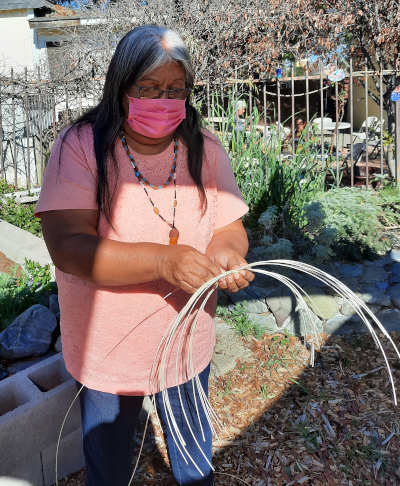
In addition, Pomo baskets display a high degree of technical virtuosity. More weaving techniques were employed when making Pomo baskets than in any other basket making culture worldwide.
Pearce enjoys employing a favorite Smith-Ferri quote in her basketry classes: “Pomo basket weavers were the best basket weavers at any time and in any space.”
Currently Pearce tends and harvests a variety of plants throughout Lake, Mendocino, and Sonoma counties, the traditional lands of the Pomo people.
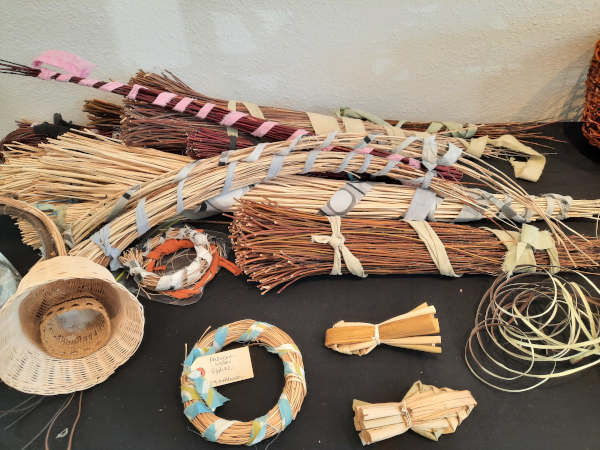
These include sedge root (which comprises most of the tan materials used in baskets), willow (an important component of cradle baskets), dogwood, hazel, bulrush root, tule (from which boats and mats are made), oak (a keystone in making cradle baskets) and redbud.
The color and characteristics of these native plants vary depending on the area. For example, Pearce says that the volcanic soil in Lake County makes our redbuds far more vibrant in color than those in Mendocino County.
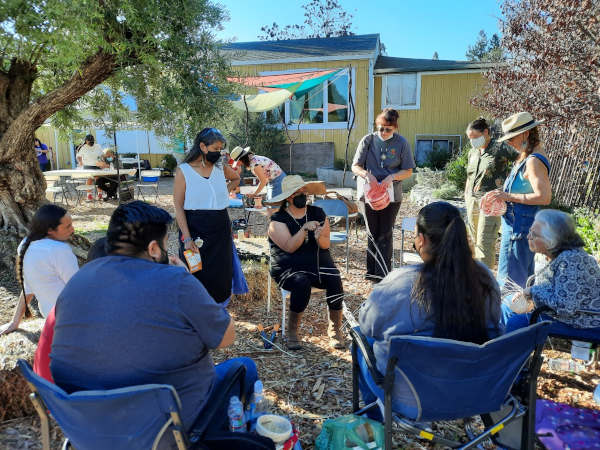
It takes a deft hand and years of experience to properly prepare plants for weaving. Something that’s imprecise must be made perfect for the task. Pearce splits redbud branches over and over to get the appropriate thickness and width for basket weaving.
One must also know the optimal harvest time for the varied plants. According to Pearce, climate change has made this task unpredictable, as plants are now blooming earlier than usual.
As intricate as weaving a basket is, it’s the tending, harvesting and preparing of the plants that makes up the bulk of the process.
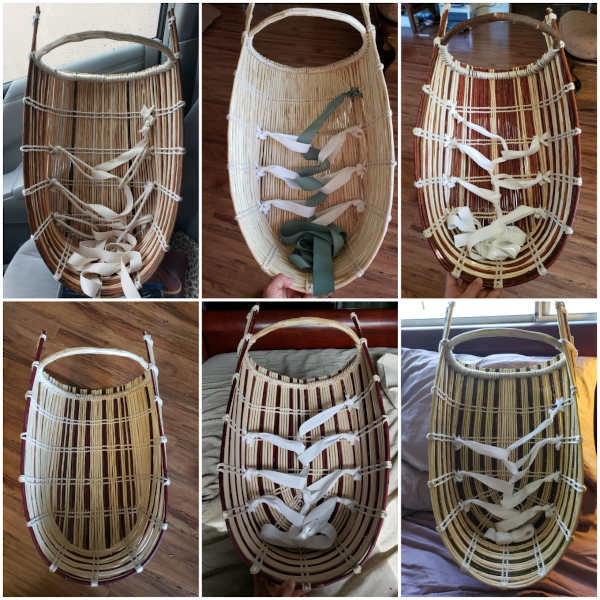
One of Pearce’s specialties is making cradle baskets, evidenced by the book she authored, “Pomo Cradle Baskets: An Introduction.” She made 16 full-size cradle baskets in 2020, more than one a month, which she feels might be a record for a single person.
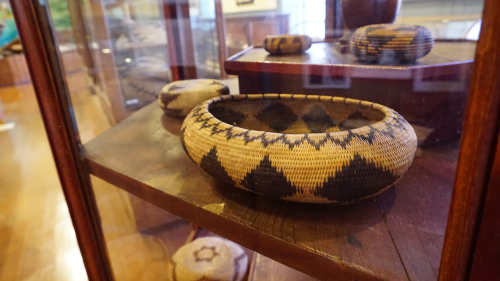
Pearce uses oak, proven to be stronger than steel, for the round rim of the basket. It takes a lot of strength to bend the oak into a circle, which Pearce said made her shoulder feel like that of a major league pitcher in 2020, her marathon cradle-making year. She says it took 25 years for her to learn to bend the oak properly.
According to Pearce, materials for cradle baskets should be harvested from the area where the baby is born to give them a spiritual tie to the land. Oak is appropriate not just for its strength, but because acorns were a staple food for the Pomo people.
Historically, it was the job of the father to make a cradle basket for his child. Pearce says this tradition has been asleep for 80 years, so it particularly pleased her to teach a cradle-making class in Upper Lake to Pomo men in January. Ten men ranging in age from 13 to 72 took part in the class.
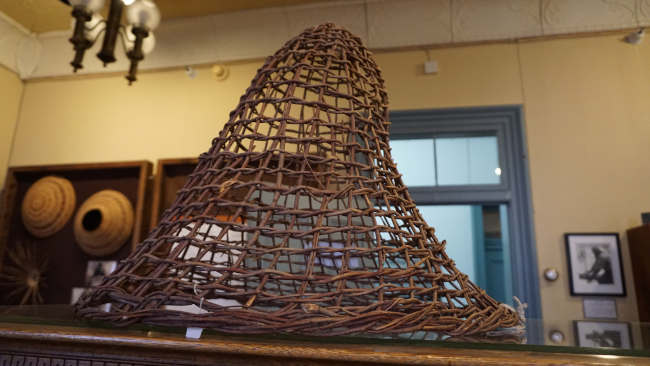
Currently Pearce is central to the ongoing Weaving Baskets, Weaving Bridges (“Weaving”) project at the Middletown Art Center, or MAC, where she’s taught several classes on Pomo basketry and has more on tap in upcoming months.
The program kicked off in November with “Speak of Who We Are,” a presentation by Pearce and Tribal Elder Millie Simon from the Middletown Rancheria of Pomo Indians.
According to Lisa Kaplan, director of the MAC, “Weaving” uses the art of basketry as a vessel for healing and understanding through the holistic practice of weaving, from native plant cultivation and preparation to weaving in community. Building (or weaving) bridges is a central goal of the project, she says, with baskets as a vehicle for cross-cultural engagement.
“I am in awe of the opportunity to have all of this ancient knowledge and sense of place shared with us,” Kaplan said. “I’m grateful, honored and humbled to be collaborating with Corine Pearce, Millie Simon, Rose Steele, Mary Wilson and others. At our last workshop, nearly 40 people were outside weaving. Indigenous and non-Indigenous people were working, talking, and meditating together on their weaving. Corine is the center of the spokes of this basket that we’re all weaving together.”
Millie Simon, who sits on the MAC board in addition to being involved with its “Weaving” project, said she’s honored to be part of the basket weaving program honoring her ancestors.
Pearce also enjoys working at the MAC. “The program has become something truly amazing,” Pearce said. “I’ve been weaving within tribal culture for quite a while, as well as outside of that, but to combine the two has been great. I hope even more people will become involved in the upcoming months.”
Pearce will teach another weaving workshop at the MAC on Saturday, March 12. To sign up or to learn more about other “Weaving '' events, visit the MAC’s website at www.middletownartcenter.org.
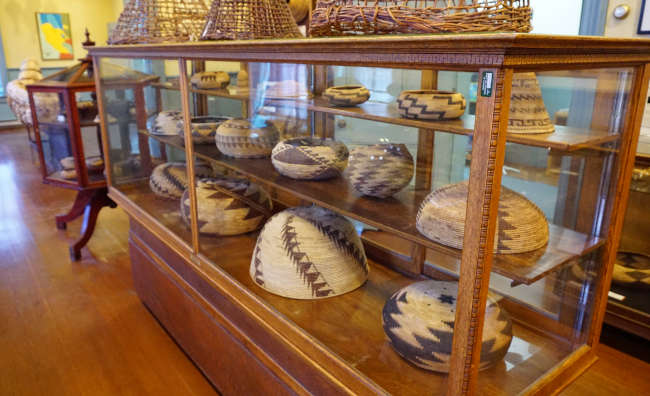
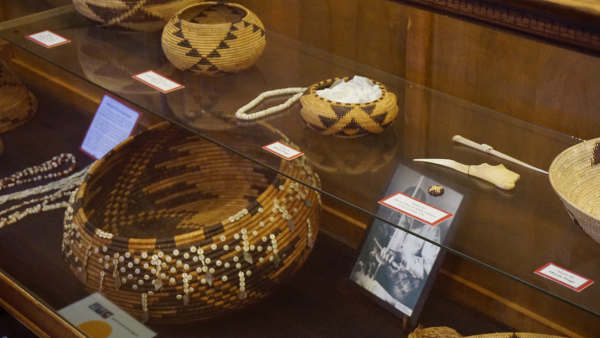
In addition to the program at the MAC, Pearce recommends viewing the permanent exhibit on Pomo culture at the Lake County Courthouse Museum in Lakeport, where a myriad Pomo baskets in all their diversity is on display. Included is a small basket covered in bright yellow feathers, an example of the artistry and intricacy of Pomo technique. Information on the Lake County museums and their hours of operation can be found at Lake County Museums (lakecountyca.gov).
Pearce, who was named the 2021 Arts Champion by the Mendocino County Board of Supervisors, is also a 2020 Jennifer Easton Community Spirit Award recipient and a 2020 Luce Indigenous Knowledge Fellow. She was featured in the PBS documentary series “Craft in America: California,” which aired in 2018.
Pearce is currently working with schools in the Ukiah area to teach basketry and assist with student native plant gardens. She’s thankful that she’s been able to connect students in every district school with their native roots through this program.
Pearce can be heard on KZYX, Mendocino County’s public radio station, where she hosts a monthly radio program. The show, “Good Ancestors and Local Treasures,” features Pomo art and culture and is aired from 9 to 10 a.m. the first Monday of every month.
To follow Corine Pearce and learn more about her work, please visit her website at www.corinepearce.com.
Esther Oertel is a freelance writer in Middletown who's contributed to Lake County News since 2010. She especially enjoys writing about the people and places that make Lake County unique. For comments, questions and story suggestions, she may be reached at

When Russia invaded Ukraine, I responded like many Americans: by making charitable donations.
I was able to make my gift with confidence because I’m a scholar of nonprofits who has studied giving during disasters and other crises.
Mostly I’ve studied how charities help local communities after events like hurricanes and earthquakes, rather than war zones. But I’m also a human being, with friends and colleagues who are Ukrainian. Empathy and a personal connection to a cause are often what motivates donors to act.
You can wisely choose causes with the potential to do the most good in the middle of this humanitarian crisis by giving with your head as well as your heart. Here are the five guidelines I follow in my own giving decisions:
5 guidelines for donors
1) Send money to organizations, not strangers
Crowdfunding and social media fundraising campaigns have become so common that when I recently searched GoFundMe, it pointed me to 1,008 separate appeals for aid for individuals, families or causes related to Ukraine.
Most were posted by individuals, and I have no doubt that some will turn out to be fake.
2) Vet groups you’re unfamiliar with before donating to them
Verifying first that the cause is legitimate will make it easier to avoid funding scams.
A useful shortcut is to look for organizations that have been vetted by others. I tried a simple keyword search “Ukraine charities,” and that was enough to turn up some promising lists posted by media outlets.
A good place to start your sleuthing on U.S.-based registered charities is the Internal Revenue Service. It also ensures you’re giving to the right group, rather than another organization with a deceptively similar name. Many scammers abuse the name recognition of established nonprofits, hoping you won’t notice the difference.
3) Give to charities with a track record in Ukraine
Some examples include Razom for Ukraine, which leads a variety of cultural and democratization initiatives. Another is UNICEF, a United Nations agency that protects children worldwide and is in a good position not only to provide immediate relief but also to pressure Russia to allow unrestricted humanitarian access. Because these groups have already built local relationships, trust and infrastructure, they are likely to be more adept at operating in these dire circumstances than the charities popping up now or those that are still mobilizing from half a world away.
4) Dispatch cash, not goods
Don’t bundle up your spare clothing or other supplies and ship them to Eastern Europe, please. The fragile Ukrainian supply lines need to remain open for medicine and food. And while there is a time and place for restricting a gift to a specific purpose, a humanitarian crisis is not the right time. Trust the people that a charity has on the ground to know which needs are the highest priority.
5) Make gifts that reflect your values
Giving is a deeply psychological act. Effective – and satisfied – donors act on values important to them.
If helping refugees is your priority, consider organizations such as Fundacja Ocalenie, which means “the Rescue Fund” in Polish. About half a million Ukrainians had fled to Poland by March 3, 2022.
If a free press is what matters most to you, given the strength of the Russian disinformation machine, consider Zaborona or the Kyiv Independent, two Ukrainian media outlets.

Buck the overhead myth
A lot of guidance about what makes charities good or bad to support can be misleading.
One common piece of advice I recommend you ignore is that donors should always support charities that spend as little money as possible on their overhead costs – things like rent and administrative pay.
Even leading charity rating and assessment sites, such as Charity Navigator and the Better Business Bureau Wise Giving Alliance, continue to rely in part on the outdated assumption that nonprofits with low overhead spending are automatically more efficient and let donors’ dollars stretch further.
Researchers have been disproving this assumption for years.
Not only can reasonable amounts of overhead help nonprofits build their capacity, but many studies have demonstrated that pinching pennies to satisfy misguided donor assumptions can weaken nonprofits, especially in the long run.
Some charity-evaluation websites do provide valuable information. Charity Navigator has a helpful “advisory” page that alerts donors about nonprofit misconduct. But to research U.S. charities supporting the Ukraine crisis, I recommend Candid, formerly known as Guidestar. It evaluates charities on the basis of broader performance metrics, such as transparency, good governance practices and outcomes.

A better signal of effectiveness than low overhead will be a responsive organization with real humans who are ready to answer your questions. It should also have a track record of working well with others and clearly communicates how it spends donors’ dollars.
Groups worth supporting are also likely to emphasize their results in their annual reports and other materials. Especially if you intend to make a big gift, you may find that the charity’s 990 forms – paperwork the IRS requires – contain a lot of useful information.
Making a choice
In the end, I supported the International Committee of the Red Cross, the winner of several Nobel Peace Prizes. Based in Switzerland, it’s already operating in Ukraine, and can help today.
I hope that you will consider giving as well, and – like me – you’ll stick with your support. The need is going to continue long after Ukraine is out of the headlines.
[Get the best of The Conversation, every weekend. Sign up for our weekly newsletter.]
Beth Gazley, Professor of Public and Environmental Affairs, O'Neill School, Indiana University
This article is republished from The Conversation under a Creative Commons license. Read the original article.
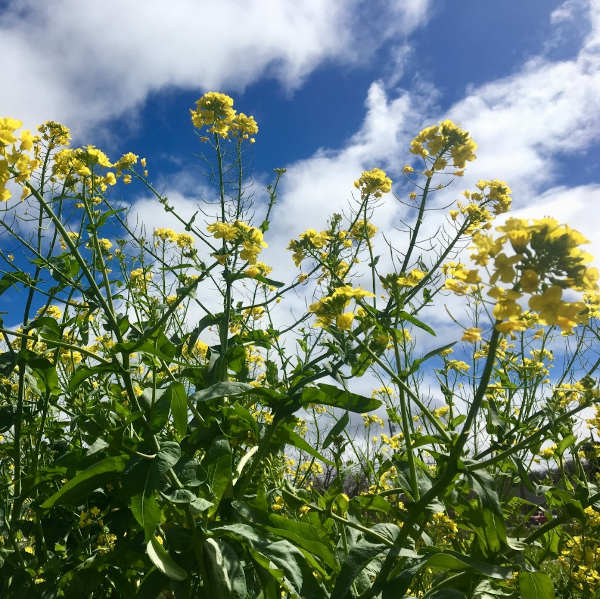
NORTH COAST, Calif. — Long-awaited buds are forming on flowering trees, poppies are peeking their heads out of the cold ground, and the sun is shining longer and longer with each passing day.
Spring’s imminent arrival is near. If you’re a gardener, you know this is the most exciting time to sow the seeds in planning for bountiful spring and summer harvests.
NCO Gardens Project’s free seed library has more than 230 varieties available to order for home delivery or pick up from North Coast Opportunities at 413 N. State St. in Ukiah. Visit bit.ly/ncoseeds to place your order today, or contact
This season, the seed library is stocked with more than 10,000 seed packets donated by local farmers, seed savers and businesses.
The bulk of the seeds were donated by a grange in Oregon and distributed to Gardens Project and other Mendocino County organizations by North American Organics.
For more than 10 years, Gardens Project has operated the free seed library, and has watched its popularity rise during the pandemic while seeds have been in short supply elsewhere.
“Expanding our seed library through an online order form at this critical time when food insecurity has peaked across the country has allowed us to reach far more community members than ever before,” said NCO Gardens Project Manager Sarah Marshall. “Since the start of the pandemic, we’ve distributed seeds to more than 1,200 home, school, and community gardeners, along with public health emergency preparedness information and resources to connect community members with pandemic food access programs.”
The seed library is made possible by the participation of many community volunteers. Each year volunteers at the Ford Street Project categorize and sort through the seeds under the direction of horticultural therapist and gardener Carolyn Brown.
Generous donations help Gardens Project keep the seed library free for all by covering costs of shipping and staff time for packing orders.
To donate in support of the free seed library, visit https://bit.ly/DonateSeedLibrary.
To learn how to save seeds for your personal use, or to contribute to the Gardens Project or Mendocino County Seed Libraries, view the series “Mendo Seed Talks” on the NCO Gardens Project YouTube Channel.
Local experts Jen Lyon and Carolyn Brown share tips on basic seed saving techniques, as well as detailed instructions on how to save garlic, bean, and corn seeds.
Stay up to date with NCO Gardens Project by following @NCOGardensProject on Facebook, or by emailing
If you’d like to donate recent seeds that have been tested for germination, contact Sarah Marshall 707-462-1958.
NCO is the Community Action Agency that serves Lake and Mendocino Counties, as well as parts of Humboldt, Sonoma, Del Norte, and Solano Counties. NCO reacts and adjusts to community needs, including disaster response and recovery.
For more information visit www.ncoinc.org or call 707-467-3200.
Dogs available for adoption this week include mixes of Anatolian shepherd, Australian cattle dog, border collie, Catahoula leopard dog, Chihuahua, German shepherd, Great Pyrenees, husky, shepherd, Pomeranian and pit bull.
Dogs that are adopted from Lake County Animal Care and Control are either neutered or spayed, microchipped and, if old enough, given a rabies shot and county license before being released to their new owner. License fees do not apply to residents of the cities of Lakeport or Clearlake.
The following dogs at the Lake County Animal Care and Control shelter have been cleared for adoption (additional dogs on the animal control website not listed are still “on hold”).
Call Lake County Animal Care and Control at 707-263-0278 or visit the shelter online for information on visiting or adopting.
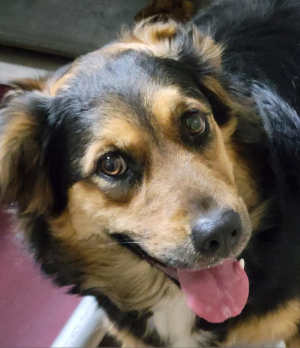
Female shepherd mix
This 5-year-old female shepherd mix has a tricolor coat.
She was in kennel No. 9, ID No. LCAC-A-2793.
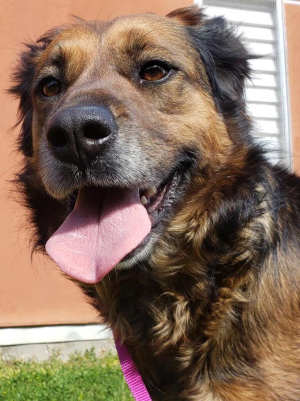
Female shepherd mix
This 7-year-old female shepherd mix has a tricolor coat.
She was in kennel No. 10, ID No. LCAC-A-2792.
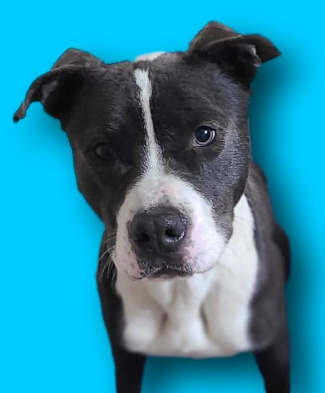
Male pit bull
This 2-year-old male pit bull has a short black and white coat.
He is in kennel No. 14, ID No. LCAC-A-2473.
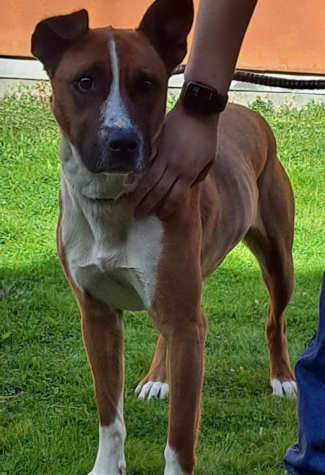
Female German shepherd mix
This 2-year-old female German shepherd mix has a short brown and white coat.
She is in kennel No. 15, ID No. LCAC-A-2812.
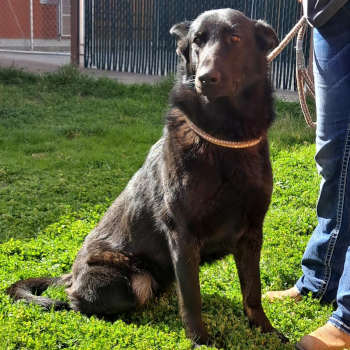
Female German shepherd
This 2-year-old female German shepherd has a black coat.
She is in kennel No. 19, ID No. LCAC-A-2844.
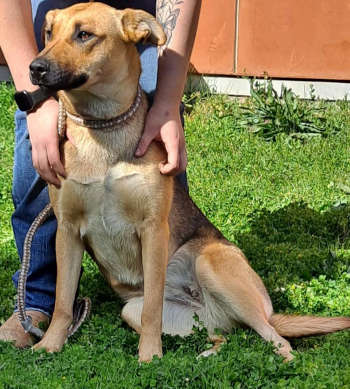
Female shepherd mix
This 1-year-old female shepherd mix has a short tricolor coat.
She is in kennel No. 20, ID No. LCAC-A-2843.
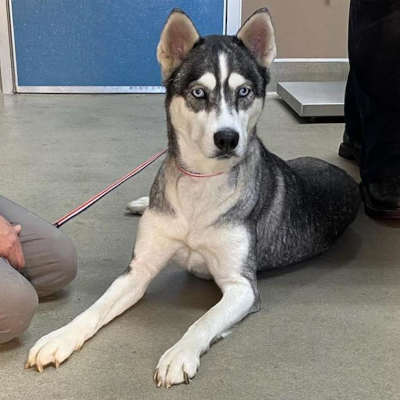
‘Blue’
“Blue” is a 4-year-old female husky with a gray and white coat, and blue eyes.
She is in kennel No. 25, ID No. LCAC-A-2816.
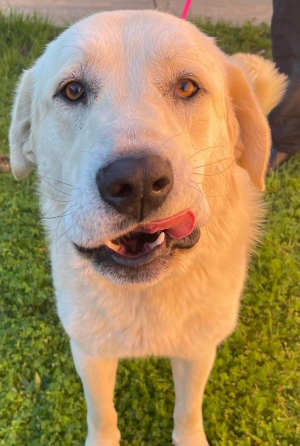
Anatolian shepherd-Great Pyrenees
This 2-year-old male Anatolian shepherd-Great Pyrenees has a short white coat.
He is in kennel No. 26, ID No. LCAC-A-2536.

Female pit bull
This 1-year-old female pit bull has a short black coat.
She is in kennel No. 27, ID No. LCAC-A-2824.

Australian cattle dog
This 1-year-old male Australian cattle dog has a short blue and black coat.
He is in kennel No. 28, ID No. LCAC-A-2754.
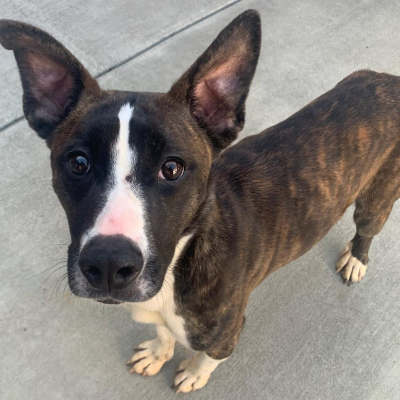
‘Marmalade’
“Marmalade” is a 1-year-old female Catahoula leopard dog with a brown brindle coat.
She is in kennel No. 30, ID No. LCAC-A-2823.
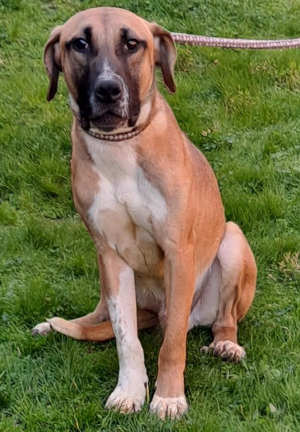
‘Bruno’
“Bruno” is a 2-year-old male Catahoula leopard dog with a brown and white coat.
He is in kennel No. 31, ID No. LCAC-A-2825.
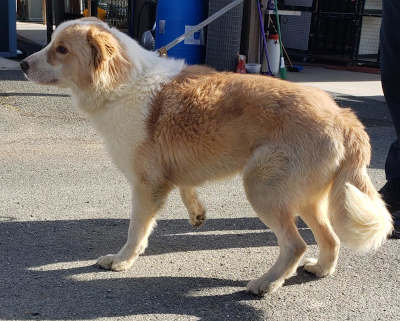
‘Zuko’
“Zuko” is a 1-year-old male border collie-cattle dog mix with a light reddish-brown and white coat.
He is in kennel No. 32, ID No. LCAC-A-2822.
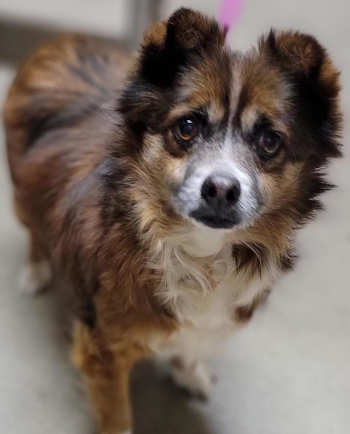
‘Benji’
“Benji” is a 9-year-old male Pomeranian-Chihuahua mix with a brown and white coat.
He is in kennel No. 34, ID No. LCAC-A-2770.
Email Elizabeth Larson at

BERKELEY, Calif. — When two neutron stars spiral into one another and merge to form a black hole — an event recorded in 2017 by gravitational wave detectors and telescopes worldwide — does it immediately become a black hole? Or does it take a while to spin down before gravitationally collapsing past the event horizon into a black hole?
Ongoing observations of that 2017 merger by the Chandra X-ray Observatory, an orbiting telescope, suggests the latter: that the merged object stuck around, likely for a mere second, before undergoing ultimate collapse.
The evidence is in the form of an X-ray afterglow from the merger, dubbed GW170817, that would not be expected if the merged neutron stars collapsed immediately to a black hole.
The afterglow can be explained as a rebound of material off the merged neutron stars, which plowed through and heated the material around the binary neutron stars.
This hot material has now kept the remnant glowing steadily more than four years after the merger threw material outward in what's referred to as a kilonova. X-ray emissions from a jet of material that was detected by Chandra shortly after the merger would otherwise be dimming by now.
While the excess X-ray emissions observed by Chandra could come from debris in an accretion disk swirling around and eventually falling into the black hole, astrophysicist Raffaella Margutti of the University of California, Berkeley, favors the delayed collapse hypothesis, which is predicted theoretically.
"If the merged neutron stars were to collapse directly to a black hole with no intermediate stage, it would be very hard to explain this X-ray excess that we see right now, because there would be no hard surface for stuff to bounce off and fly out at high velocities to create this afterglow," said Margutti, UC Berkeley associate professor of astronomy and of physics. "It would just fall in. Done. The true reason why I'm excited scientifically is the possibility that we are seeing something more than the jet. We might finally get some information about the new compact object."
Margutti and her colleagues, including first author Aprajita Hajela, who was Margutti's graduate student when she was at Northwestern University before moving to UC Berkeley, report their analysis of the X-ray afterglow in a paper recently accepted for publication in The Astrophysical Journal Letters.
The radioactive glow of a kilonova
Gravitational waves from the merger were first detected on Aug. 17, 2017, by the Advanced Laser Interferometer Gravitational-wave Observatory, or LIGO, and the Virgo collaboration.
Satellite- and ground-based telescopes quickly followed up to record a burst of gamma rays and visible and infrared emissions that together confirmed the theory that many heavy elements are produced in the aftermath of such mergers inside hot ejecta that produces a bright kilonova.
The kilonova glows because of light emitted during the decay of radioactive elements, like platinum and gold, that are produced in the merger debris.
Chandra, too, pivoted to observe GW170817, but saw no X-rays until nine days later, suggesting that the merger also produced a narrow jet of material that, upon colliding with the material around the neutron stars, emitted a cone of X-rays that initially missed Earth. Only later did the head of the jet expand and begin emitting X-rays in a broader jet visible from Earth.
The X-ray emissions from the jet increased for 160 days after the merger, after which they steadily grew fainter as the jet slowed down and expanded. But Hajela and her team noticed that from March 2020 — about 900 days after the merger — until the end of 2020, the decline stopped, and the X-ray emissions remained approximately constant in brightness.
"The fact that the X-rays stopped fading quickly was our best evidence yet that something in addition to a jet is being detected in X-rays in this source,” Margutti said. “A completely different source of X-rays appears to be needed to explain what we’re seeing."
The researchers suggest that the excess X-rays are produced by a shock wave distinct from the jets produced by the merger. This shock was a result of the delayed collapse of the merged neutron stars, likely because its rapid spin very briefly counteracted the gravitational collapse.
By sticking around for an extra second, the material around the neutron stars got an extra bounce that produced a very fast tail of kilonova ejecta that created the shock.
"We think the kilonova afterglow emission is produced by shocked material in the circumbinary medium," Margutti said. "It is material that was in the environment of the two neutron stars that was shocked and heated up by the fastest edge of the kilonova ejecta, which is driving the shock wave."
The radiation is reaching us only now because it took time for the heavy kilonova ejecta to be decelerated in the low-density environment and for the kinetic energy of the ejecta to be converted into heat by shocks, she said.
This is the same process that produces radio and X-rays for the jet, but because the jet is much, much lighter, it is immediately decelerated by the environment and shines in the X-ray and radio from the very earliest times.
An alternative explanation, the researchers note, is that the X-rays come from material falling towards the black hole that formed after the neutron stars merged.
"This would either be the first time we've seen a kilonova afterglow or the first time we've seen material falling onto a black hole after a neutron star merger," said co-author Joe Bright, a UC Berkeley postdoctoral researcher. “Either outcome would be extremely exciting.”
Chandra is now the only observatory still able to detect light from this cosmic collision. Follow-up observations by Chandra and radio telescopes could distinguish between the alternative explanations, however.
If it is a kilonova afterglow, radio emission is expected to be detected again in the next few months or years. If the X-rays are being produced by matter falling onto a newly formed black hole, then the X-ray output should stay steady or decline rapidly, and no radio emission will be detected over time.
Margutti hopes that LIGO, Virgo and other telescopes will capture gravitational waves and electromagnetic waves from more neutron star mergers so that the series of events preceding and following the merger can be pinned down more precisely and help reveal the physics of black hole formation. Until then, GW170817 is the only example available for study.
“Further study of GW170817 could have far-reaching implications,” said co-author Kate Alexander, a postdoctoral researcher who also is from Northwestern University. “The detection of a kilonova afterglow would imply that the merger did not immediately produce a black hole. Alternatively, this object may offer astronomers a chance to study how matter falls onto a black hole a few years after its birth.”
Margutti and her team recently announced that the Chandra telescope had detected X-rays in observations of GW170817 performed in December 2021. Analysis of that data is ongoing. No radio detection associated with the X-rays has been reported.
Robert Sanders writes for the UC Berkeley News Center.
In coordination with the State Water Resources Control Board, the Department of Water Resources, or DWR, said it has allotted $49 million in funding for 18 projects across the state.
The projects funded in this latest round include 15 that will directly support disadvantaged communities, including five tribes, with infrastructure repairs, well rehabilitation and hauled water, DWR reported.
“As California’s drought continues, we cannot let our guard down when it comes to preparing vulnerable communities for the dry months ahead,” said Kris Tjernell, DWR deputy director of Integrated Watershed Management. “We will continue working with the State Water Board to invest in long-term solutions to bolster drought resilience and help ensure that every Californian has access to safe, clean water.”
Among the grantees in this round is the Konocti County Water District, which is based in Clearlake.
Since the August Cache fire, the district has been supplying water to one of the mobile home parks hit by that fire, Cache Creek Mobile Home Park, with water through a temporary intertie.
DWR said Konocti County Water District will receive $4.3 million to replace existing leaky pipelines and expand the distribution system to consolidate the Cache Creek Mobile Home Estates and Creekside Mobile Home Park. Creekside also was heavily impacted by the Cache fire.
The project includes the construction of interties between Konocti County Water District, Lower Lake County Water District and Highlands Mutual Water Co., DWR said.
“Now that clean up is done we really need the water to be able to begin rebuilding,” Clearlake City Manager Alan Flora said.
Before the fire occurred the project had already been planned. Flora said the city let state Sen. Mike McGuire know about it in discussing Cache Fire recovery and he was able to speed up the funding approval.
“We are also trying to get funds included that will rebuild Dam Road after the waterline work is complete,” Flora said.
DWR said it coordinated with the State Water Resources Control Board to determine these funding commitments, which complement the board’s historical and ongoing financial assistance to small, economically disadvantaged communities for their water infrastructure needs.
In addition to Konocti County Water District, the recipients of the $49 million in phase six include:
• Lundy Mutual Water Co.: In Mono County, the Lundy Mutual Water Co. water system is struggling to meet demands due to leaks. The company will receive $2.6 million to repair leaks in its current water infrastructure.
• Kashia Band of Pomo Indians of the Stewarts Point Rancheria Kashaya Utility District: In Sonoma County, the Stewart’s Rancheria water supply is decreasing due to drought. The state will award $1.5 million to help drill a new well that will provide additional water supply for the community.
• California Environmental Indian Alliance (for Manchester Band of Pomo Indians, Round Valley Indian Tribe, Yokayo Tribe): In Mendocino County, the Manchester Band of Pomo Indians, Round Valley Indian Tribe and Yokayo Tribe are struggling to meet demands with their vulnerable water systems. The state will award $3.2 million to construct backup source connections and storage tanks.
• Redwood Valley County Water District: In Mendocino County, the Redwood Valley community does not have a reliable water source and must purchase surplus water from neighboring districts to meet demands. The district will receive $1.8 million to drill a new well.
• County of Santa Cruz: In Santa Cruz County, the community of Waterman Gap is struggling to meet daily demands due to its dwindling water supply. The county of Santa Cruz will receive $113,200 to improve its current water system and start a hauled water program.
• Yurok Tribe: In Del Norte County, the two water systems serving the Yurok Tribe are vulnerable to drought. The tribe will receive $12.6 million to consolidate with neighboring systems and construct 10 miles of pipelines and two booster pump stations.
DWR also announced funding for two emergency projects in Mendocino and Kings counties that were awarded in late December.
In Mendocino County, the Redwood Valley Little River Band of Pomo Indians received $104,523 to rehabilitate its existing well to provide the community with a stable water supply.
In Kings County, the Kettleman City Community Services District received $165,200 to purchase water for the health and safety needs of the community.
February marked six months since the Small Community Drought Relief program launched. In that time, the program has awarded over $142 million total in funding to 68 projects in 25 counties.
DWR said response to this grant program has been overwhelming with $374 million worth of projects submitted overall.
Following Friday’s announcement, DWR said the program has $48 million remaining in funds.
The program is one of several drought funding programs available through the state.
Email Elizabeth Larson at