How to resolve AdBlock issue?
Refresh this page
How to resolve AdBlock issue?
Refresh this page
Lake County News,California
  • Home
    • Registration Form
  • News
    • Education
    • Veterans
    • Community
      • Obituaries
      • Letters
      • Commentary
    • Police Logs
    • Business
    • Recreation
    • Health
    • Religion
    • Legals
    • Arts & Life
    • Regional
  • Calendar
  • Contact us
    • FAQs
    • Phones, E-Mail
    • Subscribe
  • Advertise Here
  • Login

News

Mindfulness won’t burn calories, but it might help you stick with your health goals

Meditation exists on a spectrum, from mindful moments and bursts of mindfulness to building up to a formal meditative practice. d3sign/Moment via Getty Images

Most people know roughly what kind of lifestyle they should be living to stay healthy.

Think regular exercise, a balanced diet and sufficient sleep. Yet, despite all the hacks, trackers and motivational quotes, many of us still struggle to stick with our health goals.

Meanwhile, people worldwide are experiencing more lifestyle-associated chronic disease than ever before.

But what if the missing piece in your health journey wasn’t more discipline – but more stillness?

Research shows that mindfulness meditation can help facilitate this pursuit of health goals through stillness, and that getting started is easier than you might think – no Buddhist monk robes or silent retreats required.

Given how ubiquitous and accessible mindfulness resources are these days, I have been surprised to see mindfulness discussed and studied only as a mental health tool, stopping short of exploring its usefulness for a whole range of lifestyle choices.

I am a psychologist and behavioral scientist researching ways to help people live healthier lives, especially by moving more and regulating stress more efficiently.

My team’s work and that of other researchers suggests that mindfulness could play a pivotal role in paving the way for a healthier society, one mindful breath at a time.

Mindfulness unpacked

Mindfulness has become a buzzword of late, with initiatives now present in schools, boardrooms and even among first responders. But what is it, really?

Mindfulness refers to the practice or instance of paying careful attention to one’s present-moment experience – such as their thoughts, breath, bodily sensations and the environment – and doing so nonjudgmentally. Its origins are in Buddhist traditions, where it plays a crucial role in connecting communities and promoting selflessness.

Over the past 50 years, however, mindfulness-based practice has been Westernized into structured therapeutic programs and stress-management tools, which have been widely studied for their benefits to mental and physical health.

Research has shown that mindfulness offers wide-ranging benefits to the mind, the body and productivity.

Mindfulness-based programs, both in person and digitally delivered, can effectively treat depression and anxiety, protect from burnout, improve sleep and reduce pain.

The impacts extend beyond subjective experience too. Studies find that experienced meditators – that is, people who have been meditating for at least one year – have lower markers of inflammation, which means that their bodies are better able to fight off infections and regulate stress. They also showed improved cognitive abilities and even altered brain structure.

But I find the potential for mindfulness to support a healthy lifestyle most exciting of all.

A senior couple sitting on the beach, pressing their feet together as the woman pulls the man's arms forward in a stretch.
Mindfulness meditation may enhance the psychological skills needed to follow through on exercise and other health habits. Maria Korneeva/Moment via Getty Images

How can mindfulness help you build healthy habits?

My team’s research suggests that mindfulness equips people with the psychological skills required to successfully change behavior. Knowing what to do to achieve healthy habits is rarely what stands in people’s way. But knowing how to stay motivated and keep showing up in the face of everyday obstacles such as lack of time, illness or competing priorities is the most common reason people fall off the wagon – and therefore need the most support. This is where mindfulness comes in.

Multiple studies have found that people who meditate regularly for at least two months become more inherently motivated to look after their health, which is a hallmark of those who adhere to a balanced diet and exercise regularly.

A 2024 study with over 1,200 participants that I led found more positive attitudes toward healthy habits and stronger intentions to put them into practice in meditators who practiced mindfulness for 10 minutes daily alongside a mobile app, compared with nonmeditators. This may happen because mindfulness encourages self-reflection and helps people feel more in tune with their bodies, making it easier to remember why being healthier is important to us.

Another key way mindfulness helps keep momentum with healthy habits is by restructuring one’s response to pain, discomfort and failure. This is not to say that meditators feel no pain, nor that pain during exercise is encouraged – it is not!

Mild discomfort, however, is a very common experience of novice exercisers. For example, you may feel out of breath or muscle fatigue when initially taking up a new activity, which is when people are most likely to give up. Mindfulness teaches you to notice these sensations but see them as transient and with minimal judgment, making them less disruptive to habit-building.

Putting mindfulness into practice

A classic mindfulness exercise includes observing the breath and counting inhales up to 10 at a time. This is surprisingly difficult to do without getting distracted, and a core part of the exercise is noticing the distraction and returning to the counting. In other words, mindfulness involves the practice of failure in small, inconsequential ways, making real-world perceived failure – such as a missed exercise session or a one-off indulgent meal – feel more manageable. This strengthens your ability to stay consistent in pursuit of health goals.

Finally, paying mindful attention to our bodies and the environment makes us more observant, resulting in a more varied and enjoyable exercising or eating experience. Participants in another study we conducted reported noticing the seasons changing, a greater connection to their surroundings and being better able to detect their own progress when exercising mindfully. This made them more likely to keep going in their habits.

Luckily, there are plenty of tools available to get started with mindfulness practice these days, many of them free. Mobile applications, such as Headspace or Calm, are popular and effective starting points, providing audio-guided sessions to follow along. Some are as short as five minutes. Research suggests that doing a mindfulness session first thing in the morning is the easiest to maintain, and after a month or so you may start to see the skills from your meditative practice reverberating beyond the sessions themselves.

Based on our research on mindfulness and exercise, I collaborated with the nonprofit Medito Foundation to create the first mindfulness program dedicated to moving more. When we tested the program in a research study, participants who meditated alongside these sessions for one month reported doing much more exercise than before the study and having stronger intentions to keep moving compared with participants who did not meditate. Increasingly, the mobile applications mentioned above are offering mindful movement meditations too.

If the idea of a seated practice does not sound appealing, you can instead choose an activity to dedicate your full attention to. This can be your next walk outdoors, where you notice as much about your experience and surroundings as possible. Feeling your feet on the ground and the sensations on your skin are a great place to start.

For people with even less time available, short bursts of mindfulness can be incorporated into even the busiest of routines. Try taking a few mindful, nondistracted breaths while your coffee is brewing, during a restroom break or while riding the elevator. It may just be the grounding moment you need to feel and perform better for the rest of the day.The Conversation

Masha Remskar, Psychologist and Postdoctoral Researcher in Behavioral Science, Arizona State University

This article is republished from The Conversation under a Creative Commons license. Read the original article.
Space News: 2 newly launched NASA missions will help scientists understand the influence of the Sun, both from up close and afar

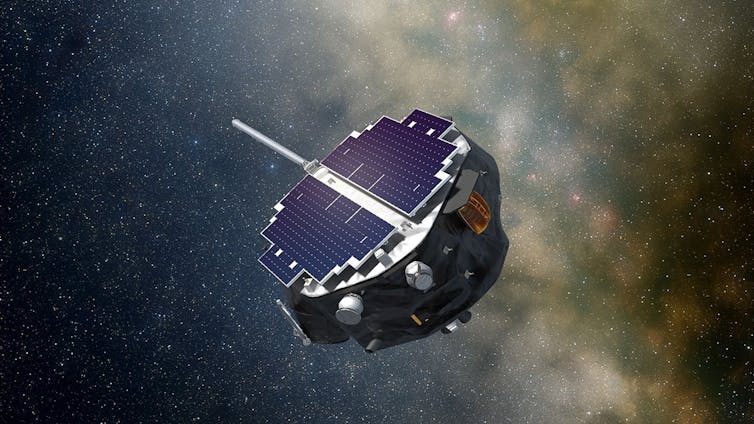
NASA’s IMAP mission is one of two launching in September 2025. NASA/Princeton University/Patrick McPike

Even at a distance of 93 million miles (150 million kilometers) away, activity on the Sun can have adverse effects on technological systems on Earth. Solar flares – intense bursts of energy in the Sun’s atmosphere – and coronal mass ejections – eruptions of plasma from the Sun – can affect the communications, satellite navigation and power grid systems that keep society functioning.

On Sept. 24, 2025, NASA launched two new missions to study the influence of the Sun on the solar system, with further missions scheduled for 2026 and beyond.

I’m an astrophysicist who researches the Sun, which makes me a solar physicist. Solar physics is part of the wider field of heliophysics, which is the study of the Sun and its influence throughout the solar system.

The field investigates the conditions at a wide range of locations on and around the Sun, ranging from its interior, surface and atmosphere, and the constant stream of particles flowing from the Sun – called the the solar wind. It also investigates the interaction between the solar wind and the atmospheres and magnetic fields of planets.

The importance of space weather

Heliophysics intersects heavily with space weather, which is the influence of solar activity on humanity’s technological infrastructure.

In May 2024, scientists observed the strongest space weather event since 2003. Several Earth-directed coronal mass ejections erupted from the Sun, causing an extreme geomagnetic storm as they interacted with Earth’s magnetic field.

This event produced a beautiful light show of the aurora across the world, providing a view of the northern and southern lights to tens of millions of people at lower latitudes for the first time.

However, geomagnetic storms come with a darker side. The same event triggered overheating alarms in power grids around the world, and triggered a loss in satellite navigation that may have cost the U.S. agricultural industry half a billion dollars.

However, this is far from the worst space weather event on record, with stronger events in 1989 and 2003 knocking out power grids in Canada and Sweden.

But even those events were small compared with the largest space weather event in recorded history, which took place in September 1859. This event, considered the worst-case scenario for extreme space weather, was called the Carrington Event. The Carrington Event produced widespread aurora, visible even close to the equator, and caused disruption to telegraph machines.

If an event like the Carrington event occurred today, it could cause widespread power outages, losses of satellites, days of grounded flights and more. Because space weather can be so destructive to human infrastructure, scientists want to better understand these events.

NASA’s heliophysics missions

NASA has a vast suite of instruments in space that aim to better understand our heliosphere, the region of the solar system in which the Sun has significant influence. The most famous of these missions include the Parker Solar Probe, launched in 2018, the Solar Dynamics Observatory, launched in 2010, the Solar and Heliospheric Observatory, launched in 1995, and the Polarimeter to Unify the Corona and Heliosphere, launched on March 11, 2025.

The most recent additions to NASA’s collection of heliophysics missions launched on Sept. 24, 2025: Interstellar Mapping and Acceleration Probe, or IMAP, and the Carruthers Geocorona Observatory. Together, these instruments will collect data across a wide range of locations throughout the solar system.

IMAP is en route to a region in space called Lagrange Point 1. This is a location 1% closer to the Sun than Earth, where the balancing gravity of the Earth and Sun allow spacecraft to stay in a stable orbit.

IMAP contains 10 scientific instruments with varying science goals, ranging from measuring the solar wind in real time to improve forecasting of space weather that could arrive at Earth, to mapping the outer boundary between the heliosphere and interstellar space.

IMAP will study the solar wind from a region in space nearer to the Sun where spacecraft can stay in a stable orbit.

This latter goal is unique, something scientists have never attempted before. It will achieve this goal by measuring the origins of energetic neutral atoms, a type of uncharged particle. These particles are produced by plasma, a charged gas of electrons and protons, throughout the heliosphere. By tracking the origins of incoming energetic neutral atoms, IMAP will build a map of the heliosphere.

The Carruthers Geocorona Observatory is heading to the same Lagrange-1 orbit as IMAP, but with a very different science target. Instead of mapping all the way to the very edge of the heliosphere, the Carruthers Geocorona Observatory is observing a different target – Earth’s exosphere. The exosphere is the uppermost layer of Earth’s atmosphere, 375 miles (600 kilometers) above the ground. It borders outer space.

Specifically, the mission will observe ultraviolet light emitted by hydrogen within the exosphere, called the geocorona. The Carruthers Geocorona Observatory has two primary objectives. The first relates directly to space weather.

The observatory will measure how the exosphere – our atmosphere’s first line of defense from the Sun – changes during extreme space weather events. The second objective relates more to Earth sciences: The observatory will measure how water is transported from Earth’s surface up into the exosphere.

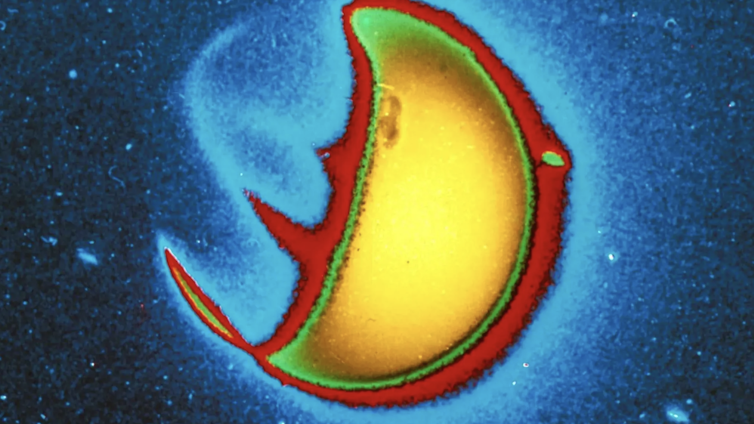
A radarlike image of a sphere, with a bright spot shown in yellow, with a green and red outline.
The first image of Earth’s outer atmosphere, the geocorona, taken from a telescope designed and built by the late American space physicist and engineer George Carruthers. The telescope took the image while on the Moon during the Apollo 16 mission in 1972. G. Carruthers (NRL) et al./Far UV Camera/NASA/Apollo 16, CC BY

Looking forward

IMAP and the Carruthers Geocorona Observatory are two heliophysics missions researching very different parts of the heliosphere. In the coming years, future NASA missions will launch to measure the object at the center of heliophysics – the Sun.

In 2026, the Sun Coronal Ejection Tracker is planned to launch. It is a small satellite the size of a shoebox – called a CubeSat – with the aim to study how coronal mass ejections change as they travel through the Sun’s atmosphere.

In 2027, NASA plans to launch the much larger Multi-slit Solar Explorer to capture high-resolution measurements of the Sun’s corona using a state-of-the-art instrumentation. This mission will work to understand the origins of solar flares, coronal mass ejections and heating within the Sun’s atmosphere.The Conversation

Ryan French, Research Scientist, Laboratory for Atmospheric and Space Physics, University of Colorado Boulder

This article is republished from The Conversation under a Creative Commons license. Read the original article.

New roadmap supports Lake County’s at-risk populations during heat, algal blooms, natural hazards

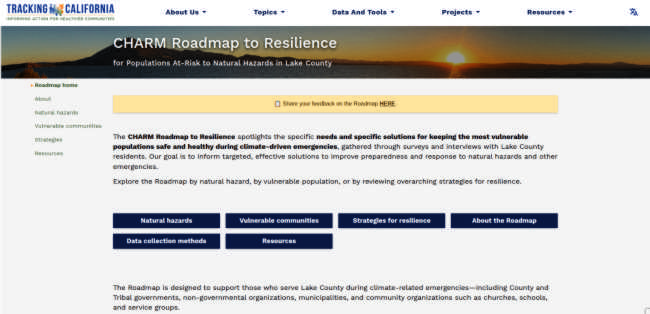
LAKEPORT, Calif. — After two years of community-driven research and collaboration, the Community Health Adaptation and Resilience Mobilization, or CHARM, project has released the Roadmap to Resilience for Populations At-Risk to Natural Hazards in Lake County. 

This innovative online tool equips emergency planners and those serving the most impacted communities with insights and recommendations to better protect them against extreme heat, harmful cyanobacterial blooms, wildfires and other natural hazards.

The roadmap, now live on the Tracking California website, summarizes findings from over 230 community surveys and 65 interviews with county residents and includes practical strategies to reduce health risk from natural hazards like extreme heat and cyanobacterial blooms on Clear Lake. 

Co-developed with Big Valley Band of Pomo Indians and four other Lake County tribes, community-based organizations and public agencies, the roadmap centers on the experience of elders, tribal members, outdoor workers, unhoused people, mobile home residents, people with mobility or transportation issues, and others often overlooked in traditional emergency response planning. 

“By listening to community members directly, we’ve created a tool that not only documents the challenges Lake County faces, but also lifts up local knowledge and trusted solutions,” said Susan Paulukonis, principal Investigator of the CHARM project and epidemiologist with the Public Health Institute’s Tracking California program.

The CHARM project is a collaboration between Big Valley Band of Pomo Indians Environmental Protection Department and Tracking California, supported by the National Institutes of Health’s Community Engagement Alliance Initiative. 

Building on the momentum of this roadmap, the CHARM team has been awarded a Phase II grant to implement a multi-year community-based intervention.

This next phase will pilot strategies to protect those most at risk during extreme heat, implemented directly through local sites such as peer support centers, senior centers and tribal social services offices across the county.

“We’re proud to build on this foundational work by turning plans into action,” said Sarah Ryan, environmental director for Big Valley and co-investigator of the project. “This project helps the most vulnerable members of our communities by reducing impacts of extreme heat and identifying lake water safety mechanisms. We now have a framework to guide targeted, community-led solutions.”

To ensure local input continues to guide next steps, the roadmap is being shared with the broader Lake County community throughout summer 2025, including presentations to the Board of Supervisors, the Risk Reduction Authority and at public events such as the Tule Boat Festival in July.

The roadmap remains open for feedback, and a brief evaluation form is available on the roadmap website for community members to share their input.

For more information, visit www.trackingcalifornia.org/projects/charm or contact Susan Paulukonis at This email address is being protected from spambots. You need JavaScript enabled to view it.. 

Clearlake Animal Control: ‘Biggie’ and the dogs

"Biggie." Photo courtesy of Clearlake Animal Control.


CLEARLAKE, Calif. — Clearlake Animal Control has dozens of great dogs needing new homes.

The shelter has 47 adoptable dogs listed on its website.

This week’s dogs include “Biggie,” a large mixed breed dog with a tan and white coat.

Shelter staff said has a personality as big as his body. “This lovable guy is full of affection — he adores cuddles, loves his toys, and is always ready to play. With his goofy charm and gentle heart, he'll keep you smiling every day.”

They said he may do well with other dogs with proper introductions, but they are not sure about cats yet. 

“What we do know is that he's eager to find a family to love and be loved by. Come by and see if he's the right fit for your family,” shelter staff said.

The shelter is located at 6820 Old Highway 53. It’s open from 9 a.m. to 6 p.m. Tuesday through Saturday. 

For more information, call the shelter at 707-762-6227, email This email address is being protected from spambots. You need JavaScript enabled to view it., visit Clearlake Animal Control on Facebook or on the city’s website.

This week’s adoptable dogs are featured below.

Email Elizabeth Larson at This email address is being protected from spambots. You need JavaScript enabled to view it.. Follow her on Twitter, @ERLarson, and on Bluesky, @erlarson.bsky.social. Find Lake County News on the following platforms: Facebook, @LakeCoNews; X, @LakeCoNews; Threads, @lakeconews, and on Bluesky, @lakeconews.bsky.social. 

East Region Town Hall meets Oct. 1

LAKE COUNTY, Calif. — The East Region Town Hall, or ERTH, will meet on Wednesday, Oct. 1.

The meeting will begin at 4 p.m. at the Moose Lodge, located at 15900 Moose Lodge Lane in Clearlake Oaks.

The meeting will be available via Zoom. The meeting ID is 813 6295 6146, pass code is 917658.

Please note, at times Zoom has issues with sound or video. The meeting will also be live streamed on the Lake County Peg TV YouTube channel.

Guest speakers will include Shannon Walker-Smith of Lake County Community Development Department, who will give a presentation on the public draft of the climate adaptation plan and take community input.

The group also will hear from Robin Borre, administrator Lake County Special Districts, regarding a discussion on the status of the Special Lighting District in Clearlake Oaks and Spring Valley CSA No. 2 projects and issues.

Also on the agenda are updates and consideration of ERTH activities/projects, ERTH Council opening, District 3 MAC Update, discussion and consideration of a letter to submit to the Board of Supervisors regarding the Sonoma Clean Power proposal and another on the environmental process for a cell phone tower.

Standing agenda items include the commercial cannabis report and cannabis ordinance update, updates on code enforcement updates, Spring Valley, the Superfund cleanup and Klaus Park, a report from District 3 Supervisor EJ Crandell, and new business and announcements.
   
ERTH’s next meeting will take place on Nov. 5.

Members are Angela Amaral, Holly Harris, Maria Kann and Denise Loustalot.

For more information visit the group’s Facebook page.

California exceeds 200,000 EV chargers

This week, Gov. Gavin Newsom announced that there are now 201,180 fully public and shared electric vehicle, or EV, charging ports available for use throughout the state. 

This is 68% more EV charger ports than the number of gasoline nozzles statewide, according to the California Energy Commission, or CEC.

Earlier this week, the governor announced clean truck sales continued to rise in California in 2024, with zero-emission models representing nearly 1 in 4 of all new truck sales. 

“In the state of California, 94% of people now live within just 10 minutes of an EV charger. We’re proving that electric vehicles are here to stay — even as Trump sells out American innovation and jobs to China,” said Newsom.

California’s growing number of publicly available EV chargers can be found at highly accessible locations like grocery stores, parking lots, and even gas stations. Shared chargers can be found at apartment complexes, workplaces, sports facilities, and other parking areas. This statewide network of public and shared chargers is in addition to the estimated 800,000 EV chargers installed in single family homes. 

“With this expanding public network, EV chargers are becoming ubiquitous in California,” said CEC Commissioner Nancy Skinner. “Our goal is to make driving an EV a no-brainer choice for Californians. They are fun to drive, never need an oil change, don’t cause smog, and it’s getting easier to charge your vehicle with public EV infrastructure.”

Federal ZEV incentives end Sept. 30

Thanks to the Trump administration and Republicans in Congress, federal incentives are ending on September 30. 

Tax credits up to $7,500 are available until then for purchase or lease of eligible new ZEVs, which include EVs and hydrogen-fueled vehicles, and up to $4,000 for eligible used ones. 

Federal incentives for at-home charging and associated battery storage are also available, up to $1,000.  

California is charging ahead

State agencies recently published a report in response to Governor Gavin Newsom’s executive order reaffirming the state’s commitment to ZEV adoption. 

While the federal government wants to keep us hooked on gas, California is charging ahead in the fight for clean air for all.

California is tearing down barriers to ZEV adoption and providing financial and other assistance to speed up EV charger deployment including in low-income areas and rural communities.  

California state agencies continue efforts to speed up EV charger installation and plan for increasing grid demand. This includes: 

• Providing grant funds that support publicly accessible, workplace and at-home charging installations, including in multi-family complexes, throughout the state.
• Prioritizing shovel-ready fast-charging installations for the funding incentives available through the CEC’s grant solicitation programs. 
• Developing the ZEV Infrastructure Plan, a comprehensive plan that lays out the overall infrastructure strategy to meet California’s zero-emission transportation goals.  
• Establishing charger reliability standards. 

In June, the state successfully blocked the Trump Administration from unlawfully withholding billions of dollars in funding approved by bipartisan majorities in Congress for electric vehicle charging infrastructure.

California also announced that there are 20,093 charging and hydrogen fueling points for medium- and heavy-duty zero-emission vehicle vehicles across the state. This is an increase of 3,766 (23%) since the last update in February.

While trucks total just six percent of vehicles on California’s roads, they account for over 35 percent of the state’s transportation emissions and a quarter of the state’s on-road greenhouse gases. 

California’s climate leadership

Pollution is down and the economy is up. Greenhouse gas emissions in California are down 20% since 2000 — even as the state’s GDP increased 78% in that same time period all while becoming the world's fourth largest economy. 

The state also continues to set clean energy records. California was powered by two-thirds clean energy in 2023, the latest year for which data is available — the largest economy in the world to achieve this level of clean energy. The state has run on 100% clean electricity for some part of the day almost every day this year.

Since the beginning of the Newsom Administration, battery storage is up to over 15,000 megawatts — a 1,900%+ increase, and over 25,000 megawatts of new resources have been added to the electric grid. 

  • 97
  • 98
  • 99
  • 100
  • 101
  • 102
  • 103
  • 104
  • 105
  • 106

Community

  • Lake County Wine Alliance offers sponsor update; beneficiary applications open 

  • Mendocino National Forest announces seasonal hiring for upcoming field season

Public Safety

  • Lakeport Police logs: Thursday, Jan. 15

  • Lakeport Police logs: Wednesday, Jan. 14

Education

  • Woodland Community College receives maximum eight-year reaffirmation of accreditation from ACCJC

  • SNHU announces Fall 2025 President's List

Health

  • California ranks 24th in America’s Health Rankings Annual Report from United Health Foundation

  • Healthy blood donors especially vital during active flu season

Business

  • Two Lake County Mediacom employees earn company’s top service awards

  • Redwood Credit Union launches holiday gift and porch-to-pantry food drives

Obituaries

  • Rufino ‘Ray’ Pato

  • Patty Lee Smith

Opinion & Letters

  • The benefits of music for students

  • How to ease the burden of high electric bills

Veterans

  • CalVet and CSU Long Beach team up to improve data collection related to veteran suicides

  • A ‘Big Step Forward’ for Gulf War Veterans

Recreation

  • Wet weather trail closure in effect on Upper Lake Ranger District

  • Mendocino National Forest seeking public input on OHV grant applications

  • State Parks announces 2026 Anderson Marsh nature walk schedule 

  • BLM lifts seasonal fire restrictions in central California

Religion

  • Kelseyville Presbyterian to host Ash Wednesday service and Lenten dinner Feb. 18

  • Kelseyville Presbyterian Church to hold ‘Longest Night’ service Dec. 21

Arts & Life

  • Auditions announced for original musical ‘Even In Shadow’ set for March 21 and 28

  • ‘The Rip’ action heist; ‘Steal’ grounded in a crime thriller

Government & Politics

  • Lake County Democrats issue endorsements in local races for the June California Primary

  • County negotiates money-saving power purchase agreement

Legals

  • March 3 hearing on ordinance amending code for commercial cannabis uses

  • Feb. 12 public hearing on resolution to establish standards for agricultural roads

How to resolve AdBlock issue?
Refresh this page