 How to resolve AdBlock issue?
News
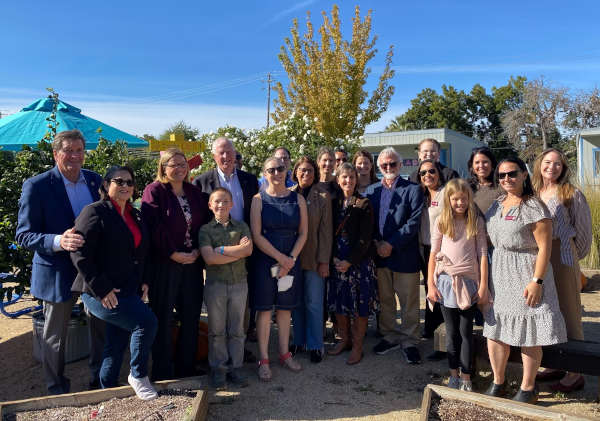
NORTHERN CALIFORNIA — This week, the U.S. Department of Agriculture’s Agricultural Marketing Service Under Secretary Jenny Moffitt and Reps. Mike Thompson and John Garamendi and Assemblymember Cecilia Aguiar-Curry announced a cooperative agreement with California for more than $23 million to increase our state’s purchase of nutritious, local foods for school meal programs.
Through the Local Food for Schools Cooperative Agreement Program, California Department of Education will purchase and distribute local and regional foods and beverages for schools to serve children through the National School Lunch and School Breakfast Programs.
These products will be healthy and unique to their geographic area, with the goal of improving child nutrition and building new relationships between schools and local farmers.
“School lunches are vital to the health and success of students in California. Nutrition plays a key role in school lunches and our local producers are the backbone of providing the food necessary to maintain this system,” said Thompson. “When we provide farm to table meals for our students, they are better prepared for the school day and benefit from fresh and healthy meals. This program will promote a more resilient food system with a foundation of our local producers, and I am proud to work with USDA, our local schools, and local growers to strengthen this program.”
“I am excited to see the USDA making a $24 million investment in California’s farmers and in the well-being of our children. I’ve fought for years to ensure nutritious, American-grown food is the foundation of our school lunch programs nationwide. This program is a big step in that direction, helping California schools support the local producers who’ve helped make our state the fruit and vegetable capital of the world,” said Garamendi.
“I am incredibly appreciative of Congressmen Thompson and Garamendi, and USDA Secretaries Lester Moffit and Dean, for hosting this announcement of California’s partnership on Farm to School programs under the National School Lunch and School Breakfast Program,” said Cecilia Aguiar-Curry (D-Winters). “This $23 million in federal support to supplement California’s investments and First Partner Jennifer Siebel-Newsom’s leadership as a champion of healthy meals in schools is a major breakthrough for our kids. We have the momentum to expand a concept we started in my home town of Winters years ago to every child in California. Fresh, local foods are the building blocks of a healthy child. And, a healthy child is one who we’ve prepared to learn, grow and succeed in life.”
“This cooperative agreement supporting California schools is another example of how USDA is working to build a more resilient food system rooted in local and regional production,” said USDA Under Secretary for Marketing and Regulatory Programs Jenny Lester Moffitt. “The Local Food for Schools Cooperative Agreement Program provides an opportunity for states to strengthen ties between local farmers, ranchers, food businesses and schools, and gives students access to nutritious foods unique to the area they live in, building stronger connections across local communities.”
“Strengthening relationships between local producers and schools is a long-term strategy to ensure our children always have access to nutritious foods in school, a win-win for child health and American agriculture,” said Deputy Under Secretary for Food, Nutrition, and Consumer Services Stacy Dean. “Through this program and many other efforts to support the school meal programs, USDA is committed to giving schools the tools they need to set children up to learn, grow, and thrive.”
With the Local Food for Schools funds, THE California Department of Education will strengthen local and regional purchasing relationships between School Food Authorities participating in the National School Lunch Program or School Breakfast Program with local farmers and producers. Schools and students will benefit from the economic support from the program to continue to provide fresh and minimally processed local foods in school meals.
“California is thrilled to receive over $23 million in local assistance funding from USDA for our schools operating the National School Lunch Program and School Breakfast Program. As the first state in the nation to adopt a permanent Universal Meals Program for our students, this funding aligns with the historic investments California is making to transform schools and ensure every public school student has access to not only a nutritious breakfast and lunch each school day, but also meals that are minimally processed, delicious, culturally relevant, California-grown and sourced from historically underserved producers” said State Superintendent of Public Instruction Tony Thurmond.
The Local Food for Schools cooperative agreements will allow organizations the flexibility to design food purchasing programs and establish partnerships with farmers and ranchers that best suit their local needs, accommodate environmental and climate conditions, account for seasonal harvests, improve supply chain resiliency and meet the needs of schools within their service area. Additionally, the program will provide more opportunities for historically underserved producers and processors to sell their products. Local Food for Schools Cooperative Agreement Program is authorized by the Commodity Credit Corporation Charter Act.
The Agricultural Marketing Service said it looks forward to continuing to sign agreements under this innovative program.
State officials said this week that California’s first-in-the-nation Earthquake Early Warning System provided advanced notification to more than 2.2 million Californians before shaking started for the 5.1 magnitude earthquake that was felt throughout the Bay Area Tuesday.
These advanced notifications provided up to 19 seconds, in many locations, for Californians to take protective action to “drop, cover, and hold on” and stay safe during the earthquake.
An estimated 2.1 million Android users received the notification directly on their phone without needing an additional app because the state’s partnership with Google incorporates the technology on all Android smartphones, in addition to more than 95,000 MyShake App users who also received the warning.
The United States Geological Survey received approximately 23,820 shake reports for the quake, primarily in the Bay Area, but also had reports come in from Southern California, Nevada, Idaho, Oregon and Washington.
“California continues to harness the power of science and technology to help keep our communities safe. When it comes to earthquakes, seconds can save lives. That’s why California continues to invest in new and emerging technologies to protect the most vulnerable among us,” said Gov. Gavin Newsom.
There were no reports of significant damage or injuries related to the earthquake, whose epicenter was in the community of Seven Trees and was felt across large portions of Northern California.
The Governor’s Office of Emergency Services, or Cal OES, which manages the earthquake warning system on behalf of the state, continues to coordinate closely with local officials in the impacted region to evaluate any issues or unmet needs.
Due to the success of Tuesday's performance, the Earthquake Early Warning System saw more than 108,000 new downloads of the MyShake App in a single day, a record.
In addition to the emergency alerts sent to individuals through MyShake and Android, the underlying technology is also being used to automate protective actions such as slowing trains, opening firehouse doors, recalling elevators, shutting off water and gas valves as well as closing bridges gates and notifying personnel in school and medical settings.
“While California has faced fires, drought and even a global pandemic, the single biggest threat we face to life and property in our state is a sizable earthquake in one of our major population centers,” said Cal OES Director Mark Ghilarducci. “Tuesday was another important step in testing our technology but work still remains to prepare for the next big one.”
Warnings delivered through the system are based on a computerized program called ShakeAlert, operated by the United States Geological Survey in partnership with Cal OES that analyzes data from seismic networks in California, calculates preliminary magnitudes, and then estimates which areas will feel shaking.
In 2019, on the 30th anniversary of the deadly Loma Prieta earthquake, Gov. Newsom announced the launch of the nation’s first statewide Earthquake Early Warning System.
The California Earthquake Early Warning System marries a smartphone application with traditional alert and warning delivery methods such as Wireless Emergency Alerts.
The system uses ground motion sensors from across the state to detect earthquakes before humans can feel them.
In 2020 Newsom announced a partnership with Google to incorporate California’s earthquake early warning technology into all Android smartphones.
To date, more than two million users have downloaded California’s MyShake App.
To learn more about earthquake preparedness and download the earthquake early warning application, visit www.earthquake.ca.gov.
How to receive alerts
• To receive earthquake warnings, there are three ways for individuals and families to get alerts through the Earthquake Warning California system.
• MyShake App: Free smartphone app that provides iPhone users with audio and visual warnings, available in both English and Spanish.
• Android Earthquake Alerts: Android phones with updated operating systems are automatically subscribed to Android Earthquake Alerts, which uses the same technology as the MyShake App; and
• Wireless Emergency Alerts: No-cost text messages for emergency situations sent through the nation-wide system providing lifesaving information for the State of California
HomeBase Feature,
The MyShake app launched its newest enhancement called HomeBase in 2022. This feature allows users to set a default location where they can receive earthquake early warning alerts, even if location services are temporarily down or turned off.
This will increase MyShake’s ability to send timely alerts so that Californians affected by an earthquake can receive warnings at a location of their choosing and be prepared for shaking.
To activate the HomeBase function, users should update their MyShake app and navigate to the Settings page, where they will find an “Add HomeBase Location” button.
The HomeBase feature differs from a function already in the app where users can receive earthquake notifications for other locations, even in other countries. For example, if users want to receive notifications for earthquakes that occur where family or friends live, they can add those locations under Settings > Notifications.
These advanced notifications provided up to 19 seconds, in many locations, for Californians to take protective action to “drop, cover, and hold on” and stay safe during the earthquake.
An estimated 2.1 million Android users received the notification directly on their phone without needing an additional app because the state’s partnership with Google incorporates the technology on all Android smartphones, in addition to more than 95,000 MyShake App users who also received the warning.
The United States Geological Survey received approximately 23,820 shake reports for the quake, primarily in the Bay Area, but also had reports come in from Southern California, Nevada, Idaho, Oregon and Washington.
“California continues to harness the power of science and technology to help keep our communities safe. When it comes to earthquakes, seconds can save lives. That’s why California continues to invest in new and emerging technologies to protect the most vulnerable among us,” said Gov. Gavin Newsom.
There were no reports of significant damage or injuries related to the earthquake, whose epicenter was in the community of Seven Trees and was felt across large portions of Northern California.
The Governor’s Office of Emergency Services, or Cal OES, which manages the earthquake warning system on behalf of the state, continues to coordinate closely with local officials in the impacted region to evaluate any issues or unmet needs.
Due to the success of Tuesday's performance, the Earthquake Early Warning System saw more than 108,000 new downloads of the MyShake App in a single day, a record.
In addition to the emergency alerts sent to individuals through MyShake and Android, the underlying technology is also being used to automate protective actions such as slowing trains, opening firehouse doors, recalling elevators, shutting off water and gas valves as well as closing bridges gates and notifying personnel in school and medical settings.
“While California has faced fires, drought and even a global pandemic, the single biggest threat we face to life and property in our state is a sizable earthquake in one of our major population centers,” said Cal OES Director Mark Ghilarducci. “Tuesday was another important step in testing our technology but work still remains to prepare for the next big one.”
Warnings delivered through the system are based on a computerized program called ShakeAlert, operated by the United States Geological Survey in partnership with Cal OES that analyzes data from seismic networks in California, calculates preliminary magnitudes, and then estimates which areas will feel shaking.
In 2019, on the 30th anniversary of the deadly Loma Prieta earthquake, Gov. Newsom announced the launch of the nation’s first statewide Earthquake Early Warning System.
The California Earthquake Early Warning System marries a smartphone application with traditional alert and warning delivery methods such as Wireless Emergency Alerts.
The system uses ground motion sensors from across the state to detect earthquakes before humans can feel them.
In 2020 Newsom announced a partnership with Google to incorporate California’s earthquake early warning technology into all Android smartphones.
To date, more than two million users have downloaded California’s MyShake App.
To learn more about earthquake preparedness and download the earthquake early warning application, visit www.earthquake.ca.gov.
How to receive alerts
• To receive earthquake warnings, there are three ways for individuals and families to get alerts through the Earthquake Warning California system.
• MyShake App: Free smartphone app that provides iPhone users with audio and visual warnings, available in both English and Spanish.
• Android Earthquake Alerts: Android phones with updated operating systems are automatically subscribed to Android Earthquake Alerts, which uses the same technology as the MyShake App; and
• Wireless Emergency Alerts: No-cost text messages for emergency situations sent through the nation-wide system providing lifesaving information for the State of California
HomeBase Feature,
The MyShake app launched its newest enhancement called HomeBase in 2022. This feature allows users to set a default location where they can receive earthquake early warning alerts, even if location services are temporarily down or turned off.
This will increase MyShake’s ability to send timely alerts so that Californians affected by an earthquake can receive warnings at a location of their choosing and be prepared for shaking.
To activate the HomeBase function, users should update their MyShake app and navigate to the Settings page, where they will find an “Add HomeBase Location” button.
The HomeBase feature differs from a function already in the app where users can receive earthquake notifications for other locations, even in other countries. For example, if users want to receive notifications for earthquakes that occur where family or friends live, they can add those locations under Settings > Notifications.
LAKEPORT, Calif. — With one of its council members having just resigned to take a supervisorial seat and a former council member on the ballot but expected to resign if elected, the city of Lakeport is looking for applicants for the open seats on the City Council.
Michael Green, who has been on the council since 2021, resigned after Gov. Gavin Newom announced he had appointed Green to the District 4 supervisorial seat vacated in July by Tina Scott. Green was sworn in on Tuesday.
In August, Mireya Turner resigned from the council after she was hired as director of the Lake County Community Development Department.
While the council appointed George Spurr, a former councilman, to fill the remainder of Turner’s term, which runs out in December, by the time of her resignation she already had filed the paperwork to run for a third term, meaning she will appear on the ballot.
At last report, no one had signed up to run for the seat as a write-in candidate. If Turner is reelected, which appears likely, she will then need to resign the seat again after the November election.
That will require the seat to be filled for two years, until the next municipal election in 2024, at which point Green’s former seat also would be up for election, along with two other seats.
City Manager Kevin Ingram told Lake County News that the situation is expected to be on the next City Council agenda for discussion.
In the meantime, the city is accepting applications from community members interested in filling the seats.
Qualified candidates must reside in Lakeport city limits, be at least 18 years of age, and registered to vote in the city of Lakeport.
The five-member City Council serves as the legislative body of the city and is responsible for setting policy, adopting the annual budget, adopting laws, determining services to be provided and the funding levels, and appointing citizens to its advisory boards and commissions.
Those interested in being considered for appointment to serve as council member on the Lakeport City Council are invited to submit a council member vacancy application.
The application can be obtained online at www.cityoflakeport.com or at Lakeport City Hall, located at 225 Park St.
Applications may be submitted electronically toThis email address is being protected from spambots. You need JavaScript enabled to view it. or in person at Lakeport City Hall.
Completed applications must be returned to the City Clerk’s Office no later than Monday, Nov. 28, at 5 p.m.
Once the application period has closed, the applications will be distributed to the City Council for review. The council will hold interviews for the applicants on Dec. 12 and 13.
For additional information, please contact Deputy City Clerk Hilary Britton at 707-263-5615, Extension 102, or by email toThis email address is being protected from spambots. You need JavaScript enabled to view it. .
Email Elizabeth Larson atThis email address is being protected from spambots. You need JavaScript enabled to view it. . Follow her on Twitter, @ERLarson, or Lake County News, @LakeCoNews.
Michael Green, who has been on the council since 2021, resigned after Gov. Gavin Newom announced he had appointed Green to the District 4 supervisorial seat vacated in July by Tina Scott. Green was sworn in on Tuesday.
In August, Mireya Turner resigned from the council after she was hired as director of the Lake County Community Development Department.
While the council appointed George Spurr, a former councilman, to fill the remainder of Turner’s term, which runs out in December, by the time of her resignation she already had filed the paperwork to run for a third term, meaning she will appear on the ballot.
At last report, no one had signed up to run for the seat as a write-in candidate. If Turner is reelected, which appears likely, she will then need to resign the seat again after the November election.
That will require the seat to be filled for two years, until the next municipal election in 2024, at which point Green’s former seat also would be up for election, along with two other seats.
City Manager Kevin Ingram told Lake County News that the situation is expected to be on the next City Council agenda for discussion.
In the meantime, the city is accepting applications from community members interested in filling the seats.
Qualified candidates must reside in Lakeport city limits, be at least 18 years of age, and registered to vote in the city of Lakeport.
The five-member City Council serves as the legislative body of the city and is responsible for setting policy, adopting the annual budget, adopting laws, determining services to be provided and the funding levels, and appointing citizens to its advisory boards and commissions.
Those interested in being considered for appointment to serve as council member on the Lakeport City Council are invited to submit a council member vacancy application.
The application can be obtained online at www.cityoflakeport.com or at Lakeport City Hall, located at 225 Park St.
Applications may be submitted electronically to
Completed applications must be returned to the City Clerk’s Office no later than Monday, Nov. 28, at 5 p.m.
Once the application period has closed, the applications will be distributed to the City Council for review. The council will hold interviews for the applicants on Dec. 12 and 13.
For additional information, please contact Deputy City Clerk Hilary Britton at 707-263-5615, Extension 102, or by email to
Email Elizabeth Larson at
State Controller Betty T. Yee has published the 2021 self-reported payroll data for fairs, expositions, and First 5 commissions on the Government Compensation in California website.
The data cover 2,035 positions and a total of more than $54.9 million in 2021 wages.
The newly published data include 1,083 positions at 24 fairs and expositions, and 952 positions at 44 First 5 commissions.
The report shows that he Lake County Fair has one permanent employee, with total wages of $86,652 and retirement and health contributions totaling $12,236, and 25 temporary employees, for total wages of $169,518 and retirement and health contributions of $14,396 on an annual basis.
The Lake County First 5 Commission pays out a total of $98,666 in salaries and $20,336 in retirement and health contributions annually.
The commission has 11 reported employees, with nine of them being unpaid board commissioners. The two paid employees are the First 5 executive director, paid annual wages of $66,838, with $17,416 in retirement and health contributions; and the health program support specialist, who receives annual pay of $31,828 and $2,920 in retirement and health contributions.
California law requires cities, counties and special districts to annually report compensation data to the state controller.
Controller Yee also maintains and publishes state government and California State University salary data.
No statutory requirement exists for superior courts, UC, community college districts, fairs, expositions, First 5 commissions, or K-12 education providers; their reporting is voluntary.
A list of entities that did not file or filed incomplete reports is available here.
Since the website launched in 2010, it has registered more than 14 million pageviews.
The site contains pay and benefit information on more than two million government jobs in California, as reported annually by each entity.
As the chief fiscal officer of California, Controller Yee is responsible for accountability and disbursement of the state’s financial resources. The controller has independent auditing authority over government agencies that spend state funds.
The data cover 2,035 positions and a total of more than $54.9 million in 2021 wages.
The newly published data include 1,083 positions at 24 fairs and expositions, and 952 positions at 44 First 5 commissions.
The report shows that he Lake County Fair has one permanent employee, with total wages of $86,652 and retirement and health contributions totaling $12,236, and 25 temporary employees, for total wages of $169,518 and retirement and health contributions of $14,396 on an annual basis.
The Lake County First 5 Commission pays out a total of $98,666 in salaries and $20,336 in retirement and health contributions annually.
The commission has 11 reported employees, with nine of them being unpaid board commissioners. The two paid employees are the First 5 executive director, paid annual wages of $66,838, with $17,416 in retirement and health contributions; and the health program support specialist, who receives annual pay of $31,828 and $2,920 in retirement and health contributions.
California law requires cities, counties and special districts to annually report compensation data to the state controller.
Controller Yee also maintains and publishes state government and California State University salary data.
No statutory requirement exists for superior courts, UC, community college districts, fairs, expositions, First 5 commissions, or K-12 education providers; their reporting is voluntary.
A list of entities that did not file or filed incomplete reports is available here.
Since the website launched in 2010, it has registered more than 14 million pageviews.
The site contains pay and benefit information on more than two million government jobs in California, as reported annually by each entity.
As the chief fiscal officer of California, Controller Yee is responsible for accountability and disbursement of the state’s financial resources. The controller has independent auditing authority over government agencies that spend state funds.
LAKEPORT, Calif. — The city of Lakeport is asking residents to continue to save water as drought conditions persist.
According to www.weather.gov, the La Nina weather pattern is expected to prevail throughout the remainder of 2022 and drought conditions are likely to persist or worsen through the fall rainy season.
The latest data from drought.gov indicates that 99.77% of California is experiencing moderate to exceptional drought conditions.
Lake County is no exception, as most of the county is in the severe drought category.
This is a reminder that the city of Lakeport relies on groundwater wells in the Scotts Valley area along with treated water from Clear Lake for the city’s potable water needs. Both sources remain vulnerable due to the current and forecasted drought conditions.
The city of Lakeport strongly encourages our customers to conserve water whenever possible — even during the traditional rainy season.
Additional water use mandates may be issued in the future and the city would like to remind our customers that the following wasteful water usage practices are currently prohibited per Lakeport City Council Resolution No. 2630 (2017):
• Hosing off sidewalks, driveways and other hardscapes.
• Washing automobiles, boats, RVs, etc., with hoses not equipped with a shut-off nozzle.
• Using non-recirculated water in a fountain or other decorative water feature.
• Watering lawns in a manner that causes runoff, or within 48 hours after measurable precipitation.
• Irrigating ornamental turf on public street medians.
Customers can help do their part in conserving by voluntarily reducing their water consumption.
Here are some simple water-saving ideas you can use at home:
• Install water-saving showerheads and take shorter showers — five minutes or less.
• Turn water off when brushing teeth.
• Let lawns go dormant in the summer.
• Water plants deeply and less often.
• Flush the toilet less.
• Check toilets, faucets and pipes for leaks and promptly repair if necessary.
For more water conservation tips and resources, please see the city’s website.
According to www.weather.gov, the La Nina weather pattern is expected to prevail throughout the remainder of 2022 and drought conditions are likely to persist or worsen through the fall rainy season.
The latest data from drought.gov indicates that 99.77% of California is experiencing moderate to exceptional drought conditions.
Lake County is no exception, as most of the county is in the severe drought category.
This is a reminder that the city of Lakeport relies on groundwater wells in the Scotts Valley area along with treated water from Clear Lake for the city’s potable water needs. Both sources remain vulnerable due to the current and forecasted drought conditions.
The city of Lakeport strongly encourages our customers to conserve water whenever possible — even during the traditional rainy season.
Additional water use mandates may be issued in the future and the city would like to remind our customers that the following wasteful water usage practices are currently prohibited per Lakeport City Council Resolution No. 2630 (2017):
• Hosing off sidewalks, driveways and other hardscapes.
• Washing automobiles, boats, RVs, etc., with hoses not equipped with a shut-off nozzle.
• Using non-recirculated water in a fountain or other decorative water feature.
• Watering lawns in a manner that causes runoff, or within 48 hours after measurable precipitation.
• Irrigating ornamental turf on public street medians.
Customers can help do their part in conserving by voluntarily reducing their water consumption.
Here are some simple water-saving ideas you can use at home:
• Install water-saving showerheads and take shorter showers — five minutes or less.
• Turn water off when brushing teeth.
• Let lawns go dormant in the summer.
• Water plants deeply and less often.
• Flush the toilet less.
• Check toilets, faucets and pipes for leaks and promptly repair if necessary.
For more water conservation tips and resources, please see the city’s website.
The California Department of Water Resources is commemorating Flood Preparedness Week, which runs Oct. 22 through Oct. 30, by encouraging residents to prepare for flood season.
“While we are preparing for a fourth year of extreme drought, we still need to plan for swings between severely dry conditions and large storms and flooding,” said DWR Director Karla Nemeth. “Just last year, December brought record-breaking precipitation to some parts of the state and was followed by the driest January, February, and March on record. That was a wake-up call for all Californians that we must prepare for both drought and flood conditions at the same time.”
More than seven million California residents are at risk of flooding, and many don’t realize it.
Flooding happens throughout the state, from rural communities to urban areas, at the base of hills and along the coast.
Every California county has received a flood-related emergency declaration in the past 20 years.
Flooding can also happen at any time of year and can still occur during drought.
Communities that are downslope of recent wildfires are also especially prone to flash floods and debris slides, and landscapes impacted by wildfires can take up to five years to recover.
To prepare for flooding, all Californians should follow three basic steps:
• Be aware of your risk – know whether your home is downslope of a burn area; pay attention to weather forecasts; listen to local authorities.
• Be prepared – always have an emergency evacuation kit ready; be prepared to evacuate early; have a plan for where you will go in an emergency and what to do with your pets.
• Take action – subscribe to your local emergency providers to get updated information. Visit the National Weather Service webpage to get updated weather information for your community. If local authorities issue an evacuation order, do not delay, follow local guidelines for evacuation.
In response to the extreme climate conditions facing California, DWR awarded over $50.4 million to communities across the state for flood risk reduction projects and $26.5 million in funding from DWR’s Coastal Watershed Flood Risk Reduction program. DWR Director Nemeth recently joined state and federal elected officials and local flood management officials to celebrate funding agreements for the Pajaro River Flood Risk Management Project, a $397 million project that will increase flood protection and provide ecosystem enhancements, groundwater recharge, economic benefits, and recreation opportunities. DWR will continue to work with local communities across the state to provide support for multi-benefit projects that reduce community flood risk.
As highlighted in Governor Newsom’s “Water Supply Strategy for a Hotter, Drier Future,” California is experiencing large swings between drought and flood, and due to climate change those swings could become more severe.
Last week, DWR hosted a symposium to highlight the need to prepare the state for flooding even during a drought, gathering scientists, water policy experts, and members of communities impacted by drought and floods for a conversation about building climate resiliency, including in the state’s water and flood management systems.
For more information on finding your flood risk, visit https://myhazards.caloes.ca.gov/.
For information on obtaining flood insurance, visit https://www.floodsmart.gov/.
For information on how you can prepare your household for flood emergencies, visit https://www.ready.gov/kit.
“While we are preparing for a fourth year of extreme drought, we still need to plan for swings between severely dry conditions and large storms and flooding,” said DWR Director Karla Nemeth. “Just last year, December brought record-breaking precipitation to some parts of the state and was followed by the driest January, February, and March on record. That was a wake-up call for all Californians that we must prepare for both drought and flood conditions at the same time.”
More than seven million California residents are at risk of flooding, and many don’t realize it.
Flooding happens throughout the state, from rural communities to urban areas, at the base of hills and along the coast.
Every California county has received a flood-related emergency declaration in the past 20 years.
Flooding can also happen at any time of year and can still occur during drought.
Communities that are downslope of recent wildfires are also especially prone to flash floods and debris slides, and landscapes impacted by wildfires can take up to five years to recover.
To prepare for flooding, all Californians should follow three basic steps:
• Be aware of your risk – know whether your home is downslope of a burn area; pay attention to weather forecasts; listen to local authorities.
• Be prepared – always have an emergency evacuation kit ready; be prepared to evacuate early; have a plan for where you will go in an emergency and what to do with your pets.
• Take action – subscribe to your local emergency providers to get updated information. Visit the National Weather Service webpage to get updated weather information for your community. If local authorities issue an evacuation order, do not delay, follow local guidelines for evacuation.
In response to the extreme climate conditions facing California, DWR awarded over $50.4 million to communities across the state for flood risk reduction projects and $26.5 million in funding from DWR’s Coastal Watershed Flood Risk Reduction program. DWR Director Nemeth recently joined state and federal elected officials and local flood management officials to celebrate funding agreements for the Pajaro River Flood Risk Management Project, a $397 million project that will increase flood protection and provide ecosystem enhancements, groundwater recharge, economic benefits, and recreation opportunities. DWR will continue to work with local communities across the state to provide support for multi-benefit projects that reduce community flood risk.
As highlighted in Governor Newsom’s “Water Supply Strategy for a Hotter, Drier Future,” California is experiencing large swings between drought and flood, and due to climate change those swings could become more severe.
Last week, DWR hosted a symposium to highlight the need to prepare the state for flooding even during a drought, gathering scientists, water policy experts, and members of communities impacted by drought and floods for a conversation about building climate resiliency, including in the state’s water and flood management systems.
For more information on finding your flood risk, visit https://myhazards.caloes.ca.gov/.
For information on obtaining flood insurance, visit https://www.floodsmart.gov/.
For information on how you can prepare your household for flood emergencies, visit https://www.ready.gov/kit.