 How to resolve AdBlock issue?
News
The California Highway Patrol and the California Office of Traffic Safety are partnering on a new yearlong campaign of education and enforcement efforts aimed at reducing the number of crashes caused by impaired drivers.
The grant-funded “Don’t Drive Impaired” campaign runs through Sept. 30, 2023.
In 2020, 669 people were killed and 10,646 were injured in driving under the influence crashes[i] within the CHP’s jurisdiction.
Each one of these injuries and deaths represents a preventable tragedy, and a continued need to focus efforts on reducing impaired driving.
“Law enforcement throughout the state continues to do their part by removing impaired drivers from the roadway,” said CHP Commissioner Amanda Ray. “Reducing impaired driving through education and enforcement remains a high priority, and this campaign provides us another opportunity to further that goal. It is never worth the risk to drive impaired. Always designate a sober driver.”
The OTS grant provides the CHP with funding to conduct additional saturation patrols, DUI checkpoints, and traffic safety education efforts throughout California. These efforts are designed to remove DUI drivers from the roadway and educate the public about the dangers of impaired driving. Additionally, the CHP will actively participate in California’s Drive Sober or Get Pulled Over efforts.
The CHP reminds the public, “DUI Doesn’t Just Mean Alcohol.” Cannabis, impairing medications, illegal drugs, or any combination can affect a driver’s ability to drive, and will result in an arrest for those who are found to be under the influence. Always designate a sober driver, take public transportation, or use a taxi or ride-share. There is always a better option than getting behind the wheel while impaired.
Additionally, the CHP would like to remind the public to call 9-1-1 if they observe a suspected DUI driver. Be prepared to provide the dispatcher a location, direction of travel, and vehicle description.
If you have questions regarding impaired driving, please contact your local CHP Area office. The Clear Lake Area office can be reached at 707-279-0103.
Funding for this program was provided by a grant from the OTS, through the National Highway Traffic Safety Administration.
The grant-funded “Don’t Drive Impaired” campaign runs through Sept. 30, 2023.
In 2020, 669 people were killed and 10,646 were injured in driving under the influence crashes[i] within the CHP’s jurisdiction.
Each one of these injuries and deaths represents a preventable tragedy, and a continued need to focus efforts on reducing impaired driving.
“Law enforcement throughout the state continues to do their part by removing impaired drivers from the roadway,” said CHP Commissioner Amanda Ray. “Reducing impaired driving through education and enforcement remains a high priority, and this campaign provides us another opportunity to further that goal. It is never worth the risk to drive impaired. Always designate a sober driver.”
The OTS grant provides the CHP with funding to conduct additional saturation patrols, DUI checkpoints, and traffic safety education efforts throughout California. These efforts are designed to remove DUI drivers from the roadway and educate the public about the dangers of impaired driving. Additionally, the CHP will actively participate in California’s Drive Sober or Get Pulled Over efforts.
The CHP reminds the public, “DUI Doesn’t Just Mean Alcohol.” Cannabis, impairing medications, illegal drugs, or any combination can affect a driver’s ability to drive, and will result in an arrest for those who are found to be under the influence. Always designate a sober driver, take public transportation, or use a taxi or ride-share. There is always a better option than getting behind the wheel while impaired.
Additionally, the CHP would like to remind the public to call 9-1-1 if they observe a suspected DUI driver. Be prepared to provide the dispatcher a location, direction of travel, and vehicle description.
If you have questions regarding impaired driving, please contact your local CHP Area office. The Clear Lake Area office can be reached at 707-279-0103.
Funding for this program was provided by a grant from the OTS, through the National Highway Traffic Safety Administration.
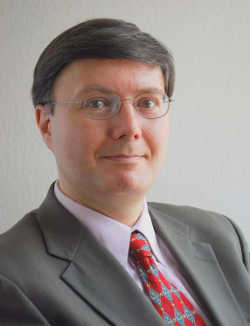
Estate planning by a married person can help to avoid unintended negative consequences to a surviving spouse and children.
This is particularly important when the married person is in a subsequent marriage and has separate property acquired prior to the current marriage.
Does a surviving spouse automatically inherit the deceased spouse’s house? Some married people believe that just by being married the surviving spouse alone automatically inherits the deceased spouse’s ownership interest in the family house. Learning otherwise can be a rude awakening to the surviving spouse.
The division of a deceased spouse’s estate without estate planning and the need for a probate may not be intended by the deceased spouse.
In California, without estate planning a decedent’s estate is divided amongst the decedent’s heirs under rules of Intestate Succession (i.e., “succession without a will”).
California is a community property state that recognizes both separate and community property interests. Separate property assets and community property assets are treated very differently.
Assets acquired while married and living together in California are presumed to be community property assets. Community property assets belong equally to both spouses during life and are divided equally at death or divorce. Such assets are often placed by the spouses into their joint living trust.
In the absence of a will or a trust by the deceased spouse to the contrary, the deceased spouse’s one-half share of a community property asset goes to the surviving spouse. No probate is needed.
Assets owned by either spouse as separate property remain separate property at death. In the absence of a will or a trust by the deceased spouse to the contrary, separate property assets are divided amongst the deceased spouse’s heirs. A surviving spouse is entitled to either one-half or (most often) one-third of the deceased spouse’s separate property assets, without a will.
Without the deceased spouse doing estate planning, the deceased spouse’s estate may be subject to probate if the deceased spouse had substantial separate property assets, like a residence.
Consider a deceased spouse who owned the family home as his own separate property from before the marriage. With separate property, California intestate law rules provide the surviving spouse with only a one-third interest and the remaining two-thirds is shared equally amongst the decedent’s surviving children.
Had the residence been a community property asset — whether acquired in the deceased spouse’s name alone or in both spouse’s name(s) — then the surviving husband does inherit the entire residence without the deceased spouse having a will in California.
How can the surviving spouse avoid becoming homeless? Fortunately, in California a surviving spouse may open a probate proceeding and petition the court for a probate homestead to allow the surviving spouse and any minor children to live in a residence for a period of time. This is true even if the deceased spouse died without a will or died with a will but either disinherited or omitted the surviving spouse as a beneficiary. The homestead can last for a period of years up to the surviving spouse’s lifetime.
However, a probate homestead is discretionary with the probate court. It must balance the interests of the surviving spouse with the competing interests of the decedent’s surviving children and any creditors with liens on the residence. Disagreement can result in litigation. The children and creditors may object.
Once created, a probate homestead is subject to the court’s supervision. A probate homestead can terminate sooner if the surviving spouse should remarry or fail to meet their obligations as a tenant.
A probate homestead is not as desirable as being life beneficiary of an ongoing trust created to hold title to the deceased spouse’s residence. The trust could even allow the trustee to sell the residence and buy a replacement if relocation was necessary.
The foregoing discussion shows how no estate planning leads to unintended consequences. It is not legal advice. If confronting the situation consult a probate attorney.
Dennis A. Fordham, attorney, is a State Bar-Certified Specialist in estate planning, probate and trust law. His office is at 870 S. Main St., Lakeport, Calif. He can be reached at
The annual Antarctic ozone hole reached an average area of 8.9 million square miles (23.2 million square kilometers) between Sept. 7 and Oct. 13, 2022.
This depleted area of the ozone layer over the South Pole was slightly smaller than last year and generally continued the overall shrinking trend of recent years.
“Over time, steady progress is being made, and the hole is getting smaller,” said Paul Newman, chief scientist for Earth sciences at NASA’s Goddard Space Flight Center in Greenbelt, Maryland. “We see some wavering as weather changes and other factors make the numbers wiggle slightly from day to day and week to week. But overall, we see it decreasing through the past two decades. The elimination of ozone-depleting substances through the Montreal Protocol is shrinking the hole.”
The ozone layer – the portion of the stratosphere that protects our planet from the Sun’s ultraviolet rays – thins to form an “ozone hole” above the South Pole every September.
Chemically active forms of chlorine and bromine in the atmosphere, derived from human-produced compounds, attach to high-altitude polar clouds each southern winter. The reactive chlorine and bromine then initiate ozone-destroying reactions as the Sun rises at the end of Antarctica’s winter.
Researchers at NASA and NOAA detect and measure the growth and breakup of the ozone hole with instruments aboard the Aura, Suomi NPP, and NOAA-20 satellites.
On Oct. 5, 2022, those satellites observed a single-day maximum ozone hole of 10.2 million square miles (26.4 million square kilometers), slightly larger than last year.
When the polar sun rises, NOAA scientists also make measurements with a Dobson Spectrophotometer, an optical instrument that records the total amount of ozone between the surface and the edge of space – known as the total column ozone value. Globally, the total column average is about 300 Dobson Units.
On Oct. 3, 2022, scientists recorded a lowest total-column ozone value of 101 Dobson Units over the South Pole. At that time, ozone was almost completely absent at altitudes between 8 and 13 miles (14 and 21 kilometers) – a pattern very similar to last year.
Some scientists were concerned about potential stratospheric impacts from the January 2022 eruption of the Hunga Tonga-Hunga Ha’apai volcano. The 1991 Mount Pinatubo eruption released substantial amounts of sulfur dioxide that amplified ozone layer depletion. However, no direct impacts from Hunga Tonga have been detected in the Antarctic stratospheric data.
View the latest status of the ozone layer over the Antarctic with NASA’s ozone watch.
Kathryn Cawdrey is a member of NASA's Earth Science News Team.
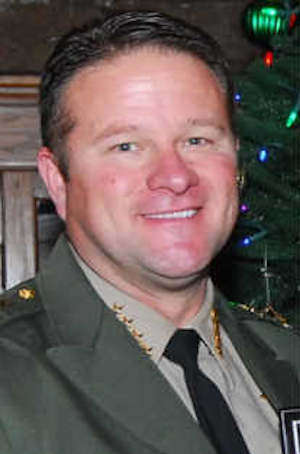
LAKE COUNTY, Calif. — Lake County’s sheriff said he will retire at the end of this year.
Sheriff Brian Martin announced his decision to staff Friday morning and posted a video about his retirement on social media shortly after speaking to Lake County News.
Martin, who turns 51 next week, told Lake County News his last day on the job will be Dec. 30, just a few days short of the official end of his second term.
He was elected to a third term in an uncontested race decided in this year’s June primary.
However, recent legislative developments at the state level caused Martin to make the retirement move before starting another four-year term.
That development was the passage by the Legislature of Assembly Bill 759, which Gov. Gavin Newsom signed at the end of September.
That bill, by Assemblymember Kevin McCarty (D-Sacramento), is changing sheriff and district attorney elections to coincide with presidential elections.
McCarty said because those positions are so important, they should be voted on during elections where there is high turnout, like the presidential election, not the midterms, where turnout tends to be lower.
The change means that sheriffs and district attorneys who have been elected as of January would have their terms extended two years, to 2028, in order to facilitate the change.
Martin called the bill’s timing “immaculate” because it presented him with an earlier-than-expected retirement decision, as he already had been planning on retiring during his coming term.
He said it will be up to the Board of Supervisors to appoint his successor, and when asked about possible candidates, he offered no names, but instead urged the board to look internally.
Martin said he has a strong leadership team, most of whom have been with him since the beginning of his time as sheriff, have supported him and who understand his philosophy.
His appointed successor won’t have the six year term allowed under AB 759. Instead, Martin said they will have to run in the next regular presidential election cycle, meaning they will be on the ballot in March of 2024.
By that point, he said the appointed sheriff will have been able to show whether or not they can do the job.
“It’s the best fair shake I can give to whoever takes this office next,” he said.
He explained that waiting to retire any later would potentially throw his successor into the middle of an election cycle, which he believes would cause unnecessary turmoil for the department and, by extension, the county government and the community.
This scenario also balances that concern with voter interest, giving them the opportunity to vote for the appointee or another candidate in the next available election.
Martin was elected in the June 2014 primary, ousting one-term Sheriff Frank Rivero in a heated three-way race that also included retired Clearlake Police Chief Bob Chalk.
Martin, who is a military veteran, has been in law enforcement since 1992, with just a one-year break in the middle of it when he and others had stepped out of the sheriff’s office because of Rivero.
He took office at the start of 2015, and seven months later he and the entire county were cast headlong into a cycle of disasters beginning with the Rocky, Jerusalem and Valley fires, and continued through incidents including the Clayton fire, the Mendocino and August complexes, and two years of flooding, in 2017 and 2019.
Then came COVID-19 in 2020, causing Martin and other local leaders to have to quickly adjust to the strange realities and complexities of a communitywide, statewide and nationwide lockdown.
However, COVID is now waning and rules having been relaxed — the governor intends to end the statewide emergency for the pandemic in February.
“I’m not leaving during a time of turmoil,” Martin said.
Martin said that he’s most proud of restoring the relationship and the trust between the sheriff’s office and the community. “We went through some very difficult times.”
However, Martin, who has been with the sheriff’s office for 17 years, said that the community has been very supportive of the agency.
At a time there has been heightened concerns about wrongdoing by police across the nation, and with many lawmakers speaking out against police and wanting to defund law enforcement, Martin said that hasn’t happened here in Lake County.
“We never were impacted by that in this community,” which he believes is a result of the sheriff’s office’s relationship with citizens.
He also credits the dedicated work of his employees. “We have people that do brave things everyday that go without recognition,” and regularly making personal sacrifices, he said.
At the same time, there are still many problems that Martin said he hasn’t been able to solve. “You’re never finished at this job,” he said.
Staffing remains a challenge. This year they’ve hired 17 new employees but also lost 17. Martin said they need to get staff levels up to provide adequate service.
There also is the situation with homeless individuals, which Martin said won’t be solved in Lake County.
He said he’s going to recommend some ideas to his successor, including updating the county’s camping ordinance to make sure it’s consistent with recent court decisions regarding unhoused people.
One of his biggest regrets is that while he saw the need for internal leadership development within the county government and the sheriff’s office, he never found the time to do it. While law enforcement works on that kind of development better than other entities, Martin said there always is room for improvement, and they have an obligation to equip employees for the job.
Martin said he is looking forward to retiring and being able to enjoy it, rather than hanging on too long as he has seen others do.
He plans to spend time paying attention to his mental, physical and spiritual health, noting the toll from stress that his around-the-clock job takes.
Martin and his wife, Crystal, who heads the Lake County District Attorney’s Office Victim-Witness Division, plan to continue living in Lake County for the short-term and will take time off to travel.
The couple’s three children are grown and off pursuing their own careers now. Oldest son Tyler is in law school in Seattle, daughter Hayley is in nursing school and the Army Reserve but still lives nearby, and son Matthew is an Army paratrooper stationed at Fort Bragg, North Carolina, where Martin himself had been stationed while in the military.
Martin thinks that, eventually, he and his wife will move out of state. His wife’s family lives in North Carolina and his mother, Joyce Campbell, a retired attorney who had worked for the Lake County Superior Court and other courts around the region, now lives in Tennessee. His father, retired Judge Richard Martin, lives in Lakeport.
“It’s been a long and rewarding career,” Martin said in the brief Facebook video.
Email Elizabeth Larson at
LAKE COUNTY, Calif. — Nearly a decade after it originally was supposed to be built, the project to construct the new Lakeport courthouse finally appears to be ready to get underway.
The courthouse project is scheduled to begin the “design-build phase” in November, said Blaine Corren, Judicial Council of California spokesperson.
Corren said that phase, which includes construction, is expected to be completed in May 2026. Completion previously had been anticipated in February 2026.
The 45,300 square foot courthouse will be built at 675 Lakeport Blvd., next to the visitor center.
The building will have a main entry floor where four courtrooms and offices will be located, as well as a lobby and waiting area, and a lower floor, or a basement, where the clerk's office, administration, self-help office, jury assembly area and building support will be located.
There also will be secure parking for judges and staff, 100 public parking spaces and solar power generation capability.
It will replace the Lakeport Division Courthouse, the 15,332 square foot space on the fourth floor of the current courthouse at 255 N. Forbes St., along with a leased records facility.
The architect is Moore Ruble Yudell Architects & Planners, with AECOM selected as the construction management agency. The design-build entity selection process is underway, the Judicial Council reported.
The Judicial Council’s Facilities Service office explained that the design-build phase starts when the design build entity — the architect, engineers and contractor team — is selected and provided with a notice to proceed. They first design then obtain permits before building the project.
This design-build phase ends with the completion of construction, the agency reported.
The project’s price tag is approximately $73,134,000, surpassing original construction cost estimates.
“It’s gonna happen,” Lake County Superior Court Judge Michael Lunas told Lake County News.
“It’s reality at this point. We’re past all the ifs and maybes,” he said.
The project has faced many ifs and maybes over the last 14 years.
In July 2008, the state Administrative Office of the Courts submitted 18 trial court funding projects to the state's Department of Finance, with Lakeport’s courthouse included as an immediate need facility because of its crowded conditions and safety issues.
The Judicial Council purchased the building site for a new courthouse in 2011 and it had appeared ready to go forward, with the state at that point anticipating construction would begin in spring 2013 and be completed in late 2014.
Throughout that time, Judge Richard Martin had championed the effort to get the courthouse built, working through endless meetings and a process to select the site.
“We were ready to go,” Martin told Lake County News in an interview this month.
However, the state’s budget crisis that was triggered by the Great Recession, and several years of funding and budget shortfalls, led to the project being placed on hold.
In an August 2019 feature titled “California Courthouse Construction, Explained,” published on the Judicial Council’s website, Corren explained, “The state’s fiscal crisis caused many construction projects to be cancelled or delayed. Beginning in 2008, more than $1.4 billion in court user fines and fees originally designated by the Legislature for court construction were borrowed, transferred to the state’s General Fund, or redirected to help fund court operations.”
“We were standing there with nothing to do for years,” Martin said.
However, the project did finally get back on track several years later.
In late 2019, the Judicial Council approved an updated courthouse priority project list that put Lakeport’s courthouse at No. 1 out of 80 projects statewide.
Ahead of that decision, Lunas — then presiding judge — and Lake County Superior Court Executive Officer Krista LeVier sent a letter to the Judicial Council supporting the methodology used for that list and saying that it should be the basis of funding decisions.
In the No. 2 spot on that priority list is a new Ukiah courthouse in Mendocino County, with a new $15 million one-room courthouse in Clearlake at the No. 6 spot. All of those projects were included in the “immediate need” category.
The original price tag for Lakeport’s courthouse was $70.8 million. When the updated courthouse priority list was issued in 2019, the estimated cost for Lakeport’s slimmed down project was $51.2 million. Since then, construction costs have risen rapidly, with the estimated cost increasing by more than $22 million for a total cost of more than $73.1 million.
Martin, who retired in 2017, said he put everything he had into the effort and was bothered by how it was put on hold.
However, he said it’s good news that it’s getting started now.
For more information about the process and to see the current project diagrams, visit the Lakeport Courthouse page on the Judicial Council’s website.
Email Elizabeth Larson atThis email address is being protected from spambots. You need JavaScript enabled to view it. . Follow her on Twitter, @ERLarson, or Lake County News, @LakeCoNews.
The courthouse project is scheduled to begin the “design-build phase” in November, said Blaine Corren, Judicial Council of California spokesperson.
Corren said that phase, which includes construction, is expected to be completed in May 2026. Completion previously had been anticipated in February 2026.
The 45,300 square foot courthouse will be built at 675 Lakeport Blvd., next to the visitor center.
The building will have a main entry floor where four courtrooms and offices will be located, as well as a lobby and waiting area, and a lower floor, or a basement, where the clerk's office, administration, self-help office, jury assembly area and building support will be located.
There also will be secure parking for judges and staff, 100 public parking spaces and solar power generation capability.
It will replace the Lakeport Division Courthouse, the 15,332 square foot space on the fourth floor of the current courthouse at 255 N. Forbes St., along with a leased records facility.
The architect is Moore Ruble Yudell Architects & Planners, with AECOM selected as the construction management agency. The design-build entity selection process is underway, the Judicial Council reported.
The Judicial Council’s Facilities Service office explained that the design-build phase starts when the design build entity — the architect, engineers and contractor team — is selected and provided with a notice to proceed. They first design then obtain permits before building the project.
This design-build phase ends with the completion of construction, the agency reported.
The project’s price tag is approximately $73,134,000, surpassing original construction cost estimates.
“It’s gonna happen,” Lake County Superior Court Judge Michael Lunas told Lake County News.
“It’s reality at this point. We’re past all the ifs and maybes,” he said.
The project has faced many ifs and maybes over the last 14 years.
In July 2008, the state Administrative Office of the Courts submitted 18 trial court funding projects to the state's Department of Finance, with Lakeport’s courthouse included as an immediate need facility because of its crowded conditions and safety issues.
The Judicial Council purchased the building site for a new courthouse in 2011 and it had appeared ready to go forward, with the state at that point anticipating construction would begin in spring 2013 and be completed in late 2014.
Throughout that time, Judge Richard Martin had championed the effort to get the courthouse built, working through endless meetings and a process to select the site.
“We were ready to go,” Martin told Lake County News in an interview this month.
However, the state’s budget crisis that was triggered by the Great Recession, and several years of funding and budget shortfalls, led to the project being placed on hold.
In an August 2019 feature titled “California Courthouse Construction, Explained,” published on the Judicial Council’s website, Corren explained, “The state’s fiscal crisis caused many construction projects to be cancelled or delayed. Beginning in 2008, more than $1.4 billion in court user fines and fees originally designated by the Legislature for court construction were borrowed, transferred to the state’s General Fund, or redirected to help fund court operations.”
“We were standing there with nothing to do for years,” Martin said.
However, the project did finally get back on track several years later.
In late 2019, the Judicial Council approved an updated courthouse priority project list that put Lakeport’s courthouse at No. 1 out of 80 projects statewide.
Ahead of that decision, Lunas — then presiding judge — and Lake County Superior Court Executive Officer Krista LeVier sent a letter to the Judicial Council supporting the methodology used for that list and saying that it should be the basis of funding decisions.
In the No. 2 spot on that priority list is a new Ukiah courthouse in Mendocino County, with a new $15 million one-room courthouse in Clearlake at the No. 6 spot. All of those projects were included in the “immediate need” category.
The original price tag for Lakeport’s courthouse was $70.8 million. When the updated courthouse priority list was issued in 2019, the estimated cost for Lakeport’s slimmed down project was $51.2 million. Since then, construction costs have risen rapidly, with the estimated cost increasing by more than $22 million for a total cost of more than $73.1 million.
Martin, who retired in 2017, said he put everything he had into the effort and was bothered by how it was put on hold.
However, he said it’s good news that it’s getting started now.
For more information about the process and to see the current project diagrams, visit the Lakeport Courthouse page on the Judicial Council’s website.
Email Elizabeth Larson at
LAKE COUNTY, Calif. — Forecasters said a cold front is expected to move over the region early next week, bringing with it colder temperatures, wind, rain and snow in the higher elevations.
The National Weather Service said a weak frontal system was to pass northwest of the North Coast overnight, with no rainfall expected, although there is the potential for early morning patchy fog on the coast and in areas of Lake County, including Cobb, on Friday morning.
A stronger front is expected to move into the area on Tuesday, bringing with it the potential for snow showers above the 3,000 foot elevation mark.
“This will be the coldest air of the season so far. Cool and unsettled weather with showers, mountain snow and gusty winds are expected,” the National Weather Service’s long term forecast said.
The specific Lake County forecast says that rain could actually arrive late Monday night, with chances of rain to continue through Thursday.
Temperatures through the weekend are forecast to rise up to the low 70s during the day and high 40s at night, dropping into the low 50s during the day and at night into the high 30s with the arrival of the cold front.
Light winds also are in the forecast for Friday, Saturday and Sunday evenings, the forecast said.
Email Elizabeth Larson atThis email address is being protected from spambots. You need JavaScript enabled to view it. . Follow her on Twitter, @ERLarson, or Lake County News, @LakeCoNews.
The National Weather Service said a weak frontal system was to pass northwest of the North Coast overnight, with no rainfall expected, although there is the potential for early morning patchy fog on the coast and in areas of Lake County, including Cobb, on Friday morning.
A stronger front is expected to move into the area on Tuesday, bringing with it the potential for snow showers above the 3,000 foot elevation mark.
“This will be the coldest air of the season so far. Cool and unsettled weather with showers, mountain snow and gusty winds are expected,” the National Weather Service’s long term forecast said.
The specific Lake County forecast says that rain could actually arrive late Monday night, with chances of rain to continue through Thursday.
Temperatures through the weekend are forecast to rise up to the low 70s during the day and high 40s at night, dropping into the low 50s during the day and at night into the high 30s with the arrival of the cold front.
Light winds also are in the forecast for Friday, Saturday and Sunday evenings, the forecast said.
Email Elizabeth Larson at