 How to resolve AdBlock issue?
News
LAKE COUNTY, Calif. – It’s time once again to set clocks to “fall back.”
Daylight saving time ends at 2 a.m. Sunday, Nov. 6. It began on Sunday, March 13.
The Energy Policy Act, passed by Congress in 2005, establishes the beginning of daylight saving time on the second Sunday in March, with the end of it on the first Sunday in November.
Daylight saving time continues in California despite the November 2018 passage of Proposition 7, a ballot initiative that allows the State Legislature to change the dates and times of daylight saving time — including moving to permanent daylight saving time — with a two-thirds vote. That proposition was approved with a yes vote of 59%, compared to a 40% no vote.
However, the necessary steps for that initiative to go into effect haven’t taken place. That includes passage of a state law to allow for it.
In February, State Assemblymember Steven Choi introduced AB2868 for California to go to year-round daylight saving time.
The bill would have allowed the state to make that move immediately after federal law authorizes it, as current federal law doesn’t allow states to set their standard time to year-round daylight saving time, according to the Legislative Counsel’s Digest entry on the bill.
However, Choi’s bill stalled in the Legislature earlier this year.
Likewise, efforts in Congress aren’t moving forward. The Sunshine Protection Act, introduced by Sen. Marco Rubio (R-Florida) passed the U.S. Senate in March, but the U.S. House of Representatives hasn’t produced its own bill on the matter.
In the meantime, changing clocks also is a good time for Californians to check the batteries in their smoke alarms and other safety features in homes.
Visit Cal Fire’s website on smoke alarms or or contact your local fire department for guidance.
Email Elizabeth Larson atThis email address is being protected from spambots. You need JavaScript enabled to view it. . Follow her on Twitter, @ERLarson, or Lake County News, @LakeCoNews.
Daylight saving time ends at 2 a.m. Sunday, Nov. 6. It began on Sunday, March 13.
The Energy Policy Act, passed by Congress in 2005, establishes the beginning of daylight saving time on the second Sunday in March, with the end of it on the first Sunday in November.
Daylight saving time continues in California despite the November 2018 passage of Proposition 7, a ballot initiative that allows the State Legislature to change the dates and times of daylight saving time — including moving to permanent daylight saving time — with a two-thirds vote. That proposition was approved with a yes vote of 59%, compared to a 40% no vote.
However, the necessary steps for that initiative to go into effect haven’t taken place. That includes passage of a state law to allow for it.
In February, State Assemblymember Steven Choi introduced AB2868 for California to go to year-round daylight saving time.
The bill would have allowed the state to make that move immediately after federal law authorizes it, as current federal law doesn’t allow states to set their standard time to year-round daylight saving time, according to the Legislative Counsel’s Digest entry on the bill.
However, Choi’s bill stalled in the Legislature earlier this year.
Likewise, efforts in Congress aren’t moving forward. The Sunshine Protection Act, introduced by Sen. Marco Rubio (R-Florida) passed the U.S. Senate in March, but the U.S. House of Representatives hasn’t produced its own bill on the matter.
In the meantime, changing clocks also is a good time for Californians to check the batteries in their smoke alarms and other safety features in homes.
Visit Cal Fire’s website on smoke alarms or or contact your local fire department for guidance.
Email Elizabeth Larson at
The California Highway Patrol said a new program will be dedicated to the safety of the state’s Native Americans.
The Native Tribal Traffic Education Program, or Native-TTEP, grant will be a proactive program designed to bring traffic safety education to the Native American population with initial efforts focused in CHP Northern, Valley and Golden Gate Divisions.
The CHP officers and other nonuniformed personnel involved in the program will serve as resources to Native American communities and tribes.
The goal of the CHP Native-TTEP grant will be to educate drivers, pedestrians and bicyclists to help reduce the number of fatal and injury crashes involving all users of roads on and near tribal lands in California.
It will also improve service and public trust in tribal communities by implementing many of the
safety programs the CHP has to offer.
The topics of the program that will benefit California’s motoring public include seat belts, the proper use of child safety seats, the dangers of driving under the influence, pedestrian and bicycle education, defensive driving techniques, distracted driving, teen/parent driving safety, driver's license requirements, and other educational subjects.
Traffic safety presentations will be conducted at schools, public health fairs, tribal events, traffic safety conferences, bicycle rodeos, Indian education and Native youth programs, tribal Elder programs, passenger safety seat checkup events, and school bus safety training.
“We are excited to offer our traffic safety programs to tribes and Native Americans living in our
communities all in an effort to strengthen relationships, reduce traffic crashes, and most importantly save lives,” said CHP Commissioner Amanda Ray.
The CHP Native-TTEP grant is the first safety grant program focused on reaching the Native American communities in California, which is home to the nation’s largest American Indian/Alaska Native population.
Funding for this program was provided by a grant from the California Office of Traffic Safety, through the National Highway Traffic Safety Administration.
The Native Tribal Traffic Education Program, or Native-TTEP, grant will be a proactive program designed to bring traffic safety education to the Native American population with initial efforts focused in CHP Northern, Valley and Golden Gate Divisions.
The CHP officers and other nonuniformed personnel involved in the program will serve as resources to Native American communities and tribes.
The goal of the CHP Native-TTEP grant will be to educate drivers, pedestrians and bicyclists to help reduce the number of fatal and injury crashes involving all users of roads on and near tribal lands in California.
It will also improve service and public trust in tribal communities by implementing many of the
safety programs the CHP has to offer.
The topics of the program that will benefit California’s motoring public include seat belts, the proper use of child safety seats, the dangers of driving under the influence, pedestrian and bicycle education, defensive driving techniques, distracted driving, teen/parent driving safety, driver's license requirements, and other educational subjects.
Traffic safety presentations will be conducted at schools, public health fairs, tribal events, traffic safety conferences, bicycle rodeos, Indian education and Native youth programs, tribal Elder programs, passenger safety seat checkup events, and school bus safety training.
“We are excited to offer our traffic safety programs to tribes and Native Americans living in our
communities all in an effort to strengthen relationships, reduce traffic crashes, and most importantly save lives,” said CHP Commissioner Amanda Ray.
The CHP Native-TTEP grant is the first safety grant program focused on reaching the Native American communities in California, which is home to the nation’s largest American Indian/Alaska Native population.
Funding for this program was provided by a grant from the California Office of Traffic Safety, through the National Highway Traffic Safety Administration.
What's up for November? A lunar eclipse, the moon and planets, and the Leonid meteors.
A total lunar eclipse is on the way, to provide a little celestial magic, early on the morning of Nov. 8. The eclipse will be visible to viewers in North America, the Pacific region, Australia, and Eastern Asia — anywhere the Moon is above the horizon while the eclipse is happening.
For observers in the Eastern time zone of the U.S. and Canada, the partial eclipse begins a little after 4 a.m. It reaches full eclipse about 5:15 local time, and the Moon then sets while still in eclipse for you.
For observers on the West Coast of North America, that translates to the partial eclipse beginning just after 1 a.m., and reaching full eclipse by about 2:15 a.m. You'll be able to see the entire eclipse unfold before sunrise, weather permitting, as the Moon exits the dark part of Earth's shadow (called the umbra) a few minutes before 5 a.m.
During a lunar eclipse, you'll likely notice that you can see a lot more faint stars, as the usually brilliant full moon dims to a dull red. And during this eclipse, viewers with binoculars can spy an extra treat — the ice giant planet Uranus will be visible just a finger's width away from the eclipsed Moon.
Check your local details to find out if the eclipse is visible from your area, and find lots more eclipse info from NASA at the address on your screen.
In the pre-dawn hours of Nov. 11, you’ll find the Moon directly between Mars and bright bluish-white star Elnath. Elnath is the second brightest star in the constellation Taurus, after reddish Aldebaran, and it forms the northern horn of the bull. You'll find that Elnath is about the same brightness as the star Bellatrix in nearby Orion, where it forms one of the hunter's shoulders.
On Nov. 20, in the hour before sunrise, look toward the southeast to find a slim, crescent Moon hanging right above bright bluish star Spica. It's a giant star, 10 times the mass of our Sun, and 12,000 times more luminous. Fortunately for us, it's located 260 light years away.
And in the evening sky, on Nov. 28, a beautiful crescent Moon hangs beneath Saturn in the south after sunset.
The Leonid meteor shower is active throughout November. It peaks after midnight on Nov. 18, with something like 15 to 20 meteors per hour under clear, dark skies.
The shower's name comes from the constellation Leo, the lion, from which its meteors appear to radiate. The meteors are dusty bits of debris left behind by comet Tempel-Tuttle as it orbits the Sun. This comet was actually discovered twice, independently.
On the peak night for the Leonids this year, the Moon will be about 35% full, meaning it will interfere with your ability to see the fainter meteors. However, Leonid meteors are often bright, with trails (also called trains) that persist for a couple of seconds after they streak across the sky.
And while the Moon will be rising in the east with Leo around midnight local time, it's actually better to view the sky away from the meteors' apparent point of origin, by lying back and looking straight upward, as any meteor trails you see will appear longer and more spectacular.
Stay up to date with all of NASA's missions to explore the solar system and beyond at nasa.gov.
Preston Dyches works for NASA's Jet Propulsion Laboratory.
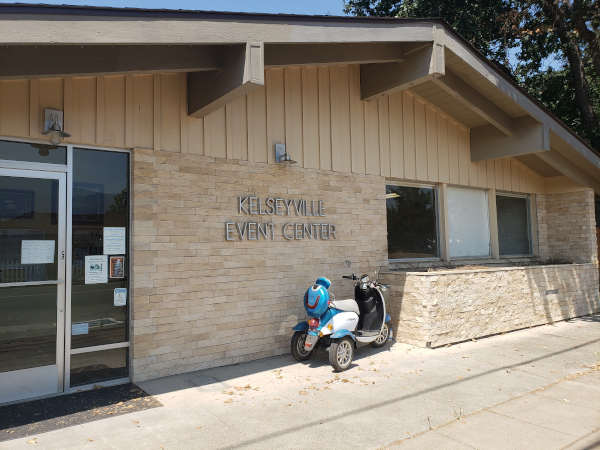
LAKE COUNTY, Calif. — A plan currently under consideration by the county of Lake would give the Kelseyville Senior Center the unique distinction of having been purchased with funds provided by the county government twice in a 20-year span.
The timing of the proposal from District 5 Supervisor Jessica Pyska, which first went before the Board of Supervisors in August, was notable as it was just 20 years before — in July 2002 — that the escrow to purchase the center from the previous owner closed thanks to funds the county budgeted to make the purchase possible.
However, until shortly before it was first discussed publicly by the board in August, neither Pyska nor county staff seemed to be aware of this previous purchase — despite having conducted “due diligence” on the proposal.
What’s been revealed of the current plan in public so far is vague beyond the idea of helping to “stabilize” the senior center’s operations and have the building available for other uses.
And, so far, a center official said negotiations with the county haven’t started.
The funds will come from American Rescue Plan Act funds. The county has received $12.5 million in ARPA funds and has set aside $1 million to help stabilize the county’s senior centers.
The board first discussed the plan regarding the spending of the ARPA funds on Dec. 21. Staff had reported there would be community input on the plan and how the money has been spent, but so far there haven’t been any of note.
What’s been revealed so far is that the Kelseyville Senior Center plan could end up taking the lion’s share of those ARPA funds set aside to target senior center needs countywide.
Despite the numerous unknowns, the Board of Supervisors voted unanimously in August to appoint a negotiating team for the county consisting of County Administrative Officer Susan Parker and Assistant County Administrative Officer Stephen Carter.
That’s ahead of being able to answer critical questions about how the property would be operated.
As for the county’s due diligence on the plan, Parker revealed little of it at the Aug. 9 board meeting beyond simply identifying the building’s current owner as the Kelseyville Seniors.
No other specifics of the plan were offered then or, more recently, during the county’s late September budget hearings.
In response to a question from Lake County News at the August meeting about who would operate the building, Pyska said the county would operate it after the morning use by the seniors, who would get to rent it from the county for continued use.
When asked by Lake County News about the estimated cost to run the facility on an annual basis, Parker said they didn’t know.
Pyska said she has spoken to the center board and the Area Agency on Aging about the proposal.
“It’s an aging building,” she said, noting it’s difficult for the nonprofit Kelseyville Seniors group to manage the repairs and maintenance.
Pyska said it could be used as a community center, explaining that Kelseyville doesn’t have a community center or a library, and it could also be used as an outpost library now that the county also has a new bookmobile coming.
She said there’s a need for Kelseyville, and the plan is for the county to purchase the building and operate it.
“This is an investment that we want to make in our senior centers and into our seniors,” she said, noting the Kelseyville Seniors group is struggling to keep up with deferred maintenance.
The board followed up at that meeting by voting unanimously to move forward with negotiations and holding a closed session discussion with county negotiators, from which there was no reportable action.
Lorna Sue Sides is the Kelseyville Senior Center’s executive director, as well as a leader of the Citizens for Healing, the group advocating for changing the name of Kelseyville to “Konocti,” and wants to put an initiative on the March 2024 presidential primary ballot to do it.
Sides told Lake County News that Pyska approached them in the summer of 2021 with a proposal for the county to purchase its buildings with ARPA funds with plans to keep the senior center operational, increasing the footprint of the building and adding library/community space.
While Pyska’s public statements painted a picture of a struggling senior center, Sides told Lake County News that the group is stable.
“We don’t need to do this. We’re solid,” she said, standing in the dining room of the center on a summer Monday, as about a dozen people were having lunch.
Sides said Kelseyville Seniors Inc. is fully solvent and its buildings are in good condition.
Lake County News posed several additional questions to the county following the board’s August approval about what information it had about the center’s financial status and the history of the building.
In response, the County Administrative Office said it was just beginning the process and that the county would request financials and other documentation soon.
At the same time, the county’s response to the questions indicated that county officials were not aware of how the building was acquired by its current owners.
History of the property
County property and historical records show that the building at 5245 Third St. that now houses the Kelseyville Senior Center/Event Center was built in 1965 and it is about 2,150 square feet on a lot that measures 0.16 of an acre.
The property began to house the Kelseyville Post Office the following year, where it remained until Jan. 27, 2002. The building was privately owned and leased to the Postal Service.
The U.S. Postal Service built a new Post Office at 5500 Gaddy Lane, which was first occupied in August 2001, said Evelina Ramirez, a Postal Service spokesperson.
Ramirez said the lease for the building on Third Street was terminated on April 27, 2002.
Both Retired County Administrative Officer Kelly Cox and retired District 5 Supervisor Rob Brown confirmed to Lake County News that the county helped the Kelseyville Seniors group purchase the building.
In the 2001-02 fiscal year budget, the county of Lake had reserved money to purchase and renovate the building. In May of 2002, the Board of Supervisors voted to allocate $200,000 — $165,000 to purchase the building and $35,000 for renovations — to the project.
Escrow closed on the building on July 23, 2002. A front-page story on July 27, 2002, in the Lake County Record-Bee explained how the building was purchased with the aid of the county of Lake.
Similarly, county records show the property’s ownership history. The grant deed for the sale listed the estate of Thomas Joseph Weiner as the seller and Kelseyville Seniors Inc. as the buyer.
However, there also was a second document recorded at that time, a short form deed of trust and security agreement for the county grant which had made the purchase by the seniors group possible in the first place.
At the time of the August board meeting, county officials appeared to be unaware of that document — or the previous part the county had to play in buying the building 20 years ago — in their responses to Lake County News. Cox said at that time he also had communicated with county officials after seeing the article Lake County News published about the board’s planned discussion on the building purchase.
Rob Brown told Lake County News that he approached Congressman Mike Thompson about funds to assist the center before the 2002 purchase.
At the Board of Supervisors’ meeting on April 13, 2004, Thompson gave the board an update on federal and local issues, and presented a check in the amount of $89,415 for the construction of a new kitchen at the Kelseyville Senior Center to Gene Kyle, according to board minutes.
Separately, a book printed by the Government Accounting Office on appropriations for the federal 2003 budget confirmed that funding, rounding it up to $90,000, and stating that it was to be used “for renovations of a facility into a senior center.”
Lake County News spoke with Marilyn Westfall, who was president of the senior center board at the time of the building’s purchase and initial renovation but is no longer involved.
“We need a place of our own,” she said, which was the impetus for pursuing the project.
Westfall was unable to recall specifics of when certain improvements were made.
However, she said she and her husband and other volunteers did a great deal of the initial renovation work, including removing the old floors due to the asbestos in them.
Her husband did the cabinetry and they painted the building. The renovations were completed within a couple of years, she said.
The 2007-08 Lake County Grand Jury Report completed an oversight report on the center “to determine if best practices in regards to bookkeeping and financial policies were being followed.”
At that time, the report said the center had a new kitchen but that it served no congregate — or in-house meals — and Meals on Wheels programs for this area were provided by the Lakeport Senior Center, which is still the case.
The report said the county of Lake contributed $2,000 that current fiscal year to the center’s operations, which were estimated to cost $10,000 annually.
The grand jury also found issues with the center’s financial procedures, and said there was no evidence at that point of a current Federal 990 filing or state filings.
“The center’s operations are more similar to a social club rather than a full-service senior center,” the report said.
Later center officials sought to remedy that. In August 2010, the center submitted to the IRS three years of Form 990-EZ filings — for 2004, 2005 and 2006.
Those reports were filed by Judy Cardinale, who was treasurer for 10 years, from about 2008 to 2018.
She said that before her tenure, the center had failed to submit the IRS filings and was in danger of losing its nonprofit status.
Cardinale told Lake County News that the major renovations to the center were done by the time she joined the center’s leadership, although she believed the kitchen renovations were done sometime around 2005.
“I had to reconstruct all the records,” she said.
The center’s federal tax filings that Cardinale helped put together give an idea of when the main spending occurred. For 2004, the filings indicated that approximately $77,002 was spent to “renovate and maintain” the building. In 2005, the center reported renovation and maintenance costs totaled $19,183, and in 2006 those costs were at $8,840.
More recently, Cardinale said the new laminate floors were installed and the interior painted before she left the center’s board.
The center today
Sides said they are used to running the center on a very small budget, but declined to give specifics due to pending negotiations.
The center has no paid staff. Sides said all work is done by volunteers and individuals who are part of the Ability Road skills training program. There also is a volunteer handyman.
They do not pay property taxes, and most of the supplies they use are donated by board members.
She said they do pay a bookkeeper for services, utilities and insurance.
The board has grown in recent months, with members now numbering five, she said.
Estimated costs to run the center for the 2021-22 fiscal year are just under $10,000, meaning that the center’s frugal management has kept its annual expenses close to what the grand jury estimated 15 years ago.
Sides said they have no intention of curtailing any of senior-centered activities if the center is sold.
The center lost about $2,000 since the beginning of the pandemic, Sides said. “Most of our income comes from rentals, so we were impacted, but I feel we sailed through the lean times due to our very low overhead and a small COVID grant.”
Over the summer the center had a couple of unexpected gifts from the Kelseyville business community and their rentals are starting to pick up, Sides said.
“I do want to go on record stating that our buildings are in good condition and KSI [Kelseyville Seniors Inc.] is fiscally sound,” she said.
The Kelseyville Senior Center still doesn’t use its kitchen to cook congregate meals for the seniors that use its services. Rather, it serves meals provided by the Lakeport Senior Center.
The Lake Family Resource Center, or LFRC, has overseen the Lakeport Senior Center since July 2020.
Lisa Morrow, executive director of both LFRC and the Lakeport Senior Center, said there is an informal agreement between the two centers.
Morrow explained that the Lakeport Senior Center holds the contract from the Area Agency on Aging to provide nutrition services to its entire service area, which includes Kelseyville, and under that contract has a meal count that it is contractually required to provide.
She said they bring hot food to the Kelseyville Senior Center so they can serve their clients there. Kelseyville does not have to pay for the service.
“We’re delivering meals to them, hot food to them, Monday through Thursday,” Morrow said.
During a late summer visit to the center, this reporter counted about a dozen people having lunch at a time, with people cycling in and out.
Sides estimated that they serve between 10 and 22 diners at their lunches five days a week.
Morrow said they used to also provide meals on Fridays, but they’ve had to cut back to four days a week due to staffing and volunteer shortages.
As a result, Kelseyville Senior Center has been seeking out food from local restaurants and caterers to fill that gap on Fridays. Over the summer, Sides said the Kelseyville Business Association had begun to step up to help find food donations for the Friday meals.
The issue has continued into the fall, with Sides noting the center held a meeting in October to discuss it. “We are going to continue to cobble together Friday lunches,” she said. “But we are working on something more stable and hope to have a solid plan by the first of the year. Looking for sponsors offering cash, prepared meals, groceries, or labor. We do have some solid commitments. Asking for quarterly donations, but one time donations will be graciously accepted.”
In addition to meals, Side said the center has a card day and an art afternoon, and they hope to be able to resume their Tai Chi program soon.
Minor upgrades have been made to the building, including new commercial grade laminate flooring that was installed within the last several years.
The kitchen is small but sinks and counters from the upgrade more than a decade ago appear in very good shape. Sides said they would expect to get new appliances if the county purchases the building.
Today, in addition to the original building, there is a small modular building that sits behind it along with a storage area that, altogether, is about 800 square feet.
Sides said the proposal she’s discussed with the county would include removing the modular and extending the original building back to the property boundary and over the area that now includes several parking spaces.
Based on those initial discussions with the county, Sides said the figure suggested for the building’s purchase was around $200,000, with the county anticipating that it would spend $500,000 to expand the building’s footprint.
She said she and the rest of her board are open to negotiating with the county regarding the sale of the center’s buildings.
Sides said she will be involved in negotiations and hopes to have two other board members present.
“Our final decision will be based on what we feel would best serve the senior population of Kelseyville, both now and into the future,” she said.
Asked in the weeks after the initial discussion about that total figure of $700,000 for purchase and renovation reported by Sides, Deputy County Administrative Officer Matthew Rothstein told Lake County News in an email, “It is quite premature to assume any terms are final. County staff have identified potentially-qualifying expenditures in support of Lake County’s other Senior Centers, and we look forward to partnering with those Centers’ operators to determine what County investments are most appropriate soon. Nothing is appropriate to announce at this time.”
However, by the time the county’s final budget hearings rolled around in late September, that $700,000 figure was listed in the capital expenditure projects.
County plan appears to be moving forward
Following the approval of the $353,392,512 county budget on Sept. 22, Rothstein confirmed to Lake County News that the $700,000 budget figure included for the senior center project “is inclusive of any negotiated purchase price and renovations.”
He added, “However, this is only a set-aside at this point; due diligence is still being conducted, and those findings will inform the course ultimately taken.”
As for whether library services might be offered there, no plans there have been introduced publicly.
County Librarian Christopher Veach told Lake County News, “I have been included in discussions with Supervisor Pyska and the County Administration office about the possibility of providing library services at the Kelseyville Senior Center but have nothing new to share at this time.”
As of this week, negotiations between the senior center board and the county still haven’t started. However, Sides said there are aspects of work that have been taking place since the board appointed the negotiating team.
That work includes an assessment of the building and an inspection conducted by county staff. The county then hired an out-of-county company to do another inspection at the end of August, Sides said.
Sides said the county has a contractor doing a bid on the necessary repairs and that the county was waiting on that bid, or estimate.
“I think the negotiations will start after this last report comes in,” Sides said. “Everyone has commented that the buildings has good bones.”
Last week, Lake County News asked Pyska about the status of the project, at which point she said in an email that the county was still conducting due diligence and “it will come back to the Board at a later time.”
Lake County News also asked if she was aware that the county of Lake in 2002 had provided the funds for the Kelseyville Seniors to purchase the building and renovate, and if there been any alternate consideration of simply asking the group to allow the county to use the building and cover utilities rather than be paid money for a building they didn't purchase on their own in the first place.
Pyska referred those questions to Parker, who she said had been conducting the due diligence.
“Yes, we are aware of the funding provided as it appears on the preliminary title search,” Parker said in an email. “We will be reviewing all options to provide to the BOS for consideration.”
Editor’s note: The story has been corrected to state that rather than all work being done at the Kelseyville Senior Center by “one volunteer,” it is done by volunteers, plural, along with assistance from the Ability Road skills training program.
Email Elizabeth Larson at
The Department of Veterans Affairs, the Department of Housing and Urban Development and the U.S. Interagency Council on Homelessness on Thursday announced preliminary results of the 2022 Point-in-Time Count showing an 11% decline in veteran homelessness since early 2020, the last time a full count was conducted.
This is the biggest drop in veteran homelessness in more than five years.
The data show on a single night in January 2022, there were 33,136 veterans who were experiencing homelessness in the United States — down from 37,252 in 2020.
Overall, this represents a 55.3% reduction in veterans experiencing homelessness since 2010.
“One veteran experiencing homelessness will always be one too many, but the 2022 PIT Count shows that we are making real progress in the fight to end veteran homelessness,” said VA Secretary Denis McDonough. “There is still a long way to go, but under President Biden’s leadership, we at VA, HUD and USICH will not stop until every veteran has a good, safe, stable home in this country they fought to defend.”
“All veterans deserve to have what they need to lead healthy, safe and successful lives — that starts with a place to call home,” HUD Secretary Marcia Fudge said Thursday. “The data released today shows we are closer than ever in ensuring that every veteran in America has a home and challenges us to ensure that every veteran — and every person in America — has a home.”
“Not only did we lower the number of veterans experiencing homelessness, but we made this progress during a global pandemic and economic crisis,” said USICH Executive Director Jeff Olivet. “This proves that, even under the most difficult circumstances, we can take care of each other and address homelessness.”
The 2022 PIT Count is the first full PIT Count since 2020 when the COVID-19 pandemic began. In 2021, many communities did not conduct unsheltered counts in order to stop or slow the spread of COVID-19, resulting in an incomplete picture of veteran homelessness in America.
Notably, the results from the PIT Count do not reflect the additional efforts launched by VA, HUD and USICH in 2022, including VA’s goal to re-house 38,000 veterans in this calendar year.
Through September, VA said it has placed nearly 31,000 homeless veterans into permanent housing — putting VA on track to meet, or even exceed its goal.
VA, USICH and HUD are making progress using the evidence-based “Housing First” approach, which prioritizes getting a veteran into housing, then provides the veteran with the wraparound support they need to stay housed — including health care, job training, legal and education assistance and more.
The VA said the progress has been made possible by the leadership of President Biden and the resources provided by Congress during the pandemic.
With the passage of the American Rescue Plan, VA’s homeless programs received $481 million in additional funding to support veterans — including funding to expand the Shallow Subsidy Initiative, expand the Supportive Services for Veteran Families Program to address legal barriers to housing and transform congregate transitional housing spaces into individual rooms with bathrooms and more.
Overall, the American Rescue Plan provided more than $5 billion to assist individuals experiencing or at risk of homelessness, as well as more than $40 billion for housing provisions nationwide.
If you are a veteran who is experiencing homelessness or at risk for homelessness, call the National Call Center for Homeless Veterans at 877-4AID-VET (877-424-3838).
Visit the VA Homeless Programs website to learn about housing initiatives and other programs for veterans exiting homelessness.
This is the biggest drop in veteran homelessness in more than five years.
The data show on a single night in January 2022, there were 33,136 veterans who were experiencing homelessness in the United States — down from 37,252 in 2020.
Overall, this represents a 55.3% reduction in veterans experiencing homelessness since 2010.
“One veteran experiencing homelessness will always be one too many, but the 2022 PIT Count shows that we are making real progress in the fight to end veteran homelessness,” said VA Secretary Denis McDonough. “There is still a long way to go, but under President Biden’s leadership, we at VA, HUD and USICH will not stop until every veteran has a good, safe, stable home in this country they fought to defend.”
“All veterans deserve to have what they need to lead healthy, safe and successful lives — that starts with a place to call home,” HUD Secretary Marcia Fudge said Thursday. “The data released today shows we are closer than ever in ensuring that every veteran in America has a home and challenges us to ensure that every veteran — and every person in America — has a home.”
“Not only did we lower the number of veterans experiencing homelessness, but we made this progress during a global pandemic and economic crisis,” said USICH Executive Director Jeff Olivet. “This proves that, even under the most difficult circumstances, we can take care of each other and address homelessness.”
The 2022 PIT Count is the first full PIT Count since 2020 when the COVID-19 pandemic began. In 2021, many communities did not conduct unsheltered counts in order to stop or slow the spread of COVID-19, resulting in an incomplete picture of veteran homelessness in America.
Notably, the results from the PIT Count do not reflect the additional efforts launched by VA, HUD and USICH in 2022, including VA’s goal to re-house 38,000 veterans in this calendar year.
Through September, VA said it has placed nearly 31,000 homeless veterans into permanent housing — putting VA on track to meet, or even exceed its goal.
VA, USICH and HUD are making progress using the evidence-based “Housing First” approach, which prioritizes getting a veteran into housing, then provides the veteran with the wraparound support they need to stay housed — including health care, job training, legal and education assistance and more.
The VA said the progress has been made possible by the leadership of President Biden and the resources provided by Congress during the pandemic.
With the passage of the American Rescue Plan, VA’s homeless programs received $481 million in additional funding to support veterans — including funding to expand the Shallow Subsidy Initiative, expand the Supportive Services for Veteran Families Program to address legal barriers to housing and transform congregate transitional housing spaces into individual rooms with bathrooms and more.
Overall, the American Rescue Plan provided more than $5 billion to assist individuals experiencing or at risk of homelessness, as well as more than $40 billion for housing provisions nationwide.
If you are a veteran who is experiencing homelessness or at risk for homelessness, call the National Call Center for Homeless Veterans at 877-4AID-VET (877-424-3838).
Visit the VA Homeless Programs website to learn about housing initiatives and other programs for veterans exiting homelessness.
Gov. Gavin Newsom on Thursday announced that he will convene local leaders in mid-November to review the state’s collective approach to homelessness and identify new strategies to better address the growing homelessness crisis.
Until this convening, the state will hold on providing the remaining third round of Homelessness Housing, Assistance and Prevention, or HHAP, grants.
“Californians demand accountability and results, not settling for the status quo,” said Gov. Newsom. “As a state, we are failing to meet the urgency of this moment. Collectively, these plans set a goal to reduce street homelessness 2% statewide by 2024. At this pace, it would take decades to significantly curb homelessness in California — this approach is simply unacceptable. Everyone has to do better — cities, counties and the state included. We are all in this together.”
All together, the plans result in just a 2% decrease of homelessness over four years statewide.
While some plans show local leaders taking aggressive action to combat homelessness, others are less ambitious — some plans even reflect double-digit increases in homelessness over four years, Newsom’s office said.
Newsom is calling all local jurisdictions together for a meeting in mid-November to coordinate on an approach that will deliver more substantial results.
Newsom’s office said this meeting will be an opportunity to learn from one another about what works, as well as to identify barriers that inhibit the progress we all want to make and strategies to remove them.
The third round of HHAP grants provides a share of $1 billion to every county, Continuum of Care, and the 13 largest cities in the state, on the condition that each local government has a plan approved by the state that reduces the number of unsheltered homeless individuals and increases permanent housing.
The state has so far provided over $1.5 billion of flexible emergency aid to address homelessness through the Homeless Emergency Aid Program and the first two rounds of HHAP funding.
Now, for the first time, recipients of the third round of HHAP funding have new requirements and must create a Homelessness Action Plan that addresses, in detail, local actions to prevent and reduce the number of individuals experiencing homelessness at the community level.
The plans must include a landscape analysis that assesses the current number of people experiencing homelessness in a given community and identify all existing programs, and all sources of funding aimed at tackling this crisis.
Additionally, the plans must include outcome-driven results and strategies for achieving these goals using clear metrics to track success.
The HHAP program is part of a $15.3 billion, multi-year state effort to turn the tide on homelessness — an all-of-the-above approach that includes cutting red tape and funding the largest expansion of homeless housing in California history.
Until this convening, the state will hold on providing the remaining third round of Homelessness Housing, Assistance and Prevention, or HHAP, grants.
“Californians demand accountability and results, not settling for the status quo,” said Gov. Newsom. “As a state, we are failing to meet the urgency of this moment. Collectively, these plans set a goal to reduce street homelessness 2% statewide by 2024. At this pace, it would take decades to significantly curb homelessness in California — this approach is simply unacceptable. Everyone has to do better — cities, counties and the state included. We are all in this together.”
All together, the plans result in just a 2% decrease of homelessness over four years statewide.
While some plans show local leaders taking aggressive action to combat homelessness, others are less ambitious — some plans even reflect double-digit increases in homelessness over four years, Newsom’s office said.
Newsom is calling all local jurisdictions together for a meeting in mid-November to coordinate on an approach that will deliver more substantial results.
Newsom’s office said this meeting will be an opportunity to learn from one another about what works, as well as to identify barriers that inhibit the progress we all want to make and strategies to remove them.
The third round of HHAP grants provides a share of $1 billion to every county, Continuum of Care, and the 13 largest cities in the state, on the condition that each local government has a plan approved by the state that reduces the number of unsheltered homeless individuals and increases permanent housing.
The state has so far provided over $1.5 billion of flexible emergency aid to address homelessness through the Homeless Emergency Aid Program and the first two rounds of HHAP funding.
Now, for the first time, recipients of the third round of HHAP funding have new requirements and must create a Homelessness Action Plan that addresses, in detail, local actions to prevent and reduce the number of individuals experiencing homelessness at the community level.
The plans must include a landscape analysis that assesses the current number of people experiencing homelessness in a given community and identify all existing programs, and all sources of funding aimed at tackling this crisis.
Additionally, the plans must include outcome-driven results and strategies for achieving these goals using clear metrics to track success.
The HHAP program is part of a $15.3 billion, multi-year state effort to turn the tide on homelessness — an all-of-the-above approach that includes cutting red tape and funding the largest expansion of homeless housing in California history.