 How to resolve AdBlock issue?
News
Included in the exhibit is a range of Bibles dating from 1739 through the 1950s.
These books are objects from Lake County families who came westward, the immigrants that came from other countries, and of family history that was passed down.
This exhibit will be offered at all three locations — the Courthouse Museum, the Lower Lake Historic Schoolhouse, and the Gibson Museum — and will focus on different aspects of the Bible collection through these three perspectives: genealogy found in family bibles, education through schools and preservation through museums.
The Historic Courthouse Museum is open Thursday to Saturday, 10 a.m. to 4 p.m., and on Sunday, noon to 4 p.m.
The Lower Lake Schoolhouse and the Gibson Museum are open Thursday to Saturday, 10 a.m. to 4 p.m.
Entre La Paginas Historia Del Condado De Sus Biblias Familiares
Los Museos De Condado Lago inaugurara una exposicion a principios de Noviembre sobre el papal de la Biblia como herramienta para el mantenimiento de registro familiares, la investigacion historica, las Ceremonias politicas Y como se conservan in los museous para futuros genealogistas. Incluida es una gama de biblias que datan de 1739 a 1950. Estos son objectos de familias del condado de Lago que vinieron hacia y de la historia familiar que se transmitio.
Esta Exhibicion se ofrecera en los tres lugares: La Escuela Historica de Lower Lake El Museo Courthouse Lakeport y El Museo Gibson. Se Centrara en diferentes aspectos de la preservacion familiar a traves de tres perspectivas: la genealogia que se encuentra en las biblias, la educacion atraves de las escuelas y conservaciones a traves de museos.
El Museo Historical Courthhouse esta abierto De Jueves a Sabado 10 a.m. a 4 p.m. y Domingo de 12 p.m. a 4 p.m.
Schoolhouse Museo Y Gibson estan abiertos de Jueves a Sabado 10AM a 4PM.
Dogs available for adoption this week include mixes of American blue heeler, basset hound, border collie, Cardigan Welsh corgi, Doberman pinscher, German shepherd, hound, husky, Labrador retriever and pit bull.
Dogs that are adopted from Lake County Animal Care and Control are either neutered or spayed, microchipped and, if old enough, given a rabies shot and county license before being released to their new owner. License fees do not apply to residents of the cities of Lakeport or Clearlake.
The following dogs at the Lake County Animal Care and Control shelter have been cleared for adoption.
Call Lake County Animal Care and Control at 707-263-0278 or visit the shelter online for information on visiting or adopting.
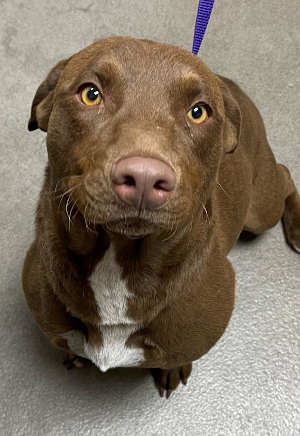
‘Arlo’
“Arlo” is a 3-year-old male basset hound-Labrador retriever mix with a short brown coat.
He is in kennel No. 9, ID No. LCAC-A-4164.
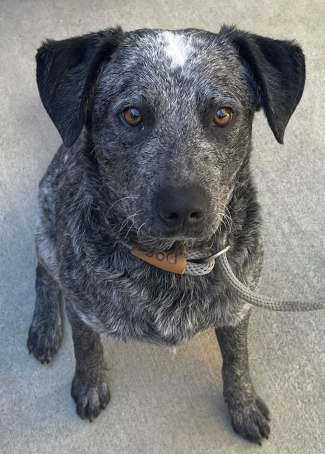
Male American blue heeler
This 1-year-old male American blue heeler has a short coat.
He is in kennel No. 10, ID No. LCAC-A-4128.
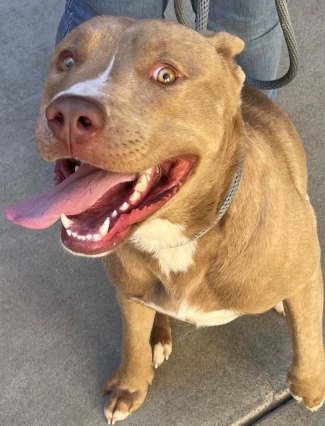
Male pit bull terrier
This 3-year-old male pit bull terrier has a short brown coat.
He is in kennel No. 12, ID No. LCAC-A-4127.
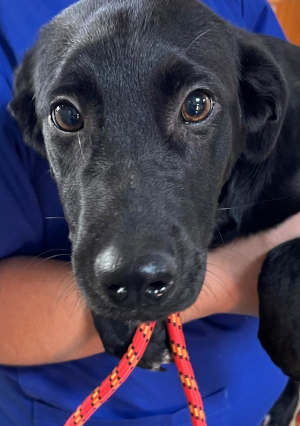
Female Labrador retriever
This 3-month-old female Labrador retriever has a short black coat.
She is in kennel No. 13, ID No. LCAC-A-4162.
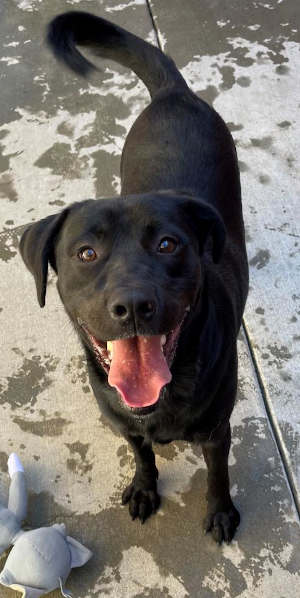
Male Labrador retriever
This 2-year-old male Labrador retriever has a short black coat.
He is in kennel No. 14, ID No. LCAC-A-4112.
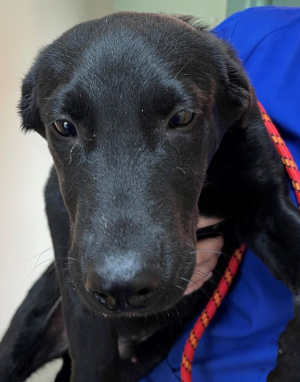
Male Labrador retriever
This 3-month-old male Labrador retriever has a short black coat.
He is in kennel No. 15, ID No. LCAC-A-4163.
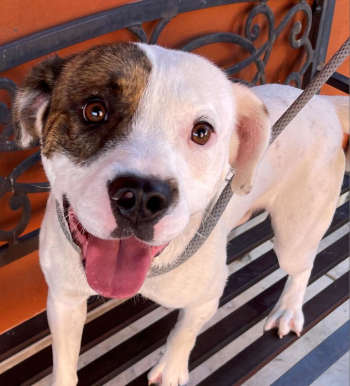
Male pit bull terrier
This 1-year-old male pit bull terrier has a short white coat with brown markings.
He is in kennel No. 16, ID No. LCAC-A-4110.
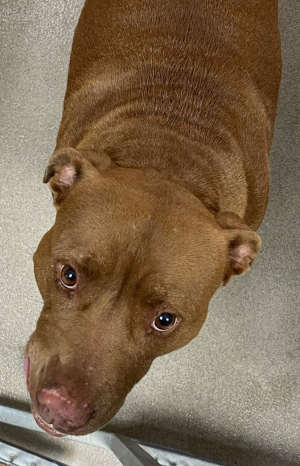
Female pit bull terrier
This 5-year-old female pit bull terrier has a short brown coat.
She is in kennel No. 17, ID No. LCAC-A-4109.
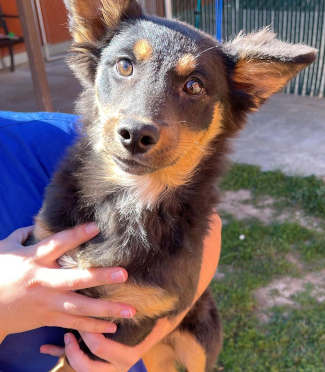
Female corgi
This 3-month-old female Cardigan Welsh corgi has a short black and tan coat.
She is in kennel No. 19, ID No. LCAC-A-4138.

Male hound mix
This 2-year-old male hound mix has a short tan coat.
He is in kennel No. 20, ID No. LCAC-A-4176.

Male pit mix puppy
This 2-month-old male pit bull terrier mix puppy has a short gray and white coat.
He is in kennel No. 23a, ID No. LCAC-A-4116.

Male pit mix puppy
This 2-month-old male pit bull terrier mix puppy has a short gray and white coat.
He is in kennel No. 23e, ID No. LCAC-A-4120.
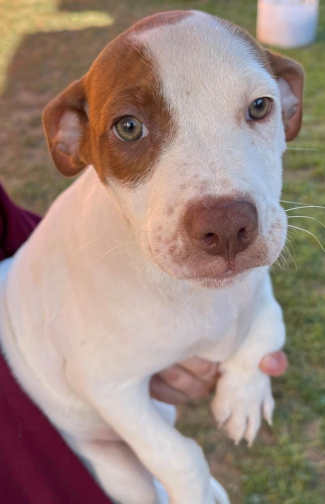
Female pit bull puppy
This 2-month-old female pit bull puppy has a short white and red coat.
She is in kennel No. 24b, ID No. LCAC-A-4121.

Female pit mix puppy
This 2-month-old female pit bull terrier mix puppy has a short white coat.
He is in kennel No. 24c, ID No. LCAC-A-4122.
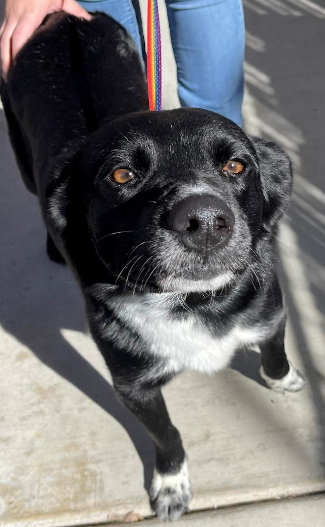
Female border collie
This 1-year-old female border collie has a black and white coat.
She is in kennel No. 30, ID No. LCAC-A-4186.

‘Ruby’
“Ruby” is a 6-month-old female hound mix with a brindle coat.
She is in kennel No. 31, ID No. LCAC-A-3753.
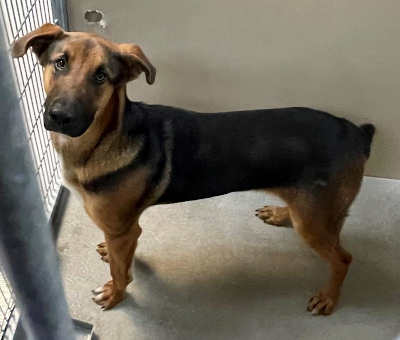
Male German shepherd
This 1-year-old male German shepherd has a short black and tan coat.
He is in kennel No. 33, ID No. LCAC-A-4204.
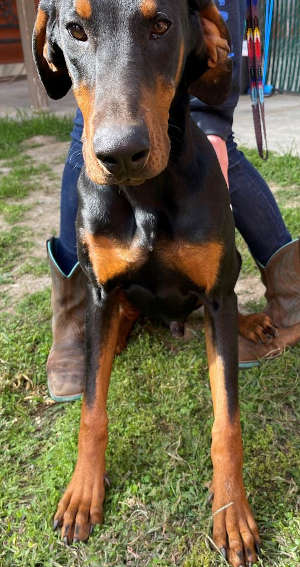
This 6-month-old male Doberman pinscher has a short black and tan coat.
He is in kennel No. 34, ID No. LCAC-A-4207.
Email Elizabeth Larson at

The U.S. Preventive Services Task Force, an independent panel of experts in primary care and prevention, issued a final recommendation on Oct. 11, 2022, published in the journal JAMA, stating that all children and adolescents between the ages of 8 and 18 should be screened for anxiety, regardless of whether they have symptoms. The recommendation follows a systematic review that evaluated the potential harms and benefits of screening.
The Conversation asked Elana Bernstein, a school psychologist who researches child and adolescent anxiety, to explain the task force’s recommendations and what they might mean for kids, parents and providers.
1. Why is the task force recommending young kids be screened?
Nearly 80% of chronic mental health conditions emerge in childhood, and when help is eventually sought, it is often years after the problem’s onset. In general, recommendations to screen for mental health disorders are based on research demonstrating that youths do not typically seek help independently, and that parents and teachers are not always skilled at correctly identifying problems or knowing how to respond.
Anxiety is the most common mental health problem affecting children and adolescents. Epidemiological studies indicate that 7.1% of children are diagnosed with anxiety disorders. However, studies also estimate that upwards of 10% to 21% of children and adolescents struggle with an anxiety disorder and as many as 30% of children experience moderate anxiety that interferes with their daily functioning at some time in their life.
This tells us that many kids experience anxiety at a level that interferes with their daily functioning, even if they are never formally diagnosed. Additionally, there is a well-established evidence base for treating childhood anxiety.
The task force evaluated the best available research and concluded that, while there are gaps in the evidence base, the benefits of screening are clear. Untreated anxiety disorders in children result in added burdens to the public health system. So from a cost-benefit perspective, the cost-effectiveness of screening for anxiety and providing preventive treatment is favorable, while, as the task force pointed out, the harms are negligible.
The task force recommendation to screen kids as young as age 8 is driven by the research literature. Anxiety disorders are most likely to first show up during the elementary school years. And the typical age of onset for anxiety is among the earliest of all childhood mental health diagnoses. The panel also pointed to a lack of accurate screening instruments available to detect anxiety among younger children; as a result, it concluded that there is not sufficient evidence to recommend screening children age 7 or younger.
Anxiety disorders can persist into adulthood, particularly those disorders with early onsets and those that are left untreated. Individuals who experience anxiety in childhood are more likely to deal with it in adulthood, too, along with other mental health disorders like depression and an overall diminished quality of life. The task force considered these long-term impacts in making its recommendations, noting that screening in children as young as 8 may alleviate a preventable burden for families.
2. How can care providers identify anxiety in young kids?
In general, it is easier to accurately identify anxiety when the child’s symptoms are behavioral in nature, such as refusing to go to school or avoiding social situations. While the task force recommended that screening take place in primary care settings – such as a pediatrician’s office – the research literature also supports in-school screening for mental health problems, including anxiety.
Fortunately, in the past three decades, considerable advances have been made in mental health screening tools, including for anxiety. The evidence-based strategies for identifying anxiety in children and adolescents are centered on collecting observations from multiple perspectives, including the child, parent and teacher, to provide a complete picture of the child’s functioning in school, at home and in the community.
Anxiety is what’s called an internalizing trait, meaning that the symptoms may not be observable to those around the person. This makes accurate identification more challenging, though certainly possible. Therefore, psychologists recommend including the child in the screening process to the degree possible based on age and development.
Among the youths who are actually treated for mental health problems, nearly two-thirds receive those services at school, making school-based screening a logical practice.
3. How would the screening be carried out?
Universal screening for all children, including those with no symptoms or diagnoses, is a preventive approach to identifying youths who are at risk. This includes those who may need further diagnostic evaluation or those would benefit from early intervention.
In both cases, the aim is to reduce symptoms and to prevent lifelong chronic mental health problems. But it is important to note that a screening does not equate to a diagnosis, something that the task force highlighted in its recommendation statement.
Diagnostic assessment is more in-depth and costs more, while screening is intended to be brief, efficient and cost-effective. Screening for anxiety in a primary-care setting may involve completion of short questionnaires by the child and/or parent, similar to how pediatricians frequently screen kids for attention-deficit/hyperactivity disorder, or ADHD.
The task force did not recommend a single method or tool, nor a particular time interval, for screening. Instead, care providers were advised to consider the evidence in the task force’s recommendation and apply it to the particular child or situation. The task force did point to multiple available screening tools such as the Screen for Child Anxiety Related Emotional Disorders and the Patient Health Questionnaire Screeners for generalized anxiety disorder, which accurately identify anxiety. These assess general emotional and behavioral health, including questions specific to anxiety. Both are available at no cost.
4. What are care providers looking for when screening for anxiety?
A child’s symptoms can vary depending on the type of anxiety they have. For instance, social anxiety disorder involves fear and anxiety in social situations, while specific phobias involve fear of a particular stimulus, such as vomiting or thunderstorms. However, many anxiety disorders share symptoms, and children typically do not fit neatly into one category.
But psychologists typically observe some common patterns when it comes to anxiety. These include negative self-talk such as “I’m going to fail my math test” or “Everyone will laugh at me,” and emotion regulation difficulties, like increased tantrums, anger or sensitivity to criticism. Other typical patterns include behavioral avoidance, such as reluctance or refusal to participate in activities or interact with others.
Anxiety can also show up as physical symptoms that lack a root physiological cause. For example, a child may complain of stomachaches or headaches or general malaise. In fact, studies suggest that spotting youths with anxiety in pediatric settings may simply occur through identification of children with medically unexplained physical symptoms.
The distinction we are aiming for in screening is identifying the magnitude of symptoms and their impact. In other words, how much do the symptoms interfere with the child’s daily functioning? Some anxiety is normal and, in fact, necessary and helpful.
5. What are the recommendations for supporting kids with anxiety?
The key to an effective screening process is that it be connected to evidence-based care.
The good news is that we now have decades of high-quality research demonstrating how to effectively intervene to reduce symptoms and to help anxious youth cope and function better. These include both medications or therapeutic approaches like cognitive behavioral therapy, which studies show to be safe and effective.
This is an updated version of an article originally published on May 13, 2022.
Elana Bernstein, Assistant Professor of School Psychology, University of Dayton
This article is republished from The Conversation under a Creative Commons license. Read the original article.
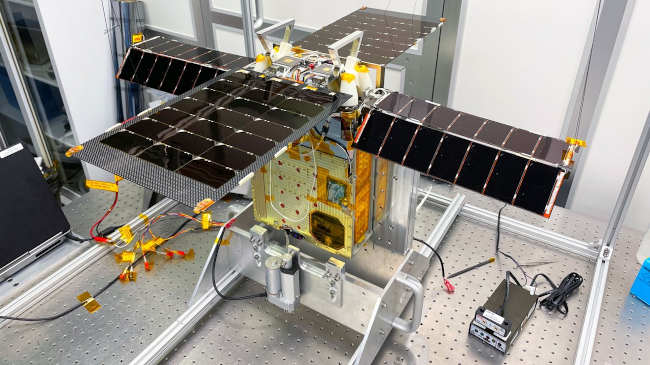
Set for a November launch, the small satellite mission will use lasers to search for water ice inside the darkest craters at the Moon’s South Pole.
It’s known that water ice exists below the lunar regolith (broken rock and dust), but scientists don’t yet understand whether surface ice frost covers the floors inside these cold craters.
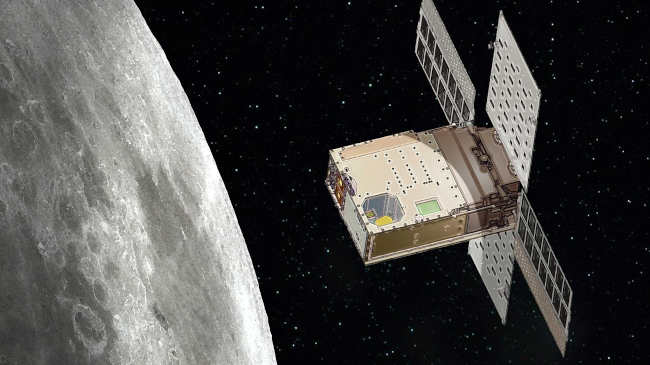
To find out, NASA is sending Lunar Flashlight, a small satellite (or SmallSat) no larger than a briefcase.
Swooping low over the lunar South Pole, it will use lasers to shed light on these dark craters — much like a prospector looking for hidden treasure by shining a flashlight into a cave. The mission will launch aboard a SpaceX Falcon 9 rocket in mid-November.
“This launch will put the satellite on a trajectory that will take about three months to reach its science orbit,” said John Baker, the mission’s project manager at NASA’s Jet Propulsion Laboratory in Southern California. “Then Lunar Flashlight will try to find water ice on the surface of the Moon in places that nobody else has been able to look.”
Fuel-efficient orbits
After launch, mission navigators will guide the spacecraft way past the Moon. It will then be slowly pulled back by gravity from Earth and the Sun before it settles into a wide, looping, science-gathering orbit.
This near-rectilinear halo orbit will take it 42,000 miles (70,000 kilometers) from the Moon at its most distant point and, at its closest approach, the satellite will graze the surface of the Moon, coming within 9 miles (15 kilometers) above the lunar South Pole.
SmallSats carry a limited amount of propellent, so fuel-intensive orbits aren’t possible. A near-rectilinear halo orbit requires far less fuel than traditional orbits, and Lunar Flashlight will be only the second NASA mission to use this type of trajectory. The first is NASA’s Cislunar Autonomous Positioning System Technology Operations and Navigation Experiment, or CAPSTONE, mission, which will arrive at its orbit on Nov. 13, making its closest pass over the Moon’s North Pole.
“The reason for this orbit is to be able to come in close enough that Lunar Flashlight can shine its lasers and get a good return from the surface, but to also have a stable orbit that consumes little fuel,” said Barbara Cohen, Lunar Flashlight principal investigator at NASA’s Goddard Space Flight Center in Greenbelt, Maryland.
As a technology demonstration, Lunar Flashlight will be the first interplanetary spacecraft to use a new kind of “green” propellant that is safer to transport and store than the commonly used in-space propellants such as hydrazine.
This new propellant, developed by the Air Force Research Laboratory and tested on a previous NASA technology demonstration mission, burns via a catalyst, rather than requiring a separate oxidizer. That is why it’s called a monopropellant.
The satellite’s propulsion system was developed and built by NASA’s Marshall Space Flight Center in Huntsville, Alabama, with integration support from Georgia Tech Research Institute in Atlanta.
Lunar Flashlight will also be the first mission to use a four-laser reflectometer to look for water ice on the Moon. The reflectometer works by using near-infrared wavelengths that are readily absorbed by water to identify ice on the surface.
Should the lasers hit bare rock, their light will reflect back to the spacecraft, signaling a lack of ice. But if the light is absorbed, it would mean these dark pockets do indeed contain ice. The greater the absorption, the more ice may be at the surface.
Lunar water cycle
It’s thought that molecules of water come from comet and asteroid material impacting the lunar surface, and from solar wind interactions with the lunar regolith. Over time, the molecules may have accumulated as a layer of ice inside “cold traps”.
“We are going to make definitive surface water ice measurements in permanently shadowed regions for the first time,” said Cohen. “We will be able to correlate Lunar Flashlight’s observations with other lunar missions to understand how extensive that water is and whether it could be used as a resource by future explorers.”
Cohen and her science team hope that the data Lunar Flashlight gathers can be used to understand how volatile molecules, like water, cycle from location to location and where they may accumulate, forming a layer of ice in these cold traps.
“This is an exciting time for lunar exploration. The launch of Lunar Flashlight, along with the many small satellite missions aboard Artemis I, may form the foundations for science discoveries as well as support future missions to the Moon’s surface,” said Roger Hunter, Small Spacecraft Technology program manager at NASA’s Ames Research Center in California’s Silicon Valley.
More about the mission
In October, Lunar Flashlight was fueled at NASA’s Marshall Space Flight Center in Huntsville, Alabama, and is scheduled to launch aboard a SpaceX Falcon 9 rocket from Cape Canaveral Space Force Station in Florida between Nov. 9 and 15 with the Japanese Hakuto-R lander and United Arab Emirate’s Rashid 1 rover. The mission worked with Maverick Space Systems to provide launch integration services.
NASA’s Small Business Innovation Research program funded component development from small businesses including Plasma Processes Inc. (Rubicon) for thruster development, Flight Works for pump development, and Beehive Aerospace (formerly Volunteer Aerospace) for specific 3D printed components. The Air Force Research Laboratory also contributed financially to the development of the Lunar Flashlight propulsion system.
Lunar Flashlight will be operated by Georgia Tech, including graduate and undergraduate students. The mission is funded by the Small Spacecraft Technology program within NASA’s Space Technology Mission Directorate.
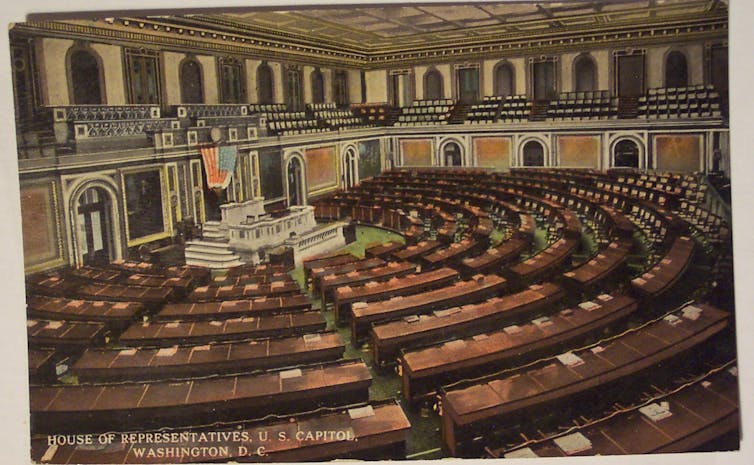
As the population of the U.S. has grown over the past century, the House of Representatives has gotten worse at being representative of the people it serves. That doesn’t have to happen – and it wasn’t always the case.
The House is the one segment of the federal government that was created from the beginning to directly channel the views of the people to Washington, D.C. But over the past century, the ability of any individual members of the House to truly represent their constituents has been diluted.
When the nation was founded, there were 65 members of the House, representing 3.9 million people in 13 states. On average, that’s one House member for every 60,450 people.
Today, there are 435 members representing 331 million people in 50 states – or one House member for every 761,169 people.
This means American democracy is less representative, and not all citizens are politically equal.
Changing sizes
Since 1913, the number of House seats has remained constant. But in the early years of the United States, the size of the House grew as the nation expanded. From 1791 to 1913, the House passed laws adding more seats in ways that reflected the admission of new states and the growing population. During the Civil War, when some Southern states seceded, the House actually shrank in size – and then resumed expanding as those states rejoined the Union and others were added.
The Congress that began in 1913 was the first to have 435 seats, representing just over 97 million people in 46 states – an average of 223,505 people per member of the House.
The number of seats in the House was fixed at 435 by law in 1929. But it is not a constitutional provision. It is a federal law, so it can be repealed or amended just like any other.
Since that time the country’s population has more than tripled.
Potential solutions
Any changes would require a new law expanding the House, determining how many seats each state would get and drawing new districts based on U.S. Census Bureau data to achieve relatively equal representation.
It might not be widely popular to send even more politicians to Washington, D.C. A larger House would also cost more to operate: The total cost for the House now averages US$3.4 million per member. But an improvement in democratic representation might be worth the effort.
If the House had kept pace with population growth since 1913, I calculate that there would be 1,560 seats now.
Comparative political analysts have identified a general mathematical principle about the size of a properly representative national legislature, called the “cube root law”: Many legislatures around the world have, by various processes, ended up with a number of seats roughly equal to the cube root of the population they represent. That is the number which, when cubed, or multiplied by itself and itself again, equals the population. That would put the U.S. House size at 692, with each seat representing an average of 478,480 people.
The Wyoming Rule
Another way to consider expanding the House would be to use what is known as the “Wyoming Rule.” It ensures the least populated state – currently Wyoming – would receive one House seat and uses its population as the basis for House districts in the other states. Each state’s House delegation would change in size over time, to remain roughly proportional to its population even as the nation grew and its people moved from state to state.
According to the 2020 census, that would mean each House district would represent approximately 577,719 people. There are several technical methods for assigning districts to the states, because no other state’s population is evenly divisible by 577,719. But using a very basic method would produce a House with 571 seats.
California, the most populous state, has roughly 68 times as many people as Wyoming does. Under the current House size, it will have 52 seats in the Congress that begins in 2023. But under a simple version of the Wyoming Rule, it would have 69.
This would ensure all U.S. residents have roughly equal representation in the House, and it would better balance the Electoral College, though less populous states would continue to have an advantage because each voter has a larger influence on the two electoral votes from their senators. While the Electoral College will always disproportionately favor states with small populations, the more seats in the House means more electors to distribute, and the more electors there are the more fair the relative voting strength of each state.
Some states would be slightly over- or underrepresented, even under the Wyoming Rule, because state boundaries don’t line up evenly with population locations. But the disparity would be less than under the current 435-seat cap.
And it’s worth noting that this method would not address the fact that 670,000 Americans live in Washington, D.C.; 3.2 million live in Puerto Rico; and about 340,000 live in the other U.S. island territories of Guam, the Commonwealth of the Northern Mariana Islands, American Samoa and the U.S. Virgin Islands. None of them have ever been represented by full voting members of the House.
Steven L. Taylor, Dean, College of Arts & Sciences; Professor of Political Science, Troy University
This article is republished from The Conversation under a Creative Commons license. Read the original article.
The City of Clearlake Animal Association also is seeking fosters for the animals waiting to be adopted.
Call the Clearlake Animal Control shelter at 707-273-9440, or email
Visit Clearlake Animal Control on Facebook or on the city’s website.
The following dogs are available for adoption. New additions are at the top.

‘Domino’
“Domino” is a male terrier mix with a short white coat.
He has been neutered.
He is dog No. 50815541.
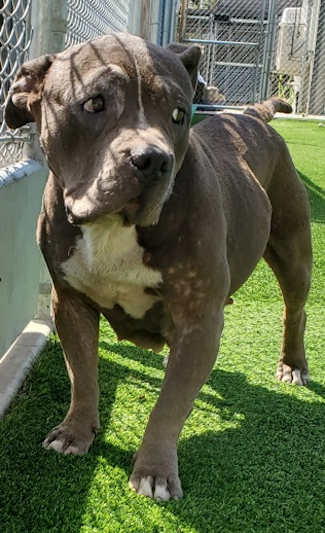
‘Mia’
“Mia” is a female American pit bull terrier mix with a short gray coat and white markings.
She has been spayed.
She is dog No. 51129358.
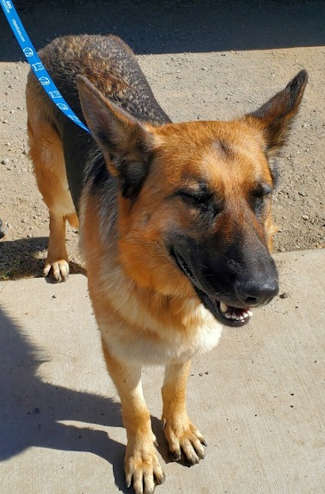
‘Reese’
“Reese” is a female German Shepherd with a black and an coat.
She has been spayed.
She is dog No. 50884542.
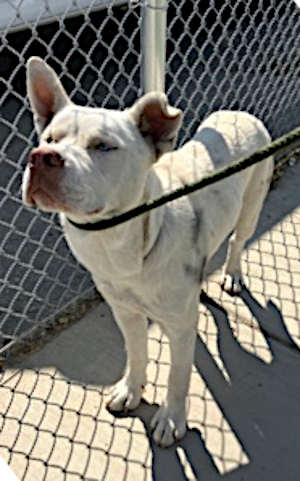
‘Aoki’
“Aoki” is a male Siberian husky mix with a white coat.
He has been neutered.
He is dog No. 50905477.

‘Babs’
“Babs” is a female Labrador retriever mix with a short black coat.
She has been spayed.
She is dog No. 49505856.

‘Baby’
“Baby” is a female American pit bull mix with a white coat.
She has been spayed.
She is dog No. 50933640.
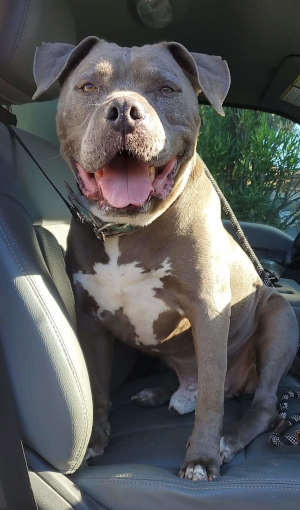
‘Big Phil’
“Big Phil” is a 13-year-old male American pit bull terrier mix with a blue coat.
He has been neutered.
He is dog No. 49951647.

‘Bruce’
“Bruce” is a 2-year-old American pit bull mix with a short gray coat with white markings.
He has been neutered.
He is dog No. 50684304.

‘Buster’
“Buster” is a male pit bull mix with a short tan coat.
He has been neutered.
He is dog No. 50762164.

‘Eros’
“Eros” is a male Rottweiler mix with a short black and tan coat.
He has been neutered.
He is dog No. 50754504.
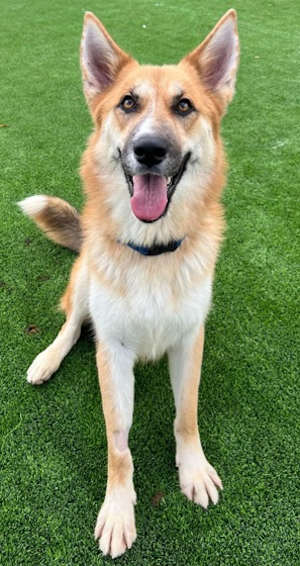
‘Foxie’
“Foxie” is a female German shepherd with a red, black and white coat.
She has been spayed.
She is dog No. 49702845.

‘Goliath’
“Goliah” is a male Rottweiler mix with a short black and tan coat.
He is dog No. 50754509.

‘Hakuna’
“Hakuna” is a male shepherd mix with a tan coat.
He has been neutered.
He is dog No. 50176912.

‘Herman’
“Herman” is a 7-year-old male American pit bull terrier mix with a brown coat.
He has been neutered.
He is dog No. 51236411.

‘Hondo’
“Hondo” is a male Alaskan husky mix with a buff coat.
He has been neutered.
He’s dog No. 50227693.
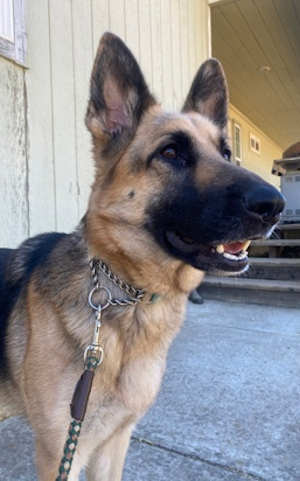
‘Keilani’
“Keilani” is a 3-year-old female German shepherd mix with a black and tan coat.
She has been spayed and she is house trained.
She is dog No. 50427566.

‘Little Boy’
“Little Boy” is a male American pit bull terrier mix with a short tan coat.
He has been neutered.
He is dog No. 50075256.

‘Luciano’
“Luciano” is a male Siberian husky mix with a short black and white coat.
He has been neutered.
He is dog No. 50596272.
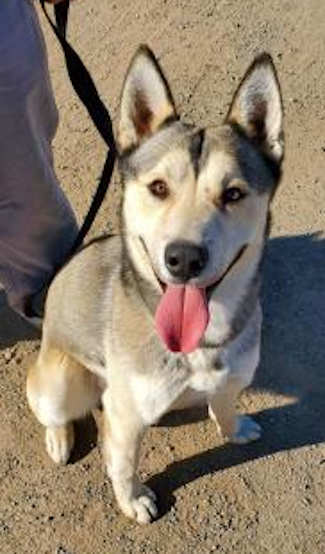
‘Mamba’
“Mamba” is a male Siberian husky mix with a gray and cream-colored coat.
He has been neutered.
He is dog No. 49520569.
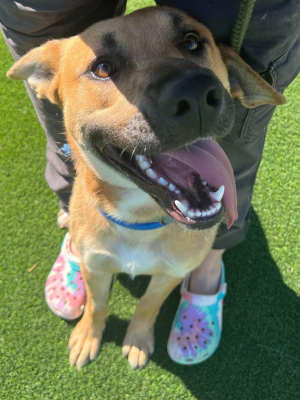
‘Matata’
“Matata” is male shepherd mix with a tan coat.
He has been neutered.
He is dog No. 50176912.
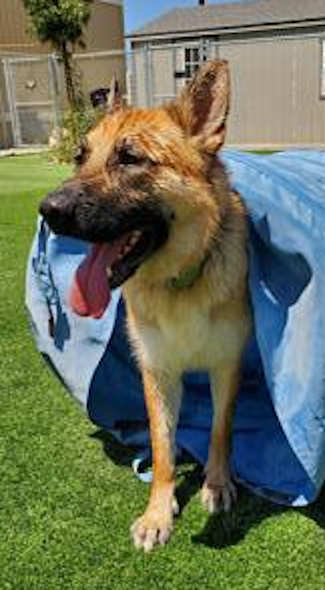
‘Maya’
“Maya” is a female German shepherd with a black and tan coat.
She has been spayed.
She is dog No. 50428151.

‘Mikey’
“Mikey” is a male German shepherd mix with a short brown and tan coat.
He has been neutered.
He is dog No. 51012855.

‘Poppa’
“Poppa” is a 3-year-old male American pit bull terrier mix with a short red and white coat.
He has been neutered.
He is dog No. 50773597.
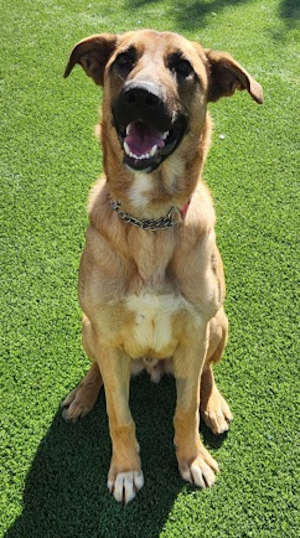
‘Rascal’
“Rascal” is a male shepherd mix with a black and brown coat.
He has been neutered.
He is dog No. 50806384.

‘Sadie’
“Sadie” is a female German shepherd mix with a black and tan coat.
She has been spayed.
She is dog No. 49802563.
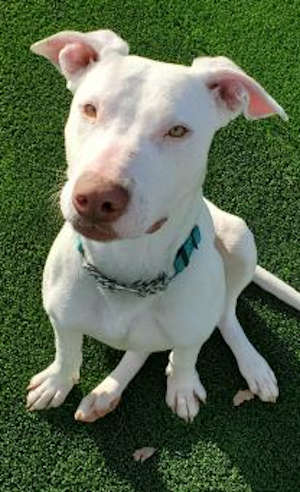
‘Snowball’
“Snowball is a 1 and a half year old male American Staffordshire terrier mix with a short white coat.
He has been neutered.
He is dog No. 49159168.
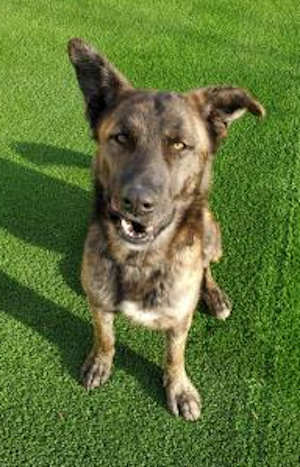
‘Terry’
“Terry” is a handsome male shepherd mix with a short brindle coat.
He gets along with other dogs, including small ones, and enjoys toys. He also likes water, playing fetch and keep away.
Staff said he is now getting some training to help him build confidence.
He is dog No. 48443693.

‘Willie’
“Willie” is a male German shepherd mix with a black and tan coat.
He has been neutered.
He is dog No. 50596003.

‘Zeda’
“Zeda” is a female Labrador retriever mix.
She has been spayed.
She is dog No. 51108916.
Email Elizabeth Larson at