 How to resolve AdBlock issue?
News
Dogs available for adoption this week include mixes of basset hound, hound, husky, Labrador retriever and pit bull.
Dogs that are adopted from Lake County Animal Care and Control are either neutered or spayed, microchipped and, if old enough, given a rabies shot and county license before being released to their new owner. License fees do not apply to residents of the cities of Lakeport or Clearlake.
The following dogs at the Lake County Animal Care and Control shelter have been cleared for adoption.
Call Lake County Animal Care and Control at 707-263-0278 or visit the shelter online for information on visiting or adopting.

‘Ruby’
“Ruby” is a 6-month-old female hound mix with a brindle coat.
She is in kennel No. 5, ID No. LCAC-A-3753.

“Arlo” is a 3-year-old male basset hound-Labrador retriever mix with a short brown coat.
He is in kennel No. 9, ID No. LCAC-A-4164.

Female husky
This 2-year-old female husky has a short brown coat with white markings.
She is in kennel No. 11, ID No. LCAC-A-4269.

Female Labrador retriever
This 3-month-old female Labrador retriever has a short black coat.
She is in kennel No. 13, ID No. LCAC-A-4162.

Male Labrador retriever
This 2-year-old male Labrador retriever has a short black coat.
He is in kennel No. 14, ID No. LCAC-A-4112.

Male Labrador retriever
This 3-month-old male Labrador retriever has a short black coat.
He is in kennel No. 15, ID No. LCAC-A-4163.

Female pit bull puppy
This 2-month-old female pit bull puppy has a short white and red coat.
She is in kennel No. 24b, ID No. LCAC-A-4121.
Email Elizabeth Larson at

Volcanic activity lasting hundreds to thousands of centuries and erupting massive amounts of material may have helped transform Venus from a temperate and wet world to the acidic hothouse it is today, a NASA paper suggests.
The paper also discusses these “large igneous provinces” in Earth’s history which caused several mass extinctions on our own planet millions of years ago.
“By understanding the record of large igneous provinces on Earth and Venus, we can determine if these events may have caused Venus’ present condition,” said Dr. Michael J. Way, of NASA’s Goddard Institute for Space Studies in New York. Way is lead author on the paper, published April 22 in the Planetary Science Journal.
Large igneous provinces are the products of periods of large-scale volcanism lasting tens of thousands or even hundreds of thousands of years. They can deposit more than 100,000 cubic miles of volcanic rock onto the surface. At the upper end, this could be enough molten rock to bury the entire state of Texas half a mile deep.
Venus today boasts surface temperatures of around 864 F on average, and an atmosphere 90 times the surface pressure of Earth’s.
According to the study, these massive volcanic outpourings may have initiated these conditions sometime in Venus’ ancient history. In particular, the occurrence of several such eruptions in a short span of geologic time (within a million years) could have led to a runaway greenhouse effect which kicked off the planet’s transition from wet and temperate to hot and dry.
Large fields of solidified volcanic rock cover 80% of Venus’ surface in total, Way said. “While we’re not yet sure how often the events which created these fields occurred, we should be able to narrow it down by studying Earth’s own history.”
Life on Earth has endured at least five major mass extinction events since the origin of multicellular life about 540 million years ago, each of which wiped out more than 50% of animal life across the planet. According to this study and others before it, the majority of these extinction events were caused or exacerbated by the kinds of eruptions that produce large igneous provinces.
In Earth’s case, the climate disruptions from these events were not sufficient to cause a runaway greenhouse effect as they were on Venus, for reasons that Way and other scientists are still working to determine.
NASA’s next missions to Venus, scheduled for launch in the late 2020s — the Deep Atmosphere Venus Investigation of Noble gasses, Chemistry, and Imaging, or DAVINCI, mission and the Venus Emissivity, Radio science, InSAR, Topography, And Spectroscopy, or VERITAS, mission — aim to study the origin, history, and present state of Venus in unprecedented detail.
“A primary goal of DAVINCI is to narrow down the history of water on Venus and when it may have disappeared, providing more insight into how Venus’ climate has changed over time,” Way said.
The DAVINCI mission will precede VERITAS, an orbiter designed to investigate the surface and interior of Venus from high above, to better understand its volcanic and volatile history and thus Venus’ path to its current state.
The data from both missions could help scientists to narrow down the exact record of how Venus may have transitioned from wet and temperate to dry and sweltering. It may also help us to better understand how volcanism here on Earth has affected life in the past, and how it may continue to do so in the future.
This study was supported by Goddard Space Flight Center’s Sellers Exoplanet Environments Collaboration, or SEEC, and was part of NASA’s Nexus for Exoplanet System Science, or NExSS, RCN.
Nick Oakes works for NASA Goddard Space Flight Center in Greenbelt, Maryland.

LAKEPORT, Calif. — Get into the holiday spirit and come down to the sixth annual Dickens' Festival on Saturday, Nov. 26, in downtown Lakeport.
The Lakeport Main Street Association will host the family friendly event from 11 a.m. to 6 p.m.
Visit local stores and great vendors that line Main Street throughout the day.
The Pet Parade will begin at noon.
The day also will feature the enchanting singing of My Divas.

Visitors are encouraged to dress in Dickensian costume and get pictures taken with Santa.
There will be fun and games for all to play, music, activities for children, and a sledding hill.
Be sure to spread some cheer and warm up with some delicious hot chocolate, too.
The event will wrap up with the tree lighting of the giant Christmas tree at 5:30 pm.

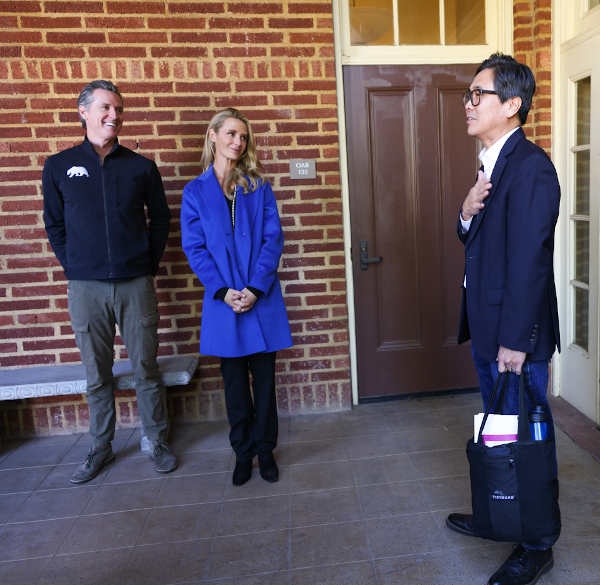
Gov. Gavin Newsom on Friday appointed Lee Herrick to serve as California’s 10th Poet Laureate.
Herrick, 52, of Fresno, is a writer and professor who teaches at Fresno City College and the MFA program at the University of Nevada, Reno at Lake Tahoe.
A former Fresno Poet Laureate, Herrick’s work is a vivid celebration of the California experience.
“As a teacher, poet, and father, Lee writes movingly about his identity as a Californian and encourages others to reflect on what the state means to them,” said Gov. Newsom. “Lee’s dedication to highlighting the diverse experiences of Californians, and making them so accessible through his poetry, makes him a perfect candidate for Poet Laureate. I look forward to his work to inspire communities and individuals across the state through the power of the written word.”
Herrick’s poetry canon explores the diversity and vitality of the California experience and the exhilarating success of the American experiment. Born in Daejeon, South Korea and adopted as an infant, he grew up in Modesto immersed in literature, art and various cultural influences.
Herrick writes eloquently on the immigrant experience – bringing to life the smell of chapchae and the sound of mariachi trumpets, the farmers market at midnight, and the small talk of Armenian neighbors. Herrick’s work is a Whitmanesque celebration of the best spirit of our state, the vibrancy of the Central Valley, and ourselves.
“I am deeply honored, humbled, and excited to be named California Poet Laureate,” said Herrick, who will use his platform called Our California to bring together poetry with a social justice or civic engagement organization in each city that he visits during his term as Poet Laureate. “I am grateful to Gov. Newsom, his staff, First Partner Siebel Newsom, the Fresno Arts Council, the City of Fresno for making me a poet, poets and writers and readers throughout this great state, friends, teachers, colleagues, students, and mostly, my family, parents and sister, and my wife and daughter for their love and light.”
Herrick served as Poet Laureate of the City of Fresno from 2015 to 2017, where he led local efforts to bridge communities and engage young people in expressing themselves through writing.
“I’m thrilled that Lee Herrick will serve as California’s next Poet Laureate. Lee’s poetry invites us to reflect on our love of California and reminds us of the values we hold so dear -- our inclusivity, empathy, and creativity,” said First Partner Jennifer Siebel Newsom. “Lee’s deep understanding of culture and community alongside his irrefutable talent will no doubt guide him throughout his tenure as our state’s poetry advocate. I look forward to working with him as he spreads a love and appreciation of poetry and literature across California, especially amongst our youth.”
Herrick’s work has been published in the Bloomsbury Review, Columbia Poetry Review, Berkeley Poetry Review, the Normal School, The Poetry Foundation, ZYZZYVA, and other publications.
He is a contributor to many anthologies, particularly those examining the literary flourishing of California’s Central Valley.
Herrick is the author of three books of poetry: “Scar and Flower,” “Gardening Secrets of the Dead” and “This Many Miles from Desire.”
The California Poet Laureate is charged with advocating for poetry in classrooms and boardrooms across the state, inspiring an emerging generation of literary artists, and educating all Californians about the many poets and authors who have influenced our state through creative literary expression.
Over the course of a two-year term, the Poet Laureate provides public readings in urban and rural locations across California, educates civic and state leaders about the value of poetry and creative expression and undertakes a significant cultural project, with one of its goals being to bring poetry to students who might otherwise have little opportunity to access it.
This position requires Senate confirmation and the California Arts Council provides an annual stipend. Herrick is a Democrat.
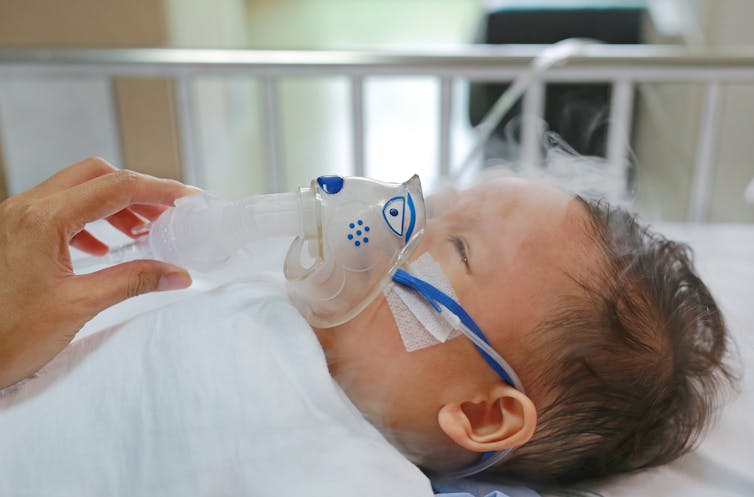
Every fall and winter, viral respiratory illnesses like the common cold and seasonal flu keep kids out of school and social activities. But this year, more children than usual are ending up at emergency departments and hospitals.
In California, the Orange County health department declared a state of emergency in early November 2022 due to record numbers of pediatric hospitalizations for respiratory infections. In Maryland, emergency rooms have run out of beds because of the unusually high number of severe respiratory syncytial virus, or RSV, infections. So emergency departments there are having to refer patients across state lines for care.
In the U.S., the winter respiratory virus season started earlier than usual this year. Since peak infections usually occur in late December or January, this uncharacteristic early wave suggests that the situation could get much worse for people of all ages, particularly children.
We are epidemiologists with expertise in epidemic analysis for emerging disease threats, including respiratory infections. We watch patterns in these infections closely, and we pay particular attention when the patterns are unusual. We’ve grown increasingly concerned about the amount of pediatric hospitalizations over the last few months and the pattern that is emerging.
The ‘triple threat’
In early November, the Centers for Disease Control and Prevention issued a health advisory about increased activity in respiratory infections – especially among children. The CDC and other health experts are warning of the so-called “triple threat” of respiratory illness from RSV, influenza – or the seasonal flu – and COVID-19.
The underlying reasons for the convergence of these viruses and the increase in infections so early in the season are not yet clear. But health experts have some clues about contributing factors and what it could mean for the coming months.
When it comes to COVID-19, 2022 is expected to usher in another winter wave of infections, similar to patterns seen in 2020 and 2021. Previous winter surges stemmed from a combination of factors, including the emergence and spread of new viral variants, more people gathering indoors rather than distanced outside, and people coming together for the holidays.
But unlike previous pandemic winters, most COVID-19 precautions – such as using masks in public areas or avoiding group activities – are more relaxed than ever. Together with the looming threat of new variants, it is difficult to predict how big the next COVID-19 wave could be.
And while the seasonal flu has proved somewhat unpredictable during the COVID-19 pandemic, it nearly always hits during late October. Flu season also arrived about a month early and in greater numbers than in recent history. By our read of the data, pediatric flu hospitalizations are nearing 10 times what has been seen for this time of year for more than a decade.
RSV infections tend to follow a similar seasonal pattern as the flu, peaking in winter months. But this year, there was an unexpected summer wave, well before the start of the typical fall respiratory virus season.
In typical years, RSV garners little media attention. It’s incredibly common and usually causes only mild illness. In fact, most children encounter the virus before age 2.
But RSV can be a formidable respiratory infection with serious consequences for children under 5, especially infants. It is the most common cause of lower respiratory infections in young children, and more severe illnesses can lead to pneumonia and other complications, often requiring hospitalization.
Why children are particularly at risk
Children, especially young children, tend to get sicker from flu and RSV than other age groups. But infants younger than 6 months old stand to suffer the most, with nearly double the risk of RSV-related death compared to other children younger than 5. COVID-19 hospitalization rates are also four to five times higher for infants than older children.
One reason the youngest children are at greater risk is that their immune systems are not yet fully developed and don’t produce the robust immune response seen in most adults. What’s more, infants younger than 6 months – who are most at risk of severe disease – are still too young to be vaccinated against influenza or COVID-19.
These viruses present challenges on their own, but their co-circulation and coinciding surges in infections create a perfect storm for multiple viruses to infect the same person at once. Viruses might even act together to evade immunity and cause damage to the respiratory tract.
Such co-infections are typically uncommon. However, the likelihood of co-infection is substantially higher for children than adults. Co-infections can be difficult to diagnose and treat, and can ultimately lead to greater disease severity, complications, hospitalization and death.
Factors behind the triple threat
There are a few reasons why the U.S. may be seeing a surge in pediatric respiratory infections. First, COVID-19 protection strategies actually help prevent the transmission of other respiratory pathogens. School and daycare closures likely also minimized exposures children normally have to various respiratory viruses.
These and other efforts to prevent the spread of COVID-19 seem to have suppressed the broad circulation of other viruses, including influenza and RSV. As a result, the U.S. saw an overall drop in non-COVID respiratory infections – and an almost nonexistent flu season in the winter of 2020.

The decreased viral activity means that children missed out on some exposures to viruses and other pathogens that typically help build immunity, particularly during the first few years of life. The resulting so-called “immunity debt” may contribute to an excess of pediatric respiratory infections as we continue into this season.
To further complicate the picture, the changing nature of viruses, including theemergence of new COVID-19 variants and the natural evolution of seasonal influenza viruses, means that we could be seeing a unique combination of particularly transmissible strains or strains that cause more severe illness.
Proactive steps people can take
The early surge in respiratory infections with high rates of hospitalization highlights the importance of prevention. The best tool we have for prevention is vaccination. Vaccines that protect against COVID-19 and influenza are available and recommended for everyone over 6 months of age. They have been shown to be safe and effective, and they can and do save lives.
In particular, most recent data on the newly updated bivalent COVID-19 booster vaccine suggests that it produces a more rigorous antibody response against the current circulating omicron variants than the original COVID-19 vaccines.
The best way to protect infants younger than 6 months old against flu and COVID-19 is by vaccination during pregnancy. When a pregnant mother is vaccinated, maternal antibodies cross the placenta to the baby, reducing the risk of COVID-19 hospitalization in young infants by 61%. Vaccination of other caregivers, family and friends can also help protect infants.
Other preventive measures, like hand-washing, covering sneezes and coughs, staying at home and isolating when sick, can help to protect the community from these viruses and others. Paying attention to local public health advisers can also help people to have the most up-to-date information and make informed decisions to keep themselves and others – of all ages – safe.
Rebecca S.B. Fischer, Assistant Professor of Epidemiology, Texas A&M University and Annette Regan, Assistant Professor of Epidemiology, University of San Francisco
This article is republished from The Conversation under a Creative Commons license. Read the original article.
The City of Clearlake Animal Association also is seeking fosters for the animals waiting to be adopted.
Call the Clearlake Animal Control shelter at 707-273-9440, or email
Visit Clearlake Animal Control on Facebook or on the city’s website.
The following dogs are available for adoption.

‘Zeda’
“Zeda” is a female Labrador retriever mix.
She has been spayed.
She is dog No. 51108916.
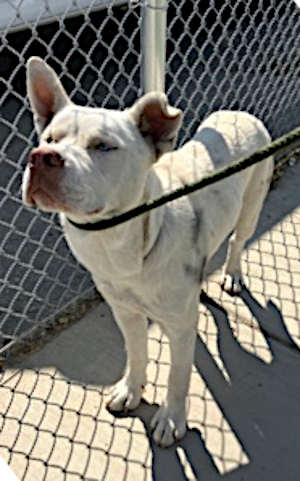
‘Aoki’
“Aoki” is a male Siberian husky mix with a white coat.
He has been neutered.
He is dog No. 50905477.

‘Athena’
“Athena” is a female American pit bull mix terrier with a short brindle coat.
She has been spayed.
She is dog No. 49934476.

‘Babs’
“Babs” is a female Labrador retriever mix with a short black coat.
She has been spayed.
She is dog No. 49505856.

‘Baby’
“Baby” is a female American pit bull mix with a white coat.
She has been spayed.
She is dog No. 50933640.

‘Bruce’
“Bruce” is a 2-year-old American pit bull mix with a short gray coat with white markings.
He has been neutered.
He is dog No. 50684304.

‘Buster’
“Buster” is a male pit bull mix with a short tan coat.
He has been neutered.
He is dog No. 50762164.

‘Domino’
“Domino” is a male terrier mix with a short white coat.
He has been neutered.
He is dog No. 50815541.

‘Eros’
“Eros” is a male Rottweiler mix with a short black and tan coat.
He has been neutered.
He is dog No. 50754504.

‘Foxie’
“Foxie” is a female German shepherd with a red, black and white coat.
She has been spayed.
She is dog No. 49702845.

‘Goliath’
“Goliah” is a male Rottweiler mix with a short black and tan coat.
He is dog No. 50754509.

‘Hakuna’
“Hakuna” is a male shepherd mix with a tan coat.
He has been neutered.
He is dog No. 50176912.

‘Herman’
“Herman” is a 7-year-old male American pit bull terrier mix with a brown coat.
He has been neutered.
He is dog No. 51236411.

‘Hondo’
“Hondo” is a male Alaskan husky mix with a buff coat.
He has been neutered.
He’s dog No. 50227693.

‘Jack’
“Jack” is a 9-month-old male terrier mix with a short black and brindle coat.
He has been neutered.
He is dog No. 50992658.

‘Little Boy’
“Little Boy” is a male American pit bull terrier mix with a short tan coat.
He has been neutered.
He is dog No. 50075256.

‘Luciano’
“Luciano” is a male Siberian husky mix with a short black and white coat.
He has been neutered.
He is dog No. 50596272.
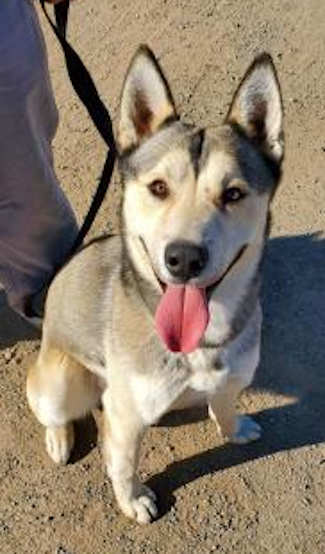
‘Mamba’
“Mamba” is a male Siberian husky mix with a gray and cream-colored coat.
He has been neutered.
He is dog No. 49520569.

‘Matata’
“Matata” is male shepherd mix with a tan coat.
He has been neutered.
He is dog No. 50176912.
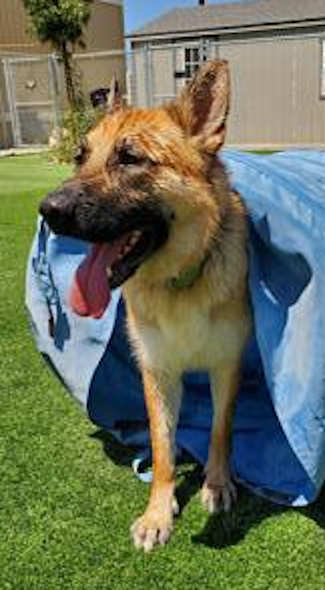
‘Maya’
“Maya” is a female German shepherd with a black and tan coat.
She has been spayed.
She is dog No. 50428151.

‘Mikey’
“Mikey” is a male German shepherd mix with a short brown and tan coat.
He has been neutered.
He is dog No. 51012855.

‘Molly’
“Molly” is a female Samoyed mix with a long white coat.
She has been spayed.
She is dog No. 50933031.

‘Paige’
“Paige” is a female American pit bull mix with a short brown coat.
She has been spayed.
She is dog No. 51194668.

‘Poppa’
“Poppa” is a 3-year-old male American pit bull terrier mix with a short red and white coat.
He has been neutered.
He is dog No. 50773597.

‘Rascal’
“Rascal” is a male shepherd mix with a black and brown coat.
He has been neutered.
He is dog No. 50806384.
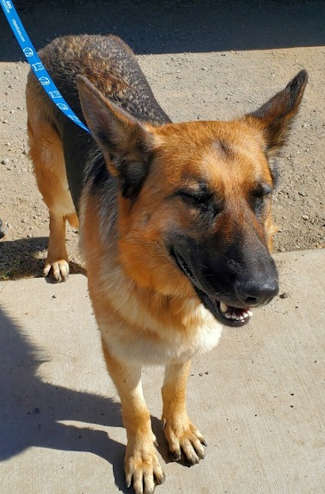
‘Reese’
“Reese” is a female German Shepherd with a black and an coat.
She has been spayed.
She is dog No. 50884542.

‘Sadie’
“Sadie” is a female German shepherd mix with a black and tan coat.
She has been spayed.
She is dog No. 49802563.

‘Snowball’
“Snowball is a 1 and a half year old male American Staffordshire terrier mix with a short white coat.
He has been neutered.
He is dog No. 49159168.
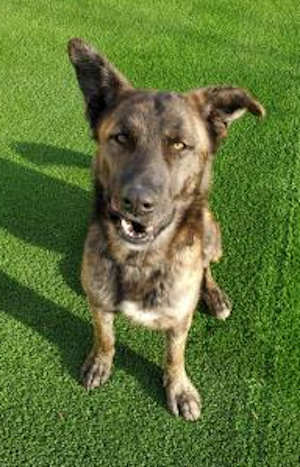
‘Terry’
“Terry” is a handsome male shepherd mix with a short brindle coat.
He gets along with other dogs, including small ones, and enjoys toys. He also likes water, playing fetch and keep away.
Staff said he is now getting some training to help him build confidence.
He is dog No. 48443693.

‘Trike’
“Trike” is a male border collie-Australian shepherd mix with a black and white coat and blue eyes.
He has been neutered.
He is dog No. 51029972.

‘Willie’
“Willie” is a male German shepherd mix with a black and tan coat.
He has been neutered.
He is dog No. 50596003.
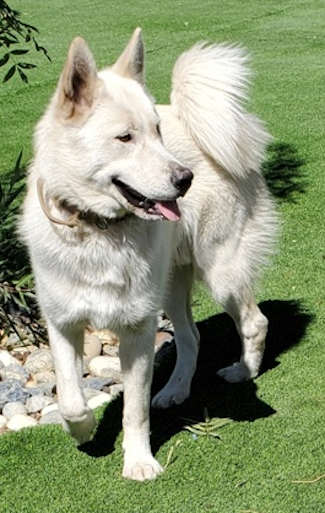
‘Zeus’
“Zeus” is a male Samoyed mix with a long white coat.
He has been neutered.
He is dog No. 50933068.
Email Elizabeth Larson at