 How to resolve AdBlock issue?
News
“As we prepare for Thanksgiving and holiday gatherings, we need to continue being vigilant in preventing the rapid spread of winter viruses,” said Dr. Pan. “As a pediatrician who specializes in infections, and a parent, it is concerning to see the rise in RSV and flu in babies, young children and our elderly population. It is crucial we are aware of prevention methods, but also, how to care for our loved ones at home, and what symptoms to be aware of for parents to seek care for their children.”
Caring for your child at home
There is no cure for respiratory viruses, but some medications can reduce disease severity in certain situations. For mild symptoms, Dr. Pan provides these tips to help ease discomfort:
• Reduce congestion with nasal saline with gentle suctioning. Patients should sit or lie upright when possible. Cool-mist humidification also helps to clear the congestion and make people feel better.
• Make sure your loved ones get plenty of rest and drinks clear fluids such as water, broth or sports drinks to prevent dehydration. For infants, use electrolyte beverages such as Pedialyte. Healthy snacks and small meals are also recommended.
• If your child has a fever (100 degrees or higher), acetaminophen and ibuprofen can be given to children 6 months of age and older. Infants and children should not be given aspirin as this can cause a rare but serious illness called Reye’s syndrome. Only use other medications or medications for infants less than 6 months old under the guidance of your health care provider.
• Follow dosing instructions listed on the back of the medication or from your health care provider.
• Stay home at least 24 hours after there is no longer a fever or signs of a fever (without the use of fever-reducing medicine).
When to seek care
Most childhood respiratory illnesses are mild and resolve on their own without the need for emergency care or hospitalization. Understanding when to see a doctor or go to the hospital ensures that children receive the right care.
Call ahead to get medical advice and see what you can do at home and when it is best to come in to be examined.
Seek evaluation right away if you child has:
• Symptoms of lung disease: fast breathing, flaring nostrils, head bobbing, grunting, or wheezing while breathing; belly breathing; pauses in breathing.
• Symptoms of dehydration.
• Gray or blue color to tongue, lips or skin.
• Significantly decreased activity and alertness.
• Symptoms that worsen or do not improve after seven days.
• Fever in those under 3 months of age (12 weeks).
• Fever above 104°F repeatedly for a child of any age.
• Poor sleep or fussiness, chest pain, ear tugging or ear drainage.
Is your child at a higher risk for severe disease?
Early evaluation and treatment by a health care professional can ensure the best possible outcomes for children who are at a higher risk of severe disease.
Children who are at higher risk of severe disease include:
• Younger children, particularly 6 months old or younger.
• Premature or low-birth weight infants.
• Children with chronic medical conditions, including chronic lung diseases, heart disease, disorders weakening the immune system, or neuromuscular disorders.
Testing for RSV
Testing for RSV is not always necessary. Unlike COVID-19, testing for RSV generally does not change the way doctors manage individual patients with this illness and treatment is based on the symptoms a person is experiencing.
Accordingly, individuals should seek care based on concerns for the symptoms listed above and not solely to obtain an RSV test result.
Further, schools and childcare settings should not require a negative RSV test to return to these settings; in most situations, return should also be based on symptoms and generally children with respiratory symptoms should not return to childcare or school until symptoms are resolved or at least mild and improving.
This includes waiting until 24 hours have passed since resolution of fever without the use of fever-reducing medications.
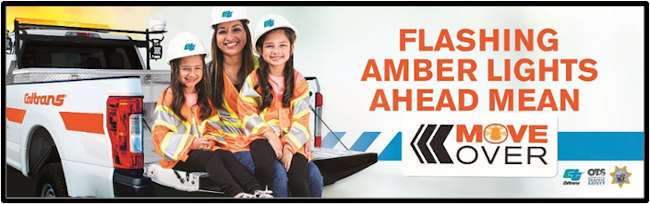
The young faces of the families of highway workers are reminding you to move over a lane or slow down for their loved ones who help keep our roads safe.
The “Kids of Caltrans” provide the personal, impactful messages behind the new public awareness campaign from the California Department of Transportation, or Caltrans, in partnership with the California Office of Traffic Safety and the California Highway Patro, that kicked off this week at Sacramento’s Golden 1 Center.
Some of the children, grandchildren, nieces and nephews of Caltrans workers featured in the “Move Over” campaign were on hand for the kickoff event, which comes on the heels of last week’s National Crash Responder Safety Week.
In video messages that will air throughout the state through January 2023, they ask drivers to be alert and move over a lane if safe to do so or slow down to safely pass highway workers.
Sadly, highway workers, law enforcement officers, emergency personnel and tow truck drivers are killed or injured along California’s roadways every year.
Moving over and slowing down when passing a vehicle stopped on the roadway with flashing lights in California isn’t just a matter of following the law — it is about saving lives.
The “Move Over” law exists to provide a safer environment for maintenance and emergency vehicles stopped along roadsides close to fast-moving traffic.
“Not a single person should die on our roadways — let alone in our work zones — so I urge you to do your part, pay attention, move over and save lives,” said Caltrans Director Tony Tavares. “Don’t let that split second of inattention destroy the lives of so many people ... including your own.”
“Making a traffic or emergency stop on the side of the road is one of the most dangerous duties law enforcement officers and other first responders perform,” said CHP Commissioner Amanda Ray. “Tragically, too many first responders and highway workers have been killed on the shoulder or median, and dozens more have been seriously injured. Please, move over or slow down when you see our officers and others working on the side of the freeway; not only is it the law, their lives depend on it.”
“Caltrans workers are mothers, fathers, grandparents, aunts and uncles who have loved ones who need them to come home,” Office of Traffic Safety Director Barbara Rooney said. “For your safety, and the safety of all roadside workers and emergency responders, please be alert and slow down.”
California’s “Move Over” law requires all drivers to move over a lane if safe to do so, and if unable to do so safely, to slow down when they see amber flashing lights on Caltrans vehicles, law enforcement and other emergency vehicles and tow trucks.
“Towing professionals are the ones we rely on when the unexpected happens. We all depend on these Heroes of the Highway to clear our roadways and get traffic safely flowing after a crash has occurred,” said Sam Johnson, president of the California Tow Truck Association and the Emergency Road Service Coalition of America. “As a motorist, you can help protect these heroes by paying attention, slowing down, and moving over when you see the flashing lights of a tow truck assisting a stranded vehicle. The California Tow Truck Association along with the Emergency Road Service Coalition of America would like to thank the motoring public for their help with our mission to get each and every one of these Heroes of the Highway safely home to their families at the end of the day.”
In 2020, nearly 7,000 work-zone crashes occurred on California roadways, resulting in more than 3,000 injuries and nearly 100 fatalities. Nationally, drivers and passengers account for 85% of those killed in work zones.
Although all 50 states have enacted “Move Over” laws, the National Highway Traffic Safety Administration found that 71% of Americans are not aware of them.
In California, failure to obey the “Move Over” law can result in fines up to $1,000, plus points on your driving record.
Since 1921, 191 Caltrans employees have been killed on the job, and one of the biggest hazards to them and anyone working on the roads is from motorists who do not exercise caution. Those 191 employees represent scores of families torn apart by preventable work zone collisions.
To see campaign videos from the kids and grandkids of Caltrans, visit http://beworkzonealert.com/.
While unemployment ticked up, the Employment Development Department said the good news is that as of October, California has recovered all of the 2,758,900 jobs lost during the pandemic-induced recession.
In Lake County, October’s unemployment rate was 4.5%, up from 4.3% in September. The October 2021 rate was 6.2%.
Most job sectors were down in October, except for mining, logging and construction, which grew by 3.2%; state and local government, 1.3%; educational and health services, 0.4%; and service producing, 0.1%.
California added more than 56,000 jobs in October, and is now 30,800 jobs above the pre-pandemic total of February 2020.
In addition, California marked the 13th consecutive month of job growth in October and accounted for more than 20% of the nation’s new jobs, outpacing the nation in year-over job growth.
California’s jobless rate in October was 4%, up from 3.8% in September, which was a record-low rate for the state in a data set that dates back to 1976.
On the national level, unemployment in October was 3.7%, up from 3.5% in September but much improved from the 4.6% reported in October 2021.
The number of Californians employed in October was 18,502,900, a decrease of 40,500 persons from September’s total of 18,543,400, but up 642,100 from the employment total in October, the report said.
At the same time, the number of unemployed Californians was 776,600 in October, an increase of 35,400 over the month, but down 386,900 in comparison to October 2021.
The state said total nonfarm jobs in California’s 11 major industries totaled 17,722,700 in October — a net gain of 56,700 jobs from September. This followed a downward revised (-1,200) month-over gain of 5,300 jobs in September.
Total nonfarm jobs statewide increased by 695,500 (a 4.1% increase) from October 2021 to October 2022 compared to the U.S. annual gain of 5,303,000 jobs (a 3.6% increase), the report said. In Lake County, nonfarm jobs increased by 4.9%, or 760 jobs, during that same time.
Regarding total farm jobs, statewide the number of jobs in the agriculture industry decreased from September by 100 to a total of 410,700 jobs in October. The agricultural industry had 3,000 more farm jobs in October 2022 than it did in October a year ago. In Lake County, the total farm jobs category was up by 5.4% in a year-over comparison, with 240 jobs added.
Eight out of 11 job sectors added jobs. Education and health services had the largest gain, 16,800 jobs, showing the largest month-over gains thanks to above average gains in outpatient care services, nursing care facilities, and individual and family services. In Lake County, the education and health services sector was up by 0.4%, or 20 jobs.
Professional and business services added 16,400 jobs statewide, strong growth credited in part to above average gains in accounting and tax prep and bookkeeping services. That sector showed no growth in October in Lake County.
Other sectors that showed growth statewide and the Lake County comparisons are as follows:
• Leisure and hospitality: increase of 13,500 jobs statewide; Lake County lost 2.3%, or 30 jobs.
• Manufacturing: increase of 6,400 jobs; Lake County lost 2.7% or 10 jobs.
• Trade, transportation and utilities: increased by 4,600 jobs; Lake County lost 0.3%, or 10 jobs.
• Information: increased by 4,100 jobs; Lake County showed no change.
• Financial activities: increased by 3,600 jobs; Lake County lost 3%, or 10 jobs.
• Other services: increased by 100 jobs; Lake County lost 1.8%, or 10 jobs.
Lake County’s 4.3% jobless rate ranked it No. 42 statewide in October.
Lake’s neighboring counties had the following rates and ranks: Colusa, 7.2%, No. 56; Glenn, 4.6%, No. 44; Mendocino, No. 20, 3.3%; Napa, No. 8, 2.7%; Sonoma, No. 6, 2.6%; and Yolo, No. 20, 3.3%.
In related data that figures into the state’s unemployment rate, there were 289,716 people certifying for Unemployment Insurance benefits during the October 2022 sample week. The EDD said that compares to 294,085 people in September and 463,257 people in October 2021.
Concurrently, 38,186 initial claims were processed in the October 2022 sample week, which was a month-over increase of 3,685 claims from September and a year-over decrease of 21,693 claims from October 2021.
Email Elizabeth Larson at
“The Fire Victims Trust was set up to help people recover from the impact of wildfires and rebuild what they lost, and no fire survivor should have to pay taxes on their settlement funds,” said Thompson. “While I continue to press for the passage of my bill, I am glad to provide additional information to those looking for clarification on what this means for their payments.”
Rep. Thompson has been working with the Internal Revenue Service, outlining several potential tax issues facing settlement recipients and requesting formal guidance from the agency.
In response, the IRS clarified that a number of existing tax provisions may assist taxpayers in deferring or fully offsetting any tax liability arising from Fire Victims Trust payments.
These provisions are especially relevant to survivors who have rebuilt or are in the process of rebuilding their homes.
The additional information can be found here.
Thompson represents California’s Fifth Congressional District, which includes all or part of Contra Costa, Lake, Napa, Solano and Sonoma counties.

As millions of people venture out for the Thanksgiving holiday, the California Highway Patrol is preparing for one of the busiest travel weekends in the nation.
To help motorists arrive at their destinations safely, the CHP will implement a maximum enforcement period, or MEP, and deploy all available officers through the holiday weekend.
The MEP begins at 6:01 p.m. on Wednesday, Nov. 23, and continues through 11:59 p.m. on Sunday, Nov. 27.
“As with every holiday, the CHP will work to keep motorists safe as they travel to gatherings with friends and family,” said Commissioner Amanda Ray. “Our officers will be on patrol to take enforcement action as necessary and to provide assistance to motorists who are stranded or in need of help on the side of the road.”
During the MEP, CHP officers will be working to assist and educate motorists and enforce traffic safety laws throughout the state, actively looking for unsafe driving behaviors, including impaired or distracted driving, unsafe speed, and people not wearing seat belts.
According to the CHP’s MEP data, 42 people, including 16 pedestrians and one bicyclist, were killed in crashes in CHP’s jurisdiction during the 2021 Thanksgiving holiday weekend. CHP officers issued more than 5,600 citations for speed and seat belt violations.
Additionally, CHP officers made 1,033 arrests for driving under the influence during the four-day period.
“Enjoy your Thanksgiving festivities, but please celebrate responsibly, wear your seat belt, and always designate a sober, nondrinking driver,” said Commissioner Ray.

The Research Brief is a short take about interesting academic work.
The big idea
People who breathe polluted air experience changes within the brain regions that control emotions, and as a result, they may be more likely to develop anxiety and depression than those who breathe cleaner air. These are the key findings of a systematic review that my colleagues and I recently published in the journal NeuroToxicology.
Our interdisciplinary team reviewed more than 100 research articles from both animal and human studies that focused on the effects of outdoor air pollution on mental health and regions of the brain that regulate emotions. The three main brain regions we focused on were the hippocampus, amygdala and the prefrontal cortex.
In our analysis, 73% of the studies reported higher mental health symptoms and behaviors in humans and animals, such as rats, that were exposed to higher than average levels of air pollution. Some exposures that led to negative effects occurred in air pollution ranges that are currently considered “safe” by the Environmental Protection Agency’s standards. In addition, we discovered that 95% of studies examining brain effects found significant physical and functional changes within the emotion-regulation brain regions in those exposed to increased levels of air pollution.
Most of these studies found that exposure to elevated levels of air pollution is associated with increased inflammation and changes to the regulation of neurotransmitters, which act as the brain’s chemical messengers.
Why it matters
Research into the physical health effects associated with air pollution exposure, such as asthma and respiratory issues, have been well documented for decades.
But only over the last 10 years or so have researchers begun to understand how air pollution can affect the brain. Studies have shown that small air pollutants, such as ultrafine particles from vehicle exhaust, can affect the brain either directly, by traveling through the nose and into the brain, or indirectly, by causing inflammation and altered immune responses in the body that can then cross into the brain.
At the same time, researchers are increasingly documenting the association between air pollution and its negative effects on mental health.
Unfortunately, research suggests that air pollution will only worsen as climate change intensifies and carbon emissions remain unregulated.
For this reason, more research into the health effects of air pollution exposure that goes beyond respiratory health outcomes into the realm of biological psychiatry is badly needed. For instance, the neurobiological mechanisms through which air pollution increases risk for mental health symptoms are still poorly understood.
What still isn’t known
In addition to our primary findings, our team also identified some notable gaps within the research that need to be addressed in order to paint a fuller picture of the relationship between air pollution and brain health.
Relatively few studies examined the effects of air pollution exposure during early life, such as infancy and toddlerhood, and in childhood and adolescence. This is especially concerning given that the brain continues to develop until young adulthood and therefore may be particularly susceptible to the effects of air pollution.
We also found that within the studies investigating air pollution effects on the brain, only 10 were conducted in humans. While research on animals has extensively shown that air pollution can cause a host of changes within the animal brain, the research on how air pollution affects the human brain is much more limited. What’s more, most of the existing brain studies in humans have focused on physical changes, such as differences in overall brain size. More research is needed that relies on a technique called functional brain imaging, which could enable researchers like us to detect subtle or smaller changes that may occur before physical changes.
In the future, our team plans to use brain imaging methods to study how air pollution increases the risk of anxiety during adolescence. We plan to use a variety of techniques, including personal air monitors that children can wear as they go about their day, allowing us to more accurately assess their exposure.
Clara G. Zundel, Postdoctoral Research Fellow in Psychiatry and Behavioral Neurosciences, Wayne State University
This article is republished from The Conversation under a Creative Commons license. Read the original article.