 How to resolve AdBlock issue?
News

KELSEYVILLE, Calif. — The fourth annual Festival of Trees, a benefit for Hospice Services of Lake County, will be held on Saturday, Dec. 3.
The event returns to a magical venue at Sophie’s Day Spa, 3855 Main St.
The Festival of Trees Spectacular Party and live auction features 25 exquisite Christmas trees designed and donated by community members.
Proceeds from the live and silent auctions will support the Wings of Hope grief counseling program for children and families and special needs of hospice patients throughout our Lake County community.
The public is invited to preview decorated trees at no charge on Friday, Dec. 2, from 4 to 8:30 p.m., before and after the Kelseyville Christmas in the Country & Parade of Lights.
Tickets for Saturday’s Festival of Trees are available and may be purchased at www.lakecountyhospice.org or by calling 707-263-6222.
The event begins at 5:30 p.m. with savories and sweets on small plates prepared by a variety of local chefs, bakers and restaurants. A no host bar providing local wines and beer will be available throughout the evening.
Lake County Sheriff Brian Martin will delight the audience with his talents as auctioneer and Jennifer Strong of Strong Financial Services, a passionate Hospice Services supporter, will serve as mistress of ceremonies.
Manager of the Funky Dozen Larry Thompson will queue up lively dance music immediately following the auction.
“We are excited to kick off the holiday season with the spectacular party atmosphere of the Festival of Trees 2022,” said interim Hospice Services Executive Director Hope Moroni. “This event facilitates the coming together of individuals during a traditionally giving time of year in support of the highly valuable services Hospice Services provides in our community.”
The success of Festival of Trees is made possible largely in part by several community sponsors including Platinum Sponsors Lake County Tribal Health Consortium, Michaels Insurance Services, Calpine Corp., Savings Bank of Mendocino, Roto-Rooter of Lake County, California Exterminators, Adventist Health Clearlake and Kelly Butcher.
Other sponsors include the UPS Store, Twin Pine Casino and Hotel, Lake Pharmacy, Tomkins Tax Associates, Cats Paw Vineyards, High County Security, Roland and Nell Shaul, Jonas Energy Solutions, Chapel of the Lakes and Sutter Lakeside Hospital.
Hospice Services of Lake County has been providing compassionate comfort care to Lake County residents for over 44 years, promoting quality of life when families need it the most.
The Wings of Hope program provides grief counseling for children who have experienced the death of a loved one.
Community members are encouraged to learn how our compassionate team can assist you and your loved ones. Call 707-263-6222 or visit Hospice Services of Lake County, 1862 Parallel Drive, Lakeport.
Additional information is also available on Hospice Services of Lake County’s website.
Janine Smith-Citron is director of development for Hospice Services of Lake County.
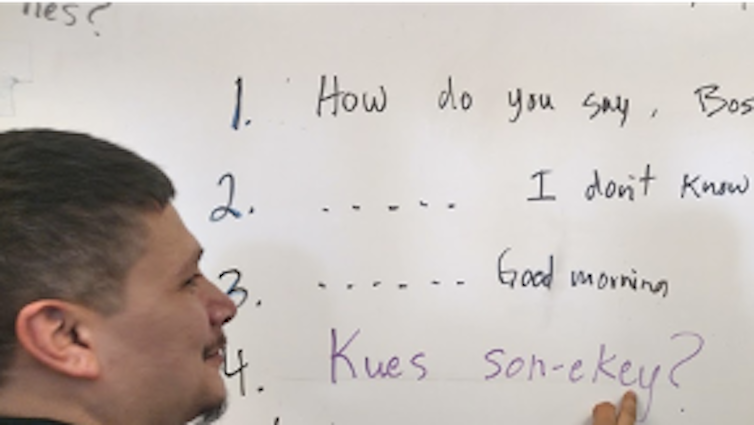
Whenever November would roll around, James Gensaw, a Yurok language high school teacher in far northern California, would get a request from a school administrator. They would always ask him to bring students from the Native American Club, which he advises, to demonstrate Yurok dancing on the high school quad at lunch time.
“On the one hand, it was nice that the school wanted to have us share our culture,” Gensaw told me during an interview. “On the other, it wasn’t always respectful. Some kids would make fun of the Native American dancers, mimicking war cries and calling out ‘chief.’”
“The media would be invited to come cover the dancing as part of their Thanksgiving coverage, and it felt like we were a spectacle,” he continued. “Other cultural groups and issues would sometimes be presented in school assemblies, in the gym, where teachers monitored student behavior. I thought, why didn’t we get to have that? We needed more respect for sharing our culture.” James Gensaw’s work in California’s public high schools as a Yurok language teacher and mentor to Native American students is part of a reckoning with equity and justice in schools.
Yurok language in schools
Tribal officials say Gensaw is one of 16 advanced-level Yurok language-keepers alive today. An enrolled Yurok tribal member, Gensaw is also part of the tribe’s Yurok Language Program, which is at the forefront of efforts to keep the Yurok language alive.
Today, the Yurok language is offered as an elective at four high schools in far northern California. The classes meet language instruction requirements for admission to University of California and California State University systems.
Yurok language classes are also offered in local Head Start preschool programs as well as in some K-8 schools when there is teacher availability, and at the College of the Redwoods, the regional community college. To date, eight high school seniors have been awarded California’s State Seal of Biliteracy in Yurok, a prestigious accomplishment that signifies commitment to and competency in the language.
When I started researching the effects of Yurok language access on young people in 2016, there were approximately 12 advanced-level speakers, according to the Yurok Language Program. The 16 advanced-level speakers in 2022 represent a growing speaker base and they are something to celebrate. Despite colonization and attempts to eradicate the Yurok language by interrupting the transfer of language from parents to their children, Yurok speakers are still here.
Throughout the 19th and 20th centuries, boarding schools in the United States operated as spaces for what I refer to as “culturecide” — the killing of culture — in my latest book, “Indigenous Language Politics in the Schoolroom: Cultural Survival in Mexico and the United States.” Students in both the United States and Mexico were often made to attend schools where they were beaten for speaking Indigenous languages. Now, new generations are being encouraged to sign up to study the same language many of their grandparents and great-grandparents were forced to forget.
Language as resistance
The Yurok Tribe made the decision years ago to prioritize growing the number of Yurok speakers and as part of that, to teach Yurok to anyone who wanted to learn. They have many online resources that are open for all. Victoria Carlson is the Yurok Language Program Manager and a language-keeper herself. She is teaching Yurok to her children as a first language, and she drives long distances to teach the language at schools throughout Humboldt and Del Norte counties.
“When we speak Yurok, we are saying that we are still here,” Carson said in an interview with me, echoing a sentiment that many Yurok students relayed to me as well. “Speaking our language is a form of resisting all things that have been done to our people.”
The students in Mr. Gensaw’s classes are majority, but not exclusively, Native American. Through my research I learned that there are white students who sign up out of interest or because nothing else fit in their schedule. There are Asian American students who wish that Hmong or Mandarin was a language option, but they take Yurok since it is the most unique language choice available. And there are Latinx students who already are bilingual in English and Spanish and who want to challenge themselves linguistically.
In my book and related publications, I document how access to Indigenous languages in school benefits different groups of students in a range of ways. Heritage-speakers — those who have family members who speak the language — get to shine in the classroom as people with authority over the content, something that many Native American students struggle with in other classes. White students have their eyes opened to Native presence that is sorely missing when they study the Gold Rush, Spanish missionaries in California, or other standard topics of K-12 education that are taught from a colonizing perspective. And students from non-heritage minority backgrounds report an increased interest in their own identities. They often go to elders to learn some of their own family languages after being inspired that such knowledge is worth being proud of.
Bringing languages like Yurok into schools that are still, as historian Donald Yacovone points out, dominated by white supremacist content, does not in and of itself undo the effects of colonization. Getting rid of curricula that teach the Doctrine of Discovery – the notion that colonizers “discovered” the Americas and had a legal right to it – is a long-term process. But placing Native American languages into public schools both affirms the validity of Indigenous cultural knowledge and also asserts the contemporary existence of Native people at the same time. It is a place to start.
One step at a time
In my experience, as a researcher on education policy and democracy, I have found that putting more culturally diverse courses in school is something that better prepares young people to learn how to interact in healthy ways with people who are different from themselves.
Gensaw, the Yurok language teacher, is at the forefront of this. One year when he was again asked if he could bring the students to dance around Thanksgiving time, he said yes, but not on the quad. He requested a school assembly space where student behavior could be monitored. The school said yes, and the students danced without being demeaned by their peers. These steps are just the beginning of what it takes to undo the effects of colonization.
Mneesha Gellman, Associate Professor of Political Science, Emerson College
This article is republished from The Conversation under a Creative Commons license. Read the original article.
Performers for this year’s celebrations will include singer, songwriter and dancer Tinashe; the Oakland Interfaith Gospel Choir; Mariachi Arcoiris de Los Angeles; cast members of Dear San Francisco, the love letter to City by the Bay; Chrissy Marshall; the Wilton Rancheria Tribe; the Bandura Ensemble of Sacramento; the Grant Union High School drumline; and UC Davis acapella groups The Afterglow and The Spokes.
The governor and first partner will light the State Capitol tree with special guest Layla Datskyy.
The 8-year-old from Rocklin was selected by the California Department of Developmental Services and the Alta California Regional Center, and will represent the nearly 400,000 Californians living with intellectual and developmental disabilities.
A third grader at O.W. Erlewine Elementary School, Layla enjoys listening to music and watching music videos. She also likes to play with dolls and enjoys watching people’s facial expressions.
The celebration, which dates back to the early 1930s, will highlight California’s diverse holiday traditions, native heritage, and spirit of inclusion.
The 2022 State Capitol tree is a 65-foot-tall white fir donated by the U.S. Forest Service Pacific Southwest Research Station and harvested from a U.S. Forest in Camino, California.
The tree will be illuminated by approximately 14,000 LED lights and is being decorated with approximately 250 traditional ornaments and 250 handmade ornaments made by children and adults with intellectual and developmental disabilities.
The event will be livestreamed on the @CAgovernor Twitter page, California Governor Facebook page and the Governor’s YouTube page.
This event will also be available to TV stations on the TVu Grid as “CA_Governor_Pack” and on the LiveU Matrix under “California Governor.”
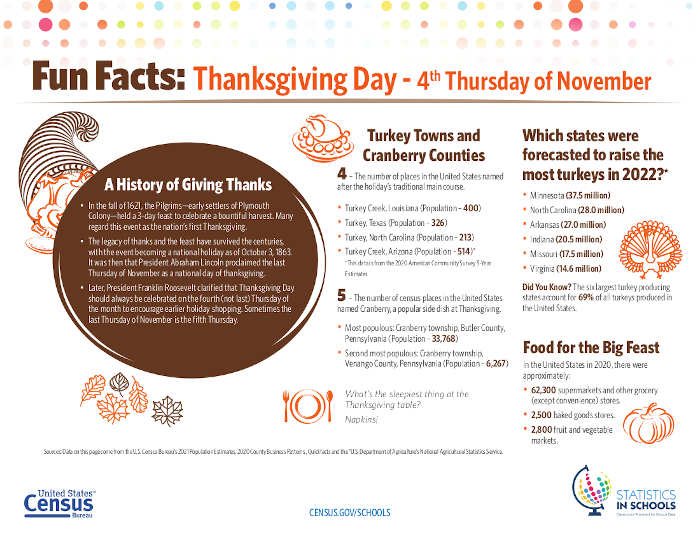
Many regard this event as the nation's first Thanksgiving.
The legacy of thanks and the feast have survived for centuries, with the event becoming a national holiday as of Oct. 3, 1863.
Did you know?
Thanksgiving is observed on the fourth Thursday of November.
There are 4 places named Turkey in the U.S. — a traditional holiday main course.
There are five places named Cranberry in the U.S. – a popular holiday side dish.
The six largest turkey producing states account for 69% of all turkeys produced according to the U.S Department of Agriculture.
Minnesota leads the way. The state was projected to raise 37.5 million turkeys in 2022.
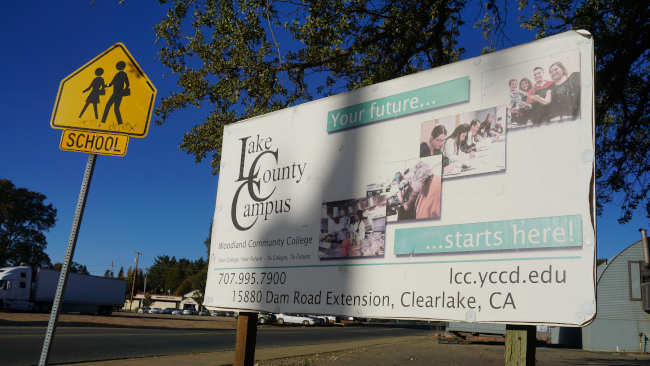
CLEARLAKE, Calif. — The long wait for a new welcome sign to Woodland Community College’s Lake County Campus in Clearlake is expected to soon be over.
The new sign will sit at the college entrance at 15880 Dam Road Extension.
District officials said Fluoresco Services LLC of Sacramento was awarded both the project for the Lake County sign and one at Woodland Community College for a total of $154,626. The district board approved the award of the contract as part of the consent agenda at its Dec. 16, 2021 meeting.
The report for the December 2021 meeting noted that it’s important for both the Woodland Community College Campus and the Lake County Campus to have functional LED monument signs “that can both display the College locations and provide digital sign messages to the public, students, faculty, and staff.”
Woodland Community College’s existing LED monument digital sign has failed many times and is no longer functional or under the manufacturer’s warranty.
The existing 4-foot by 8-foot plywood sign at the entrance to the Lake County Campus “is worn-out, the poster on the front of the sign is faded and peeling, and there is not a digital LED message component to this sign,” the report said.
“This sign has been in place for a few years now and does not present the Lake County Campus very well,” the report added.
The new two-way sign in Clearlake will allow vehicle traffic along Dam Road Extension “to view messages and be informed of upcoming events and important activities at the campus. It will be much more inviting and will present the campus in a professional and inviting way,” according to the report.
The district said it will be a Daktronics sign with high pixel density which will present a bright readable message during the daytime and dark night hours. It also will have the capability of having the message changed remotely through a cellphone app.
However, with the project still not completed, at the board’s most recent meeting on Nov. 10, during a discussion of a proposed project to build two soccer fields at Woodland Community College for a total cost of $1.9 million, concerns about the sign were raised.
Board Trustee Juan Delgado said the current plywood sign is “embarrassing.”
Board Trustee Doug Harris, who represents Lake County on the board and taught career technical and university prep classes at the Lake County Campus for over 20 years, said the discussion of a respectable new sign for the campus goes back to as far as the beginning of his tenure.
He said there were promises that the new marquee would be installed at the Lake Campus before its 50th anniversary on Oct. 13.
“Those assurances were repeated and they were not kept,” he said.
“That was a really significantly missed opportunity,” Harris added, pointing out that the community and press came out for the 50th anniversary event, and it was an ideal time for coverage of the new sign. “And we missed it.”
He told the board that in the eyes of people in Lake County’s communities, the fact that the project still hadn’t been completed “is a sign of a lack of commitment of this district to that campus.”
Interim Chancellor James Houpis told the board that the new Lake County marquee sign would be finished by January.
Harris said he had been promised the sign would be completed by August, then September and then January. He said he’s been hearing those assurances for 15 years.
No action by the board was agendized regarding the sign at the Nov. 10 meeting. However, a vote on whether or not to direct the soccer field project to move forward, funded by the 2006 Measure J bond, failed.
Cheresse Salamanca, Houpis’ executive assistant, confirmed that the soccer fields project is presently not approved to go forward. “Beyond that, it may or may not be brought back to the Board at a future date.”
Clearlake City Manager Alan Flora told Lake County News that the city’s planning department issued a permit for the new sign on Oct. 27.
Flora said the city has since been in contact with district officials regarding their plans to move forward with completing the sign project.
Email Elizabeth Larson at
The vacancies resulted due to the recent resignations of Mireya Turner, who accepted the Lake County Community Development director job, and Michael Green, who was appointed by the governor to the Board of Supervisors.
The deadline to apply for the two vacant seats is Monday, Nov. 28, at 5 p.m.
Interested persons are invited to submit a councilmember vacancy application. The application can be obtained online at www.cityoflakeport.com at the bottom of the home page.
The individuals appointed will serve approximately two years, with a term ending in 2024.
Qualified candidates must reside in Lakeport city limits, be at least 18 years of age, and registered to vote in the city of Lakeport.
The five-member City Council serves as the legislative body of the city and is responsible for setting policy, adopting the annual budget, adopting laws, determining services to be provided and the funding levels, and appointing citizens to its advisory boards and commissions.
Applications may be submitted electronically to
The applications will be distributed to the Lakeport City Council for review and interviews will be held on Dec. 12 and 13.
For additional information, please contact Deputy City Clerk Hilary Britton at 707-263-5615, Extension 102, or by email at