How to resolve AdBlock issue?
Refresh this page
How to resolve AdBlock issue?
Refresh this page
Lake County News,California
  • Home
    • Registration Form
  • News
    • Education
    • Veterans
    • Community
      • Obituaries
      • Letters
      • Commentary
    • Police Logs
    • Business
    • Recreation
    • Health
    • Religion
    • Legals
    • Arts & Life
    • Regional
  • Calendar
  • Contact us
    • FAQs
    • Phones, E-Mail
    • Subscribe
  • Advertise Here
  • Login

News

Lakeport City Council to consider new solid waste contract, Green Ranch well project

LAKEPORT, Calif. — The Lakeport City Council on Tuesday will consider a new solid waste franchise agreement with Lakeport Disposal Inc, along with a $214,500 construction contract for a new well development project.

The council will meet Tuesday, Nov. 4, at 6 p.m. in the council chambers at Lakeport City Hall, 225 Park St. 

The agenda can be found here. 

If you cannot attend in person, and would like to speak on an agenda item, you can access the Zoom meeting remotely at this link or join by phone by calling toll-free 669-900-9128 or 346-248-7799. 

The webinar ID is 973 6820 1787, access code is 477973; the audio pin will be shown after joining the webinar. Those phoning in without using the web link will be in “listen mode” only and will not be able to participate or comment. 

Comments can be submitted by email to This email address is being protected from spambots. You need JavaScript enabled to view it.. To give the city clerk adequate time to print out comments for consideration at the meeting, please submit written comments before 3:30 p.m. on Tuesday, Nov. 4.

Under council business, the council will consider a new solid waste franchise agreement with Lakeport Disposal Inc., which handles solid waste collection within the city. 

The new agreement, once approved, will replace the current contract that expires at the end of 2026 and extend service through June 2029, with options to renew through 2039. It will also continue to maintain the company’s exclusive right to collect and process all types of solid waste within Lakeport.

The new contract largely maintains what’s already in place under the 2015 agreement — the same exclusive franchise with Lakeport Disposal, continued curbside collection for trash, recycling and green waste, and continued no-cost service for city facilities and special events.

Key changes include formalizing the guarantee of one free annual bulky time pickup per household and adding language to prepare for future organics collection compliance. 

The council will also consider plans and specifications for the Green Ranch Well Development Project and award a $214,500 construction contract to Weeks Drilling & Pump Co.

The Green Ranch is an important source of the city’s water supply.

The staff report said the project involves drilling three test borings, converting one into a temporary test well for discharge testing, then removing materials and destroying the borings after testing. The goal is to collect data for designing a new replacement well on the Green Ranch to ensure a reliable year-round water supply as existing wells — some over 60 years old — reach the end of their service life.

Construction is estimated to start early December and be completed by mid-February 2026, according to the staff report. 

The council will also consider initiating recruitment for an administrative analyst to fill the GIS/asset management technician position. The staff report did not specify a salary range. 

On the consent agenda — items considered noncontroversial and usually accepted as a slate on one vote — are ordinances; waive reading except by title of any ordinances under consideration at this meeting for either introduction or passage per Government Code Section 36934; approval of the minutes of the City Council regular meeting of Oct. 21, 2025; adopt a resolution approving an amendment to the employment agreement with the city manager; approval of application 2026-001, with staff recommendations, for the 38th Bass Team Fishing Tournament; and approval of application 2025-048, with staff recommendations, for Christmas trees on Main Street.

Email staff reporter Lingzi Chen at This email address is being protected from spambots. You need JavaScript enabled to view it.. 

East Region Town Hall meets Nov. 5

LAKE COUNTY, Calif. — The East Region Town Hall, or ERTH, will meet on Wednesday, Nov. 5.

The meeting will begin at 4 p.m. at the Moose Lodge, located at 15900 Moose Lodge Lane in Clearlake Oaks.

It meeting be available via Zoom. The meeting ID is 813 6295 6146, pass code is 917658.

It also will be livestreamed on the Lake County Peg TV YouTube channel.

The meeting’s guest speaker will be Alex Haig of the Lake Area Planning Council, who will give a presentation on the Lake County Zero Emission Vehicle Infrastructure Plan and take public comments. 

This plan will guide how and where Lake County installs public charging and hydrogen fueling stations to support clean, affordable and reliable travel for residents, businesses and visitors.

On Wednesday, ERTH also will get an update on the Sonoma Clean Power proposal and receive a presentation by Richard Kuehn on the proposed senior housing development at Highway 20 and Sulphur Bank Drive and a storage unit project.

Other items on the agenda include an update on ERTH activities and committees, ongoing projects such as the Superfund cleanup and Klaus Park, updates from Spring Valley and Supervisor EJ Crandall, the commercial cannabis report and cannabis ordinance update, new business and announcements.

ERTH’s next meeting will take place on Dec. 3.

Members are Angela Amaral, Holly Harris, Maria Kann and Denise Loustalot.

For more information visit the group’s Facebook page.

Agricultural drones are taking off globally, saving farmers time and money

A farmer in China operates a drone to spray fertilizer on fields. Wang Huabin/VCG via Getty Images

Drones have become integrated into everyday life over the past decade – in sectors as diverse as entertainment, health care and construction. They have also begun to transform the way people grow food.

In a new study published in the journal Science, we show that use of agricultural drones has spread extremely rapidly around the world. In our research as social scientists studying agriculture and rural development, we set out to document where agricultural drones have taken off around the world, what they are doing, and why they have traveled so far so fast. We also explored what these changes mean for farmers, the environment, the public and governments.

From toys to farm tools

Just a few years ago, agricultural drones were expensive, small and difficult to use, limiting their appeal to farmers. In contrast, today’s models can be flown immediately after purchase and carry loads weighing up to 220 pounds (100 kg) – the weight of two sacks of fertilizer.

Their prices vary from country to country due to taxes, tariffs and shipping costs. In the U.S., a drone owner can expect to spend US$20,000 to $30,000 for the same equipment that a farmer in China could buy for less than $10,000. However, most farmers hire service providers, small businesses that supply drones and pilots for a fee, making them easy and relatively affordable to use.

A promotional video for the DJI Agras T100 agricultural drone, which can carry a maximum load of 220 pounds (100 kg).

Agricultural drones are now akin to flying tractors – multifunctional machines that can perform numerous tasks using different hardware attachments. Common uses for drones on farms include spraying crops, spreading fertilizer, sowing seeds, transporting produce, dispensing fish feeds, painting greenhouses, monitoring livestock locations and well-being, mapping field topography and drainage, and measuring crop health. This versatility makes drones valuable for growing numerous crops, on farms of all sizes.

Technological leapfrogging

We estimated the number of agricultural drones operating in some of the world’s leading agricultural countries by scouring online news and trade publications in many different languages. This effort revealed where agricultural drones have already taken off around the world.

Historically, most agricultural technology – tractors, for example – has spread from high-income countries to middle- and then lower-income ones over the course of many decades. Drones partially reversed and dramatically accelerated this pattern, diffusing first from East Asia to Southeast Asia, then to Latin America, and finally to North America and Europe. Their use in higher-income regions is more limited but is accelerating rapidly in the U.S.

China leads the world in agricultural drone manufacturing and adoption. In 2016, a Chinese company introduced the first agriculture-specific quadcopter model. There are now more than 250,000 agricultural drones reported to be in use there. Other middle-income countries have also been enthusiastic adopters. For instance, drones were used on 30% of Thailand’s farmland in 2023, up from almost none in 2019, mainly by spraying pesticides and spreading fertilizers.

In the U.S., the number of agricultural drones registered with the Federal Aviation Administration leaped from about 1,000 in January 2024 to around 5,500 in mid-2025. Industry reports suggest those numbers substantially underreport U.S. drone use because some owners seek to avoid the complex registration process. Agricultural drones in the U.S. are used mainly for spraying crops such as corn and soy, especially in areas that are difficult to reach with tractors or crop-dusting aircraft.

Safer, but not risk-free

In countries such as China, Thailand and Vietnam, millions of smallholder farmers have upgraded from the dangerous and tiring job of applying agrochemicals by hand with backpack sprayers to using some of the most cutting-edge technology in the world, often using the same models that are popular in the U.S.

Shifting from applying chemicals with backpack sprayers to drones substantially reduces the risk of direct exposure to toxins for farmers and farmworkers.

However, because drones usually spray from a height of at least 6 feet (2 meters), if used improperly, they can spread droplets containing pesticides or herbicides to neighboring farms, waterways or bystanders. That can damage crops and endanger people and nature.

Saving labor or displacing it?

Drones save farmers time and money. They reduce the need for smallholders – people who farm less than 5 acres (2 hectares), which account for 85% of farms globally – to do dangerous and tiring manual spraying and spreading work on their own farms. They also remove the need to hire workers to do the same.

By eliminating some of the last remaining physically demanding work in farming, drones may also help make agriculture more attractive to rural youth, who are often disillusioned with the drudgery of traditional farming. In addition, drones create new skilled employment opportunities in rural areas for pilots, many of whom are young people.

On the downside, using drones could displace workers who currently earn a living from crop spraying. For instance, according to one estimate from China, drones can cover between 10 and 25 acres (4 to 10 hectares) of farmland per hour when spraying pesticides. That is equivalent to the effort of between 30 and 100 workers spraying manually. Governments may need to find ways to help displaced workers find new jobs.

A person pours liquid into a tank attached to a drone, while standing near a large field.
An agricultural worker fills a drone tank with pesticide spray at a farm in Brazil. Mateus Bonomi/Anadolu Agency via Getty Images

Sky’s the limit

Drones spray and spread fertilizers and seeds evenly and efficiently, so that less is wasted. They may also reduce damage to crops in the field and consume less energy than large farm machines such as tractors.

In combination, these factors may increase the amount of food that can be produced on each acre of land, while reducing the amount of resources needed to do so. This outcome is a holy grail for agricultural scientists, who refer to it as “sustainable intensification.”

However, much of the evidence so far on yield gains from drone-assisted farming is anecdotal, or based on small studies or industry reports.

The drone revolution is reshaping farming faster than almost any technology before it. In just five years, millions of farmers around the world have embraced drones. Early signs point to big benefits: greater efficiency, safer working conditions and improved rural livelihoods. But the full picture isn’t clear yet.The Conversation

Ben Belton, Professor of International Development, Michigan State University and Leo Baldiga, Ph.D. Student in Geography, Environment and Spatial Sciences, Michigan State University

This article is republished from The Conversation under a Creative Commons license. Read the original article.
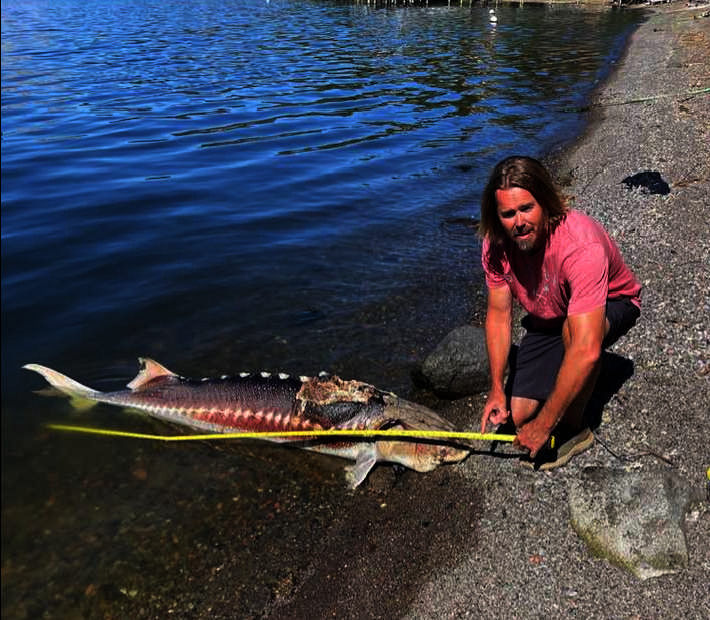

Investigation ongoing into sturgeon’s arrival in Clear Lake

A white sturgeon washed up in Buckingham near Kelseyville, California, on Monday, Sept. 15, 2025. Photo courtesy of Ken Young.


LAKE COUNTY, Calif. — How did a white sturgeon end up in Clear Lake?

Scientists are still working to answer that question about the sturgeon, discovered in September.

The white sturgeon is the largest freshwater fish in North America, but its range doesn’t include Clear Lake.

So when the big fish was found dead, washed up on a beach in Buckingham, in mid-September, it kicked off an investigation involving tribal and government scientists.

Sarah Ryan, environmental director for the Big Valley Band of Pomo Indians, said her agency got tissue samples of the sturgeon which they sent off for analysis of microcystins and mercury.

She said Robinson Rancheria is reviewing the sturgeon’s ear bones to determine whether it started in Clear Lake or not, which is possible because there is geologic imprinting on their ear bones.

Ryan said there also is a fin study being done by wildlife scientists to determine whether the fish was in salt water or not. 

“We also got reports of other sturgeon sightings but never got enough details to follow up,” Ryan said.

On Tuesday, the Board of Supervisors received an update from the Lake County Fish and Wildlife Advisory Committee on a fish die-off that occurred at the start of September, first reported about a week before the sturgeon was found.

Luis Santana, chair of the Lake County Fish and Wildlife Advisory Committee and fish and wildlife director of Robinson Rancheria’s Danoxa Fish and Wildlife Department, led the presentation about the die-off and also updated the board on the investigation into the sturgeon’s discovery.

Santana acknowledged how the topic of the sturgeon “was going crazy” on social media.

Some commenters on social media claimed the fish wasn’t real, and that the discovery was a hoax.

“Yes, it was there. It was 100% real,” Santana said.

“I took the head and the pictorial fins for further analysis, and we should know more about it, hopefully in the next couple weeks,” he explained.

Santana said the investigation is trying to identify the habitat where the sturgeon was at for its entire life.

He said that, so far, he’s thinking that someone caught it in the bay and transported it to Lake County to let it live out the rest of its life in Clear Lake.

The sturgeon was a female, and measured 7 feet, 7 inches in length, Santana said.

Santana said the low levels of dissolved oxygen in early September affected all of Clear Lake, was located throughout the water column and impacted numerous species of fish.

Likewise, so far, he believes the low-oxygen event also caused the sturgeon to die.

Noting that people do “crazy and illegal things all the time,” Santana said he doesn’t recommend moving any fish from one body of water to another, but he believes that’s what happened with the sturgeon.

The white sturgeon is a candidate for listing under the California Endangered Species Act, is catch-and-release only in the state and can’t be kept in a live well. California Department of Fish and Wildlife regulations say sturgeons of the size of the one found in Clear Lake are not to be removed from the water at all. 

As a result, moving such a fish from its natural habitat could result in thousands of dollars in legal fines and jail time, according to state regulations.

The California Department of Fish and Wildlife previously told Lake County News that, at one time, people were planting white sturgeon everywhere and they would occasionally turn up in various reservoirs throughout the state.

Supervisor Bruno Sabatier said it’s a horrible idea to bring non-native fish to Clear Lake. He noted people have dumped their aquariums into the lake.

Santana said he will come back and update the supervisors after the investigation and report on the sturgeon are completed.

Email Elizabeth Larson at This email address is being protected from spambots. You need JavaScript enabled to view it.. Follow her on Twitter, @ERLarson, and on Bluesky, @erlarson.bsky.social. Find Lake County News on the following platforms: Facebook, @LakeCoNews; X, @LakeCoNews; Threads, @lakeconews, and on Bluesky, @lakeconews.bsky.social. 

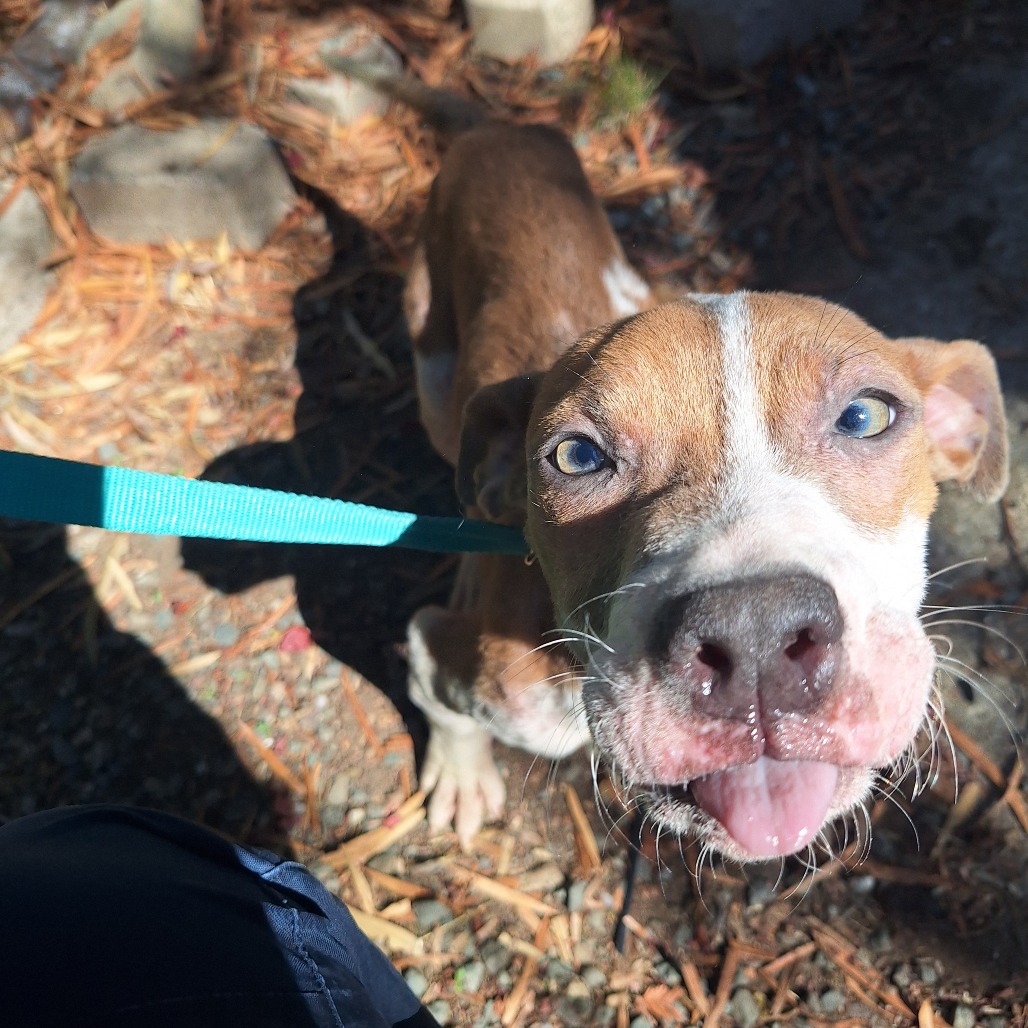
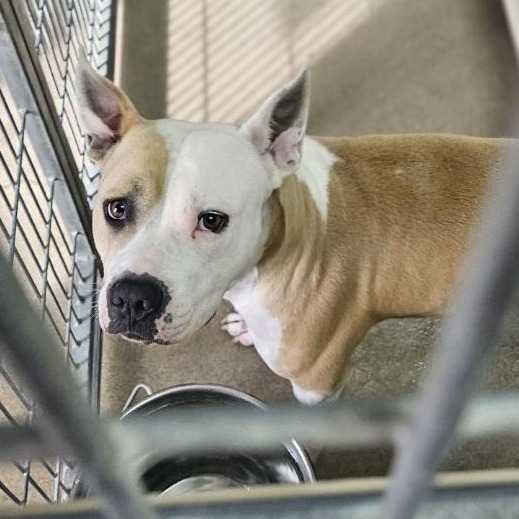
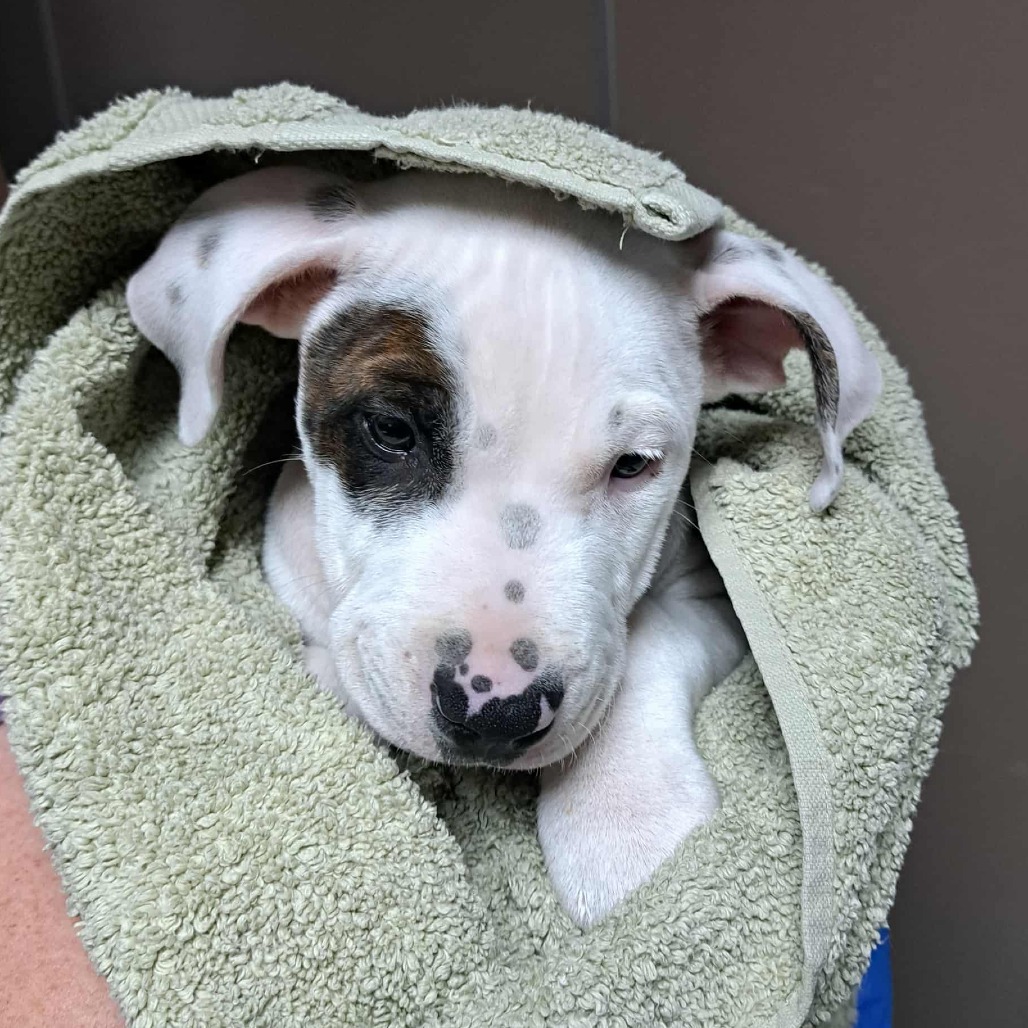
Helping Paws: This week’s dog lineup

LAKE COUNTY, Calif. — Lake County Animal Care and Control has many new dogs waiting for their adoptive families.

The dogs available for adoption this week include mixes of Australian shepherd, bulldog, chow, German shepherd, husky, Labrador Retriever, pit bull terrier, Rottweiler, terrier and shepherd.

Dogs that are adopted from Lake County Animal Care and Control are either neutered or spayed, microchipped and, if old enough, given a rabies shot and county license before being released to their new owner. License fees do not apply to residents of the cities of Lakeport or Clearlake.

Those animals shown on this page at the Lake County Animal Care and Control shelter have been cleared for adoption.

Call Lake County Animal Care and Control at 707-263-0278 or visit the shelter online for information on visiting or adopting.

The shelter is located at 4949 Helbush in Lakeport.

Email Elizabeth Larson at This email address is being protected from spambots. You need JavaScript enabled to view it.. Follow her on Twitter, @ERLarson, and on Bluesky, @erlarson.bsky.social. Find Lake County News on the following platforms: Facebook, @LakeCoNews; X, @LakeCoNews; Threads, @lakeconews, and on Bluesky, @lakeconews.bsky.social. 


Kennel#18 Eva 's preview photo
Kennel#18 Eva

Kennel#15 Scooby's preview photo
Kennel#15 Scooby

Kennel#24 Cowboy's preview photo
Kennel#24 Cowboy

 Kennel#3 Bandit's preview photo
Kennel#3 Bandit

Kennel#28(Tessa)'s preview photo
Kennel#28(Tessa)

Kennel#13 Nina's preview photo
Kennel#13 Nina

Kennel#26 Blair's preview photo
Kennel#26 Blair

Kennel#4 Amore's preview photo
Kennel#4 Amore

Kennel#22 Azula's preview photo
Kennel#22 Azula

Kennel#17 Trina's preview photo
Kennel#17 Trina

Kennel#31 Bear's preview photo
Kennel#31 Bear

Kennel#10a Phoenix's preview photo
Kennel#10a Phoenix

Kennel#10b Dallas's preview photo
Kennel#10b Dallas

Kennel#32 Bluey's preview photo
Kennel#32 Bluey

Kennel#33 (Oreo)'s preview photo
Kennel#33 (Oreo)

Kennel#12 Kora's preview photo
Kennel#12 Kora

Kennel#5's preview photo
Kennel#5


Kennel#6's preview photo
Kennel#6

Kennel#27 Spyro's preview photo
Kennel#27 Spyro

Kennel#25 Murphey's preview photo
Kennel#25 Murphey

Kennel#20 Duke's preview photo
Kennel#20 Duke

Kennel#7 Sassy's preview photo
Kennel#7 Sassy

Kennel#21 Hanson's preview photo
Kennel#21 Hanson

Kennel#14 Walter's preview photo
Kennel#14 Walter

Kennel#16's preview photo
Kennel#16

Kennel#19a Petunia's preview photo
Kennel#19a Petunia

Kennel#11(Little Momma)'s preview photo
Kennel#11(Little Momma)

Kennel#23's preview photo
Kennel#23

Kennel#8's preview photo
Kennel#8

Kennel#34's preview photo
Kennel#34

Kennel#2's preview photo
Kennel#2

Kennel#30's preview photo
Kennel#30

Kennel#19b Pico's preview photo
Kennel#19b Pico

Kennel#9's preview photo
Kennel#9

Kennel # 29's preview photo
Kennel # 29


Wildlife recovery means more than just survival of a species

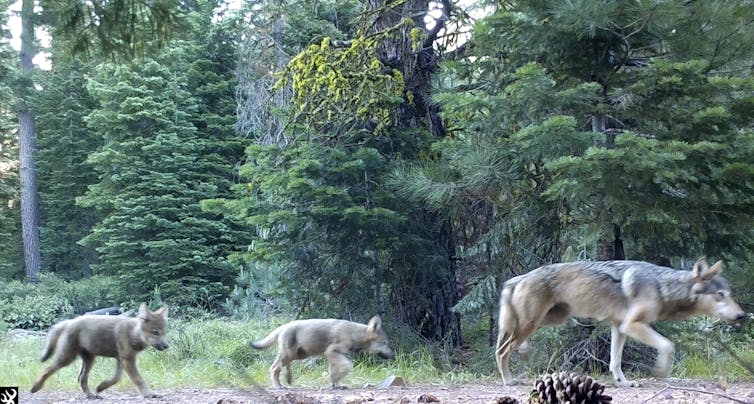
What counts as success in species recovery? U.S. Forest Service via AP

For decades, wildlife conservation policy has aimed to protect endangered species until there are enough individual animals alive that the species won’t go extinct. Then the policymakers declare victory.

That principle is enshrined in laws such as the U.S. Endangered Species Act and Canada’s Species at Risk Act. It shapes how governments manage wildlife and their habitat, how politicians weigh trade-offs between species protection and human development goals, and how the public understands conservation.

But often, those minimalist population numbers – enough to avoid extinction – aren’t enough to restore ecosystems or cultural connections between people and those animals.

There’s another way of thinking about species recovery: emphasizing not just avoiding extinction but instead enabling species to truly thrive. A shift from conserving minimum populations to restoring thriving populations involves recovering the species’ ecological role, including large parts of its geographic range and genetic diversity, as well as its relationships with people.

The difference between recovering thriving populations instead of traditional minimalist approaches becomes clear when looking at three iconic North American species: gray wolves, grizzly bears and bison.

A group of wolves gather in a snow-covered clearing.
The return of wolves to Yellowstone National Park was touted as a massive success – but was its goal too limited? National Park Service via AP

Gray wolves: More than a number

After decades of federal protection, gray wolves were taken off the list of species protected by the Endangered Species Act in parts of the U.S. in January 2021.

The Trump administration is considering removing federal protections for gray wolves nationwide.

But in the wake of the regional protection removal, states such as Montana and Idaho expanded hunting and trapping seasons for wolves, and some organizations added bounties for killing them.

Officials justified their actions by pointing to the fact that gray wolves had surpassed a minimum population threshold for species survival, and saying that intensive predator control would not jeopardize the species’ long-term viability.

The states’ current population goals would reduce wolf populations to about one-third of current numbers: from 1,235 to 500 in Idaho and from 1,134 to 450 in Montana.

For contrast, there are 3,300 wolves in Italy. That country has an area about 80% of the size of Montana and is home to less prey, less open land and more than 50 times as many people, all of which significantly raise the potential for human-wolf conflict.

So far in Idaho and Montana, gray wolf numbers have stopped increasing and may still satisfy requirements under federal laws protecting the species. But the wolf population there is not robust and thriving – it’s just surviving.

Wolves remain absent from large areas that provide suitable habitat for them. Reducing wolf numbers further, as the states want to do, would limit their ability to reoccupy these areas, where they could restore ecosystems by helping to manage often overabundant prey populations and also inspire millions of people with their wildness.

Grizzly bears: Viable yet vulnerable

Grizzly bear populations in the Greater Yellowstone and northern Continental Divide ecosystems have exceeded the federal recovery targets set decades ago under the Endangered Species Act to prevent the bears’ extinction.

In July 2025, a U.S. House of Representatives committee agreed to remove the species’ protection under the law, which would allow states to permit people to hunt the bears for the first time in decades. But it was overhunting that, in part, drove them to near extinction in the first place.

Government agencies often say that hunting and trapping reduce human conflicts with bears. But scientific and public opinion on that point is far from a consensus. There are effective, nonlethal methods for keeping bears away from humans, such as public education, electric fencing, bear-resistant garbage containers and removal of roadkill and dead livestock.

Once numbering more than 50,000 across at least 18 states in the 48 contiguous United States, grizzlies now number just over 2,000 and occupy less than 5% of their original habitat area. They can be found in only four states.

Current grizzly populations are also not interconnected, despite the availability of suitable habitat for them. That risks genetic isolation of subpopulations, which decreases genetic diversity and their prospects for adaptation and survival. Disconnection of populations also reduces their ability to disperse seeds, improve soil health and prey on other species. Grizzly bears are also an umbrella species, meaning they share habitat with a disproportionate number of other species, so recovering grizzlies benefits the entire food web.

One day, hunting might offer a new way for humans to reconnect with thriving grizzlies. But right now, with populations isolated and vulnerable, opening a hunting season would risk cutting off their chance to thrive in large, unoccupied ranges.

A group of very large animals stand in a grassy area surrounded by tree trunks.
Bison are common in Yellowstone National Park – but not nearly as common as they once were. Jon G. Fuller/VWPics/Universal Images Group via Getty Images

Bison: The illusion of return

Perhaps no species better captures the failure of existing recovery models to move beyond survival toward thriving populations than the bison. Tens of millions of them used to roam North America, shaping grassland ecosystems and playing significant material, spiritual and communal roles in Indigenous cultures.

Hunting for bison hides and tongues reduced their numbers to fewer than 1,000 at the cusp of the 20th century. Today, most bison live on ranches in small, fenced herds. Only 31,000 bison in North America are managed for conservation, and most are in isolated pockets of habitat at the fringe of their historic range. Even in Yellowstone National Park, which supports thousands of bison and provides a glimpse into how bison historically shaped North American ecosystems, the animals are barred from expanding to other parts of their historic range due to concerns about disease transfer to domestic livestock.

Thinking about the bison’s recovery in different terms does not mean tens of millions of them need to be stampeding across the continent. But it could mean large, free-ranging, genetically diverse herds that are integrated into a variety of ecosystems, where they also have a role in cultural revitalization.

A thriving view of species recovery is central to Indigenous-led initiatives, such as those guided by the 2014 Buffalo Treaty, which has been signed by more than 40 Indigenous nations. The treaty helped drive bison reintroduction to Banff National Park in Canada and is currently inspiring the recovery of free-roaming bison on Indigenous reservations across the U.S. and Canada, including the Blackfeet Reservation in Montana and Wind River Reservation in Wyoming.

A broader vision of recovery

Shifting away from the long-standing goal of a minimum viable population would require changes to how recovery targets are set, how success is measured, and how decisions are made when populations reach those minimum thresholds.

While national laws in the U.S. and Canada provide valuable starting points, focusing on species not just surviving but thriving would involve more ambitious goals, longer timelines and stronger human-wildlife coexistence measures. It would also require shifting public expectations away from the idea that recovery ends when minimal legal obligations are met.

Doing so could help combat climate change by restoring the role of large, wild animals in nutrient cycling, as well as reverse ecosystem degradation and help people of all backgrounds reconnect with nature.

As wildlife biologists, we aim to provide the best available science and recommendations to inform the conservation of North America’s wildlife. Yet under the current management paradigm, where recovery often equates to mere survival, we are compelled to ask whether this is enough. Should wildlife conservation aim merely to prevent extinction or to foster populations that thrive? How each and every one of us answers this question will shape not only the future of wolves, grizzly bears and bison, but also the legacy of wildlife recovery across North America.The Conversation

Benjamin Larue, Faculty Affiliate in Wildlife Biology, University of Montana; Jonathan Farr, Ph.D. Student in Wildlife Biology, University of Montana, and Mark Hebblewhite, Professor of Ungulate Habitat Ecology, University of Montana

This article is republished from The Conversation under a Creative Commons license. Read the original article.
  • 71
  • 72
  • 73
  • 74
  • 75
  • 76
  • 77
  • 78
  • 79
  • 80

Community

  • Lake County Wine Alliance offers sponsor update; beneficiary applications open 

  • Mendocino National Forest announces seasonal hiring for upcoming field season

Public Safety

  • Lakeport Police logs: Thursday, Jan. 15

  • Lakeport Police logs: Wednesday, Jan. 14

Education

  • Woodland Community College receives maximum eight-year reaffirmation of accreditation from ACCJC

  • SNHU announces Fall 2025 President's List

Health

  • California ranks 24th in America’s Health Rankings Annual Report from United Health Foundation

  • Healthy blood donors especially vital during active flu season

Business

  • Two Lake County Mediacom employees earn company’s top service awards

  • Redwood Credit Union launches holiday gift and porch-to-pantry food drives

Obituaries

  • Rufino ‘Ray’ Pato

  • Patty Lee Smith

Opinion & Letters

  • The benefits of music for students

  • How to ease the burden of high electric bills

Veterans

  • CalVet and CSU Long Beach team up to improve data collection related to veteran suicides

  • A ‘Big Step Forward’ for Gulf War Veterans

Recreation

  • Wet weather trail closure in effect on Upper Lake Ranger District

  • Mendocino National Forest seeking public input on OHV grant applications

  • State Parks announces 2026 Anderson Marsh nature walk schedule 

  • BLM lifts seasonal fire restrictions in central California

Religion

  • Kelseyville Presbyterian to host Ash Wednesday service and Lenten dinner Feb. 18

  • Kelseyville Presbyterian Church to hold ‘Longest Night’ service Dec. 21

Arts & Life

  • Auditions announced for original musical ‘Even In Shadow’ set for March 21 and 28

  • ‘The Rip’ action heist; ‘Steal’ grounded in a crime thriller

Government & Politics

  • Lake County Democrats issue endorsements in local races for the June California Primary

  • County negotiates money-saving power purchase agreement

Legals

  • March 3 hearing on ordinance amending code for commercial cannabis uses

  • Feb. 12 public hearing on resolution to establish standards for agricultural roads

How to resolve AdBlock issue?
Refresh this page