How to resolve AdBlock issue?
Refresh this page
How to resolve AdBlock issue?
Refresh this page
Lake County News,California
  • Home
    • Registration Form
  • News
    • Education
    • Veterans
    • Community
      • Obituaries
      • Letters
      • Commentary
    • Police Logs
    • Business
    • Recreation
    • Health
    • Religion
    • Legals
    • Arts & Life
    • Regional
  • Calendar
  • Contact us
    • FAQs
    • Phones, E-Mail
    • Subscribe
  • Advertise Here
  • Login

News

Lakeport Planning Commission meets Nov. 12

LAKEPORT, Calif. — The Lakeport Planning Commission will consider applications for residential accessory use in a commercial building and updated signage in the downtown.

The commission will meet at 5:30 p.m. Wednesday, Nov. 12, in the council chambers at Lakeport City Hall, 225 Park St.

The agenda is available here.

To speak on an agenda item, access the meeting remotely here; the meeting ID is 814 1135 4347, pass code is 847985. 

To join by phone, dial 1-669-444-9171; for one tap mobile, +16694449171,,81411354347#,,,,*847985#.

Comments can be submitted by email to This email address is being protected from spambots. You need JavaScript enabled to view it.. To give the city clerk adequate time to print out comments for consideration at the meeting, please submit written comments before 4:30 p.m. on Wednesday, Nov. 12.

On Wednesday, the commission will consider Ronald Love’s application for a use permit to allow a residential accessory use in conjunction with a commercial use at  240 N. Main St.

The building, located in the city’s downtown central business district, currently has tenants, including a real estate company and a barber shop. Love recently obtained a business license for Herbal Innovations, a wholesale and ecommerce business that will be located in the building.

The staff report said the residential conversion will happen at the back of the building , which is not visible from Main Street “and is physically separated from the commercial frontage, ensuring the property’s primary character remains commercial in nature” and consistent with the intent of city code, “which allows residential uses in conjunction with commercial uses subject to a use permit.”

The commission also will discuss an application from Country Air Properties for a freestanding sign. 

The project proposes to replace a portion of an existing freestanding sign to be replaced by an LED sign at 460 S. Main St.

The commission will next meet on Dec. 10.

Email Elizabeth Larson at This email address is being protected from spambots. You need JavaScript enabled to view it.. Follow her on Twitter, @ERLarson, and on Bluesky, @erlarson.bsky.social. Find Lake County News on the following platforms: Facebook, @LakeCoNews; X, @LakeCoNews; Threads, @lakeconews, and on Bluesky, @lakeconews.bsky.social. 

Cal Fire graduates 39 new company officers at Ione, maintaining record training pace

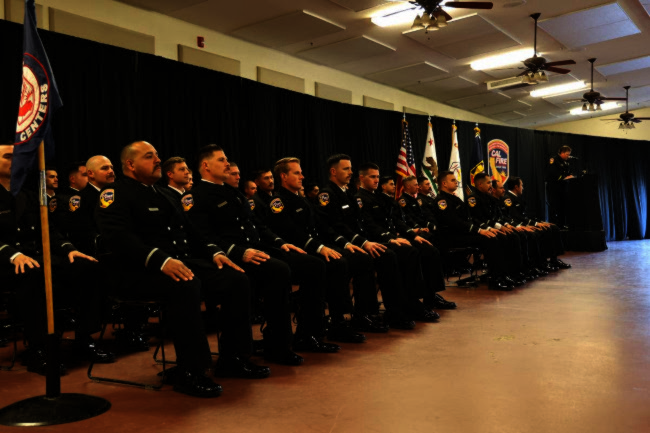
A new class of company officers graduated from the Cal Fire Training Center in Ione, California, on Friday, Nov. 7, 2025. Photo courtesy of Cal Fire.

IONE, Calif. — The California Department of Forestry and Fire Protection, or Cal Fire, on Friday celebrated the graduation of 39 new company officers from the Ione Training Center. 

This ceremony marks the successful completion of the intensive training for Fire Control Class 25-12, preparing the graduates for leadership roles across the state.

Top-level department leadership attended, including Director/Fire Chief Joe Tyler, Chief Deputy Director of Operations Anale Burlew and Cooperative Fire Protection Deputy Director Matthew Sully, alongside numerous Cal Fire Region and Unit Chiefs.

Director/Fire Chief Tyler delivered the keynote address and administered the official oath to the graduating class.

“Today we celebrate the achievement of Fire Control Class 25-12—a result of the commitment and focus these 39 officers maintained throughout their rigorous 10 weeks of training,” said Director/Fire Chief Tyler. “We also recognize the dedicated leadership of our training staff, whose efforts are essential in sustaining this record-setting pace for the future of Cal Fire.”

Setting a new benchmark in training capacity

With the graduation of Fire Control Class 25-12, Cal Fire has now trained over 575 new company officers in 2025. This robust training schedule is on track to surpass the goal of graduating more than 650 company officers by the end of the year, setting a new record for the Cal Fire Training Program.

This expanded capacity was made possible, in part, by the addition of the Atwater Training Center in July 2025 — the department’s fourth training location — which held its inaugural graduation ceremony on Oct. 24.

The critical role of the company officer

The Cal Fire company officer serves as the vital first-line supervisor and tactical field leader. 

Graduates from this standardized academy are now prepared to assume command and management responsibilities, directing the safe and effective deployment of crews and equipment during emergency incidents.

Beyond active emergencies, company officers are essential during non-emergency periods, leading crucial crew training, ensuring station readiness and directing fire prevention efforts such as defensible space inspections and public education initiatives.

Learn more about the Cal Fire Training Center.

Who gets SNAP benefits to buy groceries and what the government pays for the program – in 5 charts

Some 42 million Americans rely on SNAP benefits to put food on the table. Robert Nickelsberg/Getty Images News

The Supplemental Nutrition Assistance Program has helped low-income Americans buy groceries for decades with few disruptions.

But on Nov. 1, 2025, the federal government halted the flow of funds to states to distribute as SNAP benefits. The Trump administration blames this unprecedented disruption on the federal government shutdown, which began a month earlier. Following multiple court orders, federal officials said they plan to distribute at least a portion of the US$8 billion that’s supposed to flow monthly to the states to cover the costs of the program’s benefits. On Nov. 6, another judge ordered the distribution of all SNAP funds that were due in November.

Although the program costs billions, the benefits that families and individuals can receive from it are modest. The most a person living on their own can get is $298 a month, but many people receive far less. The average benefit is an estimated $6.17 daily – which falls below some estimates of the minimum cost of eating a nutritious diet in the United States.

The Conversation U.S. asked Tracy Roof, a political scientist who has researched the history of government nutrition programs, to explain who SNAP helps, how enrollment varies from state to state and what the program costs to run.

How many Americans are enrolled in SNAP?

The number of people getting SNAP benefits soared during the Great Recession, a big downturn that began in December 2007 and had long-lasting effects on the economy.

Because of high unemployment and poverty rates, more people were eligible for SNAP during those years. Many states, eager to bring dollars into their economies from federally funded SNAP benefits, made unprecedented efforts to enroll eligible families. SNAP enrollment peaked in 2013 at roughly 15% of Americans. The number of the program’s participants fell as the economy recovered, but never returned to pre-recession levels because a greater share of eligible families continued to enroll in the program after the economic crisis than before.

When the COVID-19 pandemic upended the U.S. economy in 2020, the number of people with SNAP benefits soared again. President Donald Trump has blamed high enrollment in SNAP on the Biden administration “haphazardly” handing benefits “to anyone for the asking.”

That assertion is misleading. While the Biden White House increased benefits, it did not expand who was eligible for SNAP. In fact, President Joe Biden agreed to apply work requirements and time limits to more SNAP recipients. Moreover, states, not the federal government, are primarily responsible for determining eligibility and enrolling people in SNAP. The number of people who received SNAP benefits during Biden’s presidency never exceeded 43 million – the peak reached in September 2020 during the first Trump administration.

The number of people using SNAP benefits to buy groceries has not fallen substantially because the number of people in poverty and the cost of living, including what Americans pay for food, have both increased since 2020.

How much does the program cost the federal government?

In inflation-adjusted 2024 dollars, spending peaked at $128 billion in 2021 and fell to $100 billion in 2024 – nearing pre-pandemic levels.

The program’s spending had previously increased significantly during the Great Recession because SNAP enrollment rose and benefits were temporarily increased. Spending declined as the economy gradually recovered.

While the number of people on SNAP during the pandemic and its aftermath never reached the peak of the Great Recession, the level of spending did reach much higher levels. This was because of three steps taken to increase benefits by more sizable amounts than during the Great Recession.

  1. The Families First Act, which Trump signed into law in March 2020, offered “emergency allotments” that increased monthly benefits for many households receiving SNAP. Biden extended emergency benefits to all households enrolled in the program in April 2021, driving spending even higher. Budget legislation that Congress passed in December 2022 ended the emergency benefits in February 2023.

  2. Biden signed two pieces of legislation in 2021 that temporarily increased the maximum SNAP benefit by 15% through September 2021 – the height of the pandemic’s effects on the economy.

  3. The Biden administration adjusted the basis for calculating monthly benefits in October 2021, just as the temporary increase was expiring. That change permanently increased benefits.

Most households getting SNAP benefits include children and older people

Nearly 60% of Americans enrolled in SNAP are either children under 18 or adults who are 60 or older.

About 1 in 5 non-elderly adults with SNAP benefits have a disability.

Less than 10% of all the people receiving SNAP benefits are able-bodied adults without children who are between the ages of 19 and 49.

Around 55% of all families with children that receive SNAP benefits include at least one employed adult.

Enrollment ranges widely from state to state

In some states, 1 in 5 people receive SNAP benefits. In others, it’s 1 in 20.

The share of a state’s population getting SNAP is determined both by its poverty rate and its policies. Those policies can affect who is eligible and the share of eligible families and individuals who enroll in the program.

Of the 10 states with the highest percentage of people on SNAP, five are also in the top 10 for the percentage of the population in poverty: New Mexico, Louisiana, Oklahoma, West Virginia and Nevada.

According to 2022 data, nine of those 10 states have enrolled nearly all families who are eligible for SNAP benefits: New Mexico, Louisiana, Oregon, Oklahoma, West Virginia, Massachusetts, Nevada, Pennsylvania and Illinois.

States vary widely in terms of the percentage of eligible families who obtain SNAP benefits. In the bottom quarter of states, fewer than 81% of eligible residents in 2022 were getting benefits. The percentage in Arkansas was the lowest: 59%.

States with the highest enrollment numbers tend to make it easier for their residents to get SNAP benefits by minimizing red tape and engaging in more outreach to eligible families. They also adopt policies that allow some people to qualify for SNAP at higher incomes or with more assets.

Americans of all races and ethnic backgrounds rely on SNAP

A little over 35% of people who get SNAP benefits are white, more than any other racial or ethnic group. Around 26% are Black and 16% are Hispanic.

Although more white people are enrolled in SNAP, Census data shows that greater percentages of Black and Hispanic people get these benefits: 24.4% of Black people and 17.2% of Hispanic people compared with 9.7% of white people. This is because these groups are disproportionately poor.

Undocumented immigrants are not eligible for SNAP. Only 4.4% of SNAP recipients in the 2023 fiscal year were immigrants who were not citizens but legally present in the U.S., such as refugees.

The “big” tax-and-spending package Trump signed into law on July 4, 2025, however, ended SNAP eligibility for most of those immigrants.

The Conversation

Tracy Roof, Associate Professor of Political Science, University of Richmond

This article is republished from The Conversation under a Creative Commons license. Read the original article.


California celebrates Native American Heritage Month in November

Gov. Gavin Newsom has issued a proclamation declaring November 2025 as "Native American Heritage Month."

This proclamation came before Newsom headed to the 30th Conference of the Parties, or COP30, in Brazil, which is expected to feature the largest Indigenous participation in the conference's history, focusing on Indigenous peoples' roles as "guardians of biodiversity."

The text of the proclamation and a copy can be found below:

PROCLAMATION

This Native American Heritage Month, California celebrates the first people of this land and those Native American peoples from across the nation who now call California home. As Californians navigate federal policies impacting our communities, families, and core values, we shine a light on the first people of this nation — often relocated to this state by force through similar federal policies throughout history — who have nonetheless found ways to persist, resist, and thrive.

First, they came to California to assist with the nation’s successive war efforts, as Native peoples have served in every United States conflict since colonial times. Then, they came at the urging of a federal government bent on assimilation and eliminating trust obligations throughout the nation by promising a better life for Native families relocating to cities like Oakland, Los Angeles and San Diego. And often, they came as children through federal programs that removed Native American children from their families — far from everything they knew, and in locations they could not easily escape.

Many of these new Californians struggled to find home and community in a place so far from the lands and practices of their ancestors; but some found new ways to access culture, community, and a sense of belonging through advocacy, gatherings, and public service. Today, California boasts the largest population of Native Americans, with diverse families, traditions, and cultures making up the dynamic Urban Indian communities across the state.  

Native peoples from across the United States continue to show up — in defense of these lands, as champions of the most vulnerable and in honor of their ancestors’ dreams. In January of this year, tribal firefighters crossed state lines to join the fight against the fires that ravaged Los Angeles County while Urban Indian communities pooled resources to provide relief for impacted families. And this summer, Native American youth joined together to paddle the free-flowing Klamath River for the first time in a century, celebrating the culmination of decades of collaborative advocacy and the beginning of healing in the region. 

California is better for having embraced Native Americans from across the nation and over generations. As a result, we are now home to a Native American renaissance with storytellers like Dallas Goldtooth, Tommy Orange, Ursula Pike, Sterlin Harjo, and Jana Schmieding embracing their histories, advancing their causes, and reclaiming their narratives on a global stage.

As we celebrate the strength, survivance and leadership of Native peoples stemming from a true commitment to past and future generations, I call on all Californians to embrace these values as we collectively face the challenges of our time.

NOW THEREFORE I, GAVIN NEWSOM, Governor of the State of California, do hereby proclaim November 2025 as “Native American Heritage Month.”

IN WITNESS WHEREOF I have hereunto set my hand and caused the Great Seal of the State of California to be affixed this 5th day of November 2025.

 
GAVIN NEWSOM
Governor of California

ATTEST:
SHIRLEY N. WEBER, Ph.D.
Secretary of State

Helping Paws: Huskies, Aussies and shepherds

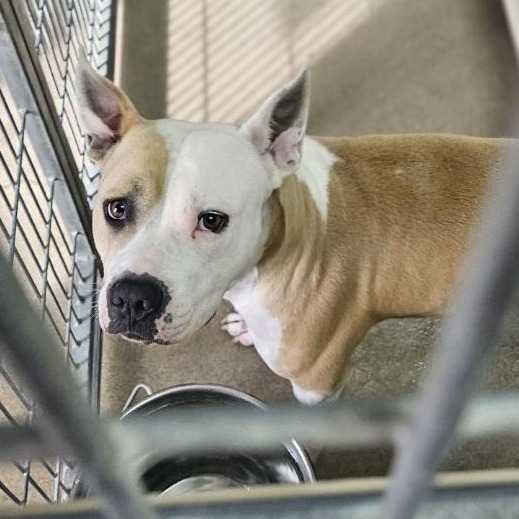
LAKE COUNTY, Calif. — Lake County Animal Care and Control has another group of new dogs available this week.

The dogs available for adoption this week include mixes of Australian shepherd, Chihuahua, chow, German shepherd, husky, Labrador Retriever, pit bull terrier, Rottweiler, terrier and shepherd.

Dogs that are adopted from Lake County Animal Care and Control are either neutered or spayed, microchipped and, if old enough, given a rabies shot and county license before being released to their new owner. License fees do not apply to residents of the cities of Lakeport or Clearlake.

Those animals shown on this page at the Lake County Animal Care and Control shelter have been cleared for adoption.

Call Lake County Animal Care and Control at 707-263-0278 or visit the shelter online for information on visiting or adopting.

The shelter is located at 4949 Helbush in Lakeport.

Email Elizabeth Larson at This email address is being protected from spambots. You need JavaScript enabled to view it.. Follow her on Twitter, @ERLarson, and on Bluesky, @erlarson.bsky.social. Find Lake County News on the following platforms: Facebook, @LakeCoNews; X, @LakeCoNews; Threads, @lakeconews, and on Bluesky, @lakeconews.bsky.social. 

Kennel#18 Eva 's preview photo
Kennel#18 Eva

Kennel#15 Scooby's preview photo
Kennel#15 Scooby

Kennel#24 Cowboy's preview photo
Kennel#24 Cowboy

 Kennel#3 Bandit's preview photo
Kennel#3 Bandit

Kennel#26 Blair's preview photo
Kennel#26 Blair

Kennel#4 Amore's preview photo
Kennel#4 Amore

Kennel#22 Azula's preview photo
Kennel#22 Azula

Kennel#17 Trina's preview photo
Kennel#17 Trina

Kennel#31 Bear's preview photo
Kennel#31 Bear

Kennel#32 (Bluey)'s preview photo
Kennel#32 (Bluey)

Kennel#12 Kora's preview photo
Kennel#12 Kora

Kennel#5 Hank's preview photo
Kennel#5 Hank

Kennel#6 Saphire's preview photo
Kennel#6 Saphire

Kennel#27 Spyro's preview photo
Kennel#27 Spyro

Kennel#25 Murphey's preview photo
Kennel#25 Murphey

Kennel#20 Duke's preview photo
Kennel#20 Duke

Kennel#21 Hanson's preview photo
Kennel#21 Hanson

Kennel#19a Petunia's preview photo
Kennel#19a Petunia

Kennel#11(Little Momma)'s preview photo
Kennel#11(Little Momma)

Kennel#23 Sugar's preview photo
Kennel#23 Sugar

Kennel#8 Dash's preview photo
Kennel#8 Dash

Kennel#34 Pawla's preview photo
Kennel#34 Pawla

Kennel#30 Junior's preview photo
Kennel#30 Junior

Kennel#19b(Pico)'s preview photo
Kennel#19b(Pico)

Kennel#16 Bernard's preview photo
Kennel#16 Bernard

Kennel#9's preview photo
Kennel#9
 
Kennel#14a's preview photo
Kennel#14a

Kennel#14b's preview photo
Kennel#14b

Kennel#13's preview photo
Kennel#13

Kennel#7's preview photo
Kennel#7


Barking orders and fighting crime: CHP’s newest four-legged crime fighters officially promoted to K-9 officers

Officer Michael Galvez and K-9 Oso. Photo courtesy of the California Highway Patrol.

Four additional specialized K-9 teams will join the California Highway Patrol to improve public safety and provide service to Californians.

This graduating class consisted of three Belgian Malinois — Judge, Jag and Jury — and one Dutch Shepherd, Oso.

Each is trained to apprehend offenders, detect illegal drugs and enhance officer and public safety. 

While on the force, these canines will play a critical role in criminal apprehension and controlled substance detection in Californian communities. 

Additionally, they will accompany CHP officers to safeguard neighborhoods as patrol canines.

“Police K-9s have proven their usefulness time and again in the situations officers face daily,” CHP Commissioner Sean Duryee. “They are hardworking, loyal partners who wake up each day ready to serve. Each of these specialized teams has dedicated time and effort to succeed on the streets, and we are excited to welcome them to our team.” 

“Our newly trained canines mark another success in furthering our efforts to bend the crime rates down and increase safety in communities,” said Gov. Gavin Newsom. “We will continue working strategically to build on our public safety investments and progress.”

The new K-9 teams are Officer Joshua Walker and K-9 Jury, Inland Division; Officer Christopher Partlow and K-9 Judge, Northern Division; Officer Christopher Keeler and K-9 Jag, Central Division; and Officer Michael Galvez and K-9 Oso, Central Division. 

Over the past 11 weeks, the four K-9 teams completed more than 400 hours of intensive training, meeting the standards set by the California Commission on Peace Officer Standards and Training. 

The K-9s, trained in criminal apprehension and narcotics detection, also known as Patrol and Narcotics Detection Canines, received their official certification on Friday, Nov. 7, during a graduation ceremony at the CHP Academy in West Sacramento.

Each K-9 handler is an experienced CHP officer with seven to 15 years of service. Handlers were carefully paired with their canine partners based on temperament, skill and personality. 

Throughout training, the teams built strong bonds of trust and communication that will support them throughout their careers.

Following this graduation, the new K-9 teams will report to their assigned CHP Area offices to assist with patrol duties and respond to calls for service in the Northern, Central and Inland Divisions.

With this graduating class, the second of 2025, the CHP now deploys 53 K-9 teams statewide:

• 37 patrol and narcotics detection canine teams;
• 9 patrol and explosives detection canine teams;
• 5 explosives detection canine teams;
• 2 narcotics detection teams.

From January through September 2025, CHP K-9 teams seized nearly 7,000 pounds of methamphetamine, 5,000 pounds of cocaine, 250 pounds of heroin, 750 pounds of fentanyl and 213 firearms, underscoring their critical role in combating drug trafficking and firearm-related crime.

To maintain peak performance, each team completes at least eight hours of ongoing training each week, ensuring readiness for the diverse situations they encounter in the field.


Officer Christopher Partlow and K-9 Judge. Photo courtesy of the California Highway Patrol.
  • 66
  • 67
  • 68
  • 69
  • 70
  • 71
  • 72
  • 73
  • 74
  • 75

Community

  • Lake County Wine Alliance offers sponsor update; beneficiary applications open 

  • Mendocino National Forest announces seasonal hiring for upcoming field season

Public Safety

  • Lakeport Police logs: Thursday, Jan. 15

  • Lakeport Police logs: Wednesday, Jan. 14

Education

  • Woodland Community College receives maximum eight-year reaffirmation of accreditation from ACCJC

  • SNHU announces Fall 2025 President's List

Health

  • California ranks 24th in America’s Health Rankings Annual Report from United Health Foundation

  • Healthy blood donors especially vital during active flu season

Business

  • Two Lake County Mediacom employees earn company’s top service awards

  • Redwood Credit Union launches holiday gift and porch-to-pantry food drives

Obituaries

  • Rufino ‘Ray’ Pato

  • Patty Lee Smith

Opinion & Letters

  • The benefits of music for students

  • How to ease the burden of high electric bills

Veterans

  • CalVet and CSU Long Beach team up to improve data collection related to veteran suicides

  • A ‘Big Step Forward’ for Gulf War Veterans

Recreation

  • Wet weather trail closure in effect on Upper Lake Ranger District

  • Mendocino National Forest seeking public input on OHV grant applications

  • State Parks announces 2026 Anderson Marsh nature walk schedule 

  • BLM lifts seasonal fire restrictions in central California

Religion

  • Kelseyville Presbyterian to host Ash Wednesday service and Lenten dinner Feb. 18

  • Kelseyville Presbyterian Church to hold ‘Longest Night’ service Dec. 21

Arts & Life

  • Auditions announced for original musical ‘Even In Shadow’ set for March 21 and 28

  • ‘The Rip’ action heist; ‘Steal’ grounded in a crime thriller

Government & Politics

  • Lake County Democrats issue endorsements in local races for the June California Primary

  • County negotiates money-saving power purchase agreement

Legals

  • March 3 hearing on ordinance amending code for commercial cannabis uses

  • Feb. 12 public hearing on resolution to establish standards for agricultural roads

How to resolve AdBlock issue?
Refresh this page