 How to resolve AdBlock issue?
News
The multistate coalition argues that AI-generated technologies that mimic human voices are a form of “artificial voice” as that term is used in the Telephone Consumer Protection Act, and that consumers therefore cannot be sent AI-generated robocalls that mimic a live caller without the consumer’s prior express written consent.
“In addition to being a daily annoyance, robocalls are often used by scammers to cause real financial damage,” said Attorney General Bonta. “AI technology presents opportunities for new levels of deception by bad actors. The FCC should take this opportunity to underscore that existing laws, like the Telephone Consumer Protection Act, can be used to protect consumers against this threat. Classifying AI-generated human voices as a type of artificial voice is a step in the right direction in preventing consumers from receiving unwanted and potentially dangerous robocalls.”
For Californians, the impact of illegal and unwanted robocalls can range from a momentary nuisance to serious fraud involving identity theft or life-changing financial losses.
Phone calls and text messages are by far the most common contact method for fraud, and in 2022 alone, fraudulent phone calls and texts led to more than $1.13 billion in reported financial losses nationwide, according to the Federal Trade Commission, or FTC.
In the comment letter, the attorneys general argue that considering AI-generated human voices an “artificial voice” is consistent with the Telephone Consumer Protection Act, and with the FCC’s treatment of prior technological developments.
Robocalls are typically the number-one consumer complaint to the FTC each year. AI technology has the potential to make phone scams more sophisticated and believable, as scammers have already begun using the technology to mimic live voices, including those of celebrities and distressed family members.
Wednesday’s action is consistent with Attorney General Bonta’s commitment to protect consumers by cracking down on robocalls:
In January 2022, Attorney General Bonta, as part of a bipartisan multistate coalition, urged the FCC to stop the flood of illegal foreign-based robocalls that “spoof” U.S. phone numbers. In August 2022, Attorney General Bonta announced the launch of a bipartisan nationwide Anti-Robocall Litigation Task Force to investigate and take legal action against the telecommunications companies responsible for bringing a majority of foreign robocalls into the U.S.
In May 2023, Attorney General Bonta, as part of a bipartisan coalition of 49 attorneys general, announced a lawsuit against Avid Telecom for allegedly initiating and facilitating billions of unlawful robocalls that included Social Security Administration scams, Medicare scams, and employment scams.
In filing the comment letter, Attorney General Bonta joins the attorneys general of Pennsylvania, Alabama, Arizona, Colorado, Connecticut, Delaware, Hawaii, Illinois, Massachusetts, Maine, Maryland, Michigan, Minnesota, Mississippi, New Jersey, North Carolina, North Dakota, Ohio, Oklahoma, Oregon, South Dakota, Tennessee, Vermont, Washington, and the District of Columbia.
A copy of the comment letter can be found here.
CLEARLAKE, Calif. — The five candidates running for the District 1 supervisorial seat made another campaign appearance to answer questions from the community.
The Lower Lake Community Action Group, the city of Clearlake and Lake County News sponsored a District 1 candidates’ forum at Clearlake City Hall on Tuesday night.
For nearly two hours Bren Boyd, John Hess, Sean Millerick, Helen Owen and Bryan Pritchard answered a series of questions with a focus on the Clearlake and Lower Lake areas.
Due to the 2021 redistricting, the District 1 supervisor now represents a small portion of the city of Clearlake as well as Lower Lake, and the city and the Lower Lake Community Action Group wanted to host an event to consider the unique challenges of their community.
Lake County News Editor/Publisher Elizabeth Larson moderated the forum, with Middletown Area Town Hall Chair Monica Rosenthal offering time keeping and organizational assistance and Clearlake City Councilman Russell Cremer, also a Lower Lake Community Action Group member, assisting with organizing the event.
The five candidates also were featured in a forum on Thursday at the Middletown Area Town Hall meeting.
The candidates will make another appearance at the Middletown Luncheon Club at noon on Wednesday at the Middletown Senior Center, 21256 Washington St.
The agency said this new crisis response team will be able to respond to where a crisis is happening, throughout Lake County, 24 hours a day.
At the September town hall Lakeport officials held on addressing the homeless crisis, Behavioral Health Director Elise Jones called the team “a whole new paradigm” that will go into the community in real time and help people in their homes.
The team — which will be accompanied by a therapist or able to contact one virtually — will offer support to people in crisis in a safe environment to help them stabilize.
To report such crises and ask for assistance, call 800-900-2075 to reach a local dispatcher.
You can also call or text 988 to reach someone today.
Among the highlights from the operations in 2023 was the seizure of almost 190,000 pounds of illegal cannabis, the eradication of almost 318,000 plants and the seizure of 119 illegally-possessed firearms.
“California is effectively decreasing the illegal cannabis market by leveraging the strengths and knowledge of over 20 state agencies and departments alongside our local and federal partners. The UCETF’s progress in 2023 reflects California’s ongoing commitment to disrupting and dismantling illegal cannabis activity,” saidd Director Nicole Elliott of Department of Cannabis Control. “I look forward to working with all our partners in 2024 to build on this progress.”
“Since its inception in late 2022, California’s Unified Cannabis Enforcement Taskforce has hit the ground running with year-round operations that spanned from the Oregon state line all the way down to San Diego,” said CDFW Director Charlton H. Bonham. “We’ve sent a strong message that illegal operations that harm our natural resources, threaten the safety of workers, and put consumer health at risk have no place in California. While there is more work to be done, we made progress last year and I look forward to going further alongside our county, state, and federal partners.”
The results of UCETF’s FY 2023 and Q4 2023 enforcement actions are:
UCETF Operations Q4 2023 CY 2023
Search Warrants Served 24 188
Pounds of Cannabis Seized 13,393.65 189,854.02
Retail Value of Cannabis Seized $22,294,571.41 $312,880,014.35
Cannabis Plants Eradicated 20,320 317,834
Firearms Seized 26 119
Money Seized $35,195.25 $223,809
In addition to releasing the Q4 and yearly totals for 2023, the taskforce announced the top five counties for enforcement activity (according to value of cannabis seized) in calendar year 2023.
They are:
County Value of Cannabis Seized
Alameda $77,828,338.50
Siskiyou $70,747,875.00
Mendocino $48,073,113.00
Los Angeles $28,317,139.69
Kern $21,578,438.25
Since inception, UCETF has seized $317,578,792.29 in unlicensed cannabis through 218 search warrants. The taskforce has also eradicated 347,321 plants and seized 128 firearms.
Created by Gov. Gavin Newsom in 2022, the Unified Cannabis Enforcement Taskforce has been charged by the Governor to further align state efforts and increase cannabis enforcement coordination between state, local and federal partners.
UCETF’s enforcement actions protect consumer and public safety, safeguard the environment, and deprive illegal cannabis operators and transnational criminal organizations of illicit revenue that harms consumers and undercuts the regulated cannabis market in California.
The taskforce is co-chaired by the Department of Cannabis Control and the California Department of Fish and Wildlife and coordinated by the Homeland Security Division of the Governor’s Office of Emergency Services.
The taskforce includes more than two dozen local, state and federal partners working together to disrupt the illegal cannabis market.
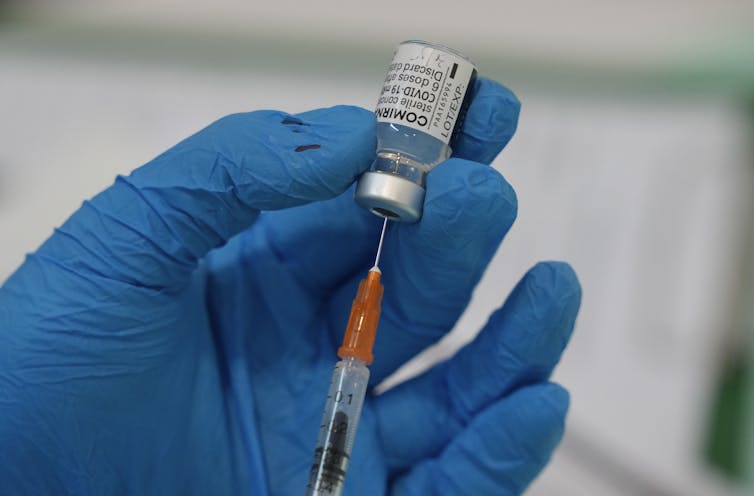
The battle to keep the government open may feel just like the crisis of the day. But these fights pose immediate and long-term risks for the U.S.
The federal government spends tens of billions of dollars every year to support fundamental scientific research that is mostly conducted at universities. For instance, the basic discoveries that made the COVID-19 vaccine possible stretch back to the early 1960s. Such research investments contribute to the health, wealth and well-being of society, support jobs and regional economies and are vital to the U.S. economy and national security.
If Congress can’t reach an agreement, then a temporary government shutdown could happen on Jan. 19, 2024. If lawmakers miss a second Feb. 2 deadline, then automatic budget cuts will hit future research hard.
Even if lawmakers avoid a shutdown and pass a budget, America’s future competitiveness could suffer because federal research investments are on track to be billions of dollars below targets Congress set for themselves less than two years ago.
I am a sociologist who studies how research universities contribute to the public good. I’m also the executive director of the Institute for Research on Innovation and Science, a national university consortium whose members share data that help us understand, explain and work to amplify those benefits.
Our data shows how endangering basic research harms communities across the U.S. and can limit innovative companies’ access to the skilled employees they need to succeed.
A promised investment
Less than two years ago, in August 2022, university researchers like me had reason to celebrate.
Congress had just passed the bipartisan CHIPS and Science Act. The “science” part of the law promised one of the biggest federal investments in the National Science Foundation – America’s premier basic science research agency – in its 74-year history.
The CHIPS act authorized US$81 billion for the agency, promised to double its budget by 2027 and directed it to “address societal, national, and geostrategic challenges for the benefit of all Americans” by investing in research.
But there was one very big snag. The money still has to be appropriated by Congress every year. Lawmakers haven’t been good at doing that recently. The government is again poised to shut down. As lawmakers struggle to keep the lights on, fundamental research is likely to be a casualty of political dysfunction. The budget proposals released so far fall $5 billion to $7.5 billion short of what the CHIPS act called for in fiscal year 2024. Deal or no deal, science is on the chopping block in Washington.

Research’s critical impact
That’s bad because fundamental research matters in more ways than you might expect.
Lagging research investment will hurt U.S. leadership in critical technologies like artificial intelligence, advanced communications, clean energy and biotechnology. Less support means less new research work gets done, fewer new researchers are trained and important new discoveries are made elsewhere.
But disrupting federal research funding also directly affects people’s jobs, lives and the economy.
Businesses nationwide thrive by selling the goods and services – everything from pipettes and biological specimens to notebooks and plane tickets – that are necessary for research. Those vendors include high-tech startups, manufacturers, contractors and even Main Street businesses like your local hardware store. They employ your neighbors and friends and contribute to the economic health of your hometown and the nation.
Nearly a third of the $10 billion in federal research funds that 26 of the universities in our consortium used in 2022 directly supported U.S. employers, including:
- A Detroit welding shop that sells gasses many labs use in experiments funded by the National Institutes of Health, National Science Foundation, Department of Defense and Department of Energy.
- A Dallas-based construction company that is building an advanced vaccine and drug development facility paid for by the Department of Health and Human Services.
- More than a dozen Utah businesses, including surveyors, engineers and construction and trucking companies, working on a Department of Energy project to develop breakthroughs in geothermal energy.
When Congress’ problems endanger basic research, they also damage businesses like these and people you might not usually associate with academic science and engineering. Construction and manufacturing companies earn more than $2 billion each year from federally funded research done by our consortium’s members.
Jobs and innovation
Disrupting or decreasing research funding also slows the flow of STEM – science, technology, engineering and math – talent from universities to American businesses. Highly trained people are essential to corporate innovation and to U.S. leadership in key fields, like AI, where companies depend on hiring to secure research expertise.
In 2022, federal research grants paid wages for about 122,500 people at universities that shared data with my institute. More than half of them were students or trainees. Our data shows that they go on to many types of jobs, but are particularly important for leading tech companies like Google, Amazon, Apple, Facebook and Intel.
More comprehensive numbers don’t exist, but that same data lets me estimate that over 300,000 people who worked at U.S. universities in 2022 were paid by federal research funds. Threats to federal research investments put academic jobs at risk. They also hurt private-sector innovation because even the most successful companies need to hire people with expert research skills. Most people learn those skills by working on university research projects, and most of those projects are federally funded.
High stakes
The last shutdown was the longest in 40 years, but even short delays in research funding have big negative effects on the scientific workforce and lead expert researchers to look outside the U.S. for jobs. Temporary cuts to research funding hurt too because they reduce high-tech entrepreneurship and decrease publication of new findings.
Lasting stagnation or shrinking investments would have even more pronounced effects. Over time, companies would see fewer skilled job candidates, academic and corporate researchers would produce fewer discoveries, and fewer high-tech startups would mean slower economic growth. America would become less competitive in the age of AI. This would make one of the fears that led lawmakers to pass the CHIPS and Science Act into a reality.
Ultimately, it’s up to lawmakers to decide whether to fulfill their promise to invest more in the research that supports jobs across the economy and American innovation, competitiveness and economic growth. Whether the current budget deal succeeds or fails, basic research is on the table and the stakes are high.
Jason Owen-Smith, Professor of Sociology, University of Michigan
This article is republished from The Conversation under a Creative Commons license. Read the original article.
The council will meet at 6 p.m. Thursday, Jan. 18, in the council chambers at Clearlake City Hall, 14050 Olympic Drive.
The meeting will be broadcast live on the city's YouTube channel or the Lake County PEGTV YouTube Channel.
Community members also can participate via Zoom or can attend in person. The webinar ID is 840 7060 8548.
The meeting also can be accessed via One tap mobile at +16694449171,,84070608548# or by dialing 1 669 444 9171.
The agenda can be found here.
Comments and questions can be submitted in writing for City Council consideration by sending them to City Clerk Melissa Swanson at
To give the council adequate time to review your questions and comments, please submit your written comments before 4 p.m. Thursday, Jan. 18.
On the agenda is the discussion and consideration of contracts related to the preparation of environmental review for the Clearlake Airport Redevelopment Project.
The council will consider waiving competitive bidding requirements and approve the contracts with Gary Price Consulting, California Engineering Company and LSW Architects and authorize City Manager Alan Flora to sign the agreements.
The project is located on the former Pearce Field airport property.
The staff report shows that the contracts will total $602,875.50.
Also on the agenda is the review, approval and submittal of the fiscally year 2024-25 Recognized Obligation Payment Schedule for the period of July 1, 2024 through June 30, 2025; a presentation of January’s adoptable dogs; the presentation of the Public Safety Recognition Award to Officer Eagle; presentation by Public Works Director Adeline Leyba of Public Works projects; and presentation of certificates of appreciation for Breakfast with Santa volunteers.
On the meeting's consent agenda — items that are considered routine in nature and usually adopted on a single vote — are warrants; authorization of an amendment of on-call contract with LACO Associates in the amount of $45,585 for the MIT Storm Drain Plan; minutes of the Dec. 13 Lake County Vector Control District Board meeting; approval of Code Enforcement supervisor and chief building inspector positions and update of the 23/24 FY Salary Schedule; and approval of the purchase from National Food Equipment of walk-in freezer unit for the senior/community center not to exceed $88,500.
Email Elizabeth Larson at