How to resolve AdBlock issue?
Refresh this page
How to resolve AdBlock issue?
Refresh this page
Lake County News,California
  • Home
    • Registration Form
  • News
    • Education
    • Veterans
    • Community
      • Obituaries
      • Letters
      • Commentary
    • Police Logs
    • Business
    • Recreation
    • Health
    • Religion
    • Legals
    • Arts & Life
    • Regional
  • Calendar
  • Contact us
    • FAQs
    • Phones, E-Mail
    • Subscribe
  • Advertise Here
  • Login

News

Is hard water bad for you? 2 water quality engineers explain the potential benefits and pitfalls that come with having hard water


Do you know how hard your water is? Tatiana Maksimova/Moment via Getty Images

When you turn on your faucet to get a glass of water or wash your face, you’re probably not thinking about what’s in your water – besides water. Depending on where you live and whether you have a water-softening system, your water might contain dissolved minerals such as calcium and magnesium. And these minerals can play a role in whether certain pollutants such as lead stay out of your water.

The more dissolved minerals, the “harder” your water. But is hard water actually good or bad for you?

As engineering researchers who study water quality, we have seen the effects – both good and bad – that soft and hard water can have on everything from plumbing systems to the human body.

What is hard water?

Hard water is water that contains dissolved minerals such as calcium, magnesium, iron and manganese. Soft water contains lower concentrations of these minerals.

Hardness is measured in terms of calcium carbonate, CaCO₃, which is used as a reference point for comparing different minerals.

The amount of these minerals in a city’s water supply varies by region. It depends on both where the water is coming from and how the water is treated.

Communities that source their water from wells rather than surface water such as lakes, streams, rivers and reservoirs often start with hard water pretreatment. As groundwater moves through the soil to a well, it picks up minerals. At the same time, areas where the types of rock and sediment are more prone to dissolving in water may have harder water.

A map showing water hardness across the U.S., with the hardest water in the Midwest, West and Southwest.
Streamflow water hardness across the U.S., where purple and blue indicate softer water and white and red indicate harder water. This map was updated in 2005 by the U.S. EPA. U.S. Geological Survey

Effects on water lines and distribution

Water that’s too hard or too soft could damage pipes and lead to health and aesthetic concerns.

Since hard water has a higher mineral concentration, minerals can build up in pipes, which leads to clogged pipes in homes and public water systems. Hardness also creates more deposits at higher temperatures, so hot water heaters are prone to mineral buildup. In areas with hard water, water heaters have a shorter life span.

A pipe with gray material around the inside.
A pipe that has a thick layer of mineral deposits inside of it. Mevedech/Wikimedia Commons

But hard water can help, too. While minerals from hard water can clog pipes, a thin layer of mineral deposition in water lines can protect you from ingesting toxins that could seep in from the pipe itself. Water without any minerals can play a role in pipe corrosion, because without a thin, protective layer of minerals, the water may start to eat away at the pipes, releasing metals from the pipes into the water. Drinking this water might mean ingesting metals such as lead, copper and iron.

While water that is too soft or too hard can have different effects on water lines, there is more chemistry than just hardness that plays a role in pipe corrosion and clogging. So, there’s no specific hardness level that is a cause for concern. Water treatment plants take the appropriate measures to adjust for different hardness levels.

A large tank of water, with fences around the top.
Drinking water normally undergoes treatment at a plant before it makes its way to your home. Florida Water Daily, CC BY

Effects on skin and hair

Whether you use hard or soft water to wash up can also have noticeable effects on your skin and hair.

Hard water is more likely to leave your skin dry. The minerals in hard water strip moisture from skin and create deposits that clog pores.

Hard water can also strip the hair of moisture, leaving it dry and coarse. Dry hair is more prone to frizz, tangles and breakage. Mineral deposits can also build up on the hair and scalp, clogging your hair follicles and leading to dandruff and slowed hair growth.

Many households have their own water-softening systems. A water-softening system may help hair and skin dryness and buildup. But many of these systems trap and replace calcium and magnesium with sodium, a mineral that does not contribute to water hardness, to lower overall hardness. Increasing the water’s sodium content may be a concern for anyone on a low-sodium diet.

Overall health benefits

Other than aesthetic and water heater concerns, drinking hard water is actually good for you and doesn’t come with any serious adverse side effects.

For example, the extra magnesium and calcium you consume in hard water may provide a gentle solution to digestive issues and constipation.

Also, researchers have found positive correlations between the hardness of drinking water and bone health. Since calcium is an essential mineral in bones, individuals in areas with drinking water that has more calcium may have higher bone mineral density and may be less prone to osteoporosis.

Researchers have also found that drinking hard water has been associated with a decrease in cardiovascular disease-related mortality. Magnesium helps regulate your cardiac muscles, while calcium keeps the sodium-potassium balance in your cardiac muscles in check, which they need to function.

Whether you have hard or soft water, don’t worry too much. Water treatment plants take appropriate measures to ensure safe water for the communities they support.

To learn more about the water hardness in your area, you can contact your local water treatment plant about its specific water treatment process. Private well owners can contact their state government to find out the testing recommendations for their area.The Conversation

Sarah Blank, Master's Student in Civil Engineering, Iowa State University and Timothy Ellis, Associate Professor of Civil, Construction and Environmental Engineering, Iowa State University

This article is republished from The Conversation under a Creative Commons license. Read the original article.

Forest Service awards more than $16 million to Lake County to reduce wildfire risk and invest in wood innovations projects

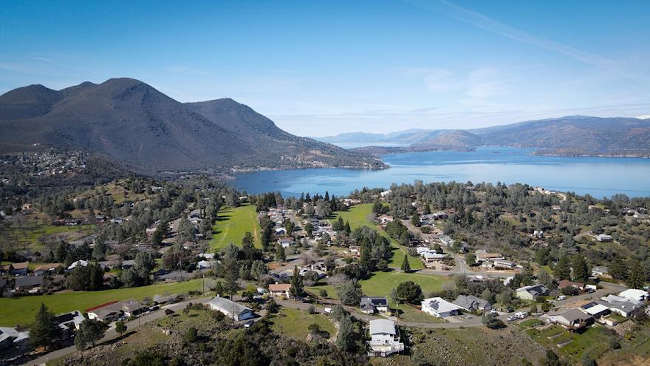
Lake County has lost more than 1,800 homes to wildfire and some estimates indicate more than 60 percent of the county has burned between 2011 and 2021. USDA Forest Service photo by Andrew Avitt.

LAKE COUNTY, Calif. — Lake County communities with limited resources and facing high risk from wildfire are getting over $16 million in support from the USDA Forest Service’s Community Wildfire Defense Grants and Wood Innovations Program.

These awards for communities like Lake County come at a time when wildfires are becoming more destructive across much of California.

“Lake County has been aggressively working to mitigate climate-related risks. Partnering with District Ranger Frank Aebly and local Forest Service staff have been an important facet of those efforts for many years,” said Jessica Pyska, Lake County’s District 5 supervisor and vice chair of the Lake County Community Risk Reduction Authority. “We appreciate the U.S. Department of Agriculture’s recognition that hardening economically vulnerable communities is a matter of national priority.”

Last Tuesday, the Forest Service announced funded proposals for three Lake County projects under the Community Wildfire Defense Grants program:

• Clear Lake Environmental Research Center: Awarded over $8 million to reduce fuels and restore fire-adapted ecosystems on private lands and roadways. This is a follow-up to their $9 million award in 2023, which is providing a blueprint for what a fire resilient community looks like.

• Lake County Resource Conservation District with Tribal EcoRestoration Alliance: Awarded $7.3 million for its “Fire in Hand, Healing Lands” project to use a traditional ecological knowledge-based approach to fuels reduction, including Indigenous-led restoration and beneficial burning. A key component is education and training through Lake County’s Training Exchange Program, also called TREX.

• Seigler Springs Community Redevelopment Association: Received $249,000 to develop a new Community Wildfire Protection Plan to reduce wildfire risk and build resiliency in the Cobb Mountain area which is still recovering from the 2015 Valley Fire.

Last Wednesday, additional awards were announced under the Wood Innovations Program grant. Wood innovations grants are meant to spark innovation, create new markets for wood products and renewable wood energy from sustainably sourced wood, and increase the capacity of wood processing facilities.

Funded proposals include Scotts Valley Energy Corp., a wholly-owned corporation of the Scotts Valley Band of Pomo Indians, which received a $409,000 award for a central wood processing campus and wood-to-energy generation in Upper Lake, the gateway to the southern portion of the Mendocino National Forest.

Local officials and funding recipients expressed excitement for the opportunities coming to Lake County.

“I am ecstatic about the funding that has been awarded to Lake County to bolster the county for community wildfire and also wood innovations,” said Eddie Crandell, Lake County’s District 3 Supervisor covering Northshore communities and Lake Pillsbury.

“Lake County Resource Conservation District is ecstatic to receive this investment and support our partners at TERA, and the community at large, to further integrate traditional ecological knowledge into our collective efforts of land stewardship and wildfire mitigation,” said Harry Lyons, the district’s board president. “Beneficial burning is an essential tool to maintain resilient landscapes, and we are thrilled to re-establish this on our landscapes with TERA’s leadership.”

Both the Community Wildfire Defense Grant and the Wood Innovations Grant are made possible in part by the Bipartisan Infrastructure Law and the Inflation Reduction Act.

More information about the funded proposals, as well as announcements about the grant program, is available on the Community Wildfire Defense Grants website and the Community Wood Grants and a Wood Innovations Grants website.

Lakeport Police Department assigns officer to city’s downtown

Officer Katie Morfin talking with downtown business owner Sandra Campos. Photo courtesy of the Lakeport Police Department.

LAKEPORT, Calif. — The Lakeport Police Department has launched a foot patrol program for the downtown business district and parks, with Officer Katie Morfin assigned as the downtown officer.

The patrol area includes Main Street, Museum Park, Library Park and Xabatin Community Park, and is bounded by Clear Lake to the east, Forbes Street to the west, Clear Lake Avenue to the north and C Street to the south.

City officials said this initiative aims to enhance police visibility, foster relationships with business owners, staff, residents and visitors. It will address crime and other issues affecting the quality of life in these areas.

Officer Morfin patrols during daytime hours from Tuesday through Friday.

The police department is currently fully staffed and said in a statement that it’s pleased to be able to offer enhanced services like these to the community.

For more information about the program, contact Officer Morfin at This email address is being protected from spambots. You need JavaScript enabled to view it. or call 707-263-5491, Extension 125.

For immediate police assistance or to report a crime, please call dispatch at 707-263-2690.

Ruddock Borre appointed Special Districts administrator

LAKE COUNTY, Calif. — The latest of a series of department head hires for the county of Lake will see a Lake County native return to head Special Districts.

Following the Board of Supervisors’ closed session discussion on Tuesday, the county announced that Robin Ruddock Borre has been appointed Special District administrator.

Ruddock Borre’s appointment is effective July 8.

She will succeed Scott Harter, who is retiring from county service following more than 27 years of dedicated service with public agencies, including the city of Lakeport and county of Lake.

Ruddock Borre was born and raised in Lake County, and brings more than 25 years of governmental management and administrative experience.

The county said she has a strong theoretical foundation in business administration, has decades of progressively responsible practical experience in public works and administration roles, and has been recognized by peers and leaders as an exceptional fiscal administrator, capable of managing all aspects of infrastructure finance and capital improvements.

Immediately prior to accepting her new role with the county of Lake, Ruddock Borre served as director of public works and community development for the city of Rio Vista.

This “working director” role encompassed departmental budgeting and purchasing responsibilities, as well as oversight of operations including maintenance, water and wastewater operations, an airport, and planning, building and business licensing-related functions.

“We are very pleased Ms. Ruddock Borre is coming home to Lake County as Special Districts Administrator,” said Bruno Sabatier, chair of the Lake County Board of Supervisors. “Her broad-based experience will make her an effective collaborator across county departments. Lake County has deep infrastructure-related needs, and funding those is critical to responsible growth; Ms. Ruddock Borre has the background to be a strong contributor to those efforts.”

“My family has deep roots in Lake County, and I am honored the Board of Supervisors has trusted me with this crucial leadership position,” said Ruddock Borre. “I look forward to applying the organizational, communication and administrative skills I have gained over my career to developing creative solutions to meet the needs of Lake County’s communities.”

House of Representatives passes fire victims tax relief bill


A bill to give tax relief to fire victims passed the House of Representatives on Tuesday.

Rep. Mike Thompson (CA-04) applauded the House’s vote to pass the Federal Disaster Tax Relief Act (H.R. 5863).

The bill includes Thompson's legislation that would exempt thousands of qualified wildfire victims in California, including Pacific Gas and Electric fire victims, from having to pay federal income tax on their settlement money or pay tax on attorney fees that are included in the settlement.

This relief would also apply retroactively to qualified victims.

“Fire survivors have been through enough in the wake of losing their homes and livelihoods to wildfires — it’s wrong to tax them on the settlement money meant to help them rebuild their lives,” said Rep. Thompson on Tuesday. “Today’s bipartisan vote to provide tax relief to fire survivors is an important step towards recovery for those who lost homes, businesses, and loved ones and sends a clear message to Senate Republicans: It’s time to work with us to pass much-needed relief for disaster victims.”

Rep. Thompson serves as the ranking member of the Subcommittee on Tax for the Ways and Means Committee.

He introduced the original legislation to provide tax relief to PG&E fire victims in the 117th Congress and has worked to advance the legislation ever since.

Last week, Rep. Thompson and Rep. Greg Steube (FL-17) led a bipartisan group of 218 Members of Congress to successfully advance a discharge petition which forced House Speaker Mike Johnson to bring the Federal Disaster Tax Relief Act to the House floor for Tuesday’s vote.

The historic advancement of Rep Thompson and Rep. Steube’s petition marked only the third time a House discharge petition has succeeded in the 21st century.

The Federal Disaster Tax Relief Act excludes from taxpayer gross income, for income tax purposes, any amount received by an individual taxpayer as compensation for expenses or losses incurred due to a qualified wildfire disaster (a disaster declared after 2014 as a result of a forest or range fire).

It also excludes relief payments for losses resulting from the East Palestine, Ohio, train derailment on Feb. 3, 2023 and designates Hurricane Ian, among other federally declared disasters, as a qualified disaster for the purposes of determining the tax treatment of certain disaster-related personal casualty losses.

The bill now goes to the Senate for a vote before going to President Biden’s desk for his signature.

Thompson represents California’s Fourth Congressional District, which includes all or part of Lake, Napa, Solano, Sonoma and Yolo counties.

Lake County highway safety project receives $3 million award

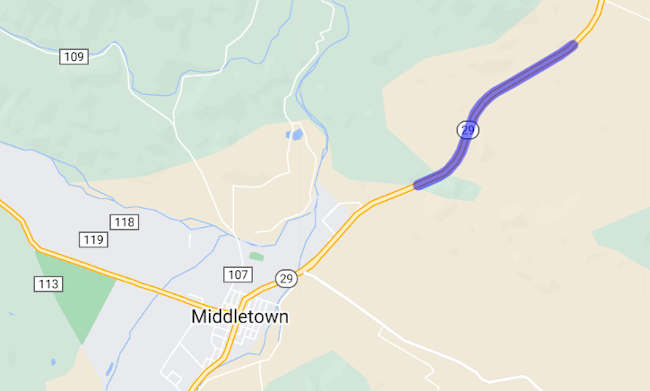
The project area near Middletown, California. Google map image courtesy of Caltrans.

LAKE COUNTY, Calif. — The state has awarded $3 million for a highway project meant to reduce crashes on Highway 29 near Middletown in its latest round of transportation funding.

On Monday, the California Transportation Commission allocated $1.9 billion to support transportation infrastructure projects across the state, including the Middletown project.

The approved funding provides significant investments for bridges, roadways, transit, and improved facilities for people who walk and bike, the state reported. Also included are projects that will build or renovate shoreline embankments, bus, bicycle, and pedestrian infrastructure, and railroad overcrossings.

“California’s transportation infrastructure is critical to the economic and cultural lifeblood of our state, and this funding provides key support in our mission to provide a safe, equitable and sustainable transportation system for all users,” said Caltrans Director Tony Tavares.

The state said the latest allocations also include nearly $430 million from the federal Infrastructure Investment and Jobs Act of 2021, also known as the “Bipartisan Infrastructure Law,” and $740 million via Senate Bill 1, the Road Repair and Accountability Act of 2017.

Since 2021, California has received more than $42 billion in IIJA funds, including more than $29 billion for transportation-related projects, officials said.

Regarding Lake County’s award, approximately $3 million in support allocations will go toward roadway and culvert upgrades and the installation of a radar feedback sign on Highway 29 from north of Butts Canyon Road to south of Grange Road near Middletown.

Manny Machado, spokesman for Caltrans District 1, told Lake County News that this safety project is located approximately 1.6 miles north of Middletown on Highway 29 between postmile 7.4 and 8.9.

“This project proposes to widen the roadbed to create a soft median with centerline rumble strips. The proposed work includes shoulder widening, roadway excavation, culvert extension, rumble strip, and pavement delineation,” said Machado. “The purpose of this project is to reduce traffic collisions.”

Machado said the 2018 Crossover Collision Monitoring Report identified this location as an area with crossover collisions that involve two or more vehicles traveling in opposite directions.

“Currently there is no median to create distance or separation between opposing traffic. In addition, existing shoulders are 4 feet wide, limiting the recovery area for errant vehicles and space for stalled vehicles, maintenance vehicles, maintenance personnel and non-motorized users,” Machado said.

He said construction is expected to start in May of 2028.

In addition to the Lake County project, the latest CTC-approved projects include the following:

• $27.4 million for the Interstate 405 improvement project in Los Angeles County.

• More than $4 million to repair bridge damage along Interstate 80 in Alameda County.

• $600,000 to replace the Ackerman Creek Bridge in Mendocino County.

• $1.2 million in support of allocations toward the construction of a left-turn lane, install lighting and other roadway improvements on U.S. 101 from the Rowdy Creek Bridge to Timbers Boulevard near Smith River in Del Norte County.

• $1.8 million in support allocations toward guardrail and other roadway safety improvements on U.S. 101 from north of the Wilson Creek Bridge to south of Crescent City in Del Norte County.

• $527,000 in support allocations toward revegetation mitigation and monitoring for culvert rehabilitation along U.S. 101 from south of Old Sherwood Road to north of Route 271 at various locations near Laytonville, Leggett and Piercy in Mendocino County.

• $28.5 million including more than $25.2 million in federal IIJA funding and $3.3 million in SB1 funding in support allocations toward roadway and guardrail improvements from south of Shimmins Ridge Road to north of Old Sherwood Road near Willits in Mendocino County.

• $830,000 toward roadway, guardrail, sign panels and Americans with Disabilities Act improvements on Route 128 from the Mill Creek Bridge to the Robinson Creek Bridge near Boonville in Mendocino County.

• $900,000 toward the construction of left-turn lanes, a merge lane and other roadway improvements on U.S. 101 from the Hopland Overhead to Mountain House Road near Hopland in Mendocino County.

• $1.1 million toward roadway, guardrail, lighting and other improvements on U.S. 101 from north of the Robinson Creek Bridge to the Pomo Lane Undercrossing near Ukiah in Mendocino County.

• $2.6 million in SB1 funding in emergency allocations toward roadway and culvert repairs and debris removal on U.S. 101 from north of the Newton Road Undercrossing and on Route 254 to north of Lum Street/Newton Road near Weott in Humboldt County following heavy rainfall that started on Feb. 14, 2024.

• $3.2 million in emergency allocations toward culvert and embankment repairs with rock slope protection along U.S. 101 south of Hookton Road near Loleta in Humboldt County following heavy rainfall that started on Jan. 9, 2024.

• $2.5 million in SB1 funding in emergency allocations toward culvert and embankment repairs, rock slope protection and erosion control on Route 1 north of Pacific Drive near Gualala in Mendocino County following heavy rainfall that started on Jan. 31, 2024.

• $4.5 million in SB1 funding in emergency allocations toward roadway and embankment repairs, rock slope protection and erosion control on U.S. 101 south of Route 271 near Leggett in Mendocino County following heavy rainfall that started on Jan. 31, 2024.

• $6.5 million in emergency allocations toward roadway, viaduct, retaining wall and culvert repairs and erosion control on Route 1 south of the Juan Creek Bridge near Rockport in Mendocino County following heavy rainfall that started on Jan. 31, 2024.

Email Elizabeth Larson at This email address is being protected from spambots. You need JavaScript enabled to view it.. Follow her on Twitter, @ERLarson, or Lake County News, @LakeCoNews.
  • 447
  • 448
  • 449
  • 450
  • 451
  • 452
  • 453
  • 454
  • 455
  • 456

Community

  • Lake County Wine Alliance offers sponsor update; beneficiary applications open 

  • Mendocino National Forest announces seasonal hiring for upcoming field season

Public Safety

  • Lakeport Police logs: Thursday, Jan. 15

  • Lakeport Police logs: Wednesday, Jan. 14

Education

  • Woodland Community College receives maximum eight-year reaffirmation of accreditation from ACCJC

  • SNHU announces Fall 2025 President's List

Health

  • California ranks 24th in America’s Health Rankings Annual Report from United Health Foundation

  • Healthy blood donors especially vital during active flu season

Business

  • Two Lake County Mediacom employees earn company’s top service awards

  • Redwood Credit Union launches holiday gift and porch-to-pantry food drives

Obituaries

  • Rufino ‘Ray’ Pato

  • Patty Lee Smith

Opinion & Letters

  • The benefits of music for students

  • How to ease the burden of high electric bills

Veterans

  • CalVet and CSU Long Beach team up to improve data collection related to veteran suicides

  • A ‘Big Step Forward’ for Gulf War Veterans

Recreation

  • Wet weather trail closure in effect on Upper Lake Ranger District

  • Mendocino National Forest seeking public input on OHV grant applications

  • State Parks announces 2026 Anderson Marsh nature walk schedule 

  • BLM lifts seasonal fire restrictions in central California

Religion

  • Kelseyville Presbyterian to host Ash Wednesday service and Lenten dinner Feb. 18

  • Kelseyville Presbyterian Church to hold ‘Longest Night’ service Dec. 21

Arts & Life

  • Auditions announced for original musical ‘Even In Shadow’ set for March 21 and 28

  • ‘The Rip’ action heist; ‘Steal’ grounded in a crime thriller

Government & Politics

  • Lake County Democrats issue endorsements in local races for the June California Primary

  • County negotiates money-saving power purchase agreement

Legals

  • March 3 hearing on ordinance amending code for commercial cannabis uses

  • Feb. 12 public hearing on resolution to establish standards for agricultural roads

How to resolve AdBlock issue?
Refresh this page