 How to resolve AdBlock issue?
News
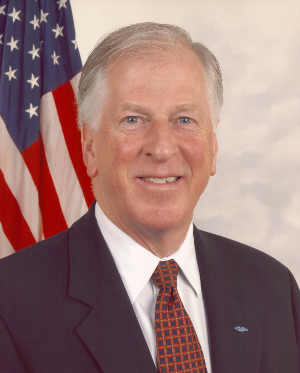
U.S. Rep. Mike Thompson on Wednesday officially filed for reelection in the newly drawn Fifth Congressional District.
The district includes all or parts of Lake, Sonoma, Napa, Solano and Contra Costa counties.
Thompson has been endorsed by leaders in all five counties. The endorsements include Democrats and Republicans, and leaders from business, agriculture, labor, local government, education, public safety, health care, and the environmental, senior and veterans’ communities.
So far, no opponents have filed candidacy papers to run against him for the seat, according to federal election filings.
“I am proud and excited to be seeking re-election in the newly drawn Fifth Congressional District of California, and I am honored by the support I have received from folks throughout our district,” said Thompson.
“From Lake County to Sonoma, Napa, Solano and Contra Costa, I will continue my fight to create jobs and strengthen our middle class, bring fiscally responsible solutions to the federal government, protect our seniors by strengthening Social Security and Medicare, and make sure our veterans and military families receive the benefits they’ve earned,” he added.
Thompson was born, grew up and still lives in the district.
“I have had the honor and great pleasure to represent Lake County for the entire time I have served in public office,” he said. “Both the county and the people are fantastic and we've worked well together and enjoyed many successes.
“While I am sad the Redistricting Commission choose to split Lake County between two Congressional districts, I am thankful that half of Lake County will remain in our district,” he said. “I don't believe you can work for half a county, so I look forward to continuing our work to strengthen all of Lake County’s communities and deliver solutions to the challenges we face.”
Thompson said hard working families across the district are looking for a fair shake. “They want to know that if they work hard and play by the rules then they will be able to put food on the table and gas in their car, make their mortgage payment, send their kids to college and pay for retirement. That’s the fair shake I am fighting for in Washington. It’s what our families, children and grandchildren deserve. And it’s what made America great.
“In the past, folks knew that making this fair shake a reality meant committing to shared responsibility – if we shared in the responsibility of building a great nation then we would share in the success of a great nation,” he said. It’s time we make that commitment again. That is what this election is about. That is how we build a strong and sustainable American future.”
In order to file for election a candidate must gather 40 to 60 nomination signatures.
In Lake County, Thompson’s nomination has been signed or endorsed by: Jim Brown, Veterans Service officer and director of the Lake County Health Services Department; County Administrative Officer Kelly Cox; Lake County Superintendent of Schools Wally Holbrook; Walt and Madelene Lyon; Lakeport businesswoman Karan Mackey; Peggy McCloud; David and Bonnie Weiss; Peter and Kathy Windrem; and Lake County Supervisors Jim Comstock, Tony Farrington and Denise Rushing.
While some of the district is new, Thompson has represented large portions of the district in the past. He has received strong support throughout all the communities in the district.
Other elected officials, organizations, business and community leaders supporting Thompson’s nomination include U.S. Senators Barbara Boxer and Dianne Feinstein, State Superintendent of Public Instruction Tom Torlakson, Congressman George Miller, Congressman John Garamendi, Sen. Mark Desaulnier, Sen. Lois Wolk, Assemblymember Susan Bonilla and Assemblymember Mariko Yamada.
Follow Lake County News on Twitter at http://twitter.com/LakeCoNews, on Tumblr at www.lakeconews.tumblr.com, on Google+, on Facebook at www.facebook.com/pages/Lake-County-News/143156775604?ref=mf and on YouTube at www.youtube.com/user/LakeCoNews .
The California Department of Water Resources (DWR) on Wednesday reduced its estimate of the amount of water the State Water Project will deliver this year.
DWR dropped its projected delivery total, or allocation, from 60 percent to 50 percent of the requested amount of slightly more than 4 million acre-feet.
“Stubbornly dry conditions this winter give us no choice but to roll back our water supply estimate,” said DWR Director Mark Cowin. “We continue to hope, however, that wetter conditions in the remaining winter weeks will allow us to boost deliveries back up.”
DWR noted that precipitation so far this winter has been only about half of normal and the mountain snowpack is less than a third of normal.
Water Year (Oct. 1-Sept. 30) runoff from rain and snow is forecasted to be far below average in both the Sacramento River and San Joaquin River systems.
The median runoff forecast of 9.4 million acre-feet for the Sacramento River system would be the 16th driest in 106 years.
The February 1 median water year runoff forecast of 3.2 million acre-feet for the San Joaquin River system would be the 21st driest in 111 years.
Average runoff is 18.3 million acre-feet for the Sacramento system, and 5.9 million acre-feet for the San Joaquin.
Much of California’s water comes from the mountainous country from Shasta Lake in the north to the American River basin in the south.
DWR’s eight precipitation gages covering this area recorded an impressive 130 percent of average rainfall and snow in October, but only 43 percent in November, four percent of average in December, 84 percent of average in January, and 18 percent of a normal February total to date this month.
Overall, this “Eight-Station Index” area to date is at 51percent of its seasonal precipitation average. Records go back to 1920.
Similarly, precipitation gages in the San Joaquin basin recorded 125 percent of the average monthly precipitation for October, 32 percent for November, zero percent for December, 80 percent for January, and 20 percent of a normal February to date.
This “San Joaquin Five-Station Index” to date is at 47 percent of its seasonal average. San Joaquin Basin records go back to 1904.
Initial State Water Project allocations have seldom been reduced. Previous times were in 2001 (from 40 percent to a final allocation of 39 percent of requests); 1991(85 percent to 30 percent), and 1977 (100 percent to 90 percent).
In 2000, the initial Allocation of 50 percent was increased to 100 percent, but finally dropped to 90 percent.
All allocations, or supply estimates, are conservative, based on factors including reservoir storage, pessimistic weather projections, and projected runoff into streams, reservoirs and aquifers.
Carryover reservoir storage from last winter remains high (110 percent of normal for the date), but a high pressure ridge this winter has diverted most storms to the north of California.
The Sierra snowpack graphically shows how California has been shortchanged this winter. Water content in the statewide snowpack is only 30 percent of normal for the date, a mere 25 percent of the average April 1 measurement, when the snowpack is normally at its peak before the spring runoff.
Mountain snow normally provides approximately one-third of the water used in California as it melts in spring and early summer.
The large differences in snowfall totals in the 2010-2011 snow season and thus far this season, demonstrate the variability that is possible in California’s precipitation and water storage.
Models of California’s future climate indicate that rain and snowfall is likely to become even less predictable. This variability makes it critically important that California continue to invest in water conservation and water recycling, as well as improve the flexibility and adaptability of our statewide water systems.
It is still possible – though statistically unlikely – that late-season storms could salvage the water year, similar to the “Miracle March” of 1991, which recorded three times that month’s average precipitation at the conclusion of an otherwise desperately dry winter in the fifth year of a drought.
The 50 percent State Water Project allocation announced today is not severely low. Last year, an unusually wet year, the final allocation was 80 percent of the slightly more than 4 million acre-feet requested by the 29 public agencies that distribute SWP water to more than 25 million Californians and nearly a million acres of irrigated farmland.
The final allocation was 50 percent in 2010, 40 percent in 2009, 35 percent in 2008, and 60 percent in 2007.
The last 100 percent allocation – difficult to achieve even in wet years because of fishery agency restrictions on Delta pumping to protect threatened and endangered fish – was in 2006.
Follow Lake County News on Twitter at http://twitter.com/LakeCoNews, on Tumblr at www.lakeconews.tumblr.com, on Google+, on Facebook at www.facebook.com/pages/Lake-County-News/143156775604?ref=mf and on YouTube at www.youtube.com/user/LakeCoNews .
LAKEPORT, Calif. – A Lakeport man arrested over the weekend on outstanding warrants also allegedly was found to be in possession of property that police say was stolen during the burglary of a Red Cross ambulance.
Joshua Weidemann, 23, was arrested shortly after 10:30 p.m. Saturday, Feb. 18, according to a report from Sgt. Kevin Odom of the Lakeport Police Department.
Odom said Lakeport Police Officer Joe Eastham was on patrol in the area of Lakeport Boulevard and Larrecou Lane last Saturday night when he saw two subjects to the rear of a business in the 500 block of Lakeport Boulevard and contacted them to determine what they were doing behind the business at such a late hour.
Eastham contacted Weidemann and a 16-year-old male juvenile from Lakeport, Odom said.
A warrant check of Weidemann revealed he had two outstanding felony drug warrants from Tehama County, according to Odom.
Eastham took Weidemann into custody and a search of his person located a ski mask, bolt cutters and other burglary type tools, along with a large bag of items including first aid kits, Odom said.
Odom said Eastham requested another officer conduct an area check the next morning for possible victims of theft.
That second officer located a broken window to the back of the Red Cross ambulance parked at the Lakeport Senior Center at 527 Konocti Ave, Odom said.
Eastham contacted the Red Cross coordinator responsible for the ambulance and positively identified the first aid kits and other items in the bag as having been taken from the ambulance, according to Odom.
Weidemann was booked for the outstanding warrants, charges for the burglary to the Red Cross ambulance are being sought and the investigation is on going, Odom said.
Follow Lake County News on Twitter at http://twitter.com/LakeCoNews, on Tumblr at www.lakeconews.tumblr.com, on Google+, on Facebook at www.facebook.com/pages/Lake-County-News/143156775604?ref=mf and on YouTube at www.youtube.com/user/LakeCoNews .
Becoming homeless. Losing everything, including their children. Doing something desperate. Facing continued, life-threatening abuse.
That is what victims of domestic violence who received help from shelters say their fate would have been if those shelters did not exist, according to Meeting Survivors’ Needs: A Multi-State Study of Domestic Violence Shelter Experiences.
Released this week, the groundbreaking study is based on a survey of 3,410 people served by domestic violence shelters in eight states during a six-month period in 2007 and 2008.
It finds that three-quarters of domestic violence victims (74 percent) rate the assistance they received at a shelter as “very helpful” and another 18 percent say it was “helpful.”
“The National Institute of Justice (NIJ), a component of the Department of Justice’s Office of Justice Programs, is proud to have administered this study, which will help us better understand
the challenges facing domestic violence survivors,” said NIJ Acting Director Kristina Rose. “Domestic violence shelters are a critical resource for keeping victims and their children safe. The data from this study will be instrumental in enhancing the coordinated community response to violence against women.”
“Meeting Survivors’ Needs” finds that the most victims staying at domestic violence shelters are 18 to 34 years old, and have children under age 18. One in four (24 percent) had stayed at a
shelter before the visit during which they took this survey.
Ninety-two percent say they “know more ways to plan for my safety” because of the shelter, 85 percent know more about community resources, and 84 percent of those who are mothers say “my children feel more supported” as a result of their shelter stay.
“This study shows conclusively that the nation’s domestic violence shelters are meeting both the urgent and longer-term needs of victims of violence, and helping them protect themselves and their children,” said Dr. Eleanor Lyon of the University of Connecticut, Institute for Violence Prevention and Reduction at the School of Social Work, who was the primary researcher for the study. “Victims attribute meaningful change to the help they received at the shelter – but they also see areas where there is room for improvement.”
One-quarter of shelter residents (24 percent) faced transportation challenges, and 54 of those challenges were resolved. One-third (32 percent) say they had conflicts with other residents, and 73 percent of those conflicts were resolved, Meeting Survivors’ Needs finds.
Some victims say that the shelter was unable to fully meet their needs related to housing, education and finance, as well as their emotional, mental health and physical health needs.
The study is based on surveys of residents of 215 domestic violence shelters in Connecticut, Florida, Illinois, Michigan, New Mexico, Oklahoma, Tennessee and Washington, which researchers say provide a “reasonable reflection” of shelters across the nation. It is the most comprehensive study of its kind ever done. The survey was available in 11 languages.
“This study is a goldmine of valuable information,” said Anne Menard, director of the National Resource Center on Domestic Violence. “It validates many of the approaches that programs around the country are using, and the hard work of staff members who work tirelessly to help victims. We take very seriously the areas where victims say improvement is needed. During these grim economic times, when shelters are struggling mightily to do more with less and serve a population in great need, maintaining and expanding core state and federal funding for these emergency shelters becomes even more essential.”
Other findings from “Meeting Survivors’ Needs”:
- More than three in four survivors (78 percent) reported that they had children under the age of 18, and 68 percent had minor children with them at the shelter.
- Nearly all survivors (99 percent) reported they got the help they wanted with their own safety and safety planning (95 percent).
- Four in five of those who needed it (81 percent) got help finding affordable housing, and three in four got help with a job or job training.
- Nearly all mothers who needed it got help with their children’s safety (98 percent) and schooling (92 percent).
- Nine in 10 survivors (91 percent) who needed it got help with a protective or restraining order, more than four in five with divorce issues (82 percent), immigration issues (84 percent), and custody/visitation issues (83 percent).
- Four in five shelters (82 percent) allow survivors to stay more than 30 days and 34 percent allow a stay of more than 60 days.
- Nearly all shelters in the study (98 percent) have the capacity to accommodate residents with disabilities. Four in five (82 percent) have staff members who speak at least one language other than English.
- The most common types of advocacy offered by shelters are: housing (offered by 95 percent of shelters in the survey), civil court (82 percent), criminal court (81 percent), health (81 percent), TANF/welfare (80 percent), child protection (79 percent), job training (78 percent), immigration issues (76 percent) and divorce/custody/visitation issues (73 percent).
- The most common types of shelter services are: support groups (offered by 97 percent of shelters in the survey), crisis counseling (96 percent), individual counseling (92 percent), parenting classes (55 percent), counseling for children (54 percent) and child care (50 percent).
Data were collected from October 2007 to March 2008. Researchers chose these states to maximize geographical, population, rural/ urban and economic diversity.
The large sample size, the inclusion of shelter programs from eight diverse states, the variety of communities in which the shelters are located and the diverse needs of those they serve make this a reasonable reflection of shelters across the nation.
Shelter residents were asked to complete a written survey at or near entrance, and again at or near exit. Materials were translated into eleven languages to increase accessibility; most were completed in English or Spanish.
Both surveys asked about 38 different possible needs, probing survivors’ entry experiences, their needs, the extent to which their needs were met, any conflicts or problems with rules they encountered, changes they attributed to their shelter stay, and their ratings of the help they received.
The first survey also addressed initial impressions and concerns, and the second addressed immediate outcomes, difficulties experienced during the stay, and the respect and support survivors had received from shelter staff.
The full report, “Meeting Survivors’ Needs: A Multi-State Study of Domestic Violence Shelter Experiences,” as well as a summary of findings, are available online at www.vawnet.org.
The study was conducted by Eleanor Lyon and Shannon Lane of the University of Connecticut’s Institute for Violence Prevention and Reduction at the School of Social Work in collaboration with the National Resource Center on Domestic Violence, a project of the Pennsylvania Coalition Against Domestic Violence.
It was funded by the U.S. Department of Health & Human Services, and administered by the National Institute of Justice.
Follow Lake County News on Twitter at http://twitter.com/LakeCoNews, on Tumblr at www.lakeconews.tumblr.com, on Google+, on Facebook at www.facebook.com/pages/Lake-County-News/143156775604?ref=mf and on YouTube at www.youtube.com/user/LakeCoNews .
LAKEPORT, Calif. – On Sunday, Feb. 26, Lake County Live! returns to the Soper-Reese Community Theatre, 275 S. Main St., Lakeport.
Broadcast takes place from 6 p.m. to 7 p.m. on KPFZ 88.1 FM and is streamed live over the Internet at www.kpfz.org.
Hearkening back to live radio of a bygone era, Lake County Live! is entertainment for the entire family. The program gives a nod and wink to those who follow local news, and hopefully to those who think “outside the box.”
The musical lineup for February is stellar.
Travis Rinker is a phenomenal guitarist, who takes his inspiration from flamenco, jazz, new age, classical and more to produce singularly incredible sounds.
Vim Natura begins with artistry of Clovice Lewis on cello and produces the smooth finish of a fine wine. Artistry from Keely Smith and Erica Call provides vocal and instrumental support.
Michael Barrish with Scott Sommers have been playing some of the best local country music around. Their guitar duo and joined voices produces harmonies to delight every audience.
Admission is free and tickets to the show are available at the theater box office or at the Travel Center in Lakeport. Seating by 5:45 p.m.
For more information, visit www.lakecountylive.com.
Follow Lake County News on Twitter at http://twitter.com/LakeCoNews, on Tumblr at www.lakeconews.tumblr.com, on Google+, on Facebook at www.facebook.com/pages/Lake-County-News/143156775604?ref=mf and on YouTube at www.youtube.com/user/LakeCoNews.
CLEARLAKE, Calif. – A community forum on Thursday will discuss preserving the region including Berryessa and Snow Mountain.
The meeting will take place from 7 p.m. to 9 p.m. Thursday, Feb. 23, at the Highlands Senior Center, 3245 Bowers Ave. in Clearlake.
The environmental action group Tuleyome will host the forum on the proposed Berryessa Snow Mountain National Conservation Area.
Congressman Mike Thompson will attend as a special guest, and will be part of a diverse local panel discussing the area.
Thompson and the panel members want to hear from the community about why the region is special, why designation as a National Conservation Area is appropriate, and why it will bring economic as well as ecological benefits to Lake County and the rest of the region.
There will be a short panel presentation and discussion, along with a question and answer period.
The proposed Berryessa Snow Mountain National Conservation Area encompasses over 321,000 acres of federal public land, Tuleyome reported.
The federal land within the proposed National Conservation Area is managed by the Bureau of Land Management, the National Forest Service, and the Bureau of Reclamation.
The Berryessa Snow Mountain Region stretches more than 100 miles, and encompasses four counties – Yolo, Napa, Lake, and Mendocino counties.
The region begins at Lake Berryessa in the south and extends through the Snow Mountain Wilderness in the north.
There are three existing wilderness areas within the proposed National Conservation Area: Snow Mountain, Cache Creek, and Cedar Roughs.
Follow Lake County News on Twitter at http://twitter.com/LakeCoNews, on Tumblr at www.lakeconews.tumblr.com, on Google+, on Facebook at www.facebook.com/pages/Lake-County-News/143156775604?ref=mf and on YouTube at www.youtube.com/user/LakeCoNews .