 How to resolve AdBlock issue?
News

CLEARLAKE, Calif. – Two United States congressmen, six panelists, representatives of wilderness organizations and nearly 200 community members packed the Highlands Senior Center in Clearlake last Thursday for an informative town hall meeting on the proposed Berryessa Snow Mountain National Conservation Area.
The meeting was arranged by the environmental group Tuleyome, which along with other groups such as the California Wilderness Coalition, was instrumental in developing the proposal.
The proposal is to move existing federal land into a single unit with a "National Conservation Area" (NCA) designation.
An 11-member advisory committee, consisting of representatives of counties, wilderness organizations and the public, would be formed to create a management plan.
The NCA management designation is used to conserve public lands for present and future use, and is given to areas of special scientific, cultural, ecological or historic significance.
The proposed area extends 100 miles from Lake Berryessa at its southern end to north of Snow Mountain and consists of several separate pieces, the largest being in Mendocino National Forest east and north of Clear Lake.
The land is currently administered by the National Forest Service, the Bureau of Land Management (BLM) and the Bureau of Reclamation, and includes the Cedar Roughs, Cache Creek and Snow Mountain Wilderness areas.
The designation would make the area eligible for federal funds available only to units of the National Landscape Conservation System.
In the first portion of the meeting, each panelist spent about five minutes answering a question from moderator Peter Windrem.
The panel consisted of Ed Robey, Lake County Sierra Club chair and former Lake County Supervisor; Denise Rushing, Lake County Supervisor and organic gardener at Dancing TreePeople Farm near Upper Lake; Judy Ahmann, past president of California CattleWomen; Clay Shannon of Shannon Ridge and Vigilance Wineries; Cecilia Aguilar-Curry, mayor pro-tem of the city of Winters; and Rich Burns, project manager at the BLM Ukiah office.
The two congressmen present were Mike Thompson of California District 1, and John Garamendi of California District 10. Garamendi serves on the House Natural Resources Committee and was deputy secretary of the U.S. Interior Department under President Bill Clinton.
Thompson and Garamendi offered insights into the legal process and its ramifications.
In describing what makes the area special, Robey recalled explorations of swimming holes and springs as a youth. Botanists consider the area special for its large number of endemic species, particularly those adapted for serpentine soils.
Rushing and Aguilar-Curry emphasized the potential economic gain from developing the area as an attraction for tourists, with Rushing referring to Costa Rica as a model for ecotourism.
Aguilar-Curry pointed out her town of Winters is about 10 miles from the southern tip of the proposed NCA, and that it allows the “Gateway to Lake Berryessa” to also consider itself to be the gateway to the entire region.
Ahmann emphasized recreational opportunities, such as hiking on trails developed by Tuleyome. She and her husband granted easement on part of their 1,275-acre Running Deer Ranch to allow access to hiking on the east side of Lake Berryessa.
After moderator Windrem’s questions, he remainder of the two-hour meeting was devoted to questions and comments from the public.
Many questions concerned the Walker Ridge Wind Project. Burns answered that as the result of a process which included public input, Walker Ridge – which lies within the proposed NCA – was approved for a wind electricity generation plant of up to 70 megawatts.
The NCA designation would not change that, and another round of public input would be required
to rescind the approval, Burns said.
Lake County Agriculture Commissioner Steve Hajik expressed concern about the affect of the NCA designation on the cattle business.
The panel and Ryan Henson of the California Wilderness Coalition said no existing cattle grazing would be disallowed.
It was the theme of many of the panel's answers that the regulations are crafted specifically for this area, and that in particular no roads would be closed, and use of herbicides to control invasive weeds would still be allowed.
The Tuleyome organization is planning more informational meetings, including one in Napa in March.
Follow Lake County News on Twitter at http://twitter.com/LakeCoNews, on Tumblr at www.lakeconews.tumblr.com, on Google+, on Facebook at www.facebook.com/pages/Lake-County-News/143156775604?ref=mf and on YouTube at www.youtube.com/user/LakeCoNews .
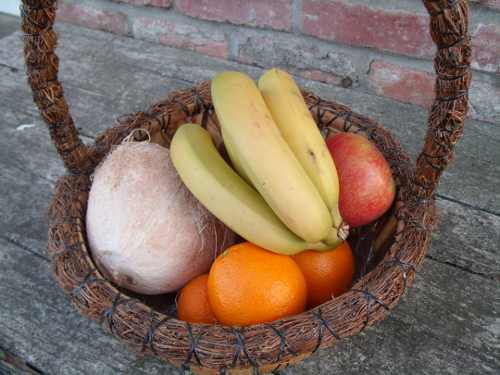
If you think Americans consume a lot of bananas – more than 26 pounds per person per year – try living in Uganda, where the average person consumes more than 500 pounds of the creamy fruit!
They’re beloved worldwide, which is reflected in their ranking among agricultural crops: fourth in global production, behind only wheat, rice and corn.
There are two distinct species of bananas: the sweet, which is usually eaten out of hand or in desserts, and the plantain, which is starchy and must be cooked prior to eating.
Plantains are typically treated more as a vegetable than a fruit and have a higher level of beta carotene than sweet bananas. They’ll be covered in a future column.
While bananas abound in hundreds of edible varieties, the banana most widely sold in supermarkets is the Cavendish.
In addition to the yellow skin of the Cavendish and the two or so other popular varieties, sweet bananas can sport red, pink, purple and black tones when ripe.
Red bananas, also known as “apple bananas,” are about four inches long and are becoming popular as an exotic variety.
Red bananas are greenish-maroon before ripening, but turn a beautiful shade of bronzy-red when ripe. They’re softer and sweeter than the typical banana and have a berry-like flavor component.
As well as varying in color, bananas come in a number of different sizes, including the miniature varieties now marketed in some areas. These have a tangy flavor when yellow and, like their larger cousins, become quite sweet when the skin speckles.
In a couple of ways, bananas are not quite what they seem.
First of all, botanically they’re not a fruit at all; they’re considered a berry.
Secondly, while the plant they grow on is called a tree (and is just as high), its trunk is a tightly-rolled bundle of leaves, making it the world’s largest herb.
I can add to this that bananas are – surprisingly – naturally radioactive, as are other foods high in potassium, such as potatoes, kidney beans, sunflower seeds and nuts. They contain large stores of potassium, specifically potassium-40, which is a radioactive isotope.
But don’t let that stop you from eating them. They’re perfectly healthy.
Bananas are thought to have originated in Malaysia about 4,000 years ago. From there, they spread throughout the Philippines and India, following later to Africa.
The Portuguese explorers who found bananas in Africa brought them to the Americas, where most of today’s commercial crop is grown.
The fruit wasn’t brought to the United States for sale until the latter part of the 19th century, and then they were only available in seaport towns where the banana schooners docked.
They became more widely available in the U.S. with the advent of refrigeration and rapid transit in the 20th century, leading to their status as our nation’s favorite fruit, with more bananas consumed here than oranges and apples combined.
Bananas, which grow in most tropical and subtropical regions throughout the world, are harvested year-round. They’re picked green since they don’t ripen on the tree.
If left on the tree, they’ll eventually split open, exposing a pulp which has a different texture and flavor than ripe bananas.
The bundles of harvested bananas are called hands, and the ten or twenty individual bananas in each hand is called a finger.
There are thousands of varieties of bananas, but most are unpalatable. Wild bananas are filled with large seeds, making them difficult to eat.
While commercial bananas do have seeds, they’re so small they’re unnoticeable. Their size also diminishes their function, meaning they’re not useful for the plant’s reproduction.
Most commercial banana plants are the Cavendish variety and are perfect clones of one another, with the majority originating from one single plant from Southeast Asia. This makes them extremely susceptible to being wiped out worldwide in a short period of time.
Currently, black Sigatoka fungus is threatening global banana crops, particularly on non-organic plantations where diseases and pests flourish without a rich diversity of soil life.
While bananas look resilient, they’re actually quite fragile and care should be taken when storing them.
Choose bananas based on how quickly you’ll use them. I prefer bananas firm, rather than overly ripe, so I almost always choose those that are green, knowing they’ll ripen up soon enough at home.
If you need to hasten the ripening process, place them in a paper bag or wrap them in newspaper. If an apple is added, they ripen even more quickly.
On the other hand, to slow this process down, allow air to circulate around them as much as possible, storing them on a banana hook or in a mesh container. Spread the bananas out to allow for maximum air flow.

Contrary to popular opinion, bananas can be stored in the fridge. The skin will darken – even turning black – but the flesh inside is protected.
Be cautious, however, about when you put them in there, making sure they are at the stage of ripeness you desire. Exposure to the cold will interrupt the ripening process, so much so that it likely will not resume once they’re pulled out.
If you find yourself with too many bananas on the express train to the overripe station, freezing is a great way to preserve them for future use.
I remove the peel and wrap each banana in waxed paper. I then store the individually wrapped bananas in a zipper-sealed bag in the freezer, where they should keep well for about six months.
These are absolutely wonderful for making smoothies thick, frosty and hearty. You can also cut the frozen bananas up to blend with plain yogurt for a naturally sweet, ice cream-like treat.
They’re perfect for your favorite banana bread or muffin recipe, as well as any other application where bananas are used mashed.
If you’re lucky enough to get your hands on fresh banana leaves, use them to wrap foods for steaming. Fresh fish is especially nice when prepared this way.
Bananas are one of our best sources of dietary potassium, which supports cardiovascular health, lowers blood pressure and prevents muscle cramps.
Bananas replenish necessary nutrients burned during physical exercise, such as glycogen, body fluids and carbohydrates.
In addition to potassium, they’re a great source of dietary fiber, vitamin B6, manganese and vitamin C, and they’ve been shown to help prevent stomach ulcers.
As to today’s recipe, I searched high and low to find a savory application for bananas that didn’t involve deep frying, and I came close with the sweet potato dish below.
Bananas, sweet potatoes, spices and nuts are a wonderful combination, and though the recipe contains some butter, it’s otherwise a healthful one.
The original recipe calls for pecans, but I substituted walnuts. Not only are they more economical, they’re delicious and abundant in Lake County.
And before I go, if you’re feeling down, it turns out that eating a banana may be just the ticket for elevating one’s mood.
It’s the only fruit that contains both tryptophan (an amino acid) and vitamin B6, a combination which helps the body produce serotonin, a natural chemical thought to contribute to feelings of well being and happiness.
Who would have thought that a simple banana could give Prozac a run for its money?
Sweet potato puree with bananas and buttered walnuts
6 pounds (about 6) sweet potatoes
2 ripe bananas, skins on
2 ounces (1/2 stick) unsalted butter, softened
½ cup pure maple syrup
2 tablespoons ground cinnamon
2 teaspoons pumpkin pie spice
½ teaspoon salt
For the buttered walnuts
1 pound walnuts
½ cup unsalted butter
About 1 tablespoon salt
2 tablespoons brown sugar
Preheat oven to 425 degrees Fahrenheit.
Pierce the sweet potatoes with a fork and bake until tender, about one hour. Roast the bananas, with the skins on, for the last 15 minutes of cooking. When cool enough to handle, peel the potatoes and bananas and transfer to a food processor. Pulse until the potatoes are chunky.
Add the butter and maple syrup, puree until smooth. Add the cinnamon, pumpkin pie spice and salt. Puree to combine. Transfer to a shallow baking pan and smooth out the surface with a spatula.
In a skillet, cook the nuts in butter over low heat and sprinkle with salt. Sauté until well-coated, stirring occasionally, for about five minutes. Transfer the nuts to paper towels to drain.
Arrange nuts on top of potato puree and sprinkle with brown sugar. Bake at 300 degrees Fahrenheit until heated through, about 20 minutes.
This recipe makes six to eight servings and its inspiration is courtesy of www.FoodNetwork.com.
Esther’s note: Pumpkin pie spice is a combination of cinnamon, ginger, cloves, nutmeg and occasionally allspice. If it’s not already in your cupboard, you can make a homemade version by combining 1 teaspoon ground cinnamon, ½ teaspoon each ground ginger and nutmeg, and ¼ teaspoon ground cloves to substitute for the 2 teaspoons of pumpkin pie spice.
Esther Oertel, a freelance writer, cooking teacher, and speaker, is passionate about local produce and all foods in the vegetable kingdom. She welcomes your questions and comments and may be reached at
Follow Lake County News on Twitter at http://twitter.com/LakeCoNews, on Tumblr at www.lakeconews.tumblr.com, on Google+, on Facebook at www.facebook.com/pages/Lake-County-News/143156775604?ref=mf and on YouTube at www.youtube.com/user/LakeCoNews .
LAKE COUNTY, Calif. – The county’s animal shelter has puppies and adult dogs cleared to go to new homes this week.
The dogs this week include border collie, boxer, shepherd, Chihuahua and lab mixes, a “min pin” and an American bulldog mix.
Dogs that are adopted from Lake County Animal Care and Control are either neutered or spayed, microchipped and, if old enough, given a rabies shot and county license before being released to their new owner. License fees do not apply to residents of the cities of Lakeport or Clearlake.
If you're looking for a new companion, visit the shelter. There are many great pets hoping you'll choose them.
The following dogs at the Lake County Animal Care and Control shelter have been cleared for adoption (additional dogs on the animal control Web site not listed are still “on hold”).

“Buddy”
“Buddy” is a 1-year-old male Chihuahua mix.
He’s got a short black coat with white markings, and is not yet neutered.
He’s in kennel No. 12, ID No. 31899.

Shepherd-lab mix pup
This 9-week-old puppy is a German Shepherd-Labrador Retriever mix.
She has a short tan coat and a long tail.
Find her in kennel No. 15c, ID No. 31806.

“Delilah”
“Delilah” is a 2-year-old female Labrador Retriever-boxer mix.
She has black coloring and a short coat.
She is in kennel No. 16, ID No. 31916.

Min pin mix
This 1 year old male is a Manchester Terrier-miniature Pinscher mix.
He has a short black and tan coat and weighs 21 pounds.
He’s in kennel No. 14, ID 31764.

Border collie mix puppies
These 11-week-old border collie mix puppies are all males.
They have short coats and black and white coloring.
The puppies can be found in kennel No. 15a-d, ID No. 31657.

American bulldog mix
This female American bulldog mix is 2 years old.
She has brown and brindle coloring, weighs 80 pounds and has been spayed.
She is in kennel No. 13, ID No. 31784.
Adoptable dogs also can be seen at http://www.co.lake.ca.us/Government/Directory/Animal_Care_And_Control/Adopt/Dogs_and_Puppies.htm or at www.petfinder.com.
Please note: Dogs listed at the shelter's Web page that are said to be “on hold” are not yet cleared for adoption.
To fill out an adoption application online visit http://www.co.lake.ca.us/Government/Directory/Animal_Care_And_Control/Adopt/Dog___Cat_Adoption_Application.htm.
Lake County Animal Care and Control is located at 4949 Helbush in Lakeport, next to the Hill Road Correctional Facility.
Office hours are Monday through Friday, 8 a.m. to 5 p.m., and 1 p.m. to 3 p.m., Saturday. The shelter is open from 10:30 a.m. to 4:30 p.m. Monday through Friday and on Saturday from 1 p.m. to 3 p.m.
Visit the shelter online at http://www.co.lake.ca.us/Government/Directory/Animal_Care_And_Control.htm.
For more information call Lake County Animal Care and Control at 707-263-0278.
Follow Lake County News on Twitter at http://twitter.com/LakeCoNews, on Tumblr at www.lakeconews.tumblr.com, on Google+, on Facebook at www.facebook.com/pages/Lake-County-News/143156775604?ref=mf and on YouTube at www.youtube.com/user/LakeCoNews .
On Friday, Congressman Mike Thompson (D-St. Helena) demanded that service members who were subjected to the Department of Defense’s (DOD) chemical weapon testing be able to receive full medical care and disability compensation for their service-connected medical conditions.
Thompson provided testimony along with former senior Navy officer and Humboldt County resident Jack Alderson at a field hearing in Sacramento of the Institute of Medicine Study Committee, which is charged with investigating the potential health impacts of the chemical weapons.
In late 2002, the DOD revealed for the first time that between 1962 and 1974 it had tested harmful chemical and biological agents by spraying them on ships and sailors.
These tests – known as Project 112, which included Project Shipboard Hazard and Defense (SHAD) – exposed at least 6,000 service members without their knowledge to harmful chemical and biological weapons and included some of the most deadly chemicals on Earth: Vx Nerve Gas, Sarin Nerve Gas and E. coli.
Many veterans who were subjected to chemical tests as part of Project 112/SHAD have developed serious medical issues but do not currently receive priority care from the U.S. Department of Veterans Affairs (VA) or disability benefits because the VA does not officially recognize any long-term health consequences from exposure to the chemical agents from these specific tests.
In 2010, Congress passed a law requiring the VA to contract with the Institute of Medicine (IOM) to consider the health impact on veterans that were part of Project 112/SHAD.
If the scientific study by the IOM finds a connection between the chemical testing and long-term health consequences, the VA will likely be compelled to provide all service members exposed to this testing priority medical care and full disability compensation. Thompson today submitted testimony to the committee.
“Our country must ensure that any service member who has become sick or developed a disability because of these tests is provided with the treatment they deserve and benefits they’ve earned,” said Thompson. “We cannot wait any longer. Many brave men who served our country are now sick or have passed away because of Project 112’s chemical and biological testing. It is our duty to right this wrong and get our service members the care they need.”
In 2002, Congress directed the IOM to conduct a study of the health effects associated with the chemicals used during Project 112/SHAD.
Numerous reports by other agencies and departments within the U.S. government, such as the Centers for Disease Control and Prevention, say exposure to these substances have long-term health consequences.
However, after five years of research the IOM study found no connection existed between the substances tested and the health problems now widely seen among known SHAD veterans.
As a result, the VA does not recognize any long-term health consequences from the Project 112/SHAD tests.
The IOM has since conceded that the first study did not adequately sample the full universe of Project 112/SHAD veterans, and that the study panel could not obtain sufficient information to assess levels of exposure to specific agents.
The initial study also failed to account for the job and duty assignments of various personnel on board all the ships and tugs involved in the chemical testing. Because of this, the first study failed to take into account the different levels of exposure.
For instance, some personnel were exposed during training and testing to multiple weapons, experimental vaccines, trace elements, stimulants, and decontamination agents, whereas other personnel would have had limited exposure because of where they were stationed. For these reasons, Congress passed a 2010 law requiring a second study.
Alderson was in charge of five different light tug operations from 1964 to 1967. As a senior officer, Alderson was notified of some military chemical tests performed on animals on his ship while he was in service.
Once he started getting sick, he asked Thompson to investigate whether or not there could be a link between his health problems and Project 112/SHAD.
It was found that the DOD performed experimental tests by spraying live chemical and biological agents on ships and sailors to test the Navy’s vulnerability to toxic warfare.
Alderson commanded some of the ships used in these experiments. He has since been diagnosed with malignant melanoma, several types of skin cancers, prostate cancer and doctors have found four occurrences of Asbestos in his lungs.
“Jack, and all the people who served with him, deserve to know the truth,” said Thompson. “If we don’t get these service members the care they need, then how can we ask our current service members to put their lives on the line knowing that harm from the enemy may not be the only danger they encounter? It is imperative for us to right our governments past wrongs and help these brave veterans who were unknowingly subjected to these tests.”
For more information about Project SHAD and Alderson's story, see this Lake County News story from May 2008: http://bit.ly/A55Q89.
For more information on the IOM study click here: http://iom.edu/Activities/Veterans/SHADII.aspx.
Follow Lake County News on Twitter at http://twitter.com/LakeCoNews, on Tumblr at www.lakeconews.tumblr.com, on Google+, on Facebook at www.facebook.com/pages/Lake-County-News/143156775604?ref=mf and on YouTube at www.youtube.com/user/LakeCoNews .

LAKEPORT, Calif. – A man reported missing last week is safe, police said Saturday.
Darayn S. Schweizer, 44, of Moses Lake, Wash., was reported missing from Lakeport last Thursday,
Feb. 23, after he was last seen in the area of Third and Park streets, as Lake County News has reported.
The Lakeport Police Department reported that officers received a telephone call at approximately 4:45 p.m. Saturday from Santa Cruz County Behavior Health Unit confirming Schweizer was there and in good health.
Schweizer was reportedly picked up by a relative from the behavior health unit and returned home, police said.
Follow Lake County News on Twitter at http://twitter.com/LakeCoNews, on Tumblr at www.lakeconews.tumblr.com, on Google+, on Facebook at www.facebook.com/pages/Lake-County-News/143156775604?ref=mf and on YouTube at www.youtube.com/user/LakeCoNews .
An agricultural fire that got out of control last Thursday in Napa County came under full containment Saturday morning, fire officials said.
The Soda Fire burned approximately 200 acres in the 3200 block of Soda Canyon Road, according to Cal Fire. No structures were burned.
On Saturday, approximately 95 fire personnel, five engines, five fire crews and one bulldozer from Cal Fire, Napa County Fire and the California Department of Corrections and Rehabilitation were on scene, taking part in patrolling and mop up, Cal Fire said.
The rugged and steep terrain, and Thursday's winds, had made fighting the fire difficult, according to Cal Fire.
E-mail Elizabeth Larson at