How to resolve AdBlock issue?
Refresh this page
How to resolve AdBlock issue?
Refresh this page
Lake County News,California
  • Home
    • Registration Form
  • News
    • Education
    • Veterans
    • Community
      • Obituaries
      • Letters
      • Commentary
    • Police Logs
    • Business
    • Recreation
    • Health
    • Religion
    • Legals
    • Arts & Life
    • Regional
  • Calendar
  • Contact us
    • FAQs
    • Phones, E-Mail
    • Subscribe
  • Advertise Here
  • Login

News

As millions of Americans face a steep rise in health insurance costs, lawmakers continue a century-long battle over who should pay for health care

Dec. 15, 2025 – the deadline for enrolling in a marketplace plan through the Affordable Care Act for 2026 – came and went without an agreement on the federal subsidies that kept ACA plans more affordable for many Americans. Despite a last-ditch attempt in the House to extend ACA subsidies, with Congress adjourning for the year on Dec. 19, it’s looking almost certain that Americans relying on ACA subsidies will face a steep increase in health care costs in 2026.

As a gerontologist who studies the U.S. health care system, I’m aware that disagreements about health care in America have a long history. The main bone of contention is whether providing health care is the responsibility of the government, or of individuals or their employers.

The ACA, passed in 2010 as the country’s first major piece of health legislation since the passage of Medicare and Medicaid in 1965, represents one more chapter in that long-standing debate. That debate explains why the health law has fueled so much political divisiveness – including a standoff that spurred a record-breaking 43-day-long government shutdown, which began on Oct. 1, 2025.

In my view, regardless of how Congress resolves, or doesn’t resolve, the current dispute over ACA subsidies, a durable U.S. health care policy will remain out of reach until lawmakers address the core question of who should shoulder the cost of health care.

The ACA’s roots

In the years before the ACA’s passage, some 49 million Americans – 15% of the population – lacked health insurance. This number had been rising in the wake of the 2008 recession. That’s because the majority of Americans ages 18 to 64 with health insurance receive their health benefits through their employer. In the 2008 downturn, people who lost their jobs basically lost their health care coverage.

Seated man talks to a doctor in a clinic waiting room.
The goal of the Affordable Care Act was to significantly decrease the number of Americans without health insurance. Drazen Zigic/iStock via Getty Images Plus

For those who believed government had a primary role in providing health insurance for its citizens, the growing number of people lacking coverage hit a crisis point that required an intervention. Those who place responsibility on individuals and employers saw the ACA as perversion of the government’s purpose. The political parties could find no common ground – and this challenge continues.

The major goal of the ACA was to reduce the number of uninsured Americans by about 30 million people, or to about 3% of the U.S. population. It got about halfway there: Today, about 26 million Americans, or 8%, are uninsured, though this number fluctuates based on changes in the economy and federal and state policy.

Health insurance for all?

The ACA implemented an array of strategies to accomplish this goal. Some were popular, such as allowing parents to keep their kids on their family insurance until age 26. Some were unpopular, such as the mandate that everyone must have insurance.

But two strategies in particular had the biggest impact on the number of uninsured. One was expanding the Medicaid program to include workers whose income was below 138% of the poverty line. The other was providing subsidies to people with low and moderate incomes that could help them buy health insurance through the ACA marketplace, a state or federal health exchange through which consumers could choose health insurance plans.

Medicaid expansion was controversial from the start. Originally, the ACA mandated it for all states, but the Supreme Court eventually ruled that it was up to each state, not the federal government, to decide whether to do so. As of December 2025, 40 states and the District of Columbia have implemented Medicaid expansion, insuring about 20 million Americans.

Meanwhile, the marketplace subsidies, which were designed to help people who were working but could not access an employer-based health plan, were not especially contentious early on. Everyone receiving a subsidy was required to contribute to their insurance plan’s monthly premium. People earning US$18,000 or less annually, which in 2010 was 115% of the income threshold set by the federal government as poverty level, contributed 2.1% of their plan’s cost, and those earning $60,240, which was 400% of the federal poverty level, contributed 10%. People making more than that were not eligible for subsidies at all.

In 2021, legislation passed by the Biden administration to stave off the economic impact of the COVID-19 pandemic increased the subsidy that people could receive. The law eliminated premiums entirely for the lowest income people and reduced the cost for those earning more. And, unlike before, people making more than 400% of the federal poverty level – about 10% of marketplace enrollees – could also get a subsidy.

These pandemic-era subsidies are set to expire at the end of 2025.

Cost versus coverage

If the COVID-19-era subsidies expire, health care costs would increase substantially for most consumers, as ACA subsidies return to their original levels. So someone making $45,000 annually will now need to pay $360 a month for health insurance, increasing their payment by 74%, or $153 monthly. What’s more, these changes come on top of price hikes to insurance plans themselves, which are estimated to increase by about 18% in 2026.

With these two factors combined, many ACA marketplace users could see their health insurance cost rise more than 100%. Some proponents of extending COVID-19-era subsidies contend that the rollback will result in an estimated 6 million to 7 million people leaving the ACA marketplace and that some 5 million of these Americans could become uninsured in 2026.

Congressional gridlock over a health care bill continues.

Policies in the tax and spending package signed into law by President Donald Trump in July 2025 are amplifying the challenge of keeping Americans insured. The Congressional Budget Office projects that the Medicaid cuts alone, stipulated in the package, may result in more than 7 million people becoming uninsured. Combined with other policy changes outlined in the law and the rollback of the ACA subsidies, that number could hit 16 million by 2034 – essentially wiping out the majority of gains in health insurance coverage that the ACA achieved since 2010.

Subsidy downsides

These enhanced ACA subsidies are so divisive now in part because they have dramatically driven up the federal government’s health care bill. Between 2021 and 2024, the number of people receiving subsidies doubled – resulting in many more people having health insurance, but also increasing federal ACA expenditures.

In 2025, almost 22 million Americans who purchased a marketplace plan received a federal subsidy to help with the costs, up from 9.2 million in 2020 – a 137% increase.

Those who oppose the extension counter that the subsidies cost the government too much and fund high earners who don’t need government support – and that temporary emergencies, even ones as serious as a pandemic, should not result in permanent changes.

Another critique is that employers are using the ACA to reduce their responsibility for employee coverage. Under the ACA, employers with more than 50 employees must provide health insurance, but for companies with fewer employers, that requirement is optional.

In 2010, 92% of employers with 25 to 49 workers offered health insurance, but by 2025, that proportion had dropped to 64%, suggesting that companies of this size are allowing the ACA to cover their employees.

Diverging solutions

The U.S. has the most expensive health care system in the world by far. The projected increase in the number of uninsured people over the next 10 years could result in even higher costs, as fewer people get preventive care and delayed health care interventions, ultimately leading to more complex medical care

Federal policy clearly shapes health insurance coverage, but state-level policies play a role too. Nationally, about 8% of people under age 65 were uninsured in 2023, yet that rate varied widely – from 3% in Massachusetts to 18.6% in Texas. States under Republican leadership on average have a higher percentage of uninsured people than do those under Democratic leadership, mirroring the political differences driving the national debate over who is responsible for shouldering the costs of health care.

With dueling ideologies come dueling solutions. For those who believe that the government is responsible for the health of its citizens, expanding health insurance coverage and financing this expansion through taxes presents a clear approach. For those who say the burden should fall on individuals, reliance on the free market drives the fix – on the premise that competition between health insurers and providers offers a more effective way to solve the cost challenges than a government intervention.

Without finding resolution on this core issue, the U.S. will likely still be embroiled in this same debate for years, if not decades, to come.The Conversation

Robert Applebaum, Senior Research Scholar in Gerontology, Miami University

This article is republished from The Conversation under a Creative Commons license. Read the original article.
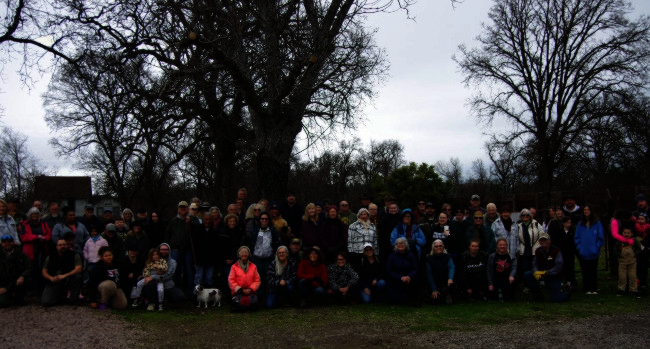

Tradition of New Year’s 'First Day Hikes' to continue at Anderson Marsh State Historic Park 

Participants in the “First Day Hike” on Jan. 1, 2025. Photo courtesy of the Anderson Marsh Interpretive Association.

LOWER LAKE, Calif. — Anderson Marsh State Historic Park will once again offer free, community hikes beginning at noon on New Year’s Day. 

The hikes are part of America's State Parks First Day Hikes program. 

The nationwide First Day Hikes program offers individuals and families an opportunity to begin the New Year by taking a healthy hike on January 1st at a state park close to home.  

Participants can choose between two routes. The first hike will be a leisurely trip to the end of the Dawa Qanoq’ana trail. Formerly known as the McVicar trail, “Dawa Qanoq’ana” means “south way in front of me” in the Pomo language.

This hike will go from the parking lot to the shores of Clear Lake across from Indian Island. This is a round-trip of about 7.5 miles of mainly flat terrain, with the first about 0.3 miles being accessible. This hike should take about three hours, depending on how many times we stop to admire what we see along the way.   

The second shorter hike covers a 3.5-mile loop over the Cache Creek, Marsh and Ridge trails, with the first about 0.5 miles being accessible. This hike should take about two hours.  

The New Year’s Day hikes will be led by State Parks volunteers associated with the Anderson Marsh Interpretive Association, or AMIA, along with State Parks Interpreters.  

“The event offers a wonderful opportunity to begin the New Year right by getting outside, enjoying nature and welcoming the New Year with friends and family on Jan. 1,” said Henry Bornstein, an AMIA Board member who is one of this year’s hike leaders.

Hikers will experience grasslands, oak woodlands, willow and cottonwood riparian habitats, and the tule marsh habitat of the Anderson Marsh Natural Preserve and may encounter a variety of migrating and resident birds and other wildlife.

Both hikes begin at noon at the park off Highway 53, between Lower Lake and Clearlake. 

Children of all ages are welcome when accompanied by an adult. Hikers should bring water and snacks, binoculars if they have them, and a hat for protection against the weather. Sturdy shoes that can handle a little mud are recommended. Participants on both hikes are welcome to walk part way and make an early return at their own pace.

No dogs are allowed on these trails, which pass through the Anderson Marsh Natural Preserve. Heavy rain will cancel the walks. 

For further information, the public is asked to contact AMIA at 707-995-2658 or This email address is being protected from spambots. You need JavaScript enabled to view it.. 

Wind advisory, flood watch in effect for Lake County

LAKE COUNTY, Calif. — High winds have triggered a wind advisory for Lake County and other parts of the North Coast region on Sunday.

The National Weather Service issued the wind advisory, which is in effect until noon on Sunday.

A flood watch remains effective for Lake County through 9 a.m. Monday due to the continuing rain that began late last week as part of an atmospheric river storm system.

Rainfall totals in inches for the 48-hour period ending at 12:30 a.m. Sunday are as follows:

• Elk Mountain: 3.35.
• High Glade Lookout (above Upper Lake): 1.52.
• Kelseyville: 0.74.
• Knoxville Creek: 1.30.
• Lake Pillsbury: 2.96.
• Lyons Valley: 1.94.
• Middletown: 0.13.
• North Cow Mountain: 2.0.
• Upper Lake: 1.64.

The forecast calls for heavy rain overnight and into Sunday, and continuing through Saturday. 

Email Elizabeth Larson at This email address is being protected from spambots. You need JavaScript enabled to view it.. Follow her on Twitter, @ERLarson, and on Bluesky, @erlarson.bsky.social. Find Lake County News on the following platforms: Facebook, @LakeCoNews; X, @LakeCoNews; Threads, @lakeconews, and on Bluesky, @lakeconews.bsky.social. 

Helping Paws: Dogs for Christmas

LAKE COUNTY, Calif. — During this Christmas week, there are many dogs at Lake County Animal Care and Control that would like to have new homes of their own for the holidays.

The dogs available for adoption this week include mixes of border collie, bulldog, cattle dog, Chihuahua, Doberman Pinscher, German shepherd, Great Pyrenees, husky, Labrador Retriever, pit bull terrier, terrier and shepherd.

Dogs that are adopted from Lake County Animal Care and Control are either neutered or spayed, microchipped and, if old enough, given a rabies shot and county license before being released to their new owner. License fees do not apply to residents of the cities of Lakeport or Clearlake.

Those animals shown on this page at the Lake County Animal Care and Control shelter have been cleared for adoption.

Call Lake County Animal Care and Control at 707-263-0278 or visit the shelter online for information on visiting or adopting.

The shelter is located at 4949 Helbush in Lakeport.

Email Elizabeth Larson at This email address is being protected from spambots. You need JavaScript enabled to view it.. Follow her on Twitter, @ERLarson, and on Bluesky, @erlarson.bsky.social. Find Lake County News on the following platforms: Facebook, @LakeCoNews; X, @LakeCoNews; Threads, @lakeconews, and on Bluesky, @lakeconews.bsky.social. 


Kennel#17 Sugar's preview photo

Kennel#17 Sugar

Kennel#14 Chief's preview photo
Kennel#14 Chief

Kennel#32 Feather's preview photo
Kennel#32 Feather

Kennel#12 Shylah's preview photo
Kennel#12 Shylah

Kennel#28 Mitzy's preview photo
Kennel#28 Mitzy

 Kennel#20 Gracie's preview photo
Kennel#20 Gracie

Kennel #29 Star's preview photo
Kennel #29 Star

Kennel#27 Lola's preview photo
Kennel#27 Lola

Kennel#9 Amore's preview photo
Kennel#9 Amore

Kennel#25a Charlie's preview photo
Kennel#25a Charlie

Kennel#25b Bear's preview photo
Kennel#25b Bear

Kennel#31a(Cleo)'s preview photo
Kennel#31a(Cleo)

Kennel#31b Baxter's preview photo
Kennel#31b Baxter

Kennel#24 Nelly's preview photo
Kennel#24 Nelly

Kennel#30 Rosa's preview photo
Kennel#30 Rosa

Kennel#8(Brut)'s preview photo
Kennel#8(Brut)

 
Kennel#15a Mufasa's preview photo
Kennel#15a Mufasa

Kennel#15b Terrance's preview photo
Kennel#15b Terrance

Kennel#3(Buddy)'s preview photo
Kennel#3(Buddy)

Kennel#4(Chance)'s preview photo
Kennel#4(Chance)

Kennel#26 Theo's preview photo
Kennel#26 Theo

Kennel#18 Ivy's preview photo
Kennel#18 Ivy

Kennel#13 Rosie's preview photo
Kennel#13 Rosie

Kennel#10's preview photo
Kennel#10

Kennel#11a's preview photo
Kennel#11a

Kennel#11b's preview photo
Kennel#11b
Kennel#7's preview photo
Kennel#7

Kennel#6's preview photo
Kennel#6

 Kennel#22a's preview photo
Kennel#22a

 Kennel#22b's preview photo
Kennel#22b

 Kennel#22c's preview photo
Kennel#22c

Kennel#34a's preview photo
Kennel#34a

Kennel#34b's preview photo
Kennel#34b

B#54 Little Lady's preview photo
B#54 Little Lady

Willow's preview photo
Willow

B#11(Brutus)'s preview photo
B#11(Brutus)

Kennel#19a Stella's preview photo
Kennel#19a Stella

Kennel#19b Aurora's preview photo
Kennel#19b Aurora

Kennel#19c Celeste's preview photo
Kennel#19c Celeste

Kennel#16 Polar's preview photo
Kennel#16 Polar


How to reduce gift-giving stress with your kids – a child psychologist’s tips for making magic and avoiding tears

’Tis the season … for gift-buying stress. Photo by Ryan Miller/Invision/AP

As a child, I loved being the center of attention. So it was a problem when my baby brother was born a day before my birthday. For years, I would beg my parents for a birthday gift “one day early.” My laid-back brother remembers thinking, “I don’t care about presents. Just give her mine!”

As an associate professor and child psychologist at the University of Denver who studies child development and parenting, I’ve come to learn about these types of challenges associated with gift giving. The holidays, while a magical time, can also be stressful. Society places an expectation on parents to buy gifts, regardless of their financial circumstances, and children themselves often feel a variety of complex emotions.

How children react to getting presents is partially linked to temperament, which is the variety of ways that children experience, perceive and interact with the world. Temperament is the precursor to personality – some people are introverts, while others are extroverts. Temperament is partially heritable. That means an introverted parent who feels social pressure to buy many gifts for their shy and easily overwhelmed child may be inadvertently causing stress.

Faced with this holiday conundrum, I’m often asked questions like “Is there a magic number of gifts to give my kids?” or “What gifts will hold my child’s attention the longest?”

While there isn’t an easy answer to either question, these tips and tricks can help parents be more thoughtful and intentional about gift giving, especially for children who are young.

The age rule

Young children cannot focus on a lot of things at once. A good rule of thumb is that a 1-year-old can focus only on one thing at a time. A 2-year-old can maybe focus on two things at most, and a 3-year-old maybe three things, and so on. Stop at five. Very few children actually need more than five gifts, so feel free to go lower.

The attention rule

I have often searched for the magical gift that will keep my children occupied for hours, and so far I haven’t found it. What I have found is that my children – ages 5 and 7 – get excited about the things that I get excited about. So I try to buy things that I think are fun. Ask yourself what you would like to play with if you got to be a child again. I bet your children would be eager to join you in those things.

The games rule

Card and board games are great gifts, often inexpensive, fun for many ages – excepting babies, of course – and capable of holding attention for a long time. Plus, they usually don’t take up much storage space. I love giving my kids games that are not only fun but also teach them helpful skills.

Collaborative games for preschoolers and early school-age children like the Fairy Game and Outfoxed teach problem-solving, teamwork and early reasoning skills. Games for elementary-age children, such as Sorry and Battleship, teach kids how to manage difficult situations, like not always being in the lead, being a good sport even if you’re behind, and losing gracefully.

Timeless card games like Uno and Memory, and newer ones like Sleeping Queens and Exploding Kittens, are great for using working memory, thinking flexibly, persisting and strategizing. Most importantly, playing games together supports positive family time, which is an excellent antidote to stress, bad moods or boredom.

The pressure rule

Imagine the holiday experience through the eyes of each of your children. Some children relish receiving gifts, like I did. Others, however, may feel self-conscious, overwhelmed by the sensory overload – all the textures, commotion and bright colors, not to mention people staring at them. The elements of surprise combined with the unspoken social pressure to be gracious and well regulated are challenging for any young child.

We expect small children to contain their excitement, delay gratification and react positively to the surprise. And then come up with a polite response. These are all complex requests, rarely directly or explicitly taught. It’s no wonder that many children show negative emotions, have tantrums, or even just say, “I’m tired!” during holiday celebrations.

That’s why beyond the precise nature of “the perfect gift,” we shouldn’t lose sight of what we should be doing. And that is investing in togetherness and helping kids learn skills like being patient and taking turns, strengthening memory capacities, planning ahead, not giving up, and that being a team player will pay off later. These skills pave the way for longer sustained attention, focus and concentration, as well as confidence.

My 7-year-old is becoming a skillful chess player because we have taught him the rules and strategy and helped him practice. Maybe this is the real magical gift – not the purchase itself, but the decision to invest in time with your child early.The Conversation

Angela J. Narayan, Associate Professor, Clinical Child Psychology Ph.D. program, University of Denver

This article is republished from The Conversation under a Creative Commons license. Read the original article.

Space News: What's powering these mysterious, bright blue cosmic flashes? Astronomers find a clue

AT 2024wpp, a luminous fast blue optical transient, or LFBOT, is the bright blue spot at the upper right edge of its host galaxy, which is 1.1 billion light-years from Earth. (Image credit: Aidan Martas/UC Berkeley)


Among the more puzzling cosmic phenomena discovered over the past few decades are brief and very bright flashes of blue and ultraviolet light that gradually fade away, leaving behind faint X-ray and radio emissions. 

With slightly more than a dozen discovered so far, astronomers have debated whether they are produced by an unusual type of supernova or by interstellar gas falling into a black hole.

Analysis of the brightest such burst to date, discovered last year, shows that they’re neither.

Instead, a team of astronomers led by researchers from the University of California, Berkeley, concluded that these so-called luminous fast blue optical transients, or LFBOTs, are caused by an extreme tidal disruption, where a black hole of up to 100 times the mass of our sun completely shreds its massive star companion within days. 

The discovery resolves a decade-long conundrum but also illustrates the many varieties of stellar calamities that astronomers encounter, each with its characteristic spectrum of light — different wavelengths, different intensities — that evolves over time. 

Figuring out the processes that produce these unique light signatures tests current knowledge of the physics of black holes and helps astronomers understand the evolution of stars in our universe.

The inferred mass of the black hole — in a range sometimes referred to as intermediate-mass black holes — is also intriguing for astronomers. 

While black holes of more than 100 solar masses are known to exist because their mergers have been detected by gravitational wave experiments like the Laser Interferometer Gravitational-Wave Observatory, or LIGO, they’ve never been directly observed and how they grow to that size is still a mystery. 

Study of this and similar events could shed light on the stellar environment in which large black holes evolve alongside a massive stellar companion.

“Theorists have come up with many ways to explain how we get these large black holes, to explain what LIGO sees,” said Raffaella Margutti, UC Berkeley associate professor of astronomy and physics. “LFBOTs allow you to get at this question from a completely different angle. They also allow us to characterize the precise location where these things are inside their host galaxy, which adds more context in trying to understand how we end up with this setup — a very large black hole and a companion.”

LFBOTs got their name because they are bright — they’re visible over distances of hundreds of millions to billions of light-years — and last for only a few days, producing high-energy light ranging from the blue end of the optical spectrum through ultraviolet and X-ray. 

The first was seen in 2014, but the first with sufficient data to analyze was recorded in 2018 and, per the standard naming convention, was called AT 2018cow. 

The name led researchers to refer to it as the Cow, and subsequent LFBOTs have been called, tongue in cheek, the Koala (ZTF18abvkwla), the Tasmanian Devil (AT2022tsd) and the Finch (AT2023fhn).

The newest LFBOT, named AT 2024wpp (the Woodpecker, perhaps?), is analyzed in two papers recently accepted by The Astrophysical Journal Letters. UC Berkeley postdoctoral fellow Nayana A.J. is first author of an analysis of X-ray and radio emissions from AT 2024wpp, while Berkeley graduate student Natalie LeBaron is first author of an analysis of the optical, ultraviolet and near infrared emissions. Margutti is the senior author of both papers.

The realization that the transient outburst could not have resulted from a supernova came after the researchers calculated the energy emitted. It turned out to be 100 times greater than what would be produced in a normal supernova, which would require the conversion of about 10% of the rest-mass of the sun into energy over a very short time scale, mere weeks.

“The sheer amount of radiated energy from these bursts is so large that you can't power them with the collapse and explosion of a massive star — or any other type of normal stellar explosion,” LeBaron said. “The main message from AT 2024wpp is that the model that we started off with is wrong. It’s definitely not caused by an exploding star.”

The researchers hypothesize that the intense, high-energy light emitted during this extreme tidal disruption was a consequence of the long parasitic history of the black hole binary system. As they reconstruct this history, the black hole had been sucking material from its companion for a long time, completely enshrouding itself in a halo of material too far from the black hole for it to swallow.

Then, when the companion star finally got too close and was torn apart, the new material became entrained into a rotating disk of debris, called an accretion disk, and slammed against the existing material, generating X-ray, UV and blue light. Much of the gas from the companion also ended up swirling toward the poles of the black hole, where it was ejected as a jet of material. They calculated that the jets were traveling about 40% of the speed of light and generated radio waves when they encountered surrounding gas.

The estimated mass of the companion star that was shredded was more than 10 times the mass of the sun. It may have been what’s known as a Wolf-Rayet star, which are very hot and evolved, having already used up much of their hydrogen. This would explain the weak hydrogen emission from AT 2024wpp.

Like most LFBOTs, AT 2024wpp is located in a galaxy with active star formation, so large, young stars like these are expected. AT 2024wpp is 1.1 billion light-years away and between five and 10 times more luminous than AT 2018cow.

A large collection of telescopes was used to measure the various wavelengths of light emitted by the LFBOT. 

These included three X-ray telescopes, NASA’s Chandra X-ray Observatory, Swift-XRT and the Nuclear Spectroscopic Telescope Array (NuSTAR); radio telescopes such as the Atacama Large Millimeter/submillimeter Array (ALMA) and CSIRO’s Australia Telescope Compact Array (ATCA); the Ultra-Violet/Optical Telescope (UVOT) on NASA’s Neil Gehrels Swift Observatory; and ground-based optical telescopes, including the Keck, Lick and Gemini Observatories.

Because LFBOTs produce copious amounts of UV, the researchers are looking forward to the launch of two planned UV telescopes — ULTRASAT and UVEX, which involves numerous Berkeley scientists and will be operated by the Space Sciences Laboratory — in the coming years. 

These telescopes will be critical for discovering and rapidly characterizing more LFBOTs before they reach peak brightness, allowing astronomers to systematically probe the diversity of their environments and progenitor systems.

“Right now, we find only about one LFBOT per year. But once we have UV telescopes in place in space, then finding LFBOTs will become routine, like detecting gamma ray bursts today,” Nayana A.J. said.

Margutti is supported by the National Science Foundation (AST-2224255) and National Aeronautics and Space Administration (80NSSC22K1587, 80NSSC25K7591, 80NSSC22K0898).

Robert Sanders writes for the UC Berkeley News Center.

  • 37
  • 38
  • 39
  • 40
  • 41
  • 42
  • 43
  • 44
  • 45
  • 46

Community

  • Lake County Wine Alliance offers sponsor update; beneficiary applications open 

  • Mendocino National Forest announces seasonal hiring for upcoming field season

Public Safety

  • Lakeport Police logs: Thursday, Jan. 15

  • Lakeport Police logs: Wednesday, Jan. 14

Education

  • Woodland Community College receives maximum eight-year reaffirmation of accreditation from ACCJC

  • SNHU announces Fall 2025 President's List

Health

  • California ranks 24th in America’s Health Rankings Annual Report from United Health Foundation

  • Healthy blood donors especially vital during active flu season

Business

  • Two Lake County Mediacom employees earn company’s top service awards

  • Redwood Credit Union launches holiday gift and porch-to-pantry food drives

Obituaries

  • Rufino ‘Ray’ Pato

  • Patty Lee Smith

Opinion & Letters

  • The benefits of music for students

  • How to ease the burden of high electric bills

Veterans

  • CalVet and CSU Long Beach team up to improve data collection related to veteran suicides

  • A ‘Big Step Forward’ for Gulf War Veterans

Recreation

  • Wet weather trail closure in effect on Upper Lake Ranger District

  • Mendocino National Forest seeking public input on OHV grant applications

  • State Parks announces 2026 Anderson Marsh nature walk schedule 

  • BLM lifts seasonal fire restrictions in central California

Religion

  • Kelseyville Presbyterian to host Ash Wednesday service and Lenten dinner Feb. 18

  • Kelseyville Presbyterian Church to hold ‘Longest Night’ service Dec. 21

Arts & Life

  • Auditions announced for original musical ‘Even In Shadow’ set for March 21 and 28

  • ‘The Rip’ action heist; ‘Steal’ grounded in a crime thriller

Government & Politics

  • Lake County Democrats issue endorsements in local races for the June California Primary

  • County negotiates money-saving power purchase agreement

Legals

  • March 3 hearing on ordinance amending code for commercial cannabis uses

  • Feb. 12 public hearing on resolution to establish standards for agricultural roads

How to resolve AdBlock issue?
Refresh this page