 How to resolve AdBlock issue?
News
LAKEPORT, Calif. – A woman injured in a water skiing accident was flown to a regional trauma center on Sunday.
The woman, whose name was not released, suffered a head injury while out on Clear Lake, according to Capt. Rick Bergem of the Lakeport Fire Protection District.
Bergem said Lakeport Fire personnel had been committed to other calls when the injured woman was reported at about 11 a.m., so a Northshore Fire medic unit from Nice assisted and responded to the scene.
The woman initially had lost consciousness when hitting her head on a ski, which Bergem said is not an uncommon injury in the sport.
By the time firefighters saw her, she was conscious and had been transported to a private residence in the 1900 block of Lakeshore Boulevard, Bergem said.
He said the decision was made to fly the woman out to a regional trauma center on a precaution due to her head injury.
The woman was transported by REACH air ambulance, which Bergem said landed at the old Natural High School property on the lakeshore in the 800 block of N. Main Street.
Email Elizabeth Larson at

There are dozens of varieties of pumpkins, from large ones with thin flesh for carving Jack-O-Lanterns to small ones with sweet, dense flesh for pies.
Pumpkins are a type of winter squash and share a family tree with summer squashes, cucumbers, and gourds. In other parts of the English-speaking world, such as Australia, the word “pumpkin” means any type of thick-skinned winter squash, rather than the orange-skinned varieties that are exclusively referred to by the moniker here in the United States.
Pumpkins and other winter squash will ripen off the vine, so those that are not quite ripe when their vine dies (such as from frost) will continue to develop color and flavor, both in the field and after they’re picked.
The word itself has an interesting history. It originates from the Greek word for large melon, pepon, which the French adapted to pompon. The British morphed the French word into pumpion, and, finally, American colonists changed that to the word we know today, pumpkin.
The exact origin of pumpkin is not known, but they are believed to be native to North America. The oldest evidence for this are ancient pumpkin-like seeds found in Mexico that are estimated to be from sometime between 7000 to 5500 B.C.
The ancestor of today’s pumpkin was elongated with a crooked neck and was cultivated in ancient American cultures along creek banks in companion plantings with sunflowers and beans.
These pumpkin relatives were cultivated before maize, the ancestor of modern-day corn. Once maize became a staple crop, ancient farmers grew it with pumpkins and beans using a method known as the “Three Sisters.” In this tradition, maize stalks served as trellises for the climbing beans, the beans provided stability for the maize and added nitrogen to the soil, and the squash plants sheltered the shallow roots of the corn and shaded the ground, which discouraged weeds and preserved moisture.
These American Indian peoples relied on the pumpkin as a food source that sustained them through the winter. They utilized the entire fruit, including the flesh, which they roasted, baked, boiled, and dried; the seeds, which they ate and used medicinally; and the blossoms, which they added to stews.
In addition, the flesh which was dried was ground into flour, and pumpkin shells were dried for bowls and storage containers. Strips of dried pumpkin were even made into mats that could be used for trading.
Pumpkins are grown successfully on every continent save Antarctica. They’re enjoyed in cuisines throughout the world, including China, where, for example, the leaves are used as a vegetable or an ingredient in soup; India, where it’s used in a variety of regional cuisines and sometimes cooked with butter and spices; Thailand, where its flesh is used in curry dishes and small, custard-filled pumpkins comprise a dessert; the Middle East, where it’s enjoyed in sweet dishes; Japan, where it’s used in tempura; Mexico and the southwestern U.S, where the blossoms are enjoyed; Italy, where it stuffs ravioli and flavors beverages; and Kenya, where pumpkin flesh is boiled and the leaves (called seveve there) are used in popular dishes.
This list, of course, is partial, both in terms of the cuisines listed and the manner in which pumpkin is used, but it serves to show the diversity of ways pumpkin can be prepared. All parts of the pumpkin, its flesh, seeds, leaves, and blossoms, are edible.
Pumpkin seeds, also known as pepitas, are especially healthy. They may be slippery and hard to handle when scooped out of the hollow of a pumpkin, but they’re easily transformed into a delicious toasted snack. They're also wonderful when topping soup or a salad.
Wash them to remove the bits of fiber that may be clinging to them and pat them dry. Toss them with a bit of oil, lightly salt them, and spread them out on a baking sheet.
Bake them in a low oven, about 250 degrees Fahrenheit, until they’re golden, crisp, and dry, which takes about an hour. Stir them every 10 minutes or so to prevent scorching.
Alternatively, they may be toasted on the stovetop in a skillet or in a hotter oven. In both cases, they’ll cook much more quickly, but should be hovered over to prevent burning.
Canned pumpkin is quick and convenient for things such as pies, soups, or custards (try combining it with coconut milk and Thai spices for soup, for example); however, when fresh squashes are available, a bit of effort will yield a lovely home-made puree.
If doing this, be sure to use pumpkins that are intended for use in pies or cooking. Pumpkins grown for carving Jack-O-Lanterns have little flesh, and since they’re not bred for eating, the taste is inferior.
To make fresh pumpkin puree, cut a pumpkin into wedges of about 4 or 5 inches and brush the flesh sides with melted butter or olive oil. Arrange them flesh side down in a roasting pan and cover with aluminum foil.
Roast the pumpkin pieces in a 400 degree Fahrenheit oven until the flesh is very tender and may be pierced with a fork, about two hours, turning after the first hour. Remove the foil and let the pumpkin cool.
Once cool, discard any liquid that may have collected, scoop out pumpkin flesh, and puree in batches in a food processor. Transfer the puree to a large sieve or colander with several layers of cheesecloth set over a large bowl. Cover with plastic wrap and place in the refrigerator to drain at least 8 hours or overnight.
Pumpkin is low in calories and sodium, but high in fiber, and the seeds are rich in protein, iron, and B vitamins. The flesh has high stores of beta-carotene, an antioxidant that converts to vitamin A. Research has shown that beta-carotene is helpful in preventing heart disease and some cancers, and even helps delay the aging process.
Today’s recipe is adapted from the medley of roasted vegetables I offered in a culinary demo last season at the Lake County Farmers’ Finest Market at Steel Winery in Kelseyville, Calif. The original recipe utilized butternut squash, but pumpkin will substitute well.
Use a small to medium-sized cooking pumpkin, cut it into wedges, and then cut into cubes. I find it’s easier to remove the outer skin by cutting it off once the pumpkin’s been cubed. Enjoy!
Roasted pumpkin with apples, onion, and crispy sage
About six cups of cubed fresh pumpkin, skin removed
3 large or 4 medium apples, any variety other than the most tart, peeled and cubed
2 large onions, peeled and cubed
20 or more fresh sage leaves, stems removed
Extra virgin olive oil, ½ cup to crisp sage plus more for roasting
Kosher salt and cracked black pepper
Toss the pumpkin, apple, and onion together in a large bowl with just enough olive oil to coat so each piece is glossy.
Spread mixture on a baking sheet (you may need more than one) and roast in a 400 degree Fahrenheit oven for an hour or so, stirring every 15 minutes, until cubes are fork tender and caramelized. Typically, they will be tender after 30 minutes, but will need to stay in longer to brown.
Meanwhile, heat olive oil over medium-high heat in a small saucepan on stovetop until hot. (It’s ready when a drop of water makes it sizzle.)
Throw in a few sage leaves in the hot oil and cook for a few seconds until crispy. (Be careful as oil may splatter!) The leaves are ready when their green color deepens and they become crisp. If they become brown, they lose flavor. Remove leaves to a paper towel to drain. Repeat until all leaves are crispy.
When roasting process is complete, turn roasted cubes into a large bowl. Crumble sage leaves over mixture and toss to combine. Taste and add more salt and/or pepper, if needed.
Serve warm as a side dish or at room temperature as an autumn salad.
Esther Oertel, a freelance writer, cooking teacher, and speaker, is passionate about local produce and all foods in the vegetable kingdom. She welcomes your questions and comments and may be reached at
LAKE COUNTY, Calif. – More than 750 cyclists took part in the 22nd annual Konocti Challenge on Saturday, Oct. 6, once again setting an attendance record for the popular event.
Many of the riders in this year’s challenge came from outside Lake County. Out-of-county participants comprised 83.6 percent of the riders, according to Ride Director Jennifer Strong of the Lakeport Rotary, which puts on the annual fundraiser event.
The ride also was a boon to local hotels, according to a rider survey Strong shared. She reported that 59.5 percent of the early respondents indicated they stayed in local lodging.
Strong said she felt that percentage would remain consistent and that “there was not a single hotel room from Nice to Kelseyville,” as riders from around the country descended on Lake County for the annual event.
The rest stop competition saw a tie for first place between the People Services “Pirate Cove” and the Operation Tango Mike “Margaritaville.” The Scotts Valley Women’s Civic Club took third place with their rest stop themed ‘HofBruas Haus’.
Hundreds of riders took part in a barbecue lunch held at prepared by Rotarian Kenny Parlet and culinary educator Joe Parker who brought students to help prepare food for the group.
Popularity of the Konocti Challenge has grown to the point that organizers are contemplating a cap on the number of riders to preserve the small town charm of the ride.
Take a few minutes and tag along on portions of the ride by viewing the video above.
Email John Jensen at
LAKEPORT, Calif. – A group of dogs are available this week, as Lake County Animal Care and Control holds its second adoption event.
Dogs of all sizes and ages are waiting at the shelter to find new homes, and the adoption event reduces the cost to give a dog a good home.
The county’s $30 adoption fee will be waived. Male dogs will be available for $116, which covers surgery, vaccines (including rabies), heartworm test, license and microchip. Female dogs weighing 60 pounds and under will cost $126, and it will cost $141 for those weighing more than 60 pounds.
Thanks to Lake County Animal Care and Control’s new veterinary clinic, many of the animals offered for adoption already are spayed or neutered and ready to go home with their new families.
Dogs that are adopted from Lake County Animal Care and Control are either neutered or spayed, microchipped and, if old enough, given a rabies shot and county license before being released to their new owner. License fees do not apply to residents of the cities of Lakeport or Clearlake.
If you're looking for a new companion, visit the shelter. There are many great pets hoping you'll choose them.
The following dogs at the Lake County Animal Care and Control shelter have been cleared for adoption (additional dogs on the animal control Web site not listed are still “on hold”).

Labrador Retriever-beagle
This female Labrador Retriever-beagle mix is 8 months old.
She weighs 28 pounds, has a short black coat and has not yet been altered.
She’s in kennel No. 4, ID No. 34315.

Labrador Retriever-beagle
This female Labrador Retriever-beagle mix is of undetermined age.
She weighs nearly 37 pounds, has a short black coat and is not yet spayed.
Find her in kennel No. 5, ID No. 34314.

Male dachshund-Chihuahua mix
This male dachshund-Chihuahua mix is just over 2 years old.
He has a short black coat and weighs 15 pounds. It was not reported if he was altered yet or not.
He’s in kennel No. 6, ID No. 34206.

Male shepherd mix
This male shepherd mix is 4 years old.
He has a long black and tan coat, weighs 52 pounds and has not yet been neutered.
Find him in kennel No. 16, ID No. 33870.
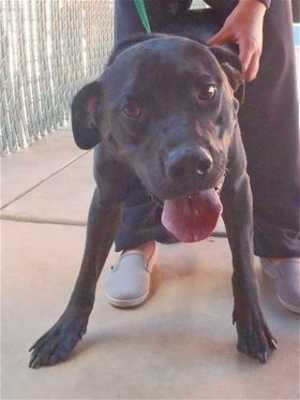
‘Moose’
“Moose” is a Labrador Retriever mix.
He is 3 years old, weighs 66 pounds and has been neutered.
He’s in kennel No. 19, ID No. 34643.

Female pit bull terrier mix
This female pit bull terrier mix is 6 years old.
She has a short coat and weighs 61 pounds. It was not reported if she had been altered or not.
Find her in kennel No. 27, ID No. 34514.

Male pit bull terrier mix
This male pit bull terrier mix is 1 year old.
He has a short black and white coat, and has been neutered.
He’s in kennel No. 29, ID No. 34591.

Female pit bull terrier mix
This female pit bull terrier mix is 1 year old.
She has a short brown and white coat, weighs nearly 33 pounds and has not yet been spayed.
Find her in kennel No. 32, ID No. 34588.

Male pit bull terrier mix
This male pit bull terrier mix is 6 years old.
He weighs 43 pounds, has a short tan coat and has not been neutered.
Shelter staff said he has an injury on his right ear.
He’s in kennel No. 34, ID No. 34586.
Adoptable dogs also can be seen at http://www.co.lake.ca.us/Government/Directory/Animal_Care_And_Control/Adopt/Dogs_and_Puppies.htm or at www.petfinder.com .
Please note: Dogs listed at the shelter's Web page that are said to be “on hold” are not yet cleared for adoption.
To fill out an adoption application online visit http://www.co.lake.ca.us/Government/Directory/Animal_Care_And_Control/Adopt/Dog___Cat_Adoption_Application.htm .
Lake County Animal Care and Control is located at 4949 Helbush in Lakeport, next to the Hill Road Correctional Facility.
Office hours are Monday through Friday, 8 a.m. to 5 p.m., and 1 p.m. to 3 p.m., Saturday. The shelter is open from 10:30 a.m. to 4:30 p.m. Monday through Friday and on Saturday from 1 p.m. to 3 p.m.
Visit the shelter online at http://www.co.lake.ca.us/Government/Directory/Animal_Care_And_Control.htm .
For more information call Lake County Animal Care and Control at 707-263-0278.
Email Elizabeth Larson at
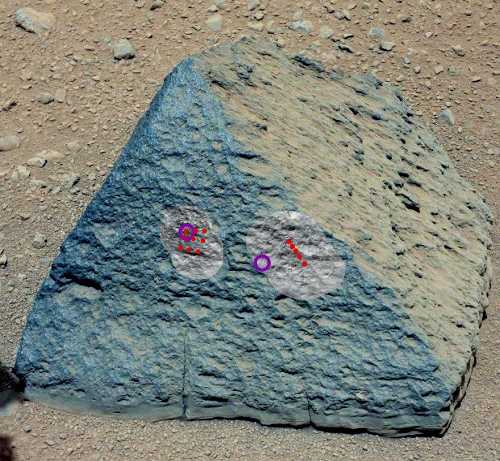
The first Martian rock NASA’s Curiosity rover has reached out to touch presents a more varied composition than expected from previous missions.
The rock also resembles some unusual rocks from Earth’s interior.
The rover team used two instruments on Curiosity to study the chemical makeup of the football-size rock called “Jake Matijevic” (matt-EE-oh-vick).
The results support some surprising recent measurements and provide an example of why identifying rocks’ composition is such a major emphasis of the mission. Rock compositions tell stories about unseen environments and planetary processes.
“This rock is a close match in chemical composition to an unusual but well-known type of igneous rock found in many volcanic provinces on Earth,” said Edward Stolper of the California Institute of Technology in Pasadena, who is a Curiosity co-investigator. “With only one Martian rock of this type, it is difficult to know whether the same processes were involved, but it is a reasonable place to start thinking about its origin.”
On Earth, rocks with composition like the Jake rock typically come from processes in the planet’s mantle beneath the crust, from crystallization of relatively water-rich magma at elevated pressure.
Jake was the first rock analyzed by the rover’s arm-mounted Alpha Particle X-Ray Spectrometer (APXS) instrument and about the thirtieth rock examined by the Chemistry and Camera (ChemCam) instrument.
Two penny-size spots on Jake were analyzed Sept. 22 by the rover’s improved and faster version of earlier APXS devices on all previous Mars rovers, which have examined hundreds of rocks. That information has provided scientists a library of comparisons for what Curiosity sees.
“Jake is kind of an odd Martian rock,” said APXS Principal Investigator Ralf Gellert of the University of Guelph in Ontario, Canada. “It’s high in elements consistent with the mineral feldspar, and low in magnesium and iron.”
ChemCam found unique compositions at each of 14 target points on the rock, hitting different mineral grains within it.
“ChemCam had been seeing compositions suggestive of feldspar since August, and we’re getting closer to confirming that now with APXS data, although there are additional tests to be done,” said ChemCam Principal Investigator Roger Wiens (WEENS) of Los Alamos National Laboratory in New Mexico.
Examination of Jake included the first comparison on Mars between APXS results and results from checking the same rock with ChemCam, which shoots laser pulses from the top of the rover’s mast.

The wealth of information from the two instruments checking chemical elements in the same rock is just a preview. Curiosity also carries analytical laboratories inside the rover to provide other composition information about powder samples from rocks and soil.
The mission is progressing toward getting the first soil sample into those analytical instruments during a “sol,” or Martian day.
“Yestersol, we used Curiosity’s first perfectly scooped sample for cleaning the interior surfaces of our 150-micron sample-processing chambers. It’s our version of a Martian carwash,” said Chris Roumeliotis (room-eel-ee-OH-tiss), lead turret rover planner at NASA’s Jet Propulsion Laboratory in Pasadena, Calif.
Before proceeding, the team carefully studied the material for scooping at a sandy patch called “Rocknest,” where Curiosity is spending about three weeks.
“That first sample was perfect, just the right particle-size distribution,” said JPL’s Luther Beegle, Curiosity sampling-system scientist. “We had a lot of steps to be sure it was safe to go through with the scooping and cleaning.”
Following the work at Rocknest, the rover team plans to drive Curiosity about 100 yards eastward and select a rock in that area as the first target for using the drill.
For more about the Mars Science Laboratory Curiosity rover mission, visit www.nasa.gov/msl and http://mars.jpl.nasa.gov/msl .
You can follow the mission on Facebook and Twitter at www.facebook.com/marscuriosity and www.twitter.com/marscuriosity .
NICE, Calif. – A Lucerne man was in critical condition at a regional trauma center Saturday night after he was seriously injured in a motorcycle crash earlier in the day.
Ramsey Wade Milks, 39, was injured in the wreck, which the California Highway Patrol said occurred at about 5:10 p.m.
Milks was driving his 1982 Yamaha 500 motorcycle and exiting the northbound Highway 29 offramp to the Nice-Lucerne Cutoff when, according to the CHP, he illegally passed a vehicle on the left while failing to step for the posted stop sign at the base of the offramp.
The CHP said Milks continued driving his motorcycle in a reckless manner and at a high rate of speed eastbound on the Nice-Lucerne Cutoff east of Lakeshore Drive. He then allowed his motorcycle to travel to the right of the paved eastbound lane.
Milks lost control of the motorcycle on the soft dirt and gravel shoulder that borders the eastbound lane and the motorcycle went down the sloped embankment, the CHP said.
The left side handlebar of Milks’ motorcycle struck a power pole on the east shoulder of the cutoff, and the impact caused Milks to be ejected into the power pole, according to the CHP.
The CHP said Milks was transported via REACH air ambulance to Santa Rosa Memorial Hospital.
Milks was admitted to the hospital’s intensive care unit, where he was being treated for a skull fracture and brain swelling, the CHP reported.