 How to resolve AdBlock issue?
News
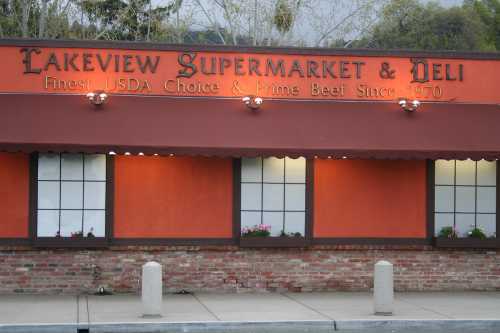
LUCERNE, Calif. – A well-known local businessman said his business is facing a devastating blow as the result of a federal agency’s unilateral action to bar him from participating in the food stamp program.
Kenny Parlet, whose family has owned and operated Lakeview Supermarket & Deli since 1970, was notified by letter last week that the U.S. Department of Agriculture’s Food and Nutrition Service was permanently disqualifying the store from accepting food stamps.
The reason: The store was accused of “trafficking,” or exchanging Supplemental Nutrition Assistance Program – or SNAP – benefits for cash. SNAP is now the official name for the federal food stamp program.
Parlet said he expected a $5,000 fine and a one-week suspension from using the program. Instead, he was hit with one of the program’s most stringent sanctions.
The USDA Food and Nutrition Service confirmed to Lake County News on Monday that Lakeview Market was permanently disqualified on Nov. 16 for trafficking, but would divulge no further details about the case.
Parlet said one of his employees made several inappropriate transactions totaling $132.50, mistakes which he said could end up costing him half a million in lost sales annually – or about 25 percent of his business – and which may, ultimately, cause him to close his business’ doors.
During the USDA’s sting operation, Parlet said the one employee was approached four times and, as a result, accumulated multiple violations. He said that employee had been trained, but he said the SNAP system can be very complicated.
One sale included a box of forks and matches that the cashier – who admitted to making mistakes – wrongly ran as food items, he said. A few weeks later, a $3 sale that included a box of forks and a scouring sponge also violated the rules.
In two other instances, the same cashier allowed the undercover agent to treat their SNAP card like a debit card and receive cash back rather than using the funds only on food, Parlet said.
While the Food and Nutrition Service can choose to impose a civil penalty in lieu of permanent disqualification, Parlet said he was not given that option and, after no warnings or contact, was notified of the final action.
Parlet now has a 10-day period from the receipt of the letter in which to begin a lengthy appeal process that he said a USDA agent already has told him he’s likely to lose.
In the meantime, he’s been ordered to return the electronic benefit transfer equipment used for SNAP transactions within five days or else face fines.
For Parlet, the most incomprehensible part of what he called a “nightmare” for his business is that his store never had a previous violation or warning.
“If we make a mistake, we’re done,” he said.
While he said the employee who was responsible for the transactions was terminated, the store’s entire staff, management team and all of the the local SNAP customers are being punished to “the ultimate degree.”
Parlet said he’s now starting to look at employee cutbacks in order to keep his business afloat.
Caught in a federal crackdown
The action against Parlet comes months after the USDA began a nationwide crackdown on abuses of SNAP, which is now serving 46 million Americans every month, a program record.
According to the U.S. Census Bureau’s American Community Survey, 4,784 Lake County households were estimated to have received food stamp assistance during 2011.
“The Extent of Trafficking in the Supplemental Nutrition Assistance Program: 2006-2008,” a March 2011 report by the USDA Food and Nutrition Service’s Office of Research and Analysis, estimated that trafficking diverted an estimated $330 million annually from SNAP benefits between 2006 and 2008.
Agriculture Under Secretary Kevin Concannon said the USDA has a “zero tolerance policy” for SNAP fraud.
The agency in August unveiled what it said were aggressive new tactics meant to address misuse of SNAP benefits, including tougher financial sanctions for retailers found in violation.
The new sanctions also allow USDA to permanently disqualify a retailer who traffics and, and at the same time, to assess a monetary penalty in addition to the disqualification. Such financial penalties would be proportional to the amount of SNAP business the store is conducting, which the USDA said will help ensure that the financial punishment more closely fits the crime.
Before the changes, the USDA could disqualify a retailer or issue a financial penalty, not both.
Also in August, Concannon released a report for fiscal year 2012’s third quarter showing that 574 stores across the nation had sanctions placed against them that included fines or temporary disqualifications, while another 1,016 stores were permanently disqualified for trafficking or falsifying applications.
A reading of the federal regulations that govern business sanctions and disqualification suggest that the ruling against Parlet is particularly heavy handed.
The regulations state that the Food and Nutrition Service regional office making a disqualification or penalty determination “shall” consider the following: the nature and scope of the violations committed by personnel of the firm; any prior action taken by the service to warn the firm about the possibility that violations are occurring; and any other evidence that shows the firm's intent to violate the regulations.
In addition, the regulations suggest there are a number of lesser sanctions for firms that have a first-time offense.
Parlet, who said he has never had a previous violation, qualifies for a warning letter or a disqualification period of six months, which can be applied “if it is to be the first sanction for the firm and the evidence shows that personnel of the firm have committed violations such as but not limited to the sale of common nonfood items due to carelessness or poor supervision by the firm's ownership or management.”
Parlet has asked for a review of the action against him by the USDA office in Virginia, but he said the USDA’s Sacramento office told him the chances are 99 percent against a ruling in his favor.
Sting operation targets store
Parlet doesn’t know why federal officials focused in on his store, although he suggested it may be because of the market’s large amount of SNAP transactions, which make up 25 percent of its sales. He said total SNAP transactions average between 10 and 15 percent in most stores.
“We cater to them,” he said of SNAP recipients. “That’s what I think prompted the investigation.”
Lakeview Supermarket also fits the USDA’s profile of a high risk store. Among large stores, supermarkets have higher trafficking rates, the USDA’s trafficking report found.
The report said trafficking also was likely to happen in the most impoverished areas, which it defined as being where more than 30 percent of households live in poverty. Based on the most recent figures available from the U.S. Census Bureau, Lake County’s poverty rate for all age groups is 24.6 percent, just shy of fitting the definition.
However, Lake County fits the definition of being rural, and trafficking rates, according to the agency’s report, are highest in the most urban and the most rural areas.
An uncertain future
Parlet said the SNAP program is a significant portion of his business. “We do about $40,000 a month in food stamp sales on average.”
He estimated he will lose as much as $40,000 starting in December, when he usually expects to be filling holiday orders for his popular meat packs.
If customers can’t use their food stamps at his store, he believes he will lose additional sales for other items that aren’t covered by the SNAP program and which those customers purchase with cash.
Parlet said the appeal process will require him to get an attorney, as the case likely will be transferred to a federal court, where a USDA official told him he will have to sue the government, and win, in order to get his SNAP privileges reinstated.
He said he’s spoken to Congressman Mike Thompson’s office, which is trying to work with the USDA to find a less damaging outcome for the business.
“Meanwhile, we’re just bleeding every single minute we’re without this,” Parlet said.
He’s also concerned that if he wanted to sell his business, the USDA could go after him with fines.
Parlet said he’s survived an increasingly difficult business climate, put in tens of thousands of dollars to upgrade his store and worked to build a lasting business. All of that now hangs in the balance.
“I’ve lost all faith in pretty much everything at this point,” Parlet said.
Email Elizabeth Larson at
LAKE COUNTY, Calif. – The Lake County Department of Water Resources on Monday announced a seasonal closure of all off-road trails in the Highland Springs Recreation Area to bicycles and horses, in an effort to prevent trail deterioration and soil erosion during the rainy months.
While this closure prohibits equestrian and bicycle uses of the off-road trails; the trails remain open to hiking.
Throughout the closure, equestrians and bicyclists still will have access to and use of the main roads within the park.
In previous years, heavy wet-season trail use damaged some of the trails. This seasonal closure to horses and bicycles is designed to prevent further damage to and deterioration of the trails and to minimize soil erosion throughout the park.
A recent grant application made by the Lake County Horse Council, in cooperation with the Department of Water Resources and Highland Springs Trails Volunteers, will provide grant funding to help repair sections of damaged trails; it is anticipated the trail repair work will begin in the spring.
Managed by the Department of Water Resources, the Highland Springs Recreation Area comprises more than 3,200 acres of watershed area with approximately 30 miles of single-track trails.
For more information about the closure and repair work, contact the Lake County Department of Water Resources at 707-263-2344.
For information about the Lake County Horse Council, visit www.lakecountyhorsecouncil.com .
For more information about trails, maps, closures, as well as volunteering opportunities with the Highland Springs Trails Volunteers, visit www.highlandspringstrailsvolunteers.com .
LUCERNE, Calif. – A local man was arrested on Sunday after he was injured in a crash on Interstate 5.
Michael Rodriguez, 63, of Lucerne was arrested on suspicion of driving under the influence of drugs, according to California Highway Patrol Officer Bryan Konvalin of the CHP’s Woodland Area office.
At 8:35 a.m. Sunday James Dale Roberts, 39, of Modesto was driving a 2009 Freightliner tractor/trailer combination on northbound I-5 south of County Road 103 near Woodland with Rodriguez approaching the ear in a 2006 Ford Focus. Denise Bailey Green, 42, of Sacramento was following the other vehicles in a 2002 Kia Rio, Konvalin said.
As Rodriguez approached the rear of the Freightliner, he attempted to change lanes to pass, but collided with the rear of the Freightliner. Konvalin said the impacted caused the Ford to go out of control and collide with the Kia.
The traffic collision caused moderate damage to the involved vehicles and Rodriguez suffered complaints of pain, Konvalin said.
CHP officers responded to the scene to investigate the traffic collision. Konvalin said they contacted Rodriguez and observed that he was exhibiting signs of drug intoxication.
Officers performed a DUI evaluation and determined that Rodriguez was driving while under the influence of drugs at the time of the traffic collision, Konvalin said.
Konvalin said Rodriguez subsequently was arrested for DUI, but released from custody to received medial treatment at Woodland Memorial Hospital.
NORTH COAST, Calif. – A woman with numerous identity theft cases around the North Coast and Bay Area has reached a plea agreement with Sonoma County prosecutors.
Sonoma County District Attorney Jill Ravitch said Denise Hankins, 42, entered a plea to 20 different felony charges, all relating to identity theft involving numerous victims, on Nov. 16.
Ravitch said Hankins obtained her victims’ information mostly through stolen mail and by stealing wallets. Hankins then used that information to open bank accounts and store accounts.
Hankins was arrested in September of this year after a joint investigation by the Sonoma County Sheriff’s Department and the Calistoga Police Department, according to Ravitch’s office.
Hankins’ victims and crimes range from Sonoma County to Calistoga and into the East Bay, where she is currently on probation for a forgery conviction out of Alameda County, Ravitch said.
As part of the agreement, Hankins stipulated to a prison term of 15 years and six months. Ravitch said the court indicated that it will likely impose that sentence as 10 years in custody with five years, six months to be served on mandatory supervision.
Hankins will be sentenced formally on Jan. 30, 2013, at 9 a.m. in Department 13 by the Honorable Robert LaForge.
Deputy District Attorney Amy Ariyoshi prosecuted the case.
CLEARLAKE, Calif. – A Clearlake woman was injured Sunday evening when she was hit by a vehicle while crossing Olympic Drive.
Amber Byrne, 48, sustained moderate injuries in the incident, which the Clearlake Police Department said occurred near the intersection of Olympic Drive and Uhl Avenue.
Officers were dispatched to the scene at approximately 5:37 p.m., finding Byrne lying on the side of the road when they arrived, according to a report from the Clearlake Police Department.
Police identified the driver of the vehicle involved in the crash as 41-year-old Wendy Newsome of Clearlake.
The Clearlake Police Department’s preliminary investigation indicated that Byrne was crossing Olympic Drive traveling north when she was hit by Newsome’s 2007 Dodge Caliber, which was traveling west on Olympic Drive.
Byrne was flown to Santa Rosa Memorial Hospital via air ambulance, police said. Newsome and the passengers inside her vehicle were uninjured.
Olympic Drive was closed to traffic for approximately one hour. Police said Newsome was released on scene.
Police said the cause of the collision is still under investigation, adding that drugs and alcohol do not appear to be a factor.
Anyone who may have witnessed the collision is urged to contact Officer Mike Carpenter at 707-994-8251.
LAKE COUNTY, Calif. – The National Weather Service in Sacramento on Monday issued a flood watch to be effective from Wednesday morning through late Saturday night for portions of Northern California including the Clear Lake area.
A flood watch means there is a potential for flooding based on current forecasts.
The flood watch indicates that prolonged periods of precipitation will begin midweek through the weekend throughout Northern California and will bring wet and windy weather, likelihood of urban and small stream flooding, and the possibility of debris flows especially near areas burned in recent forest fires.
More than 7 inches of rainfall has been forecasted for Lake County during the four-day period.
According to Lake County Department of Water Resources staff, flooding from Clear Lake is not anticipated; however, flooding from local creeks is likely.
Be aware, be prepared: Important flood safety tips
Lake County residents are asked to be informed, alert and prepared.
To be prepared for possible flooding, residents are encouraged to assemble a family emergency kit, create a family emergency plan and be aware of flood risks.
Following are a few important flood safety tips:
- Know your risk and take action to reduce your risk.
- Be prepared with an emergency kit. Include flashlight, battery-operated radio, extra batteries, candles, matches, first-aid kit, medications, blankets, food, and water. The American Red Cross ( http://www.redcross.org/prepare/location/home-family ) offers simple checklists to create an emergency preparedness kit.
- Be aware of your surroundings and know your evacuation routes. Relocate to a safe area before access is cut off by rising floodwaters. Don’t forget to take an emergency kit and copies of important documents with you.
- Choose a family meeting place and have a plan for how to communicate during an emergency.
- Tune to local radio or television stations. Listen for emergency information, flood watch and warning bulletins, and instructions from authorities.
- Stay away from rising creeks, streams, and rivers.
- Do not attempt to cross flowing water that may be more than six inches deep. When in doubt, don’t cross.
- Don’t drive through water on the roadway; during floods, more people are trapped and die in their vehicles than anywhere else. Don’t drive around road barriers as floodwaters may have washed out a road or bridge.
- Look out for small animals, especially snakes, which have been flooded out of their homes and may be seeking shelter. Use a pole or stick to poke and turn things over and scare away small animals.
- Look before stepping. After a flood, the ground and floors may be covered with debris, including broken bottles and nails. Floors and stairs covered with mud can be very slippery.
- Be alert for gas leaks. Use a flashlight to inspect for damage. Do not smoke or use candles, lanterns, or open flames unless the gas has been turned off and the area ventilated.
- Stay away from power lines and electrical wires. Electric current can travel through water. The second major cause of flood-related death is electrocution. Report downed power lines to PG&E at 800-743-5000.
- Have the electricity turned off by PG&E. Some appliances, such as televisions, maintain electrical charges even after being unplugged. Do not use appliances or motors that have been exposed to water until they have been taken apart, cleaned, and dried.