 How to resolve AdBlock issue?
News

Gov. Jerry Brown and First Lady Anne Gust Brown hosted the 81st annual Capitol Christmas Tree Lighting Ceremony Wednesday night on the West Steps of the State Capitol in Sacramento.
Gov. Brown lit the Capitol Christmas tree with 10-year-old Christian Anderson of Costa Mesa.
This year's tree is a 50-foot tall white fir tree from the Latour Demonstration State Forest located near Redding in Shasta County. It is the first Capitol Christmas tree from a state forest.
The tree is decorated with hundreds of handcrafted ornaments made by children and adults with developmental disabilities who receive services and support from the state’s development centers and 21 nonprofit regional centers.
It is illuminated by approximately 10,000 ultra-low wattage LED lights.

UKIAH, Calif. – A Santa Rosa man and a Lakeport man escaped injury on Tuesday when the moving truck in which they were riding overturned on Highway 128.
Ramon Jesus Severns, 37, of Santa Rosa and Tracy Dean Faustino, 50, of Lakeport were involved in the single-vehicle crash, which occurred early Tuesday afternoon, according to the California Highway Patrol’s Ukiah office.
Severns was driving a 1997 GMC 6500 box truck with riding Faustino as his passenger, the report said.
CHP Dispatch received a call at approximately 1:19 p.m. about a loaded moving truck having overturned on Highway 128 approximately a mile and a half west of Fish Rock Road, according to the report.
CHP units responded and when they arrived on scene they found both the eastbound and westbound lanes of traffic blocked, the report explained.
The CHP said traffic detours subsequently were put in place. The highway would be reopened at 6:20 p.m. that night.
Based on the CHP investigation, Severns had become distracted by items in the vehicle and allowed the truck to drift to the right and leave the roadway.
Severns lost control of the truck, which the CHP said overturned and came to rest against a telephone pole.
The CHP said Severns and Faustino, both of whom were wearing their seat belts, were uninjured.
The cause of the crash is still under investigation, the CHP said.
LAKE COUNTY, Calif. – The holiday season is supposed to be a time for family, friends and festive celebrations. Unfortunately, each year between Thanksgiving and New Year’s it is also a time when there is a tragic jump in the number of alcohol-related highway fatalities.
Since 1981, every President of the United States has proclaimed December “National Drunk and Drugged Driving (3D) Prevention Month” to help underscore the public’s commitment to preventing impaired driving and promoting the use of designated drivers and sober ride programs.
The month of December and the New Year’s Eve holiday are also often highlighted by significant increases in state and local law enforcement efforts to combat impaired driving such as the use of sobriety checkpoints and saturation patrols.
The California Highway Patrol reported that in Lake County over the past two years there have been five fatalities and 96 injuries due to alcohol-impaired driving crashes.
Impaired driving is one of America’s deadliest problems. In 2010, 10,228 people were killed in alcohol-impaired driving crashes, accounting for nearly one-third (31 percent) of all traffic-related deaths in the United States.
Every day almost 30 people die in motor vehicle crashes that involve an alcohol-impaired driver. This amounts to one death every 48 minutes.
The annual cost of alcohol-related crashes totals more than $51 billion. The cost of a person’s first DUI, without a crash or any injury, is estimated to be $8000.
According to the National Highway Traffic Safety Administration (NHTSA), about three in every 10 Americans will be involved in an alcohol-related crash at some point in their lives.
Lake County Alcohol and Other Drug Services is joining with other national, state and local highway safety and law enforcement officials to remind everyone this holiday season to always designate a sober driver before each holiday party or event involving alcohol.
Remembering to designate a sober driver before the party begins is just one of several, simple steps to help avoid a tragic crash or an arrest for impaired driving.
Other important reminders include:
- Never get behind the wheel of your vehicle if you’ve been drinking, buzzed driving is drunk driving;
- If impaired, call a taxi – use mass transit if available – or call a sober friend or family member to come and get you;
- Or, just stay where you are and sleep it off until you are sober.
- If you are hosting a party this holiday season, remind your guests to always plan ahead to designate a sober driver, always offer alcohol-free beverages during the event, and make sure all of your guests leave with a sober driver; and
- Friends don’t let friends drive drunk. Take the keys and never let a friend leave your sight if you think they are about to drive while impaired.
Driving impaired or riding with someone who is impaired is simply not worth the risk.
The consequences are serious and real. Not only do you risk killing yourself or someone else, but the trauma and financial costs of a crash or an arrest for driving while impaired can be significant and not the way you want to spend your holiday season.
So remember, this holiday season, if you catch a buzz, catch a ride.
For more information or if you have questions please contact Lake County Behavioral Health in Lakeport at 707-994-6494 or in Lucerne at 707-274-9101.
LAKE COUNTY, Calif. – Hours ahead of the deadline, county election officials completed the final canvass for the Nov. 6 presidential election, with the numbers showing turnout was down from four years ago.
Registrar of Voters Diane Fridley said her staff finished the final canvass for the Nov. 6 election before lunch on Tuesday, well ahead of the 5 p.m. deadline.
The final results don’t show any placement changes for the candidates in the various city council and school board races, or the judicial contest.
However, the final count does give a more accurate picture of voter turnout for the election.
Among Lake County’s 34,938 registered voters, 13,470, or 38.6 percent, cast absentee or vote-by-mail ballots, compared to 10,215, or 29.2 percent, who voted at precincts.
The overall countywide voter turnout was 67.8 percent, compared to the 73.6 percent voter turnout the county reported for the 2008 presidential election.
Overall voter turnout in the new Congressional District Three, which covers the northern half of the county and will be represented by Congressman John Garamendi, was at 63 percent.
Congressman Mike Thompson will represent the new Congressional District Five, covering the southern half of the county, where voter turnout was 72.3 percent.
With city council elections in both cities, voter turnout was 55.7 percent in Clearlake and 71.1 percent in Lakeport.
The final counts showed that Measure E, the half-cent sales tax for water quality projects on Clear Lake, had a 63 percent yes vote, with 37 percent voting no. It needed 66 percent to win.
Also needing a 66-percent supermajority was the city of Clearlake’s Measure G, which would have funded road improvements and code enforcement. It had a 61.7 percent yes vote, to 38.3 percent voting no.
Voter turnout was 60.5 percent in the Konocti Unified School District and 71.4 percent in the South Lake County Fire Protection District, which had a successful measure, Measure F, to raise the district’s appropriation limits.
Email Elizabeth Larson at
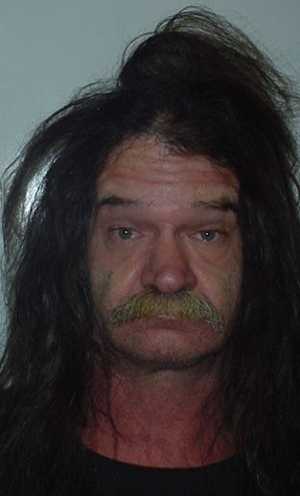
LAKEPORT, Calif. – A Clearlake man has been sentenced to 26 years in prison for sexually assaulting a child dozens of times in a six-month period.
Anthony Ellis Bugg, 52, of Clearlake received the sentence from Judge Richard Martin on Monday.
On Oct. 29 Bugg had pleaded guilty to two counts of molesting an 11-year-old child, according to the Lake County District Attorney’s Office.
Bugg’s public defender, Barry Melton, declined comment on the case, which was prosecuted by Deputy District Attorney Edward Borg, the assigned child sexual assault prosecutor for the Lake County District Attorney’s office. District Attorney Investigator Denise Hinchcliff also assisted in the investigation.
The investigative reports and testimony at the preliminary examination showed that the crimes committed by Bugg came to light when he emailed a suspected child molester in Nevada.
Bugg, using the pseudonym “Tony Smith,” boasted about his 11-year old girlfriend. Unknown to Bugg, that person had been arrested and his computer accounts were being monitored by law enforcement.
The account used by Bugg was traced to an address in Clearlake. After receiving the foregoing information, Det. Timothy Alvarado of the Clearlake Police Department, assisted by Det. Ryan Peterson, began an investigation in which he determined that Bugg lived at the address listed in the account.
During the investigation, the victim, an 11 year old girl, disclosed that Bugg had molested her on numerous occasions, beginning in December 2011. Most of the assaults took place in a shed behind Bugg’s residence.
The victim estimated that Bugg had molested her at least 30 times between January and May 2012. The investigation also disclosed a brief film clip of Bugg molesting the victim.
Bugg pleaded no contest to two separate felony offenses: lewd act with a child by force or violence, which was alleged to have occurred in December 2011, and continuous sexual abuse of a child, alleged to have occurred from January to mid-May 2012, officials reported.
Finding that the crimes displayed an aggravated level of cruelty and viciousness, Judge Martin sentenced Bugg to the upper term in each count.
Because both offenses are violent sex crimes, Bugg was sentenced to full consecutive terms, for an aggregate sentence of 26 years in state prison.
Additionally, Bugg will have to serve 85 percent of his sentence before he is eligible for release. When he is released, Bugg will be required to register as a sex offender.
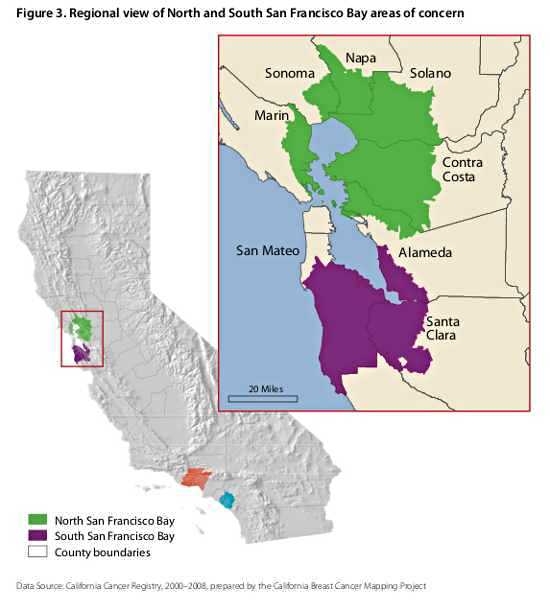
LAKE COUNTY, Calif. – A new study has identified several areas in California previously not known to have invasive breast cancer rates substantially higher than the state average, while Lake County’s rate appears low compared to many other parts of the state.
The Public Health Institute’s California Breast Cancer Mapping Project found four new “areas of concern” encompassing sections of Ventura, Los Angeles, Riverside and Orange counties.
In addition, the research found that parts of the north and south Bay Area – including portions of Sonoma, Marin, Napa, Solano, Contra Costa, Alameda, Santa Clara and San Mateo counties – showed elevated rates for the disease.
The California Breast Cancer Mapping Project developed and used a protocol to map breast cancer rates within and across county boundaries and by using data obtained from the California Cancer Registry by census tract.
Researchers said that breast cancer surveillance traditionally has relied on aggregate county-level data. That method of surveillance had not identified the new focus areas, which span sections of multiple counties.
“Breast cancer doesn’t know geographic boundaries and this study shows that mapping breast cancer rates by census tract is a useful and important supplement to county-level surveillance, which is still essential,” said Eric Roberts, MD, PhD, principal investigator of the CBCMP. “We found that the specific communities most impacted by breast cancer can fall within or across counties. By identifying these communities we can more efficiently and effectively direct resources to them.”
The new methodology pointed to rates in the newly identified areas of concern that were 10 to 20 percent higher than the state average between 2000-08, with 2008 being the most recent data available when the study began, the project reported.
Researchers analyzed sociodemographic factors of women with breast cancer in the four areas of concern.
The findings showed that white women have an elevated risk of having the disease, a pattern that already had been identified in previous research.
They also found that women diagnosed with invasive breast cancer in the Ventura/Los Angeles area of concern had less private insurance compared to the other areas of concern and the state overall.
Here in Lake County, the new mapping did not find above-average incidences, which matches other studies of breast cancer rates.
Both the California Cancer Registry and the California Department of Public Health’s 2012 Health Status Profile for Lake County showed comparatively low rates for the disease when compared with other types of cancers.
From 2005 to 2009, Lake County had an age-adjusted invasive breast cancer rate of 55.46 people per 100,000, the fifth-lowest rate in the state, according to California Cancer Registry statistics. The state average was 66.07 incidences per 100,000.
Lake County Public Health Officer Dr. Karen Tait said Lake County’s breast cancer incidence rate is actually low. However, she said mortality rates are not as good.
She pointed to the county health status profile’s findings that Lake’s age-adjusted death rate for breast cancer was 21.7, slightly above the national objective of 21.3 and the state rate of 20.7.
She said the higher mortality rate may have to do with virulence of the disease and access to treatment, the latter being influenced by socioeconomic issues.
Tait also pointed out that every one of Lake County’s high cancer rates is worsened by smoking. “And people just don’t realize that.”
The new research, while meant to map areas of concern, wasn’t meant to determine the causes of breast cancer rates or detect specific environmental triggers, according to the report.
While the role that environmental pollutants play in breast cancer is of concern, the study’s authors said research shows that cancer often does not develop until decades after these exposures take place.
The maps are based on women live when they were diagnosed; the research does not include where they lived previously or what pollutant exposures they may have experienced.
Researchers hope the new protocol will be put to good use.
“The CBCMP mapping protocol is a very useful tool to enhance surveillance of breast cancer, and possibly other cancers, at the local level,” said Roberts. “We look forward to exploring how it can be more widely utilized by public agencies and other stakeholders.”
The project’s full report is available at http://cehtp.org/resources/breast_cancer_mapping/ or can be viewed below.
Email Elizabeth Larson at