 How to resolve AdBlock issue?
News
The state of California is replacing the current In-Home Supportive Services payroll system with an updated system that will be designed to meet new state and federal requirements for the IHSS Program, county officials reported this week.
The IHSS payroll system will be using a new timesheet format and timesheets will no longer be entered at our Lower Lake location, according to the Lake County Department of Social Services.
The new timesheets will be mailed to a timesheet processing facility in Chico, Calif., county officials said.
Effective March 16, timesheets must be mailed to the address located on the timesheet. Providers and recipients will no longer be able to drop off timesheets at the Lake County IHSS/Public Authority, Adult Services, Social Services or Child Welfare Services facilities.
For additional information, please call 707-995-4680.
CLEARLAKE, Calif. – This week the city council will get updates on its waste stream compliance order from the state and also hear about new efforts to address suicide rates in the county.
The council will meet for a closed session to discuss a potential property acquisition at 5:30 p.m. Thursday, Feb. 28, in the council chambers at Clearlake City Hall, 14050 Olympic Drive, before the open session begins at 6 p.m.
On the consent agenda – items usually accepted as a slate on one vote – are items including the Feb. 14 meeting minutes, the disbursement check list, consideration of an application for participation in the state and federal surplus property program, receipt of North Coast Opportunities' Head Start Child Development Program’s 2011-2012 Annual Report, and consideration of a contract amendment with Robert Galusha for engineering special projects through Dec. 31, 2013.
At the beginning of the meeting the council will present proclamations recognizing March as March for Meals Month and Suicide Awareness Month.
Among the agenda's business items, the council will receive a presentation by the Family Service Agency on the North Bay Suicide Prevention Project.
The council also will receive an annual report from Clearlake Waste Solutions and get an update on the cancellation of the compliance order placed on the city by the California Department of Resources and Recycling, or CalRecycle.
A Feb. 20 letter notified city officials that CalRecycle met this month and decided the city had met the terms of the compliance order and was no longer subject to administrative penalties.
CalRecycle issued the compliance order against the city on Feb. 24, 2009, “based on the City’s failure to adequately implement its diversion programs,” according to a background report for the Feb. 19 meeting at which CalRecycle finally lifted the order.
The city received time extensions to meet the requirements and, in addition, updated its franchise agreement with Clearlake Waste Solutions in August 2011. The CalRecycle report noted, “The agreement enhanced the services provided by the hauler, and increased overall effectiveness of all waste diversion programs.”
The report to the city from Clearlake Waste Solutions noted that tons of trash from the city have dropped from 5,569 tons in 2009 to 4,469 tons last year, with recycling tonnage rising from 1,328 in 2009 to 1,465 in 2013.
In that three-year period green waste recycling increased from 1,062 tons to 1,341 tons, and overall recovery increased from 30 percent o 39 percent of the waste stream, the report showed.
Email Elizabeth Larson at
NORTH COAST, Calif. – State Sen. Noreen Evans (D-Santa Rosa) has introduced two proposals for the 2013 legislative session that she said will improve and strengthen the California Environmental Quality Act, also known as CEQA.
The bills, SB 617 and SB 754, seek to preserve and protect some of the nation’s leading community and environmental protection laws.
“California has a proud history of supporting the public’s right to know what developments are taking place in their communities and enacting protections to preserve their quality of life and the environment around them,” said Evans. “When private profits infringe on public well-being, we rely on CEQA for the ability to defend our homes and our health.”
The introduction of the bills comes at a time when a number of legislators have reportedly been considering introducing CEQA reform legislation.
Signed into law 43 years ago by then Republican Gov. Ronald Reagan, the California Environmental Quality Act has long been lauded for the process it provides to reveal potential health and environmental impacts large development projects will have on the local community and environment.
At times, it is the public’s last defense to ensure that large construction project proponents mitigate or reduce a project’s negative impact on its surroundings.
The law has been particularly important for individuals who do not have the means to hire a team of lawyers to monitor and influence large projects planned in communities.
“Whatever changes are made to the California Environmental Quality Act this legislative session, it is essential that its core democratic protections of meaningful public participation and community enforcement are maintained or strengthened,” said Bruce Reznik, executive director of the Planning and Conservation League. “This legislation brought forward by Sen. Evans will go a long way toward improving any shortcomings in the environmental review process without endangering these core provisions.”
SB 617 will ensure that new information technologies are employed to make CEQA document filing and access easier. Key components of the bill include:
- Mandates that notices during the environmental review process be posted concurrently online and at the county recorder’s office in the affected county;
- Clarifies that project reviews must examine the impacts of the physical environment on the project, fixing the unwise court decision in Ballona Wetlands Trust;
- Provides that electronic records of proceedings be posted concurrently with their preparation;
- Removes several mooted provisions from CEQA.
The second bill, SB 754, provides a framework to further strengthen CEQA’s public participation process and improve the environmental protections of the law.
Key provisions of this framework strengthening legislation include:
- Mandates translation of initial notices and executive summaries where there is a significant limited English proficient population;
- Ensures that illegal actions undertaken to change the land prior to an environmental review do not get to reset the baseline of review;
- Implements controls on administrative record costs;
- Prohibits a developer from directly contracting for and overseeing the preparation of the environmental review, thus ensuring an unbiased and transparent environmental review;
- Limits the “shelf-life” of environmental impact reports (EIRs) that may be used in assessing a project to seven years;
- Reinforces archaeological resource protections by raising the ceiling on mitigation, and;
- Provides enforcement for mitigation measures.
“Sen. Evans’ proposals will enhance transparency and improve the integrity of the environmental review process. These are the right kinds of CEQA changes for the legislature to consider,” said Sierra Club California Director Kathryn Phillips. “While it is a great relief to see Senator Steinberg and others turning away from proposals that would have essentially gutted this landmark environmental law, we do not plan to let our guard down now. Sierra Club and other leading conservation groups will continue to fight any radical changes to dismantle CEQA.”
“CEQA is and always has been a review process,” said Evans. “CEQA works and these bills will make the process work even better. They’ll do that without changing any of the law's essential protections while preserving community voices and California's environment.”
Evans represents the Second Senatorial District, including all or portions of Humboldt, Lake, Mendocino, Marin, Napa, Solano and Sonoma counties.
LAKE COUNTY, Calif. – With the potential for damaging cuts looming due to the threat of sequestration, Lake County's superintendent of schools is urging members of Congress to take immediate action.
On Tuesday Lake County Superintendent of Schools Wally Holbrook, contacted Congressman Mike Thompson and Congressman John Garamendi, urging them to immediately act to stop federal sequestration.
Holbrook's office said sequestration would wield another blow to education, adding to the more than $18 billion in cuts that education has suffered over the last four years.
If Congress does not take action, this Friday the across-the-board budget cuts known as sequestration are scheduled to take effect, Holbrook's office reported. Young children and families across the nation have much to lose if the fiscal cliff isn't resolved by March 1.
According to the California Association for the Education of Young children, some of the impacts to young children include:
- 70,000 young children would lose Head Start/Early Head Start early learning services;
- 30,000 children and families could lose child care;
- 600,000 low-income, nutritionally at risk, pregnant, postpartum, and breastfeeding women, infants, and children would lose WIC nutrition assistance;
- 125,000 low income families would lose rental housing vouchers, increasing housing instability that is detrimental to young children's development.
Young children aren't the only ones who will be impacted; Lake County school districts have much to lose as well.
Michelle Buell, Lake County Office of Education's senior director of business services, listed the following funding reductions Lake County school districts will be faced with if the 5.3 percent sequestration cuts are allowed to occur:
- Kelseyville: $51,369;
- Konocti: $205,796;
- Lakeport: $51,583;
- Middletown: $40,017;
- Lucerne: $10,676;
- Upper Lake Elementary: $22,636;
- Upper Lake High School: $9,578;
- LCOE: $86, 535;
- Total reduction to Lake County education funding: $478,190.
According to Holbrook, this represents a reduction in per pupil funding of $52.27, and he urged Thompson and Garamendi to do all they can to protect the most vulnerable students from losing critical support needed, particularly students with disabilities, students in poverty and English learners.
According to a White House brief released Tuesday, if sequestration were to take effect, the impacts on California in this year alone are:
– Teachers and schools: California will lose approximately $87.6 million in funding for primary and secondary education, putting around 1,210 teacher and aide jobs at risk. In addition about 187,000 fewer students would be served and approximately 320 fewer schools would receive funding.
– Education for children with disabilities: In addition, California will lose approximately $62.9 million in funds for about 760 teachers, aides, and staff who help children with disabilities.
– Work-study jobs: Around 9,600 fewer low income students in California would receive aid to help them finance the costs of college and around 3,690 fewer students will get work-study jobs that help them pay for college.
– Head Start: Head Start and Early Head Start services would be eliminated for approximately 8,200 children in California, reducing access to critical early education.
Superintendent Holbrook urged community members to contact their representatives and urge them to act to prevent sequestration in the interest of protecting communities.
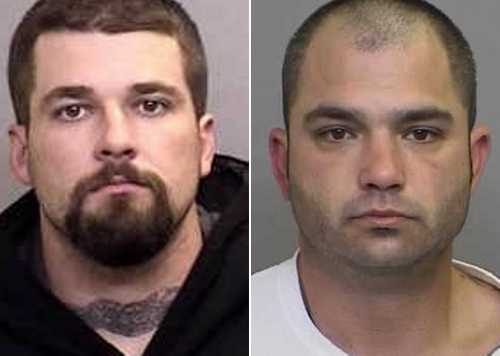
NORTH COAST, Calif. – Mendocino County's sheriff said Tuesday that one man has been taken into custody and a second is still being sought for attempting to kill a deputy.
Sheriff Tom Allman said Christopher Skaggs, 30, of Redwood Valley was arrested Tuesday morning but his associate, 42-year-old Walter Kristopher Miller, a transient from Ukiah, was still being sought for shooting at a deputy Monday night.
Allman and Lt. Greg Van Patten held a teleconference with reporters Tuesday afternoon to offer an update on the developing situation.
The shooting occurred shortly before 10 p.m. in the 900 block of Highway 253 in Ukiah, sheriff's officials reported.
A Mendocino County Sheriff's deputy – whose name has not been released – conducted a traffic stop of a sedan displaying an expired registration in the 1200 block of South State Street in Ukiah, according to a written report Van Patten issued earlier in the day.
Once the sedan stopped the deputy approached the driver’s window to contact the driver, but Van Patten said that when the deputy reached the window the vehicle quickly accelerated southbound on South State Street.
The deputy pursued the sedan, which reached speeds of approximately 80 to 90 miles an hour, van Patten said.
The sedan turned westbound on Highway 253 and slowed to speeds of approximately 50 to 60 miles an hour before swerving into the opposing traffic lane several times, even in the presence of blind curves in the roadway, according to Van Patten.
In the 900 block of Highway 253 the front passenger of the sedan – who Allman said detectives believed was Miller – partially exited the open passenger window and shot five to six times at the deputy's patrol vehicle with a handgun from a distance of about 35 yards.
One of the bullets struck the patrol vehicle's radiator, leaving the patrol vehicle inoperable, Allman said.
Mendocino County Sheriff's deputies from across the county converged on the area in an attempt to locate the sedan, which was last seen traveling westbound of Highway 253, officials reported.
Allman said the California Highway Patrol, Ukiah Police Department, Cloverdale Police Department, Mendocino County District Attorney's Office, Santa Rosa Police Department and Sonoma County Sheriff's Office – which sent nine deputies – assisted in the search.
At around 11 p.m. Monday a deputy located the sedan, abandoned in a driveway leading to a residence located in the 6000 block of Highway 253. Allman said the home's residents were not aware of the vehicle's presence.
He said a reverse 911 call was initiated to residents in the surrounding area.
During a search of the driveway near the sedan deputies found a number of items that Allman and Van Patten said showed the suspects' path of escape, which was on foot.
Among the findings were items that Allman said had been reported as stolen from a residence on Van Arsdale Road in Potter Valley earlier in the evening, Van Patten said.
Allman said that five firearms – including three handguns, a rifle and shotgun – were taken in the burglary.
One of the handguns, which had a 30-round magazine, matched the description of the weapon Miller allegedly used to shoot at the deputy, he said.
None of those guns were found in the sedan, Allman said.
What they did find was “a considerable amount of ammunition” all over the car, he added.
Allman said the California Department of Justice is assisting with processing the vehicles.
He said sheriff's detectives worked the case through the night and are continuing to follow up leads.
At about 9 a.m. Tuesday detectives were tipped about Skaggs' location, and he was apprehended following a brief foot chase not far from where the vehicle was abandoned. He was not armed at the time of his arrest, Allman said.
Allman said they intend to charge the men with attempted murder of a peace officer, and are working side by side with Mendocino County District Attorney David Eyster on forming the case.
He said Skaggs also was being sought on an unrelated burglary and robbery incident that occurred Feb. 19, and that he had been due in court on Tuesday in connection with a vehicle pursuit that occurred last year.
Allman called Skaggs a “109er,” a person released from state prison due to AB 109, the state's correctional realignment legislation.
“He is the kind of criminal that belongs in state prison and not county jail,” said Allman.
Miller, who is still at large and believed to be armed, was arrested for parole violations three times last year in Sonoma County, with the latest arrest taking place in December, Allman said.
“He extremely dangerous,” Allman said of Miller, who is believed to still be in the Ukiah area.
Anyone with information on the current whereabouts of Miller is urged to contact the Mendocino County Sheriff's Office Dispatch Center at 707-463-4086 or the Sheriff's Office Tip-Line at 707-234-2100.
Area residents wanting to receive reverse 911 alerts from the Mendocino County Sheriff's Office on their cell phone can visit https://alerts.deltalert.com/optin/start.xhtml?clientId=172425218 .
Email Elizabeth Larson at
NORTH COAST, Calif. – The U.S. Environmental Protection Agency’s Regional Administrator Jared Blumenfeld on Tuesday recognized nonprofit GRID Alternatives as a Climate Change Champion.
The EPA Pacific Southwest Region’s Environmental Award was presented at a ceremony hosted by the Hopland Band of Pomo Indians in Hopland.
“EPA applauds GRID Alternatives for championing clean technologies to offset the climate change impacts of greenhouse gas emissions,” said Blumenfeld. “This organization is a role model for how business can promote solar energy while equipping Californians with the skills they need to sustain this industry.”
“The Hopland Band of Pomo Indians has been pleased to have Grid Alternatives Work with our qualifying tribal members to install the latest solar technology on their homes,” said Shawn Padi, chairman of the Hopland Band of Pomo Indians. “This green technology not only helps the environment but also makes our qualifying Tribal members’ monthly energy bills much more affordable.”
GRID Alternatives has developed a solar affordable housing program to train and lead teams of community volunteers and job trainees to install solar electric systems for low-income homeowners, generating financial benefits for families, job training opportunities for local workers, and environmental benefits through the reduction of greenhouse gases.
As of February 2013, GRID Alternatives has installed over 3,000 solar electric systems in homes, trained 11,700 community volunteers and job trainees on the theory and practice of installing solar systems, and has prevented over 250,000 tons of greenhouse gas emissions through PV installations.
Beneficiaries of these systems have included seniors on fixed incomes, veterans, and homeowners struggling with unemployed and underemployment, as well as low-income residents of more than 14 tribal communities throughout California.
More information about GRID Alternatives, headquartered in Oakland, Calif., may be found at: www.gridalternatives.org .
The EPA Pacific Southwest Region’s Environmental Awards program acknowledges commitments and significant contributions to protecting the environment in California, Arizona, Nevada, Hawaii, Pacific Islands and tribal lands.
Groups and individuals were selected from nominees received this year from businesses, government officials, tribes, media, academia, environmental organizations and community activists.
For more information on the other 2012 award winners visit http://epa.gov/region9/awards .