 How to resolve AdBlock issue?
News
The Federal Emergency Management Agency and the National Oceanic Atmospheric Administration have partnered to designate March 3-9, 2013, as National Severe Weather Preparedness Week.
Cal EMA joins FEMA and NOAA to share the “Being a Force of Nature” message, and the agencies encourage Californians to know their risk, take action and be an example for others.
California is prone to all types of severe weather events, including flood, drought, severe thunderstorms and even tornadoes – and recent winter storms hitting Northern and Southern California are a reminder that weather can strike anywhere and at anytime.
Just last year, there were more than 450 weather-related fatalities and nearly 2,600 injuries nationally.
Each time severe weather threatens there are stories of ordinary Americans who do the extraordinary to save loved ones – a mother protecting her children by shielding them from flying debris, a homeowner opening up his storm shelter to neighbors, neighbors helping a senior in a wheelchair get to a safe shelter, individuals ensuring friends are aware of the current watch or warning in their area.
Tornadoes struck approximately 46 states, caused over $1.6 billion in damage and nearly 70 fatalities last year. There were more than 935 tornadoes in 2012, with 206 in April alone. While April and May are peak months, tornadoes happen all year round.
Building a weather-ready nation requires that every individual and community take action because severe weather knows no boundaries and affects everyone. Be a force of nature by making a public pledge to be prepared at www.ready.gov/severe-weather .
What can you do to prepare?
Knowing your risk, taking action and being an example by sharing your knowledge and actions through your social network are just a few steps you can take to be better prepared and assist in saving lives.
– Know your risk: The first step to becoming weather-ready is to understand the type of hazardous weather that can affect where you live and work, and how the weather could impact you and your family. Every state in the United States has experienced tornadoes and severe weather, so everyone is exposed to some degree of risk. Check the weather forecast regularly and visit www.ready.gov/severe-weather to learn more about how to be better prepared and how you can protect your family during emergencies.
– Pledge and take action: Be force of nature by taking the pledge to prepare at www.ready.gov/severe-weather . When you pledge to prepare, you will take the first step to making sure that you and your family are prepared for severe weather. This includes filling out your family communications plan that you can email to yourself, putting an emergency kit together, keeping important papers and valuables in a safe place, and getting involved. Obtain a NOAA Weather Radio, and check to see if your cell phone is equipped to receive wireless emergency alerts and sign up for localized alerts from emergency management officials. Stay informed by having multiple sources for weather alerts – NOAA Weather Radio, www.weather.gov and wireless emergency alerts. Subscribe to receive alerts at http://www.weather.gov/subscribe .
– Be an example: Once you have taken action and pledged to be a force of nature, share your story with your family and friends. Create a video and post on a video sharing site; post your story on Facebook, LinkedIn, Twitter, comment on a blog or share through any other social media site. Technology today makes it easier than ever to be a good example and share the steps you took to help us achieve the vision of a weather-ready nation.
Information on the different types of severe weather such as tornadoes, severe thunderstorms and flooding is available at http://www.weather.gov and www.ready.gov/severe-weather .
LAKEPORT, Calif. – Lakeport resident Phil Myers joined members of the Parkinson’s disease community from across the country in Washington, D.C. for the Parkinson’s Action Network (PAN) Forum Feb. 25-27.
Myers recently was appointed and trained as a Parkinson’s research advocate for the Parkinson’s Disease Foundation.
“The PAN Forum was an incredible opportunity to join forces with other advocates from across the country and have our voices heard in Washington,” Myers said. “I am excited to represent the people of Lake County in our nation’s capital, and am working hard to make a difference for people with Parkinson’s and their families.”
At the PAN Forum, people living with Parkinson’s, their families and caregivers, scientists and researchers, and others working toward finding a cure for Parkinson’s came together in the nation’s capital to hear updates on the latest Parkinson’s disease research and learn about what role the federal government plays in Parkinson’s research.
They also attended grassroots advocacy workshops to learn how they can best educate lawmakers on issues important to the Parkinson’s community and met with members of Congress and their staff to talk about ways in which the government can support efforts to find better treatments and a cure, as well as improve the quality of life for people living with Parkinson’s.
During the forum, Myers worked work with a team of advocates from California and met with Congressman Mike Thompson’s staff as well as Sen. Dianne Feinstein’s staff and Sen. Barbara Boxer’s staff to share information and updates about Parkinson’s disease, biomedical research funding and jobs in California and to specifically ask for their vote on certain issues that matter to people with Parkinson’s and their families.
The Parkinson’s Action Network is the unified voice of the Parkinson’s community advocating for better treatments and a cure.
In partnership with other Parkinson’s organizations and our powerful grassroots network, PAN educates the public and government leaders on better policies for research and an improved quality of life for people living with Parkinson’s.
For more information, visit www.parkinsonsaction.org .
The Parkinson’s Disease Foundation is a leading national presence in Parkinson’s disease research, education and public advocacy. Since its founding in 1957, PDF has dedicated over $96 million to fund the work of leading scientists throughout the world and over $40 million to support national education and advocacy initiatives for more information, go to www.pdf.org .
”
LOWER LAKE, Calif. – Children and adults enjoyed an evening of fun and learning at Lower Lake Elementary School’s recent “Family Science Night”
The annual event was held on Thursday, Feb. 28.
Science teacher Lisa Rogers organized en evening of learning featuring robots, telescopes, millipedes and plenty of enthusiastic young people who shared exhibits and fun experiments.
Lake County News videographer John Jensen visited with the students, and produced the video report featured above.
LAKE COUNTY, Calif. – The county’s animal shelter this week has another large selection of dogs available for adoption.
The dogs are different ages, breeds, sizes and temperaments, but all need the same thing – a loving home.
Dogs that are adopted from Lake County Animal Care and Control are either neutered or spayed, microchipped and, if old enough, given a rabies shot and county license before being released to their new owner. License fees do not apply to residents of the cities of Lakeport or Clearlake.
If you're looking for a new companion, visit the shelter. There are many great pets hoping you'll choose them.
The following dogs at the Lake County Animal Care and Control shelter have been cleared for adoption (additional dogs on the animal control Web site not listed are still “on hold”).
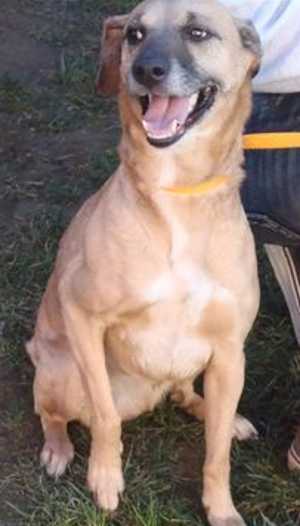
Terrier mix
This female terrier mix is 5 years old.
She has a short tan coat and weighs 23 pounds. It was not reported if she had been altered.
Find her in kennel No. 6, ID No. 35601.
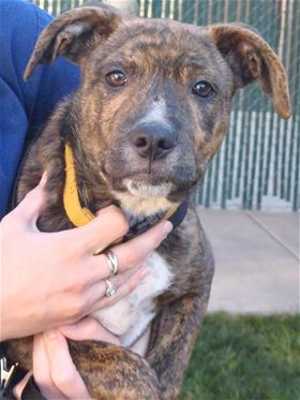
Shepherd-pit bull terrier mix
This male shepherd-pit bull terrier mix is 13 weeks old.
He has a short brown-brindle coat and has not been neutered.
He’s in kennel No. 7, ID No. 35680.
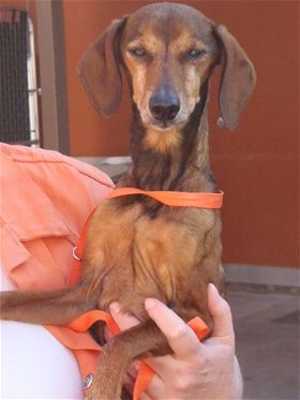
Dachshund-terrier mix
This male dachshund-terrier mix is 10 years old.
He has a short red coat, weighs nearly 12 pounds and has been neutered.
Visit with him in kennel No. 8, ID No. 35644.
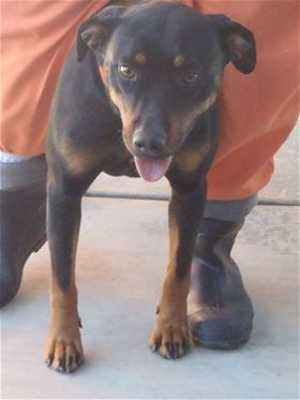
Rottweiler-Labrador Retriever mix
This female Rottweiler-Labrador Retriever mix is 4 months old.
She has a short brown and black coat. It was not been reported if she has been altered.
She’s in kennel No. 9, ID No. 35681.
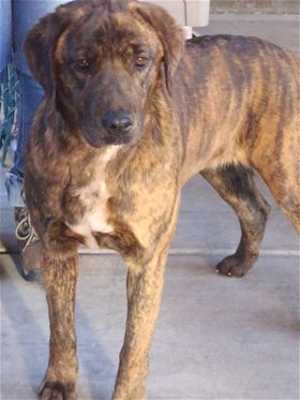
Brown brindle female
This female dog is of unspecified breed and age.
She’s of medium size, with a short brown brindle coat. It was not reported if she had been altered.
She’s in kennel No. 10, ID No. 35679.
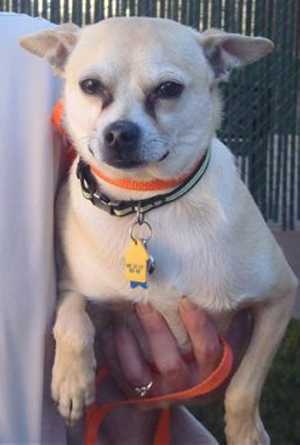
'Milo'
“Milo” is a 1 year old male Chihuahua mix.
He has a short tan coat and has been altered.
He's in kennel No. 13, ID No. 35533.
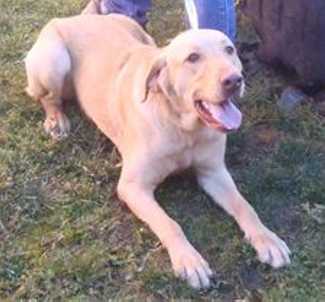
‘Leo’
“Leo” is a 10 month old male Labrador Retriever mix.
He has a short buff-colored coat, weighs 70 pounds and has been neutered.
Find him in kennel No. 14, ID No. 35407.
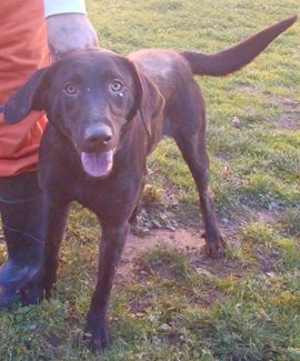
‘Jitsue’
“Jitsue” is a 10 month old female Labrador Retriever mix.
She has a short chocolate-colored coat, weighs 62 pounds and has been spayed.
She's in kennel No. 16, ID No. 35408.
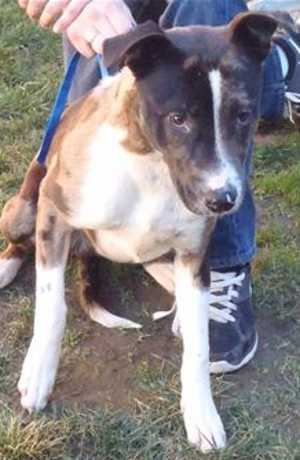
‘Rusty’
“Rusty” is a 1 year old Catahoula Leopard Dog-shepherd mix.
He has a short tricolored coat and weighs 49 pounds. It was not reported if he had been altered or not.
Find him in kennel No. 18, ID No. 35627.
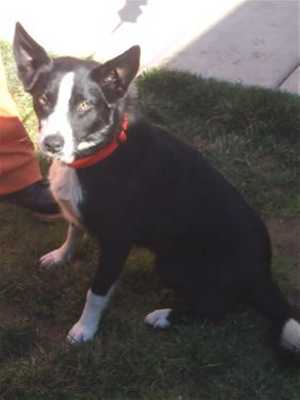
Border collie mix
This female border collie mix is 8 months old.
She has a medium length black and white coat, weighs nearly 33 pounds and has been altered.
She's in kennel No. 20, ID No. 35507.
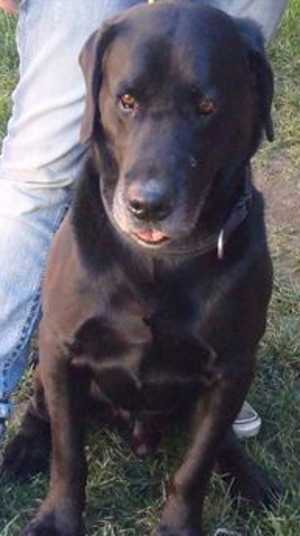
Labrador Retriever mix
This male Labrador Retriever mix is 6 years old.
He has a medium-length coat, weighs 79 pounds and has been neutered.
Find him in kennel No. 22, ID No. 35623.

Chihuahua-terrier mix
This male Chihuahua-terrier mix is 2 years old.
He has a short black and brown coat, and has been altered.
Find him in kennel No. 23b, ID No. 35473.
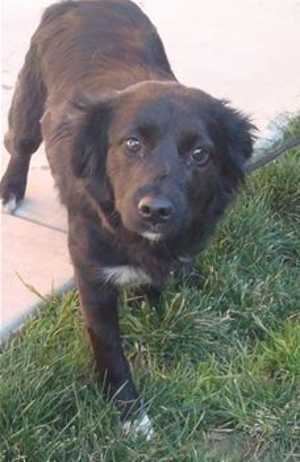
Australian Cattle Dog-blue heeler
This female Australian Cattle Dog-blue heeler mix is 1 year old.
She has a long black coat and has not been spayed.
She’s in kennel No. 25, ID No. 35659.
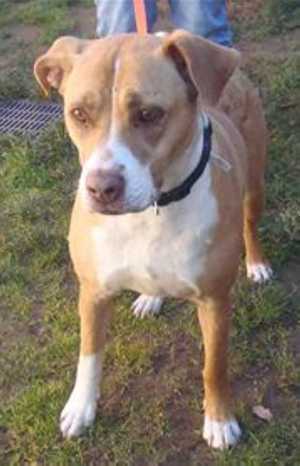
Female retriever mix
This female retriever mix is 4 years old.
She has a short tan coat, weighs 60 pounds and has been spayed.
Find her in kennel No. 26, ID No. 35528.
Please note: Dogs listed at the county shelter's Web page that are said to be “on hold” are not yet cleared for adoption.
To fill out an adoption application online visit http://www.co.lake.ca.us/Government/Directory/Animal_Care_And_Control/Adopt/Dog___Cat_Adoption_Application.htm .
Lake County Animal Care and Control is located at 4949 Helbush in Lakeport, next to the Hill Road Correctional Facility.
Office hours are Monday through Friday, 8 a.m. to 5 p.m., and 1 p.m. to 3 p.m., Saturday. The shelter is open from 10:30 a.m. to 4:30 p.m. Monday through Friday and on Saturday from 1 p.m. to 3 p.m.
Visit the shelter online at http://www.co.lake.ca.us/Government/Directory/Animal_Care_And_Control.htm .
For more information call Lake County Animal Care and Control at 707-263-0278.
Email Elizabeth Larson at
Something unexpected is happening on the sun.
This year is supposed to be the year of Solar Max, the peak of the 11-year sunspot cycle. Yet 2013 has arrived and solar activity is relatively low. Sunspot numbers are well below their values in 2011, and strong solar flares have been infrequent for many months.
The quiet has led some observers to wonder if forecasters missed the mark. Solar physicist Dean Pesnell of the Goddard Space Flight Center has a different explanation.
“This is solar maximum,” he suggested. “But it looks different from what we expected because it is double peaked.”
Conventional wisdom holds that solar activity swings back and forth like a simple pendulum. At one end of the cycle, there is a quiet time with few sunspots and flares. At the other end, Solar Max brings high sunspot numbers and solar storms. It’s a regular rhythm that repeats every 11 years.
Reality, however, is more complicated. Astronomers have been counting sunspots for centuries, and they have seen that the solar cycle is not perfectly regular.
For one thing, the back-and-forth swing in sunspot counts can take anywhere from 10 to 13 years to complete; also, the amplitude of the cycle varies. Some solar maxima are very weak, others very strong.
Pesnell noted yet another complication: “The last two solar maxima, around 1989 and 2001, had not one but two peaks.”
Solar activity went up, dipped, then resumed, performing a mini-cycle that lasted about two years.
The same thing could be happening now. Sunspot counts jumped in 2011, dipped in 2012, and Pesnell expects them to rebound again in 2013.
“I am comfortable in saying that another peak will happen in 2013 and possibly last into 2014,” he predicted.
Another curiosity of the solar cycle is that the sun’s hemispheres do not always peak at the same time. In the current cycle, the south has been lagging behind the north. The second peak, if it occurs, will likely feature the southern hemisphere playing catch-up, with a surge in activity south of the sun’s equator.
Pesnell is a leading member of the NOAA/NASA Solar Cycle Prediction Panel, a blue-ribbon group of solar physicists who assembled in 2006 and 2008 to forecast the next Solar Max.
At the time, the sun was experiencing its deepest minimum in nearly a hundred years. Sunspot numbers were pegged near zero and x-ray flare activity flat-lined for months at a time.
Recognizing that deep minima are often followed by weak maxima, and pulling together many other threads of predictive evidence, the panel issued this statement: “The Solar Cycle 24 Prediction Panel has reached a consensus. The panel has decided that the next solar cycle (Cycle 24) will be below average in intensity, with a maximum sunspot number of 90. Given the date of solar minimum and the predicted maximum intensity, solar maximum is now expected to occur in May 2013. Note, this is not a unanimous decision, but a supermajority of the panel did agree.”
Given the tepid state of solar activity in Feb. 2013, a maximum in May now seems unlikely.
“We may be seeing what happens when you predict a single amplitude and the Sun responds with a double peak,” said Pesnell.
Incidentally, Pesnell noted a similarity between Solar Cycle 24, under way now, and Solar Cycle 14, which had a double-peak during the first decade of the 20th century. If the two cycles are in fact twins, “it would mean one peak in late 2013 and another in 2015.”
No one knows for sure what the sun will do next. It seems likely, though, that the end of 2013 could be a lot livelier than the beginning.
Dr. Tony Phillips works for the National Aeronautics and Space Administration.
When the sun rose over Russia's Ural Mountains on Friday, Feb. 15, many residents of nearby Chelyabinsk already knew that a space rock was coming.
Later that day, an asteroid named 2012 DA14 would pass by Earth only 17,200 miles above Indonesia. There was no danger of a collision, NASA assured the public.
Maybe that's why, when the morning sky lit up with a second sun and a shock wave shattered windows in hundreds of buildings around Chelyabinsk, only a few people picking themselves off the ground figured it out right away. This was not a crashing plane or a rocket attack.
“It was a meteor strike--the most powerful since the Tunguska event of 1908,” says Bill Cooke of NASA's Meteoroid Environment Office.
In a coincidence that still has NASA experts shaking their heads, a small asteroid completely unrelated to 2012 DA14 struck Earth only hours before the publicized event.
The impactor flew out of the blue, literally from the direction of the sun where no telescope could see it, and took everyone by surprise.
“These are rare events and it is incredible to see them happening on the same day,” said Paul Chodas of NASA's near-Earth Object Program at JPL.
Researchers have since pieced together what happened. The most telling information came from a network of infrasound sensors operated by the Comprehensive Test Ban Treaty Organization (CTBTO). Their purpose is to monitor nuclear explosions.
Infrasound is a type of very low-frequency sound wave that only elephants and a few other animals can hear.
It turns out that meteors entering Earth's atmosphere cause ripples of infrasound to spread through the air of our planet.
By analyzing infrasound records, it is possible to learn how long a meteor was in the air, which direction it traveled, and how much energy it unleashed.
The Russian meteor's infrasound signal was was the strongest ever detected by the CTBTO network. The furthest station to record the sub-audible sound was 15,000km away in Antarctica.
Western Ontario Professor of Physics Peter Brown analyzed the data. “The asteroid was about 17 meters in diameter and weighed approximately 10,000 metric tons,” he reported. “It struck Earth's atmosphere at 40,000 mph and broke apart about 12 to 15 miles above Earth's surface. The energy of the resulting explosion exceeded 470 kilotons of TNT.” For comparison, the first atomic bombs produced only 15 to 20 kilotons.
Based on the trajectory of the fireball, analysts have also plotted its orbit. “It came from the asteroid belt, about 2.5 times farther from the sun than Earth,” said Cooke.
Comparing the orbit of the Russian meteor to that of 2012 DA14, Cooke has shown that there is no connection between the two. “These are independent objects,” he said. “The fact that they reached Earth on the same day, one just a little closer than the other, appears to be a complete coincidence.”
Infrasound records confirm that the meteor entered the atmosphere at a shallow angle of about 20 degrees and lasted more than 30 seconds before it exploded.
The loud report, which was heard and felt for hundreds of miles, marked the beginning of a scientific scavenger hunt.
Thousands of fragments of the meteor are now scattered across the Ural countryside, and a small fraction have already been found.
Preliminary reports, mainly communicated through the media, suggest that the asteroid was made mostly of stone with a bit of iron – “in other words, a typical asteroid from beyond the orbit of Mars,” said Cooke. “There are millions more just like it.”
And that is something to think about as the cleanup in Chelyabinsk continues.
Dr. Tony Phillips works for the National Aeronautics and Space Administration.