 How to resolve AdBlock issue?
News
In an effort to eliminate dangerous behind-the-wheel cell phone use and texting, the California Office of Traffic Safety (OTS), California Highway Patrol (CHP), and more than 200 law enforcement agencies across the state on Tuesday announced high visibility enforcement operations during April’s National Distracted Driving Awareness Month.
The overall goal of the increased enforcement is to convince drivers of the dangers of distracted driving and reduce the number of people impacted by this risky behavior.
The “It’s Not Worth It!” theme emphasizes that a phone call or text isn’t worth a hefty fine or a collision.
“In a few short years, distracted driving has grown to be a nationwide traffic safety concern, and we all need to put forth the effort necessary to put an end to it,” said OTS Director Christopher J. Murphy. “Law enforcement agencies will be stepping up their efforts to help remind drivers to stay alert when behind the wheel and to not endanger their lives or the lives of others with distractions from mobile devices.”
In recent years, hundreds have been killed and thousands seriously injured in California as a result of collisions that involved at least one driver who was distracted.
Nationally, an estimated 3,331 people died in 2011. Any activity that diverts the driver’s attention away from the primary task of driving is distracting, but the recent dramatic rise in cell phone talking and texting has greatly increased the number of collisions.
“No text message or phone call is worth the risk of serious injury – or much worse,” said Brian Kelly, Acting Secretary of the Business, Transportation & Housing Agency. “Always keep your eyes on the road and hands off your phone while driving.”
Behind the wheel, cell phone use can significantly reduce the brain functions needed for safe driving, sometimes up to 37 percent. The cell phone conversation can cause such a reduction in proper brain function that good drivers are transforming seemingly into inattentive “zombies” behind the wheel.
To avoid falling victim to “zombie-like” distracted driving behaviors OTS is providing drivers with the following tips that can be implemented by any motorist:
- Turn off your phone and/or put it out of reach while driving;
- Include in your outgoing message that you can’t answer while you are driving;
- Don’t call or text anyone at a time when you think they may be driving;
- Adjust controls and set your song playlist before you set out on the road;
- Stay alert and keep your mind on the task of driving- often after a long day at work or a not-so-restful night’s sleep, people’s minds can wander when behind the wheel. If you find yourself daydreaming – clear your head and focus on the road.
In 2012, the California Department of Motor Vehicles reported nearly 450,000 handheld cell phone and texting convictions, with more than 57,000 tickets issued in April alone.
The CHP and statewide law enforcement agencies are committed to ensuring our streets are safe by ticketing anyone found driving while distracted.
The fine for a first time texting or hand-held cell phone violation is $159, with subsequent tickets costing $279.
“Enforcement is just one part of this campaign,” said CHP Commissioner Joe Farrow. “The larger goal is educating motorists about the dangers of distracted driving and encouraging them to change their behavior behind the wheel. This effort is not about how many citations law enforcement officers can issue, but how many lives are ultimately saved because motorists made the right choice to focus their attention on the road, free of distraction.”
Drivers and passengers alike are invited to check out all the Distracted Driving Zombies and add comments on the OTS Facebook page at www.facebook.com/CaliforniaOTS , and follow OTS on Twitter @OTS_CA.
Get more distracted driving information at www.distraction.gov and www.ots.ca.gov , and teen information at www.impactteendrivers.org .
The California Department of Water Resources will conduct the season’s next-to-last snow survey this Thursday, March 28.
It is expected that the manual measurements will confirm electronic readings showing that snowpack water content is well below normal for the date.
Remote sensors on Tuesday indicated that statewide, snowpack water content is 54 percent of average for the date. That is also 54 percent of the average April 1 reading when the snowpack normally is at its peak before the spring melt.
The snowpack normally provides about a third of California’s water as it melts into streams, reservoirs and aquifers in spring and early summer, the Department of Water Resources reported.
November and December storms built a heavy snowpack early this season, but conditions since have been unusually dry, the agency said.
How much record dry conditions in much of the state have depleted the snowpack will be assessed by surveyors from DWR and cooperating agencies as they take measurements up and down the mountain ranges.
One focus of attention Thursday will be on the manual survey scheduled for 11 a.m. off Highway 50 near Echo Summit.
Despite the dwindling snowpack, most key storage reservoirs are above or near historic levels for the date, according to the agency.
An exception is San Luis Reservoir, a critical off stream reservoir south of the Sacramento-San Joaquin Delta that is only at 63 percent of its historic level for the date. San Luis, which has a capacity of 2,027,840 acre-feet, normally is filled by pumping from the Delta, which has been restricted to protect Delta smelt and salmon.
An acre-foot is 325,851 gallons, enough to cover one acre to a depth of one foot.
DWR currently estimates that it will be able to deliver 35 percent of the slightly more than 4 million acre-feet of water requested by the 29 public agencies that distribute State Water Project water to more than 25 million Californians and nearly a million acres of irrigated farmland.
The delivery estimate was reduced from 40 percent on Friday due to dry weather and pumping restrictions to protect Delta smelt and salmon.
The final SWP allocation for calendar year 2012 was 65 percent of requested deliveries. The initial delivery estimate for calendar year 2011 was only 25 percent of requested SWP water.
However, as winter took hold, a near record snowpack and heavy rains resulted in deliveries of 80 percent of requests in 2011.
The final allocation was 50 percent in 2010, 40 percent in 2009, 35 percent in 2008, and 60 percent in 2007.
The last 100 percent allocation – difficult to achieve even in wet years because of pumping restrictions to protect Delta fish – was in 2006, state officials said.
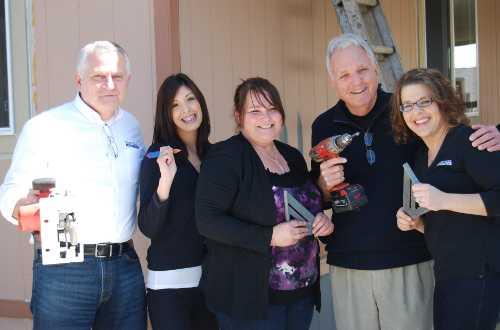
LAKEPORT, Calif. – Thanks to a partnership between a local credit union and a nonprofit, a Lakeport family will soon have a home of its own.
In 2012, Habitat for Humanity Lake County was presented with the unique opportunity to partner with Mendo Lake Credit Union.
Under the leadership of Chief Executive Officer Richard Cooper, Mendo Lake Credit Union presented a property in the city of Lakeport to Habitat for Humanity Lake County to be refurbished for one of Habitat’s partner families.
Volunteers from the community are aiding future homeowner Callie Swift in the refurbishment of what will soon be her family’s new home.
“I am so excited,” said Swift, a single mother of two. “I’ve helped on other Habitat homes; it is finally my turn. It’s a lot of physical labor, but will be so worth it. I’ll be two minutes away from work and I can see the lake from my deck.”
In addition to the property, Mendo Lake Credit Union employees and volunteers will participate in the refurbishment work and will assist Swift by providing beds for her two children.
“We are able to turn a bad situation into a good one,” said Cooper. “This is pretty exciting.”
This will be Habitat for Humanity Lake’s 17th home in the county and its first in Lakeport.
In order to provide homeownership opportunities for low-income, first-time homebuyers, Habitat for Humanity Lake County relies on donations and volunteers.
To find out how you can help, or for more information about Habitat for Humanity Lake County, visit www.lakehabitat.org , call 707-994-1100 or drop by the office at 16285 A Main St., Lower Lake.
LAKE COUNTY, Calif. – A member of the state Board of Equalization will host a teleconference town hall in April on the state fire fee, which currently is the focus of a lawsuit and legislation seeking to overturn it.
Board of Equalization Member George Runner will host the tele-town hall beginning at 6 p.m. Tuesday, April 2.
For those who want to participate in the tele-town hall, they are asked to register in advance at www.calfirefee.com/townhall or by calling 916-324-4970.
Participants will receive a telephone call at the start of the tele-town hall connecting them with the group.
The fire fee, passed by the California Legislature and signed into law by Gov. Jerry Brown in 2011, assigned a fee to every parcel in the State Responsibility Area, as Lake County News has reported.
At a November 2011 meeting, the California Board of Forestry and Fire Protection approved a per-parcel fee of $150. For parcels also covered by local responsibility areas, there was a $35 per parcel reduction in the fee.
The state began billing property owners for the fees in 2012.
Opponents of the fee said it wasn’t going toward fire prevention but to the creation of a new bureaucracy. At the same time, the state took a reported $50 million from Cal Fire’s budget.
Since then, legislation has been introduced to try to repeal the fee. Runner, a vocal opponent of the fire fee, said the Howard Jarvis Taxpayers Association filed suit to overturn the fee. The Board of Equalization was served with the suit on March 12.
“Recent revelations regarding the state’s misuse of fire fee dollars have only strengthened our case that the ‘fire fee’ is really an illegal tax,” Runner, who plans to join the lawsuit through an amicus brief, said in a written statement.
Payments of the fee so far have generated $72 million in revenue for the state, Runner reported.
He said the 2013 round of bills – which had been set to be mailed April 2 – is being delayed in response to concerns about accuracy of billing data.
Last week, Runner had sent Cal Fire a letter asking for the delay until the Board of Forestry has the opportunity to correct the State Responsibility Area maps, as there have been concerns that inconsistencies in boundaries resulted in some property owners being incorrectly billed.
Cal Fire also has been under increased scrutiny after nearly $4 million was discovered in a secret fund, with the fire fees reportedly diverted for wildfire investigations.
“The fire fee is tax policy at its worst,” said Runner. “Ever since the Legislature enacted this illegal tax, it’s created one problem after another. If the Legislature doesn’t act quickly to repeal this fiasco, the courts need to strike it down.”
Email Elizabeth Larson at
MENDOCINO NATIONAL FOREST, Calif. – A prescribed fire is planned for this Wednesday on the Grindstone Ranger District of the Mendocino National Forest, conditions permitting.
The Alder Springs Underburn is planned for approximately 250 acres and is located near Alder Springs off of Forest Highway 7.
The public may notice smoke in this area of the forest Wednesday, as well as residual smoke after ignitions are over, forest officials said.
Forest visitors are asked to be aware of their surroundings and watch for prescribed burning operations to maintain personal and firefighter safety.
Areas where prescribed burning operations are taking place will be well signed with increased fire personnel and agency traffic in the area.
Prescribed burning is an important tool for the forest to use for hazardous fuels reduction and forest health improvement, including wildlife habitat.
Prescribed fire is applied by trained professionals in a skillful manner under specific weather conditions in a defined location to achieve specific objectives. Each prescribed fire can be different visually depending on the forest types, fuel load and how long fire has been absent from the area, including both wildfires and prescribed fires.
Forest officials said prescribed burns are conducted when there is a window of opportunity and specific conditions and criteria are met before, and will be sustained during and after, the burn.
Visitors are encouraged to contact the Mendocino National Forest at 530-934-3316 for more information.
Confirmation and updates on prescribed fire activities can also be found on Twitter, @MendocinoNF, or visit www.fs.usda.gov/mendocino .
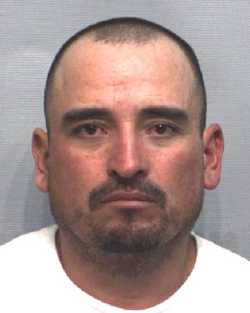
NORTHERN CALIFORNIA – A man who Monterey County officials had been seeking since 1997 for a homicide was arrested last week following a traffic stop in Glenn County.
Fidel Rios-Soto, 39, of Renton, Wash., was taken into custody for drug charges and later booked for the murder warrant, according to Glenn County Sheriff Larry Jones.
At 8:30 p.m. Tuesday, March 19, the California Highway Patrol conducted an enforcement stop on a vehicle for a vehicle code violation on southbound Interstate 5, south of the County Road 20 overpass, Jones reported.
Officers contacted the driver, Rios-Soto, and an adult female passenger, both of Washington state. Rios-Soto was cooperative and advised the officers he had methamphetamine and approximately $6,000 of U.S. currency on his person, Jones said.
Glenn Interagency Narcotics Task Force (GLINTF) agents were called and took over the investigation. Jones said the CHP officer on scene advised GLINTF agents there possibly was an outstanding felony arrest warrant for homicide out of Monterey County for a Fidel Rios-Soto, but with a different date of birth. The outstanding warrant was issued in 1997.
GLINTF agents located approximately 16 grams of methamphetamine, approximately $24,000 in U.S. currency, and a loaded handgun inside the vehicle. Jones said the street value of the narcotics was estimated at $1,600.
GLINTF agents, in conjunction with the Monterey County Sheriff’s Office, continued the investigation to determine the true identity of Rios-Soto, Jones said. The identity was confirmed by the Monterey County Sheriff’s Office by photos, tattoos, surgical scars, and by comparing latent print cards that were provided by GLINTF.
On Friday, March 22, Fidel Rios-Soto was booked for the felony warrant for homicide, with bail set at $500,000, Jones said. On March 19 he had been booked by GLINTF agents on the fresh local narcotics and weapons violations, with bail set at $55,000.
Glenn County Sheriff’s correctional officers also obtained a no bail Immigration & Customs Enforcement hold on Rios-Soto, Jones said.
Rios-Soto alleged that he was currently living in Renton, Wash., and worked for NW Classic Landscapes, also located in Renton, according to Jones.
Arrangements will be made to have Rios-Soto transported to Monterey County to answer for the alleged homicide. Jones said Glenn County GLINTF will continue to assist Monterey County as needed.