 How to resolve AdBlock issue?
News
CLEARLAKE, Calif. – A Clearlake resident has received an appointment from California’s governor.
Gov. Jerry Brown’s office announced on Friday that Robert Taylor has been appointed to Area Board I of the California State Council on Developmental Disabilities.
Taylor, 52, has been an advisor for the Board Resource Center Inc. since 2009. He served on the Regional Community Advisory Committee of L.A. Care from 2000 to 2011. Taylor worked as a telemarketer for Zoya Telecommunications Inc. from 1998 to 2001.
He serves on the California Health and Human Services Agency Olmstead Advisory Committee, the California State Council on Developmental Disabilities Employment First Committee and the California Department of Developmental Services Consumer Advisory Committee.
This position does not require Senate confirmation and there is no compensation. Taylor is a Democrat.
Other appointees to the California State Council on Developmental Disabilities announced Friday include Jonine Biesman, 44, of Westlake Village, Area Board X; Jeana Ericksen, 43, of Santa Rosa, Area Board IV; Verdine Mertens, 82, of Red Bluff, Area Board II; and Rosanna Ryan, 62, of Redding, Area Board II.
The Department of Water Resources (DWR) has decreased this year’s water delivery estimate from 40 to 35 percent of requested State Water Project water.
The reduced allocation is due primarily to a record dry January and February in Northern California, where key reservoirs capture water to supply millions of Californians.
Weather so far in March also has been relatively dry. California normally receives more than 90 percent of its rain and snow from December through April.
Pumping restrictions this winter in the Sacramento-San Joaquin Delta to protect salmon and Delta smelt also limit the ability of DWR to meet requests for State Water Project (SWP) supplies.
November and December were relatively wet, but between November 1 and February 28, restrictions to minimize harm to native fish prevented DWR from pumping more than 550,000 acre-feet of water from the Delta to store at San Luis Reservoir. San Luis is a critical summer supply pool for the SWP and the federal Central Valley Project. Today the reservoir is 63 percent full.
If DWR did not have to rely solely on its south Delta pumping plant and had a north Delta diversion on the Sacramento River, as proposed by the Bay Delta Conservation Plan (BDCP), the department could have moved water to San Luis Reservoir while meeting existing salmon and Delta smelt protections.
The ability to divert that water in the wake of winter storms likely would have led to a higher allocation for SWP water supply contractors this year.
“We reduced pumping this winter to protect fish from reverse flows in south Delta streams that entrain fish and divert them from their migratory routes,” said DWR Director Mark Cowin. “The new intakes and habitat restoration proposed by the BDCP would mitigate this problem. These ongoing conflicts will continue until we fundamentally change the way we convey water from the Delta.”
Last week, the California Natural Resources Agency began releasing draft chapters of the BDCP, which aims to both halt the decline of native fish populations in the Delta and stabilize the delivery of water from the Delta. For more information, visit www.baydeltaconservationplan.com .
The 29 public agencies that buy water from the SWP have requested slightly more than four million acre-feet from the project. Together, these agencies supply water to 25 million Californians and nearly a million acres of farmland.
This new water delivery estimate may change if hydrologic conditions improve.
Water content in the snowpack, which begins to melt around the first of April, is 57 percent of normal for the date and 56 percent of a full season’s average.
Reservoir storage will help California cope with dry weather. Lake Oroville in Butte County, the SWP’s principal storage reservoir, is at 109 percent of average for the date (82 percent of its 3.5 million acre-foot capacity). Lake Shasta north of Redding, the federal Central Valley Project’s largest reservoir with a capacity of 4.5 million acre-feet, is at 103 percent of its normal storage level for the date (82 percent of capacity).
Reservoirs will supply most water needs this year, but successive dry years would bring drought conditions to some regions of the state.
The final allocation of SWP water in calendar year 2012 was 65 percent of requested deliveries. The allocation was 80 percent in 2011, 50 percent in 2010, 40 percent in 2009, 35 percent in 2008, and 60 percent in 2007.
The last 100 percent allocation – difficult to achieve even in wet years because of restrictions on Delta pumping to protect native fish species – was in 2006.
Europe’s Planck spacecraft has obtained the most accurate and detailed map ever made of the oldest light in the universe.
The map results suggest the universe is expanding more slowly than scientists thought, and is 13.8 billion years old, 100 million years older than previous estimates.
The data also show there is less dark energy and more matter in the universe than previously known.
“Astronomers worldwide have been on the edge of their seats waiting for this map,” said Joan Centrella, Planck program scientist at NASA Headquarters in Washington. “These measurements are profoundly important to many areas of science, as well as future space missions. We are so pleased to have worked with the European Space Agency on such a historic endeavor.”
The newly estimated expansion rate of the universe, known as Hubble’s constant, is 67.15 plus or minus 1.2 kilometers/second/megaparsec. A megaparsec is roughly 3 million light-years. This is less than prior estimates derived from space telescopes, such as NASA’s Spitzer and Hubble, using a different technique.
The new estimate of dark matter content in the universe is 26.8 percent, up from 24 percent, while dark energy falls to 68.3 percent, down from 71.4 percent. Normal matter now is 4.9 percent, up from 4.6 percent.
Planck is a European Space Agency mission. NASA contributed mission-enabling technology for both of Planck’s science instruments, and U.S., European and Canadian scientists work together to analyze the Planck data.
The map, based on the mission’s first 15.5 months of all-sky observations, reveals tiny temperature fluctuations in the cosmic microwave background, ancient light that has traveled for billions of years from the very early universe to reach us. The patterns of light represent the seeds of galaxies and clusters of galaxies we see around us today.

“As that ancient light travels to us, matter acts like an obstacle course getting in its way and changing the patterns slightly,” said Charles Lawrence, the U.S. project scientist for Planck at NASA’s Jet Propulsion Laboratory in Pasadena, Calif. “The Planck map reveals not only the very young universe, but also matter, including dark matter, everywhere in the universe.”
Planck launched in 2009 and has been scanning the skies ever since, mapping the cosmic microwave background, the afterglow of the theorized big bang that created our universe. This relic radiation provides scientists with a snapshot of the universe 370,000 years after the big bang.
The cosmic microwave background is remarkably uniform over the entire sky, but tiny variations reveal the imprints of sound waves triggered by quantum fluctuations in the universe just moments after it was born.
These imprints, appearing as splotches in the Planck map, are the seeds from which matter grew, forming stars and galaxies.
Prior balloon-based and space missions learned a great deal by studying these patterns, including NASA’s Wilkinson Microwave Anisotropy Probe (WMAP) and the Cosmic Background Explorer (COBE), which earned the 2006 Nobel Prize in Physics.
Planck is the successor to these satellites, covering a wider range of light frequencies with improved sensitivity and resolution.
The age, contents and other fundamental traits of our universe are described in the so-called “Standard Model” of cosmology, which has been developed over the years by astronomers.
These new data have allowed researchers to test and improve the Standard Model with the greatest precision yet. At the same time, some curious features are observed that don’t quite fit with the simple picture.
For example, the model assumes the sky is the same everywhere, but the light patterns are asymmetrical on two halves of the sky, and there is a spot extending over a patch of sky that is larger than expected.
“On one hand, we have a simple model that fits our observations extremely well, but on the other hand, we see some strange features which force us to rethink some of our basic assumptions,” said Jan Tauber, the European Space Agency’s Planck project scientist based in the Netherlands. “This is the beginning of a new journey, and we expect our continued analysis of Planck data will help shed light on this conundrum.”
Complete results from Planck, which still is scanning the skies, will be released in 2014.
Dr. Tony Phillips works for the National Aeronautics and Space Administration.
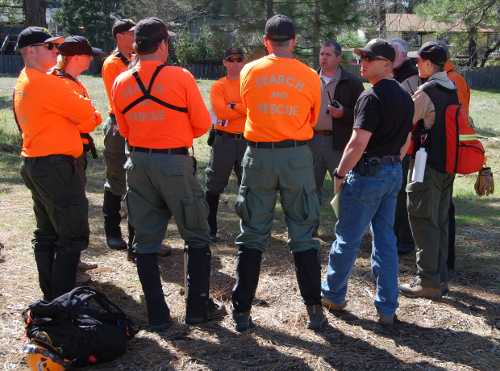
COBB, Calif. – A multiagency search on Friday scoured the Cobb area in an effort to locate a girl who is believed to have run away from home the previous morning.
Jenica Frederick, 12, was last seen at about 7 a.m. or 8 a.m. Thursday at her home on St. Helena Drive in Cobb, as she was getting ready to catch the school bus to school, according to sheriff’s officials.
However, sheriff’s officials said the girl did not ride the bus or attend school at Cobb Mountain Elementary that day.
“Nothing suggests at this point that she’s been abducted. This is a ‘voluntary’ missing,” said Sgt. John Gregore of the Lake County Sheriff’s Office. “She ran away on her own. But that can always change in a heartbeat. So we definitely treat this with that risk. She’s a 12-year-old girl out there on her own.”
Jenica is a Caucasian female, 4 feet, 9 inches tall, 116 pounds, with short brown hair, blue eyes and a fair complexion. When she was last seen she was wearing dark blue or black jeans, a green plaid jacket, a pink backpack that looked like it was full of items and a lot of colored bracelets, sheriff’s officials reported.
The girl was reportedly distraught over a recent “behavioral incident” at home, according to the sheriff’s report.
On Friday, search teams used the Pine Summit Pool in Cobb as a base camp as the search for the girl continued.
When she didn’t come home on Thursday night, the search began, with Lake County Search and Rescue and sheriff’s deputies conducting a ground search of the Cobb-Anderson Springs area, said Gregore, who was overseeing base camp operations on Friday.
Gregore said the search expanded on Friday to include resources and personnel from search and rescue teams from Marin, Sonoma, Napa and Mendocino counties, as well as the California Highway Patrol.
He said 20 law enforcement officers, 64 volunteers, four search and rescue dogs and CHP helicopters had been involved as of 2 p.m. Friday.

The sheriff’s office has experienced search teams and search and rescue coordinators who were on the job for hours; one such volunteer told this reporter on Friday that he was leaving after having spent 14 hours working the communication center.
“The plan right now is to backtrack everything we hit in the daytime,” said Gregore. “Our law enforcement officers are trying to find leads to see if she is here somewhere. And if she is confirmed out of this area we will change our game plan to Kit’s Corner, or Lakeport, or Sonoma, or somewhere else. We will search that area.”
He said they didn’t know where Jenica may have been headed, whether into the woods or some other location.
A three- to four-square-mile search perimeter was established, said Gregore, with teams covering all the basic trails, but not moving deep into the woods.
“Generally with something like this we are not talking experienced hiker, a 12-year-old girl is going to get tired. She doesn’t have a lot of experience hiking,” he said.
On Friday morning, officials received information that Jenica had been seen walking along Highway 175 northbound toward Red Hills Road on Thursday morning, Gregore said.
He said his main focus was to help the search teams by following the leads in an effort to develop an accurate picture of where the girl may have gone.
Gregore said he and others at the base camp were staying in touch with the girl’s distraught parents to keep them informed of the search’s progression.
He said the family was willing to do whatever was required, noting that in such cases it can be difficult for parents to turn the matter over to law enforcement.
“Anybody who has any kind of information should call the Lake County Sheriff’s office at 707-263-2690,” said Gregore. “We are going to follow up on leads. She is not in trouble with law enforcement. We just want to make sure that she’s OK.”
Email John Lindblom at
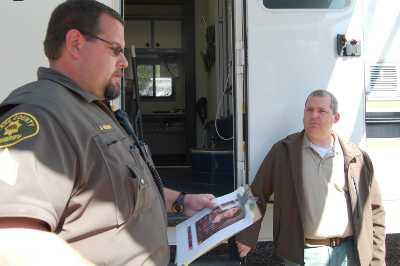
COBB, Calif. – Authorities are searching the Cobb area for a girl who has been missing since Thursday morning.
Jenica Frederick, 12, was last seen at around 7 a.m. Thursday in the area of 9600 block of St. Helena Drive in Cobb, according to a flier being circulated in the community.
She reportedly did not show up for school at Cobb Mountain Elementary, and there were reports of her being seen walking down Highway 175 toward Kelseyville mid-morning on Thursday.
Sheriff’s officials did not return Lake County News’ messages seeking comment about the case.
The Pine Summit Pool Facebook page reported that the facility was being used as a base camp for the search effort.
The girl is described as 4 feet, 9 inches tall, 116 pounds, with short brown hair and hazel eyes.
She was last seen wearing dark jeans, a green plaid shirt, a pink backpack and a lot of colored bracelets.
Anyone with information is asked to call the sheriff’s dispatch number at 707-263-2690.
Email Elizabeth Larson at
CLEARLAKE OAKS, Calif. – A bicyclist died Thursday night after he was hit by a vehicle.
The California Highway Patrol’s report on the crash, issued late Thursday night, said the bicyclist’s identity was not known at that time.
The CHP said the collision occurred at 9:30 p.m. on Highway 20 east of Keys Boulevard in Clearlake Oaks.
The bicyclist was riding a black 10-speed east on Highway 20. The CHP said the man was wearing dark clothing but no helmet.
William Hartman, 68, of Yuba City was driving a 2003 GMC Sonoma eastbound on Highway 20 with 59-year-old Evelyn Krause, also of Yuba City, riding as his passenger, the CHP said.
Hartman didn’t see the bicyclist and hit him from behind, according to the CHP.
The bicyclist was pronounced dead at the scene, the CHP said. Hartman and Krause were uninjured.
The CHP said alcohol does not appear to be a factor in the Thursday night crash.
The collision remains under investigation by CHP Officer Geer.
Email Elizabeth Larson at