 How to resolve AdBlock issue?
News

LAKE COUNTY, Calif. – The Lake County Rodeo Association directors announced the selection of Carol Thorn as grand marshal of this year's Lake County Rodeo.
The rodeo this year takes place Friday, July 12, and Saturday, July 13, at the Lake County Fairgrounds, 401 Martin St. in Lakeport.
Thorn will ride in the annual rodeo parade on Main Street in downtown Lakeport, which begins at 11 a.m. July 13.
The search for the 84th annual rodeo's grand marshal began in February, when the rodeo association put out the call for nominees. They were looking for community members who supported the rodeo way of life, showed respect for others and their community. Thorn's selection resulted from that months-long process.
Thorn's love of horses began at age 5 when she lived in Los Altos. Upon moving to Lake County in 1971 she found her very first horse “Synbad” and won her very first ribbon, third place, at the Lake County Fair. At that point, she was hooked on horses.
She continued advancing her horsemanship by riding in many western horse shows, gymkhanas and play days. She also participated in English riding.
As a teenager she rode in the Clear Lake Junior Horsemen's drill team on her horse Syndy. She remained an active member in the Junior Horsemen through her teen years.
Her mother told her, “If you want to learn to drive my truck, you've got to learn how to back the trailer first.” Thorn can back a trailer anywhere and also has also grown to love driving carts.
To this day she has dedicated an unbelievable amount of time founding, participating in and leading many horse and driving events.
Some of her many activities include being a founding member and officer of Hooves and Wheels Driving Club; more than 20 years as drill master/advisor of the Junior Horsemen's Club; sponsor to numerous high school rodeo participants; countless hours of volunteer work and sharing her expertise at various rodeo events and the Clear Lake Junior Horsemen Winter Gymkhana series; leader for horse and dog projects for Scotts Valley 4-H and buckle co-sponsor (with Jaxan Christenson) for large Animal Round Robin 4-H Award at the Lake County Fair in memory of Dr. Coral Ashby.
A testimony to Thorn's constant contributions to Lake County youth came from Jessica Leishman.
“Carol Thorn is one of the most compassionate horse and any other animal people I have ever met. I personally have fond memories of her when I was a youngster growing up and in my adult years as well. I truly believe with Carol here in our community, many events would have not run as smoothly as they have or, may not have happened at all. She is always willing to answer questions and offer a helping hand to all ages,” Leishman said.
Thorn has for many years served as drill master, Leishman said. “Carol always made sure everyone was on task and had an impeccable way of getting us all to work together as a Drill Team. She has always handled herself in a graceful manner and set an excellent example for the children and adults alike. If there were more Carol Thorns in the world, kids and animals would all be better off, I truly believe that.”
For more information about the Lake County Rodeo, visit http://lakecountyrodeo.sharepoint.com/Pages/default.aspx .
LAKE COUNTY, Calif. – The county's transit agency is preparing for a strike action by transit workers that's expected to take place early next week.
The strike by members of Teamsters Local 665 is anticipated to take place on Monday, July 1, and Tuesday, July 2, in response to a breakdown in negotiations with Paratransit Services, the Bremerton, Wash.-based nonprofit that has operated Lake Transit Authority since 2007.
Negotiations toward a new three-year agreement broke down after employees met and failed to ratify Paratransit Services' offer on Sunday, according to Mark Wall, Lake Transit Authority's general manager.
He said union members informed Paratransit Services that they would strike July 1-2 and return to work on Wednesday, July 3.
The majority of the roughly 36 Paratransit Services employees represented by Local 665 are expected to strike, said Don Staler, the union's local shop steward and a Lake Transit driver for the last four years.
When Local 665 members voted for how long to strike – two days or a week – the two-day strike won by only two votes, which Staler took for an indication of solidarity among workers. He said a federal mediator was at the last negotiating session.
Randy Grove, director of operations and human resources for Paratransit Services, said in a written statement that a 2.2-percent wage rate increase was offered to Lake Transit employees.
Grove said that followed a 2.6-percent increase provided last year, and represents a cumulative 23.1- percent in wage rate increases over the six-year period of Paratransit Services’ administration of transit services for Lake Transit Authority.
“We have experienced increased operating costs, rising medical costs, and are seeing decreased transit funding in California,” Grove said.
He said the 2.2-percent wage increase was “incredibly fair in light of layoffs, furloughs and business closures experienced by others in the region,” adding that the union was seeking an overall wage and benefit package increase totaling 8.2 percent for 2013.
Staler, who estimated he makes only $0.50 more an hour today than he did when he started four years ago, did not have available the breakdown of the union’s requests for wages and benefit increases, but he said there are a number of issues on the table.
Those issues include bereavement pay for part-time workers; lack of accrued sick days; health benefits, which Staler said only about half a dozen workers can afford to take; and low morale and turnover, which Staler suggested is an outgrowth of Lake County's Paratransit Services workers making $2 to $3 an hour less than surrounding counties and roughly half of them working only part-time.
A main issue is restoration of step increases, which Staler said the union agreed to suspend several years ago due to the economy with Paratransit Services not allowing them the step increases back. Staler said those step increases are written into the Lake Transit contract.
Demand for Lake Transit's services have continued to go up, with Staler pointing out that 400,000 were transported by the agency last year.
Last year, Lake Transit put up its rates. “That never got to us,” said Staler, who believes the company is able – but unwilling – to pay its employees what they're worth.
Paratransit Services and its Lake County employees have had negotiations stalemates previously that came close to resulting in strike actions.
In August 2010, a federal negotiator brought the two sides to the table, with a new contract approved about two weeks later, as Lake County News has reported.
Most recently, Lake Transit workers had been days from a planned strike last November during negotiations for a new collective bargaining agreement contract opener on wages, health and welfare issues, when the two sides agreed to return to the table for mediation.
As a result of next week's planned strike, transit officials said the following limited services will operate July 1-2:
- Clear Lake / Lakeport Dial-a-Ride (DAR) will operate from 7 a.m. to 5 p.m.;
- Routes 5 and 6 will run from 7 a.m. to 5 p.m.;
- Route 4 westbound will operate at 7:05 a.m. and 1 p.m.;
- Route 1 eastbound will operate at 8:31 a.m. and 2:21 p.m.
As a result of Lake Transit’s large increase in ridership over the last several years, plans have been made to offer expanded services in the Clearlake area, including adding a third route and extending the operation day from 5:19 a.m. until 10:52 p.m. as of July 1, Wall said.
The strike will have the added effect of delaying that service expansion until after employees return to work, Wall said.
Wall said riders who would like to be kept informed of service conditions can register to receive automated telephone updates by calling 707-994-3334. Riders also can visit www.laketransit.org .
Staler acknowledged that the strike could have a huge financial impact on the county, even though it's meant to be short-lived.
As for whether there might be any meetings this week that could stop the strike, Staler said that the next move is up to Paratransit Services.
“They know what we're going to do and when we're going to do it,” he said.
Email Elizabeth Larson at
LAKE COUNTY, Calif. – As the steady drizzle with periods of heavy and record-setting rainfall for late June began tapering off Tuesday afternoon, much warmer and drier weather was anticipated to return beginning Wednesday and continuing throughout the weekend.
This has been an unusual year for rainfall, according to the University of California Watershed Sciences.
That organization said recently that this water year – Oct. 1 through Sept. 30 – began as one of the wettest on record. A series of storms in early December brought more than 18 inches of rain to Cobb Mountain – which received the most rain in California in that storm system – before the arrival of the driest January on record, as previously reported.
Then it rained in June, not just once, but twice, thanks this last time from an “atmospheric river” – also known as the Pineapple Express – which usually occurs in late fall into early winter.
This rare early-summer storm system brought measurable amounts of rain throughout Northern California and Lake County, with several areas breaking records for rainfall at this time of year including Sacramento, San Francisco and the Napa Valley, according to the Weather Channel.
Rainfall totals for Lake County were less than initially forecast with this rain system, with most areas around Lake County receiving less than one inch.
From the below-normal daytime temperatures early this week, highs will climb back into the 80s Wednesday, with muggy and humid conditions, according to Western Weather Group Lake County, before reaching above-normal temperatures by this weekend.
Friday will be hot and sunny in the low- to upper 90s as the thermometer ticks upwards each day throughout the weekend and into early next week, when the hottest locations will reach the century mark or higher.
Overnight lows Wednesday will be a bit cooler as skies clear – in the upper 40s- to mid-50s – then also will trend upwards according to forecasters throughout the weekend.
A slight decline in temperatures doesn't look possible until near or after the July 4 holiday, forecasters predicted.
Email Terre Logsdon at
LAKE COUNTY, Calif. – Varying weather conditions seem to have everyone guessing about how much blue‐green algae might appear in Clear Lake this summer.
Accumulations have been observed in some areas, only to vanish overnight.
Although accurate predictions about this year’s blue‐green algae patterns may be difficult, experts in Lake County’s Water Resources Department verify the presence of blue‐green algae and note that the current dominant type is Lyngbya, similar to previous years.
There are many types of blue‐green algae (technically cyanobacteria). Some of them are capable of producing toxins that can have a variety of harmful effects on humans and animals, according to county health officials.
Although cyanotoxin tests in Clear Lake have consistently been well within recommended limits for safe recreation, health officials still recommend caution in areas with accumulations of algal mats, visible surface scum, or a “pea soup” appearance of the water.
In these areas, swimming and wading in the water should be avoided by people of all ages. Officials said pets should not be allowed to swim in these areas or drink lake water.
Another condition health officials said people should know about is “swimmer’s itch,” a fairly common cause of rash in people who swim or wade in areas of lakes and ponds where aquatic water plants and weeds flourish. It is an allergic reaction that results from a tiny parasite that is released from snails.
The parasite normally burrows into the skin of various birds and mammals. In the case of humans, the parasite quickly dies, but produces an allergic reaction that results in an intensely itchy rash. The condition generally resolves without special medical care, health officials reported.
Swimmer’s itch is not a condition that must be reported to public health authorities, but unofficial reports have been common this year.
Tips for safe recreation in lake water include:
Avoid contact with water in areas with thick surface foam, scum, a pea soup appearance, heavy growth of aquatic plants and water weeds. After swimming, towel off promptly. Even better, shower with fresh water. After pets swim, rinse with fresh water and towel them dry. Do not allow them to lick fur dry. Never drink untreated lake water. Boiling lake water does not guarantee that it is safe to drink.
By observing a few simple precautions, visitors and residents can safely recreate in and around Clear Lake and enjoy all of the beauty and outdoor activities it has to offer.
For more information, visit http://www.co.lake.ca.us/Government/Directory/Environmental_Health/Blue-Green_Algae.htm?PageMode=Print ,
http://www.cdph.ca.gov/healthinfo/environhealth/water/pages/bluegreenalgae.aspx or http://www.cdph.ca.gov/HEALTHINFO/DISCOND/Pages/SwimmersItch.aspx .
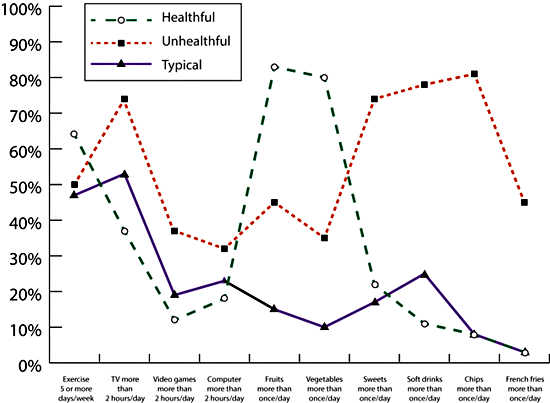
Only about half of U.S. adolescents are physically active five or more days of the week, and fewer than one in three eat fruits and vegetables daily, according to researchers at the National Institutes of Health.
In a survey of youth in 39 states, NIH researchers questioned nearly 10,000 students between 11 and 16 years old about their activity levels and eating habits. They also asked the students to describe their emotional health, body image, and general satisfaction with life.
“The students showed a surprising variability in eating patterns,” said lead author Ronald J. Iannotti, Ph.D., of the Prevention Research Branch of the Eunice Kennedy Shriver National Institute of Child Health and Human Development (NICHD), the NIH Institute in which the study was conducted. “But most – about 74 percent – did not have a healthy pattern.”
Dr. Iannotti conducted the research with NICHD colleague Jing Wang, Ph.D. In addition to NICHD, funding also was provided by the Maternal and Child Health Bureau of the Health Resources and Services Administration.
Their findings appear in the Journal of Adolescent Health.
The researchers found that the adolescents’ diet and activity habits could be classified into three general categories. They described the first group as unhealthful. This group accounted for 26 percent of participants.
The second group, classified as healthful, accounted for 27 percent. Because it was the largest group – including 47 percent of participants – the researchers classified the third group as typical.
The researchers surveyed participants about: their daily amount of physical activity, the amount of time they spent in front of a computer screen or other electronic screen, and the amount of healthy and unhealthy foods they consumed. Other questions sought information on symptoms of depression and self-satisfaction with their bodies.
The analysis of the survey results showed that the typical youth were least likely to exercise five or more days each week or to eat fruits and vegetables at least once a day.
They were more likely to spend time watching television, playing video games or on a computer than the healthful group, and less likely to do so than the unhealthful group. They infrequently ate fruits and vegetables but also infrequently ate sweets, chips or fries, or had soft drinks.
Youth in this group were more likely than youth in the other two groups to be overweight or obese and to be dissatisfied with the appearance of their bodies.
The unhealthful group consumed the most sweets, chips, french fries, and soft drinks. They also were more likely than the other groups to report watching TV, playing video games and using a computer more than two hours a day.
Despite the caloric foods they consumed, youth in the unhealthful group were more likely to be underweight and to report needing to put on weight.
Youth in this group also were more likely to report symptoms of depression and of poor physical health, such as backaches, stomachaches, headaches or feeling dizzy.
Nearly 65 percent of students in the group that the researchers termed healthful reported exercising five or more days per week – the highest rate of the three groups.
These students were least likely to spend time in front of a screen and were most likely to report eating fruits and vegetables at least once a day.
Students in this group also were least likely to consume sweets, soft drinks, chips and French fries. They reported the lowest rates of depressive symptoms and the highest life satisfaction ratings.
All three groups could stand to improve their health habits, Dr. Iannotti said, whether walking or biking between home and school or eating more fresh produce each day.
According to the U.S. Department of Health and Human Services’ Physical Activity Guidelines for Americans External Web Site Policy, children and adolescents should get one hour or more of moderate or vigorous aerobic physical activity a day, including vigorous intensity physical activity at least three days a week.
On Monday, the California Department of Public Health Drinking Water Program submitted a corrective action plan to the US Environmental Protection Agency that addresses all 29 of the issues raised by the federal government in April.
“We have worked closely with our federal partners during this process and we appreciate their guidance,” said Dr. Ron Chapman, CDPH director and state public health officer. “We look forward to continuing our collaborative efforts with US EPA to achieve our mutual goal of providing safe drinking water for the people of California.”
In an April 19 letter, the US EPA informed CDPH that it was not in compliance with the Safe Drinking Water Act.
The US EPA reported that $1.5 billion has been provided to California to capitalize the Safe Drinking Water State Revolving Fund. However, as of October 2012, $455 million remains unspent.
The action plan CDPH submitted Monday reflects the distribution of $84 million by the end of this week to water projects across the state.
CDPH officials said the agency will disburse nearly $200 million in total funds in fiscal year 2013-14 and in the following two fiscal years, will disburse an additional $600 million, to help water systems deliver safe drinking water to their communities and put CDPH on track to meet the targets set by the US EPA.
Among CDPH's current list of executed funding agreements for water projects is one with the county of Lake for $1,809,760, which will fund construction of surface water treatment plant improvements for the community of Spring Valley.
“This administration is committed to ensuring safe drinking water for all Californians as evidenced by Gov. Brown’s signature on AB 685, which establishes a state policy that every Californian has a human right to safe, clean, affordable and accessible drinking water,” added Chapman.
During the two years since Gov. Jerry Brown took office, notable progress has been made in California’s Revolving Fund program, and CDPH remains committed to the work that needs to be done to reach the mutual federal and state goals and to maximize the use of the available dollars, Chapman reported.
Some recent changes to get money out to water projects faster, fund more projects and make the application for funding simpler include: offering funding for planning as well as construction, facilitating greater opportunity for grant funding for public water systems that serve disadvantaged and severely disadvantaged communities, and streamlining the application processes, according to CDPH.
The US EPA is expected to respond to the corrective action plan by July 1.
The plan is available on the CDPH Web site, http://cdph.ca.gov/programs/Documents/CDPHresponse_EPA06242013.pdf .