 How to resolve AdBlock issue?
News
The California Department of Fish and Wildlife (CDFW) has completed its 2013 waterfowl breeding population survey.
The resulting data indicate the overall number of breeding ducks has decreased by 15 percent.
“Habitat conditions are poor in both northeastern California and the Central Valley, so below-average production for all waterfowl species is not a surprise,” said CDFW waterfowl program biologist Melanie Weaver.
Mallards, the most abundant duck in the survey, decreased 23 percent, from 387,100 in 2012 to 298,600 this year.
The total number of ducks of all species decreased from 529,700 last year to 451,300 this year. This estimate is 23 percent below the long-term average.
The decline was attributed to low precipitation, especially in the spring, with some areas only receiving 34 percent of average rainfall since Jan. 1.
CDFW biologists and warden-pilots have conducted this survey using fixed-wing aircraft since 1955. The California Waterfowl Association, under contract with CDFW, assists CDFW by surveying some transects by helicopter.
The population estimates are for surveyed areas only, although those areas include the majority of California’s suitable duck nesting habitat. They include wetland and agricultural areas in northeastern California, the Central Valley from Red Bluff to Bakersfield, and the Suisun Marsh.
The majority of California’s wintering duck population originates from breeding areas in Alaska and Canada that are surveyed by U.S. Fish and Wildlife Service (USFWS).
The results from these surveys should be available in July.
CDFW survey information, along with similar data from other Pacific Flyway states, is used by the USFWS and the Flyway Council when setting hunting regulations for the Pacific Flyway states, including California.
The federal regulation frameworks specify the outside dates, maximum season lengths and maximum bag limits.
Once CDFW receives the USFWS estimates and the frameworks for waterfowl hunting regulations from the USFWS, CDFW will make a recommendation to the Fish and Game Commission regarding this year’s waterfowl hunting regulations.
LAKE COUNTY, Calif. – For skywatchers, the nights of Saturday, June 22, and Sunday, June 23, will be a good time to look up.
An extreme supermoon will light up the sky on those nights.
A supermoon, what astronomers call a perigee full moon, is a full or new moon that is at 90 percent or more of its closest perigee to Earth. Perigee is the point nearest to the center of the Earth for an Earth-orbiting object.
An extreme supermoon means a full or new moon at 100 percent greater mean perigee.
This weekend, the moon will be the closest it will get to Earth this year, according to AccuWeather.
That closeness will make the moon look larger and more impressive than usual.
Mark Paquette of AccuWeather said the term “supermoon” is attributed to astrologer Richard Nolle, who first used it to describe the phenomenon.
See the graphic below for more information about the supermoon.

KELSEYVILLE, Calif. – A fire that began on Mount Konocti on Thursday afternoon is expected to be fully contained on Friday morning.
The fire, reported shortly before 2:30 p.m. Thursday, burned 25 acres and was 80-percent contained shortly after 9 p.m., according to Cal Fire.
Cal Fire said its resources stayed on scene into the night.
Kelseyville Fire, Cal Fire, Lakeport Fire, Northshore Fire, Lake County Fire and US Forest Service were among the agencies responding to the blaze, which quickly moved through dry vegetation on the mountainside.
The air and ground resources that aggressively worked the fire helped keep the fire from growing larger.
Firefighters’ work also protected Judy Cardinale’s home, which was in the fire’s path.
Cardinale credited firefighters for saving the house and other nearby structures.
Email Elizabeth Larson at

In last-minute developments on Thursday, state lawmakers withdrew their plans to uphold damaging, last-minute riders included in the state budget last week that open government proponents said would have made the California Public Records Act unenforceable.
State Senate President Pro Tem Darrell Steinberg (D-Sacramento) and Assembly Speaker John A. Pérez (D-Los Angeles) released a joint statement Thursday in which they said they agreed “there needs to be both an immediate fix to ensure local entities comply with the California Public Records Act and a long term solution so the California Public Records Act is not considered a reimbursable mandate.”
Budget amendments added last week to SB 71 and AB 76 would have removed requirements for local agencies to comply with California Public Records Act requirements when responding to requests from the public and the media, as Lake County News has reported.
The riders would have ended requirements to respond within 10 days to public records act requests, assist requesters with framing their requests more effectively, providing documents in the requester’s preferred format, or even providing a reason or legal justification for denying requests, according to Californians Aware, one of the groups that fought the proposals.
The amendments would, in turn, have encouraged local agencies to follow the public records act’s provisions as best practices, and require any local agency to announce if it does not follow these best practices at its next regularly scheduled meeting and annually thereafter.
Stripping the requirements was proposed as a cost-saving measure, but legislators gave no specific figures about how much might be saved.
According to voting records, Assemblymember Mariko Yamada, who represents Lake County in the Assembly, voted for the final version of AB 76 with the Senate budget’s amendments – including the public records act provisions – last Friday, June 14.
On the same day in the state Senate, Sen. Noreen Evans – whose district includes Lake County – voted against SB 71, which she called “extremely problematic,” because she said the provisions included in it would make the California Public Records Act unenforceable.
“I do think that the public policy with respect to the California Public Records Act is an extremely important one and it affects not only the transparency of the operations of government but also the enforceability and ultimately the accountability of certain public agencies,” Evans said.
After Evans spoke in the Senate, Sen. Mark Leno (D-San Francisco) responded to concerns about the public records act changes, maintaining that the budget measures were meant to save the state “millions of dollars” in having to reimburse local jurisdictions from fulfilling such requests. He said the measures in the budget bill didn’t make such records unavailable.
However, journalists and open government activists across the state rallied against the proposed changes, arguing that trusting that government would simply do the right thing wasn’t a way to guarantee transparency, and that the 45-year-old law has been critical in keeping the operations of government open at all levels.
Pérez said Wednesday that the Assembly would take up the budget again and remove the provisions damaging to the California Public Records Act.
However, the same day Steinberg and Leno said the state Senate wouldn’t revisit the budget “unless there is evidence that locally-elected officials aren’t complying with the statutes that they were elected and expected to uphold,” they said in a statement.
They also planned to introduce a constitutional amendment to go before voters next June making changes to the California Public Records Act.
Gov. Jerry Brown signaled his support for the amendment plan in a separate statement.
On Thursday, Steinberg indicated that constitutional amendment was still on track, but said the Senate would take up the amended SB 71 passed by the Assembly earlier in the day that removed changes in the budget regarding the California Public Records Act.
The joint statement from Steinberg and Pérez said that as the Senate advances its proposed constitutional amendment, the Assembly will work with them throughout the process “to give voters the chance to make clear that good government shouldn’t come with an extra price tag.”
The updated version of the budget bill passed the Assembly on Thursday by a 54-25 vote, with Yamada supporting the new version of the bill.
The Senate is reportedly scheduled to take up the amended version of the budget bill next week.
Email Elizabeth Larson at
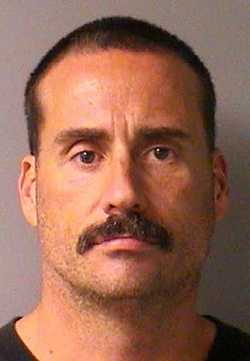
LAKEPORT, Calif. – An inmate who escaped from a work detail last weekend was returned to local custody on Thursday.
Brendan Scott Ferris, 42, of Kelseyville was booked into the Lake County Jail on Thursday afternoon, according to jail records.
Last Sunday afternoon, while on a work detail for Lake County Social Services in Lakeport, Ferris escaped from custody. He is believed to have slipped out a rear door of the building as part of the inmate work crew was being taken back to the jail, as Lake County News has reported.
The Lake County Sheriff’s Office has not responded to inquiries from Lake County News about Ferris’ escape or his latest arrest.
Ferris – who’s serving a three-year, eight-month sentence for two felony drug possession charges – is now charged with a felony escape charge, Chief Deputy District Attorney Richard Hinchcliff told Lake County News earlier this week.
Jail records indicate Ferris is due to appear in court on the escape charge on Monday, June 24.
Since his escape – estimated to be the fifth since April 2012 – there have reportedly been repercussions.
Lake County News has confirmed with county agencies including Lake County Animal Care and Control – which regularly uses inmate trustees at the animal shelter, located next to the jail – that they have been told the inmate worker program is on hold, with no timeline for when the inmate trustees may be available for new assignments.
Email Elizabeth Larson at

LAKEPORT, Calif. – A sample of mosquitoes collected last week south of Kelseyville has been confirmed as the first to test positive for West Nile Virus in Lake County his year.
“This is the earliest date that we have detected WNV activity in Lake County, and it may be a warning that this will be a very active year for WNV,” said Jamesina Scott, Ph.D., district manager and research director of the Lake County Vector Control District. “Last year we saw more WNV activity in Lake County than we had since 2005, and had the first human case since 2006.”
West Nile Virus has been detected in 17 California counties so far this year, mainly in mosquitoes and dead birds. One fatal human case was reported earlier this year in Sacramento County.
Over the years, Lake County has experienced few reported cases of WNV illness, but one case was reported to Lake County Health Services in 2012, local health officials reported.
West Nile Virus causes no symptoms in approximately 80 percent of people who catch the infection, officials reported. Up to 20 percent of people experience a variety of symptoms that range from fatigue, fever, headache, body aches, rash and even nausea and vomiting. Less than 1 percent of cases suffer severe illness, including neurologic effects that may be permanent, and some instances are fatal.
There is no specific treatment for the virus, so the best approach is to avoid exposure to mosquito bites, which is the means by which the virus is transmitted.
“Avoiding West Nile Virus requires only simple precautions, but they need to be followed consistently,” said Lake County Public Health Officer Karen Tait, M.D.
Officials encourage residents to protect themselves from mosquito bites by avoiding being outside at dusk and dawn when mosquitoes are most active, and to wear long sleeves and use an insect repellant containing an EPA-registered active ingredient like DEET, Picaridin, Oil of Lemon Eucalyptus, or IR353.
The Lake County Vector Control District traps and tests mosquitoes throughout the county to identify the areas that have the highest risk, and targets those areas for source reduction and treatment using an integrated vector management program.
“The mosquitoes that transmit WNV develop in backyard sources of standing water,” said Dr. Scott.
Scott encouraged residents to spend a few minutes in their yards this afternoon to look for standing water where mosquitoes develop. “You can dump out small containers of water like plastic wading pools or buckets.
For ornamental ponds, out-of-service swimming pools, and other water that you cannot drain, please call the District for free mosquito-eating fish. These are simple and environmentally friendly ways to prevent mosquitoes around your home,” she said. Out-of-service swimming pools and spas can be a major source of mosquitoes.
Residents are encouraged to contact the district to report neglected pools, request service for mosquito problems, or to get mosquito fish at 707-263-4770 or to fill out a service request online at www.lcvcd.org .
“Dead birds – especially jays, crows, and ravens – and tree squirrels are good indicators of WNV, and residents should report dead birds and tree squirrels to the state’s Dead Bird Hotline,” said Dr. Scott. “Our district gets immediate access to these reports and they help us locate potential hotspots and reduce the chance of human transmission.”
Residents can report dead birds and tree squirrels by calling 877-WNV-BIRD (877-968-2473) (toll-free) or online at the district’s Web site, http://www.lcvcd.org/ , where they can click on the “Report a Dead Bird” link in the right-hand column.
Residents with questions, or who would like help with a mosquito problem should contact the Lake County Vector Control District at 707-263-4770 or visit www.lcvcd.org .
For more information about West Nile Virus, visit http://www.westnile.ca.gov/ .