 How to resolve AdBlock issue?
News
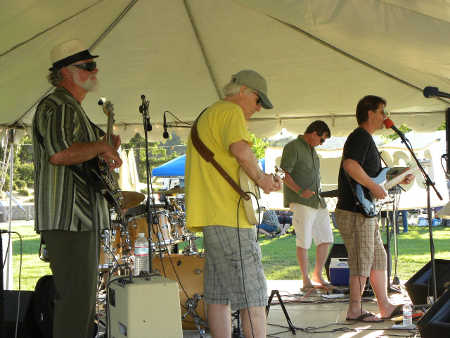
LAKEPORT, Calif. – It’s on! Local organizations and individuals are ready to battle for bragging rights Saturday, Aug. 2, at the fifth annual “Grillin’ on the Green” fundraiser at Westside Community Park.
Tickets are still available for the 5 to 8 p.m. event and may be purchased in advance at Polestar Computers in Kelseyville and the Lake County Chamber of Commerce, Main Street Bicycles and Lake Event Design, all in Lakeport.
Additionally, people may call Cindy Ustrud,707-263-7091, or Dennis Rollins, 707-349-0969, for tickets or information.
Ticket prices for the event are $25 per adult, $10 per child 12 years old or younger, and no charge for children 2 years old or younger. Tickets will also be sold at the function.
“Come out and join us for a fun evening in the park. Dance. Eat. Play – all while helping us raise funds to continue developing the park,” said Rollins, chair of the Westside Community Park Committee.
Mike Adams will be this year’s master of ceremonies.
Children’s activities including a bounce house and water slide are planned, and the whole family will enjoy musical entertainment by the LC Diamonds, said Rollins. Classic cars will be on display by local car clubs.
Participating cook-off teams this year include the Lakeport Kiwanis Club, Delta Iota Tau Sorority, the Cowgirls Consignment sponsored by the Lakeport Lions, the Early Lake Lions, the Clear Lake High School Sports Foundation and Lakeport Fire Department Volunteers, Still Smokin and Q-n, the City of Lakeport, team “JQ,” Adam Bruch, Pat Lambert/Farmers Insurance, and the Rotary Servers.
Attendees enjoy a full dinner with fixings to accompany the barbecue dishes, said Rollins. Past years’ Grillin’ attendees have called the fare the “best barbecue around,” he added.
Salads, beans, desserts and beverages will be provided by Lakeview Market, Ruzicka Associates, Main Street Bicycles, and the Lakeport English Inn. Snow cones will be available from Marta and Domingo Avillea.
Information about the event can be found on the park’s Web site, www.westsidecommunitypark.org, or on Westside Community Park’s Facebook page.
This year’s major sponsors are the Keeling-Barnes Family Foundation, which is pledging matching funds up to $5,000, and Sutter Lakeside Hospital.
Additional sponsors include the Ustrud-Rollins Family, Clearlake Redi-Mix, Brian Grey, DDS, MDS, Dr. Alexander McGeoch, DDS, Savings Bank of Mendocino County, Guy Strohmeier’s Auto Center, Kathy Fowler Chevrolet, Susie LaPointe, Margaret Silveira, Jon and Annette Hopkins, Mendo Lake Credit Union, William C. Kranz, Attorney at Law, and Polestar Computers.
In-kind contributions have been made by Lake County News, KNTI radio, the Lake County Record-Bee, Chacewater Winery & Olive Mill, S2 Tutoring & PR, Lake Event Design and Kelseyville High School.
Levels of sponsor recognition are $100, $300, $500, $1,000, $3,000 and $5,000. Sponsors will be recognized at the Grillin’ on the Green event.
The Grillin’ on the Green committee of volunteers includes Rollins, Cindy Ustrud, Wilda Shock, Beth Havrilla, Alice Holmes, Sue Stout, Tami Cramer, Val Schweifler and Jessica Kelley.
Westside Community Park, located at 1401 Westside Park Road, is a city of Lakeport recreational facility that has been in development for 15 years and includes soccer fields, baseball and softball diamonds, a horseshoe area and dog park.
The nonprofit Park Committee is developing the park in conjunction with the City of Lakeport, volunteers, and numerous contributions by individuals and businesses dedicated to constructing a recreational facility for the youth and adults of Lake County.

Caltrans and the California Highway Patrol (CHP) are warning motorists statewide that the CHP is conducting maximum enforcement of traffic laws in active construction zones as part of a public safety campaign focused on work zone safety.
As part of this campaign, Caltrans will activate its electronic highway message signs in active construction and maintenance work zones around the state to display the following warning: “Workers ahead, CHP on patrol, max enforcement.”
“This is about protecting the safety of California’s motorists and the men and women working along the state’s highways,” said Caltrans Director Malcolm Dougherty. “Using our highway message signs and increasing CHP’s presence around these areas, we are reminding California drivers to do their part in reducing collisions and hazardous conditions in these work zones.”
Currently, there are more than 700 active projects under way worth more than $11 billion.
As part of the maximum enforcement effort, the CHP will have their patrol officers increase the time spent patrolling active work zones in their areas, while also conducting proactive enforcement efforts.
Drivers should be aware that any traffic infraction committed within a construction work zone will result in a doubling of the usual fine.
“Through a combination of education and enforcement our goal is to provide the safest environment possible for highway workers,” said CHP Commissioner Joe Farrow. “Motorists are reminded to reduce their speed, watch for highway workers and safely move over a lane when passing work crews. These simple actions can mean the difference between life and death.”
“Without a doubt, working on a highway construction project is a dangerous job,” said Assemblymember Bonnie Lowenthal (D-Long Beach), chair of the Assembly Committee on Transportation. “For the millions of drivers on our roads each day, these signs will get the message across loud and clear – a little extra vigilance can save a life.”
"Highway workers are doing their part to make our roadways safe and reliable for everyone," said Director Rhonda Craft of the Office of Traffic Safety. "We need to do our part by slowing down and using extra caution around active work zones."
The enforcement message will be displayed through Aug. 1 and from Sept. 23 to 25 on any electronic highway message signs within five miles in advance of active construction work zones.
The enforcement message will be activated when there are no critical emergency or traffic safety messages or Amber Alerts.
NORTHERN CALIFORNIA – The U.S. Environmental Protection Agency announced a Clean Water Act settlement requiring the East Bay Municipal Utility District (EBMUD) and seven East Bay communities to conduct extensive system repairs aimed at eliminating millions of gallons of sewage discharges into San Francisco Bay.
Under Monday's agreement, EBMUD and the communities will assess and upgrade their 1,500 mile-long sewer system infrastructure over a 21-year period.
The work is expected to cost approximately $1.5 billion.
The entities will pay civil penalties of $1.5 million for past sewage discharges that violated federal environmental law.
Since 2009, EPA, state and local regulators and environmental groups have worked to reduce sewage discharges from East Bay communities.
During that period, interim actions required EBMUD and the East Bay communities to improve their sewer maintenance practices and gather information to identify priorities for investment.
The San Francisco Bay covers 1,600 square miles and is the largest Pacific estuary in the Americas, a host for millions of migratory birds and a hub of commerce and recreation for more than seven million Bay Area residents.
Unfortunately, the bay is under threat from many sources of pollution, including crumbling wastewater infrastructure that allows sewage to escape from the system.
During rainstorms, in particular, older sewer systems can be overwhelmed, releasing rivers of sewage before fully treated.
In addition to polluting waterways, raw and partially treated sewage can spread disease-causing organisms, metals, and nutrients that threaten public health. Sewage can also deplete oxygen in the bay, threatening fish, seals and other wildlife.
“For many years, the health of San Francisco Bay has been imperiled by ongoing pollution, including enormous discharges of raw and partially treated sewage from communities in the East Bay,” said Jared Blumenfeld, EPA’s Regional Administrator for the Pacific Southwest. “Many of these discharges are the result of aging, deteriorated sewer infrastructure that will be fixed under the EPA order.”
The settlement is the result of a Clean Water Act enforcement action brought by the EPA, U.S. Department of Justice, State Water Resources Control Board, San Francisco Bay Regional Water Board, San Francisco Baykeeper and Our Children’s Earth Foundation.
“This settlement will result in major reductions of sewage discharges into the San Francisco Bay,” said W. Benjamin Fisherow, chief of Environmental Enforcement in the Justice Department’s Environment and Natural Resources Division. “These improvements will help reach our goal of eliminating pollution in the neighborhoods in these cities and in the bay so that citizens may rest assured that they reside in a safe, clean environment.”
The seven East Bay communities in the EBMUD settlement are the cities of Alameda, Albany, Berkeley, Emeryville, Oakland and Piedmont, and the Stege Sanitary District, serving El Cerrito, Kensington and a portion of Richmond.
“The public has been required to repair their own sewer laterals for over two years now, so it is past time that the local agencies aggressively repair their sewer systems,” said Bruce Wolfe, executive officer of the San Francisco Bay Regional Water Board. “This settlement spells out how the agencies will work with the public over the next 21 years to do just that and protect the bay.”
“Baykeeper will be watching the progress of these repairs closely to ensure that pollution of San Francisco Bay is reduced and eventually eliminated, and we will take action if the repairs fall short,” said Baykeeper Executive Director Deb Self.
On an annual basis, hundreds of millions of gallons of raw and partially treated sewage are discharged directly to San Francisco Bay.
Also, as much as 600,000 gallons of raw sewage from community sewer systems is first discharged onto streets and other public areas – through outlets such as manhole covers – before it drains to the bay.
As part of the agreement, EBMUD and the seven communities will repair and rehabilitate old and cracked sewer pipes; regularly clean and inspect sewer pipes to prevent overflows of raw sewage; identify and eliminate illegal sewer connections; continue to enforce private sewer lateral ordinances; and ensure proactive renewal of existing sanitary sewer infrastructure.
EBMUD will also immediately begin work to offset the environmental harm caused by the sewage discharges, which are expected to continue until these sewer upgrades are completed, by capturing and treating urban runoff and contaminated water that currently flows to the bay untreated during dry weather.
Keeping raw sewage and contaminated storm water out of the waters of the United States is one of EPA’s National Enforcement Initiatives.
The proposed settlement is subject to a 30-day public comment period and final court approval.
Read the settlement at http://www.usdoj.gov/enrd/Consent_Decrees.html .
Learn more about EPA’s national wastewater enforcement initiative at http://go.usa.gov/5pak .
EPA is working to restore San Francisco Bay; learn more at http://www2.epa.gov/sfbay-delta .
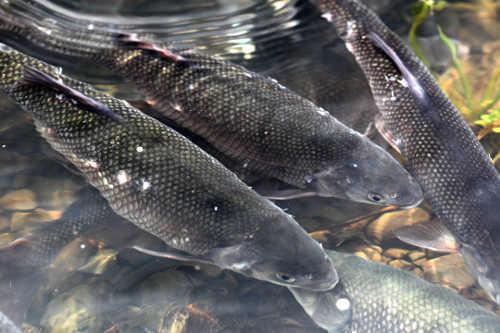
LAKE COUNTY, Calif. – State wildlife officials are proposing to list a minnow native to Clear Lake that once was a Pomo food staple as a “threatened” species under the California Endangered Species Act, with a potential decision coming as soon as next week.
The California Department of Fish and Wildlife completed its status review of the Clear Lake hitch and is recommending the listing, which it believes is warranted.
At its June 4 meeting in Fortuna, the California Fish and Game Commission formally accepted the Department of Fish and Wildlife's status review on the hitch for consideration.
The commission is expected to make the final decision on the listing at its two-day meeting which takes place Wednesday, Aug. 6, in San Diego.
In his memo to the Fish and Game Commission, California Department of Fish and Wildlife Director Charlton Bonham wrote, “It is the Department's recommendation that Clear Lake hitch is likely to become an endangered species in the foreseeable future in the absence of the protections and management efforts required by CESA (California Endangered Species Act), and the petitioned action is warranted.”
The report can be found at http://www.fgc.ca.gov/meetings/2014/aug/080614docs.aspx .
The agency's status review finds that threats to the hitch's continued existence include present or threatened modification or destruction of habitat, as well as predation and competition with non-native fishes, among them sports fish like black bass, sunfish and catfish which are known to prey on the hitch in all of its life stages.
“There is no scientific information indicating other factors, such as overexploitation, disease, and other natural occurrences or human-related activities, are threats to the continued existence of the species,” the report said.
Management actions needed to improve the likelihood of the hitch's survival include a scientifically valid population estimate or index; a thorough assessment of barriers to fish movement on primary spawning streams; an analysis of spawning habitat in primary spawning streams and recommendations for restoration actions; a review of reservoir operations at Highland Springs, Adobe Creek and Kelsey Creek detention dams to assess water release operations that may be impacting hitch; and development and implementation of guidelines for minimizing impacts and, other specific actions that could improve the hitch's status, according to the report.
In September 2012, the Center for Biological Diversity petitioned to protect the hitch under both the federal Endangered Species Act and the state’s Endangered Species Act, as Lake County News has reported.
In March 2013, the California Fish and Game Commission voted 2-1 to designate the hitch as a candidates species for California Endangered Species Act protection.
Jeff Miller of the Center of Biological Diversity said the US Fish & Wildlife Service still has not responded to the federal petition for the hitch.
Miller said the organization was happy with the scientists used for the state's peer review. “We trusted they would have good comments and suggestions,” he said, adding, “It looks like they did.”
While they're pleased with the review, the Center for Biological Diversity is going to recommend that the Fish and Game Commission consider endangered – rather than threatened – status for the hitch due to the low spawning numbers in the last few years.
The organization will make the pitch for the endangered listing at the San Diego meeting Aug. 6, Miller said.
“Practically, there's not a lot of difference between the threatened and endangered listing,” he said, with threatened status offering more exemptions.
Hitch are facing huge challenges, he said. Those challenges include 92 percent of the fish's historical migration paths now being blocked by obstacles, meaning they're only able to access a fraction of their former habitats, a factor pointed out in the Department of Fish and Wildlife report.
That, said Miller, leads to concerns about inbreeding, besides the impacts on the fish from low stream flow due to critically dry years like this one. And more dry years can be expected due to climate change, Miller said.
Changes to the environment caused the dieout of the Clear Lake splittail, which spawned later and had to stay in streams longer, Miller said. The Department of Fish and Wildlife report said the Clear Lake splittail was last recorded in 1972.
One of the biggest questions that remains about the hitch's possible listing relates to the potential impacts on the Lake County economy and overall water use.
One area where changes should be minimized relates to tribal harvest, which the listing petition recommends be allowed to continue as long as there is a sustainable plan.
Miller said he's been working with Lake County tribes in the petition process – he approached them for input long before submitting the petitions – and said he will continue to advocate for tribal harvest.
“That culture component shouldn’t be sacrificed,” he said, pointing out that the tribes already are voluntarily limiting harvests.
He added of the tribes, “They’re doing a lot of the science and research of what’s going on with this fish.”
Sarah Ryan, environmental director for Big Valley Rancheria, said the Big Valley tribe still does limited hitch harvest under a collection permit for scientific uses, with the allowance of using them for whatever purpose afterwards. Those harvests, however, have been cut back a lot because of the low fish numbers, she said.
There also appears to be no anticipated impact for the Yolo County Flood Control and Water Conservation District, which holds the rights to Clear Lake's water.
General Manager Tim O'Halloran said the district investigated the potential listings and the conclusion was that there would not be much impact on its operations.
“It seemed like most of the focus was on the upstream tributaries,” O'Halloran said.
Miller said the process for any resulting hitch listing will follow those used with other fish listings. “We’re not going to be reinventing the wheel here.”
He said there will be a regulatory overview of water diversions, with scrutiny placed on illegal or unpermitted diversions.
For those legally taking water from streams or Clear Lake, they'll have to consider the impact on the hitch, he said, with potential impacts on pumping practices.
“The sky is not going to fall because of this but I do think it’s going to mean some changes in water use and diversion,” he said.
Miller suggested that changes to water use can be made up in efficiency, water conservation, recycling and other opportunities to keep water in local streams.
“None of that is going to happen right away,” Miller said.
He added that he doesn’t think it will be as draconian as people think it will be.
Greg Giusti, director of the University of California Cooperative Extension for Lake and Mendocino counties, was one of the peer reviewers on the original draft of the Department of Fish and Wildlife study of the hitch.
He said he won't be attending the Aug. 6 meeting in San Diego, noting it would not be appropriate for him to take an advocacy position on the matter.
As for what potential impacts he foresees coming from a possible listing, Giusti said that it's just conjecture at this point.
He said he's had several phone conversations and meetings with Department of Fish and Wildlife officials to discuss possible outcomes of a listing, and has shared that information with county planning and water officials.
While nothing has been determined, “Certainly many of us have been thinking of options and approaches for nearly a year now,” he said.
Giusti suggested that any California Environmental Quality Act-compliant projects near streams could be affected.
A listing also could potentially affect water users who draw directly from creeks during the spawning seasons. Giusti said the county may have to develop “hitch specific” guidelines and regulatory pathways to afford land owners the ability to seek “incidental take” permits under the Environmental Species Act.
“Again, I’m simply sharing ‘what ifs,' but one thing is very certain, it will not be business as usual,” Giusti said.
Email Elizabeth Larson at
CLEARLAKE, Calif. – The city of Clearlake has awarded the contract for its Olympic Drive/Old Highway 53 street maintenance project.
Knife River Construction of Chico received the contract, which totals $322,667.
Construction is scheduled to begin on Olympic Drive on Wednesday, Aug. 6, with an anticipated completion date of Tuesday, Aug. 12.
City Engineer Bob Galusha said the project consists of digging out by grinding failed sections of Olympic Drive between Mattioda Street and Lakeshore Drive and replacing with new asphalt concrete.
During the grinding and asphalt paving operations traffic will be reduced to one lane and controlled by a flagman.
Driveway access will be limited while the grinding and paving operations are being conducted and parking will be prohibited along the roadway.
Motorists are advised to use alternate routes during the construction project.
Concurrently with Olympic Drive, the contractor will be performing work on Old Highway 53 from Olympic Drive to Highway 53 to the north, Galusha said.
Work also is expected to begin on Aug. 6, with an anticipated completion date of Wednesday, Aug. 13.
Galusha said an asphalt overlay will placed along the edge of the new asphalt paving. New asphalt tie-ins will be made to the existing asphalt and gravel driveways along Old Highway 53 as well.
During the overlay and shoulder backing work, traffic will be reduced on Old Highway 53 to one lane and controlled by a flagman, he said. Driveway access will be limited during construction and parking along the roadway will be prohibited.
Electronic message boards will be placed in advance of the project to advise motorists of the street construction project and traffic restrictions that will be in place during construction, he said.
Galusha said following the two local projects an additional Highway Safety Improvement Project will be awarded in late July to permanently restripe those roads using highly-reflective thermo plastic striping on both the centerline and edge lines.
Pavement reflectors will be placed on the centerline for improved visibility and roadway delineation during the night hours and inclement weather, Galusha said.
He said this work is scheduled for later in August or early September.
Questions regarding the projects should be directed to Public Works Director Doug Herren at 707-994-8201, Extension 102.
LAKE COUNTY, Calif. – Forecasters are predicting that the coming week will bring with it more hot temperatures that are expected to hit the century mark mid-week.
The National Weather Service's forecast for the week ahead shows average daytime temperatures around the county hovering in the high 90s and nighttime temperatures in the low to mid 60s, with some light winds anticipated.
The forecast expects that Tuesday and Wednesday could both hit the century mark in the Clearlake area, with Wednesday likely to see temperatures at 100 degrees or just above in other parts of the county.
One thing there is little of in the coming week's forecast – rain.
The week is expected to have clear days and nights, although the Middletown area's forecast calls for a 10-percent chance of showers on Monday night, with partly cloudy conditions also forecast for other parts of the county on Monday evening.
The latest US Drought Monitor report says little or no precipitation is expected throughout California early this week.
Email Elizabeth Larson at