 How to resolve AdBlock issue?
News
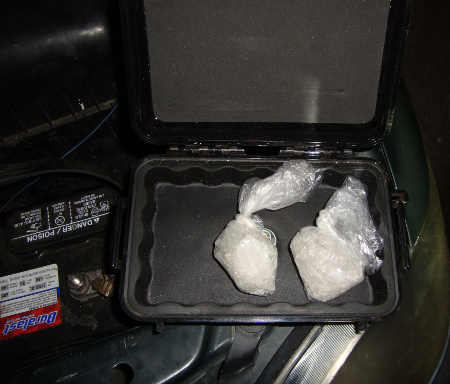
LUCERNE, Calif. – The check of a suspicious vehicle on Wednesday resulted in one arrest and the seizure of 47.6 grams of methamphetamine.
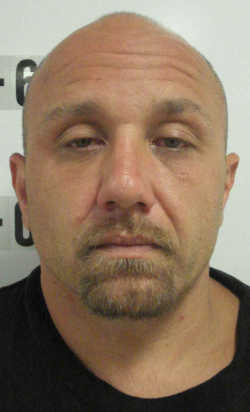
Stephen Anthony Thomas, 36, was taken into custody as a result of the stop, according to Lt. Steve Brooks of the Lake County Sheriff's Office.
At 12:30 a.m. Wednesday a sheriff's K9 unit was traveling westbound on Highway 20 in Lucerne when the deputy noticed three subjects standing near a Lexus sport utility vehicle that was parked on the shoulder of Highway 20, just east of the Beachcomber Resort at 6345 Highway 20, Brooks said.
The deputy parked in front of the resort and contacted the three subjects as they walked toward his patrol vehicle, according to Brooks.
The subjects said they were from Redwood Valley and had come to the resort to visit a friend. Brooks said the deputy observed that all of the lights were off in the rooms at the resort.
The three subjects were identified as Thomas, 37-year-old Jesse James Rodriguez and 26-year-old Amber Cheri Dillon, all from Redwood Valley, Brooks said.
A subsequent records check conducted by Central Dispatch revealed that all three subjects had their driving privileges suspended. Brooks said Central Dispatch also advised that Dillon was on felony probation in Mendocino County and was subject to search and seizure.
Thomas said he had purchased the Lexus recently and had not yet registered it in his name. When the deputy asked, Thomas also denied having anything illegal in the vehicle, Brooks said.
Brooks said the deputy advised Thomas that he was a K9 officer and that he was going to deploy his canine to conduct an exterior sniff of the vehicle. Thomas maintained that there were no narcotics in the vehicle.
During the exterior sniff, the canine produced a positive alert at the front driver side wheel well, indicating that the odor of a controlled substance was present, Brooks said.
The deputy informed Thomas of the positive alert, Brooks said. Thomas said that someone might have smoked marijuana inside the vehicle during the last couple of days.
Brooks said the deputy opened the hood of the vehicle and located a black plastic case between the car battery and the vehicle frame, above the driver side wheel well.
The deputy opened the case and located two clear plastic bags containing a clear crystalline substance recognized to be methamphetamine. Brooks said Thomas denied knowing anything about the methamphetamine.
Thomas was arrested for possession of a controlled substance for sale, transportation of a controlled substance and using a false compartment to conceal narcotics, according to Brooks.
Brooks said Thomas was transported to the Lake County Hill Road Correctional Facility and booked. His bail was set at $35,000. Jail records indicated he later posted the required percentage of bail and was released.
Both Dillon and Rodriguez were released at the scene, Brooks said.
The methamphetamine was later weighed and determined to have a gross weight of 47.6 grams or 1.68 ounces, according to Brooks.
The Sheriff’s Narcotics Task Force can be reached through its anonymous tip line at 707-263-3663.
LAKEPORT, Calif. – Lake County District Attorney Don Anderson on Wednesday issued a report on the case involving a part-time sheriff's deputy who last December was shot and mortally wounded by his wife.
Anderson released the additional information on the case following a criminal grand jury's recent decision not to indict Paula Ann Piveronas, 64, for the murder of her husband, Robert Piveronas, 66, as Lake County News reported last week.
Anderson said his office won't seek criminal charges against Paula Piveronas at this time.
Due to the fact Robert Piveronas was a part-time deputy sheriff with the Lake County Sheriff’s Department, the Lake County Critical Incident Protocol was implemented, and the District Attorney’s Office immediately took over the lead investigation into this matter, Anderson said.
The decision not to seek prosecution was based primarily on several factors, including Paula Piveronas raising the issue of self-defense. Anderson said California law places the burden on the prosecution to prove the crime was not committed in self-defense.
“In this matter, from the facts and evidence of the case, the prosecution at this time cannot prove beyond a reasonable doubt that Paula Piveronas was not acting in self-defense,” Anderson said.
On Dec. 6, 2013, Robert Piveronas and Paula Piveronas were at their home on Reeves Lane in Lakeport. The investigation revealed the couple had been consuming alcohol during the evening and early morning hours.
Anderson said the couple had been involved in an argument that morning regarding marital issues. Researching official records and interviews with people close to the Piveronases revealed there had been no prior reports of domestic violence in the marriage.
At approximately 7:09 a.m. that day, Paula Piveronas called the sheriff’s office, stating that she shot her husband and thought he was dead. Sheriff’s deputies responded to the scene and found Robert Piveronas lying mortally wounded on the floor of his bedroom, according to Anderson's report.
Among her initial statements, Paula Piveronas told sheriff’s deputies that her husband had threatened to kill her. She said she thought Robert grabbed his gun, so she shot him, Anderson reported.
Paula Piveronas told her parents that she and Robert were fighting. She claimed that her husband said he was going to kill her and she shot him. She said Robert was grabbing her by her clothes and was throwing her around, according to Anderson's report.
Anderson said that Robert Piveronas made several statements to deputies at the scene. Some of those statements corroborated some statements made by Paula Piveronas, including that Paula Piveronas thought he was going to kill her. However, Robert Piveronas denied hitting, threatening or pull a gun on his wife.
Evidence at the crime scene also corroborated Paula Piveronas’ accounts of what happened, Anderson said.
Robert Piveronas was shot three times with a 9 millimeter pistol. Anderson said the bullets generally entered the upper chest area and traveled down the body toward the back of the abdomen.
This and other evidence at the scene was consistent with Robert Piveronas being at the foot of the bed, leaning down, bending forward and facing Paula Piveronas who was at the head of the bed, according to Anderson.
Besides the 9 millimeter pistol Paula Piveronas used to shoot her husband, Anderson said a revolver was located on the floor of the bedroom in the immediate vicinity of where Robert Piveronas was located.
“The evidence points to an assumption that Robert had the revolver in his hand when he was shot,” Anderson said.
Robert Piveronas, who was taken to Santa Rosa Memorial Hospital for treatment, succumbed to his injuries the morning after the shooting, Anderson said.
Anderson said the case was taken before a criminal grand jury. The evidence, testimony and deliberations of these proceedings are confidential and will not be publicly released, he said.
No indictment was found by the grand jury, a decision with which the District Attorney’s Office is in agreement, Anderson said.
LAKE COUNTY, Calif. – The Lake County Fair and local volunteers are once again joining hearts and hands to stock local food pantries.
Hunger is a serious issue in Lake County. This summer, county churches and the Lake County Fair are partnering to become part of the solution at the third annual Lake County CAN event.
From 11 a.m. to 1 p.m. Sunday, Aug. 31, visitors can receive free admission to the Lake County Fair by donating four nonperishable food items per person.
Last year almost 300 cases of food were collected, as 2,210 people brought four or more cans.
In Lake County, 18 percent of the population lives below the poverty level.
Approximately 26.1 percent of the children in Lake County live below the poverty level, and almost 50 percent of the children living in Lake County are eligible for free or reduced meals. In some cities around the lake it is more than 90 percent.
Volunteers are needed to help to sort, pack and deliver the food donations from 2 to 5 p.m. Aug. 31 at Mendo Mill, located at 2465 S. Main St. in Lakeport. In 2013, more than 100 people helped.
If you would like to lend a hand, contact one of the participating organizations or come to Mendo Mill.
Local partners in Lake County CAN include United Christian Parish in Lakeport, Upper Lake United Methodist Church, Kelseyville United Methodist Church, Clearlake Oaks Community United Methodist Church, Lower Lake Community United Methodist Church, Middletown United Methodist Church, Recovery Ministries in Lucerne, Lucerne Alpine Senior Center, Galilee Lutheran Church and the Lake County Bible Fellowship.
Sponsors for the event include the Lake County Fair, United Methodist Communications, Mendo Mill and Lake County News.
If an asteroid big enough to knock modern civilization back to the 18th century appeared out of deep space and buzzed the Earth-Moon system, the near-miss would be instant worldwide headline news.
On July 23, 2012, Earth experienced a close shave just as perilous, but most newspapers didn't mention it.
The “impactor” was an extreme solar storm, the most powerful in as much as 150+ years.
“If it had hit, we would still be picking up the pieces,” says Daniel Baker of the University of Colorado.
Baker, along with colleagues from NASA and other universities, published a seminal study of the storm in the December 2013 issue of the journal Space Weather.
Their paper, entitled “A major solar eruptive event in July 2012,” describes how a powerful coronal mass ejection (CME) tore through Earth orbit on July 23, 2012.
Fortunately Earth wasn't there. Instead, the storm cloud hit the STEREO-A spacecraft.
“I have come away from our recent studies more convinced than ever that Earth and its inhabitants were incredibly fortunate that the 2012 eruption happened when it did,” sakd Baker. “If the eruption had occurred only one week earlier, Earth would have been in the line of fire.
Extreme solar storms pose a threat to all forms of high-technology.
They begin with an explosion – a “solar flare” – in the magnetic canopy of a sunspot. X-rays and extreme UV radiation reach Earth at light speed, ionizing the upper layers of our atmosphere; side-effects of this “solar EMP” include radio blackouts and GPS navigation errors.
Minutes to hours later, the energetic particles arrive. Moving only slightly slower than light itself, electrons and protons accelerated by the blast can electrify satellites and damage their electronics.
Then come the CMEs, billion-ton clouds of magnetized plasma that take a day or more to cross the Sun-Earth divide.
Analysts believe that a direct hit by an extreme CME such as the one that missed Earth in July 2012 could cause widespread power blackouts, disabling everything that plugs into a wall socket.
Most people wouldn't even be able to flush their toilet because urban water supplies largely rely on electric pumps.
Before July 2012, when researchers talked about extreme solar storms their touchstone was the iconic Carrington Event of September 1859, named after English astronomer Richard Carrington who actually saw the instigating flare with his own eyes. In the days that followed his observation, a series of powerful CMEs hit Earth head-on with a potency not felt before or since. Intense geomagnetic storms ignited Northern Lights as far south as Cuba and caused global telegraph lines to spark, setting fire to some telegraph offices and thus disabling the 'Victorian Internet.”
A similar storm today could have a catastrophic effect. According to a study by the National Academy of Sciences, the total economic impact could exceed $2 trillion or 20 times greater than the costs of a Hurricane Katrina. Multi-ton transformers damaged by such a storm might take years to repair.
“In my view the July 2012 storm was in all respects at least as strong as the 1859 Carrington event,” said Baker. “The only difference is, it missed.”
In February 2014, physicist Pete Riley of Predictive Science Inc. published a paper in Space Weather entitled “On the probability of occurrence of extreme space weather events.” In it, he analyzed records of solar storms going back 50+ years.
By extrapolating the frequency of ordinary storms to the extreme, he calculated the odds that a Carrington-class storm would hit Earth in the next 10 years.
The answer: 12 percent.
“Initially, I was quite surprised that the odds were so high, but the statistics appear to be correct,” said Riley. “It is a sobering figure.”
In his study, Riley looked carefully at a parameter called Dst, short for “disturbance – storm time.” This is a number calculated from magnetometer readings around the equator.
Essentially, it measures how hard Earth's magnetic field shakes when a CME hits. The more negative Dst becomes, the worse the storm.
Ordinary geomagnetic storms, which produce Northern Lights around the Arctic Circle, but otherwise do no harm, register Dst=-50 nT (nanoTesla).
The worst geomagnetic storm of the Space Age, which knocked out power across Quebec in March 1989, registered Dst=-600 nT. Modern estimates of Dst for the Carrington Event itself range from -800 nT to a staggering -1750 nT.
In their December 2013 paper, Baker et al. Estimated Dst for the July 2012 storm. “If that CME had hit Earth, the resulting geomagnetic storm would have registered a Dst of -1200, comparable to the Carrington Event and twice as bad as the March 1989 Quebec blackout.”
The reason researchers know so much about the July 2012 storm is because, out of all the spacecraft in the solar system it could have hit, it did hit a solar observatory. STEREO-A is almost ideally equipped to measure the parameters of such an event.
“The rich data set obtained by STEREO far exceeded the relatively meagre observations that Carrington was able to make in the 19th century,” noted Riley. “Thanks to STEREO-A we know a lot of about the magnetic structure of the CME, the kind of shock waves and energetic particles it produced, and perhaps most importantly of all, the number of CMEs that preceded it.”
It turns out that the active region responsible for producing the July 2012 storm didn't launch just one CME into space, but many. Some of those CMEs “plowed the road” for the superstorm.
A paperin the March 2014 edition of Nature Communications by UC Berkeley space physicist Janet G. Luhmann and former postdoc Ying D. Liu describes the process: The July 23 CME was actually two CMEs separated by only 10 to 15 minutes. This double-CME traveled through a region of space that had been cleared out by yet another CME four days earlier. As a result, the storm clouds were not decelerated as much as usual by their transit through the interplanetary medium.
“It's likely that the Carrington event was also associated with multiple eruptions, and this may turn out to be a key requirement for extreme events,” noted Riley. “In fact, it seems that extreme events may require an ideal combination of a number of key features to produce the 'perfect solar storm.'”
“Pre-conditioning by multiple CMEs appears to be very important,” agreed Baker.
A common question about this event is, how did the STEREO-A probe survive? After all, Carrington-class storms are supposed to be mortally dangerous to spacecraft and satellites. Yet STEREO-A not only rode out the storm, but also continued taking high-quality data throughout.
“Spacecraft such as the STEREO twins and the Solar and Heliospheric Observatory (a joint ESA/NASA mission) were designed to operate in the environment outside the Earth's magnetosphere, and that includes even quite intense, CME-related shocks,” said Joe Gurman, the STEREO project scientist at the Goddard Space Flight Center. “To my knowledge, nothing serious happened to the spacecraft.”
The story might have been different, he said, if STEREO-A were orbiting Earth instead of traveling through interplanetary space.
“Inside Earth's magnetosphere, strong electric currents can be generated by a CME strike,” he explained. “Out in interplanetary space, however, the ambient magnetic field is much weaker and so those dangerous currents are missing.” In short, STEREO-A was in a good place to ride out the storm.
“Without the kind of coverage afforded by the STEREO mission, we as a society might have been blissfully ignorant of this remarkable solar storm,” noted Baker. “How many others of this scale have just happened to miss Earth and our space detection systems? This is a pressing question that needs answers.”
If Riley's work holds true, there is a 12 percent chance we will learn a lot more about extreme solar storms in the next 10 years – when one actually strikes Earth.
Said Baker, “We need to be prepared.”
See the ScienceCast here: http://youtu.be/7ukQhycKOFw .
Dr. Tony Phillips works for the National Aeronautics and Space Administration.
LAKE COUNTY, Calif. – The Lake County Winery Association has invited the Relay For Life to join them at this year’s 10th annual Wine Adventure.
Relay For Life Volunteers will sell raffle tickets for a chance to win one of two “instant” wine cellars full of Lake County wines and a wine fridge. Raffle tickets will be sold at all adventure starting wineries.
One hundred percent of the raffle sales will be donated to the American Cancer Society's Relay For Life.
“The Relay For Life is extremely grateful for this fundraising opportunity and would like to thank the Lake County Winery Association for their generosity and commitment to giving back to our community” said Marshele Bennett, volunteer coordinator with the Relay For Life of Lake County.
“The Winery Association invited us to sell raffle tickets and then informed us they would be donating the prize as well. We couldn't be more grateful,” Bennett said.
The Savings Bank has donated a wine fridge to the Relay For Life to be included as a raffle prize.
More than 25 Lake County wineries will open their doors to welcome adventurers for the10th annual Lake County Wine Adventure on Saturday, July 26, and Sunday, July 27.
Hours for this year’s event are from 11 a.m. to 5 p.m. both days.
The adventure begins at one of eight host wineries, where visitors will receive a wrist band, wineglass with special keepsake wine charm, four bottle wine bag and passport map.
The passport will admit attendees to all of the participating wineries for wine, food and fun.
Tickets for the Wine Adventure are $45 for the two-day passport. Special one-day passport for Sunday is $35. Designated drivers get in free. You must be 21 or over to participate. For additional information, visit http://www.lakecountywineries.org/adventure .
This year’s Relay For Life of Lake County took place in May where volunteers raised over $65,000.00 for the American Cancer Society.
Relay For Life, a team event that gives participants the opportunity to celebrate the lives of those who have faced cancer, remember loved ones lost and fight back against the disease. More funding means more cancer breakthroughs and more lives saved.
To learn more, call the American Cancer Society at 707-545-6720 and ask for Racheal Harmon or visit www.RelayForLife.org .
LAKE COUNTY, Calif. – Gov. Jerry Brown has appointed Clearlake resident Robert Taylor to the California State Council on Developmental Disabilities.
Taylor, 54, has served on Area Board I of the California State Council on Developmental Disabilities since 2013 and has been an advisor for the Board Resource Center Inc. since 2009.
He was a telemarketer for Zoya Communications Inc. from 1998 to 2001.
Taylor is a member of the California Health and Human Services Agency Olmstead Advisory Committee and the California State Council on Developmental Disabilities Employment First Committee.
He served on the Regional Community Advisory Committee 2 at L.A. Care from 2008 to 2011.
This position does not require Senate confirmation and the compensation is $100 per diem.
Taylor is registered without party preference.