 How to resolve AdBlock issue?
News
LAKE COUNTY, Calif. – A new Web site is being launched to allow Lake County residents to add their voice to conversations on improving the quality of life of the county.
The new www.lovelakecounty.com Web site is due to go live at 4 a.m. Tuesday.
The Web site is hosted on the Mindmixer platform and is funded through a Community Transformation Grant awarded to St Helena Hospital Clear Lake to reduce chronic disease and improve the health and well-being of Lake County.
The goal is that people who are not able to attend meetings in person due to time or travel restrictions will be able to participate in community issues through this Web site from the comfort of their own homes at a time convenient to them.
The Web site is a way to create positive dialog about what’s working well and how to continue building on those things to fill gaps and tap the county's full potential.
The aim is to keep the spirit of the conversation upbeat, while looking for thoughtful suggestions and differing viewpoints.
Follow this link and add your comments to our first topic for discussion: “What if you were to wake up one morning and Lake County was the way you'd like it to be – what did you notice changed?”
Organizations that needs to hear from its members or clients on important issues are welcome to apply to join the group and have their topics for discussion posted at www.LoveLakeCounty.com . Send an email to
All Lake County residents are welcome to participate and can sign up free on the Love Lake County Web site at http://lovelakecounty.com .
Arctic sea ice coverage continued its below-average trend this year as the ice declined to its annual minimum on Sept. 17, according to the NASA-supported National Snow and Ice Data Center (NSIDC) at the University of Colorado, Boulder.
“Arctic sea ice coverage in 2014 is the sixth lowest recorded since 1978,” said Walter Meier, a research scientist at NASA’s Goddard Space Flight Center in Greenbelt, Maryland.
Over the 2014 summer, Arctic sea ice melted back from its maximum extent reached in March to a coverage area of 1.94 million square miles, according to analysis from NASA and NSIDC scientists.
This year’s minimum extent is similar to last year’s and below the 1981-2010 average of 2.40 million square miles.
“The summer started off relatively cool, and lacked the big storms or persistent winds that can break up ice and increase melting,” said Meier. Nevertheless, the season ended with below-average sea ice. “Even with a relatively cool year, the ice is so much thinner than it used to be. It is more susceptible to melting,” he explained.
This summer, the Northwest Passage above Canada and Alaska remained ice-bound. A finger of open water stretched north of Siberia in the Laptev Sea, reaching beyond 85 degrees north, which is the farthest north open ocean has reached since the late 1970s, according to Meier.
While summer sea ice has covered more of the Arctic in the last two years than in 2012’s record low summer, this is not an indication that the Arctic is returning to average conditions, Meier said.
This year’s minimum extent remains in line with a downward trend; the Arctic Ocean is losing about 13 percent of its sea ice per decade.
To measure sea ice extent, scientists include areas that are at least 15 percent ice-covered.
The NASA-developed computer analysis, which is one of several methods scientists use to calculate extent, is based on data from NASA’s Nimbus 7 satellite, which operated from 1978 to 1987, and the U.S. Department of Defense’s Defense Meteorological Satellite Program, which has provided information since 1987.
In addition to monitoring sea ice from space, NASA is conducting airborne field campaigns to track changes in Arctic sea ice and its impact on climate.
Operation IceBridge flights have been measuring Arctic sea ice and ice sheets for the past several years during the spring.
A new field experiment, the Arctic Radiation – IceBridge Sea and Ice Experiment (ARISE) started this month to explore the relationship between retreating sea ice and the Arctic climate.
For more information on sea ice observations from space, visit http://nsidc.org/data/seaice/ .
Dr. Tony Phillips works for the National Aeronautics and Space Administration.
NORTHERN CALIFORNIA – The 2014 Sudden Oak Death Blitz results reveal areas where Phytophthora ramorum – the pathogen known to cause sudden oak death, or SOD – is thriving despite drought conditions and areas where infection levels are nearly undetectable, possibly offering an opportunity for impacted communities in the fight against SOD.
SOD is a serious invasive, quarantine disease that is killing tanoak, coast live oak, California black oak, Shreve’s oak, and canyon live oak trees in California.
Since its discovery in 2000, more than 3 million trees have died, making it the number one cause of tree mortality in California coastal forests.
One of the largest citizen science programs in the state, SOD Blitzes are a grassroots effort organized by local volunteers in cooperation with the Garbelotto lab at UC Berkeley.
The 500 participating citizen scientists in 2014 surveyed more than 10,000 trees and collected more than 2,000 samples.
Participants were trained to identify SOD symptoms on California bay laurel and tanoak leaves and to properly record sample locations as well as mark surveyed trees for comparison in future years.
Within 48 hours of collection, samples were processed by the Garbelotto lab to determine the presence or absence of P. ramorum.
Although the very southern tip of Lake County has had sudden oak death findings, this year Lake County wasn't a SOD Blitz location, according to Katie Palmieri of the California Oak Mortality Task Force. However, neighboring Sonoma County was part of the survey.
Among 2014 findings in San Francisco County was a P. ramorum-positive redwood in The Presidio (National Park Service). While redwood isn’t harmed if infected, its needles support pathogen sporulation and spread.
SOD has only been found once before in the park in 2011 on an oak. Oaks can die if infected, but they do not spread P. ramorum. Mitigation activities there are under way. Additionally, the main Golden Gate Park nursery continues to be infested; officials there are working to address the issue.
In eastern Santa Cruz County, a canyon on the San Benito County border was found positive. While this is one of the easternmost reports of SOD in California, it is in a cooler area that is conducive to the pathogen, with redwood and tanoak.
Unexpectedly high levels of P. ramorum were found in north Berkeley and Tilden Regional Park in Alameda County, with the pathogen not only found on California bay laurel, but also on oaks.
Similar findings were also made in the region between Novato in Marin County and Petaluma, and Sonoma in Sonoma County.
The drought has led to a reduction in the number of infected trees in many warmer areas with oak woodlands as well as in areas where SOD has recently become established, including southern Mendocino, northern Sonoma, and southern Oakland counties as well as the eastern San Francisco Peninsula and Carmel Valley Village in Monterey County.
“Given the dry weather, SOD Blitz results this year have been very site specific, with pathogen levels decreased in drier areas, yet, areas nearby with cooler conditions still have higher infection rates. Updating SODMap with these findings will serve as one tool in helping inform people about the risk of SOD in their neighborhood, which may offer input as to when preventative measures might be appropriate to implement, including preventative treatments based on new recommendations and, in some cases, selective bay removal,” said Matteo Garbelotto, UC Berkeley.
Four regional meetings will be offered – East Bay, Peninsula, Sonoma and Carmel Valley, see http://nature.berkeley.edu/garbelottowp/?page_id=816 for details – to help community members interpret results and understand recommended management options.
SOD Blitz results also are available online at www.sodblitz.org , where results from 2008 to 2014 can be viewed using Google Earth.
This year a geographically based chart has also been posted, with results compiled based on ecologically related regions and at a smaller scale than in previous years.
Other major findings for 2014 that were not associated with SOD Blitzes, include P. ramorum-positive oaks on the Monterey peninsula, SOD in Redwood National Park, and SOD in Trinity County.
For more information on SOD Blitzes, go to www.sodblitz.org .
For more information on sudden oak death and P. ramorum, go to the California Oak Mortality Task Force Web site at www.suddenoakdeath.org or contact Katie Palmieri at 510-847-5482 or
LAKE COUNTY, Calif. – Lake County Animal Care and Control has two cats ready for homes this week.
There is a female adult orange tabby and a female gray tabby kitten ready to leave the shelter and join loving families.
In addition to spaying or neutering, cats that are adopted from Lake County Animal Care and Control are microchipped before being released to their new owner. License fees do not apply to residents of the cities of Lakeport or Clearlake.
If you're looking for a new companion, visit the shelter. There are many great pets there, hoping you'll choose them.
In addition to the animals featured here, all adoptable animals in Lake County can be seen here: http://bit.ly/Z6xHMb .
The following cats at the Lake County Animal Care and Control shelter have been cleared for adoption (other cats pictured on the animal control Web site that are not listed here are still “on hold”).

Gray tabby kitten
This female gray tabby kitten has a short coat.
She is in cat room kennel No. 30, ID No. 706.

Female orange tabby
This female orange tabby has a medium-length coat.
She is in cat room kennel No. 57, ID No. 660.
Adoptable cats also can be seen at http://www.co.lake.ca.us/Government/Directory/Animal_Care_And_Control/Adopt/Cats_and_Kittens.htm or at www.petfinder.com .
Please note: Cats listed at the shelter's Web page that are said to be “on hold” are not yet cleared for adoption.
To fill out an adoption application online visit http://www.co.lake.ca.us/Government/Directory/Animal_Care_And_Control/Adopt/Dog___Cat_Adoption_Application.htm .
Lake County Animal Care and Control is located at 4949 Helbush in Lakeport, next to the Hill Road Correctional Facility.
Office hours are Monday through Friday, 8 a.m. to 5 p.m., and 1 p.m. to 3 p.m., Saturday. The shelter is open from 10:30 a.m. to 4:30 p.m. Monday through Friday and on Saturday from 1 p.m. to 3 p.m.
Visit the shelter online at http://www.co.lake.ca.us/Government/Directory/Animal_Care_And_Control.htm .
For more information call Lake County Animal Care and Control at 707-263-0278.
Email Elizabeth Larson at

Gov. Jerry Brown on Saturday joined Senate President pro Tem Darrell Steinberg, Think Long Committee for California chair Nicolas Berggruen and others to sign legislation – SB 1253 – to increase public participation in the initiative process and provide better information to voters on ballot measures.
“California’s century-old initiative process is a hallmark of our electoral system and today we’re taking an important step to modernize and strengthen direct democracy,” said Gov. Brown.
The legislation, authored by Senate pro Tem Steinberg, requires the Secretary of State’s office to post on the Internet and regularly update the top 10 donors of the committees in support and opposition of an initiative.
The measure introduces a 30-day public review period at the beginning of the initiative process. Proponents can amend the initiative in response to public input during that review period.
The signature gathering period would also be extended to 180 days instead of the current 150 days.
“SB 1253 improves the initiative process in a simple but profound way. By allowing an initiative proponent to withdraw their measure closer to the election, it allows for the possibility of reasoned compromise and a better result between the people's elected government and the people's initiative alternative,” said Steinberg.
“SB 1253 strengthens the integrity of the initiative process, which is uniquely influential in California political life. It introduces transparency of funding while also enabling broader debate and public review so that measures can be modified before they go to the ballot, avoiding unintended consequences,” said Think Long Committee for California chair Nicolas Berggruen.
“California’s initiative process leaves little room for alternatives and compromises in making public policy. SB 1253 changes the timetable in a way that allows the Legislature to engage with proponents and find ways to implement legislative solutions. We look forward to participating in the new process and encouraging Californians to do so,” said president of the League of Women Voters of California Helen Hutchison.
“Common Cause is pleased to stand with Gov. Brown and a broad coalition of organizations to support SB 1253. SB 1253 will give voters the chance to see what initiatives are about early in the process, address flaws if there are problems with the language, and get easy access to information about who is backing the initiatives. SB 1253 modernizes the initiative process to put voters back in driver’s seat,” said California Common Cause executive director Kathay Feng.
“Too often, ballot measures are confusing and poorly written, but there is no chance for initiative backers to make even the most routine changes. This legislation makes common-sense improvements that will help voters understand what their votes mean and enable them to make informed decisions,” said former Chief Justice of the California Supreme Court and Think Long Committee member Ronald George.
For full text of the bill, visit: http://leginfo.legislature.ca.gov .
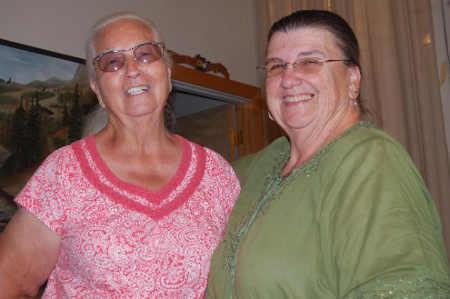
LUCERNE, Calif. – Without Executive Director Rae Eby-Carl and a few people she calls “a wonderful cadre of volunteers,” the Lucerne Alpine Senior Center might no longer exist.
And that would have catastrophic effects on the county’s nutrition. How would you go about replacing the more than 27,000 meals provided by the center on-site and delivered to the less ambulant this year?
“Lake County has always been a delightfully involved population,” said Eby-Carl. “From the time I arrived here 35 years ago, one of the things that impressed me the most is how people go out and do things, especially for seniors and people in schools.”
She added, “The other thing I think is unique about the county is the cooperation between agencies and programs.”
Eby-Carl – now in her 18th month at the center – had retired in January 2012 after serving as a senior director at Lake Family Resource Center. Then the leadership spot at the center became available.
“I heard about the problem they were having here and I thought I would spend a year helping them get their systems in place,” she said.
Eby-Carl took over as executive director in March 2013, a month after the Area Agency on Aging of Lake and Mendocino Counties Board of Directors voted unanimously to terminate the center’s $66,000 annual contract because a state auditor concluded that its nutritional program was “high risk.”
She immediately began addressing the faults found with the center's program and in April 2013 – following a successful inspection – the Area Agency on Aging Board voted to rescind the contract termination.
Another ongoing challenge for the center over the last decade was a funding shortfall of about $168,000 that past directors and boards alleged was the result of an embezzlement in 2005.
However, a criminal case failed to get to trial due to the death of the lead investigator and the matter eventually was dismissed.
For eight years after the money was reported to have disappeared there was a crippling effect on the center.
Executive directors came and went and board members were appointed and resigned, frustrated in their efforts to stabilize the ailing facility.
Eby-Carl was a good fit for a bad situation at the Lucerne Alpine Senior Center, in part, because she’d been through something similar at another nonprofit where embezzlement occurred.
She served as interim executive director of AWARE – “Abused Women: A Recovery Environment” – which offered services and shelter to women who were victims of domestic violence. AWARE later would be disbanded and closed.
Eby-Carl helped the California Attorney General's Office in its case against the organization's previous executive director, who misappropriated funds.
“She got convicted, but she never served a day (in prison),” said Eby-Carl.
Creating new systems and safeguards
Eby-Carl also succeeded at the Lucerne Alpine Senior Center where her predecessors didn’t by implementing systems to monitor how purchases were made, taxes were paid and services were rendered.
“There were taxes that hadn’t been paid that we made sure got paid and two claims on the books from past employees who weren’t paid for their retirement. And we’ll soon be in a position to pay them as well,” said Eby-Carl.
“What I had to do was put systems in place that would monitor how we purchased, taxes were paid, and that they had nutritious meals and inspections were done regularly,“ she added.
To prevent a recurrence of money issues for the Lucerne Alpine Senior Center, Eby-Carl also made contractual arrangements for the Lake Family Resource Center to handle the center's funds.
“That way the new director will never handle cash,” Eby-Carl added, “and it’s in place to ensure that money is handled properly. So now we’re on a monitoring system just like any other senior center in the county. “
Another change was in the way purchases are made.
“When I came here the chair of the board was doing all the purchasing,” said Eby-Carl. “The first thing I thought we needed was to have vendors and I arranged that. We have vendors for delivery every week on a cash-as-you-go basis. We partner with other agencies such as People Services and they do three-quarters of our deliveries.”
The payroll at the center is not much of an expense or an issue.
In addition to Eby-Carl, whose contract calls for 24 hours a week, there are only three others on the payroll, two of them cooks. The other is Eby-Carl’s secretary, who works 25 hours a week. Even a large share of mopping up after meals is done by volunteers.
The senior center's headquarters, located at 3985 Country Club Drive, began life as a fourth through eighth grade school in 1932.
Despite the age of the center's headquarters building, it has been brought up to par in cleanliness.
“I would put our standards up next to anybody,” Eby-Carl said.

The need to raise funds
Another change is that, during Eby-Carl’s 18 months and partly before she came to the center, the entire Lucerne Alpine Senior Center's Board of Directors has been replaced.
“They were recruiting new board members before I came on board, but if there’s anybody out there who wants to help the center they can be on our board,” she said.
The new directors are being trained in fundraising, a critical component of the center's activities.
The center's annual budget is $192,280. Eby-Carl said that about $140,000 of that comes from the center’s thrift store.
“The other $60,000 we have to raise from the community and it comes from fundraisers and donations,” Eby-Carl said. “Some people just straight donate,” but that $60,000 has to be raised every year.
The center has been holding regular fundraisers and community events. Every third Saturday the center hosts its “Open Mic Lucerne” event.
“We have small children performing for people in their 80s,” said Eby-Carl. “Every third Wednesday we have people come and do a potluck. On the second Tuesday of every month we have a songwriters and poetry gathering.”
Much of the funding goes to “Meals on Wheels,” which supplies nearly 23,000 meals annually to people from Lucerne to the western county line.
The main service provided at the Lucerne Alpine Senior Center is a Monday through Friday lunch, consisting of soup, salad, an entrée, side dishes, dessert and a drink. The cost for people over 55 years of age is $4. For those under 55 years the same meal is provided for $5.
Breakfast is not provided. “It has not been done for a long time because we were losing money on it,” Eby-Carl explained. “One of the first things I had to do was plug losses.”
If the center was doing something that wasn’t making a profit and was draining the resources, that service was ended, she said.
However, the senior center continues to operate a pantry, which is stocked by donations of goods from the community and no funding.
“Performance-wise we’ve shined,” Eby-Carl added. “We started below the water, but stayed afloat with regular donations. Many of the people (who eat at the center) can’t afford to pay, but nobody goes hungry; we feed them whether they are able to pay or not.”
The Lucerne Alpine Senior Center, 3985 Country Club Drive, can be reached at telephone 707-274-8779 or through its Web site at http://www.lucernealpineseniorcenter.com .
Email John Lindblom at