 How to resolve AdBlock issue?
News
LAKE COUNTY, Calif. – Lake County Animal Care and Control has a kennel filled with dogs of various sizes and breeds needing homes this week.
The mixes include dachshunds, Labrador Retrievers, Vizslas, a chow chow, pit bull and terrier.
Dogs that are adopted from Lake County Animal Care and Control are either neutered or spayed, microchipped and, if old enough, given a rabies shot and county license before being released to their new owner. License fees do not apply to residents of the cities of Lakeport or Clearlake.
If you're looking for a new companion, visit the shelter. There are many great pets hoping you'll choose them.
In addition to the animals featured here, all adoptable animals in Lake County can be seen here: http://bit.ly/Z6xHMb .
The following dogs at the Lake County Animal Care and Control shelter have been cleared for adoption (additional dogs on the animal control Web site not listed are still “on hold”).
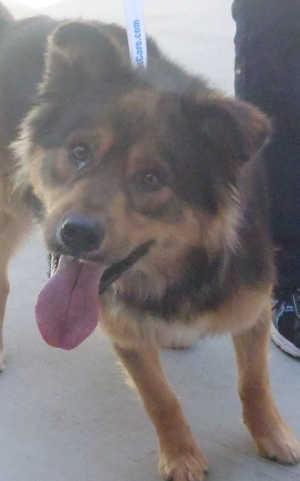
'Bandit'
“Bandit” is an adult male chow chow mix.
He has a medium-length tan and brown coat.
He's in kennel No. 7, ID No. 831.
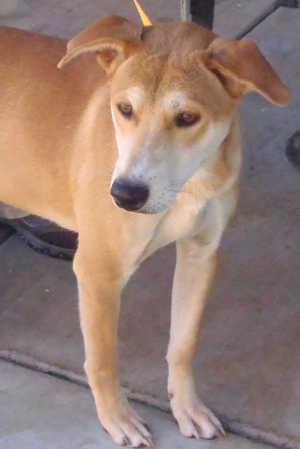
Vizsla mix
This male dog is a Vizsla-hound mix.
He has a short reddish and white coat.
He's in kennel No. 9a, ID No. 897.
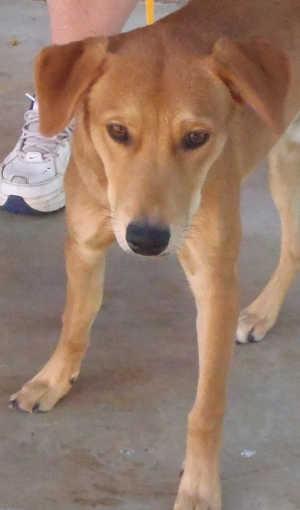
Vizsla mix
This male Vizsla mix also has some hound ancestry.
He has a short reddish coat.
He's in kennel No. 9b, ID No. 900.
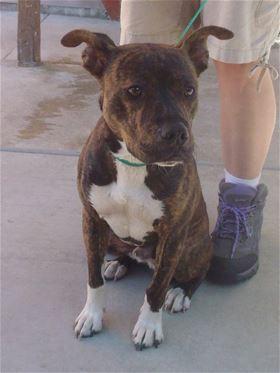
'Hank'
“Hank” is a male pit bull terrier mix.
Shelter staff said he is great with other dogs. He is very playful but calms down quickly.
He needs training with basic manners but he is a quick learner and would make a good family pet for a family with children age 5 and above.
Hank is in kennel No. 28, ID No. 672.
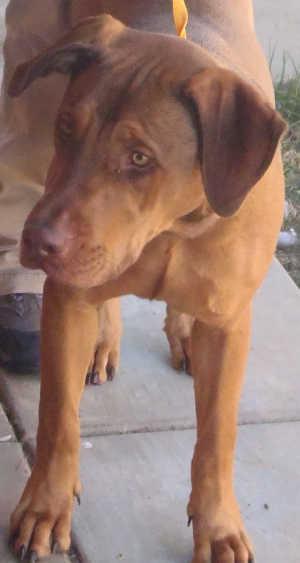
'Oliver'
“Oliver” is a male Labrador Retriever and hound mix.
He has a short reddish-brown coat.
Find Oliver in kennel No. 31, ID No. 809.
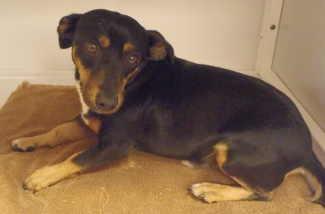
Male dachshund mix
This dachshund mix is an adult male.
He has a short tricolor coat.
He's in kennel No. 32, ID No. 792.
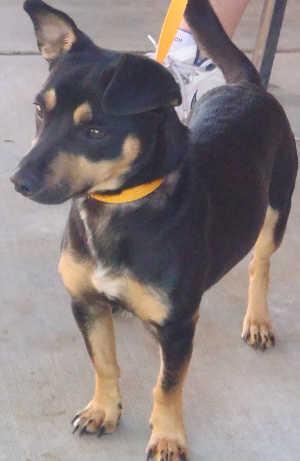
Male terrier mix
This male dog is a terrier and dachshund mix.
He has a short tricolor coat.
He's in kennel No. 32b, ID No. 835.
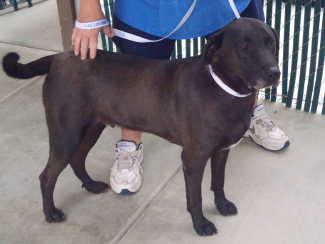
Labrador Retriever mix
This male dog is a Labrador Retriever mix.
He has a short black coat.
He's in kennel No. 34, ID No. 779.
To fill out an adoption application online visit http://www.co.lake.ca.us/Government/Directory/Animal_Care_And_Control/Adopt/Dog___Cat_Adoption_Application.htm .
Lake County Animal Care and Control is located at 4949 Helbush in Lakeport, next to the Hill Road Correctional Facility.
Office hours are Monday through Friday, 8 a.m. to 5 p.m., and 1 p.m. to 3 p.m., Saturday. The shelter is open from 10:30 a.m. to 4:30 p.m. Monday through Friday and on Saturday from 1 p.m. to 3 p.m.
Visit the shelter online at http://www.co.lake.ca.us/Government/Directory/Animal_Care_And_Control.htm .
For more information call Lake County Animal Care and Control at 707-263-0278.
Email Elizabeth Larson at
On April 23, NASA's Swift satellite detected the strongest, hottest and longest-lasting sequence of stellar flares ever seen from a nearby red dwarf star. The initial blast from this record-setting series of explosions was as much as 10,000 times more powerful than the largest solar flare ever recorded.
“We used to think major flaring episodes from red dwarfs lasted no more than a day, but Swift detected at least seven powerful eruptions over a period of about two weeks,” said Stephen Drake, an astrophysicist at NASA's Goddard Space Flight Center in Greenbelt, Maryland, who gave a presentation on the “superflare” at the August meeting of the American Astronomical Society's High Energy Astrophysics Division. “This was a very complex event.”
At its peak, the flare reached temperatures of 360 million degrees Fahrenheit (200 million Celsius), more than 12 times hotter than the center of the sun.
The “superflare” came from one of the stars in a close binary system known as DG Canum Venaticorum, or DG Cvn for short, located about 60 light-years away.
Both stars are dim red dwarfs with masses and sizes about one-third of our sun's. They orbit each other at about three times Earth's average distance from the sun, which is too close for Swift to determine which star erupted.
“This system is poorly studied because it wasn't on our watch list of stars capable of producing large flares,” said Rachel Osten, an astronomer at the Space Telescope Science Institute in Baltimore and a deputy project scientist for NASA's James Webb Space Telescope, now under construction. “We had no idea DG Cvn had this in it.”
Most of the stars lying within about 100 light-years of the solar system are, like the sun, middle-aged.
But a thousand or so young red dwarfs born elsewhere drift through this region, and these stars give astronomers their best opportunity for detailed study of the high-energy activity that typically accompanies stellar youth.
Astronomers estimate DG Cvn was born about 30 million years ago, which makes it less than 0.7 percent the age of the solar system.
Stars erupt with flares for the same reason the sun does. Around active regions of the star's atmosphere, magnetic fields become twisted and distorted.
Much like winding up a rubber band, these allow the fields to accumulate energy. Eventually a process called magnetic reconnection destabilizes the fields, resulting in the explosive release of the stored energy we see as a flare.
The outburst emits radiation across the electromagnetic spectrum, from radio waves to visible, ultraviolet and X-ray light.
At 5:07 p.m. EDT on April 23, the rising tide of X-rays from DG Cvn's superflare triggered Swift's Burst Alert Telescope, or BAT.
Within several seconds of detecting a strong burst of radiation, the BAT calculates an initial position, decides whether the activity merits investigation by other instruments and, if so, sends the position to the spacecraft.
In this case, Swift turned to observe the source in greater detail, and, at the same time, notified astronomers around the globe that a powerful outburst was in progress.
“For about three minutes after the BAT trigger, the superflare's X-ray brightness was greater than the combined luminosity of both stars at all wavelengths under normal conditions,” noted Goddard's Adam Kowalski, who is leading a detailed study on the event. “Flares this large from red dwarfs are exceedingly rare.”
The star's brightness in visible and ultraviolet light, measured both by ground-based observatories and Swift's Optical/Ultraviolet Telescope, rose by 10 and 100 times, respectively.
The initial flare's X-ray output, as measured by Swift's X-Ray Telescope, puts even the most intense solar activity recorded to shame.
The largest solar explosions are classified as extraordinary, or X class, solar flares based on their X-ray emission.
“The biggest flare we've ever seen from the sun occurred in November 2003 and is rated as X 45,” explained Drake. “The flare on DG Cvn, if viewed from a planet the same distance as Earth is from the sun, would have been roughly 10,000 times greater than this, with a rating of about X 100,000.”
But it wasn't over yet. Three hours after the initial outburst, with X-rays on the downswing, the system exploded with another flare nearly as intense as the first.
These first two explosions may be an example of “sympathetic” flaring often seen on the sun, where an outburst in one active region triggers a blast in another.
Over the next 11 days, Swift detected a series of successively weaker blasts. Osten compares the dwindling series of flares to the cascade of aftershocks following a major earthquake.
All told, the star took a total of 20 days to settle back to its normal level of X-ray emission.
How can a star just a third the size of the sun produce such a giant eruption? The key factor is its rapid spin, a crucial ingredient for amplifying magnetic fields.
The flaring star in DG Cvn rotates in under a day, about 30 or more times faster than our sun. The sun also rotated much faster in its youth and may well have produced superflares of its own, but, fortunately for us, it no longer appears capable of doing so.
Astronomers are now analyzing data from the DG Cvn flares to better understand the event in particular and young stars in general.
They suspect the system likely unleashes numerous smaller but more frequent flares and plan to keep tabs on its future eruptions with the help of NASA's Swift.
State health officials say they have increased efforts to identify a virus that causes severe respiratory illness and has hit several areas of the country particularly hard this year.
The monitoring and testing has so far identified 14 cases statewide of enterovirus D68, which the California Department of Public Health said can cause acute, unexplained severe respiratory illness, with the condition of particular concern for children.
As of Oct. 1, CDPH has confirmed enterovirus D68, or EV-D68, infection in 14 young patients in California so far this year.
The patients are residents of San Diego (5), Alameda (2), Los Angeles (1), Riverside (1), San Francisco (1), Santa Cruz (1), Solano (1), and Ventura (1) counties and the city of Long Beach City (1), CDPH said Friday.
Dr. Gil Chavez, CDPH deputy director and state epidemiologist for the Center for Infectious Diseases, said the 14 patients range in age from under 1 year of age to 15 years of age.
Dr. James Watt, MD, chief of CDPH's Division of Communicable Disease Control, said to date the agency has received testing specimens from more than 180 patients believed to have EV-D68, with 140 of those in various stages of testing. “It's fairly complex and it takes a bit of time.”
Of those tested so far, the 14 cases were confirmed, he said.
Dr. Karen M. Tait, M.D., Lake County's public health officer, told Lake County News that, so far, she has not been notified of any local children who are being tested for EV-D68.
According to CDPH, EV-D68 – which is one of more than 100 non-polio enteroviruses – causes respiratory illness and the virus likely spreads from person to person when an infected person coughs, sneezes or touches contaminated surfaces.
EV-D68 symptoms include fever – although fever may not be present – runny nose, sneezing, cough, and body and muscle aches.
Officials said some children have more serious illness with breathing difficulty and wheezing, particularly children with a history of asthma. EV-D68 can rarely cause neurologic illness.
CDPH urged parents to seek medical attention immediately for children who are having any breathing difficulty – wheezing, difficulty speaking or eating, belly pulling in with breaths, blueness around the lips – particularly if the child suffers from asthma.
There is no specific treatment for patients with EV-D68, nor is there a vaccine to prevent it, health officials said. However, everyone 6 months of age and older should receive influenza vaccine every year to protect themselves against that important cause of respiratory disease, CDPH said.
Chavez said the EV-D68 case numbers have not grown in California as they have elsewhere, and that it does tend to be a rare condition.
It is not a condition that is required to be reported to the state, so CDPH doesn't have annual statistics on its occurrence from which to draw to make comparisons for this year's cases, said Chavez.
What's different this year, he said, is that beginning in the summer there was an uptick in EV-D68 cases across the country, so CDPH began asking hospitals and other health care providers for specimens from patients with extreme breathing problems – including children in pediatric intensive care units – without other known causes.
CDPH said 13 of the confirmed EV-D68 had respiratory illness and one has had acute flaccid paralysis.
Officials said that, as part of a separate investigation, CDPH has identified 35 patients as of Oct. 1 with acute flaccid paralysis and spinal cord involvement since 2012. Of those patients, three have had infection with EV-D68, two in 2012 and one in 2014.
Because EV-D68 was found in respiratory specimens from these patients, it is not known whether EV-D68 was a cause of paralysis or a coincidental finding, CDPH said.
Chavez said that investigation is continuing. “We don’t know really what is behind all these cases.”
Dr. Carol Glaser, MD, interim chief of the CDPH Center for Infectious Diseases Immunization Branch, said the acute flaccid paralysis patients range in age from 7 months to 73 years.
She said that CDPH has received anecdotal reports that of those 35, two have made full recoveries. Those who suffer from the illness often have severe neurological deficiencies.
The Centers for Disease Control are working to determine if EV-D68 and acute flaccid paralysis are somehow related, according to Glaser.
“There’s a lot of precedent to suggest that we will see an association,” she said.
Because no vaccine exists for EV-D68, CDPH emphasized the importance of preventing transmission.
The best ways to do that include:
– Wash hands often with soap and water for 20 seconds, especially after changing diapers.
– Avoid touching eyes, nose and mouth with unwashed hands.
– Avoid kissing, hugging and sharing cups or eating utensils with people who are sick.
– Disinfect frequently touched surfaces, such as toys and doorknobs, especially if someone is sick.
Additional information about EV-D68 can be found on the Centers for Disease Control and Prevention’s Enterovirus D68 page, http://www.cdc.gov/non-polio-enterovirus/about/ev-d68.html .
Email Elizabeth Larson at
FINLEY, Calif. – The 25th annual Vineyard Run for Literacy will take place on Sunday, Oct. 12, in conjunction with the annual Steele Wines Harvest Festival.
Race participants can choose to compete in either a 5K or 10K run or a 5K walk.
On-site registration begins at 8 a.m. at Steele Wines, located at the corner of Highway 29 and Thomas Drive, south of Finley.
The race begins at 9 a.m.
There is a suggested donation of $20 for individuals and $30 per family if you preregister. Add $5 for registration on event day.
All proceeds from the event go to the Lake County Literacy Coalition to support literacy tutoring activities throughout Lake County.
Imagine not being able to read, hoping that you can remember what the doctor told you about several medications to help your child get well. Imagine having to ask for help to fill out a job application.
The coalition purchases books and supplies and provides tutor training and workshops for our tutors.
The families program provides books for children under the age of 6 so that the parents can read to their children and break the cycle of illiteracy.
The Vineyard Run for Literacy is a great opportunity to get outdoors and enjoy the autumn weather amid the agricultural beauty of Finley.
In addition to local runners and walkers, the Vineyard Run for Literacy draws participants from around the state.
Encourage coworkers, friends and family members to make donations to sponsor your walk/run. Bring $100 in sponsor contributions on race day and your registration fee is waived.
Sponsor sheets are available at Lake County Library or by calling 707-263-7633.
Registration forms are available at all branches of the Lake County Library, the Lake County Chamber of Commerce, WestAmerica Bank and Lake County Visitor Information Center as well as at Steele Wines on the morning of the run.
Winners in each category receive both ribbons and prizes.
Additionally all participants are entered in a drawing for prizes donated by local merchants.
For additional information please contact
Leaving an inheritance outright to a minor raises various concerns.
Let us consider some important concerns and possible solutions.
A frequent concern is that anything left to a minor may be taken away and used by a self-serving parent.
For example, consider a couple who names their now single daughter’s children as alternative death beneficiaries should the daughter not be alive to inherit.
The daughter’s parents are concerned that their ex-son in law, whom they distrust with good reason, will do his best to get control over any inheritances that pass to his children (from the grandparents).
How can this be prevented?
The best way to prevent this is to provide that the grandchildren’s inheritances will be held in further trust, or else, if the amount is relatively modest, be held at a bank in a custodial account (CUTMA), under the control of a trustworthy relative, friend, or private fiduciary as trustee or custodian, as relevant.
In the example, this would protect the inheritance against the grandchildren’s predatory father.
Another concern is that anything left to a minor will be wasted or abused by the minor as soon as he or she get their hands on it.
Leaving the assets in trust with express goals and uses allows the trust to purposefully further worthwhile goals.
For example, the trust may allow the trustee to pay for the child’s college tuition, room and board and perhaps a stipend so long as the beneficiary maintains at least a “B” average and carries a full course load.
The trust encourages the beneficiary to pursue college but prevents him or her from becoming lazy and uninterested in his or her own responsibilities.
Further concerns are “when,” “how” and even “if” the minor receive outright inheritance distributions.
Should inheritances be distributed in stages or all at once upon attaining a certain age? At what age should distributions occur?
There is no single answer. Some trusts distribute everything once the beneficiary attains a certain age (say, 21 or 25), others distribute in stages (e.g., a third at age 21, half at age 25, and the rest at age 30), and still other trusts hold everything in trust for the beneficiary’s lifetime.
Trusts that hold assets up to the beneficiary’s entire lifetime are usually discretionary trusts created to protect the assets from creditors.
Discretionary trusts give the trustee absolute discretion over if, when and how assets should be used for the beneficiary’s benefit.
Special needs trusts, for example, are completely discretionary trusts. The trustee may, but does not have to, use the assets to pay for the comforts of life that are not provided for by welfare benefits (SSI and Medi-Cal) while preserving eligibility for such needs based benefits.
Other discretionary trusts serve simply to protect the assets against the beneficiary’s own creditors. If the beneficiary cannot demand distribution of the assets then neither can his or her own creditors (limited special exceptions, including one for the unpaid child support owed by the beneficiary).
Such discretionary trusts allow the trustee to make purchases and payments on behalf of the beneficiary without directly depositing money into the beneficiary's own account, where creditors can get at it.
Lastly, what if minors depend on their parent’s or guardian’s estate being kept intact – instead of sold and divided – how can they be protected when their parent dies?
A so-called “family pot trust” allows the trustee to keep the parents’ estate undivided in order to provide any dependent children with a home.
Once the last dependent has reached a milestone (usually age 21 or 25) then the trust assets are sold, and typically divided equally amongst the adult children.
Dennis A. Fordham, attorney (LL.M. tax studies), is a State Bar Certified Specialist in Estate Planning, Probate and Trust Law. His office is at 870 S. Main St., Lakeport, California. Fordham can be reached by e-mail at
NORTHERN CALIFORNIA – Working smoke alarms can make a life-saving difference in a fire.
That’s the message behind this year’s Fire Prevention Week campaign, “Working Smoke Alarms Save Lives: Test Yours Every Month!”
Cal Fire is joining forces with firefighters and safety advocates nationwide during Fire Prevention Week, Oct. 5 to 11, to remind California residents and visitors about the importance of having working smoke alarms in the home and testing them monthly.
According to the latest national research, working smoke alarms cut the chance of dying in a fire in half.
Meanwhile, almost two-thirds of home fire deaths resulted from fires in homes with no smoke alarms or no working smoke alarms.
“Smoke alarms save lives,” said California State Fire Marshal Tonya Hoover. “Having more than one properly placed smoke alarm can significantly increase your chance of surviving a fire. Home smoke alarms can alert people to a fire before it spreads, giving everyone enough time to get out. Be sure to test your smoke alarms regularly.”
Cal Fire is taking the opportunity to stress the importance of having smoke alarms and encourage everyone to take the necessary steps required to update and maintain their home smoke alarm protection.
Smoke alarms are one of the best and least expensive safety devices you can buy and install to protect yourself, your family and your home, the agency said.
Cal Fire said that in the event of a home fire, properly installed and maintained smoke alarms could save your own life and those of your loved ones by providing time to escape.
This year’s Fire Prevention Week campaign includes the following smoke alarm messages:
– Install smoke alarms in every bedroom, outside each separate sleeping area and on every level of the home, including the basement.
– Make sure all smoke alarms are interconnected. This way, when one sounds, they all do.
– Test alarms at least monthly by pushing the test button.
– Replace all smoke alarms when they are 10 years old or sooner if they don’t respond properly.
– Make sure everyone in the home knows the sound of the smoke alarm and understands what to do when they hear it.
For more fire safety tips, visit the Cal Fire Web site at www.fire.ca.gov .