 How to resolve AdBlock issue?
News
NORTH COAST, Calif. – A Lake County woman was killed and three others were injured in a Saturday morning crash on Highway 101 in Mendocino County.
Wanda Shields, 67, of Nice died in the two-vehicle crash, which occurred just before 9 a.m. Saturday on Highway 101 north of Geysers Road, according to a report from the California Highway Patrol's Ukiah Area office.
The CHP said Xuan Zuo, 30, of Kirkland, Wash., was driving her 2004 Honda northbound on Highway 101 in the No. 1 lane and swerved for an object ahead of her.
She lost control of the vehicle and crossed over the center median and into the southbound lanes, directly into the path of a 1998 Buick driven by 74-year-old Don Shields of Nice, with Wanda Shields riding as his passenger, the CHP said.
The vehicles driven by Zuo and Shields collided, with Wanda Shields sustaining fatal injuries, according to the CHP.
The CHP said Don Shields suffered major injuries and was transported by air ambulance to Santa Rosa Memorial Hospital for treatment.
Zuo had minor injuries and her right front passenger, Jiapeng Lu, 33, also of Kirkland, suffered major injuries and was transported to Ukiah Valley Medical Center, the CHP said. Another passenger in Zuo's vehicle, which the report indicated was a young child, was uninjured.
The CHP said all of those involved in the crash were using their seat belts at the time of the crash, and alcohol does not appear to be a contributing factor.
The CHP said the crash remains under investigation.
Highway 101 near Comminsky Road Station Road was closed for about three and a half hours following the crash, the CHP said.
Editor's note: The original version of the CHP's preliminary report on the crash indicated Wanda Shields was not wearing her seat belt. However, in a followup on Wednesday the CHP corrected its report to note that she was, indeed, using her safety equipment.
Email Elizabeth Larson at
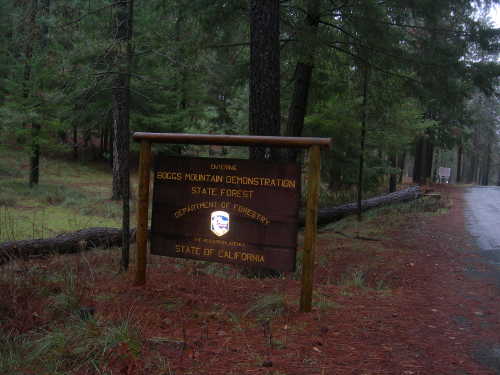
“Climb the mountains and get their good tidings. Nature's peace will flow into you as sunshine flows into trees. The winds will blow their own freshness into you, and the storms their energy, while cares will drop away from you like the leaves of Autumn.” – John Muir, “The Mountains of California”
LAKE COUNTY, Calif. – Southern Lake County's Boggs Mountain Demonstration State Forest is located seven miles northwest of Middletown, off of Highway 175.
Boggs Mountain Demonstration State Forest is 3,493 acres of awe-inspiring woods which was acquired by the state of California via a private landowner in 1949.
Just what is a “demonstration state forest”?
Demonstration forests are forests which are representative of the most common type of forests in California.
Our state has eight demonstration state forests, with more than 71,000 combined acres, including Jackson in Mendocino County, Ellen Pickett in Trinity County, Mount Zion in Amador County, Las Posadas in Napa County, Soquel in Santa Cruz County, LaTour in Shasta County and Mountain Home in Tulare County.
Like the rest of Lake County, Boggs Forest is considered to be a Mediterranean climate with hot and dry summers and warm, wet winters.
The temperature ranges from 100 degrees F (summers) down to 13 degrees F (winters) at Boggs, with an average annual rainfall of 71 inches, in typical years.
Due to Boggs' elevation of 3,720 feet, the forest can experience light snowfall several times a year.
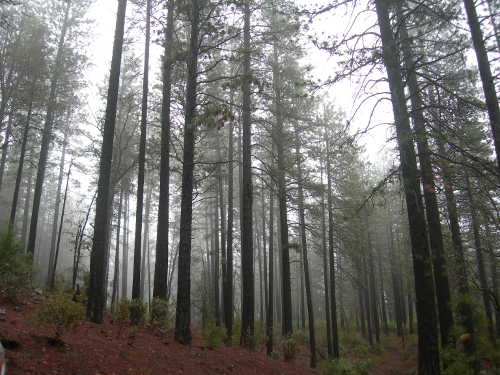
When hiking any of Boggs Mountain's trails you will be surrounded by manzanita and chaparral when you start out, then climb into stunning mixed wooded forest of ponderosa pine, Douglas-fir and sugar pine.
Interspersed along the way you'll encounter various oaks, such as canyon live oak, black oak. Be sure to look for dogwood and madrone as well.
The geology of Boggs is considered to be complex in form, as it is assembled on a large lava cap with slopes and rock outcrops.
Evidence of rock which is volcanic in nature can be seen throughout the forest, with igneous rock such as andesite and basalt.
According to details in the report from the California Department of Forestry and Fire Protection, the sedimentary rock seen in the soils are sandstones and mudstones.
The forest is a popular spot year-round for not only hiking, but equestrian use as well as designated bicycling use.
For more information see the Friends of Boggs Mountain Web site at http://boggsmountain.net/calendar/hiking-events/ .
Kathleen Scavone, M.A., is an educator, potter, writer and author of “Anderson Marsh State Historic Park: A Walking History, Prehistory, Flora, and Fauna Tour of a California State Park” and “Native Americans of Lake County.” She also writes for NASA and JPL as one of their “Solar System Ambassadors.” She was selected “Lake County Teacher of the Year, 1998-99” by the Lake County Office of Education, and chosen as one of 10 state finalists the same year by the California Department of Education.
LAKE COUNTY, Calif. – Lake County Animal Care and Control has a unique variety of mostly working dogs – plus some smaller canines – available for adoption this week.
The dogs featured this week include mixes of blue heeler or cattle dog, boxer, Chihuahua, German Shepherd, hound, pit bull and retriever.
Dogs that are adopted from Lake County Animal Care and Control are either neutered or spayed, microchipped and, if old enough, given a rabies shot and county license before being released to their new owner. License fees do not apply to residents of the cities of Lakeport or Clearlake.
If you're looking for a new companion, visit the shelter. There are many great pets hoping you'll choose them.
In addition to the animals featured here, all adoptable animals in Lake County can be seen here: http://bit.ly/Z6xHMb .
The following dogs at the Lake County Animal Care and Control shelter have been cleared for adoption (additional dogs on the animal control Web site not listed are still “on hold”).
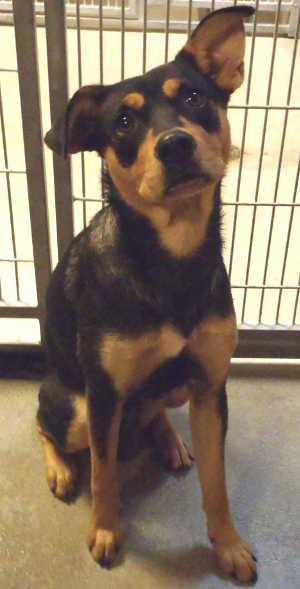
Female German Shepherd mix
This female German Shepherd mix has a short black and tan coat.
Staff said she's very sweet, knows some commands and is observant of her surroundings. She will make a very devoted pet in the right home, has no food guarding issues and would be a great companion dog.
She's in kennel No. 5, ID No. 1431.
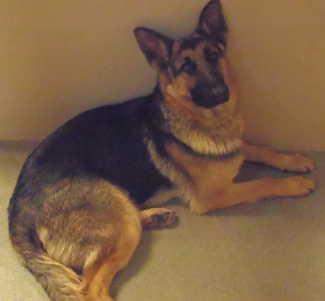
Male German Shepherd
This male German Shepherd mix has a medium-length black and tan coat.
He's calm and collected, according to shelter staff, and gets along with both male and female dogs.
Based on staff evaluation, he would do great in a family with kids and has no signs of food aggression.
He's in kennel No. 7, ID No. 1407.
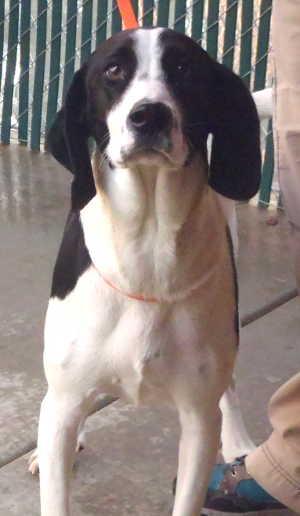
Male hound mix
This male hound mix has a short black and white coat.
Shelter staff said he loves to run, knows some commands and would do fine with cats.
He has no issues with food guarding and gets along great with both male and female dogs, according to shelter staff, who said he would be great in an active family with children 7 years old and above.
He's in kennel No. 10, ID No. 1375.
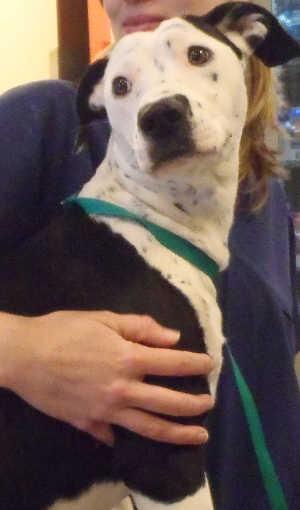
Cattle dog mix
This young female cattle dog mix has a short black and white coat.
She's in kennel No. 13, ID No. 1444.
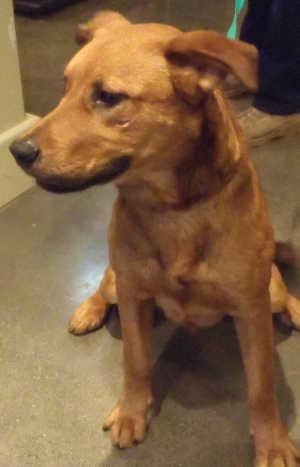
Retriever-shepherd mix
This male retriever-shepherd mix has a short gold-colored coat.
He's in kennel No. 14, ID No. 1448.
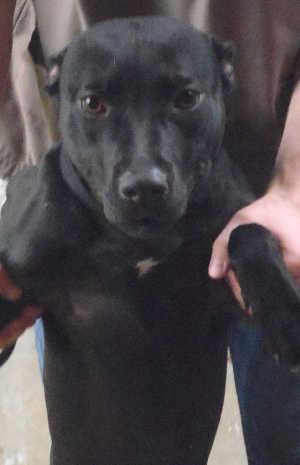
Pit bull mix
This female pit bull terrier mix has a short black coat.
She's in kennel No. 16, ID No. 1380.

Female Chihuahua mix
This female Chihuahua mix has a short black and white coat.
Shelter staff said she's very sweet and great with kids, and loves to be held and hugged.
She would do fine in a home with cats, gets along great with male and female dogs, and would make someone a great lap dog.
She's in kennel No. 27, ID No. 1398.
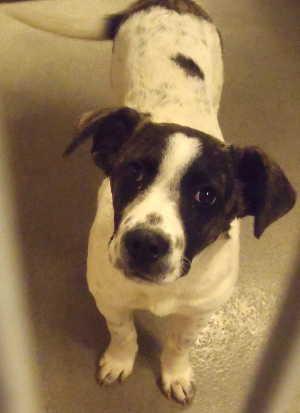
Female cattle dog
This young female cattle dog mix has a short black and white coat.
She's in kennel No. 28, ID No. 1427.
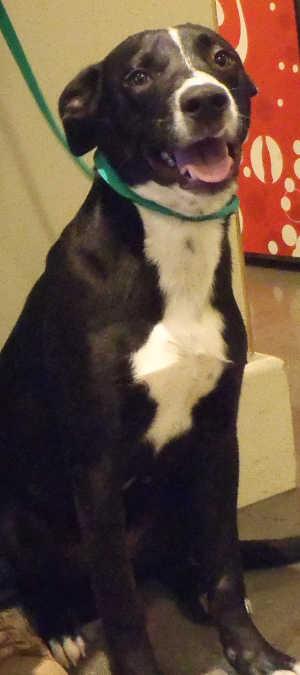
Australian Cattle Dog
This young male Australian Cattle Dog has a short black and white coat.
He's in kennel No. 29, ID No. 1445.
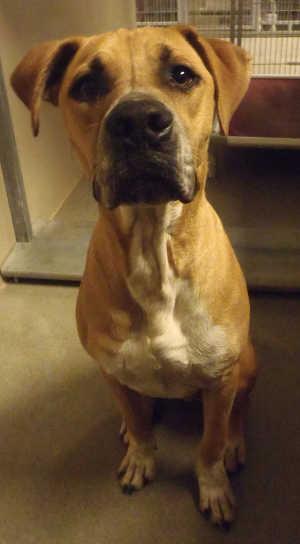
Male boxer mix
This male boxer mix has a short tan and white coat.
Shelter staff said he knows some commands, does not guard food and would do well in an active family with children over age 10. It's suggested that he shouldn't be in a home with cat.
He's in kennel No. 30, ID No. 1436.
To fill out an adoption application online visit http://www.co.lake.ca.us/Government/Directory/Animal_Care_And_Control/Adopt/Dog___Cat_Adoption_Application.htm .
Lake County Animal Care and Control is located at 4949 Helbush in Lakeport, next to the Hill Road Correctional Facility.
Office hours are Monday through Friday, 8 a.m. to 5 p.m., and 1 p.m. to 3 p.m., Saturday. The shelter is open from 10:30 a.m. to 4:30 p.m. Monday through Friday and on Saturday from 1 p.m. to 3 p.m.
Visit the shelter online at http://www.co.lake.ca.us/Government/Directory/Animal_Care_And_Control.htm .
For more information call Lake County Animal Care and Control at 707-263-0278.
Email Elizabeth Larson at
Where did our planet get its oceans?
Among planetary scientists, this is one of the most important and perplexing questions about the origins of Earth.
One popular theory holds that water was brought to Earth by the ancient impacts of comets and asteroids.
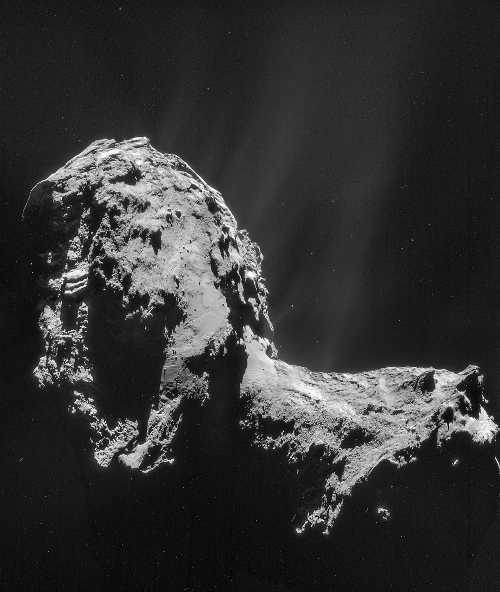
However, new data from the European Space Agency’s Rosetta spacecraft indicate that terrestrial water did not come from comets like 67P/Churyumov-Gerasimenko.
The findings were published Dec. 10 in the journal Science.
Researchers agree that water must have been delivered to Earth by small bodies at a later stage of the planet’s evolution.
It is, however, not clear which family of small bodies is responsible.
There are three possibilities: asteroid-like small bodies from the region of Jupiter; Oort cloud comets formed inside of Neptune's orbit; and Kuiper Belt comets formed outside of Neptune's orbit.
The key to determining where the water originated is in its isotopic “flavor.” That is, by measuring the level of deuterium – a heavier form of hydrogen.
By comparing the ratio of deuterium to hydrogen in different objects, scientists can identify where in the solar system that object originated.
And by comparing the D/H ratio, in Earth’s oceans with that in other bodies, scientists can aim to identify the origin of our water.
The Rosetta Orbiter Spectrometer for Ion and Neutral Analysis (ROSINA) instrument has found that the composition of comet 67P/Churyumov-Gerasimenko’s water vapor is significantly different from that found on Earth.
The value for the D/H ratio on the comet is more than three times the terrestrial value. This is among the highest-ever-measured values in the solar system. That means it is very unlikely that comets like 67P/Churyumov-Gerasimenko are responsible for the terrestrial water.
The D/H ratio is the ratio of a heavier hydrogen isotope, called deuterium, to the most common hydrogen isotope. It can provide a signature for comparison across different stages of a planet's history.
“We knew that Rosetta’s in situ analysis of this comet was always going to throw us surprises," said Matt Taylor, Rosetta’s project scientist from the European Space Research and Technology Center, Noordwijk, the Netherlands. “The bigger picture of solar-system science, and this outstanding observation, certainly fuel the debate as to where Earth got its water.”
Almost 30 years ago (1986) the mass spectrometers on board the European Giotto mission to comet Halley could, for the first time, determine D/H ratio in a comet. It turned out to be twice the terrestrial ratio.
The conclusion at that time was that Oort cloud comets, of which Halley is a member, cannot be the responsible reservoir for our water.
Several other Oort cloud comets were measured in the next 20 years, all displaying very similar D/H values compared to Halley.
Subsequently, models that had comets as the origin of the terrestrial water became less popular.
This changed when, thanks to the European Space Agency's Herschel spacecraft, the D/H ratio was determined in comet Hartley 2, which is believed to be a Kuiper Belt comet.
The D/H ratio found was very close to our terrestrial value – which was not really expected.
Most models on the early solar system claim that Kuiper Belt comets should have an even higher D/H ratio than Oort cloud comets because Kuiper Belt objects formed in a colder region than Oort cloud comets.
The new findings of the Rosetta mission make it more likely that Earth got its water from asteroid-like bodies closer to our orbit and/or that Earth could actually preserve at least some of its original water in minerals and at the poles.
“Our finding also disqualifies the idea that Jupiter family comets contain solely Earth ocean-like water,” said Kathrin Altwegg, principal investigator for the ROSINA instrument from the University of Bern, Switzerland, and lead author of the Science paper. “It supports models that include asteroids as the main delivery mechanism for Earth’s oceans.”
Comets are time capsules containing primitive material left over from the epoch when the sun and its planets formed.
Rosetta's lander obtained the first images taken from a comet's surface and will provide analysis of the comet's possible primordial composition.
Rosetta will be the first spacecraft to witness at close proximity how a comet changes as it is subjected to the increasing intensity of the sun's radiation.
Observations will help scientists learn more about the origin and evolution of our solar system and the role comets may have played in seeding Earth with water, and perhaps even life.
Dr. Tony Phillips works for the National Aeronautics and Space Administration.
UPPER LAKE, Calif. – A Willits man died Friday night after being struck by a vehicle while crossing Highway 20 near Blue Lakes.
The 46-year-old man's name was not released by the California Highway Patrol's Clear Lake Area office pending notification of next of kin.
In a preliminary report issued early Saturday morning, the CHP said the crash occurred at 8:40 p.m. Friday on Highway 20 east of Irvine Avenue, which is located near Blue Lakes Lodge.
Larry Pergeau, 37, of Ukiah, was driving his 2004 Ford Ranger westbound at approximately 50 miles per hour, with 39-year-old Dawn Beckwith, also of Ukiah, riding as his passenger, the CHP said.
The pedestrian was crossing Highway 20 at Irvine Avenue from south to north. As Pergeau rounded a moderate turn to the right he saw the pedestrian crossing the roadway directly ahead, the report said.
Pergeau braked and swerved his pickup to the left, but the CHP said he was unable to avoid hitting the pedestrian.
The CHP said the Willits resident struck the right side headlight, bumper and hood, and was thrown onto the north shoulder of Highway 20.
Northshore Fire Protection District personnel arrived on scene shortly afterward. Radio reports indicated paramedics attempted cardiopulmonary resuscitation on the injured man.
Medics pronounced the man dead at the scene, the CHP said.
Pergeau was evaluated at the scene, and authorities said he was not under the influence.
The CHP said that it is not yet known if the Willits man who died was under the influence of drugs or alcohol.
Pergeau and Beckwith were both wearing their seat belts and were uninjured, the CHP said.
CHP Officer Chris Tuggle is investigating the crash.
This is the second crash involving a pedestrian in the county this month.
The previous incident, which occurred on Dec. 13 – also near Upper Lake – sent a Lucerne man to a regional trauma center with serious injuries, as Lake County News has reported.
Email Elizabeth Larson at
LAKE COUNTY, Calif. – The Christmas week is winding down with some frosty weather, and the final week of the year – along with the first days of the new year – is expected to have even colder temperatures.
The National Weather Service on Friday issued a frost advisory for the hours of 4 to 9 a.m. Saturday, as Lake County News has reported.
But forecasters said even colder weather is expected midweek.
Around the county, the forecast calls for daytime temperatures Sunday through Friday ranging into the low 50s, with nighttime temperatures in the mid-20s.
There also is the chance of mild winds in the first half of the week, according to the forecast.
New Year's Day is forecast to be sunny, with a daytime high of 50 degrees and the nighttime temperature dropping into the high 20s, forecasters said.
The National Weather Services urged area residents to be sure to protect pets and sensitive plants from the cold, frosty weather.
Email Elizabeth Larson at