How to resolve AdBlock issue?
News
CLEARLAKE, Calif. – An upcoming murder mystery and dinner will benefit two local organizations.
“The Mafia Murders” will be held on Wednesday, Dec. 31, at the Highlands Senior Center, 3245 Bowers Road in Clearlake.
Doors open at 6 p.m.
Proceeds from the dinner will support Lake County Youth Services and the Lake County Theatre Co.
The cost is $40 per person. VIP tables also are available.
All tickets are presale only.
For more information, call 707-994-5437.
Trees are an essential part of California’s climate and are vital to improving air quality and conserving water.
To help educate Californians on the value that trees provide to building successful, healthy cities and neighborhoods, the California Department of Forestry and Fire Protection, or Cal Fire, and California ReLeaf are announcing the annual statewide Arbor Week poster contest for students in third, fourth and fifth grades.
Students are asked to create original artwork based on the theme “We Need Trees and Trees Need Us”. Submissions are due to California ReLeaf by February 13, 2015.
Winners will be featured at the State Fair and awarded cash prizes provided by the California Community Forests Foundation.
Cal Fire and California ReLeaf are partnering to encourage cities, nature groups, schools, and youth organizations to celebrate California Arbor Week by planting trees in their communities.
California ReLeaf is an alliance of community-based groups, individuals, businesses, and government agencies working to protect the environment by planting and caring for trees and the state’s urban and community forests.
“Trees are vital, functional parts of our communities, our homes and yards, and our lives”, said Cal Fire Deputy Director Duane Shintaku. “This is especially true during times of challenging drought conditions. Focused education for California’s youth is one of the most effective ways we can increase awareness of the important roles trees play in California and the many benefits they provide to the communities in which we live.”
The goals of Arbor Week include educating Californians about trees, encouraging tree planting, teaching elementary school children the environmental, social, and economic benefits of trees, and protecting the state’s valuable natural resources.
“One of the numerous benefits of trees is that they make California’s cities and towns healthier places to live,” said Cindy Blain, executive director of California ReLeaf. “Children who have access to nature and green spaces to play and learn are more active, have lower incidences of obesity, concentrate better in school, and demonstrate healthier social behaviors. Planting and caring for trees means investing in a better future for our children and California.”
Contest rules, as well as educational materials related to the value of trees, community benefits of trees, jobs in the urban and community forestry field, and tree identification can be downloaded at www.arborweek.org/contests .
The contest is sponsored by California ReLeaf, Cal Fire, and the California Community Forests Foundation.
California Arbor Week runs March 7-14 every year to mark famed horticulturist Luther Burbank’s birthday and to raise awareness of the benefits of trees in our communities.
In 2011, legislation was passed to define California Arbor Week in statute.
Visit www.arborweek.org for more information.
A report released this month by Trust for America’s Health and the Robert Wood Johnson Foundation finds that the Ebola outbreak exposes serious underlying gaps in the nation’s ability to manage severe infectious disease threats.
Half of states and Washington, D.C. scored five or lower out of 10 key indicators related to preventing, detecting, diagnosing and responding to outbreaks.
Maryland, Massachusetts, Tennessee, Vermont and Virginia tied for the top score – achieving eight out of 10 indicators. Arkansas has the lowest score at two out of 10.
California, Delaware, Nebraska, New Hampshire, North Dakota, Pennsylvania and Wisconsin scored seven out of 10.
The indicators are developed in consultation with leading public health experts based on data from publicly available sources or information provided by public officials.
“Over the last decade, we have seen dramatic improvements in state and local capacity to respond to outbreaks and emergencies. But we also saw during the recent Ebola outbreak that some of the most basic infectious disease controls failed when tested,” said Jeffrey Levi, PhD, executive director of Trust for America’s Health, or TFAH.
“The Ebola outbreak is a reminder that we cannot afford to let our guard down. We must remain vigilant in preventing and controlling emerging threats – like MERS-CoV, pandemic flu and Enterovirus – but not at the expense of ongoing, highly disruptive and dangerous diseases – seasonal flu, HIV/AIDS, antibiotic resistance and health care-associated infections,” Levi said.
Some key findings from the “Outbreaks: Protecting Americans from Infectious Diseases” report include progress and gaps in the areas of:
– Preparing for emerging threats: Significant advances have been made in preparing for public health emergencies since the Sept. 11, 2001, and the anthrax attacks, but gaps remain and have been exacerbated as resources were cut over time.
– Forty-seven states and Washington, D.C. reported conducting an exercise or using a real event to evaluate the time it took for sentinel laboratories to acknowledge receipt of an urgent message from the state’s laboratory.
– Only 27 states and Washington, D.C. met a score equal to or higher than the national average for the Incident and Information Management domain of the National Health Security Preparedness Index.
– Vaccinations: More than two million preschoolers, 35 percent of seniors and a majority of adults do not receive all recommended vaccinations.
– Only 14 states vaccinated at least half of their population against the seasonal flu (from fall 2013 to spring 2014).
– Only 35 states and Washington, D.C. met the goal for vaccinating young children against the hepatitis B virus (Healthy People 2020 target of 90 percent of children ages 19 to 35 months receiving at least three doses).
– Health care-associated infections: While health care-associated infections have declined in recent years due to stronger prevention policies, around one out of every 25 people who are hospitalized each year still contracts a health care-associated infection.
– Only 16 states performed better than the national standardized infection ratio for central-line-associated bloodstream infections.
– Only 10 states reduced the number of central line-associated bloodstream infections between 2011 and 2012.
– Sexually transmitted infections and related disease treatment and prevention: The number of new HIV infections grew by 22 percent among young gay men, and 48 percent among young black men (between 2008 and 2010); more than one-third of gonorrhea cases are now antibiotic-resistant; and nearly three million baby boomers are infected with hepatitis C, the majority of whom do not know they have it.
– Thirty-seven states and Washington, D.C. require reporting of all (detectable and undetectable) CD4 and HIV viral load data, which are key strategies for classifying stage of disease, monitoring quality of care and preventing further transmission of HIV.
– Food safety: Around 48 million Americans suffer from a foodborne illness each year.
– Thirty-eight states met the national performance target of testing 90 percent of reported E.coli O157 cases within four days (in 2011).
“The best offense to fighting infectious diseases is a strong and steady defense,” said Paul Kuehnert, a Robert Wood Johnson Foundation director. “Infectious disease control requires having systems in place, continuous training and practice and sustained, sufficient funding. As we work with communities across the nation to build a Culture of Health, we recognize that promoting and protecting health, and readiness to respond to wide-scale health threats are essential.”
The “Outbreaks” report recommends that it is time to rethink and modernize the health system to better match existing and emerging global disease threats.
Priority improvements should include:
– Core abilities: Every state should be able to meet a set of core capabilities and there must be sufficient, sustained funding to support these capabilities. Some basic capabilities include: investigative expertise, including surveillance systems that can identify and track threats and communicate across the health system and strong laboratory capacity; containment strategies, including vaccines and medicines; continued training and testing for hospitals and health departments for infection control and emergency preparedness; risk communications capabilities that inform the public without creating unnecessary fear; and maintaining a strong research capacity to develop new vaccines and medical treatments;
– Health care and public health integration: Systems must be improved so the health care system, hospitals and public health agencies work better together toward the common goals of protecting patients, health care workers and the public; and
– Leadership and accountability: Stronger leadership is needed for a government-wide approach to health threats at the federal, state and local levels, and there must be increased support for integration and flexibility of programs in exchange for demonstration of capabilities and accountability.
The report and state-by-state materials are available on TFAH’s Web site at www.healthyamericans.org .
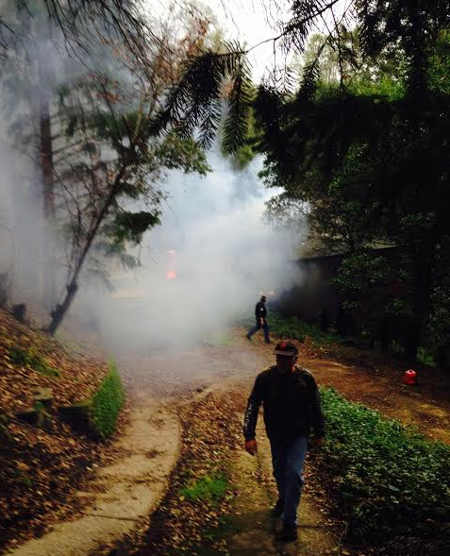
KELSEYVILLE, Calif. – A Christmas Eve fire did serious damage to a home near Kelseyville.
The fire at the stick-built home, located on Soda Bay Road near Crystal Drive in Buckingham, was dispatched shortly before 11:30 a.m. Wednesday, according to Kelseyville Fire Capt. Paul Scott.
Radio reports indicated that Soda Bay Road was closed briefly for emergency vehicles during the incident.
Kelseyville Fire responded with two engines, a water tender and seven personnel, while Lakeport Fire sent an engine and three personnel as part of a mutual aid response, Scott said.
When firefighters arrived, the home was fully involved, said Scott.
He said the home's owner was on site when firefighters were working, but Scott was not sure if the owner had been home when the fire started. No injuries were reported.
The fire was continued in about 30 to 40 minutes, Scott said, with mop up taking place afterward.
“The guys did a really good stop on it,” with no other structures damaged, Scott said.
Scott said the home is still standing, but the inside was destroyed and the structure appeared to be a complete loss.
He said the fire's cause is under investigation.
Email Elizabeth Larson at
NORTHERN CALIFORNIA – California's governor has once against issued his Christmas pardons list, which this year includes cases from Lake and its neighboring counties.
Altogether, Gov. Jerry Brown granted 105 pardons on Wednesday.
Among the individuals granted pardons this year was Robert George Swisley, who on July 30, 1984, was sentenced in Lake County Superior Court to three years' probation for possession of a controlled substance for sale.
Swisley's pardon said he was discharged from probation on July 30, 1987, having completed his sentence.
In February 2013 Swisley obtained an order from Placer County Superior Court “evidencing that since his release from custody, he has lived an honest and upright life, exhibited good moral character, and conducted himself as a law-abiding citizen,” with the court granting a certificate of rehabilitation and recommending that Swisley be granted a full pardon.
Other cases from neighboring counties included on the governor's latest pardon list include:
– Marlon Cox, now a resident of New Jersey, sentenced in April 1982 in Napa County to prison for sale and transportation of marijuana or hashish;
– Charles Lee Kelly, who in March 1996 was sentenced in Yolo County to prison for possession of a controlled substance for sale;
– Harry Lee Perdue, sentenced to probation in March 1997 in Yolo County for driving under the influence causing injury; and
– Joseph Mary Villanueva Jr., who in January 1995 was sentenced to probation in Yolo County for transportation of a controlled substance.
The Governor's Office said the individuals granted pardons all completed their sentences and have been released from custody for more than a decade without further criminal activity.
Individuals who have been convicted of a crime in California may apply to the governor for a pardon, Brown's office reported.
All applicants for a pardon who were eligible obtained a Certificate of Rehabilitation, which is an order from a superior court declaring that a person convicted of a crime is now rehabilitated, according to the process.
A gubernatorial pardon may be granted to people who have demonstrated exemplary behavior and have lived productive and law-abiding lives following their conviction. Pardons are not granted unless they are earned, the Governor's Office reported.
When a pardon is granted, the California Department of Justice and the Federal Bureau of Investigation are notified so that they may update their records on the applicant. The pardon is filed with the Secretary of State and the Legislature, and it is a public record, officials said.
Of the pardons included in Brown's Wednesday list, more than 60 of the cases involved various drug convictions – solicitation, transportation, sales, possession, cultivation and manufacturing.
Other crimes for which pardons were granted included assault with a deadly weapon other than a firearm, assault with a firearm, attempted grand theft, attempted robbery, bad check possession, burglary, conspiracy to commit a crime, dissuading a witness from testifying, driving under the influence, grand theft, inflicting corporal injury on a cohabitant, injuring or destroying insured property, knowingly receiving stolen property, perjury, possession of a dangerous weapon, robbery, soliciting a murder, vehicle theft and vehicular manslaughter.
By day's end Brown had withdrawn a pardon he had given to a Southern California man, Glen Williams Carnes, who had been convicted in 1998 of possession of a controlled substance for sale. The Los Angeles Times reported that federal regulators recently had disciplined Carnes.
Email Elizabeth Larson at
The European Space Agency’s orbiting Rosetta spacecraft is expected to come within four miles of the surface of comet 67P/Churyumov–Gerasimenko in February of next year.
The flyby will be the closest the comet explorer will come during its prime mission.
“It is the earliest we could carry it out without impacting the vitally important bound orbits that are currently being flown,” said Matt Taylor, the Rosetta project scientist from the European Space Research and Technology Center, Noordwijk, the Netherlands. “As the comet becomes more and more active, it will not be possible to get so close to the comet. So this opportunity is very unique.”
The low flyby will be an opportunity for Rosetta to obtain imagery with a resolution of a few inches per pixel. The imagery is expected to provide information on the comet’s porosity and albedo (its reflectance). The flyby will also allow the study of the processes by which cometary dust is accelerated by the cometary gas emission.
“Rosetta is providing us with a grandstand seat of the comet throughout the next year. This flyby will put us track side – it’s going to be that close,” said Taylor.
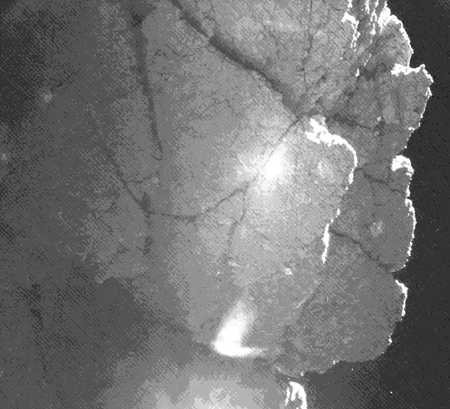
The Rosetta orbiter deployed its Philae lander to one spot on the comet's surface in November. Philae obtained the first images taken from a comet's surface and will provide analysis of the comet's possible primordial composition.
Comets are time capsules containing primitive material left over from the epoch when our sun and its planets formed.
Rosetta will be the first spacecraft to witness at close proximity how a comet changes as it is subjected to the increasing intensity of the sun's radiation.
Observations will help scientists learn more about the origin and evolution of our solar system and the role comets may have played in seeding Earth with water, and perhaps even life.
For more information on the U.S. instruments aboard Rosetta, visit http://rosetta.jpl.nasa.gov .