 How to resolve AdBlock issue?
News
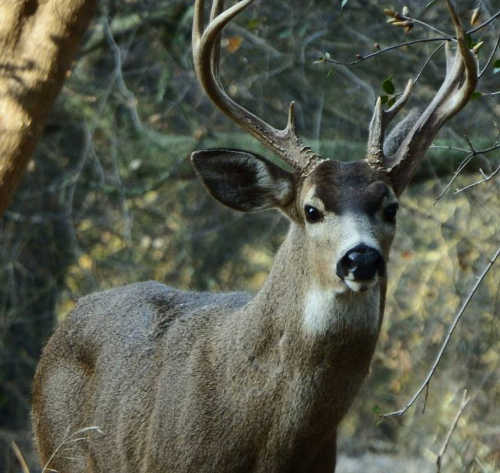
NORTHERN CALIFORNIA – I always love seeing the deer when I go into the forests throughout this region.
The deer seen most often in this part of California the black-tail subspecies of mule deer (Odocoileus hemionus), most recognizable by their large independently-moving ears and black tails.
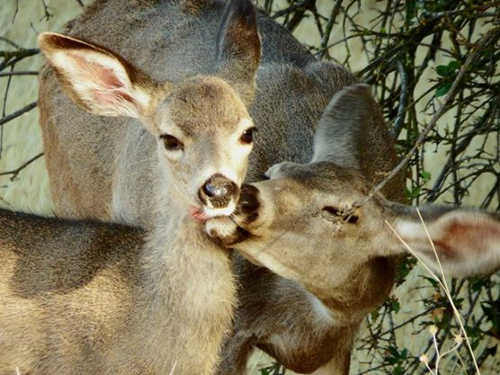
Recently, I came across a doe and her three youngsters on a walk, and took photos and video of them as mama washed the youngsters’ faces with her tongue.
The big males are strutting this time of year, too, following after females and challenging one another for dominance over their wintering grounds.
Mule deer breed between October and February, so we’re right in the middle of their season now.
Twin births are normal for black-tail mule deer, and triplets are not uncommon.
Does are generally excellent mothers, and will protect their fawns if they have to.
Deer would rather flee than fight, but when running isn’t an option, a mother deer will advance on intruders, rear up, and pound them with their front hooves to protect her offspring.
Once you spot the deer on your walk, it’s best take photos without intruding on the deer’s space if you can.
A simple 50x telephoto lens will actually let you get some really decent shots while also keeping you at a distance that is comfortable for the deer.
Taking video is always fun, too, especially when you’re filming yearlings and their mamas.
Fawns arrive after gestating for six or seven months. When the 6- to 8-pound fawns are born – and for the first week to 10 days of life – they have no scent, and that protects them from predators when the doe has to step away to find food.
By the way, don’t assume that a fawn sitting by itself in the forest has been “abandoned.” Unless it’s severely sick or injured, leave it where it is and don’t touch it. Its mother is no doubt just off for a few minutes foraging for food.
Those young deer who survive their first year can grow up to be about 150 to 280 pounds (depending on their gender), and can live up to about 10 years in the wild (although they can live much longer in captivity).
Does have to take in a lot of nutrients to feed themselves and produce milk for their young, and they do this by foraging for herbaceous plants and weeds, leaves, lichen, rose hips and berries such as blackberries.
They’ll even eat poison oak and California Buckeye leaves, and seem to have a sort of natural immunity to the toxins in them.
Grass is low in nutritional content, so they tend to ignore that unless there is no other food source readily available.
To communicate with her youngsters and other deer, the doe may use visual displays, scents and vocalizations.
Glands in different parts of the legs actually produce different kinds of scents.
Glands on the inside of the legs, for example, secrete a scent that helps the deer recognize one another as individuals, whereas other glands on the outside of the legs produce a heavier “alarm” or warning scent.
To show predators how strong and healthy they are, the deer will often flee while “stotting,” bounding through the forest with all four hooves bouncing off the ground at the same time.
Be careful when driving around dawn or dusk when deer are most active. That “deer in the headlights” reaction to the lights on your car is caused less by fear than by the fact that the deer’s pupils dilate in low-light so their vision is optimized.
When the light from your headlights glares into their eyes, they stand still because they’re temporarily blinded and are waiting for their eyes to adjust.
As David C. Yancy, a deer biologist with the Kentucky Department of Fish and Wildlife Resources noted, “They don’t know what to do, so they do nothing.”
We humans, however, do know what do: when driving in areas where you know deer are prevalent, slow down (especially around corners) and keep an eye out for them.
Both you and the deer will be happier for it.
Tuleyome Tales is a monthly publication of Tuleyome, a nonprofit conservation organization based in Woodland, Calif. For more information about Tuleyome go to www.tuleyome.org . Mary K. Hanson is an amateur naturalist and photographer and author of The Chubby Woman’s Walkabout blog.
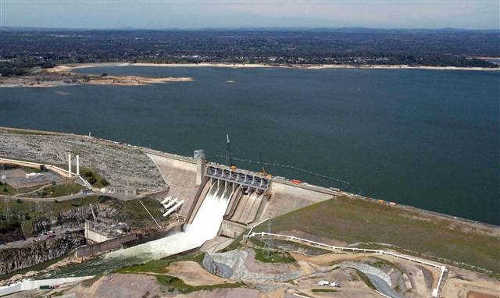
According to a new study sponsored by the National Oceanic and Atmospheric Administration, natural oceanic and atmospheric patterns are the primary drivers behind California's ongoing drought.
A high pressure ridge off the West Coast (typical of historic droughts) prevailed for three winters, blocking important wet season storms, with ocean surface temperature patterns making such a ridge much more likely.
Typically, the winter season in California provides the state with a majority of its annual snow and rainfall that replenish water supplies for communities and ecosystems.
Further studies on these oceanic conditions and their effect on California's climate may lead to advances in drought early warning that can help water managers and major industries better prepare for lengthy dry spells in the future.
“It's important to note that California's drought, while extreme, is not an uncommon occurrence for the state. In fact, multi-year droughts appear regularly in the state's climate record, and it's a safe bet that a similar event will happen again. Thus, preparedness is key,” said Richard Seager, report lead author and professor with Columbia University's Lamont Doherty Earth Observatory.
This report builds on earlier studies, published in September in the Bulletin of the American Meteorological Society, which found no conclusive evidence linking human-caused climate change and the California drought.
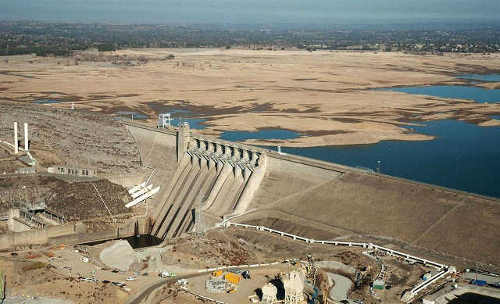
The current study notes that the atmospheric ridge over the North Pacific, which has resulted in decreased rain and snowfall since 2011, is almost opposite to what models project to result from human-induced climate change.
The report illustrates that mid-winter precipitation is actually projected to increase due to human-induced climate change over most of the state, though warming temperatures may sap much of those benefits for water resources overall, while only spring precipitation is projected to decrease.
The report makes clear that to provide improved drought forecasts for California, scientists will need to fully understand the links between sea surface temperature variations and winter precipitation over the state, discover how these ocean variations are generated, and better characterize their predictability.
This report contributes to a growing field of science-climate attribution-where teams of scientists aim to identify the sources of observed climate and weather patterns.
“There is immense value in examining the causes of this drought from multiple scientific viewpoints,” said Marty Hoerling, report co-author and researcher with NOAA's Earth System Research Laboratory. “It's paramount that we use our collective ability to provide communities and businesses with the environmental intelligence they need to make decisions concerning water resources, which are becoming increasingly strained.”
Since 2012, NASA's Voyager 1 spacecraft has experienced three “tsunami waves” in interstellar space.
The most recent, which reached the spacecraft earlier this year, is still propagating outward according to new data. It is the longest-lasting shock wave that researchers have seen in interstellar space.
“Most people would have thought the interstellar medium would have been smooth and quiet. But these shock waves seem to be more common than we thought,” said Don Gurnett, professor of physics at the University of Iowa in Iowa City. Gurnett presented the new data Dec. 15 at the American Geophysical Union meeting in San Francisco.
A “tsunami wave” occurs when the sun emits a coronal mass ejection, throwing out a magnetic cloud of plasma from its surface. This generates a wave of pressure.
When the wave runs into the interstellar plasma – the charged particles found in the space between the stars – a shock wave results that perturbs the plasma.
“The tsunami causes the ionized gas that is out there to resonate – “sing” or vibrate like a bell,” said Ed Stone, project scientist for the Voyager mission based at California Institute of Technology in Pasadena.
This is the third shock wave that Voyager 1 has experienced. The first event was in October to November of 2012, and the second wave in April to May of 2013 revealed an even higher plasma density.
Voyager 1 detected the most recent event in February, and it is still going on as of November data. The spacecraft has moved outward 250 million miles (400 million kilometers) during the third event.
“This remarkable event raises questions that will stimulate new studies of the nature of shocks in the interstellar medium,” said Leonard Burlaga, astrophysicist emeritus at NASA Goddard Spaceflight Center in Greenbelt, Maryland, who analyzed the magnetic field data that were key to these results.
It is unclear to researchers what the unusual longevity of this particular wave may mean. They are also uncertain as to how fast the wave is moving or how broad a region it covers.
The second tsunami wave helped researchers determine in 2013 that Voyager 1 had left the heliosphere, the bubble created by the solar wind encompassing the sun and the planets in our solar system. Denser plasma “rings” at a higher frequency, and the medium that Voyager flew through, was 40 times denser than what had been previously measured.
This was key to the conclusion that Voyager had entered a frontier where no spacecraft had gone before: interstellar space.
“The density of the plasma is higher the farther Voyager goes,” Stone said. “Is that because the interstellar medium is denser as Voyager moves away from the heliosphere, or is it from the shock wave itself? We don't know yet.”
Gurnett, principal investigator of the plasma wave instrument on Voyager, expects that such shock waves propagate far out into space, perhaps even to twice the distance between the sun and where the spacecraft is right now.
Voyager 1 and its twin, Voyager 2, were launched 16 days apart in 1977. Both spacecraft flew by Jupiter and Saturn. Voyager 2 also flew by Uranus and Neptune. Voyager 2, launched before Voyager 1, is the longest continuously operated spacecraft and is expected to enter interstellar space in a few years.
Dr. Tony Phillips works for the National Aeronautics and Space Administration.
LAKE COUNTY, Calif. – With near-freezing temperatures in the forecast, the National Weather Service has issued a frost advisory for Lake County for the early morning hours on Saturday.
The frost advisory is in effect from 4 to 9 a.m. Saturday, according to the agency.
The forecast said that a combination of lighter winds and a cool airmass – along with mainly clear skies – will cause temperatures to drop to the lowest levels of the winter so far and lead to the first widespread frost of the season.
Forecasters are predicting that temperatures will dip into the low to mid-30s around Lake County.
The National Weather Service said ground frost will be possible by about 4 a.m. as eye-level temperatures drop into the mid-30s. Temperatures are expected to rise into the upper 30s by 9 a.m.
The frost advisory urges people to cover sensitive plants, which may be damaged or killed if left unprotected.
Email Elizabeth Larson at
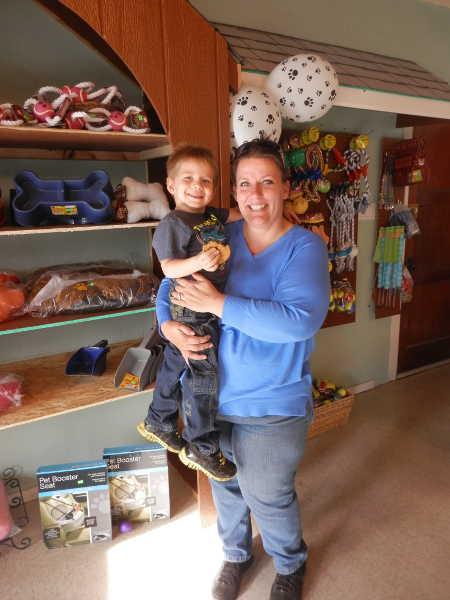
CLEARLAKE, Calif. – There is a new bakery in town, specializing in biscuits – dog biscuits, to be precise.
Tabetha Atwood has taken a hobby and turned it into something she loves, opening up Our Happy Tails Etc. Dog Bakery and Treats on Lakeshore Drive in Clearlake.
Her products include a list of easily recognizable ingredients and prices that can be appreciated.
She works side-by-side with her husband Charlie Atwood. While she attends to the baking, he is busy is leather working to offer hand-crafted collars and leashes. Custom bedding, clothing (for the owner or the dog), toys, seat belts and other items are available at the store.
“We are dog lovers, that's what really prompted us to do this. We just took a hobby and turned it into something we love,” Tabetha Atwood said. “We enjoy what we do and when you enjoy what you do you want to bring everyone in on it.”
The Atwoods strive to make pampering affordable for every pooch.
“Dog treats and pet supplies can be very expensive. Why pay high prices for something you can make yourself,” Tabetha Atwood said. “A lot of people around here don't have that kind of money and we believe every dog deserves to be spoiled.”
The venture began out of concern for contaminated dog food and treats.
She said she started baking treats for her own dogs and soon her friends wanted them for their dogs, too.
“We wanted something that was good for our dogs,” she said. “You can pronounce and spell everything on our labels: carrots, cheese, apple sauce … so you know what you are getting.”
Tabetha Atwood has created 89 veterinarian-approved recipes that can be customized to suit desired shape, color and flavor as well as allergen issues.
Treats are baked in a certified commercial kitchen as required by the license the baker obtained through the Food and Drug Administration.
“It's my understanding it's the first license issued in Lake County for this type of business,” she said, adding the license does not allow for the production of cat treats.
The couple is relatively new to the area and had reasons for opening shop in Clearlake.
Charlie Atwood said the had fond memories of visiting the area as a child, remembering it as a wonderful place to escape.
“I wanted to bring something back to Clearlake – the way it was – and I want my child to have a better life than I have,” he said.
“There are a bunch of new businesses popping up and we are just glad to be a part of that. It's great for the community,” Tabetha Atwood added.
Our Happy Tails Etc. Dog Bakery and Treats is located at 14458 Lakeshore Drive, Clearlake, telephone 707-701-6527.
Visit the bakery on Facebook at https://www.facebook.com/pages/Our-Happy-Tails-Etc-Dog-Bakery-and-Treats/484439211686734 .
Email Denise Rockenstein at
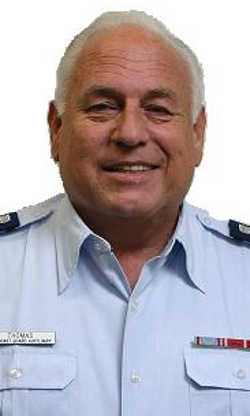
LAKE COUNTY, Calif. – A Lake County resident is moving up into a leadership role for the U.S. Coast Guard Auxiliary.
United States Coast Guard Commander Curtis Sumrok, director of the Auxiliary for District 11 North, announced the appointment of Rich Thomas of Hidden Valley Lake as district commodore.
District 11 North of the Auxiliary covers Utah and Nevada, and from Monterey to the Oregon border throughout Northern California.
The auxiliary came into existence in 1939 and was recognized by the United States Congress and each year funds are set-aside from Congress to operate this all volunteer organization that acts as the civil arm and force multiplier for the Coast Guard.
Auxiliary members throughout the country annually save several hundred lives, more than 12,000 boaters being assisted, provide more than 100,000 free vessel examinations for the public, offered safe boating classes to more than 100,000 boaters and gave hundreds of hours of augmentation in support of the Coast Guard missions during 2014.
Each year the auxiliary provides over 3.5 million hours of volunteer hours nationwide.
Thomas will oversee all auxiliary operations for District 11 North.
He has been a member of Lake County Flotilla 8-8 for 12 years.