 How to resolve AdBlock issue?
News
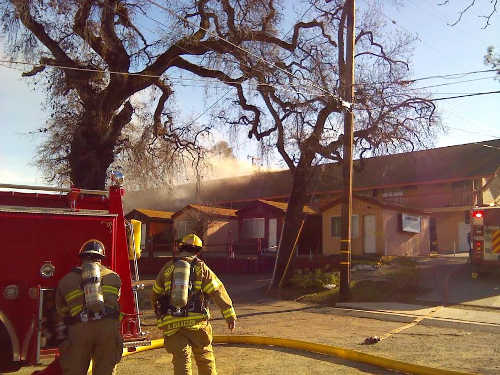
CLEARLAKE OAKS, Calif. – A Sunday afternoon fire at a Clearlake Oaks motel led to the discovery of one body and the displacement of dozens of people who had been living at the property long-term.
The fire at the Lake Haven Motel, located at 100 Short St. just off of Highway 20, was first reported at around 1:30 p.m., and was contained about an hour later, according to radio reports.
Northshore Fire Deputy Chief Pat Brown, who was the incident commander, confirmed to Lake County News that firefighters found one body, although he could not say at that point if the death was a direct result of the fire.
The circumstances of the individual's death, he said, will be under investigation by members of the Lake County Arson Task Force, led by Lake County Fire Capt. Brice Trask.
In all, two of the motel's units were damaged by the fire, Brown said.
Brown said that when the fire was first dispatched he was at his home, and even from a distance could see the smoke coming from the two-story cinder block motel.
He immediately began bumping up the request for resources from fire agencies around the county.
In addition to Northshore – which had numerous personnel, including Brown and Fire Chief Jay Beristianos – Lake County Fire sent resources including Chief Willie Sapeta, and Cal Fire, Lakeport, Kelseyville and South Lake County Fire all responded, Brown said.
Lake County Sheriff's deputies and California Highway Patrol officers also responded to help control the scene, where there were displaced residents as well as others who came to see what had happened.
Lakeport Fire set up a ladder truck at the Tower Mart next door, with firefighters going up onto the roof to access the fire.
Initial reports indicated there was one person trapped. It was not immediately clear if the person who was reported trapped was the one who died.
Followup reports stated that the residents had been evacuated. One woman with a walker and an oxygen tank had to be helped from the building.
Brown estimated about 30 people had been displaced, with the building being shut down.
He called Lake County building officials to the scene due to the building's occupancy issues. The building appears to have been used more for long-term housing then for a motel.
Brown said no firefighters had been injured, but didn't have details at that time about whether there had been any additional injuries amongst residents.
Sapeta had the motel residents gather at Tower Mart to speak with them.
People brought with them their pets – primarily dogs and cats, with one young man arriving with a pet snake draped around his neck.
Red Cross responded to the scene to assist with helping to provide housing, according to radio reports.
Deputies arrested one man, 43-year-old Clearlake Oaks resident Juan Alfredo Apodaca, on misdemeanor charges of interfering with firefighters and officers. He was placed into a patrol car and transported from the scene.
Units continued to remain at the scene until the evening, scanner traffic indicated.
Email Elizabeth Larson at
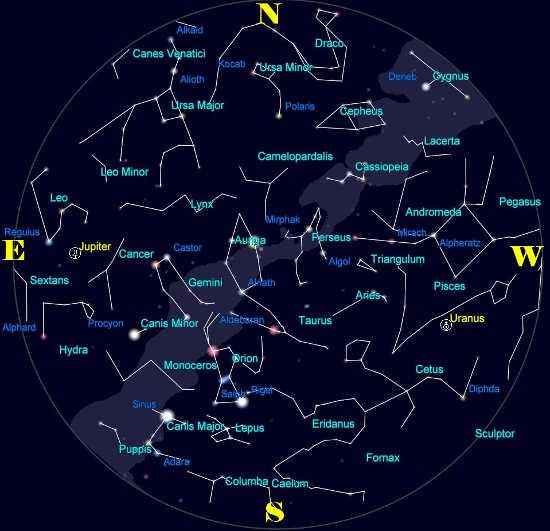
LAKE COUNTY, Calif. – January skies are dominated by one of the most beautiful of constellations, Orion the Hunter.
This stunning pattern of stars is rich with deep sky objects and bright stars.
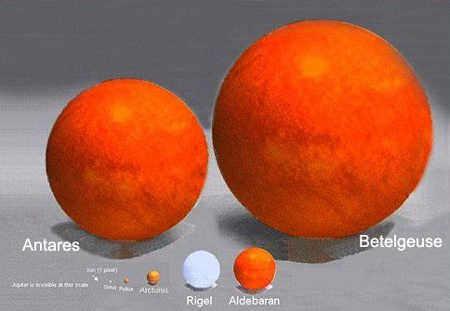
Of the 10 brightest stars in the sky, Orion has two of them: Rigel and Betelgeuse.
Rigel is a blue supergiant star, 79 times larger than our sun.
Betelgeuse is a red supergiant star, much larger than Rigel.
One of the night sky’s most stunning objects is the Great Orion Nebula. Through even a small telescope this mass of dust and gas is very beautiful to observe.
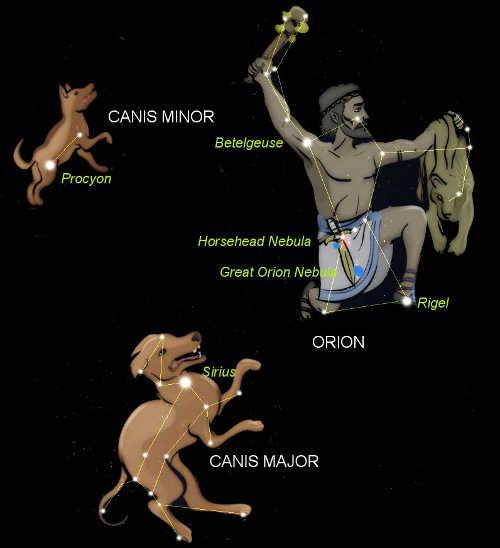
Also found in Orion is the Horsehead Nebula, though a very large telescope is required to see it clearly.
In Greek mythology Orion was a mighty hunter who did battle with Scorpius the Scorpion, a summer constellation.
Like all good hunters, he had two hunting dogs: Canis Major (Big Dog) and Canis Minor (Little Dog).
Canis Major possesses Sirius, the brightest star in the sky.
Canis Minor has Procyon, the eighth brightest star in the sky.
As cold as our nights have been, it is well worth it to bundle up, go outside, and view Orion and his dogs.
John Zimmerman is a resident of Lake County and has been an amateur astronomer for over 50 years. For more information about astronomy and local resources, visit his Web site at www.lakecountyskies.com .

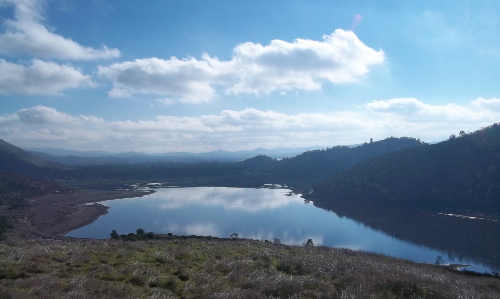
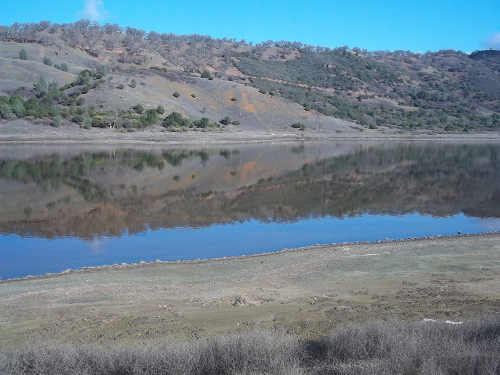
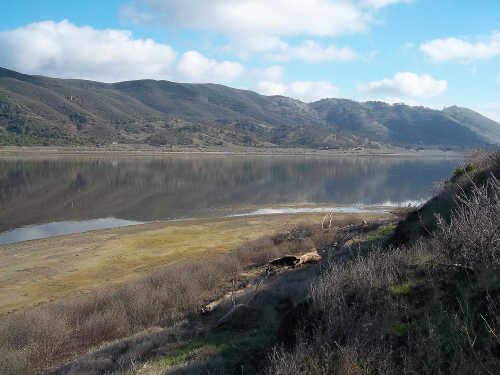
Borax Lake, located around the southern end of Clear Lake, holds many layers of history and prehistory in its waters and vicinity.
It has been determined by archaeologists to be one of the oldest and most important ancient occupation sites in North America, and it was once the site of a thriving Borax industry when the California Borax Co. operated there in the mid 1850s to 1869.
In prehistoric times – more than 10,000 years ago at the end of the Ice Age – mammoths roamed the area.
A group of people known as Early Man came to hunt them and made use of the abundant obsidian that flowed from Mt. Konocti to use for tools and weapons.
The archaeological finds in this area are so significant that the Archaeological Conservancy purchased the site in 1987.
The site also is on the National Registry of Historic Places. The Archaeological Conservancy, based in New Mexico, is a nonprofit organization dedicated to preserving the remaining archaeological sites in America.
The land surrounding Borax Lake has changed much since the prehistoric era. It became an oak and pine woodlands.
In 2000 the land surrounding the lake was purchased with plans to put in vineyards and the oaks were, sadly, cut down, by a developer.
Borax Lake obsidian has been excavated at other archaeological sites at Indian villages throughout California, as it was a valuable trading commodity by Native Americans.
This special volcanic region, now known as Clear Lake Volcanics, produced a unique translucent, gray-black to light gray-colored glass that was used for many kinds of spear tips, arrowheads and tools.
Both Folsom and Clovis point artifacts have been excavated at the site, dating back over 12,000 years.
The first archaeological dig at the Borax Lake site, now known as CA-LAK-36, took place in the 1940s.
When an orchard was planted and homes were built in the vicinity, the cultural stratigraphy was disturbed, mixing the years of the past into the layers of soil. Much valuable information about the early inhabitants was lost.
I was able to participate in an archaeological site survey of the Borax Lake vicinity in the 1990s with the Archaeological Conservancy. Fragments and arrowheads were discovered in the orchard then.
In the 1850s Dr. J. A. Veatch “discovered” Borax Lake. It wasn’t long before the California Borax Co. began mining the borax.
Borax, known as sodium tetraborate has a classification of 2 on the Moh’s scale of hardness. It has been used for everything from a detergent, water softener, disinfectant, and in the ceramics and welding industries.
Part of its popularity stems from the ease in which it dissolves in water, and when it is heated, it fuses easily.
The California Borax Co. harvested the borax with the use of scoop shovels, which were placed on boats in the lake. Up to two tons could be scooped daily in the company’s heyday.
When the lake was low in the hot summer months, a layer of borax crystals formed which made the job of collecting the stuff easier.
Tests performed in Borax Lake have found that the crystals penetrate a jelly-like substance and a layer of blue clay in the lakebed of over 60 feet below the surface.
Workers at the California Borax Company, many of whom were Chinese, were paid $31 a month.
It is believed that poor mining techniques ruined the borax production through their practice of piercing too many holes, too deep in the lakebed, which allowed for the entry of too much fresh water.
Larger borax mines in Death Valley and Mojave Desert areas in the 1880s sprang up, which also were believed to bring the Borax Lake business to a close.
These were the famous 20 Mule Team Borax works that became legendary with their teams of 18 mules and two horses that hauled a 30-ton load during 10 days of travel over 165 miles with a brief overnight stop before they unloaded their cargo, just to turn around and do it all over again.
Kathleen Scavone, M.A., is an educator, potter, writer and author of “Anderson Marsh State Historic Park: A Walking History, Prehistory, Flora, and Fauna Tour of a California State Park” and “Native Americans of Lake County.” She also writes for NASA and JPL as one of their “Solar System Ambassadors.” She was selected “Lake County Teacher of the Year, 1998-99” by the Lake County Office of Education, and chosen as one of 10 state finalists the same year by the California Department of Education.
LAKE COUNTY, Calif. – Lake County Animal Care and Control is starting off the new year with a variety of mostly working dog breeds offered for adoption.
The dogs available this week are mixes of Australian Cattle Dog, Chihuahua, Doberman Pinscher, German Shepherd, pit bull terrier and retriever.
Dogs that are adopted from Lake County Animal Care and Control are either neutered or spayed, microchipped and, if old enough, given a rabies shot and county license before being released to their new owner. License fees do not apply to residents of the cities of Lakeport or Clearlake.
If you're looking for a new companion, visit the shelter. There are many great pets hoping you'll choose them.
In addition to the animals featured here, all adoptable animals in Lake County can be seen here: http://bit.ly/Z6xHMb .
The following dogs at the Lake County Animal Care and Control shelter have been cleared for adoption (additional dogs on the animal control Web site not listed are still “on hold”).
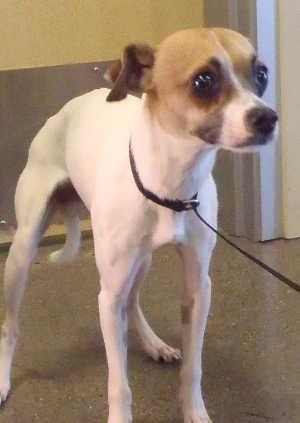
Male Chihuahua mix
This male Chihuahua mix has a short white and tan coat.
Shelter staff said he was very scared when he was brought to the shelter, but appears to do well around other dogs.
He's in kennel No. 3, ID No. 1486.
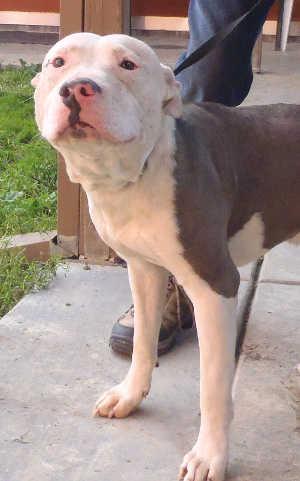
'King'
“King” is a male pit bull terrier mix.
He has a short white and gray coat.
He's in kennel No. 8, ID No. 1511.
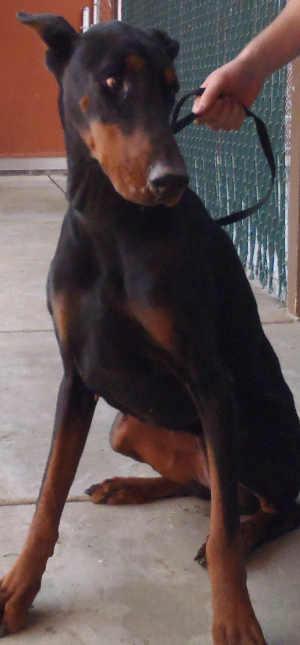
'Karma'
“Karma” is a female Doberman Pinscher mix.
She has a short black and tan coat.
She's in kennel No. 9, ID No. 1479.
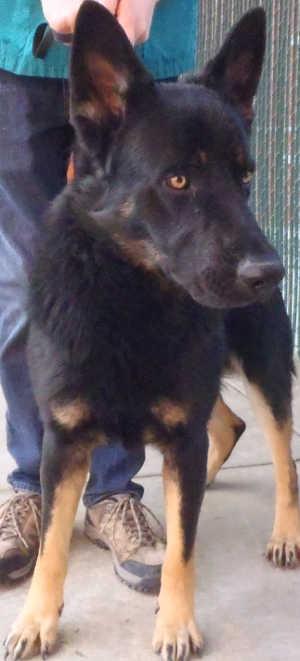
Male German Shepherd mix
This male German Shepherd mix has a short black and tan coat.
He's in kennel No. 11, ID No. 1503.
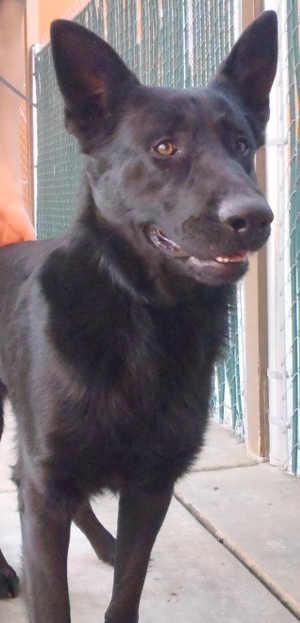
Male German Shepherd mix
This male German Shepherd mix has a short black coat.
He's in kennel No. 12, ID No. 1504.
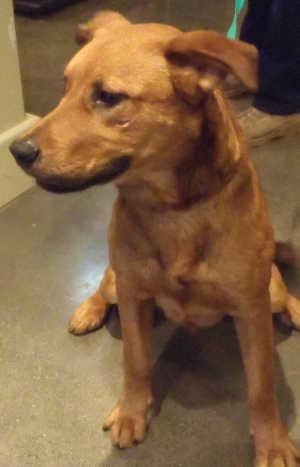
Retriever-shepherd mix
This male retriever-shepherd mix has a short gold-colored coat.
He's in kennel No. 14, ID No. 1448.
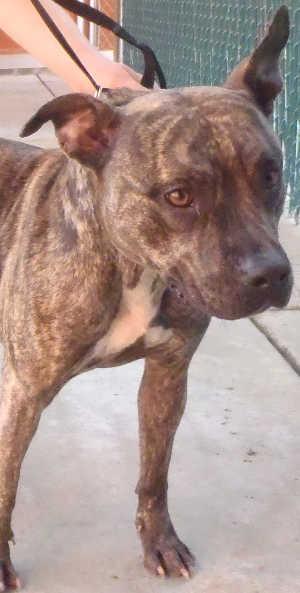
Pit bull terrier mix
This female pit bull terrier mix has a short brown brindle coat.
She's in kennel No. 15, ID No. 1501.
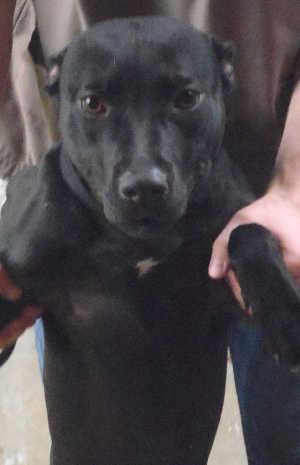
Pit bull mix
This female pit bull terrier mix has a short black coat.
She's in kennel No. 16, ID No. 1380.
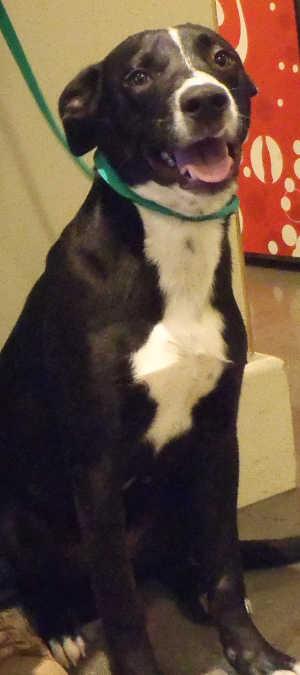
Australian Cattle Dog
This young male Australian Cattle Dog has a short black and white coat.
He's in kennel No. 29, ID No. 1445.
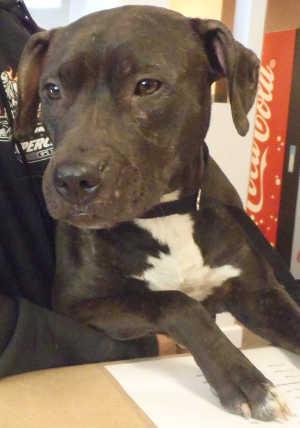
Pit bull terrier mix
This young female pit bull terrier mix has a short black and white coat.
She's in kennel No. 31, ID No. 1497.
To fill out an adoption application online visit http://www.co.lake.ca.us/Government/Directory/Animal_Care_And_Control/Adopt/Dog___Cat_Adoption_Application.htm .
Lake County Animal Care and Control is located at 4949 Helbush in Lakeport, next to the Hill Road Correctional Facility.
Office hours are Monday through Friday, 8 a.m. to 5 p.m., and 1 p.m. to 3 p.m., Saturday. The shelter is open from 10:30 a.m. to 4:30 p.m. Monday through Friday and on Saturday from 1 p.m. to 3 p.m.
Visit the shelter online at http://www.co.lake.ca.us/Government/Directory/Animal_Care_And_Control.htm .
For more information call Lake County Animal Care and Control at 707-263-0278.
Email Elizabeth Larson at
It's active. It's passive. And it's got a big, spinning lasso.
Scheduled for launch on Jan. 29, NASA's Soil Moisture Active Passive (SMAP) instrument will measure the moisture lodged in Earth's soils with an unprecedented accuracy and resolution.
The instrument's three main parts are a radar, a radiometer and the largest rotating mesh antenna ever deployed in space.
Remote sensing instruments are called “active” when they emit their own signals and “passive” when they record signals that already exist.
The mission's science instrument ropes together a sensor of each type to corral the highest-resolution, most accurate measurements ever made of soil moisture – a tiny fraction of Earth's water that has a disproportionately large effect on weather and agriculture.
To enable the mission to meet its accuracy needs while covering the globe every three days or less, SMAP engineers at NASA's Jet Propulsion Laboratory in Pasadena, Calif., designed and built the largest rotating antenna that could be stowed into a space of only 1 foot by 4 feet for launch. The dish is 19.7 feet in diameter.
“We call it the spinning lasso,” said Wendy Edelstein of NASA's Jet Propulsion Laboratory, Pasadena, California, the SMAP instrument manager.
Like the cowboy's lariat, the antenna is attached on one side to an arm with a crook in its elbow. It spins around the arm at about 14 revolutions per minute (one complete rotation every four seconds).
The antenna dish was provided by Northrop Grumman Astro Aerospace in Carpinteria, Calif. The motor that spins the antenna was provided by the Boeing Company in El Segundo, Calif.
“The antenna caused us a lot of angst, no doubt about it,” Edelstein noted. Although the antenna must fit during launch into a space not much bigger than a tall kitchen trash can, it must unfold so precisely that the surface shape of the mesh is accurate within about an eighth of an inch.
The mesh dish is edged with a ring of lightweight graphite supports that stretch apart like a baby gate when a single cable is pulled, drawing the mesh outward.
“Making sure we don't have snags, that the mesh doesn't hang up on the supports and tear when it's deploying – all of that requires very careful engineering,” Edelstein said. “We test, and we test, and we test some more. We have a very stable and robust system now.”
SMAP's radar, developed and built at JPL, uses the antenna to transmit microwaves toward Earth and receive the signals that bounce back, called backscatter. The microwaves penetrate a few inches or more into the soil before they rebound.
Changes in the electrical properties of the returning microwaves indicate changes in soil moisture, and also tell whether or not the soil is frozen.
Using a complex technique called synthetic aperture radar processing, the radar can produce ultra-sharp images with a resolution of about half a mile to a mile and a half.
SMAP's radiometer detects differences in Earth's natural emissions of microwaves that are caused by water in soil.
To address a problem that has seriously hampered earlier missions using this kind of instrument to study soil moisture, the radiometer designers at NASA's Goddard Space Flight Center, Greenbelt, Maryland, developed and built one of the most sophisticated signal-processing systems ever created for such a scientific instrument.
The problem is radio frequency interference. The microwave wavelengths that SMAP uses are officially reserved for scientific use, but signals at nearby wavelengths that are used for air traffic control, cell phones and other purposes spill over into SMAP's wavelengths unpredictably.
Conventional signal processing averages data over a long time period, which means that even a short burst of interference skews the record for that whole period.
The Goddard engineers devised a new way to delete only the small segments of actual interference, leaving much more of the observations untouched.
Combining the radar and radiometer signals allows scientists to take advantage of the strengths of both technologies while working around their weaknesses.
“The radiometer provides more accurate soil moisture but a coarse resolution of about 40 kilometers [25 miles] across,” said JPL's Eni Njoku, a research scientist with SMAP. “With the radar, you can create very high resolution, but it's less accurate. To get both an accurate and a high-resolution measurement, we process the two signals together.”
SMAP will be the fifth NASA Earth science mission launched within the last 12 months.
Dr. Tony Phillips works for the National Aeronautics and Space Administration.
LAKEPORT, Calif. – A 12-year-old Lakeport girl who went missing Friday afternoon has been located and is safe.
The Lakeport Police Department reported early Saturday morning that Tayonna McClain had been located and returned home.
On Friday evening, police issued a call to the community for assistance in finding the girl, who last had been seen at about 3:20 p.m. at 1075 Martin St. in Lakeport, according to acting Sgt. Gary Basor.
In a followup report early Saturday, Basor said the girl was safe and sound, and he thanked the community for the help in the search.