How to resolve AdBlock issue?
Refresh this page
How to resolve AdBlock issue?
Refresh this page
Lake County News,California
  • Home
    • Registration Form
  • News
    • Education
    • Veterans
    • Community
      • Obituaries
      • Letters
      • Commentary
    • Police Logs
    • Business
    • Recreation
    • Health
    • Religion
    • Legals
    • Arts & Life
    • Regional
  • Calendar
  • Contact us
    • FAQs
    • Phones, E-Mail
    • Subscribe
  • Advertise Here
  • Login

News

Space News: NASA’s Hubble reveals largest found chaotic birthplace of planets

This Hubble Space Telescope image shows the largest planet-forming disk ever observed around a young star. It spans nearly 400 billion miles — 40 times the diameter of our solar system. Image: NASA, ESA, STScI, Kristina Monsch (CfA); Image Processing: Joseph DePasquale (STScI).

Astronomers using NASA’s Hubble Space Telescope have imaged the largest protoplanetary disk ever observed circling a young star. 

For the first time in visible light, Hubble has revealed the disk is unexpectedly chaotic and turbulent, with wisps of material stretching much farther above and below the disk than astronomers have seen in any similar system. Strangely, more extended filaments are only visible on one side of the disk. 

The findings, which were published Tuesday in The Astrophysical Journal, mark a new milestone for Hubble and shed light on how planets may form in extreme environments, as NASA’s missions lead humanity’s exploration of the universe and our place in it.

Located roughly 1,000 light-years from Earth, IRAS 23077+6707, nicknamed “Dracula’s Chivito,” spans nearly 400 billion miles — 40 times the diameter of our solar system to the outer edge of the Kuiper Belt of cometary bodies. 

The disk obscures the young star within it, which scientists believe may be either a hot, massive star, or a pair of stars. And the enormous disk is not only the largest known planet-forming disk; it’s also shaping up to be one of the most unusual.

“The level of detail we’re seeing is rare in protoplanetary disk imaging, and these new Hubble images show that planet nurseries can be much more active and chaotic than we expected,” said lead author Kristina Monsch of the Center for Astrophysics | Harvard & Smithsonian, or CfA. “We’re seeing this disk nearly edge-on and its wispy upper layers and asymmetric features are especially striking. Both Hubble and NASA’s James Webb Space Telescope have glimpsed similar structures in other disks, but IRAS 23077+6707 provides us with an exceptional perspective — allowing us to trace its substructures in visible light at an unprecedented level of detail. This makes the system a unique, new laboratory for studying planet formation and the environments where it happens.”

The nickname “Dracula’s Chivito” playfully reflects the heritage of its researchers — one from Transylvania and another from Uruguay, where the national dish is a sandwich called a chivito. The edge-on disk resembles a hamburger, with a dark central lane flanked by glowing top and bottom layers of dust and gas.

Puzzling asymmetry

The impressive height of these features wasn’t the only thing that captured the attention of scientists. The new images revealed that vertically imposing filament-like features appear on just one side of the disk, while the other side appears to have a sharp edge and no visible filaments. This peculiar, lopsided structure suggests that dynamic processes, like the recent infall of dust and gas, or interactions with its surroundings, are shaping the disk.

“We were stunned to see how asymmetric this disk is,” said co-investigator Joshua Bennett Lovell, also an astronomer at the CfA. “Hubble has given us a front row seat to the chaotic processes that are shaping disks as they build new planets — processes that we don’t yet fully understand but can now study in a whole new way.”

All planetary systems form from disks of gas and dust encircling young stars. Over time, the gas accretes onto the star, and planets emerge from the remaining material. IRAS 23077+6707 may represent a scaled-up version of our early solar system, with a disk mass estimated at 10 to 30 times that of Jupiter — ample material for forming multiple gas giants. This, plus the new findings, makes it an exceptional case for studying the birth of planetary systems.

“In theory, IRAS 23077+6707 could host a vast planetary system,” said Monsch. “While planet formation may differ in such massive environments, the underlying processes are likely similar. Right now, we have more questions than answers, but these new images are a starting point for understanding how planets form over time and in different environments.”

The Hubble Space Telescope has been operating for over three decades and continues to make ground-breaking discoveries that shape our fundamental understanding of the universe. Hubble is a project of international cooperation between NASA and the European Space Agency, or ESA. NASA’s Goddard Space Flight Center in Greenbelt, Maryland, manages the telescope and mission operations. Lockheed Martin Space, based in Denver, also supports mission operations at Goddard. The Space Telescope Science Institute in Baltimore, which is operated by the Association of Universities for Research in Astronomy, conducts Hubble science operations for NASA.

Flood watch, wind advisory issued for Lake County through Sunday

LAKE COUNTY, Calif. — The National Weather Service has issued a flood watch and wind advisory for Lake County through the weekend due to incoming storms.

The flood watch is in effect from 4 p.m. Friday through 10 p.m. Sunday, while the wind advisory lasts from 1 p.m. Friday through 4 p.m. Saturday.

Forecasters said there will be rain and mountain snow, along with gusting winds and the potential for thunderstorms across Northern California through Monday. 

The forecast calls for south winds of up to 25 miles per hour and gusting winds up to 60 miles per hour in northern Lake County. 

Rainfall totals through Monday could reach nearly 3 inches, according to the forecast.

After Monday, chances of rainfall are expected to lessen but to continue through Thursday.

Daytime temperatures through the weekend will hover in the low 50s, dropping into the high 40s at the start of the week.

Nighttime conditions into next week will be in the high 40s, dropping into the high 30s.

The rainy conditions over the past week have given Clear Lake a boost. 

The United States Geological Survey’s gauge on Clear Lake shows that since the day after Christmas, the lake’s depth rose from 4.27 feet Rumsey, the special measure for the lake, up to 5.11 feet Rumsey by early Friday morning.

On Jan. 2, 2025, Clear Lake’s level was at 5.90, according to USGS historical records.

Email Elizabeth Larson at This email address is being protected from spambots. You need JavaScript enabled to view it.. Follow her on Twitter, @ERLarson, and on Bluesky, @erlarson.bsky.social. Find Lake County News on the following platforms: Facebook, @LakeCoNews; X, @LakeCoNews; Threads, @lakeconews, and on Bluesky, @lakeconews.bsky.social. 

California homeowners could qualify for grants for new roofs and fire safety

This story was originally published by CalMatters. Sign up for their newsletters.

Some homeowners in areas of California with high wildfire risk could eventually get money for new roofs or to build fire-resistant zones around their properties under a new state law that goes into effect today.

The Safe Homes grant program is designed to help low- and middle-income homeowners with fire mitigation. People who qualify could use grants to create 5-foot ember-resistant zones around properties, also known as Zone Zero, as required by law in some areas. The program will also contribute toward costs for fire-safe roofs.

The state’s Insurance Department, which is responsible for implementing the program, is working out the details around eligibility, the amount of and the distribution of grants. It is now developing an application portal that it hopes to have ready by March, said Michael Soller, spokesperson for the department.

The insurance department will be handling all the details of the grants, said Mike Dayton, chief of staff of Assemblymember Lisa Calderon, the Los Angeles-area Democrat and chair of the Assembly Insurance Committee who wrote the law, and has so far secured $3 million in the state budget to get the program started.

Soller said homeowners who have policies with admitted insurance carriers or the last-resort FAIR Plan and who live in high-risk areas will have to meet income limits set by the state housing department to be eligible for the grants, whose amounts have not been determined. Communities, cities and counties with mitigation projects could also apply for grants. 

He also said the insurance department plans to advocate for additional and ongoing funding for the program. 

Another source of funding could be the federal government, including the Federal Emergency Management Agency, Soller said. But Gov. Gavin Newsom recently tried to meet with FEMA to talk about disaster aid related to the Los Angeles County fires and was unsuccessful.

Also, two Californians in Congress have proposed legislation that would establish a federal grant program and tax credits for mitigation. U.S. Reps. Mike Thompson, a Napa Democrat, and Doug LaMalfa, an Oroville Republican, have introduced their bill for the past two sessions, but it has not made it to a floor vote. 

The California Board of Forestry and Fire Protection recently extended the finalization of rules regarding Zone Zero buffers around properties to the first half of next year. The rules are expected to take effect for existing homes in 2029.

This article was originally published on CalMatters and was republished under the Creative Commons Attribution-NonCommercial-NoDerivatives license.

Key state provision to fast‑track wildfire safety window extended

California will continue moving to reduce catastrophic wildfire risk by extending a key provision allowing for wildfire safety projects to qualify for the state’s fast‑track forest management program through May 1, 2026. 

Officials said this targeted action keeps a proven emergency tool focused on one goal: using the full rainy season to safely complete more fuels reduction and beneficial fire projects that protect communities, forests, and critical infrastructure.

"When we created this fast‑track forest management program, the goal was simple: cut through bureaucracy, honor our commitment to environmental values, and move faster to protect Californians from catastrophic fire. This order grants communities, tribes, and land managers additional time to get projects in the door so we can use the full rainy season for safe, science‑driven fuels reduction and beneficial fire,” said Gov. Gavin Newsom.

Nearly one year after launching California’s expedited forest management initiative under the March 1, 2025 State of Emergency, the governor is extending the central provision of the March 1 proclamation that governs when projects must begin in order to use the streamlined process.

Previously, qualifying projects had to be “initiated” in the calendar year 2025. Under this action, announced on Wednesday, eligible projects may now be initiated through May 1, 2026, allowing communities, tribes, resource conservation districts, utilities and other partners to keep bringing forward high‑priority projects under the fast‑track pathway, particularly during the rainy season that is prime-time for beneficial fire projects to take place.

Following Gov. Newsom’s wildfire emergency proclamation, state agencies, including the California Natural Resources Agency and the California Environmental Protection Agency, have coordinated to streamline permitting and cut red tape for high-priority wildfire-safety projects while maintaining essential environmental protections. 

Through this fast-track process, projects are now being approved in as little as 30 days, saving a year or more of review time for more complex projects. 

This has helped local governments, tribes, resource conservation districts, electrical utilities and nonprofits secure permits quickly, enabling critical safety projects to be implemented on-the-ground faster than ever before.

To date, 218 projects covering more than 40,000 acres have been approved statewide and half are already underway or have been completed. 

In Lake County, there is one 37-acre project, involving the Tribal EcoRestoration Alliance, which will focus on fuel reduction. It will take place between March 2, 2026, and March 1, 2028.

There are 50 approved projects in Southern California, including 10 projects covering nearly 1,000 acres in Los Angeles County.

Notable projects include:

• A 600-plus-acre fuels reduction project led by the Mountains Recreation and Conservation Authority near the Palisades Fire footprint in Los Angeles County.
• The nearly 3,000-acre Scott Valley–Callahan Fuels Reduction and Forest Resiliency Project in Siskiyou County is removing hazardous fuels and creating strategic fuel breaks to protect local communities.

The state is ensuring full transparency into all projects approved for fast-tracked permitting through this easy-to-navigate online dashboard.

The streamlined process allows practitioners to move faster without compromising important environmental protections. 

California state agencies are reviewing wildfire projects to ensure the state maintains its nation-leading environmental standards without adding bureaucratic hurdles to critical safety projects that will protect the state’s nearly 40 million residents and diverse natural landscapes.

A new Statewide Fuels Reduction Environmental Protection Plan, or EPP, has been developed to enable critical wildfire safety projects to proceed expeditiously while protecting public health and the environment. 

The EPP requires applicants to comply with best management practices and measures to minimize impacts on environmental resources while completing fuels reduction projects, thereby safeguarding water and air quality, tribal cultural resources, and special-status species and their habitats.  

Using the rainy season to fight fire with fire

Many of the most effective tools for reducing wildfire risk, especially beneficial fire, can only be safely deployed during cooler, wetter months. 

Beneficial fire includes prescribed burns and cultural burns that are carefully planned and monitored to clear excess vegetation, restore forest and woodland ecosystems, and protect communities from extreme fire behavior in the summer and fall.

Extending the deadline for eligible projects to May 1, 2026 is specifically designed to capture the full rainy season, when:

• Cooler temperatures and higher fuel moisture reduce the risk that planned burns will escape.
• Atmospheric conditions make it easier to manage smoke in ways that protect public health.
• Crews can safely implement larger and more complex fuels reduction projects without competing with peak fire‑response demands.

This action aligns with California’s broader strategy to dramatically expand the safe use of beneficial fire as a core tool for both wildfire prevention and climate resilience. It complements the governor’s recent direction to Cal Fire and partner agencies to streamline beneficial fire permitting, deepen collaboration with tribal communities, and integrate beneficial fire into long‑term forest and landscape resilience planning.

Part of a comprehensive wildfire strategy

Today’s order is one piece of California’s broader effort to tackle the wildfire crisis from every angle — prevention, response and recovery. 

Since 2021, the state has invested billions of dollars in wildfire prevention and forest resilience, expanded cutting‑edge technologies that help firefighters respond faster and more safely, and forged unprecedented partnerships with federal, tribal, and local governments, as well as private and non‑profit landowners.

State officials said the fast‑track forest management program has become a critical backstop as other streamlining tools have been constrained by litigation, helping the state avoid a return to the fragmented, slow‑motion review system that left communities exposed in past decades.

Has the Fed fixed the economy yet? And other burning economic questions for 2026

The U.S. economy heads into 2026 in an unusual place: Inflation is down from its peak in mid-2022, growth has held up better than many expected, and yet American households say that things still feel shaky. Uncertainty is the watchword, especially with a major Supreme Court ruling on tariffs on the horizon.

To find out what’s coming next, The Conversation U.S. checked in with finance professors Brian Blank and Brandy Hadley, who study how businesses make decisions amid uncertainty. Their forecasts for 2025 and 2024 held up notably well. Here’s what they’re expecting from 2026 – and what that could mean for households, workers, investors and the Federal Reserve:

What’s next for the Federal Reserve?

The Fed closed out 2025 by slashing its benchmark interest rate by a quarter of a percentage point – the third cut in a year. The move reopened a familiar debate: Is the Fed’s easing cycle coming to an end, or does the cooling labor market signal a long-anticipated recession on the horizon?

While unemployment remains relatively low by historical standards, it has crept up modestly since 2023, and entry-level workers are starting to feel more pressure. What’s more, history reminds us that when unemployment rises, it can do so quickly. So economists are continuing to watch closely for signs of trouble.

So far, the broader labor market offers little evidence of widespread worsening, and the most recent employment report may even be more favorable than the top-line numbers made it appear. Layoffs remain low relative to the size of the workforce – though this isn’t uncommon – and more importantly, wage growth continues to hold up. That’s in spite of the economy adding fewer jobs than most periods outside of recessions.

Gross domestic product has been surprisingly resilient; it’s expected to continue growing faster than the pre-pandemic norm and on par with recent years. That said, the recent shutdown has prevented the government from collecting important economic data that Federal Reserve policymakers use to make their decisions. Does that raise the risk of a policy miscue and potential downturn? Probably. Still, we aren’t concerned yet.

And we aren’t alone, with many economists noting that low unemployment is more important than slow job growth. Other economists continue to signal caution without alarm.

Consumers, the largest driver of economic growth, continue spending – perhaps unsustainably – with strength becoming increasingly uneven. Delinquency rates – the share of borrowers who are behind on required loan payments in housing, autos and elsewhere – have risen from historic lows, while savings balances have declined from unusually high post-pandemic levels. A more pronounced K-shaped pattern in household financial health has emerged, with older higher-income households benefiting from labor markets and already seeming past the worst financial hardship.

Still, other households are stretched, even as gas prices fall. This contributes to a continuing “vibecession,” a term popularized by Kyla Scanlon to describe the disconnect between strong aggregate economic data and weaker lived experiences amid economic growth. As lower-income households feel the pinch of tariffs, wealthier households continue to drive consumer spending.

For the Fed, that’s the puzzle: solid top-line numbers, growing pockets of stress and noisier data – all at once. With this unevenness and weakness in some sectors, the next big question is what could tip the balance toward a slowdown or another year of growth. And increasingly, all eyes are on AI.

Is artificial intelligence a bubble?

The dreaded “B-word” is popping up in AI market coverage more often, and comparisons to everything from the railroad boom to the dot-com era are increasingly common.

Stock prices in some technology firms undoubtedly look expensive as they rise faster than earnings. This may be because markets expect more rate cuts coming from the Fed soon, and it is also why companies are talking more about going public. In some ways, this looks similar to bubbles of the past. At the risk of repeating the four most dangerous words in investing: Is this time different?

Comparisons are always imperfect, so we won’t linger on the differences between this time and two decades ago when the dot-com bubble burst. Let’s instead focus on what we know about bubbles.

Economists often categorize bubbles into two types. Inflection bubbles are driven by genuine technological breakthroughs and ultimately transform the economy, even if they involve excess along the way. Think the internet or transcontinental railroad. Mean-reversion bubbles, by contrast, are fads that inflate and collapse without transforming the underlying industry. Some examples include the subprime mortgage crisis of 2008 and The South Sea Company collapse of 1720.

If AI represents a true technological inflection – and early productivity gains and rapid cost declines suggest it may – then the more important questions center on how this investment is being financed.

Debt is best suited for predictable, cash-generating investments, while equity is more appropriate for highly uncertain innovations. Private credit is riskier still and often signals that traditional financing is unavailable. So we’re watching bond markets and the capital structure of AI investment closely. This is particularly important given the growing reliance on debt financing in some large-scale infrastructure projects, especially at firms like Oracle and CoreWeave, which already seem overextended.

For now, caution, not panic, is warranted. Concentrated bets on single firms with limited revenues remain risky. At the same time, it may be premature to lose sleep over “technology companies” broadly defined or even investments in data centers. Innovation is diffusing across the economy, and these tech firms are all quite different. And, as always, if it helps you sleep better, changing your investments to safer bonds and cash is rarely a risky decision.

A quiet but meaningful shift is also underway beneath the surface. Market gains are beginning to broaden beyond mega-cap technology firms, the largest and most heavily weighted companies in major stock indexes. Financials, consumer discretionary companies and some industrials are benefiting from improving sentiment, cost efficiencies and the prospect of greater policy clarity ahead. Still, policy challenges remain ahead for AI and housing with midterms looming.

Will things ever feel affordable again?

Policymakers, economists and investors have increasingly shifted their focus from “inflation” to “affordability,” with housing remaining one of the largest pressure points for many Americans, particularly first-time buyers.

In some cases, housing costs have doubled as a share of income over the past decade, forcing households to delay purchases, take more risk or even give up on hopes of homeownership entirely. That pressure matters not only for housing itself, but for sentiment and consumption more broadly.

Still, there are early signs of relief: Rents have begun to decline in many markets, especially where new supply is coming online, like in Las Vegas, Atlanta and Austin, Texas. Local conditions such as zoning rules, housing supply, population growth and job markets continue to dominate, but even modest improvements in affordability can meaningfully affect household balance sheets and confidence.

Looking beyond the housing market, inflation has fallen considerably since 2021, but certain types of services, such as insurance, remain sticky. Immigration policy also plays an important role here, and changes to labor supply could influence wage pressures and inflation dynamics going forward.

There are real challenges ahead: high housing costs, uneven consumer health, fiscal pressures amid aging demographics and persistent geopolitical risks.

But there are also meaningful offsets: tentative rent declines, broadening equity market participation, falling AI costs and productivity gains that may help cool inflation without breaking the labor market.

Encouragingly, greater clarity on taxes, tariffs, regulation and monetary policy may arrive in the coming year. When it does, it could help unlock delayed business investment across multiple sectors, an outcome the Federal Reserve itself appears to be anticipating.

If there is one lesson worth emphasizing, it’s this: Uncertainty is always greater than anyone expects. As the oft-quoted baseball sage Yogi Berra memorably put it, “It’s tough to make predictions, especially about the future.”

Still, these forces may converge in a way that keeps the expansion intact long enough for sentiment to catch up with the data. Perhaps 2026 will be even better than 2025, as attention shifts from markets and macroeconomics toward things that money can’t buy.The Conversation

D. Brian Blank, Associate Professor of Finance, Mississippi State University and Brandy Hadley, Associate Professor of Finance and Distinguished Scholar of Applied Investments, Appalachian State University

This article is republished from The Conversation under a Creative Commons license. Read the original article.
CDFW to conduct helicopter capture and collaring efforts for deer, elk and gray wolves in Northern California

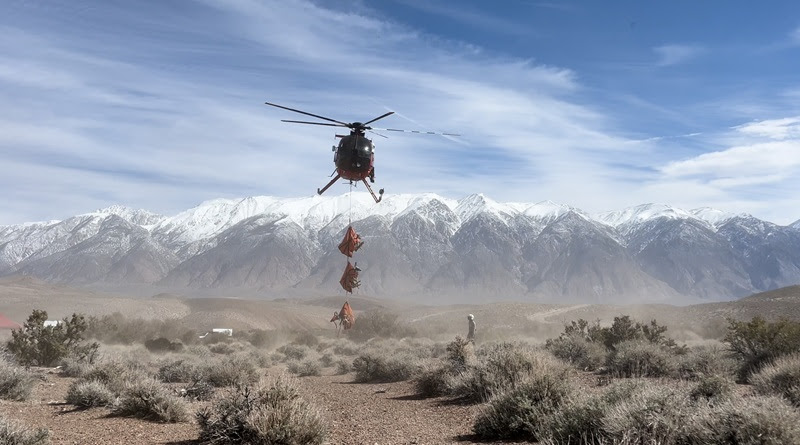
A helicopter carries three deer. Photo courtesy of the California Department of Fish and Wildlife. 


NORTHERN CALIFORNIA — The California Department of Fish and Wildlife is initiating efforts in Northern California to capture deer, elk and wolves by helicopter and outfit the animals with GPS collars.

Helicopter captures for deer and elk will be conducted in portions of Alameda, Colusa, Humboldt, Lake, Lassen, Modoc, Plumas, Santa Clara, Sierra, Siskiyou and Tehama counties throughout the month of January 2026. 

Capturing and collaring mule deer, tule, and Rocky Mountain elk improves CDFW’s understanding of species distribution, habitat use, abundance, migration patterns, recruitment rates and survival.

Capture teams will be targeting wolves in Siskiyou, Lassen and Tehama counties and potentially other uncollared packs or wolf groups in Modoc, Shasta and Plumas counties. Any captured wolves will be returned to the nearest suitable public land habitat after processing.

Deployed collars will transmit data to CDFW scientists daily for up to three years and provide detailed information about animal movements, habitat preferences and locations. 

For collared wolves specifically, CDFW will share animal location information with cattle and sheep producers with the goal of reducing negative interactions with the understanding GPS tracking collars do not transmit data in real-time. Wolf movement and location data will automatically feed into CDFW’s online Wolf Tracker mapping tool.

Wildlife capture operations will take place on lands managed by CDFW, the USDA Forest Service, the Bureau of Land Management as well as on private properties with permission from landowners. CDFW is grateful to the USDA Forest Service, BLM, timberland owners and other private parties for providing access to their lands for these wildlife capture efforts.

  • 29
  • 30
  • 31
  • 32
  • 33
  • 34
  • 35
  • 36
  • 37
  • 38

Community

  • Lake County Wine Alliance offers sponsor update; beneficiary applications open 

  • Mendocino National Forest announces seasonal hiring for upcoming field season

Public Safety

  • Lakeport Police logs: Thursday, Jan. 15

  • Lakeport Police logs: Wednesday, Jan. 14

Education

  • Woodland Community College receives maximum eight-year reaffirmation of accreditation from ACCJC

  • SNHU announces Fall 2025 President's List

Health

  • California ranks 24th in America’s Health Rankings Annual Report from United Health Foundation

  • Healthy blood donors especially vital during active flu season

Business

  • Two Lake County Mediacom employees earn company’s top service awards

  • Redwood Credit Union launches holiday gift and porch-to-pantry food drives

Obituaries

  • Rufino ‘Ray’ Pato

  • Patty Lee Smith

Opinion & Letters

  • The benefits of music for students

  • How to ease the burden of high electric bills

Veterans

  • CalVet and CSU Long Beach team up to improve data collection related to veteran suicides

  • A ‘Big Step Forward’ for Gulf War Veterans

Recreation

  • Wet weather trail closure in effect on Upper Lake Ranger District

  • Mendocino National Forest seeking public input on OHV grant applications

  • State Parks announces 2026 Anderson Marsh nature walk schedule 

  • BLM lifts seasonal fire restrictions in central California

Religion

  • Kelseyville Presbyterian to host Ash Wednesday service and Lenten dinner Feb. 18

  • Kelseyville Presbyterian Church to hold ‘Longest Night’ service Dec. 21

Arts & Life

  • Auditions announced for original musical ‘Even In Shadow’ set for March 21 and 28

  • ‘The Rip’ action heist; ‘Steal’ grounded in a crime thriller

Government & Politics

  • Lake County Democrats issue endorsements in local races for the June California Primary

  • County negotiates money-saving power purchase agreement

Legals

  • March 3 hearing on ordinance amending code for commercial cannabis uses

  • Feb. 12 public hearing on resolution to establish standards for agricultural roads

How to resolve AdBlock issue?
Refresh this page