 How to resolve AdBlock issue?
News
On Monday California Attorney General Kamala Harris issued an information bulletin to California law enforcement agencies outlining new responsibilities under state law to report incidents involving shootings or any use of force that results in serious bodily injury or death of a civilian or a peace officer.
AB 71, introduced by Assemblyman Freddie Rodriguez in December 2014 and supported by Attorney General Harris, requires all California law enforcement agencies starting Jan. 1, 2016 to begin collecting data on incidents involving the shooting of a civilian by a peace officer, the shooting of a peace officer by a civilian, as well as data on incidents involving use of force by a civilian/peace officer against the other that result in serious bodily injury or death.
An annual report of data must be submitted to the California Department of Justice beginning Jan. 1, 2017.
“As a career prosecutor, I have always known one central truth: the public and law enforcement need each other to keep our communities safe. I am proud to implement landmark legislation requiring reporting from law enforcement agencies to the California Department of Justice on shooting and use of force incidents,” said Attorney General Harris. “California is leading the nation in promoting accountability through open data, which will strengthen trust between law enforcement and the communities that we are sworn to protect.”
As a part of the bulletin, the Attorney General distributed a use of force incident template to inform law enforcement agencies and officers of the required data fields that must be submitted to the Department of Justice.
This template was created with input from stakeholders including Assemblyman Rodriguez’s office, California law enforcement associations, state and local law enforcement agencies, and advocacy groups.
The template and its accompanying instructions are also available on the California Law Enforcement Web and on the California Department of Justice Web site: http://oag.ca.gov/law .
In order to make reporting less cumbersome for officers, the Department of Justice will be working with select law enforcement agencies to develop and field test a Web-based data collection system that will allow law enforcement to track and submit use of force data electronically.
Once user tested and accepted, all law enforcement agencies will be able to track data internally as well as report data electronically utilizing this system.
This new Web-based collection system will dramatically improve the quality and efficiency of data collection by the department, officials said.
In 2017, use of force data collected by the Department of Justice under the new law will also be published on the Attorney General’s OpenJustice Dashboard and Data Portal, which was launched in September 2015. OpenJustice is a first-of-its-kind criminal justice open data initiative that releases unprecedented data and provides user-friendly visualization tools.
The dashboard spotlights key metrics and embraces transparency in the criminal justice system to strengthen trust, enhance government accountability, and inform public policy. Attorney General Harris began by releasing data on: (1) deaths in custody, (2) arrest rates and (3) law enforcement officers killed and assaulted.
Since January 2015, Attorney General Harris has taken several steps to strengthen the trust between law enforcement and California communities.
These actions include:
– Directing the Department of Justice’s Division of Law Enforcement to conduct a 90-Day Review of its special agent trainings on implicit bias and use of force.
– Initiating a body camera pilot program for DOJ special agents.
– Convening law enforcement, youth, and community organizations to facilitate discourse about the best ways to cultivate trust and positive relationships.
– Creating the 21st Century Policing Working Group to foster discussion regarding implicit bias and building community trust, and to share best practices.
– Launching OpenJustice, a first-of-its-kind criminal justice open data initiative that is releasing unprecedented information with a focus on being interactive and highlighting data stories.
– Training Police Executives from 29 different law enforcement agencies in a Principled Policing Course, a POST Certified Training on Implicit Bias and Procedural Justice.
LAKE COUNTY, Calif. – A storm coming from the Gulf of Alaska is expected to bring more snow to Northern California.
The National Weather Service issued a special weather statement Sunday about the possibility of snow overnight and into Monday morning.
The forecast calls for a dusting of snow for interior Northern California as the result of a cold – but not particularly wet – winter system arriving overnight.
Forecasters are predicting snow levels to lower to a couple of hundred feet elevation into Monday morning.
Now is expected to end in the lower elevations by Monday afternoon, but will continue over the higher Sierra elevations until later in the day.
The specific forecast for Lake County calls for snow in the higher elevations, such as above Upper Lake near the High Glade Lookout, with rain more likely in the low-lying areas.
However, Lake County residents on Sunday evening were already reporting that they were getting snow, especially in areas such as Cobb.
Travelers are urged to be prepared for slick roads at lower-than-normal elevations.
In Lake County, the rest of the week, including New Year's Eve and New Year's Day, is forecast to be mostly clear and sunny.
Daytime highs this week will be in the low 50s and lows in the high 20s, according to the forecast.
Email Elizabeth Larson at
LAKE COUNTY, Calif. – Two cats are waiting at Animal Care and Control for new homes as the new year gets set to arrive.
The cats, one male and one female, are ready to spend 2016 with their new families.
In addition to spaying or neutering, cats that are adopted from Lake County Animal Care and Control are microchipped before being released to their new owner. License fees do not apply to residents of the cities of Lakeport or Clearlake.
If you're looking for a new companion, visit the shelter. There are many great pets there, hoping you'll choose them.
In addition to the animals featured here, all adoptable animals in Lake County can be seen here: http://bit.ly/Z6xHMb .
The following cats at the Lake County Animal Care and Control shelter have been cleared for adoption (other cats pictured on the animal control Web site that are not listed here are still “on hold”).
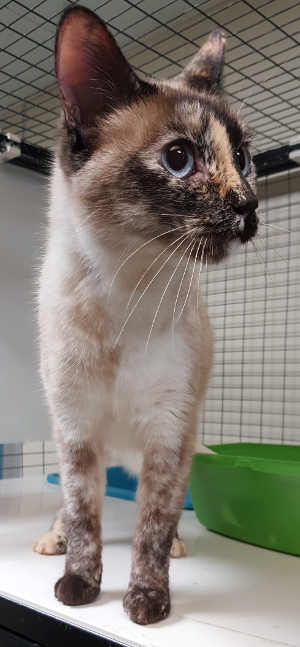
'Baby'
“Baby” is a domestic short hair mix with blue eyes and calico markings.
She's in cat room kennel No. 75, ID No. 4172.
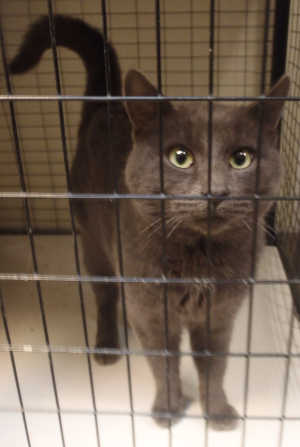
Domestic short hair mix
This male domestic short hair mix has an all-gray coat.
Shelter staff said he is very sweet and just wants attention.
He is in cat room kennel No. 87, ID No. 4065.
Adoptable cats also can be seen at http://www.co.lake.ca.us/Government/Directory/Animal_Care_And_Control/Adopt/Cats_and_Kittens.htm or at www.petfinder.com .
Please note: Cats listed at the shelter's Web page that are said to be “on hold” are not yet cleared for adoption.
To fill out an adoption application online visit http://www.co.lake.ca.us/Government/Directory/Animal_Care_And_Control/Adopt/Dog___Cat_Adoption_Application.htm .
Lake County Animal Care and Control is located at 4949 Helbush in Lakeport, next to the Hill Road Correctional Facility.
Office hours are Monday through Friday, 11 a.m. to 5 p.m., and 11 a.m. to 3 p.m., Saturday. The shelter is open from 11 a.m. to 4 p.m. Monday through Friday and on Saturday from 11 a.m. to 3 p.m.
Visit the shelter online at http://www.co.lake.ca.us/Government/Directory/Animal_Care_And_Control.htm .
For more information call Lake County Animal Care and Control at 707-263-0278.
Email Elizabeth Larson at
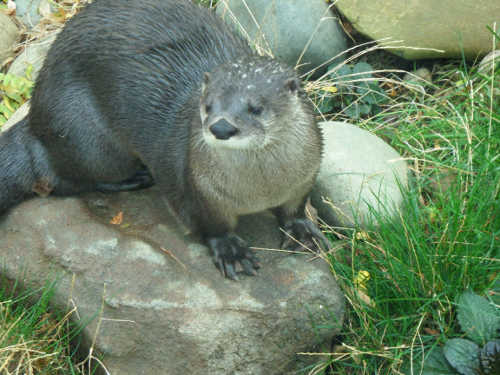
NORTHERN CALIFORNIA – We are right at the beginning of the breeding season for North American river otters (Lontra canadensis), so you will probably be seeing a lot of them in and around local rivers, streams, wetland areas, ponds and lakes throughout the Berryessa Snow Mountain National Monument region.
Related to weasels, otters are both “endemic” to North America and “crepuscular.” This means they’re found here in North America and nowhere else in the world, and that they are most active at dusk and at dawn.
During the winter months, though, you should be able to see otters swimming, fishing, and searching for mates during the daytime hours.
By the way, that “play” activity you see them doing – romping, wrestling, chasing and rolling over each other – is actually learning behavior.
Through their games, otters learn how to survive, how to fight and hunt, and how to, well … be otters.
Although they may, at first glance, seem somewhat gangly on land, they can actually run at speeds of up to 29 miles per hour – and slide on their bellies even faster. In the water, they tend to swim at speeds around 8 or 9 miles per hour.
When fishing or wrestling, otters can stay underwater for about eight minutes, and their ears and nostrils clamp shut to keep the water out.
Those long whiskers you see on the otter’s face are called “vibrissae” and help the otter to feel what’s around it in murky water.
The otter’s feet are also highly sensitive to touch, and it has heightened senses of smell and hearing.
Although a lot of otter communication is done through scent-marking, they can also vocalize with a wide variety of sounds: growling, barking, whistling, chuckling, purring and grunting.
Their “alarm call” is actually like a super-loud sneeze: the otter will force air out through its nostrils with a kind of concussive force.
Most of the groups of otters you see during the fall and winter months consist of a mother otter, her children (“pups”) and helpers (other females and pups not related to the main female in the group).
A group of otters, by the way, is called a “bevy” or a “raft” (when they’re in the water).
During this time of the year, the males will den separately from the females in loose-knit bachelor groups when they’re not seeking lady-friends.
Otters are not territorial and don’t mind sharing space with other otters even during the breeding season.
River otters breed between December and April, and the mama otter can have up to six pups in a litter. Pups are born fully furred, but can’t see or hear until they are about a month old.
Unlike European otters, female North American otters can actually delay the implantation of fertilized eggs for up to eight months.
So although her pregnancy itself will last only about two months, it could be 10 months to a year between the time she was breed and the time her pups arrive.
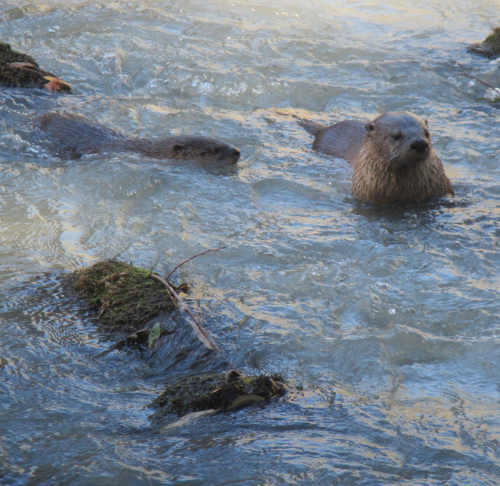
Because of this, it’s difficult to tell which female otters are pregnant and which are not until right before they’re ready to give birth.
Mother otters need a place to stay where they can rest and have their babies, but they are loathe to building anything for themselves and often take over the abandoned beaver dens or burrows of other animals.
If there’s no vacancy anywhere, otters will use whatever else is available such as hollow logs. Once the otters establish themselves, their home is referred to as a “holt.” The holt usually has several entrances, including at least one that leads directly to a water source.
Otters are highly susceptible to water pollution and will leave an area where the water has been tainted, so having active otters in our area is an indicator that we have healthy aquatic habitats in our region for them to use.
Be mindful, then, that when you flush oil, pesticides and other toxins down your driveway into the gutter, you might be contaminating the very water systems on which these beautiful creatures rely.
If you’re lucky enough to see some otters in the wild this season, please share your photos on Tuleyome’s Facebook page.
“Tuleyome Tales” is a monthly publication of Tuleyome, a 501(c)(3) nonprofit conservation organization based in Woodland, Ca. Mary K. Hanson is a Certified California Naturalist and author of “The Chubby Woman’s Walkabout” blog. For more information about Tuleyome, visit www.tuleyome.org .
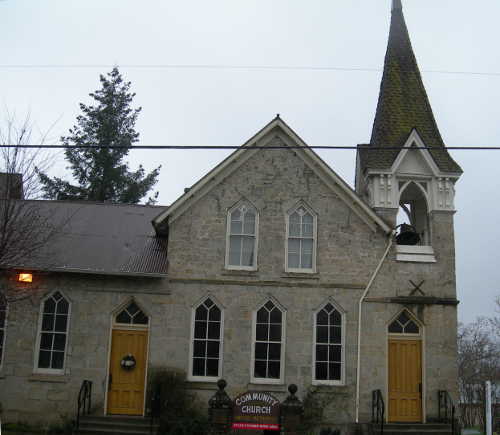
MIDDLETOWN, Calif. – The historic Middletown Community United Methodist Church, located at 15155 Armstrong St. was constructed in 1871.
Modern, for its time, it was heated back then with a wood stove.
One of the church's first ministers was Rev. W. E. Read, who hailed from Sullivan County, Missouri.
Prior to his post in Middletown, Rev. Read worked at the Mt. Zion Church in Colusa County in 1876.
According to the book, “History of Napa and Lake County,” Rev. Read traveled to Lake County in May 1881 after his house in Red Bluff was consumed by a fire there.
The book describes him as, “an earnest, eloquent preacher, a zealous, indefatigable worker, and, during the summer, made a record in his avenue of work.”
In an undated newspaper article on the Gibson Museum Web site, Rev. Read's place of residence was in the Kearsage Hotel in Middletown, of which a portion thereof was utilized as an Indian missionary school.
The Middletown Community United Methodist Church was once called the Church of the Pioneers, and also, the Middletown Methodist Episcopal Church.
When little Middletown was planned way back when, a plot of land was slated for a tiny wooden structure which the settlers found, soon enough, to be too small.
Next, a stone structure was planned and built, then dedicated on Oct. 9, 1893.
For more information about this beautiful part of Lake County's past and present, visit these Web sites:
– The United Methodist Church: http://www.middletownmethodist.org/index.htm ;
– Gibson Museum & Cultural Center: http://www.cgibsonmuseum.com/ .
Kathleen Scavone, M.A., is an educator, potter, writer and author of “Anderson Marsh State Historic Park: A Walking History, Prehistory, Flora, and Fauna Tour of a California State Park” and “Native Americans of Lake County.” She also writes for NASA and JPL as one of their “Solar System Ambassadors.” She was selected “Lake County Teacher of the Year, 1998-99” by the Lake County Office of Education, and chosen as one of 10 state finalists the same year by the California Department of Education.
LAKE COUNTY, Calif. – There is a big group of dogs waiting at Lake County Animal Care and Control, hoping to start the new year with new homes and families.
The dogs available for adoption this week include mixes of American Bulldog, Australian Shepherd, border collie, cattle dog, dachshund, Dalmatian, hound, husky, Labrador Retriever, Leonberger, pit bull, pointer, Sharpei, shepherd and terrier.
Dogs that are adopted from Lake County Animal Care and Control are either neutered or spayed, microchipped and, if old enough, given a rabies shot and county license before being released to their new owner. License fees do not apply to residents of the cities of Lakeport or Clearlake.
If you're looking for a new companion, visit the shelter. There are many great pets hoping you'll choose them.
In addition to the animals featured here, all adoptable animals in Lake County can be seen here: http://bit.ly/Z6xHMb .
The following dogs at the Lake County Animal Care and Control shelter have been cleared for adoption (additional dogs on the animal control Web site not listed are still “on hold”).
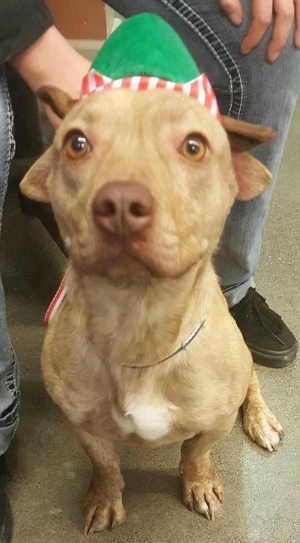
'Digger'
“Digger” is a male terrier and Sharpei mix with a short tan coat.
He was found on Lakeview Drive in Nice.
Shelter staff said he always comes to the front of the kennel, wiggly and happy. He has no food aggression, allowed them to pull at his feet and tail with no problems and he gets along great with female dogs.
He's in kennel No. 4, ID No. 3693.
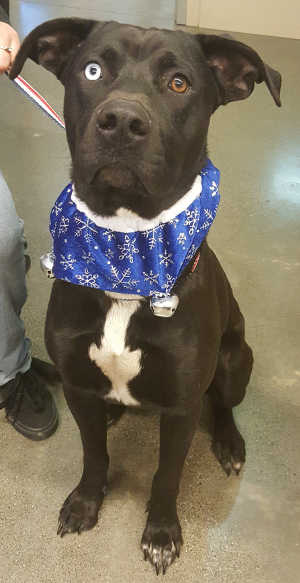
Labrador Retriever-Dalmatian mix
This male Labrador Retriever-Dalmatian has a short black coat with white markings.
He also has one blue eye and one brown eye.
Shelter staff said he has a low energy level and is good with other dogs, having come in with the dogs in kennels No. 8 and 10.
He's in kennel No. 5, ID No. 4138.
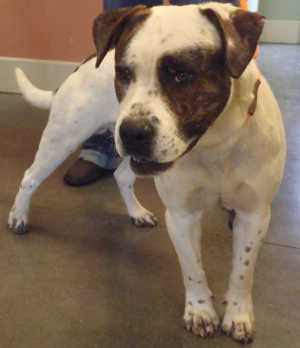
Hound mix
This male hound mix has a short white coat with brown markings.
He's in kennel No. 7, ID No. 4165.
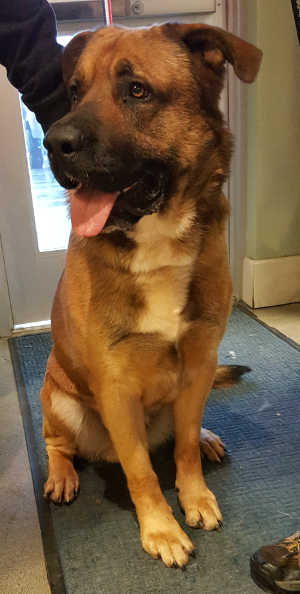
'Parkah'
“Parkah” is a male shepherd-retriever mix.
He's a handsome fellow with a short tan coat with white and black markings.
Shelter staff said he would do well in a home with no other dogs.
He's in kennel No. 8, ID No. 4220.
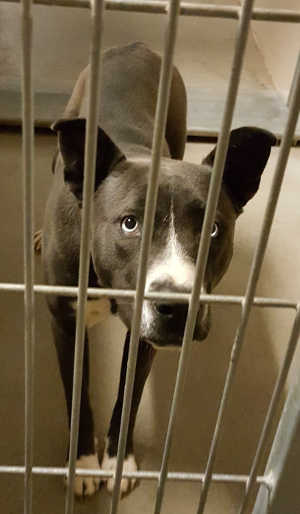
Border collie-husky mix
This female border collie-husky mix has a short gray and white coat.
She's in kennel No. 9, ID No. 4217.
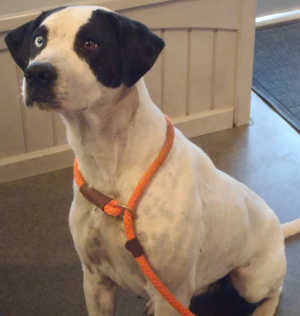
Cattle dog mix
This female cattle dog mix has a short white coat with black markings, and one brown and one blue eye.
Shelter staff said she has great manners, knows how to sit and lie down. She is a little hesitant about being indoors – she may only have been an outside dog – but is adapting well. She's good with other dogs, having come in with the dogs in kennels No. 5 and 8. Based on her evaluation, she seems to like male dogs more than females.
“She will melt your heart in minutes,” shelter staff said.
She's in kennel No. 10, ID No. 4152.
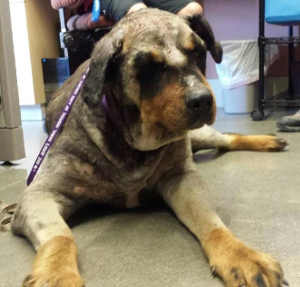
'Cache'
“Cache” has had a rough year. He was rescued from the area of the Jerusalem fire this summer and adopted, but later returned because of an issue with his adopter's cat.
Shelter staff said he's a gentle, mellow giant that is part Leonberger. He's looking for a special person to give him a home for the rest of his life.
Cache is in kennel No. 11, ID No. 3101.
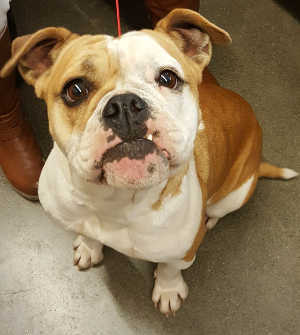
American Bulldog mix
This sweet female American Bulldog mix has a short brown and white coat.
Shelter staff said she is great with other dogs, both male and female, and shows no food aggression. She is a lovely young girl who will thrive in a loving home.
She is in kennel No. 13, ID No. 4185.
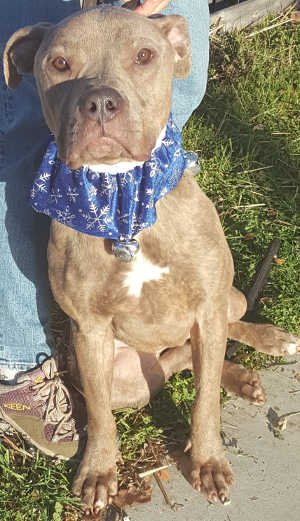
Pit bull mix
This female pit bull mix has a short gray coat with white markings.
Shelter staff said she is great with other dogs and is very people friendly, just wanting to sit in your lap. She has a low energy level and would do well in home with children.
She's in kennel No. 18, ID No. 3194.
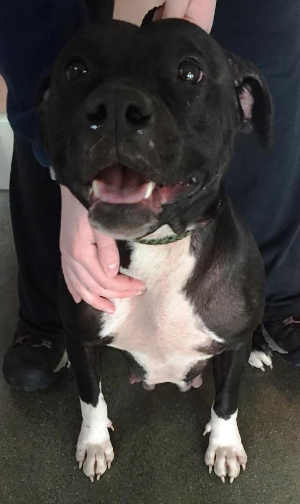
Pit bull terrier
This female pit bull terrier mix has a short black coat with white markings.
Shelter staff said she was brought in as a stray and is hoping her family will come for her.
She is in kennel No. 19, ID No. 4213.
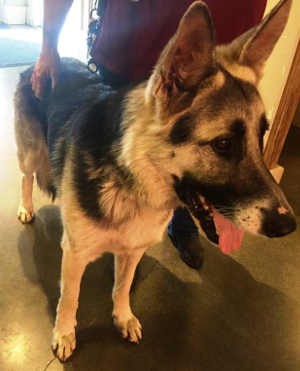
German Shepherd mix
This male German Shepherd mix has a tan and black coat with white markings.
Shelter staff said he is a beautiful boy who does not have any problems with food aggression, and is tolerant with being handled and having his feet, tail and skin pulled with no problems.
He does fine with other dogs, male or female. He has a lot of potential, and just needs somebody who will work with him.
Find him in kennel No. 22, ID No. 4116.
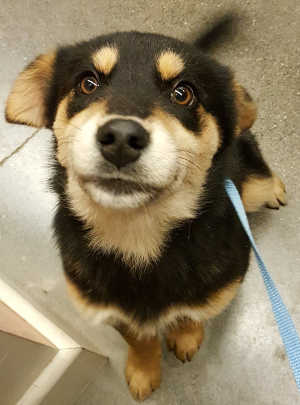
Shepherd mix
This young male shepherd mix has a short tricolor coat.
He has a sweet, smiley face, according to shelter staff.
He's in kennel No. 23, ID No. 4219.
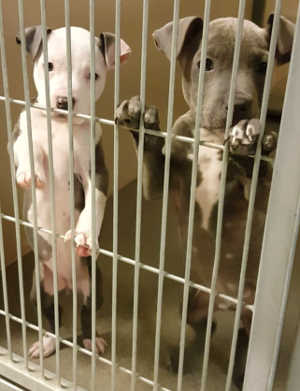
Pit bull terrier puppies
Four female pit bull puppies are available to new homes.
They are in kennels No. 26a and Nos. 26b, ID Nos. 4110 and 4228.
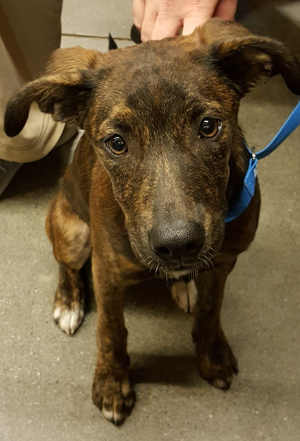
Shepherd-pit bull terrier mix
This young female shepherd-pit bull terrier mix has a short brown brindle coat.
Shelter staff describe her as a cuddle bug. She has no food aggression and gets along well with cats. While she gets nervous around more excited dogs, when introduced to a calmer shepherd mix, she was much more comfortable with him. She would love someone who is calm and patient with her.
She is in kennel No. 27, ID No. 4201.
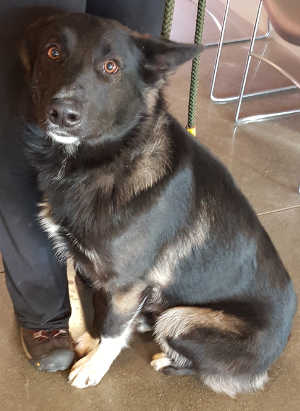
Shepherd-Australian Shepherd mix
This male shepherd-Australian Shepherd mix has a black coat with tan and white markings.
Shelter staff said he is a handsome and sweet boy.
He's in kennel No. 31, ID No. 4197.
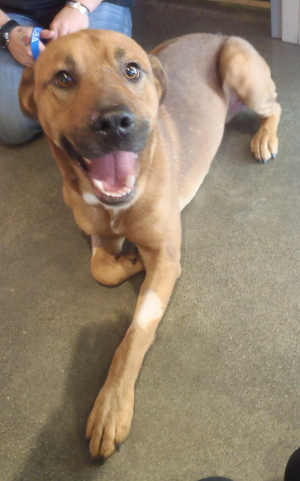
Labrador Retriever-shepherd mix
This male Labrador Retriever-shepherd mix has a short tan and black coat.
Shelter staff said he has no food aggression, and does fine with female dogs. He is very scared in the animal control environment, and needs to go home to a loving family. He is great with people, and just needs some one on one time to come out of his shell.
He's in kennel No. 33, ID No. 3861.
To fill out an adoption application online visit http://www.co.lake.ca.us/Government/Directory/Animal_Care_And_Control/Adopt/Dog___Cat_Adoption_Application.htm .
Lake County Animal Care and Control is located at 4949 Helbush in Lakeport, next to the Hill Road Correctional Facility.
Office hours are Monday through Friday, 11 a.m. to 5 p.m., and 11 a.m. to 3 p.m., Saturday. The shelter is open from 11 a.m. to 4 p.m. Monday through Friday and on Saturday from 11 a.m. to 3 p.m.
Visit the shelter online at http://www.co.lake.ca.us/Government/Directory/Animal_Care_And_Control.htm .
For more information call Lake County Animal Care and Control at 707-263-0278.
Email Elizabeth Larson at