 How to resolve AdBlock issue?
News
As Mark Twain once said, “Distance lends enchantment to the view.”
This definitely holds true for the Deep Space Climate Observatory, or DSCOVR, a new space weather mission from NOAA that also carries NASA instruments to keep an eye on Earth.
Launched in February 2015, DSCOVR is now a million miles from Earth where it can look back and see half of our planet all at once. The view prompted President Obama to tweet:
“Just got this new blue marble photo from @NASA. A beautiful reminder that we need to protect the only planet we have.”
The first “blue marble” photos taken by Apollo astronauts nearly 50 years ago sparked a new awareness of Earth as a fragile sphere of dazzling beauty floating alone in a dangerous void, worthy of careful stewardship.
It energized grassroots green movements and inspired young scientists who would go on to investigate climate change, forecast weather, and much more.
None of the modern Earth observing satellites, however, can see the entire sunlit side of Earth all at once. They are too close.
Satellites in low-Earth orbit collect high-resolution images swath by swath on consecutive overpasses. To see the whole Earth, the pieces have to be ‘stitched’ together from pieces obtained at different instants all at the same local time (e.g., 13:30 for MODIS-AQUA).
Geostationary satellites can see the entire planet and let us watch the Earth evolve by using multiple satellites to build a full picture. These satellite systems typically only get observations during the day.
Adam Szabo, DSCOVR project scientist at NASA’s Goddard Space Flight Center says “The DSCOVR mission provides a new and complementary view of Earth.”
DSCOVR “floats” at the first sun-Earth Lagrange point (L1), a sort of gravitational parking spot for spacecraft. Here the gravitational pull of the sun and Earth cancel out, providing a quasi-stable orbit. It’s the perfect spot for DSCOVR’s camera to capture full sunlit disk images of Earth in one picture all at the same instant from sunrise to sunset (synoptic images).
“By capturing full disk images in 10 wavelengths approximately every 1.8 hours, DSCOVR can answer questions about daily variations on the Earth. For example, it can help researchers understand the ozone layer and the variability of cloud cover from sunrise to sunset.”
DSCOVR will also help scientists track aerosols. Szabo tells us, “It can see massive dust clouds moving from the Sahara Desert to the southern US and Central America. And it can see smoke from large forest fires in remote northern Canada where nobody keeps an eye out.”
At L1, DSCOVR will also be in perfect position to look out for a very real external threat: the ionized pieces of the sun it hurls our way which are known as coronal mass ejections. DSCOVR will be the nation's first operational space weather satellite in deep space.
A partnership between NASA, NOAA, and the U.S. Air Force, this mission’s primary objective is, in fact, to help NOAA provide timely space weather alerts and forecasts.
The observatory also offers a rare view of the moon.
Because the moon is tidally locked to Earth, only one side is visible from our planet. The unseen far side was shrouded in mystery until 1959, when the Soviet Luna 3 spacecraft swung around the moon and photographed it from behind. This feat is repeated by the current high resolution US Lunar Reconnaissance Orbiter Camera or LROC.
DSCOVR will observe the far side about twice a year as the observatory periodically crosses the orbital plane of the moon. DSCOVR’s first images of the Moon transiting Earth in July were a social media sensation.
Since DSCOVR began regular observations, NASA is posting daily color images of Earth to a dedicated public Web site.
These images, showing different views of the planet as it rotates through the day, will be available 12 to 36 hours after they are acquired.
These are the first true-color Earth images where the colors are adjusted to closely match what the average human eye would see.
Find DSCOVR's daily images at http://epic.gsfc.nasa.gov/ .
Warning: Earth is surrounded by electrons that can be disruptive to our technology.
A population of high-energy electrons inhabits the Van Allen radiation belts high above Earth.
While these electrons pose no danger to humans on Earth’s surface, where we are protected by the atmosphere, they have been blamed for many spacecraft failures.
Electron swarms can penetrate and electrify the hulls of satellites and short-circuit sensitive electronics. Avoiding them is a good idea.
To avoid them, though, you have to figure out where they are. And that’s a problem because these electrons can be very elusive.
The Van Allen belts were discovered in 1958 and their discovery was one of the earliest scientific achievements of the space age.
During solar storms, high-energy electrons in the belts have been known to vanish – only to return a few hours later. This strange phenomenon was first spotted in the 1960s, and it has puzzled physicists ever since.
In 2012, NASA launched the Radiation Belt Storm Probes (RBSP), which have since been renamed the Van Allen Probes. Rather than avoiding the radiation belts, these heavily-shielded spacecraft regularly fly right into them.
Their mission is to discover what makes the belts so dangerous and, moreover, so unpredictable.
In the few years since they have launched, the Van Allen Probes have made many discoveries—such as the occasional existence of a third radiation belt that no one knew about before.
The mystery of the vanishing electrons, however, has not been fully solved.
A popular idea among researchers is that the electrons precipitate into Earth’s upper atmosphere, depositing their energy high above our planet’s surface. But how? What could trigger such an electron “rainfall”?
To answer this question, the Van Allen Probes needed help – from below.
Since 2013, an international team of researchers led by physicist Robyn Millan of Dartmouth College have been launching research balloons from Antarctica, each standing more than 8 stories tall.
These mammoth balloons ride circumpolar winds around the South Pole, floating as much as 40 km high as they look for signs that electrons are penetrating the atmosphere overhead.
The name of the program is “BARREL” – short for Balloon Array for Radiation-belt Relativistic Electron Losses.
The electron rainfall, when it occurs, reveals itself by a telltale glow of X-rays. These X-rays are the by-product of electrons striking atoms and molecules in the upper atmosphere. BARREL’s balloons are equipped with a payload of sensors to observe such emissions.
Occasionally, the balloons are in flight when the Van Allen Probes pass overhead. Such a conjunction is perfect for this research; the two Probes can track the electrons from above while the balloons do so from below.
There were two such conjunctions on January 3rd and 6th of 2014 – and researchers put them to good use.
Working together, the Van Allen Probes and BARREL were able to piece together a means of escape.
“Electrons were gradually eroded away over the course of several days [in part] by interaction with plasmaspheric ‘hiss,’” wrote Millan and colleagues in a letter published in Nature.
“Plasmaspheric hiss” is a type of electromagnetic radiation or “plasma wave” , that can scatter these high-energy electrons down toward Earth. Looking up from Antarctica, BARREL could measure the electrons losing their energy in the form of relatively harmless X-rays. The plasmaspheric hiss was simultaneously observed by both Van Allen Probe satellites.
There may be other ways for the electrons to escape the Van Allen belts so the mystery is not fully solved.
As 2015 unfolds, the BARREL team has completed a third campaign of balloon flights over Sweden in search of more clues.
As part of its mission to save lives, the California Highway Patrol is informing people about several new laws signed by Gov. Edmund G. Brown Jr. during the 2015 legislative session.
These new laws apply to various aspects of roadway safety and go into effect in 2016.
A list of the new laws is included below.
– Child safety seats (AB 53, Garcia). Beginning Jan. 1, 2017, children under two years of age must ride rear-facing in an appropriate child passenger safety seat. Children weighing 40 or more pounds or standing 40 or more inches tall would be exempt. California law continues to require that all children eight years of age or younger be properly restrained in an appropriate child safety seat in the back seat of the vehicle.
– Hit-and-run (AB 8, Gatto). A “Yellow Alert” notification system will be established as of Jan. 1, 2016, for specified hit-and-run incidents resulting in death or serious injury. As with AMBER, Silver, or Blue Alerts, the CHP will work with requesting law enforcement agencies to determine whether the hit-and-run meets the criteria for a Yellow Alert, including the use of the freeway Changeable Message Signs (CMS). Criteria established in the law include the availability of information about the hit-and-run suspect or the suspect’s vehicle, and whether disseminating the information will be helpful.
– Driving under the influence: Ignition Interlock Device (SB 61, Hill). This new law grants a one-year extension to a pilot project for the Ignition Interlock Device (IID) in Alameda, Los Angeles, Sacramento, and Tulare counties. The pilot was first instituted in 2010. Under the current law, a person convicted of driving under the influence (DUI) may be required to install an IID in their vehicle. If the IID registers alcohol on the driver’s breath, the vehicle will not start. The length of time the IID is required in the vehicle is based on how many prior DUI convictions the driver has had.
– Silver Alerts (AB 643, Nazarian). The “Silver Alert” notification system has been amended to allow the alert to be communicated on CMS when there is a vehicle involved in the missing person incident. The Silver Alert is an emergency system that allows law enforcement to broadcast regional or statewide alerts for seniors, or individuals with developmental disabilities or who are cognitively impaired, and are missing and may be in danger.
– Highway lane use (AB 208, Bigelow). The law requiring slow-moving passenger vehicles to pull over safely to let traffic pass has been amended to apply to all vehicles, effective Jan. 1, 2016. Bicycles will now be included in the legal requirement that slow-moving vehicles use the next available turnout or other area to let backed-up traffic – five or more vehicles – get by.
– Electronically motorized boards (AB 604, Olsen). The new law defines “electronically motorized board” as a wheeled device designed to be stood on and powered by electronic propulsion, going no more than 15 miles per hour. The electronically motorized boards can only be ridden on a highway with a speed limit of 35 miles per hour or less, or specific designated bikeways. The rider must be at least 16 years old and must wear a bicycle helmet. Cities and counties are authorized to restrict the use of the electrically motorized boards.
– Electric bicycles (AB 1096, Chiu). The new law, effective Jan. 1, 2016, creates three separate classes of electric bicycles, defined by their maximum speed and how much power is supplied by the motor. Classes 1 and 2 have a maximum speed of 20 miles per hour. A Class 3 electric bicycle has a maximum speed of 28 miles per hour. The operator of a Class 3 bicycle must be at least 16 years old and wear a helmet. Manufacturers and distributors must label the bicycles with the classification number, top assisted speed, and wattage. The new law sets up safety restrictions and regulates access on trails and paths.
For complete information on bills enacted in 2015, please refer to the Legislative Counsel Web site at http://LegInfo.Legislature.ca.gov .
LAKE COUNTY, Calif. – A 3.0-magnitude earthquake occurred near The Geysers geothermal steamfield late on Christmas Eve.
The quake was reported at 9:54 p.m. Thursday, according to the US Geological Survey.
It was centered three miles northwest of The Geysers and 13 miles southwest of Clearlake, and occurred just at the earth's surface, based on the US Geological Survey report.
The survey received one shake report from the Clearlake Oaks area.
Email Elizabeth Larson at
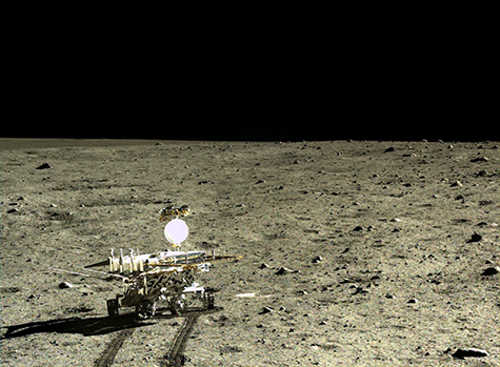
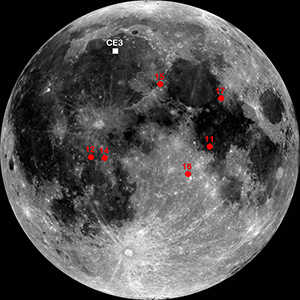
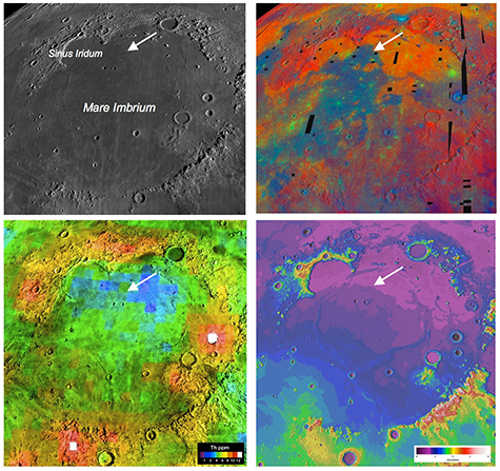
In 2013, Chang’e-3, an unmanned lunar mission, touched down on the northern part of the Imbrium basin, one of the most prominent of the lava-filled impact basins on the moon visible from Earth.
It was a beautiful landing site, said Bradley L. Jolliff, PhD, the Scott Rudolph Professor of Earth and Planetary Sciences at Washington University in St. Louis, who is a participant in an educational collaboration that helped analyze Chang’e-3 mission data.
The lander touched down on a smooth flood basalt plain next to a relatively fresh impact crater (now officially named the Zi Wei crater) that had conveniently excavated bedrock from below the regolith for the Yutu rover to study.
Since the Apollo program ended, American lunar exploration has been conducted mainly from orbit. But orbital sensors mostly detect the regolith (the ground-up surface layer of fragmented rock) that blankets the moon, and the regolith is typically mixed and difficult to interpret.
Because Chang’e-3 landed on a comparatively young lava flow, the regolith layer was thin and not mixed with debris from elsewhere. Thus it closely resembled the composition of the underlying volcanic bedrock. This characteristic made the landing site an ideal location to compare in situ analysis with compositional information detected by orbiting satellites.
“We now have ‘ground truth’ for our remote sensing, a well-characterized sample in a key location,” Jolliff said. “We see the same signal from orbit in other places, so we now know that those other places probably have similar basalts.”
The basalts at the Chang’e-3 landing site also turned out to be unlike any returned by the Apollo and Luna sample return missions.
“The diversity tells us that the moon’s upper mantle is much less uniform in composition than Earth’s,” Jolliff said. “And correlating chemistry with age, we can see how the Moon’s volcanism changed over time.”
Two partnerships were involved in the collection and analysis of this data, published in the journal Nature Communications Dec. 22.
Scientists from a number of Chinese institutions involved with the Chang’e-3 mission formed one partnership; the other was a long-standing educational partnership between Shandong University in Weihai, China, and Washington University in St. Louis.
A mineralogical mystery
The moon, thought to have been created by the collision of a Mars-sized body with the Earth, began as a molten or partially molten body that separated as it cooled into a crust, mantle and core.
But the buildup of heat from the decay of radioactive elements in the interior then remelted parts of the mantle, which began to erupt onto the surface some 500 million years after the moon’s formation, pooling in impact craters and basins to form the maria, most of which are on the side of the moon facing the Earth.
The American Apollo (1969-1972) and Russian Luna (1970-1976) missions sampled basalts from the period of peak volcanism that occurred between 3 and 4 billion years ago. But the Imbrium basin, where Chang’e-3 landed, contains some of the younger flows – 3 billion years old or slightly less.
The basalts returned by the Apollo and Luna missions had either a high titanium content or low to very low titanium; intermediate values were missing.
But measurements made by an alpha-particle X-ray spectrometer and a near-infrared hyperspectral imager aboard the Yutu rover indicated that the basalts at the Chang’e-3 landing site are intermediate in titanium, as well as rich in iron, said Zongcheng Ling, PhD, associate professor in the School of Space Science and Physics at Shandong University in Weihai, and first author of the paper.
Titanium is especially useful in mapping and understanding volcanism on the moon because it varies so much in concentration, from less than 1 weight percent TiO2 to over 15 percent. This variation reflects significant differences in the mantle source regions that derive from the time when the early magma ocean first solidified.
Minerals crystallize from basaltic magma in a certain order, explained Alian Wang, PhD, research professor in earth and planetary sciences in Arts & Sciences at Washington University. Typically, the first to crystallize are two magnesium- and iron-rich minerals (olivine and pyroxene) that are both a little denser than the magma, and sink down through it, then a mineral (plagioclase feldspar), that is less dense and floats to the surface.
This process of separation by crystallization led to the formation of the Moon’s mantle and crust as the magma ocean cooled.
The titanium ended up in a mineral called ilmenite (FeTiO3) that typically doesn’t crystallize until a very late stage, when perhaps only 5 percent of the original melt remains. When it finally crystallized, the ilmenite-rich material, which is also dense, sank into the mantle, forming areas of Ti enrichment.
“The variable titanium distribution on the lunar surface suggests that the moon’s interior was not homogenized,” Jolliff said. “We’re still trying to figure out exactly how this happened. Possibly there were big impacts during the magma ocean stage that disrupted the mantle’s formation.”
Another clue to the moon’s past
The story has another twist that also underscores the importance of checking orbital data against ground truth. The remote sensing data for Chang’e-3’s landing site showed that it was rich in olivine as well as titanium.
That doesn’t make sense, Wang said, because olivine usually crystallizes early and the titanium-rich ilmenite crystallizes late. Finding a rock that is rich in both is a bit strange.
But Yutu solved this mystery as well. In olivine, silicon is paired with either magnesium or iron but the ratio of those two elements is quite variable in different forms of the mineral. The early-forming olivine would be magnesium rich, while the olivine detected by Yutu has a composition that ranges from intermediate in iron to iron-rich.
“That makes more sense,” Jolliff said, “because iron-enriched olivine and ilmenite are more likely to occur together.
“You still have to explain how you get to an olivine-rich and ilmenite-rich rock. One way to do that would be to mix, or hybridize, two different sources,” he said.
The scientists infer that late in the magma-ocean crystallization, iron-rich pyroxene and ilmenite, which formed late and at the crust-mantle boundary, might have begun to sink, and early-formed magnesium-rich olivine might have begun to rise. As this occurred, the two minerals might have mixed and hybridized.
“Given these data, that is our interpretation,” Jolliff said.
In any case, it is clear that these newly characterized basalts reveal a more diverse moon than the one that emerged from studies following the Apollo and Luna missions.
Remote sensing suggests that there are even younger and even more diverse basalts on the Moon, waiting for future robotic or human explorers to investigate, Jolliff said.
Diana Lutz writes for Washington University in St. Louis.
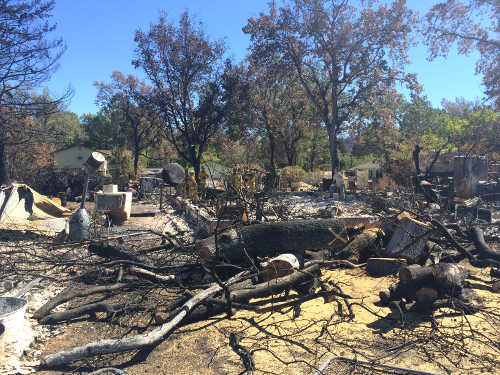
LAKE COUNTY, Calif. – Home Depot Foundation has awarded Habitat for Humanity Lake County a $100,000 grant in response to the devastating wildfires that destroyed so many homes in southern Lake County this year.
“The Home Depot Foundation has been a significant supporter of the home repair work we do for veterans in this county,” said Richard Birk, director of Habitat for Humanity Lake County. “This contribution is yet another step in our continuing relationship with them and we appreciate their generosity.”
This money has been designated to build homes for qualifying fire victims and for repairs needed to make fire-damaged homes livable again.
While more money will be needed to address the more than 500 uninsured homeowners and renters displaced in the fires, Birk said this significant grant will allow Habitat for Humanity to begin the rebuilding work these damaged communities need.
Those low-income victims who lost their residences and have limited means to reacquire shelter should contact the Habitat for Humanity office at 707-994-1100, Extension 104, or visit www.lakehabitat.org to determine qualifications for homeownership.
Additionally, to donate to the fire rebuild fund or to sponsor a home build, you may do so by visiting the Web site or calling the number above for more information.