 How to resolve AdBlock issue?
News
LAKEPORT, Calif. – It's a new year full of big plans for the Lake County Museum.
The Friends of the Lake County Museum hosted a New Year's celebration and open house at the Historic Courthouse Museum in Lakeport on Saturday, Jan. 9.
Lake County Museum Antone Pierucci said the event was meant discuss not just the plans for 2016 but to look back at 2015's accomplishments.
“We have a lot to offer and we're looking forward to working more with the public,” he said.
In the video above, Pierucci details some of what is in store for the new year.
Assistant Curator Whitney Petrey said the museum has been receiving a lot of new donations for its collection.
At the open house she showed off some of the newly accessioned items, including surveying equipment and an “Ediphone,” equipment used for courtroom dictation. The items are featured in the video.
The new staff began expanding public programs in 2015, most notably with the county museum's first celebration of California Archaeology Month in October, as Lake County News has reported. A video of the museum's archaeology month presentation can be found here: https://youtu.be/TllcLiDSy3c .
Building on that new energy, highlights of 2016 will include a March installment of the “Digging Archaeology” school program, which was introduced in October.
Among the upcoming exhibits for 2016 is a look at crime and punishment in Lake County.
The exhibit, which opens in April, will explore the criminal and law enforcement history of Lake County, and feature original court documents, photos and artifacts relating both to famous and lesser-known criminals in the area and how they were brought to justice.
As part of the crime and punishment theme, the museum will host a murder mystery dinner on April 9.
In July, the museum's “Schools of Lake County” exhibit will open, to be followed in August by the annual Quilt and Fiber Arts Show at the Lower Lake Schoolhouse Museum.
In October, the museum will celebrate California Archaeology Month and also will feature another session of the “Digging Archaeology” school program.
In honor of 2016 being an election year, the museum also is planning an exhibit on the politics of Lake County in November.
The exhibit will include never-before displayed objects, documents and photographs “that capture the democratic process in all of its tumultuous glory.”
To celebrate the holiday season, the museum is planning a Victorian Christmas celebration in December.
Pierucci welcomes anyone interested in knowing more about Lake County history or volunteering at the museums to call 707-263-4555.
Hours at the Historic Courthouse Museum, 255 Main St. in Lakeport, are 10 a.m. to 4 p.m. Wednesday through Saturday, and noon to 4 p.m. Sunday.
The Lower Lake Schoolhouse Museum, 16435 Main St., is open 11 a.m. to 4 p.m., Wednesday through Saturday.
Follow the local museums on Facebook or at http://museums.lakecountyca.gov/ .
Email Elizabeth Larson at
COBB, Calif. – The Valley Fire Long-Term Recovery Task Force met to give updates to the community on Tuesday at Black Rock Golf Course in Cobb.
At the meeting representatives of different local, state and federal groups reported on the recovery efforts.
Included in the reports was an update from county officials regarding the Valley Fire Hazardous Tree Removal program.
The full meeting video can be viewed above.
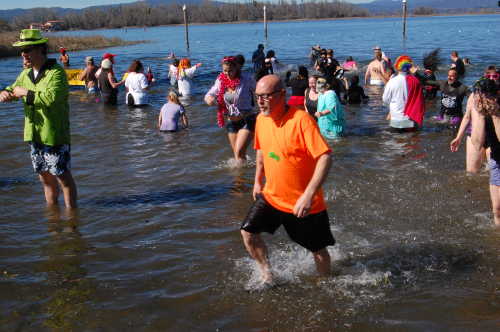
LAKE COUNTY, Calif. – The Lake County Special Olympics Polar Plunge is seeking out individuals willing to take a winter jump into Clear Lake in order to support local athletes.
The plunge will be held on Saturday, Feb. 20, at Lakeside County Park in Kelseyville.
Registration is from 10:45 to 11:45 a.m., with the costume contest at 11:45 a.m., the plunge at noon and the post party at 12:30 p.m.
The Polar Plunge is a unique opportunity for individuals, organizations and businesses to support Lake County Special Olympics athletes by jumping into icy, cold Clear Lake.
Special Olympics is an all-volunteer organization that provides free year-round sports training and competition opportunities for children and adults with intellectual disabilities.
By participating in Special Olympics, athletes gain self-confidence and self-esteem that carries over into their everyday lives, giving them the opportunity to be contributing members of society.
The Polar Plunge is not a swim but a fundraiser – the only fundraiser Lake County Special Olympics has each year, with proceeds supporting more than 100 athletes involved in basketball, track and field, bocce, softball, golf and soccer.
Plungers must raise a minimum of $125 in donations to participate. Don't want to dip but still want to help? Register as a “chicken” and you'll be excused from plunging.
Participants can register and set up their own personal or team Web page at www.polarplungenorcalnv.com/kelseyville , and email family, friends and coworkers asking for their support.
A minimum $125 donation earns participants a Polar Plunge hooded sweatshirt and free admission to the post-plunge party. More incentive prizes are received at higher donation levels. People registered as chickens receive all the same prizes.
All money raised will support Lake County athletes and cover the necessary sports equipment, uniforms, transportation to out-of-county competitions and other related expenses. Special Olympics receives no government dollars.
Lake County faced many challenges in 2015 due to the devastating wildland fires, with individuals, nonprofits and public organizations facing increased financial strain.
In recognition of the county's increased challenges, organizers ask that community members participate in the fundraiser as they are able, and offer thanks for the help already received.
Donations can be made online at www.polarplungenorcalnv.com/kelseyville or mailed to Lake County Special Olympics, P.O. Box 94, Lakeport, CA 95453.
For more information contact fundraiser Steve and Peggy Buchholz at
LAKE COUNTY, Calif. – This week there is another diverse group of canines needing new homes.
This week's adoptable dogs are mixes of border collie, boxer, hound, husky, Labrador Retriever, Leonberger and pit bull.
Dogs that are adopted from Lake County Animal Care and Control are either neutered or spayed, microchipped and, if old enough, given a rabies shot and county license before being released to their new owner. License fees do not apply to residents of the cities of Lakeport or Clearlake.
If you're looking for a new companion, visit the shelter. There are many great pets hoping you'll choose them.
In addition to the animals featured here, all adoptable animals in Lake County can be seen here: http://bit.ly/Z6xHMb .
The following dogs at the Lake County Animal Care and Control shelter have been cleared for adoption (additional dogs on the animal control Web site not listed are still “on hold”).

'Spencer'
“Spencer” is a Labrador Retriever-pit bull retriever mix.
Shelter staff said said he has a lot of love to give and can't contain himself.
He's in kennel No. 2, ID No. 2382.
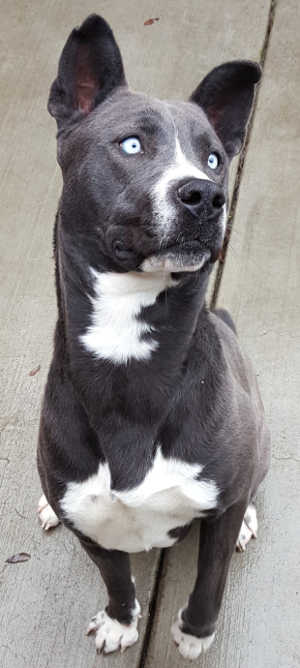
Border collie-husky mix
This female border collie-husky mix has a short gray and white coat.
Shelter staff said she has no issues with food aggression, and would be good with children ages 7 and above.
She's in kennel No. 9, ID No. 4217.
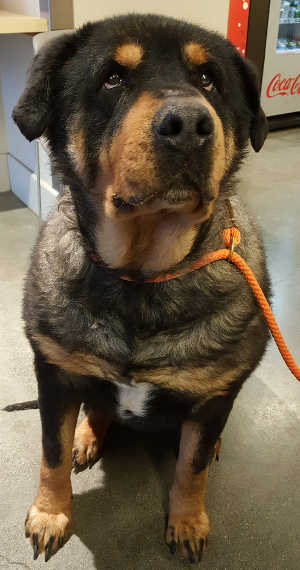
'Cache'
“Cache” has had a rough year. He was rescued from the area of the Jerusalem fire this summer and adopted, but later returned because he didn't get along with a cat.
Shelter staff said he's a gentle, mellow giant that is part Leonberger. He's looking for a special person to give him a home for the rest of his life.
Cache is in kennel No. 11, ID No. 3101.
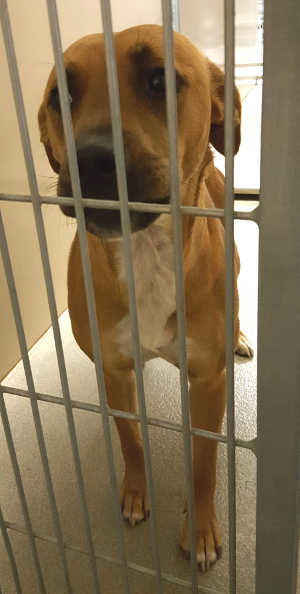
Hound mix
This female hound mix has a short tan coat with white markings.
She is in kennel No. 12, ID No. 4298.
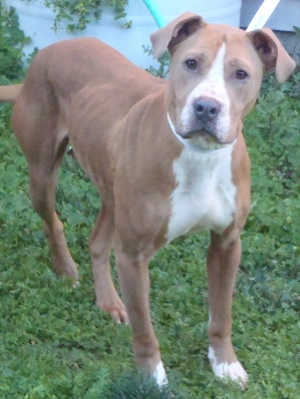
'Mom'
“Mom” is a pit bull terrier mix with a short brown and white coat.
She's in kennel No. 15, ID No. 4242.
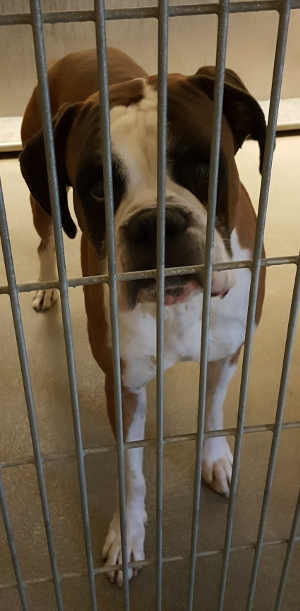
Boxer mix
This male boxer mix has a short tan coat with white markings.
He's in kennel No. 16, ID No. 4274.
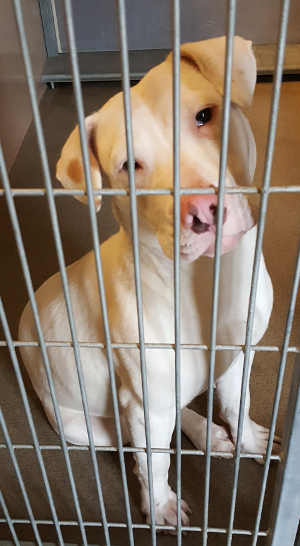
'Magnolia'
“Magnolia” is a female pit bull terrier mix with an all-white coat.
Shelter staff said she would do best in a home with no small dogs or cats.
She's in kennel No. 17, ID No. 4276.
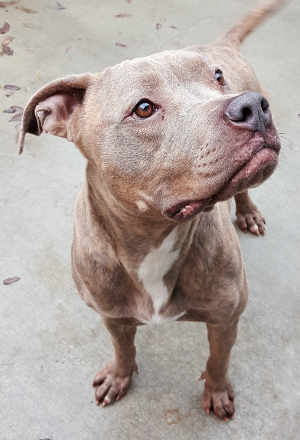
Pit bull mix
This female pit bull mix has a short gray coat with white markings.
Shelter staff said she is great with other dogs and is very people friendly, just wanting to sit in your lap. She has a low energy level and would do well in home with children.
She's in kennel No. 18, ID No. 3194.
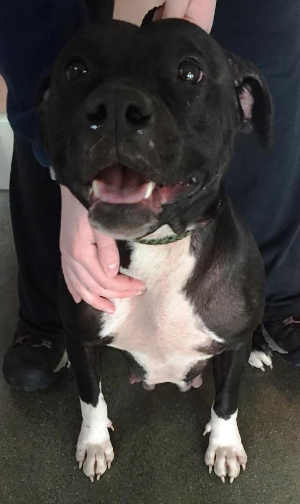
Pit bull terrier
This female pit bull terrier mix has a short black coat with white markings.
Shelter staff said she was brought in as a stray and is hoping her family will come for her.
She is bouncy and sits on command, has no food aggression and was pretty calm in the cat room, showing no aggression towards them. She does great with both male and female dogs, and just wants to play.
“She should and could definitely be an ambassador for the breed,” according to shelter staff.
She is in kennel No. 19, ID No. 4213.
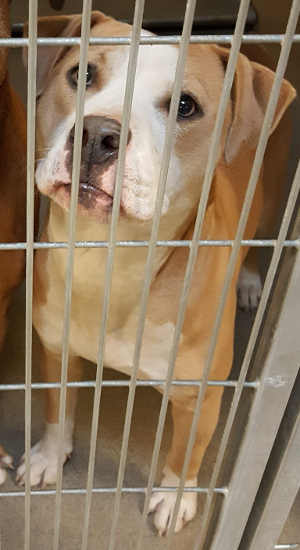
Pit bull terrier mix
This female pit bull terrier mix has a short tan coat with white markings.
She's in kennel No. 23, ID No. 4305.
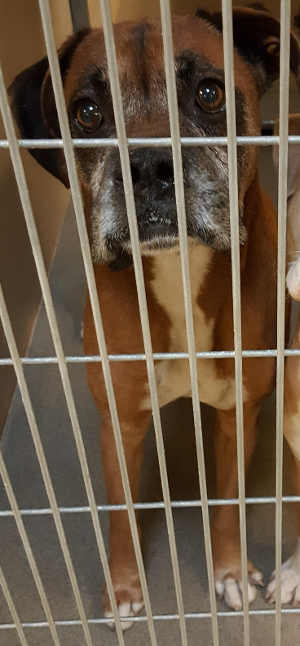
Boxer mix
This male boxer mix has a short tan coat with white markings.
He's in kennel No. 24, ID No. 4304.
To fill out an adoption application online visit http://www.co.lake.ca.us/Government/Directory/Animal_Care_And_Control/Adopt/Dog___Cat_Adoption_Application.htm .
Lake County Animal Care and Control is located at 4949 Helbush in Lakeport, next to the Hill Road Correctional Facility.
Office hours are Monday through Friday, 11 a.m. to 5 p.m., and 11 a.m. to 3 p.m., Saturday. The shelter is open from 11 a.m. to 4 p.m. Monday through Friday and on Saturday from 11 a.m. to 3 p.m.
Visit the shelter online at http://www.co.lake.ca.us/Government/Directory/Animal_Care_And_Control.htm .
For more information call Lake County Animal Care and Control at 707-263-0278.
Email Elizabeth Larson at

Well, it's not quite like the song about the dawning of the Age of Aquarius, but our solar system is experiencing an uncommon lineup that should be quite a treat for sky-watchers.
The solar system itself hasn't changed – it's just that the timing of the planets orbiting the sun puts them into a lineup that makes for good viewing by earthlings.
From now until about Feb. 20, early risers will stand a good chance of seeing five planets simultaneously in the pre-dawn sky: Mercury, Venus, Saturn, Mars and Jupiter (technically six, if you count the Earth you're standing on).
Those planets should be visible to the naked eye. Of course, if you happen to have binoculars or a telescope, you'll get an even better view.
The last appearance by the quintet on one nighttime stage was in December 2004 and January 2005.
If you miss this month's viewing opportunity, the five will be back in the evening sky in late July through mid-August, but Mercury and Venus won't be easily visible from northern latitudes.
If you go outside during the five-planet display, and if weather conditions are favorable, here's what you should be able to see: Jupiter will rise in the evening, then Mars will pop up after midnight, followed by Saturn, brilliant Venus, and finally, Mercury.
All five will be visible from southeast to southwest between 6 and 6:30 a.m. local time, over the span.
Earth’s moon will also join the cosmic display from Jan. 23 to Feb. 7. During that time, the moon will shift from the west-northwest to east-southeast and will be visible near the five planets and some stars.
During the day and night between Jan. 27 and 28, the morning view of the moon will switch from right of Jupiter to left of Jupiter.
Then, on Feb. 1, the moon will be visible near Mars, followed by an appearance near Saturn on Feb. 3. On Feb. 6, the moon, Mercury and dazzling Venus will appear in a triangular formation before sunrise.
For Jim Green, director of NASA's Planetary Science Division, the rare planetary lineup reminds him how far we have come in exploring our solar system.
“NASA spacecraft have visited each one of the five planets that we will be able to see over the next few weeks, as well as Uranus, Neptune and Pluto,” Green said. “We can be proud that American curiosity, technology and determination are helping us unlock many mysteries about our solar system.”
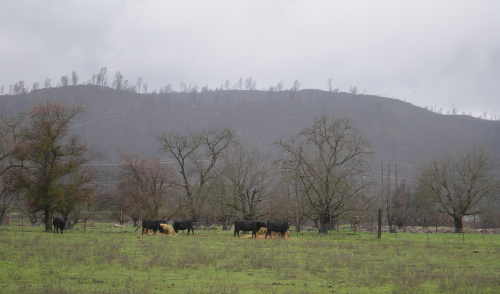
“A nation that forgets its past can function no better than an individual with amnesia.” – David McCullough
LAKE COUNTY, Calif. – Cattle are not native to California or, for that matter, North America, but were introduced to these lands by the Spanish during the mission era.
According to the “Historical and Descriptive Sketchbook of Napa, Sonoma, Lake and Mendocino”, by C. A. Menefee, 1873, “The first farming (in Lake County) was commenced in 1854.”
Menefee added, “Stock raising is the chief source of natural wealth outside of the mines. The hills are devoted to stock, and so much of the valleys as are not used for the production of grain ... Around the lake are some of the finest dairies anywhere to be found. Butter and cheese are produced and shipped in large quantities. The rich land bordering the lake seems especially adapted to grazing. Clear Lake cheese is recognized in the markets as the finest that can be found.”
Problems arose prior to the “first farming of 1854” in Lake County due to the raising of cattle. From the introduction to my novella, “People of the Water,” a fictional account of the events leading up to the Bloody Island Massacre of 1850:
“Like many Indians in California, the Pomo Indians of the Clear Lake Basin in California were run off of their tribal, ancestral lands, forced to work the ranches or Missions, beaten and massacred. Charles Stone and Andrew Kelsey purchased stock from Salvador Vallejo, and garnered permission to use his land for grazing. Kelsey and Stone mistreated Indians to the extreme – they starved, beat, and worked them to death.
“It was common knowledge in nearby settlements that Stone and Kelsey were cruel to the Indians. The Indians could no longer tolerate the hunger and the beatings, so they killed some cattle for food. This incident did not bode well with Stone and Kelsey.
“Many more atrocities ensued – one Indian was tied to a tree then beaten, some Indian homes were burned down, and others were marched to the gold fields where most perished due to exposure and starvation. Added to those heartrending incidents was the fact that Chief Augustine’s wife was kidnapped and forced to live with the white men.
“So, in the fall of 1849, Stone and Kelsey were murdered by Indians. In the spring of 1850, a detachment of the United States troops led by Captain Nathaniel Lyon was sent from the San Francisco Presidio or Benicia with whaleboats hauled by wagons, along with cannons, in retaliation for Stone and Kelsey’s deaths. Pomo people in their village of Badonnapoti on what is now called Bloody Island, in Clear Lake, California were targeted and massacred by the soldiers.
“Women and children were killed indiscriminately – soldiers chased them into the water, bludgeoning and shooting them. This massacre was replayed again and again over the course of a month as the soldiers continued killing Indians, working their havoc westward toward Ukiah.
“The United States government concluded its tyranny in 1851 by drafting a treaty and trying to initiate a rancheria. The treaty, like so many others, was never ratified. The site is marked by California State Historical marker number 427, located at the intersection of State Highway 20 and Reclamation Road, 1.7 miles southeast of Upper Lake marks the area, once an island, where this story took place. The brutality of the Bloody Island Massacre and similar atrocities to other tribes is a grievous legacy. The courage of the Pomo people lives on forever.”
Another atrocious practice involving cattle was that of “baiting the bulls.”
According to Henry Mauldin, “Large grizzly bears were often found in California during this period. When a group of riders approached one of these bears, he would be lassoed by each of the riders until he was in a web-like tangle of lariats and quite helpless. With the bear held captive other riders would go in search of a Long Horn bull. When found, it too would be lassoed and taken to where the bear was. A short piece of rope would then be secured, one end to the bull and the other to the bear. All other possible lariats would be removed. By that time both animals were angry, full of fight and well matched in ability. Always one or the other was killed and many times both failed to survive.
“When the soldiers came over the trail from Hopland, at a point near the Riggs place on Scotts Creek (in 1851), the men found the remains of both a Long Horn and a grizzly bear where they had died from “Baiting of the Bulls”, the only known incident of that kind in Lake County. It was thought to have taken place by a visit of Spanish-Americans from their Mexican land grant at Hopland.”
Cattle, or stock in Lake County included the “longhorn” variety, so named due to their wide horns which can span up to 7 feet, tip-to-tip. This breed was quite hardy and was able to thrive on poor quality feed and not much water. They were popular for their hides and tallow.
In 1907 our county farm advisor estimated there were around 15,000 head of cattle in Lake County.
The varieties included Hereford, polled Hereford, Scotch Highland, Angus, shorthorn and Galloway cattle. The Angus variety arrived in Lake County in 1943.
Kathleen Scavone, M.A., is an educator, potter, writer and author of “Anderson Marsh State Historic Park: A Walking History, Prehistory, Flora, and Fauna Tour of a California State Park” and “Native Americans of Lake County.” She also writes for NASA and JPL as one of their “Solar System Ambassadors.” She was selected “Lake County Teacher of the Year, 1998-99” by the Lake County Office of Education, and chosen as one of 10 state finalists the same year by the California Department of Education.