How to resolve AdBlock issue?
News
The California Department of Water Resources has identified 21 groundwater basins and subbasins in which excessive groundwater pumping has resulted in significant overdraft.
The basins are located in the Central Valley and Southern California.
Overdraft impacts can include seawater intrusion and land subsidence, in addition to chronically lowered groundwater levels.
As a result, those basins and subbasins fall under the earliest deadlines required by the Sustainable Groundwater Management Act, or SGMA.
Under the package of historic groundwater management laws enacted by Gov. Edmund G. Brown Jr. in September 2014, the basins identified by DWR as significantly overdrafted must have groundwater sustainability plans in place by Jan. 31, 2020.
The SGMA requires all basins designated as high- or medium-priority and subject to critical conditions of overdraft to be managed under a groundwater sustainability plan or coordinated groundwater sustainability plans two years earlier than the other high- and medium-priority basins.
This is not the first time DWR has identified basins in critical overdraft. Working with local agencies, DWR identified such basins in 1980 and 2003, as described in Bulletin 118 reports issued those years.
Bulletin 118 is a comprehensive report on California groundwater resources that is periodically updated by DWR.
The latest list of basins subject to critical conditions of overdraft will be published in the next update of Bulletin 118, expected in late 2016.
DWR released a draft list of basins in critical overdraft last August, holding a public meeting in the Central Valley, a statewide Webcast, and 30-day public comment period in which local agencies had the opportunity to ask questions and offer guidance.
DWR evaluated the comments and additional data supplied before releasing the final list.
For more information regarding California’s groundwater please visit http://www.water.ca.gov/groundwater/index.cfm .
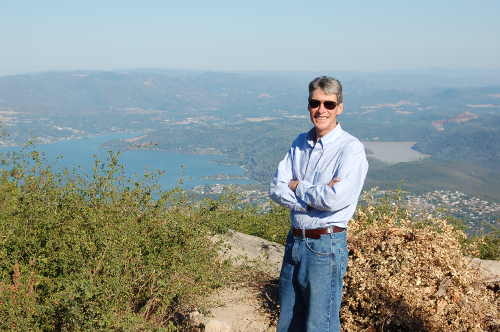 LUCERNE, Calif. – Starting in February, a series of programs on the natural environment of Lake County will be presented at the Marymount California University Lakeside campus in Lucerne.
The first program, featuring Dr. Harry Lyons, will be on Thursday, Feb. 4, from 6 to 7:30 p.m.
The programs are co-sponsored by the Friends of Marymount California University Lakeside and the Lake County Land Trust and will be the first in a “Distinguished Speakers Series,” offered by the Friends of MCU and other Lake County organizations in order to help introduce our local four-year university to the community.
Starting at 5 p.m. short, informal tours of the Marymount California University building, also known as “The Castle,” will be presented, along with refreshments.
A $5 donation will benefit a scholarship fund for students attending the Lakeside campus.
As the first topic in the series, Dr. Harry Lyons, Yuba College biology professor, will present a program titled, “Lessons from Green Water,” in which he weaves the stories of two nutrient-rich aquatic ecosystems, the Hudson River and Clear Lake, in addressing the problems and promises of such rich biological communities.
Although differing in their geological and hydrologic histories, the two systems face similar problems with over-enrichment and mercury contamination.
Most feel the biological condition of the Hudson has improved; some feel the biological condition of Clear Lake has not.
Can the political action taken on behalf of the Hudson River serve as a model for pushing improvement of water quality in Clear Lake? How is the chance of success through political action dependent on the type of pollution and its causes?
Dr. Lyons grew up swimming and fishing in the Hudson. His lifelong interest in water led him to pursue his Ph.D. in oceanography from the Scripps Institution of the University of California after academic work at Rutgers and Stanford.
He has lived by, sampled from, and swum in Clear Lake for more than 35 years. His talks are always peppered with the spirit of relevant songs.
The next scheduled speaker will be Dr. John Parker on March 3, who will use artifacts and a PowerPoint presentation to take you through the cultural, environmental, and technological changes that occurred in Lake County during the past 20,000 years and introduce you to the relationship between Lake County’s American Indian inhabitants and their environment in his program titled, “Cultural and Environmental changes over 20,000 years.”
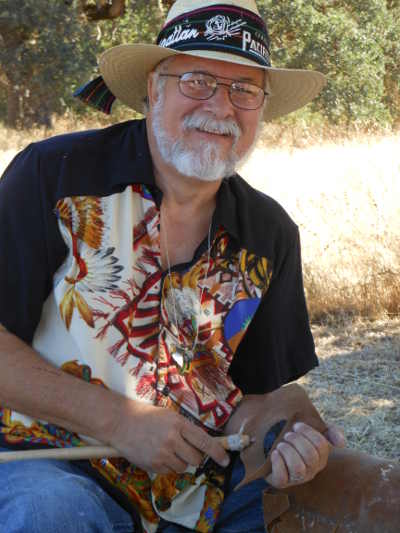
The series will conclude on April 7 and will feature Catherine Koehler, an ecologist with a special interest in native grasslands of our region, who will present a program titled, “Native Grasslands of Lake County.”
She is director of the University of California’s McLaughlin Reserve in eastern Lake County and the executive director for the Lake County Land Trust.
She has a broad background in the biological sciences, with a bachelors in zoology, a master’s in ecology, and has worked in a range of projects in wildlife biology and plant ecology.
The public is warmly invited to these presentations and encouraged to learn more about Lake County’s new four-year university.
The Friends of MCU Lakeside is a recently formed group that developed out of the Marymount California University Lakeside Campus Advisory Council.
Many original advisory council members have continued on with the MCU Friends group in order to provide scholarship support for students at MCU.
The MCU Lakeside campus is located at 3700 Country Club Drive, Lucerne.
For more information, call 888-991-5253 or 707-262-0707, leave a message and someone will return your call.

KELSEYVILLE, Calif. – The Clear Lake Area California Highway Patrol will offer a free “Start Smart” traffic safety class for soon to-be-licensed, newly licensed, and teenage drivers and their parents or guardians on Wednesday, Jan. 27.
The class will take place from 6 to 8 p.m. at the Clear Lake Area CHP office, located at 5700 Live Oak Drive in Kelseyville.
The leading cause of death for Americans 15 to 19 years old is motor vehicle collisions, according to the National Highway Traffic Safety Administration.
The CHP's goal is to reduce the death rate among young drivers as the result of these collisions.
“The CHP is committed to mitigating traffic collisions involving young, inexperienced drivers, because they are preventable,” said Lt. Hector Paredes, commander of the CHP's Clear Lake Area office. “Start Smart is an excellent program that promotes safe driving for young new drivers.”
The “Start Smart” program is aimed at helping newly licensed and future licensed teenage drivers understand the critical responsibilities of driving and to understand that accidents happen, but collisions are 100-percent preventable.
The program is designed to provide an interactive safe driving awareness class which will illustrate how poor choices behind the wheel of a car can affect the lives of numerous people.
“Start Smart” also focuses on responsibilities of newly licensed drivers, responsibilities of parents or guardians and collision avoidance techniques.
Space is limited for this class. For more information or reservations, call Officer Kory Reynolds at the CHP office 707-279-0103.
NORTHERN CALIFORNIA– The Oakville Crossroad bridge, over the Napa River between Highway 29 and Silverado Trail in Napa County, will reopen 10 a.m. Thursday, Jan. 21.
The bridge was closed May 22, 2015, as a result of damage from a 4.1-magnitude earthquake.
At that time – the west abutment, the base that held up the west end of the bridge – sank 4 inches, pulling apart existing cracks on the then-nearly 100-year-old bridge, and exposing structural steel. It was closed to vehicles, bicycles and foot traffic.
The bridge was demolished, and a new one stands in its place.
The project cost is about $7 million, which was primarily funded by the Federal Highway Administration.
The new reinforced concrete box-girder bridge is 33-feet-wide by 120-feet-long. The structure will carry two lanes of traffic and passes over the Napa River at a higher elevation (about 3 feet higher) to meet current hydraulic design standards.
The road approaches were widened and raised to meet the new bridge elevation and width. The channel was re-graded to a roughened channel bottom to accommodate fish passage and rock slope protection was planted on both channel slopes to protect the bridge abutments from scour and erosion.
The project also includes onsite and offsite riparian planting and construction of habitat structures for California Freshwater Shrimp.
Other items include modification to existing culverts and driveways and traffic safety features, such as bridge rails and guardrails.
NORTHERN CALIFORNIA – Since wildfires swept Lake and Calaveras counties, federal and state agencies have provided more than $127.8 million in disaster assistance and grants to assist survivors, cities and the counties to recover.
The fires burned nearly 147,000 acres between Sept. 9 and Oct. 30, 2015.
As of Wednesday, the California Governor’s Office of Emergency Services (Cal OES), the Federal Emergency Management Agency and the U.S. Small Business Administration (SBA) have approved more than $34.3 million in federal disaster assistance for California survivors to help rebuild their lives.
In addition, FEMA and Cal OES provided affected counties with nearly $3.7 million in grants for hazard mitigation projects within the designated counties.
Public Assistance grants total $89.9 million for approved disaster-related emergency protective measures, debris removal and repair or restoration of public infrastructure.
Cal OES provided $1 million (100 grants) for survivors through the State Supplemental Grant Program. The program is for survivors who have received the maximum FEMA grant amounts and still have remaining unmet needs.
Here is a snapshot of the disaster-recovery effort as of Jan. 18:
• More than 3,760 Californians have registered for assistance with FEMA and nearly $11.6 million has been approved.
• More than $7.5 million has been approved for 1,189 households in housing assistance.
– More than $1.3 million in rental assistance was approved for 883 Lake County and Calaveras County survivor households to pay for a rental resource.
– “Manufactured Housing Units” provide temporary housing for 42 households, while 36 households await units.
– “Other Needs Assistance” approved more than $4 million for 1,023 households to meet other disaster-related needs not covered by insurance or other sources.
For those who registered, FEMA’s Helpline, 800-621-3362 or (TTY) 800-462-7585, remains available to those with questions or needing to update their registration information.
FEMA’s mission is to support citizens and first responders to ensure that as a nation we work together to build, sustain and improve our capability to prepare for, protect against, respond to, recover from and mitigate all hazards.
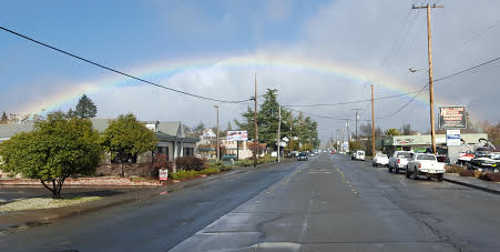
LAKE COUNTY, Calif. – Forecasters are predicting a midweek break in the rain, with more storms expected later in the week and into the weekend.
The National Weather Service said the break from Wednesday through Thursday afternoon will be followed by another wet, windy storm beginning on Thursday, with stormy conditions expected to continue through Saturday.
Lake County has been getting the kind of consistent winter rain that it hasn't seen for several years.
The National Weather Service reported the following 24-hour rainfall totals, in inches, from 1 a.m. Tuesday through 1 a.m. Wednesday:
– Bartlett Springs: 1.40;
– Bear Canyon (near Middletown): 1.85;
– Cobb: 1.26;
– Colusa/Lake County line: 0.49;
– High Glade Lookout (above Upper Lake): 1.15;
– Kelseyville: 0.77;
– Lakeport: 0.54;
– Lower Lake: 0.78;
– Lyons Valley: 0.58;
– Middletown: 1.15;
– Upper Lake: 0.90.
The rain has continued to improve the depth of Clear Lake.
The US Geological Survey reported early Wednesday that the lake was at 3.38 feet Rumsey, the special measurement for Clear Lake. A full lake is 7.56 feet Rumsey.
For comparison, Clear Lake's depth measurements were as follows on Jan. 20 during the past several years: 2015, 2.87 feet Rumsey; 2014, 0.57 feet Rumsey; 2013, 5.77 feet Rumsey; 2012, 2.38 feet Rumsey; 2011, 5.61 feet Rumsey; and 2010, 2.05 feet Rumsey.
Snowpack levels also are on the rise.
In the Mendocino National Forest, on Anthony Peak in the Covelo Ranger District, the snowpack is at 27 percent, up from the 21 percent reported in January 2015, according to California Department of Water Resources data.
Across the Sierras, the main location of the state's snowpack, as of Tuesday the state Department of Water Resources reported that the snowpack was at 111 percent of normal for this time of year, compared to the 32 percent reported on Jan. 19 of last year.
In the northern Sierra, snowpack is at 121 percent, 115 percent in the central Sierra and 91 percent in the southern Sierra, based on the agency's readings.
Email Elizabeth Larson at