How to resolve AdBlock issue?
Refresh this page
How to resolve AdBlock issue?
Refresh this page
Lake County News,California
  • Home
    • Registration Form
  • News
    • Education
    • Veterans
    • Community
      • Obituaries
      • Letters
      • Commentary
    • Police Logs
    • Business
    • Recreation
    • Health
    • Religion
    • Legals
    • Arts & Life
    • Regional
  • Calendar
  • Contact us
    • FAQs
    • Phones, E-Mail
    • Subscribe
  • Advertise Here
  • Login

News

Why natural disasters hit harder in rural school districts


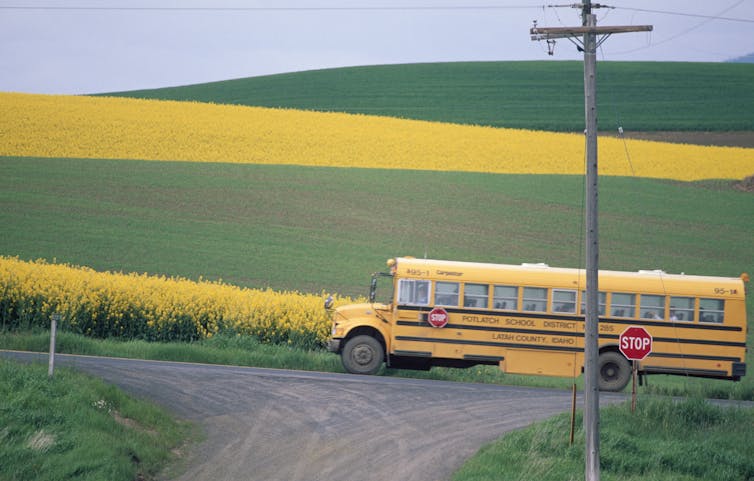
School buses play a pivotal role in rural areas. Grant Faint/The Image Bank via Getty Images

A week after Hurricane Sandy flooded New York City’s streets and subways in 2012, the city’s schools were back in business. But schools in rural North Carolina did not reopen until almost a month after Hurricane Helene roared through in late September 2024.

While natural disasters and health crises may have long-lasting effects on any school system, in rural areas the lack of physical, financial and organizational resources is amplified when disaster strikes.

Fortunately, there are solutions. Based on my professional research on emergency preparedness – and my experience working in educational settings – I’ve identified several strategies that may help.

Rural schools have unique disaster challenges

Unlike urban areas, rural districts often have little access to the recreation centers, cultural institutions, university campuses and other structures that could provide temporary sites for classes after a disaster.

Access to these buildings helped schools in New York City in the response to Hurricane Sandy.

Rural areas also have greater distances between homes, fewer buildings that can be used for temporary schooling, and deteriorating infrastructure. Educational resources are often insufficient, transportation is difficult, and many areas lack access to broadband.

Rural school districts may have weaker local funding streams. As a result, they may struggle to provide students full access to textbooks, technology and other essential materials.

Another major barrier for rural students is transportation.

In many rural communities, students rely on school buses to get to and from school. When natural disasters damage roads or disrupt transportation networks, students may be unable to attend school in person for extended periods.

Even after the immediate effects of a disaster subside, transportation issues can persist. For example, the North Carolina Department of Transportation estimated that it could take a year or more to repair road damage from Hurricane Helene.

‘Digital divide’ contributes to impact

Urban schools, with more reliable power and internet and better access to digital resources, are able to pivot quickly to online or hybrid learning when buildings are suddenly closed.

Students in rural schools, however, may have no access to reliable internet services or little or no access to the internet at all. In addition, teachers in rural areas may have more difficulty shifting classes online, since they are more likely to lack training or experience in digital instruction than teachers in cities.
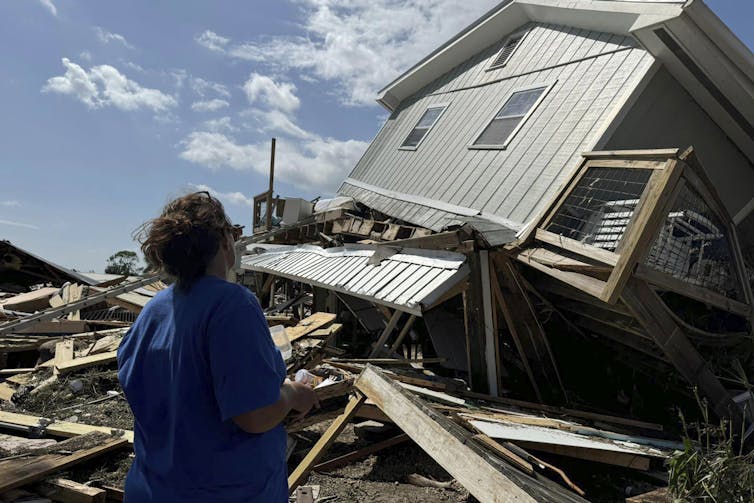
Woman looks on at her house, which was lifted up and on its side at an angle by the storm, with debris everywhere
Rural communities have fewer resources to deal with major disasters, such as Hurricane Helene. AP Photo/Kate Payne

Planning for disaster

The disruptions following a natural disaster have both immediate and long-term consequences. Studies have found that the effects of natural disasters include mental health issues, learning loss, lower graduation rates and diminished opportunities for higher education or career advancement.

Due to the challenges already facing rural schools, I believe preparing for a disaster in a rural area should occur earlier and take into account the specific needs of the community.

Rural schools, even more than their urban counterparts, cannot rely on a one-size-fits-all approach but need to make the best of the resources available and encourage collaboration from the local community and neighboring communities.

Here are a few strategies they could use.

Provide offline learning materials

Although it may seem intuitive, one key solution to school closures is developing learning materials that do not require internet access. I have found that many teachers focus on electronic resources, such as smartphones and Apple watches, and overlook the use of old-fashioned methods.

Instructional materials, such as workbooks and textbooks, should be available and used before a disaster occurs. This is to ensure that students can continue with their studies when they are cut off from school. These materials, which can be supplemented after a disaster, can include projects that students can work on independently or with their families.

Use mobile technology

Another approach incorporates mobile technology, such as smartphones. If service is available, students and teachers can communicate by phone.

When internet access is unavailable, schools can use mobile learning hubs. These are vehicles equipped with Wi-Fi, computers and other educational tools. These mobile hubs can travel to rural areas to provide students with access to digital resources. They serve as temporary classrooms or internet access points, bringing education directly to students.

During the COVID-19 pandemic, for example, I worked with a community college in Tennessee that provided mobile hubs at public libraries, school parking lots and on campus. Students were able to use these resources at all hours, day and night.

Create a flexible learning environment

Schools can give students more flexibility in when and how they learn during the academic year. For example, schools can allow students to make up missed work at their own pace. Or schools can provide alternative learning hours to students who may need to help their families with recovery efforts.

After Hurricane Helene downed power lines and closed roads in Beaufort County, South Carolina, students who were without power or internet were given five days to complete their work and other considerations.

This flexibility helps ensure students do not fall too far behind. It may even help students better manage stress and maintain their mental well-being.

Strengthen rural schools

Making rural school systems more resilient when disasters occur is essential to ensuring that students can continue learning.

Advance planning, flexible learning options and partnerships with families, community support services and local and federal government programs can help. But I believe the underlying issues of the lack of resources, transportation challenges and the digital divide should also be addressed to reduce the long-term impact of crises on rural education.The Conversation

Lee Ann Rawlins Williams, Clinical Assistant Professor of Education, Health and Behavior Studies, University of North Dakota

This article is republished from The Conversation under a Creative Commons license. Read the original article.


Space News: How does the International Space Station orbit Earth without burning up?


The International Space Station orbits Earth. NASA/Roscosmos

Curious Kids is a series for children of all ages. If you have a question you’d like an expert to answer, send it to This email address is being protected from spambots. You need JavaScript enabled to view it..


How is the International Space Station able to orbit without burning up? – Mateo, age 8, New York, New York


Flying through Earth’s orbit are thousands of satellites and two operational space stations, including the International Space Station, which weighs as much as 77 elephants. The International Space Station, or ISS, hosts scientists and researchers from around the world as they contribute to discoveries in medicine, microbiology, Earth and space science, and more.

One of my first jobs in aerospace engineering was working on the ISS, and the ISS remains one of my favorite aerospace systems. I now work at Georgia Tech, where I teach aerospace engineering.

The ISS travels very quickly around the Earth at 5 miles per second (8 kilometers per second), which means it could fly from Atlanta to London in 14 minutes. But at the same time, small chunks of rock called meteoroids shoot through space and burn up when they hit Earth’s atmosphere. How is it that some objects – such as the International Space Station – orbit the Earth unscathed, while others, such as asteroids, burn up?

The ISS moves quickly while it orbits the Earth.

To answer why the ISS can stay in orbit for decades unscathed, you first need to understand why some things, such as meteoroids, do burn up when they enter our planet’s atmosphere.

Why do meteoroids burn up in the atmosphere?

Meteoroids are small chunks of rock and metal that orbit the Sun. These space rocks can travel between 7 and 25 miles per second (12 to 40 km per second). That’s fast enough to cross the entire United States in about 5 minutes.

Sometimes, the orbit of a meteoroid overlaps with Earth, and the meteoroid enters Earth’s atmosphere – where it burns up and disintegrates.

Even though you can’t see them, the atmosphere is full of a combination of particles, primarily nitrogen and oxygen, which make up the air you breathe. The farther you are from the surface of the Earth, the lower the density of particles in the atmosphere.

The atmosphere has several layers. When something from space enters the Earth’s atmosphere, it must pass through each of these layers before it reaches the ground.

Meteoroids burn up in a part of Earth’s atmosphere called the mesosphere, which is 30 to 50 miles (48 to 80 kilometers) above the ground. Even though the air is thin up there, meteoroids still bump into air particles as they fly through.

When meteoroids zoom through the atmosphere at these very high speeds, they are destroyed by a process that causes them to heat up and break apart. The meteoroid pushes the air particles together, kind of like how a bulldozer pushes dirt. This process creates a lot of pressure and heat. The air particles hit the meteoroid at hypersonic speeds – much faster than the speed of sound – causing atoms to break away and form cracks in the meteroid.

The high pressure and hot air get into the cracks, making the meteoroid break apart and burn up as it falls through the sky. This process is called meteoroid ablation and is what you are actually seeing when you witness a “shooting star.”

An infographic showing the layers of the atmosphere, starting with the troposphere closest to Earth, then the stratosphere, mesosphere, thermosphere and exosphere, farthest from Earth.
The ISS orbits in the thermosphere, about 200 miles (322 km) from Earth. NOAA, CC BY-ND

Why doesn’t the ISS burn up?

So why doesn’t this happen to the International Space Station?

The ISS does not fly in the mesosphere. Instead, the ISS flies in a higher and much less dense layer of the atmosphere called the thermosphere, which extends from 50 miles (80 km) to 440 miles (708 km) above Earth.

The Kármán line, which is considered the boundary of space, is in the thermosphere, 62 miles (100 kilometers) above the surface of the Earth. The space station flies even higher, at about 250 miles (402 km) above the surface.

The thermosphere has too few particles to transmit heat. At the height of the space station, the atmosphere is so thin that to collect enough particles to equal the mass of just one apple, you would need a box the size of Lake Superior!

As a result, the ISS doesn’t experience the same kind of interactions with atmospheric particles, nor the high pressure and heat that meteoroids traveling closer to Earth do, so it doesn’t burn up.

A high-flying research hub

Although the ISS doesn’t burn up, it does experience large temperature swings. As it orbits Earth, it is alternately exposed to direct sunlight and darkness. Temperatures can reach 250 degrees Fahrenheit (121 degrees Celsius) when it’s exposed to the Sun, and then they can drop to as low as -250 degrees F (-156 degrees Celsius) when it’s in the dark – a swing of 500 degrees F (277 degrees C) as it moves through orbit.

The engineers who designed the station carefully selected materials that can handle these temperature swings. The inside of the space station is kept at comfortable temperatures for the astronauts, the same way people on Earth heat and cool our homes to stay comfortable indoors.

Research on the ISS has led to advancements such as improved water filtration technologies, a better understanding of Earth’s water and energy cycles, techniques to grow food in space, insights into black holes, a better understanding of how the human body changes during long-duration space travel, and new studies on a variety of diseases and treatments.

NASA plans to keep the ISS active until 2030, when all of the astronauts will return to Earth and the ISS will be deorbited, or brought down from orbit by a specially designed spacecraft.

As it comes down through Earth’s atmosphere in the deorbiting process, it will enter the mesosphere, where many parts of it will heat up and disintegrate.

Some spacecraft, such as the crew capsules that bring astronauts to and from the ISS, can survive reentry into the atmosphere using their heat shield. That’s a special layer made up of materials that are able to withstand very high temperatures. The ISS wasn’t designed for that, so it doesn’t have a heat shield.

If you’d like to see the space station as it passes over your area, you can check out NASA’s website to find out when it might be visible near you.


Hello, curious kids! Do you have a question you’d like an expert to answer? Ask an adult to send your question to This email address is being protected from spambots. You need JavaScript enabled to view it.. Please tell us your name, age and the city where you live.

And since curiosity has no age limit – adults, let us know what you’re wondering, too. We won’t be able to answer every question, but we will do our best.The Conversation

Kelly Griendling, Lecturer of Aerospace Engineering, Georgia Institute of Technology

This article is republished from The Conversation under a Creative Commons license. Read the original article.

DUI crash sends two to trauma centers, results in arrest

LAKE COUNTY, Calif. — A Thursday night head-on crash sent two people to regional trauma centers, with one of them being arrested for driving under the influence.

The two-vehicle wreck occurred just before 6 p.m. Thursday on Highway 29 at Hofacker Lane south of Lower Lake.

Sgt. Joel Skeen of the California Highway Patrol’s Clear Lake Area office said the crash involved a white 2019 Lexus ES 300 sedan driven by 23-year-old Taylor Eldridge of Lakeport and a gray 2020 Toyota Corolla driven by Nathan Verstoppen, 29, of Hidden Valley Lake.

Skeen said Eldridge was driving northbound on Highway 29 when she crossed over the double yellow lines and into the opposing lane, where she collided head-on with Verstoppen, who was traveling southbound.

Eldridge and Verstoppen both suffered major injuries, Skeen said. Neither had passengers in their vehicles.

Skeen said Eldridge was arrested on suspicion of driving under the influence and released to Queen of the Valley Hospital in Napa.

Verstoppen was also in critical condition and flown to Santa Rosa Memorial Hospital, Skeen said.

The CHP said the road was temporarily closed due to the crash and there were challenges in transporting the patients due to the air ambulances not being able to fly due to fog.

Email Elizabeth Larson at This email address is being protected from spambots. You need JavaScript enabled to view it.. Follow her on Twitter, @ERLarson, and on Bluesky, @erlarson.bsky.social. Find Lake County News on the following platforms: Facebook, @LakeCoNews; X, @LakeCoNews; Threads, @lakeconews, and on Bluesky, @lakeconews.bsky.social.

Thompson supports legislation to prevent government shutdown

On Friday, Rep. Mike Thompson (CA-04) said he joined a majority of members of the House of Representatives in supporting the passage of a continuing resolution to avoid a government shutdown.

“Tonight, I voted to avoid a potentially disastrous government shutdown ahead of the holidays,” Thompson said.

“Since October, Democrats and Republicans negotiated in good faith to develop a bipartisan bill to fund our government. Republicans set the total amount of funding in the bill. Yet hours before we were set to pass that bill, Elon Musk and President-elect Trump intervened to kill it,” Thompson continued.

“I am disappointed that the Continuing Resolution passed tonight was not the negotiated Republican bill that Democrats agreed to support,” Thompson said. “However, I am pleased that the Continuing resolution Democrats helped pass includes critical disaster funding and funding for lifesaving fire breaks in our state.

“The resolution also includes my bill to extend telehealth coverage benefits so that all Medicare beneficiaries retain access to critical services. Since my days in the California State Senate, I’ve been a big believer in telehealth’s ability to save money, time, and lives, and today’s telehealth extension ensures continued access to care for millions of Americans,” he said.

“As important, this bill did not extend a $4 trillion line of credit to President-elect Trump and Elon Musk so they could extend tax cuts to billionaires at the expense of Social Security and Medicare,” Thompson concluded.

Thompson represents California’s Fourth Congressional District, which includes all or part of Lake, Napa, Solano, Sonoma and Yolo counties.

Tribal housing program expansion benefits Lake County tribe

LAKE COUNTY, Calif. — The Federal Home Loan Bank of San Francisco announced this week that it added $1.8 million to its Tribal Nations Program that it first launched earlier in the year.

This additional allocation brings the 2024 program total to $2.8 million, directed towards developing essential infrastructure and expanding the supply of affordable housing for Native American communities.

The funding expansion’s beneficiaries include the Big Valley Band of Pomo Indians in Lakeport, which will receive $400,000 via Legacy Bank for new housing construction.

“FHLBank San Francisco is proud to increase the funding for our Tribal Nations Program and support the development of safe and affordable housing units on tribal land,” said Alanna McCargo, president and CEO of FHLBank San Francisco. “As all of America grapples with a severe housing crisis, Native American communities are disproportionately affected. Making these additional funds available through our Tribal Nations Program is a critical step for increasing the supply of affordable housing for Native American communities in Arizona, California and Nevada.”

According to the Department of Housing and Urban Development, approximately 15% of Native populations live with overcrowding, compared with the national average of 2%.

Emphasizing the need for more affordable housing, HUD research estimates 68,000 additional units are needed to replace severely inadequate units and eliminate overcrowding on Native American Tribal lands.

In January 2024, the Bank launched its Tribal Nations Program with $1 million in grant funding to provide critically necessary infrastructure funding to increase the supply of affordable housing for Native American communities.

The announcement of an additional $1.8 million will fund housing construction, rehabilitation and infrastructure development for three Native American and American Indian grant recipients, which, along with Big Valley, include Native American Outreach Ministries Inc. and the NAOMI House in Joseph City, Arizona, which will receive $600,000 via Clearinghouse CDFI for infrastructure building and housing rehabilitation, and the Washoe Housing Authority in Gardnerville, Nevada will receive $800,000 via Clearinghouse CDFI to bolster housing infrastructure.

“Legacy Bank is proud to work with FHLBank San Francisco on their Tribal Nations Program, supporting the development of Native-led, Native-serving affordable housing,” said James D. Hicken, president and CEO of Legacy Bank. “It is our mission to support the growth and economic strength of tribal communities, and the development of safe, secure housing is vital for advancing prosperity of these communities.”

“AHP grants from FHLBank San Francisco have proven to be an important resource in helping us reach the construction goals of the Washoe Housing Authority’s development of the Stewart Community in Carson City, Nevada,” said Martin Montgomery, executive director of Washoe Housing Authority. “A small piece of tribal land will be transformed from desert to 20 new affordable housing units, complete with modern amenities such as central heat and air, high efficiency water heaters, solar panels and ENERGY STAR® appliances. The Stewart Community will provide housing security for many tribal families, giving them a new place to call home thanks in-part to funding from FHLBank San Francisco.”

This $2.8 million in funding for the 2024 Tribal Nations Program builds on FHLBank San Francisco’s ongoing support for affordable housing and economic development projects benefiting Native American communities, including, to date, over $25 million in grants from AHP projects that have created more than 1,700 affordable housing units for tribal communities and more than $2 million in AHEAD grants awarded to over 40 economic development projects.

The Tribal Nations Program is also an important component of an initiative to voluntarily increase FHLBank San Francisco’s annual commitment to community programs.

In 2023, the Bank’s board of directors voted to allocate up to an additional 5% of the Bank’s annual net income for funding economic development and housing grant programs that enrich people’s lives and revitalize communities.

Additional programs implemented or enhanced in 2023 include a Middle-Income Downpayment Assistance pilot program, the Bank’s annual AHEAD economic development program, and the Empowering Black Homeownership matching grant program, which supports the work of Housing Counseling Agencies in underserved communities of color.

For more information about the Tribal Nations Program and other community programs, visit the Bank’s website at fhlbsf.com.

Supporting a grieving loved one on holidays and special occasions: Practical tips from a clinical psychologist


The holidays can be an especially difficult time for those grieving a loss. Dimensions/E+ via GettyImages

Nearly 95% of people who have experienced loss report dealing with at least one symptom of physical or mental distress. Approximately 10% of them develop prolonged grief disorder, a persistent and debilitating form of grief that does not ease with time.

Often, this grief is due to the death of a loved one, but it may also be caused by the loss of a friendship, a divorce or even a job loss.

Grief affects not only mental health but also physical well-being, and it can increase the risk of heart disease, immune dysfunction and even death.

Holidays and special occasions, which often include family gatherings, traditions and reminders of what’s missing, can amplify this pain, leaving those grieving feeling isolated and overwhelmed.

As a clinical psychologist and professor of psychiatry and neurobehavioral sciences working with cancer patients and their families, I see the profound toll grief takes on people. I’ve also experienced grief personally, both when my mother died suddenly at the age of 66 and when my father passed after a long illness at the age of 84.

Those experiences, combined with my research, have driven me to dedicate much of my career to understanding grief and its effects, and to finding effective ways to support those who are struggling with it.

Mourning vs. prolonged grief

Grief is a natural response to loss, encompassing emotional, cognitive, physical and social reactions. Common signs include sadness, withdrawal, difficulty concentrating, disrupted sleep and physical symptoms like fatigue or aches.

Grief is deeply personal, and while there is no “right” way to grieve, most people move through the process over time, finding a new equilibrium in their lives.

However, some people experience prolonged grief disorder, a condition newly recognized in psychiatry’s gold-standard manual, the Diagnostic and Statistical Manual of Mental Disorders, Fifth Edition, in 2022.

This condition is characterized by intense yearning, sorrow or preoccupation with the deceased that persists for 12 months or more, significantly impairing daily functioning. People experiencing this disorder often feel disconnected from life and unable to find joy or meaning.

Grief can have a profound effect on the brain.

Unlike nonpathological grief, prolonged grief disorder is associated with chronic activation of the brain’s stress response system, particularly in areas like the amygdala. The amygdala is a small, almond-shaped cluster of neurons in the brain that plays a key role in processing emotions, especially fear, stress and threat-related responses. Prolonged grief disorder is also linked to mental health conditions such as depression, anxiety and post-traumatic stress disorder, or PTSD.

As you support a friend or family member in their grief, it’s important to watch for signs of prolonged grief disorder because it requires targeted interventions. Research, including my ongoing studies on the use of psilocybin-assisted therapy for the treatment of grief, highlights the importance of innovative approaches to help those stuck in the cycle of prolonged grief.

If you suspect someone you love is struggling with prolonged grief, encouraging them to seek help and offering to support them in the process can be life-changing. Resources are available, from grief counseling to support groups. Organizations like the American Grief Foundation and local mental health services can provide further guidance for helping a loved one get the treatment they require.

Caring for our own grief on holidays and special occasions

Research supports several strategies for addressing grief, whether typical or prolonged:

  • Express emotions: Suppressing grief can exacerbate mental and physical health issues. Talking with trusted friends, journaling and joining support groups can be therapeutic.

  • Engage in rituals: Personal or cultural rituals, like lighting a candle, visiting a grave site or creating a memory book help integrate loss into one’s life.

  • Create new traditions as a way to honor your loss: If you’re mourning a death, consider integrating your loved one’s memory into the occasion by preparing their favorite dish, playing their favorite music or hanging an ornament in their honor.

  • Seek professional support: Cognitive behavioral therapy or complicated grief therapy can be effective treatments for prolonged grief disorder. Psychedelic-assisted therapy is also emerging as a promising option in clinical research.

Simply being present is one of the best ways to support a grieving loved one during the holidays. Alex Potemkin/E+ via Getty Images

Supporting someone as they grieve

For those grieving, holidays and special occasions like a birthday or Mother’s Day can be especially difficult. Here are some practical tips for supporting someone who is grieving during these times:

  • Remember that grief is not a problem to be solved, but a process to be supported.

  • Be present. A common fear is saying the wrong thing to someone who is grieving. Often, it’s not about saying the “perfect” thing, but simply showing up and listening without judgment.

  • Acknowledge the loss. Saying “I’ve been thinking about (their loved one) and how much they meant to you” or “I want you to know that I’ve been thinking about you and the significance of what you’re experiencing right now” can be more comforting than avoiding the subject.

  • Offer practical help. Grief can be debilitating and exhausting. Assisting with tasks like cooking, shopping or child care can relieve some of the burden.

  • If you don’t know what to say, it’s OK to admit it. A simple “I don’t have the right words, but I’m here for you” can mean a great deal.

  • Avoid phrases like “They’re in a better place” or “Everything happens for a reason.” While the intentions behind them are often good, these platitudes can feel dismissive.

  • Focus on empathy and validation. Saying “This must be so hard for you” or “Tell me more about what you’re feeling” opens the door to meaningful conversation and helps make space for the complex emotions that grief brings.

  • Respect the boundaries of your loved one who’s grieving. Let them honor their emotions by going at their own pace.

Navigating holidays and special occasions with those who have experienced a loss can be complicated. But your presence and compassion in these moments can support their healing.The Conversation

J. Kim Penberthy, Professor of Psychiatry and Neurobehavioral Sciences, University of Virginia

This article is republished from The Conversation under a Creative Commons license. Read the original article.

The holiday season, often considered a time of joy and togetherness, can also be one of the most challenging periods for those who are grieving a loss.
  • 293
  • 294
  • 295
  • 296
  • 297
  • 298
  • 299
  • 300
  • 301
  • 302

Community

  • Lake County Wine Alliance offers sponsor update; beneficiary applications open 

  • Mendocino National Forest announces seasonal hiring for upcoming field season

Public Safety

  • Lakeport Police logs: Thursday, Jan. 15

  • Lakeport Police logs: Wednesday, Jan. 14

Education

  • Woodland Community College receives maximum eight-year reaffirmation of accreditation from ACCJC

  • SNHU announces Fall 2025 President's List

Health

  • California ranks 24th in America’s Health Rankings Annual Report from United Health Foundation

  • Healthy blood donors especially vital during active flu season

Business

  • Two Lake County Mediacom employees earn company’s top service awards

  • Redwood Credit Union launches holiday gift and porch-to-pantry food drives

Obituaries

  • Rufino ‘Ray’ Pato

  • Patty Lee Smith

Opinion & Letters

  • The benefits of music for students

  • How to ease the burden of high electric bills

Veterans

  • CalVet and CSU Long Beach team up to improve data collection related to veteran suicides

  • A ‘Big Step Forward’ for Gulf War Veterans

Recreation

  • Wet weather trail closure in effect on Upper Lake Ranger District

  • Mendocino National Forest seeking public input on OHV grant applications

  • State Parks announces 2026 Anderson Marsh nature walk schedule 

  • BLM lifts seasonal fire restrictions in central California

Religion

  • Kelseyville Presbyterian to host Ash Wednesday service and Lenten dinner Feb. 18

  • Kelseyville Presbyterian Church to hold ‘Longest Night’ service Dec. 21

Arts & Life

  • Auditions announced for original musical ‘Even In Shadow’ set for March 21 and 28

  • ‘The Rip’ action heist; ‘Steal’ grounded in a crime thriller

Government & Politics

  • Lake County Democrats issue endorsements in local races for the June California Primary

  • County negotiates money-saving power purchase agreement

Legals

  • March 3 hearing on ordinance amending code for commercial cannabis uses

  • Feb. 12 public hearing on resolution to establish standards for agricultural roads

How to resolve AdBlock issue?
Refresh this page