 How to resolve AdBlock issue?
News
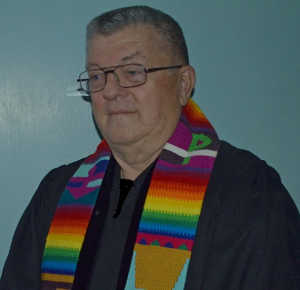
UPPER LAKE, Calif. – The congregation at the Upper Lake Community United Methodist Church has welcomed a new pastor.
Rev. Bob C. Green has assumed the position of pastor at the church, bringing a broad range of skills and strengths to his work shepherding the congregation of the Methodist church, located at 604 Clover Valley Road, on the corner of First Street and Clover Valley Road.
He graduated from Pacific School of Religion in 1982 and was ordained in June of that year at University Christian Church in Berkeley.
While there, he served as an assistant pastor from 1980 until 1984, at which time he received a call to be the senior pastor.
He retired from that position in July 2000 and was called to a three-year interim position at Garfield Park Christian in Santa Cruz.
Upon leaving Santa Cruz, he and his wife Diana spent seven years touring the USA full-time in their motorhome. They now live in Lakeport.
Prior to entering the ministry he served in the U.S. Marine Corp and then 19 years as an Idaho State Police officer.
He and Diana have been married 59 years and have three sons with six grandchildren between them.
Their eldest son is a missionary in Bogota, Colombia; the middle one is a pilot for American Airlines; and the youngest works as a stationery engineer for Kaiser Permanente in Oakland.
The church's motto is “Open Hearts, Open Minds, Open Doors.” All are welcome to any and all of the Sunday services, which commence at 11 a.m., or any of the many special services held throughout the year.
LAKEPORT, Calif. – A Lakeport man has been sentenced to jail time for driving on a suspended license twice – including during a 2013 wreck that claimed a man's life – but the vehicular manslaughter case against him for that fatal crash has been dropped after a jury deadlocked at trial in May.
On Friday Wayne Leroy Caldwell, 42, was sentenced to two years in the Lake County Jail after having pleaded guilty to two counts of driving on a suspended license, according to Deputy District Attorney John DeChaine.
In May, shortly after he'd entered those pleas, Caldwell had gone on trial for misdemeanor vehicular manslaughter for the crash that killed 26-year-old Brandon Helmer of Kelseyville on Dec. 7, 2013. However, the result was a hung jury.
A few weeks after the jury's deadlock, DeChaine announced that the District Attorney's Office would not refile the vehicular manslaughter case against Caldwell.
“We had presented the evidence that was legally admissible, but it wasn't sufficient to prove the case beyond a reasonable doubt,” DeChaine told Lake County News.
Caldwell, who was driving on a suspended license at the time of the crash, was not impaired by any substances at the time of the wreck, according to the California Highway Patrol's report on the crash.
However, DeChaine said Caldwell had admitted to investigators that at the time of the crash he was tired.
DeChaine said the evidence suggested that Caldwell fell asleep, which caused his 1994 Dodge Ram pickup to cross double-yellow lines on Highway 29 south of Cruickshank Road outside of Kelseyville.
His pickup drifted into the path of Helmer's 1992 Acura Integra, causing a head-on collision that killed Helmer, a young husband and father of three little girls, with his wife later giving birth to their fourth daughter.
Andrea Sullivan, Caldwell's defense attorney, said on the day of the crash he had driven from Willits – where he was living at the time – to Clearlake, stopped, visited with friends and ate, and at about 4:40 p.m. began the return trip to Willits.
She said the CHP estimated Caldwell had only been driving around 20 minutes when the crash occurred.
The prosecution alleged that Caldwell was negligent in not getting off the roadway after he realized he was tired. DeChaine said Caldwell had told investigators that, because he was tired, he had planned to pull over.
By not getting off the road at that point, DeChaine said Caldwell put the public at risk. “For us, that was the demonstration of negligence,” and the basis for the vehicular manslaughter case, he said.
With Caldwell not having been impaired by drugs or alcohol, and the fact that he was reported to have had adequate sleep the night before, Sullivan said she advised him to be checked out by a doctor.
She said Caldwell subsequently took part in a sleep study which determined he had moderate to severe sleep apnea, a condition that can cause people to be tired or fall asleep unexpectedly.
Before the trial started, DeChaine said Caldwell pleaded guilty to two of the counts against him – driving on a suspended license on the day of the crash that killed Helmer and again on Jan. 31, 2014 – which took those out of the jury's purview.
“They were all in the same case but we had him plead before the trial began to the driving on a suspended license,” Sullivan said.
Caldwell went on trial on May 18, with six full days of testimony, Sullivan said.
At trial, she presented evidence of Caldwell's sleep apnea, with Dr. James Steele – who runs four sleep centers in Lake, Humboldt, Mendocino and Sonoma counties – giving testimony on the sleep disorder. Sullivan said Steele was not the doctor who did Caldwell's sleep study.
Sullivan argued that Caldwell was overcome by a medical condition and therefore was not negligent or guilty of manslaughter.
Caldwell did not testify in the case, DeChaine said.
DeChaine said the case had challenges, including that witnesses had not seen any behavior or driving pattern that caused them concern before Caldwell drifted into oncoming traffic and hit Helmer.
“From my perspective, that doesn't matter,” said DeChaine, adding that the average person knows when they are too tired to be behind the wheel.
However, at the end of May, the jury deadlocked and announced it couldn't reach a verdict. The split was 7-5, with the majority of the jurors in favor of a not guilty verdict, “which I think is pretty significant,” said Sullivan.
“From my perspective, the hung jury was obviously a disappointment but the case did have its challenges,” said DeChaine.
At a followup court appearance on June 20, DeChaine told the court the vehicular manslaughter case against Caldwell was being dropped.
Although DeChaine did not elaborate on the reason in court, he told Lake County News on Friday – after Caldwell's sentencing – that despite a strong investigation by the CHP, “One of the challenges is that we couldn't definitively demonstrate when he started to fall asleep.”
DeChaine said that because of evidence code limits, the prosecution also couldn't raise the issue during trial of Caldwell's five prior convictions for driving on a suspended license.
After the vehicular manslaughter portion of the case was dropped, Caldwell still faced sentencing for the December 2013 and January 2014 driving on a suspended license charges, with the prosecution arguing that, because of his long history of prior convictions, probation wasn't appropriate.
Retired Judge Arthur Mann – who presided over the case – agreed, and on Friday imposed the maximum sentence allowed for misdemeanor charges, one year in the county jail for each count. DeChaine said the counts will run consecutively, for a total of two years.
“I was pleased with the stiff sentence that Judge Mann handed down,” DeChaine said.
Just how much of that two years Caldwell will serve is unclear, as he could be entitled to credits of up to 50 percent, said DeChaine.
Even had Caldwell been convicted of vehicular manslaughter, DeChaine said he was unlikely to serve more time in jail than he received on Friday because of the statutory limits on misdemeanor sentencing.
While he would have liked to have the manslaughter conviction in the case, DeChaine said, “Nothing can bring Brandon Helmer back. No conviction can turn back the events that led to his death.”
DeChaine said Caldwell must report on Aug. 10 to begin serving his sentence in the Lake County Jail.
Email Elizabeth Larson at
California Attorney General Kamala D. Harris on Friday announced the release of four annual crime reports, which provide law enforcement agencies and the public with statewide data on crime statistics in their communities.
The reports released include:
– Crime in California;
– Hate Crime in California;
– Homicide in California;
– Juvenile Justice in California.
A complete copy of the reports can be found at http://openjustice.doj.ca.gov/publications .
The Attorney General Office also is making raw data from the Crime in California report easily and widely available in an effort to promote transparency and encourage researchers, academics and interested parties to further analyze the data.
The information can be accessed via the Attorney General’s OpenJustice Web site, which shares key findings in its data stories and publishes raw data on its data portal from the California Department of Justice’s statewide repository of criminal justice datasets.
This March, Attorney General Harris and Assemblymember Jacqui Irwin introduced Assembly Bill 2524, which would convert Crime in California and other criminal justice annual reports published by the California Department of Justice into a set of key findings, data visualizations, and downloadable digital datasets that will be updated quarterly on the Attorney General’s OpenJustice Web portal.
Crime in California 2015 presents statewide statistics for reported crimes, arrests, dispositions of adult felony arrests, adults placed on probation, full-time criminal justice personnel, citizens’ complaints against peace officers, domestic violence related calls for assistance, and law enforcement officers killed or assaulted.
Highlights for 2015:
– The violent and property crime rates per 100,000 population increased from 2014 to 2015; the 2015 rates are 2.9 percent and 0.4 percent lower than 2010 (respectively).
– From 2010 to 2015, the robbery and aggravated assault rates decreased 13.2 percent and 1.1 percent, respectively.
– The arrest rate decreased by 4.5 percent from 2014 to 2015; a total of 1,158,812 arrests in the state in 2015; the lowest since 1969 (1,212,845 arrests in 2014).
– Misdemeanor driving under the influence arrests decreased for the fifth year in a row.
– Adult felony arrest rates decreased by approximately 29 percent (predominantly burglary and drug offenses) and adult misdemeanor rates increased by 10 percent (also predominantly burglary and drug offenses) most likely due to the reclassification of Proposition 47 crimes.
– There was an 8.1-percent increase in all aggravated assaults and 15.7-percent increase in aggravated assaults with a firearm from 2014 to 2015.
– Assaults on peace officers increased by 10 percent from 2014 to 2015
Homicides in California 2015 contains information related to homicide, including demographic data on victims, persons arrested for homicide, persons sentenced to death, peace officers feloniously killed in the line of duty, and justifiable homicides.
Highlights from 2015:
– The homicide rate increased in 2015 (from 4.4 to 4.8 per 100,000); a total of 1,861 homicides in the state
– Over the past decade the homicide rate ranged from a high of 6.9 percent in 2006 to last year’s low of 4.4 percent.
– In 2015, 82.8 percent of homicide victims were male and 17.2 percent were female.
– The largest proportion of victims has consistently been Hispanic.
– There were 163 justifiable homicides reported in 2015, with 130 committed by a peace officer and 33 committed by a private citizen.
– Firearms are used in over 70 percent of homicides in 2015; there was a 9.2 percent increase in the number of homicides with a firearm compared to 2014.
Hate Crime in California 2015 reports statistics on hate crimes that occurred in California during 2015.
Highlights from 2015:
– Hate crime events increased 10.4 percent from 758 in 2014 to 837 in 2015; the vast majority of this increase is attributed to an uptick in events involving religious bias.
– Hate crime events involving a religious bias increased 49.6% from 127 in 2014 to 190 in 2015.
– Hate crime events with a sexual orientation bias are the second most common type of hate crime over the past 10 years (2006 – 2015).
– The total number of hate crime events has decreased 35.9 percent from 1,306 in 2006 to 837 in 2015.
– Anti-Islamic (Muslim) bias events increased from 18 in 2014 to 40 in 2015; anti-Jewish bias events rose from 80 in 2014 to 97 in 2015.
– Hate crime events targeting Hispanics increased 35 percent from 60 in 2014 to 81 in 2015.
– Anti-black motivation hate crimes continue to the most common hate crime, accounting for 31.9 percent (3,443) of all hate crime events since 2006.
Juvenile Justice in California 2015 provides insight into the juvenile justice process by reporting the number of arrests, referrals to probation departments, petitions filed, and dispositions for juveniles tried in juvenile and adult courts.
Highlights from 2015:
– Juvenile arrests decreased for the seventh year in a row and are at the lowest levels ever.
– There were 71,923 juvenile arrests reported by law enforcement agencies in 2015, down 17 percent from 2014.
– In 2015 more than half of the juvenile (58.2 percent) arrests were for a misdemeanor offense and nearly a third (29.7 percent) were arrested for a felony offense.
– Among those arrested in 2015, 53 percent were Hispanic/Latino, 22 percent were white, and 19 percent were black.

Astronomers are using the NASA/ESA Hubble Space Telescope to study auroras – stunning light shows in a planet's atmosphere – on the poles of the largest planet in the solar system, Jupiter.
This observation program is supported by measurements made by NASA's Juno spacecraft, currently on its way to Jupiter.
Jupiter, the largest planet in the solar system, is best known for its colorful storms, the most famous being the Great Red Spot.
Now astronomers have focused on another beautiful feature of the planet, using Hubble's ultraviolet capabilities.
The extraordinary vivid glows shown in the new observations are known as auroras. They are created when high-energy particles enter a planet's atmosphere near its magnetic poles and collide with atoms of gas.
As well as producing beautiful images, this program aims to determine how various components of Jupiter's auroras respond to different conditions in the solar wind, a stream of charged particles ejected from the sun.
This observation program is perfectly timed as NASA's Juno spacecraft is currently in the solar wind near Jupiter and will enter the orbit of the planet in early July 2016.
While Hubble is observing and measuring the auroras on Jupiter, Juno is measuring the properties of the solar wind itself; a perfect collaboration between a telescope and a space probe.
"These auroras are very dramatic and among the most active I have ever seen,” said Jonathan Nichols from the University of Leicester, U.K., and principal investigator of the study. "It almost seems as if Jupiter is throwing a firework party for the imminent arrival of Juno."
To highlight changes in the auroras Hubble is observing Jupiter almost daily for several months. Using this series of far-ultraviolet images from Hubble's Space Telescope Imaging Spectrograph, it is possible for scientists to create videos that demonstrate the movement of the vivid auroras, which cover areas bigger than Earth.
Not only are the auroras huge in size, they are also hundreds of times more energetic than auroras on Earth. And, unlike those on Earth, they never cease.
While on Earth the most intense auroras are caused by solar storms – when charged particles rain down on the upper atmosphere, excite gases and cause them to glow red, green and purple – Jupiter has an additional source for its auroras.
The strong magnetic field of the gas giant grabs charged particles from its surroundings. This includes not only the charged particles within the solar wind but also the particles thrown into space by its orbiting moon Io, known for its numerous and large volcanoes.
The new observations and measurements made with Hubble and Juno will help to better understand how the sun and other sources influence auroras.
While the observations with Hubble are still ongoing and the analysis of the data will take several more months, the first images and videos are already available and show the auroras on Jupiter's north pole in their full beauty.
The Jet Propulsion Laboratory in Pasadena manages the Juno mission for Southwest Research Institute in San Antonio, Texas. The Hubble Space Telescope is a project of international cooperation between NASA and the European Space Agency.
Now is a great time for hunters to start pre-planning for the 2016-2017 season.
If this is the year that you'd like to hunt an unfamiliar area or learn more about an outdoor pursuit you've never tried, you may want to consider hiring a professional guide.
The California Department of Fish and Wildlife (CDFW) is responsible for licensing hunting and inland/freshwater fishing guides in the state (a Commercial Passenger Fishing Vessel License is required for guiding fishing activities in marine waters).
As defined by the Fish and Game Code, a "guide" means any person who is engaged in the business of packing or guiding, or who, for compensation, assists another person in taking or attempting to take any bird, mammal, fish, amphibian or reptile.
"Guide" also includes any person who, for profit, transports other persons, their equipment, or both to or from hunting or fishing areas.
A good guide can greatly increase the chances of success for a hunter who is stalking a new species or unfamiliar with an area. Your guide isn't just a mentor, but also a navigator, driver, shooting coach, tracker, and maybe even butcher and cook.
"Hiring a guide can be a worthwhile investment of both time and money," said Lt. Alan Gregory, CDFW's Advanced Hunter Education director. "You have to approach it as though you're hiring a contractor to work on your house. Do your due diligence well before the season starts. Research the options that are available to you and get three bids before any money changes hands."
Finding a guide
Spending time in the woods during the preseason is a trait of consistently successful hunters. Licensed guides spend their time scouting during the preseason so they can provide information on recent game sightings, travel patterns and feeding routines. That knowledge can be worth its weight in gold.
A California guide license is "one size fits all," in that it covers both hunting and freshwater fishing, so it might seem a little daunting to find a true expert in the hunt you want. However, it's definitely possible if you do a little homework in the months before your hunt.
– Look through the searchable CDFW licensed guide database to identify a few possibilities. Each guide can be found by name, permit number, services offered, species and counties of operation.
– Look up guide Web sites (if they have them) and check out online hunting forums and message boards to read testimonials and reviews.
– Ask around at sporting goods stores. Some may keep a list of guides, and employees or other hunters in the store may be able to give personal references.
– Interview several guides over the phone. Request references. Ask how many years they've been in business, what their success rate is and whether they are bonded, licensed and insured.
– Ask about cancellation policies. It's always better to be safe than sorry, and to know if you'll be expected to pay should something unexpected happen.
– Budget! Prices vary depending on species, length of trip, whether processing is included, etc. Remember to factor in travel, food and lodging costs for the trip. Be sure you understand the package offered, and what's included vs. what is not.
Tipping is also the standard for good service, and positive feedback in the form of a good review, in writing, is always appreciated.
Becoming a guide
Experienced hunters who enjoy mentoring others in the field may find that becoming a professional guide is the perfect way to turn a hobby into a career.
In order to become a licensed hunting guide in California, you have to submit an application and pay a fee. The cost of a resident guide license is $215.73 annually (Feb. 1 through Jan. 31 of the following year). A nonresident guide license is $495.75. Employees of a guide who assist in the service and who meet certain criteria are charged $47.38 for a license.
Guides must not have any CDFW violations in the two years preceding their application. A prospective guide with CDFW-related violations may have his or her application denied and licensed guides with violations may have their licenses revoked.
A guide must also purchase and maintain a "performance bond." The bond is to protect the clients and assure that any deposit a guide receives from a client to reserve a future trip will be returned to the client if the guide cancels and tries to keep the deposit.
For more information on acquiring a guide license, please go to www.wildlife.ca.gov/licensing and see Fish and Game Code, sections 2535-2546 and California Code of Regulations Title 14, section 745.
LAKEPORT, Calif. – A domestic turkey in north Lakeport tested positive for West Nile virus, the Lake County Vector Control District confirmed Friday.
Officials said the bird was picked up on June 28.
“This is the time of year when we expect to see West Nile virus activity,” said Jamesina Scott, Ph.D., the Lake County Vector Control District's manager and research director. “WNV is being transmitted by mosquitoes now, and is a timely reminder to avoid mosquito bites.”
No other West Nile virus has been detected in Lake County in 2016, Scott said.
Statewide, 23 California counties have detected WNV this year, mainly in mosquitoes and dead birds. No human cases have been reported in California this year, according to California's West Nile virus Web site, http://westnile.ca.gov/ .
This weekend, many people will be outside during dusk and dawn when mosquitoes are biting. Scott recommended using an insect repellent that contains Picaridin, DEET, IR3535, Oil of Lemon Eucalyptus or PMD on exposed skin, and consider wearing long-sleeved shirts and pants to prevent mosquito bites.
Residents are urged to help reduce their risk of contracting mosquito-borne diseases by following these guidelines:
• Dump or drain standing water. Mosquitoes grow in standing water.
• Defend yourself with mosquito repellents containing Picaridin, DEET, IR3535, Oil of Lemon Eucalyptus, or PMD.
• Avoid being outdoors when mosquitoes are biting, typically dawn and dusk.
• Maintain neglected swimming pools. Just one can produce more than one million mosquitoes and affect people up to five miles away.
• Report dead birds to the toll-free state hotline: 1-877-968-2473 or online at http://www.westnile.ca.gov/report_wnv.php .
The mosquitoes that transmit WNV develop in out-of-service swimming pools and spas, animal watering troughs, ornamental ponds and other sources of standing water.
The district offers free mosquito-eating fish to control mosquitoes in these sources. Residents are encouraged to contact the district to report neglected pools, request service for mosquito problems, or to get mosquito fish at 707-263-4770 or to fill out a service request online at www.lcvcd.org .
The Lake County Vector Control District traps and tests mosquitoes throughout the county to identify the areas that have the highest risk, and targets those areas for source reduction and treatment using an integrated vector management program.
Residents with questions, or who would like help with a mosquito problem should contact the Lake County Vector Control District at 707-263-4770 Monday through Friday, 7:30 a.m. to 4 p.m., or visit the agency's Web site at www.lcvcd.org .
For more information about West Nile virus, visit http://www.westnile.ca.gov/ .
Information about mosquito repellents can be found on the US Centers for Disease Control and Prevention Web site at http://www.cdc.gov/westnile/faq/repellent.html .