 How to resolve AdBlock issue?
News
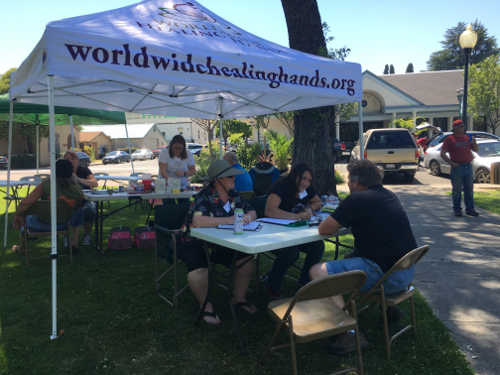 LAKEPORT, Calif. – Joining a community event presented by New Hope Fellowship at Library Park on June 12, Worldwide Healing Hands (WHH) health care volunteers conducted free health screenings to individuals attending the event.
Offering consultations and health checks, 12 volunteers including physicians, nurse practitioners, nurses and translators conducted “a very successful medical screening” specifically targeting the Hispanic population, according to WHH medical director Dr. Paula Dhanda.
The event was one of many health screening opportunities planned by the organization to assist Lake County’s homeless and indigent this year.
Dr. Dhanda reported that the team screened 21 patients – 13 men and 8 women – over the course of the two-hour event, and the physicians identified three individuals needing surgery.
“Our volunteers will assist them in accessing the care they need,” she added.
WHH’s volunteers were thanked by New Hope Fellowship Pastor Moses Zapata for the team’s participation in the outreach event.
“Our hearts are absolutely filled with gratitude and thankfulness to you for your generosity, professionalism and selfless care,” he wrote in a letter to Dr. Dhanda. “We realize that it was strictly voluntary on your part which makes the work you did all the more an act of human kindness that cannot be repaid with words alone.”
Volunteers assisting with the screening included Dr. Paula Dhanda, Dr. Arthur Bikangaga, Family Nurse Practitioner Christine Dalva, Physician Assistant Mike Mietz, Jasmin Clarke, Lacey Deas, Sandy Mietz, Falisha Johns, LVN, Perla Lovejoy, RN, Michael DelValle, Dinora Garcia and Carol Stahr, LVN.
The team checked blood pressure and other vital signs and discussed health concerns with individuals. Food was provided by New Hope Fellowship.
“Worldwide Healing Hands thanks the health care workers and other volunteers who gave their time during the recent free screening event to care for members of our community,” said Dr. Dhanda.
WHH plans to conduct similar screening clinics in the future. Volunteers will continue to inform individuals about health care availability at upcoming sessions.
For information about upcoming screenings, Worldwide Healing Hands missions and volunteer opportunities, visit the WHH Web site, www.worldwidehealinghands.org .

A painting by Virginia artist Guy Crittenden has won the 2016 California Duck Stamp Art Contest.
It was the first time that Crittenden has won the California Duck Stamp Art Contest, although he has won numerous contests held by other states.
Following the contest last Tuesday in Davis, the judges praised Crittenden’s painting, citing its autumnal feel, quality of light and anatomical accuracy.
“In my experience it is important to focus on a composition that works, first and foremost, and then worry about matters such as accuracy, feathers and habitat,” said Crittenden, a landscape, wildlife and sporting artist. “My experience with landscape painting helps me create a background that is accurate, luminescent and pleasing to the eye, one that glows with warm light and sun coming through the clouds.”
Artists from around the country submitted entries for this year’s contest, sponsored by the California Department of Fish and Wildlife (CDFW).
Timothy Schreiber of Duffield, Va., placed second, Mark Thone of Shakopee, Minn., placed third and Jeffrey Klinefelter of Etna Green, Ind., received honorable mention.
The top four paintings will be displayed at the Pacific Flyway Decoy Association’s 46th Annual Classic Wildlife Art Festival, which will be held at the Double Tree Hotel in Sacramento on July 9 and 10.
Since 1971, the California Duck Stamp Program’s annual contest has attracted top wildlife artists from around the country.
The contest is traditionally open to artists from all 50 states in order to ensure a wide pool of submissions. All proceeds generated from stamp sales go directly to waterfowl conservation projects throughout California.
In the past, hunters were required to purchase and affix the stamp to their hunting licenses. Today, hunters are no longer required to carry the stamps because California’s modern licensing system prints proof of additional fees paid directly onto the license. However, CDFW still produces the stamps, which can be requested on CDFW’s Web site at www.wildlife.ca.gov/licensing/collector-stamps .
The subject of the 2017 California Duck Stamp Art Contest will be the ruddy duck, with details on that contest to be released at a later date.
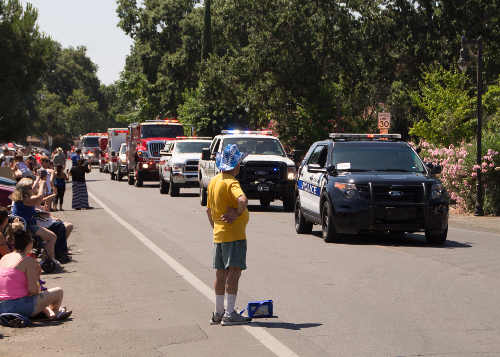
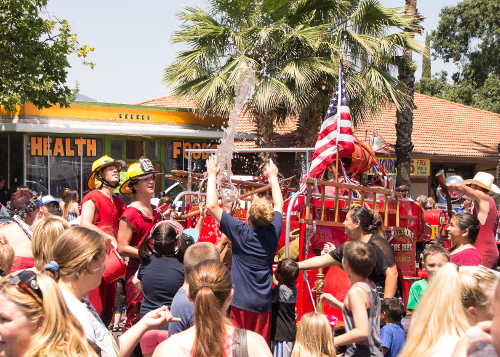
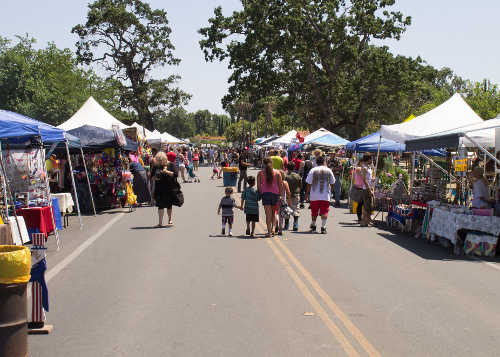
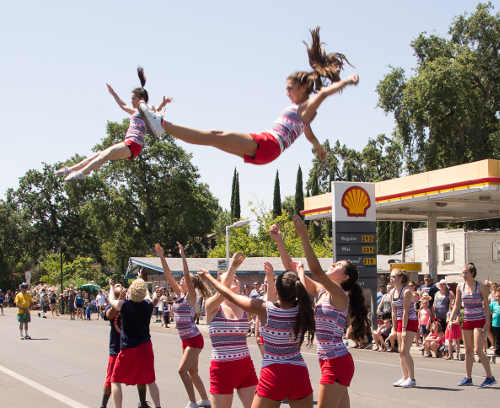 CLEARLAKE, Calif. – On Saturday Clearlake hosted an annual Independence Day celebration full of fun, color, classic cars, racing worms and topped off with a nighttime fireworks show that was hailed as spectacular.
The day's highlights included the annual Redbud Parade with a Star Wars theme, the International Worm Races, the 17th annual Show & Shine Car Show, a street fair and was capped off with the fireworks show that night.
Below are photos of some of the day's festivities by photographer Kurt Jensen.





NORTHERN CALIFORNIA – This is the time of the year when rattlesnakes in the Berryessa Snow Mountain National Monument region are very active.
So, if you’re walking or hiking in the region keep an ear and an eye out for them.
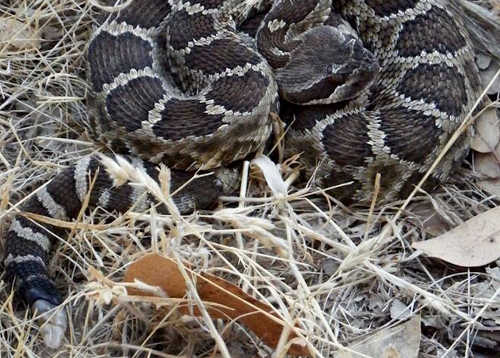
There are several different species of rattlesnakes in California but the most common one in our region is the Northern Pacific Rattlesnake (Crotalus oreganus oreganus).
Rattlesnakes are a kind of venomous pit viper. The two small pits on the face detect thermal radiation and act something like a pinhole camera, working in conjunction with the snake’s eyes to provide it with a kind of “thermal map” of its surroundings.
Although snakes can see easily in daylight, their pits also help them to see in darkness, detecting temperature variations of 32 degrees Fahrenheit or less and allowing them to see the heat signature of any nearby prey.
Rattlesnakes also have an excellent sense of smell. Their noses and their Jacobsen organs (located in the roof of the mouth and accessed when the snake flicks its tongue) work together to detect and identify scents.
Hearing is another issue, though. As they don’t have any external “ears,” rattlesnakes are effectively deaf and depend on vibrations in the ground to let them know if there is anything – like a human – coming at them that they cannot yet see or smell.
When alerted to intruders, the rattlesnakes will often shake their rattles as a warning that they are nearby.
The rattles are made up of a series of interlocking, hollow “buttons” at the end of the tail. Special muscles in the tail can shake the rattle up to 50 time per second.
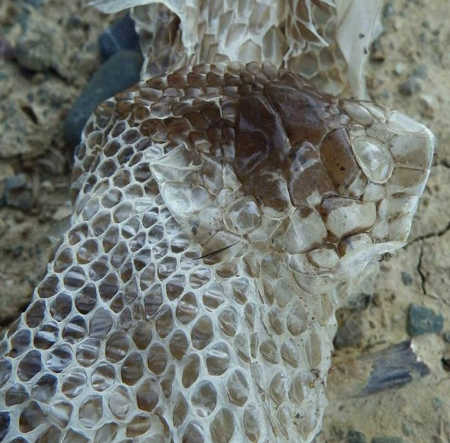
And by the way, no, you can’t tell the snake’s age by the number of buttons on the rattle. New segments are added to the rattle each time the snake sheds its skin (which can be several times a year if it’s able to eat a lot). Other segments can be lost or damaged as the rattlesnake ages, travels over rough terrain or encounters other animal combatants.
Rattlesnakes won’t always shake their rattles either, so don’t be fooled into thinking there aren’t any around you simply because you can’t hear them.
Be vigilant when on the trail. Don’t step or put your hands into areas where you cannot see (such as long grass, rock tumbles, or dense thickets), and step up on top of logs and rocks and pause for a moment to look over them before you step over them… there might be a rattlesnake tucked in on the other side that you’ll miss if you’re not careful.
Check around stumps and logs before sitting down to rest and never grab at what looks like a “stick” in the water. Rattlesnakes are excellent swimmers, and you don’t want that “stick” to bite you.
All rattlesnakes are born with fully functioning fangs, and in fact they have three pairs of back-up fangs in their heads at any one time.
The old fangs are shed and replaced about every six weeks. When the rattlesnake bites, special muscles on the sides of its venom glands squeeze the venom out into the fangs.
Some people believe that younger snakes are unable to control their venom, and are therefore more dangerous than adults, but that’s not the case.
All rattlers, regardless of age, can regulate their venom discharge, and adults have larger venom glands than juveniles, so papa can pump out a lot more venom than junior can.
The venom is a cocktail of enzymes, lipids, amino acids and other compounds, and is designed to bring their prey down, immobilize it, and start digesting it before it ever gets to the snake’s stomach.
One tiny fun fact about the venom: adult California ground squirrels have a natural immunity to it, and scientists have recently discovered that the snake’s venom is evolving to try to overcome that immunity.
As you go hiking and walking through the region just keep in mind that these guys are out there. And remember, too, that rattlesnakes very seldom bite unless they are provoked, so if you see or hear one, just give it a wide berth – 5 to 6 feet is a good distance – so it has somewhere to retreat to and it will mostly likely leave you alone.
And if you come across a recently deceased rattlesnake remember that the “bite reflex” may still be operational, so don’t pick up or handle dead rattlers.
Tuleyome is a501(c)(3) nonprofit conservation organization based in Woodland, CA. For more information, visit www.tuleyome.org . Mary K. Hanson is a Certified California Naturalist and author of the “Cool Stuff Along the American River” series of nature guides available at www.lulu.com .
KELSEYVILLE, Calif. – A vehicle crash into a power pole on Sunday afternoon resulted in an extended closure of a portion of Soda Bay Road.
The crash occurred shortly before 4:30 p.m. on Soda Bay Road at Riviera Heights, according to the California Highway Patrol.
According to reports from the scene, there were three people with minor injuries, although the CHP later reported the crash was noninjury.
A brief power outage was reported in the area as a result of the crash, which caused power lines to fall across the roadway, according to the CHP.
The CHP reported that county roads personnel were called out early in the evening to help with the road closure.
Both AT&T and Pacific Gas and Electric responded to the scene to make repairs, the CHP said.
With multiple lines still down on Sunday evening, the CHP said Soda Bay Road may be closed through the night due to the ongoing repairs.
Email Elizabeth Larson at
Despite the well-known dangers of distracted driving, the number of California drivers who use mobile devices while they drive is on the rise.
In a study conducted by the California Office of Traffic Safety (OTS) in April 2016, at least 12.8 percent of California drivers were observed using a mobile device during the day, up from 9.2 percent in 2015 and eclipsing the previous high of 10.8 percent in 2013.
Due to the difficulty of observing mobile device use in a vehicle, these figures are considered minimums, with actual usage likely several points higher.
“These latest numbers are discouraging, but not totally unexpected,” said OTS Director Rhonda Craft. “The number of smartphones in the United States has gone from zero, 10 years ago, to over 200 million today. They have become so much a part of our lives that we can’t put them down, even when we know the danger.”
California and many other states observed National Distracted Driving Awareness Month in April. The California Highway Patrol (CHP) and hundreds of other law enforcement agencies conducted educational and enforcement efforts.
The CHP alone organized more than 300 educational presentations and issued 13,496 citations for distracted driving violations. The OTS conducted a social media campaign urging drivers to Silence the Distraction.
“Distraction occurs any time drivers take their eyes off the road, their hands off the wheel, and their minds off their primary task of driving safely,” CHP Commissioner Joe Farrow said. “Any non-driving activity is a potential distraction and increases the risk of a collision.”
Data from the CHP’s Statewide Integrated Traffic Records System shows that in 2013, 22,306 people were involved in collisions in which distracted driving was a factor. The number of distracted driving victims in California increased slightly in 2014, to 22,652.
From 2013 to 2015, the number of drivers killed or injured in collisions in which distracted driving was a factor increased every year, from 10,162 in 2013, to 10,548 in 2014, and to 11,090 in 2015.
Despite these number, drivers seem less concerned about the dangers of distracted driving. The OTS study found that the observed usage rates appear to confirm previous studies, which show more drivers admit to using mobile devices “sometimes” or “regularly.”
Fewer drivers believe that talking or texting on a cell phone is a major safety problem. Meanwhile, the percentage of those who say they have been hit or nearly hit by a driver using a cell phone remains steady at nearly 60 percent.
Other significant findings in the observational survey:
· Though nearly all types of usage were up, typing and posting increased by more than one third.
· The highest observed electronic device use and the fastest increase in usage is in urban areas, at 9.4 percent.
· Electronic device use during rush hours increased by 71 percent in 2016.
· The percentage of 16-24 year-olds talking on hand-held cell phones increased from less than 1 percent every year since 2012 to more than 2 percent in 2016.
· Southern California drivers hold the phone to their ear at a rate double (3.8 percent) or more that of Central California drivers (1.9 percent) and Northern California drivers (1.4 percent).
“The study results are disturbing,” Commissioner Farrow said. “Every time someone drives distracted, they are putting themselves, their passengers and everyone on or near the roadway at risk.”